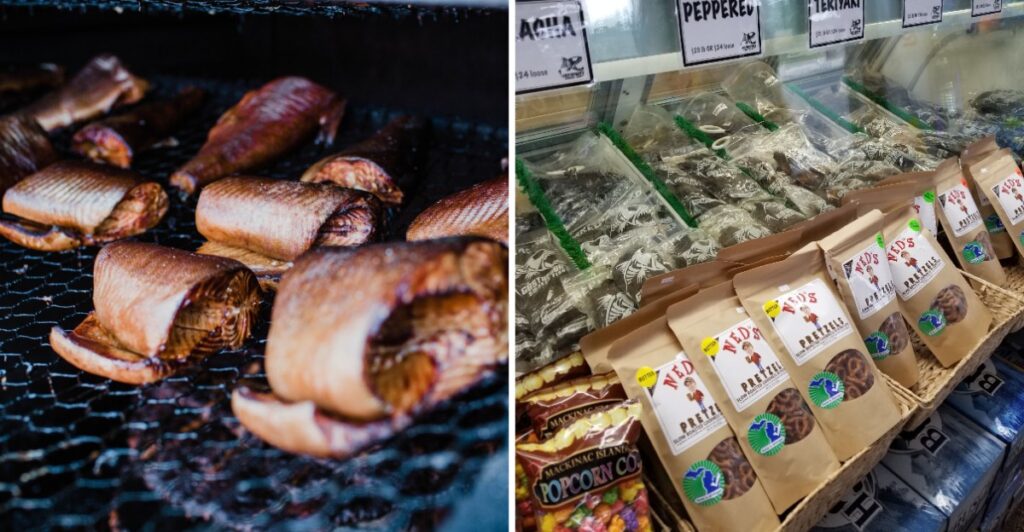
Gas, snacks, smoked fish. One of these is clearly overachieving.
Along U.S. 2 in Michigan’s Upper Peninsula, a roadside stop has been smoking fish since 1978. And yes, the gas pumps are almost beside the point once that aroma gets involved.
The fish is prepared on-site using a family method with salt-water brine and maple wood. Generations of the same family have kept that tradition going.
That is enough to make me reconsider whatever sad road snack I packed.
There is jerky around too, but the fish case is where my attention would go first.
If you still have miles ahead, bring a cooler. Trust me, smoked whitefish riding shotgun for two hours sounds charming only until the car starts smelling like lunch.
So be honest: once the tank is full, are you really leaving without checking the fish case?
The Business Started Along U.S. 2 In 1978
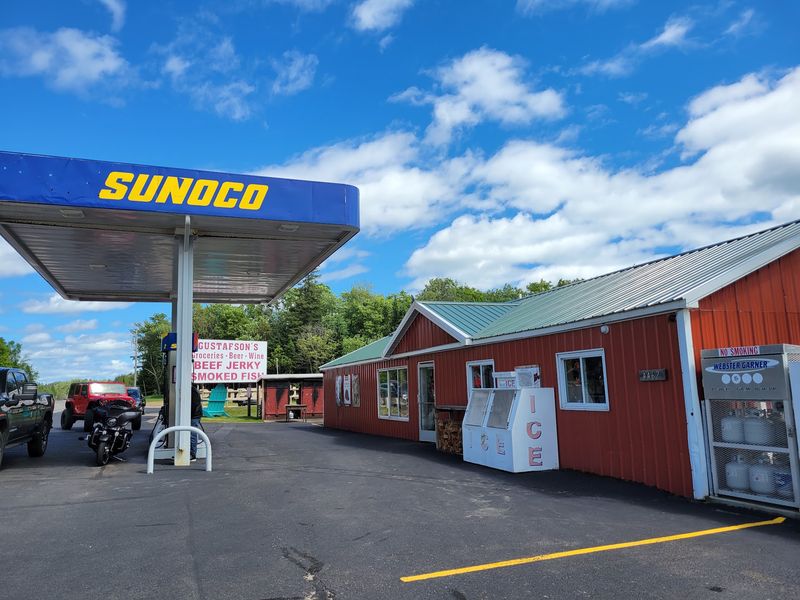
Tom and Joyce Gustafson opened the filling station and smoked-fish business in 1978 along U.S. 2 in the Brevort area of Michigan’s Upper Peninsula. The roadside setting has always been part of the operation rather than a theme added later.
The combination made practical sense on a long highway corridor. Drivers could stop for fuel while the store offered smoked fish and other food that could be carried back to the car.
Over the decades, the retail side expanded, but the gas-station role and smoked-fish focus remained together.
That history also explains why the place works differently from a restaurant. This is primarily a market and roadside store. The smoked fish is sold to go, so the meal can happen at a picnic table later, at a campground, or after the day’s drive is finished.
For a first visit, think like a traveler rather than a diner. Bring a small cooler if the day is long, know how much refrigerator space is waiting at the other end, and buy accordingly.
The road may be doing most of the planning, but the fish still deserves a little logistics. A reusable cold pack or two can save you from rearranging the entire day around a purchase you made twenty minutes after breakfast.
Three Generations Have Worked In The Family Business
The Gustafson family remains closely tied to the business. Third-generation sisters Kristi and Morgan Gustafson have worked alongside their parents, Mike and Lara, carrying forward a shop started by their grandparents Tom and Joyce.
That continuity matters most in the parts of the operation that rely on repetition and hands-on knowledge. Smoking fish is not simply a matter of turning on a machine and waiting for a timer.
Brining, loading the smokers, choosing the wood, managing the smoke, and knowing when a batch is ready all depend on a method practiced again and again.
The recipe follows the method Tom taught the next generation, with very little changed.
You do not need to know the family tree before choosing a piece of whitefish, but the history gives useful context to what is happening behind the store. The smokers are not decorative props. They are part of the same working process that has shaped the business for decades.
That is enough history for the first stop. The rest can wait until the cooler is packed. If you are curious about the process, knowing that the same family is still involved makes the smokehouse side more than scenery beside the pumps.
Maple Wood And Salt-Water Brine Shape The Fish
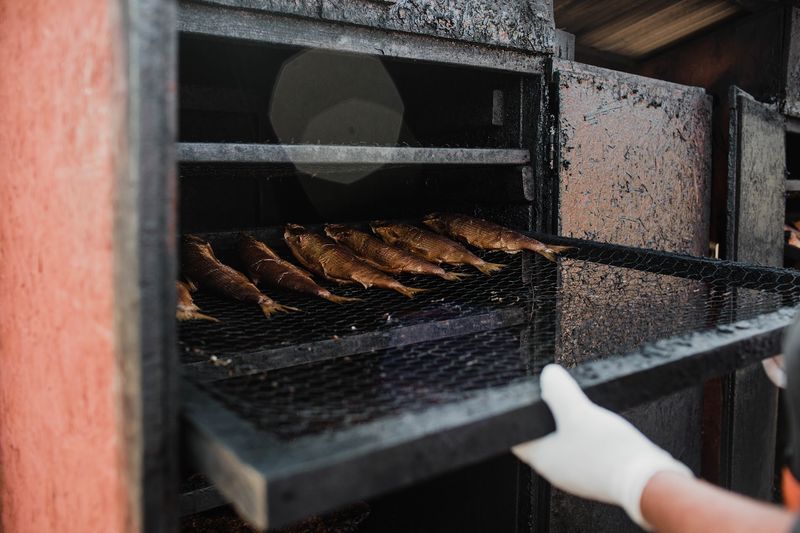
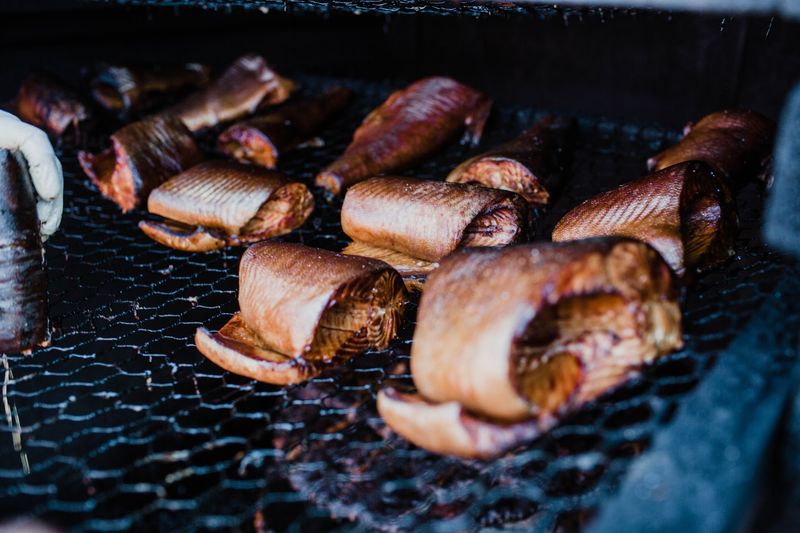
The smoking method starts before the fish reaches the smoker. Gustafson’s uses a natural salt-water brine, then smokes the fish over maple wood for roughly five to six hours. The process follows the family method passed down from founder Tom Gustafson.
Maple is central to the process. It supplies the smoke while the longer cooking period gives the fish time to take on flavor without turning a roadside food stop into a quick heat-and-serve operation.
The smokers are on the property, which keeps the production side close to the storefront. That matters when you are deciding what to buy because the fish is not simply arriving as a finished packaged product from somewhere else.
If several varieties are available, start with the fish rather than the seasoning. Whitefish, trout, and salmon have different textures and richness, so choosing the species first makes the rest of the decision easier.
Keep the quantity realistic too. Smoked fish travels well when kept properly chilled, but buying enough for an imaginary dinner party is not especially useful if only two people are waiting at home.
One or two choices are easier to finish and give you a better excuse to try something different next time.
Great Lakes Fish Give The Cooler Plenty Of Variety
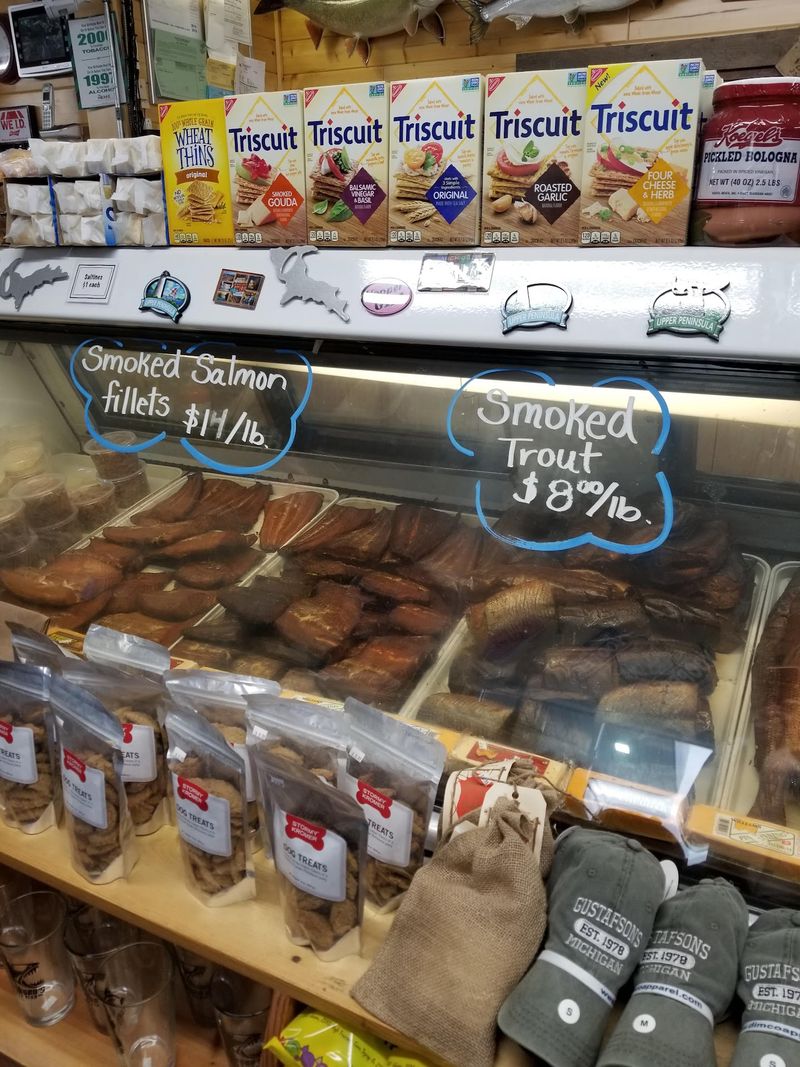
The smoked-fish selection includes whitefish, lake trout, salmon, chubs, and other Great Lakes specialties. Smoked fish dip is another regular part of the store’s food lineup.
Exact availability can change, which is normal for a product tied to fish supply and production batches. That makes the cooler in front of you more useful than a fixed shopping list written days earlier.
Whitefish is a natural starting point if you want something closely tied to Great Lakes food traditions. Lake trout gives you another regional option, while salmon offers a familiar reference point for anyone newer to smoked fish.
Fish dip is easier to manage if the next stop involves crackers, bread, or a picnic cooler. Whole or larger pieces of smoked fish make more sense when you know where they will be stored and served.
The choice does not need to become a tasting exam. Pick one fish you already know and one you do not, or keep it simpler and take the variety that fits the next meal.
A road-trip market is at its best when the food can actually survive the road trip.
Jerky And Regional Goods Broaden The Stop
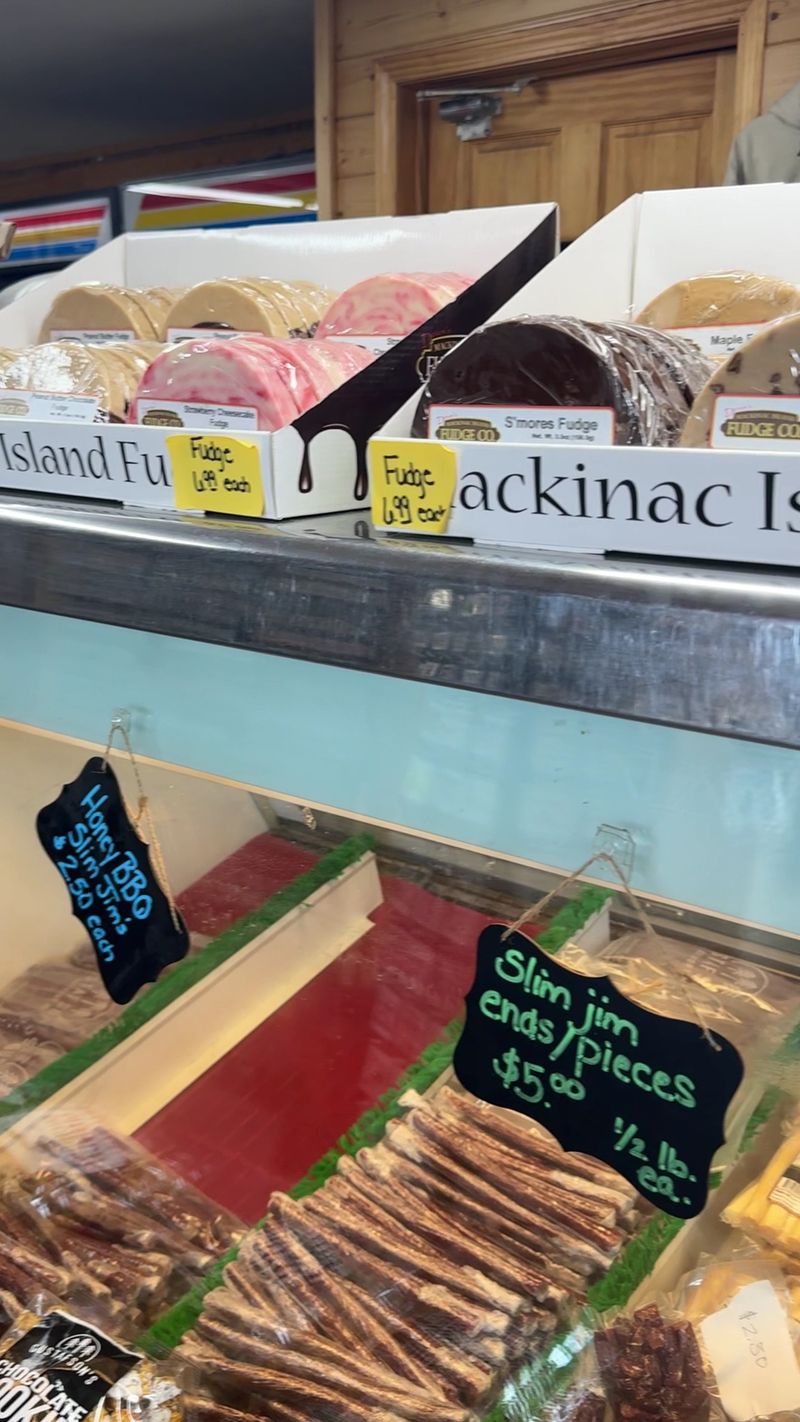
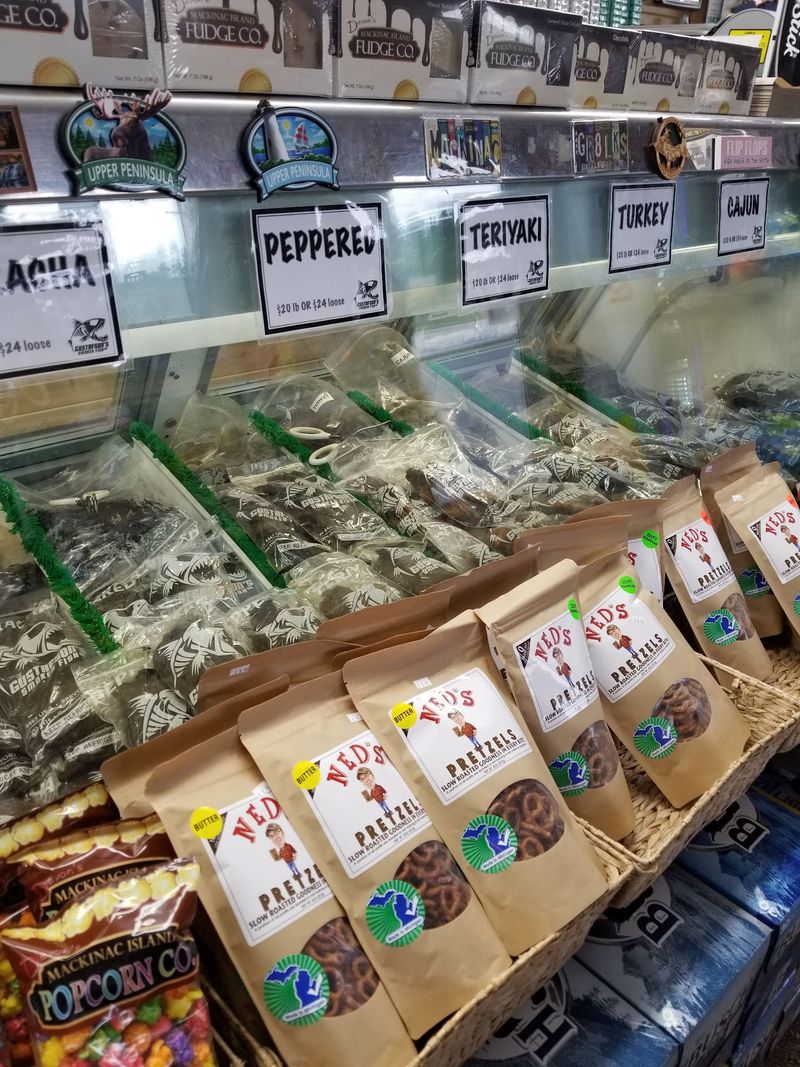
Smoked fish may get top billing, but Gustafson’s also makes and sells beef jerky in several flavors. Mild, peppered, barbecue, Cajun, and teriyaki beef jerky are part of the selection, alongside slim jims and turkey jerky.
Jerky solves a different road-trip problem than smoked fish. It does not need to become dinner immediately, and it is easier to tuck into a bag when the cooler is already doing enough work.
The store also carries cheese curds, snacks, seasonings, Trenary Toast, candy, Upper Peninsula-themed goods, and other regional products. That makes it possible to build a simple food bag without treating every shelf like a souvenir emergency.
If you are driving several more hours, separate what needs refrigeration from what does not. Smoked fish and cheese belong with the cold items. Jerky, toast, candy, and packaged snacks can handle the easier part of the car.
The same restraint that helps at a grocery market works here. Choose one fish, one road snack, and perhaps one regional item you cannot easily find at home.
The car still needs room for passengers. A small bag of shelf-stable food also gives you something useful for later without asking the cooler to perform miracles all afternoon.
Current Hours Make It Easy To Work Into A U.P. Drive
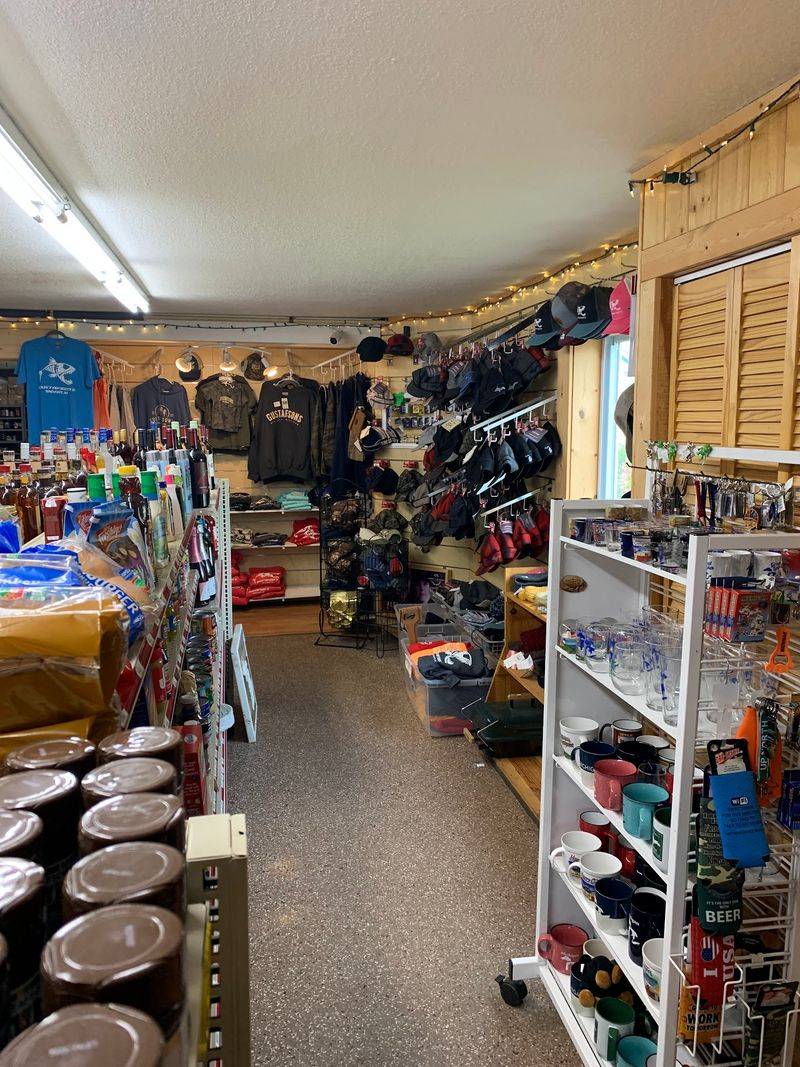
The business operates beyond the summer road-trip season as well, although short seasonal or holiday closures can occur. That makes it useful in more than just the warmest months, while checking the schedule still makes sense around special dates.
Because it also functions as a gas station and convenience stop, you can keep the visit short when the schedule is tight. Fuel, fish, jerky, and back to the road can all happen without turning the stop into a full afternoon.
If you have more time, check the coolers first and packaged goods second. That keeps the main reason for the stop from getting buried under snacks and souvenirs.
A cooler is especially useful when the next hotel, campground, or home refrigerator is still a long drive away.
The location makes planning simple: stay on U.S. 2, watch the time, and give cold purchases the same care you would after any grocery stop.
Gustafson’s Smoked Fish is located at W4467 US-2, Brevort, MI 49760,
A Simple Shopping Plan Keeps The Roadside Stop Practical
Gustafson’s works best when you treat it as a working food market rather than a museum piece from the highway’s past. The family history is real, but the useful part for today’s traveler is still what can go into the cooler and snack bag.
Start with the smoked fish. Check which varieties are available, decide how soon you will eat them, and choose an amount that fits your refrigeration plan.
Then move to jerky or another shelf-stable snack if the drive still has miles to go. Cheese curds and other chilled products can join the fish, while regional packaged foods can handle the car-friendly side of the purchase.
If several people are traveling together, split the decisions. One person chooses the fish, another picks the jerky, and someone else can be trusted with snacks only if they have demonstrated reasonable restraint at previous gas stations.
The family smoking process, maple wood, long U.S. 2 history, and Great Lakes fish give the stop its character without requiring much ceremony.
Keep the cooler cold, keep the order manageable, and let the next stretch of highway handle the scenery.