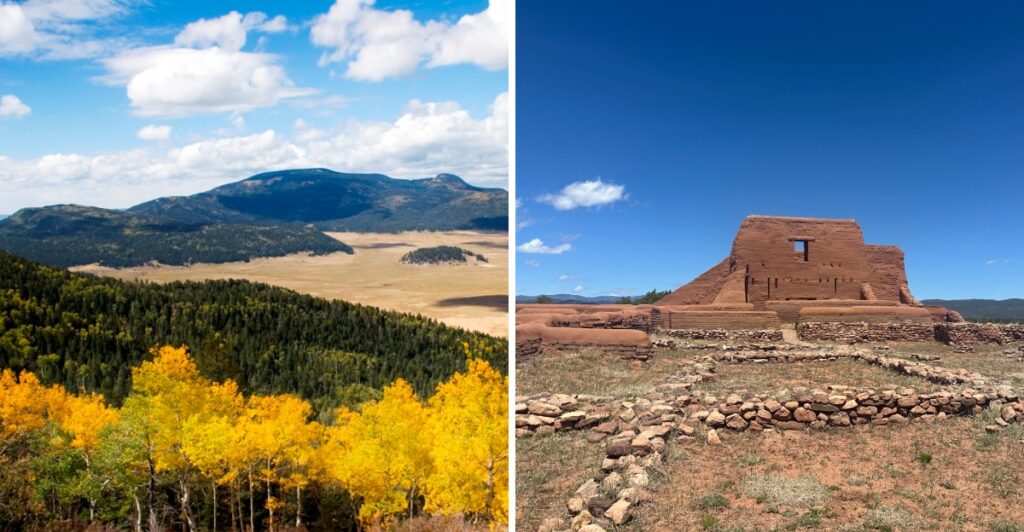
Santa Fe is the kind of city that can easily fill a whole trip, but the roads beyond it are hard to ignore. Within a manageable drive, canyon walls hold ancient dwellings, elk roam a vast volcanic valley, and old mining communities have found new life through art.
New Mexico turns a simple day trip into a chance to see a completely different landscape before dinner. You can climb wooden ladders at an archaeological site, stroll through a historic plaza, or hike among cone-shaped rock formations that barely look real.
Some destinations are close enough for a slow morning. Others are better with an early start and extra time for the road.
Either way, there is plenty to make the drive worthwhile. Check current conditions, bring water, and leave room for an unplanned stop.
These trips make Santa Fe a terrific starting point for exploring more of the region.
1. Bandelier National Monument
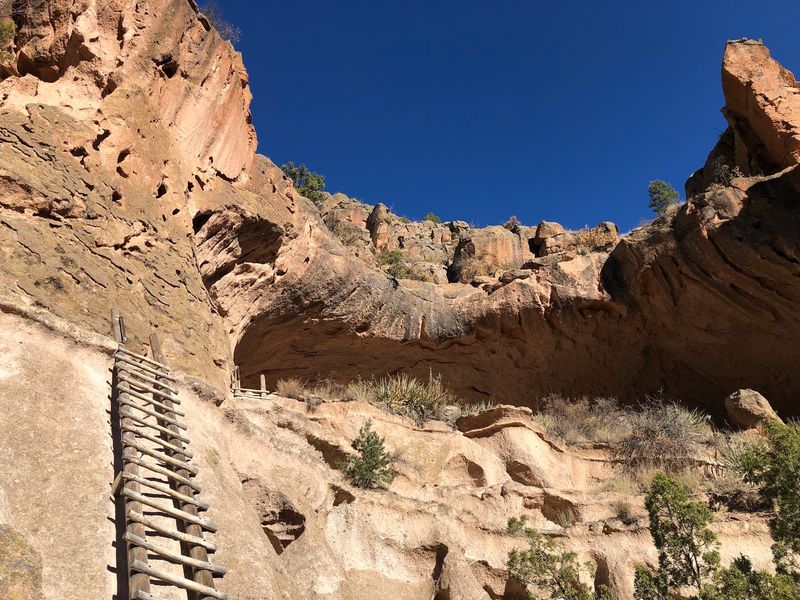
Wooden ladders lean against pale canyon walls, inviting hikers to climb straight into the past. Bandelier National Monument sits at 15 Entrance Rd, Los Alamos, NM 87544, about an hour west of Santa Fe in Frijoles Canyon.
Ancestral Pueblo people carved homes into the soft volcanic rock here long ago.
The Main Loop Trail is the star attraction. It is a paved and fairly easy path that passes the round village of Tyuonyi and a row of cliff dwellings called cavates.
Visitors can climb ladders into some of these small rooms and peek out at the canyon below. Honestly, standing in a doorway shaped by hand centuries ago sounds pretty humbling to me.
For more of a challenge, the trail continues to Alcove House. Reaching it means climbing several tall ladders, so anyone nervous about heights may want to sit this one out.
Frijoles Creek runs through the canyon, adding shade and a gentle soundtrack to the walk.
Timing matters during busy months. In 2026, shuttle service operates only inside Bandelier during peak visitation periods, so check the official park website before heading out.
Pack water, sturdy shoes, and sunscreen, since the high desert sun is no joke. Petroglyphs and carved holes for roof beams remain visible in the cliffs, small clues to busy daily lives.
Canyon walls here hold more stories than any history book could fit.
2. Taos Plaza
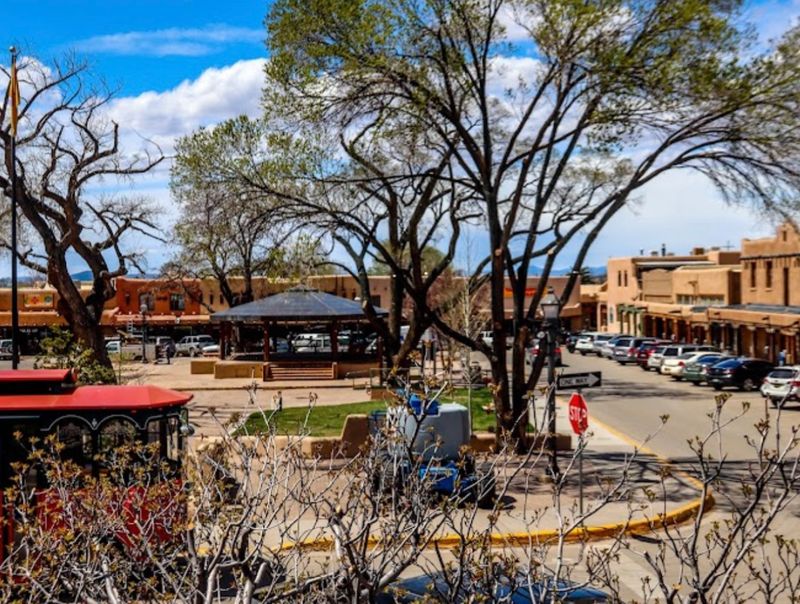
Adobe walls glow warm brown around a leafy square that has been the heart of Taos for generations. Taos Plaza is located at N Plaza in historic downtown Taos, NM 87571, roughly a ninety-minute drive north of Santa Fe.
The trip itself is part of the fun, especially along the High Road or the river route.
Shops and galleries line the plaza and the nearby side streets. Visitors can browse turquoise jewelry, handwoven rugs, and paintings inspired by the bright northern light.
Artists have flocked to Taos for over a century, and that creative spirit still feels alive in every corner.
The plaza also holds a lot of history. Spanish settlers, Native peoples, and later Anglo traders all shaped this small town.
Nearby, the historic Taos Inn and the Governor Bent House add more layers to explore on foot.
Comfortable walking shoes help, since the best discoveries often hide down narrow lanes. Parking can fill up on summer weekends, so arriving early makes life easier.
Fall brings golden aspens to the surrounding mountains, which turns the drive into a showpiece. I have always loved how a town this small manages to feel so big on culture.
Bring a little extra patience and a lot of curiosity. Taos tends to hand out surprises at every turn.
3. Ghost Ranch
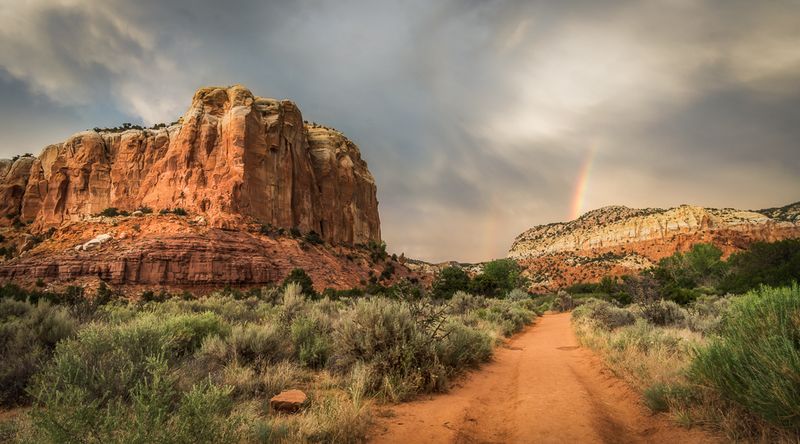
Painter Georgia O’Keeffe called these red and gold cliffs home, and one look explains why. Ghost Ranch sits at 280 Private Drive 1708, Abiquiu, NM 87510, about an hour northwest of Santa Fe along a scenic highway.
The landscape steals the show. Striped cliffs rise in shades of red, orange, and cream, while the flat-topped Pedernal mesa watches from the distance.
O’Keeffe painted that mesa so often that it became one of her favorite subjects.
Hiking trails offer different levels of effort. Chimney Rock Trail climbs to a viewpoint over the colorful valley, and Box Canyon Trail follows a shadier route into a narrow canyon.
Both are popular, so morning starts beat both the heat and the crowds.
Ghost Ranch is also an education and retreat center. Visitors can check in at the welcome center for day passes, guided tours, and information about the on-site museums.
The ranch has fossil collections that highlight its rich dinosaur history, which is a fun bonus for young explorers.
I find it charming that a place with such a spooky name feels so welcoming. Bring water, a hat, and a camera with plenty of storage space.
Sunset makes the rocks practically blush, and nobody wants to miss that show.
Here, the land does the painting before anyone even picks up a brush.
4. Valles Caldera National Preserve
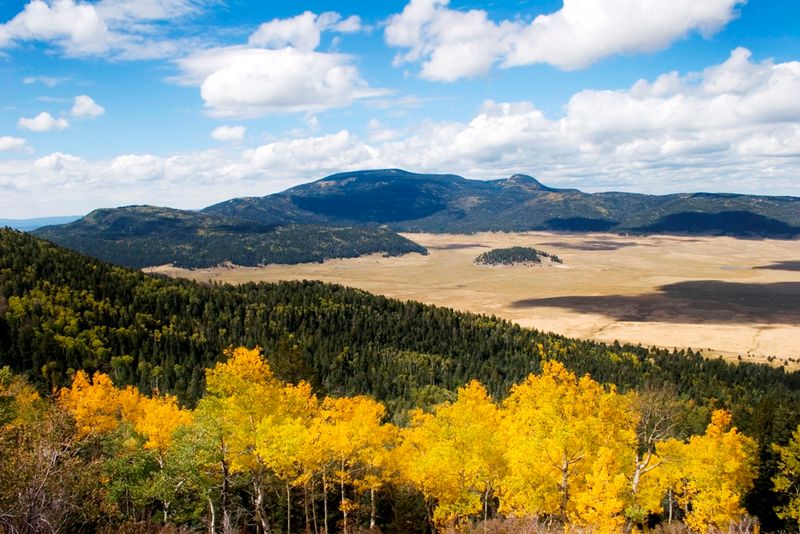
Imagine a huge grassy bowl ringed by forested hills, with elk wandering across it like they own the place. They kind of do.
Valles Caldera National Preserve is located at 090 Villa Louis Martin Dr, Jemez Springs, NM 87025, in the Jemez Mountains west of Santa Fe.
The preserve sits inside the crater of an ancient volcano. Over a very long time, the land filled with meadows, streams, and thick forests.
Today, the wide Valle Grande opens up right beside the highway, and it is a jaw-dropper.
Wildlife watching is a huge draw. Elk herds often appear early in the morning or near dusk, and coyotes, prairie dogs, and hawks also call this valley home.
Binoculars make a big difference here.
Visitors can stop at the Valle Grande entrance station for maps and updates. Hiking trails range from short strolls to longer forest walks.
Fishing is allowed in some streams with the right permit, and winter brings cross-country skiing and snowshoeing when snow cooperates.
Weather changes fast at this elevation, so layers are smart in every season. Summer afternoons often bring thunderstorms, which means morning visits work best.
Seeing a sleeping volcano turned into a peaceful meadow strikes me as nature’s best plot twist.
The elk, meanwhile, seem completely unbothered by all the history beneath their hooves.
5. Kasha-Katuwe Tent Rocks National Monument
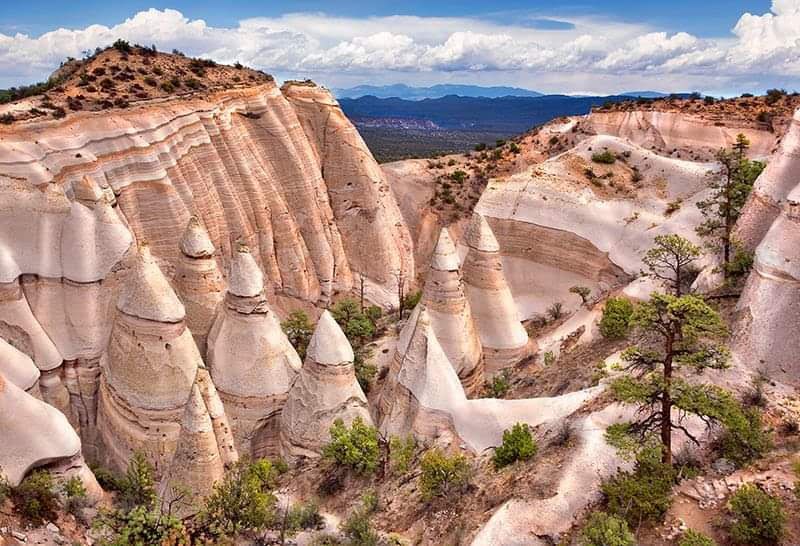
Cone-shaped rocks stand in tidy rows, looking like a camp of giant stone tents. Kasha-Katuwe Tent Rocks National Monument is found off Indian Service Route 22, Cochiti Pueblo, NM 87072, roughly forty-five minutes southwest of Santa Fe.
The name comes from the Keresan language of the local Pueblo people and means white cliffs. Volcanic eruptions long ago left thick layers of ash and pumice.
Wind and water then carved them into the pointy hoodoos visitors see today, many topped with little boulder caps.
The Slot Canyon Trail is the most famous hike. It squeezes through a narrow canyon with curving walls before climbing to a mesa top with sweeping views.
The final stretch is steep, so good shoes are a must.
Access depends on the Pueblo de Cochiti, and the monument has faced closures in recent years. Checking the official status before leaving Santa Fe saves a wasted trip.
Pets are not allowed on the trails, and there is little shade, so water matters.
Respect plays a big role here, since the land holds deep cultural meaning for the Pueblo community. Visitors should stay on marked paths and leave rocks exactly where they found them.
I have to admit, these formations look like something a kid would sketch on a rainy day. Nature really rocked this design.
6. El Santuario de Chimayó
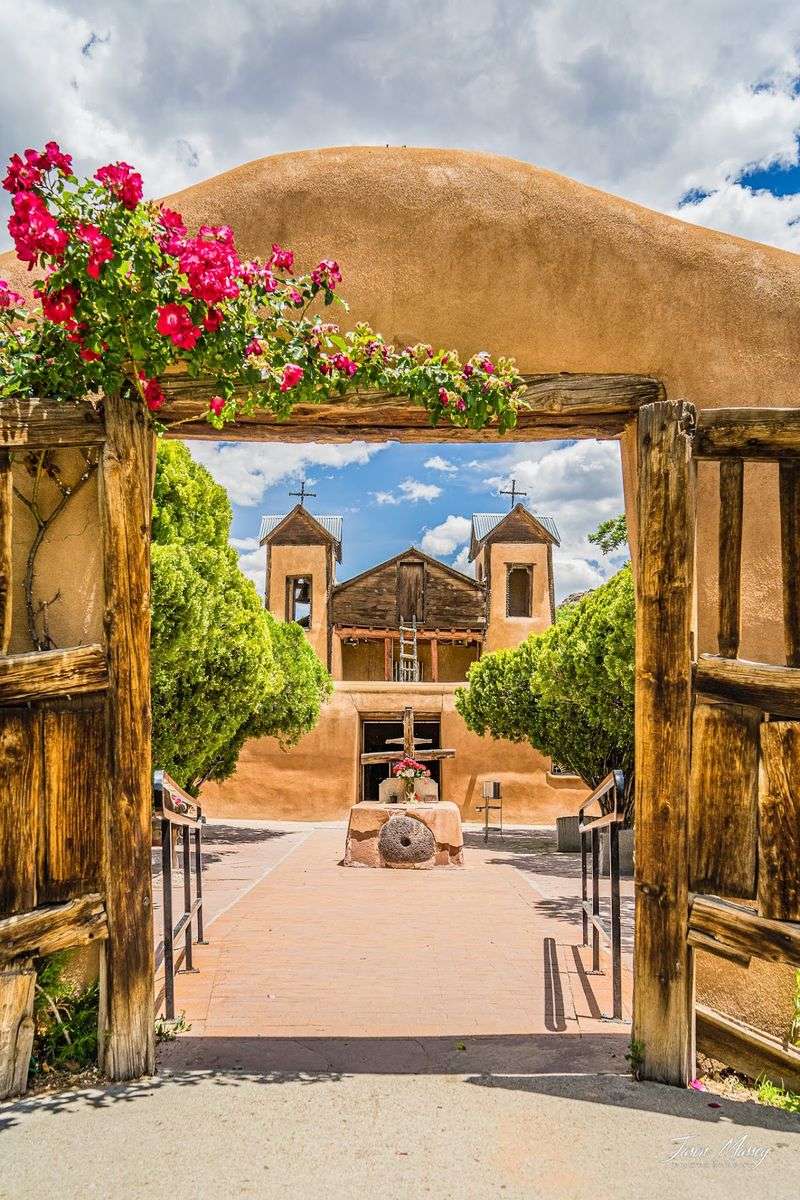
Quiet and humble, a small adobe church in the hills draws visitors from across the country each year. El Santuario de Chimayó sits at 15 Santuario Dr, Chimayó, NM 87522, about forty minutes north of Santa Fe.
Built in the early nineteenth century, the church is known for a small room holding a pit of earth that many believe has healing power. Visitors often scoop a little into containers to take home.
A nearby room displays crutches, photos, and notes left by people giving thanks.
The Santuario is a National Historic Landmark. Inside, carved and painted altar screens show the folk art tradition of northern New Mexico.
Photography is not allowed inside the church, so visitors should take mental snapshots instead.
Every spring during Holy Week, thousands of pilgrims walk to Chimayó, some from very far away. Visiting at other times usually feels calmer.
The grounds include peaceful courtyards, a creek, and small chapels worth seeing.
The village itself has a long weaving tradition, and family-run shops nearby sell colorful handwoven rugs and blankets. Combining the church with a drive along the High Road to Taos makes for a full day.
Dress respectfully and keep voices soft, since this remains an active place of worship. I find the simple faith on display here quietly moving.
Some places speak loudest in whispers.
7. Los Alamos Visitor Center
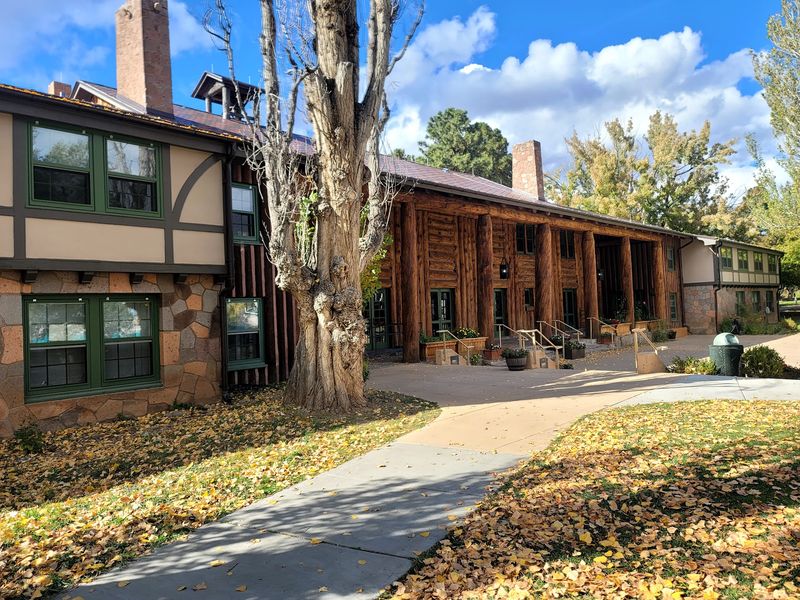
High on a mesa, a town once kept secret from the world now welcomes curious visitors. The Los Alamos Visitor Center is located at 475 20th St Suite A, Los Alamos, NM 87544, about forty-five minutes from Santa Fe.
Here is a good first stop for anyone exploring this unusual town. Friendly staff can share maps, brochures, and tips about local trails and museums.
The center also serves as a gateway to the Manhattan Project National Historical Park, which tells the story of the scientific work done here during World War II.
Within walking distance, the Bradbury Science Museum offers free exhibits about science and history. The Los Alamos History Museum and Fuller Lodge sit nearby too, giving a look at life before and after the secret lab arrived.
Outdoor lovers will find plenty to do as well. Canyon trails wind right through town, and the views of the Jemez Mountains and Rio Grande valley are hard to beat.
Pairing a visit with Bandelier or Valles Caldera creates an easy, packed itinerary.
Downtown is compact and easy to walk, with parking close by. Visiting on a weekday tends to mean lighter crowds at the museums.
I love that a place known for big science also feels like such a friendly small town. Curiosity runs in the local water supply, it seems.
8. Pecos National Historical Park
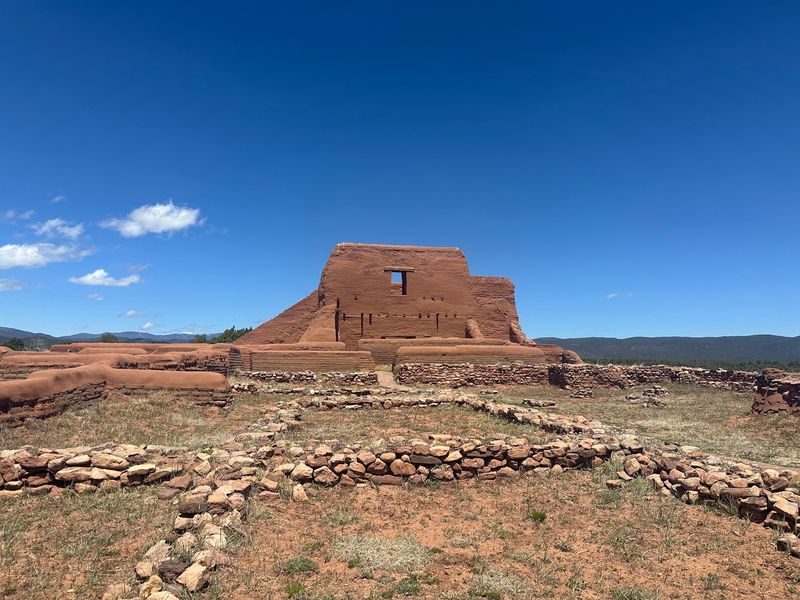
Crumbling mission walls rise from a ridge, framed by mountains and a big open sky. Pecos National Historical Park is located at 1 Peach Dr, Pecos, NM 87552, only about thirty minutes east of Santa Fe.
Long ago, Pecos Pueblo was a busy trading center where Plains tribes and Pueblo people met to swap goods. Later, Spanish missionaries built a large church here.
Today, the remains of the pueblo and the mission church tell the story of these meetings and changes.
The Ancestral Sites Trail is an easy loop that passes the ruins of the pueblo, reconstructed kivas, and the mission church. Signs along the way explain what visitors are looking at.
Some kivas may be open for a peek, depending on conditions.
History here does not stop with the pueblo. The park also protects part of the Santa Fe Trail and the site of the Battle of Glorieta Pass from the Civil War.
Ranger-led tours to some areas run on certain days, so checking the schedule helps.
The visitor center has a small museum and a film that set the scene nicely. The park rarely feels crowded, which makes it a relaxing choice.
To me, the mix of so many chapters in one spot feels like a history lesson that actually sticks. Time leaves its signature everywhere here.
9. Jemez Springs
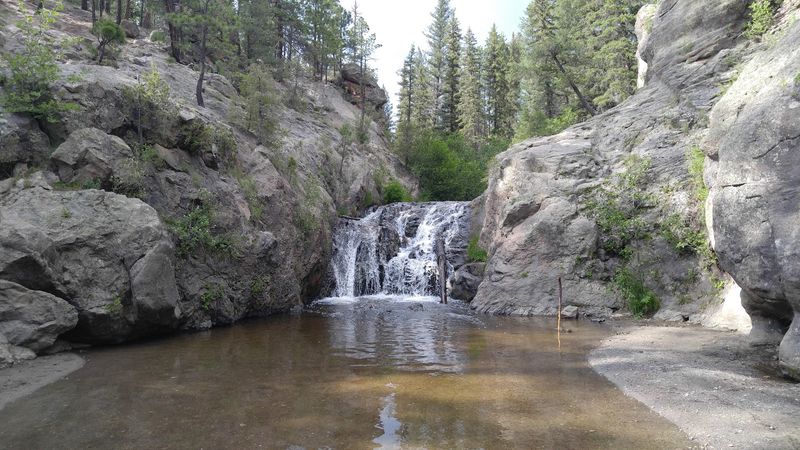
Steam, red rock, and a sleepy main street make this mountain village a cozy escape. Jemez Springs centers around 080 Jemez Springs Plaza, Jemez Springs, NM 87025, about ninety minutes west of Santa Fe through the Jemez Mountains.
Hot springs are the big draw. The historic Jemez Springs Bath House uses natural mineral water, and visitors can book a soak to ease tired muscles after a day of hiking.
Reservations are a smart move, especially on weekends.
The drive along the Jemez Mountain Trail Scenic Byway is just as rewarding. Red cliffs line the road, and the Jemez River runs alongside much of the route.
Soda Dam, a strange mineral formation shaped by spring water, sits just north of town and makes a quick, fun stop.
History fans can visit Jemez Historic Site nearby. It protects the stone ruins of a village and a Spanish mission church.
Signs and a small museum explain the deep roots of the Jemez people in this canyon.
Fall paints the cottonwoods yellow, while winter brings a peaceful quiet. Cell service can be spotty, so downloading maps ahead of time helps.
I think a village with warm water bubbling out of the ground has its priorities straight. Relaxing here comes naturally, no effort required.
10. Madrid
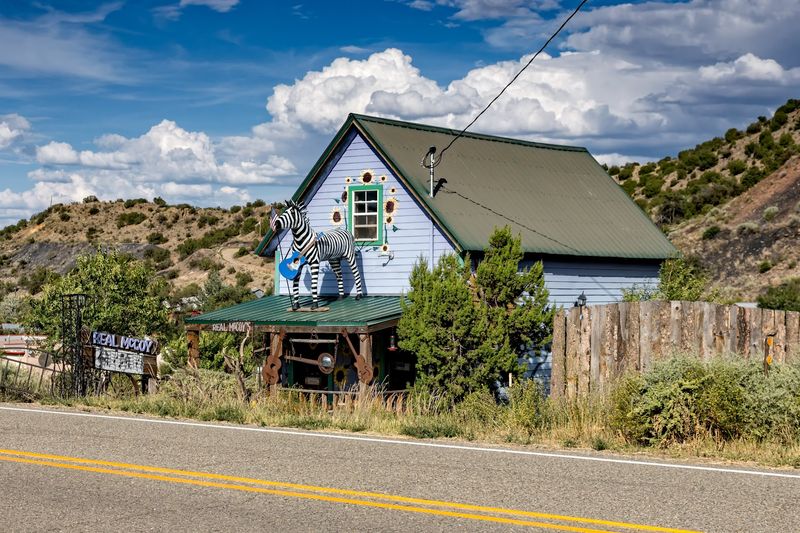
Bright storefronts, funky art, and a laid-back attitude give this former coal town its offbeat charm. Madrid sits along the Turquoise Trail at 2846 NM-14, Madrid, NM 87010, roughly forty minutes south of Santa Fe.
Once a busy coal mining town, Madrid nearly emptied out when the mines closed. Artists later moved in and turned the old miner cabins into galleries, studios, and quirky shops.
Today, the main road is lined with colorful buildings full of handmade jewelry, pottery, and paintings.
Walking is the best way to soak it all in. Each shop has its own personality, and browsing can easily fill a few happy hours.
The Old Coal Town Museum shares stories from the mining days for visitors who want some background.
Movie fans may recognize the town from the comedy film Wild Hogs, which was filmed here. That bit of fame still draws a few curious travelers.
Parking is mostly along the highway, so careful driving and walking matter. Weekends get busier, while weekdays feel slower and more relaxed.
The drive along the Turquoise Trail offers rolling hills and wide desert views that set the mood.
I can’t help admiring a town that reinvented itself with paintbrushes instead of pickaxes. Madrid proves that style never runs out of fuel.
11. Cerrillos Hills State Park
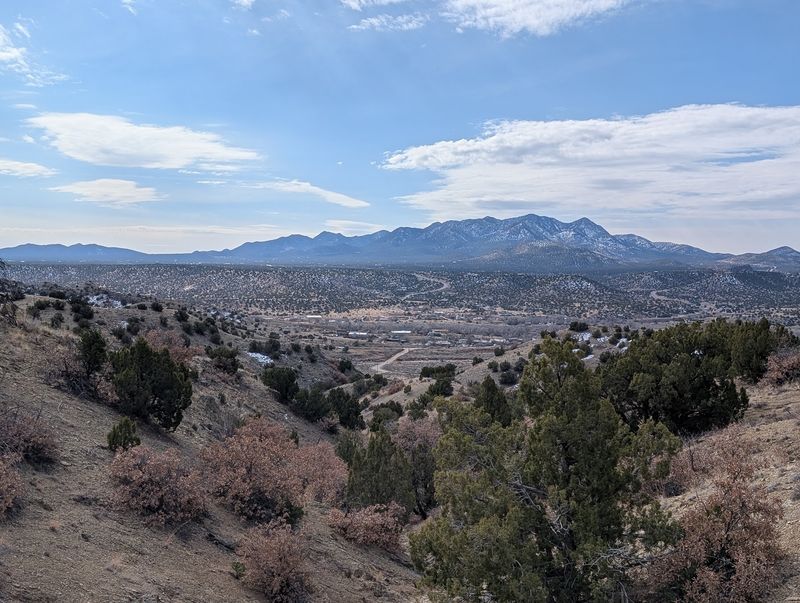
Turquoise was pulled from these dusty hills long before the first Spanish explorers arrived. Cerrillos Hills State Park sits near 37 Main St, Cerrillos, NM 87010, just a short drive from Madrid and about thirty minutes from Santa Fe.
The park protects an area with a deep mining past. Native peoples dug turquoise here for centuries, and later miners searched for silver, lead, and other minerals.
Old mine shafts still dot the landscape, safely fenced off for visitors.
A network of easy to moderate trails winds through rolling hills covered in juniper and piñon. Hikers, mountain bikers, and horseback riders all share the paths.
Signs along the way explain the mining history and point out interesting features.
The views are wide and peaceful. On clear days, distant mountain ranges stretch across the horizon in every direction.
Sunset hikes reward visitors with soft colors spreading over the desert.
Nearby, the tiny village of Cerrillos looks like a set from an old western film, with dirt streets and historic buildings. Exploring both makes a nice pairing with Madrid on the same day.
Shade is limited, so water and sun protection are essential. Rattlesnakes may appear in warm months, so staying on trails is wise.
I love that hills this modest hold such a colorful past. Clearly, these slopes were worth digging into.