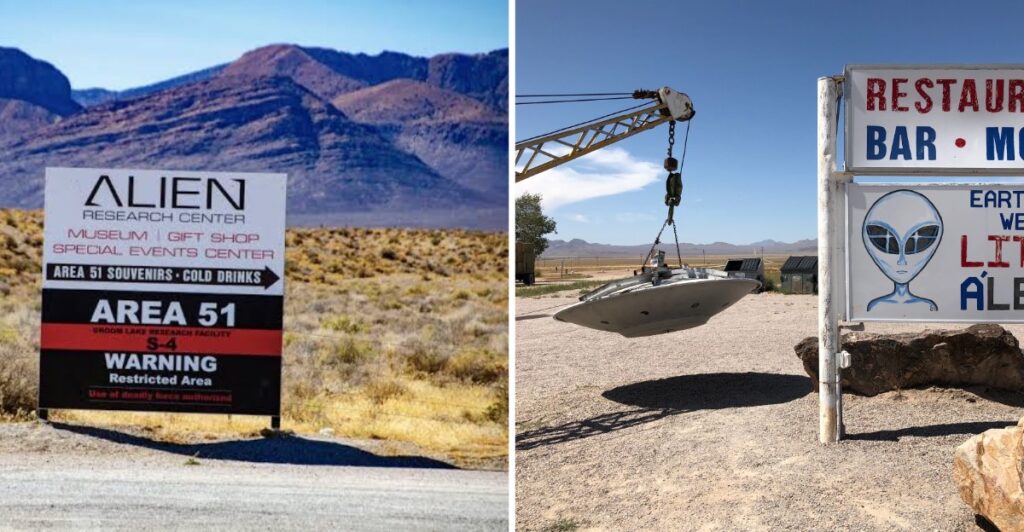
If your highway has an official alien nickname, you are allowed one suspicious glance at the sky.
Maybe two.
This Nevada route has spent decades collecting UFO stories, Area 51 lore, and enough desert mystery to make every distant light suddenly seem worth discussing.
The nickname is official.
The military site nearby is real too, and very much off limits, so keep the adventure on public roads.
There is still plenty to notice without crossing a fence.
Alien-themed landmarks show up along the route, while long stretches of open desert make the road feel even stranger once the towns thin out.
Cell service can disappear.
Gas stations can too.
So fill the tank, bring water, and keep an eye on the horizon.
If something unusual does show up, at least nobody can say you chose the wrong highway.
Nevada Gave The Highway Its Extraterrestrial Name
State Route 375 did not start life with an alien nickname.
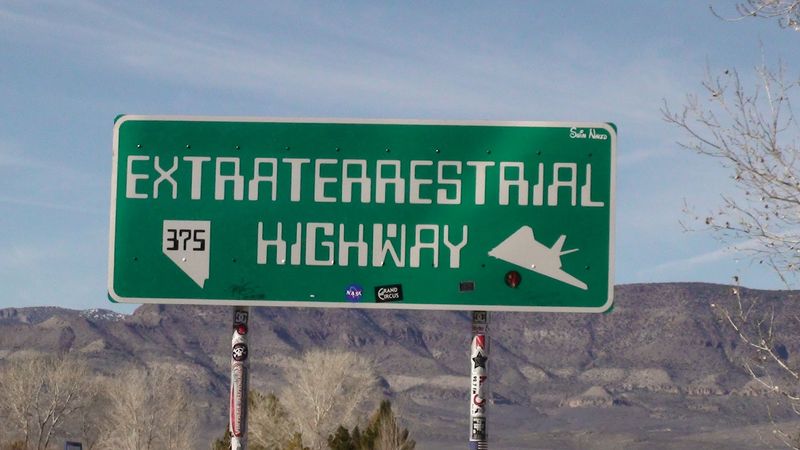
Nevada officially designated the 98-mile stretch between Crystal Springs and Warm Springs as the Extraterrestrial Highway in February 1996.
The Nevada Commission on Tourism chose the name to lean into the region’s unusual mix of remote desert, classified military activity, aircraft testing, and UFO lore.
The road runs through south-central Nevada, not through Area 51 itself. That distinction matters when you start planning the drive.
Near Crystal Springs, an official Extraterrestrial Highway sign marks the beginning of the themed route. The sign has become part of the road-trip ritual, but the highway beyond it is still an ordinary state route with long distances between services.
The landscape does most of the visual work. Broad valleys open between dry mountain ranges, sagebrush fills the lower ground, and traffic can thin quickly.
You do not need to believe anything unusual is overhead to understand why the road picked up its reputation. The combination of empty land, military history, and an official name that invites curiosity is enough to keep the story moving.
The Alien Research Center Sets The Tone
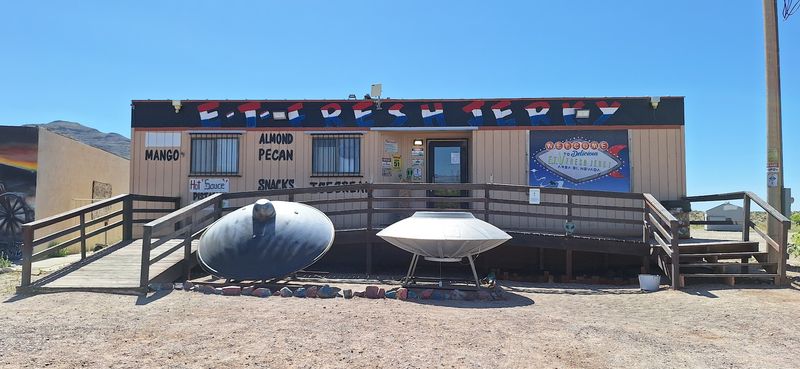
Near the eastern end of the route, the Alien Research Center makes the theme impossible to miss.
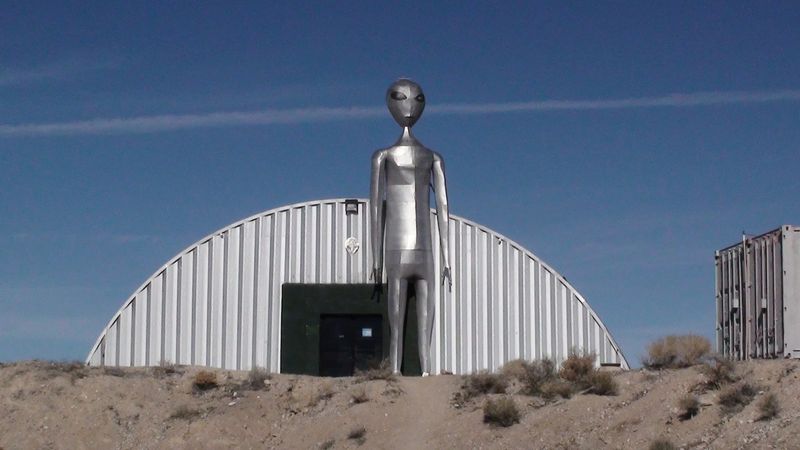
A giant silver alien stands outside a large Quonset-style building, giving the stop a sense of humor before you even reach the door.
Inside, the shop sells alien-themed clothing, mugs, hats, toys, snacks, books, and other souvenirs tied to Area 51 and the Extraterrestrial Highway.
That makes it an easy first stop if you are entering the route from the Crystal Springs side. Browse for a few minutes, take the obvious photo outside, and use the break to make sure the car is ready for the longer desert stretch ahead.
The stop is a gift shop rather than a scientific facility, despite the name. Its role is simpler: it leans into the UFO theme and gives the beginning of the drive a clear landmark.
If you want one souvenir from the route, this is the easiest place to make that decision before the road gets emptier.
Then the silver alien stays behind and the desert starts doing most of the talking.
Ninety-Eight Miles Can Feel Much Longer Out Here
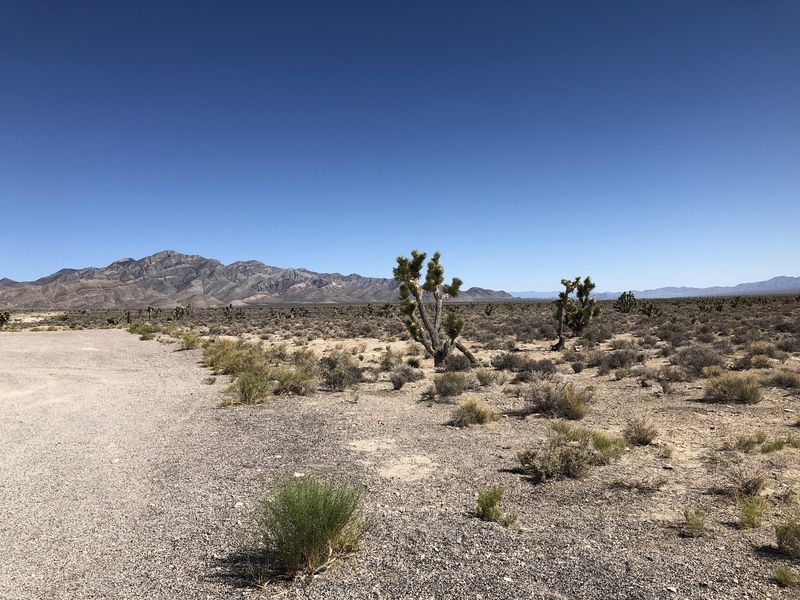
The Extraterrestrial Highway covers 98 miles, but the drive can feel longer because services are limited and settlements are few.
Crystal Springs anchors the eastern end, while Warm Springs marks the western side. Between them, the road crosses open valleys and long stretches where the horizon seems to do more moving than the traffic.
The limited services and long distances make preparation more important than on a typical highway drive.
Fill the fuel tank before committing to the route. Carry drinking water and enough food for the day. Cell service ranges from spotty to nonexistent in parts of the region, so downloaded directions are more useful than assuming a phone will stay connected.
The same open country that makes the road feel isolated also gives it broad night skies. With little nearby light pollution, stars become much more prominent after sunset.
If you stop to look, use a safe pullout rather than the travel lane. Desert darkness arrives quickly, and familiar-looking shoulders can be harder to judge after daylight disappears.
Those distances make fuel, water, downloaded directions, and a little extra time useful parts of the drive.
If you are using the route as a day trip, decide your turnaround point before leaving the more populated highways. The distances between stops can look modest on a map but feel much bigger once services disappear.
Rachel Sits Closest To Area 51
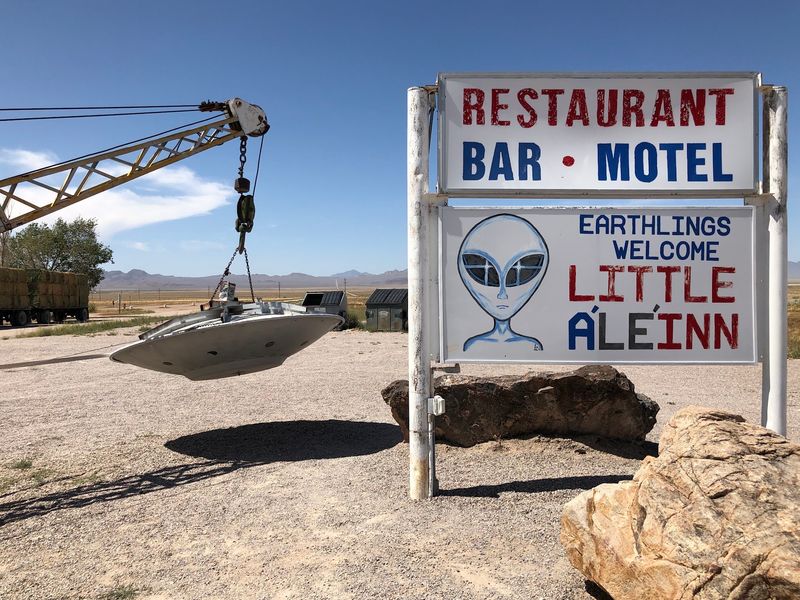
Rachel is the closest community to Area 51 and the main settlement directly along the Extraterrestrial Highway.
It is small enough that the desert still dominates the view, but its connection to UFO culture has made the town a familiar name among people following the Area 51 story.
Rachel developed that identity gradually as curiosity about nearby military activity brought more travelers into the region. Today, alien-themed signs and roadside references make the connection obvious without changing the fact that this remains a real residential community.
Drive slowly through town, stay on public roads, and remember that homes and private land are not part of the attraction.
Rachel also breaks up the long highway with a place to stop, stretch, and reset before continuing west or turning back east.
The town’s location is the important part. Area 51 itself is not open to visitors, so Rachel is about as close as the public road-trip experience gets without crossing into restricted territory.
That keeps the day grounded in what is actually accessible: the highway, the town, the desert, and the stories that have accumulated around all three.
Curiosity can come along. Trespassing cannot.
Area 51 Stays Off Limits
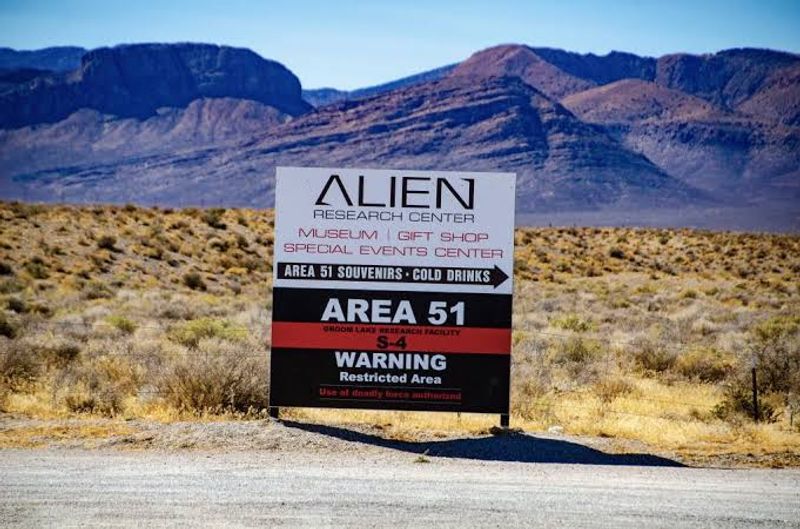
Area 51 sits within the Nevada Test and Training Range, an active and highly restricted military area.
It is not a tourist attraction and cannot be visited by the public. Military boundaries are marked, and travelers need to stay on legal public roads and respect every posted warning.
That rule is the most important piece of trip planning on the entire route.
The history behind the secrecy is real. Area 51 has long been associated with testing advanced aircraft, including programs connected with the U-2 spy plane and other classified aviation work.
The surrounding secrecy helped feed decades of UFO speculation and conspiracy theories.
The public highway lets you travel through the broader region without giving access to the installation itself.
There is no need to test a dirt road simply because it appears to head toward the base. If a route approaches restricted property or posted boundaries, turn around.
You can follow the state highway, stop at public landmarks, and keep the entire trip on legal public roads.
Mystery works better when it does not end with a confrontation at a military boundary.
The Black Mailbox Adds Another Roadside Landmark
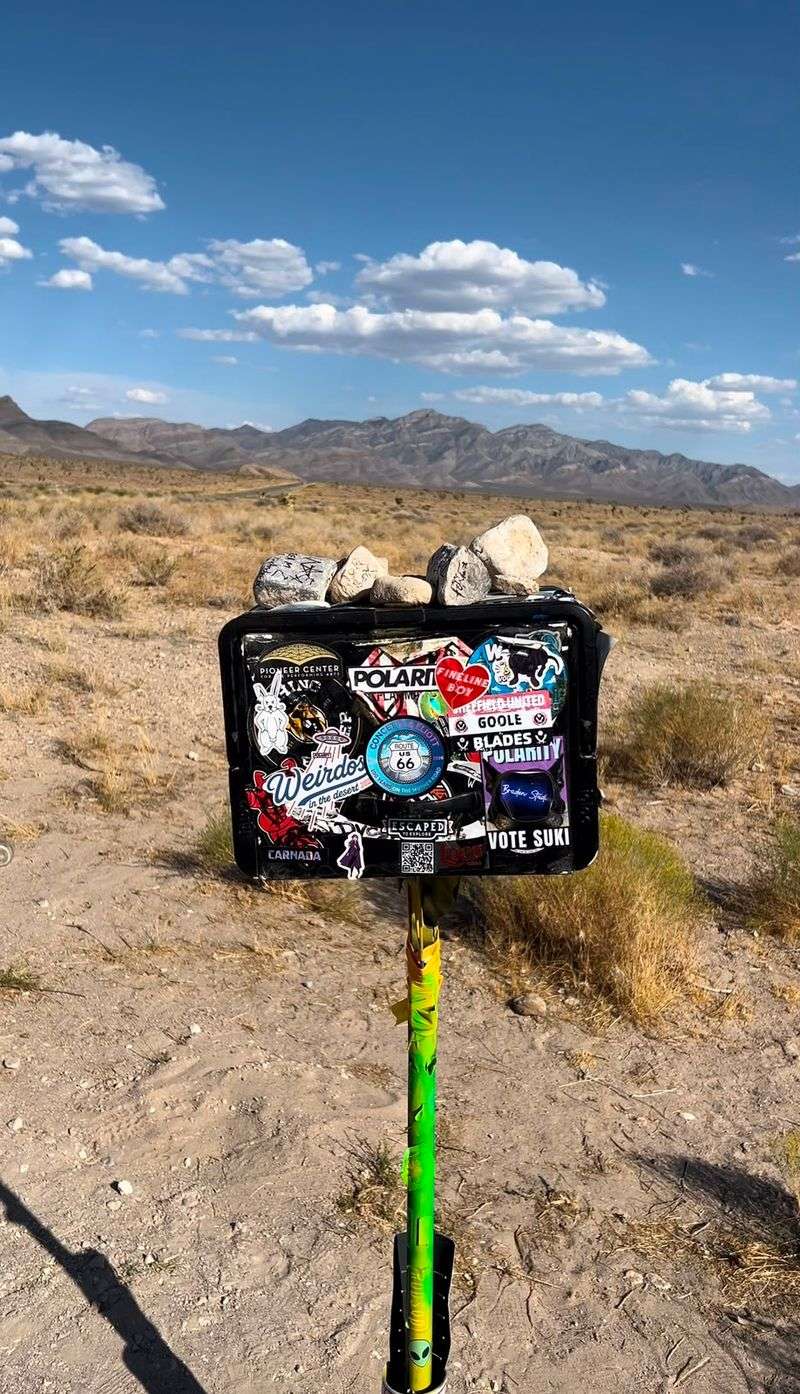
One of the route’s stranger landmarks sits at the intersection of State Route 375 and Mail Box Road.
The Black Mailbox is not the original ranch mailbox that first became associated with UFO watchers in the area. That older mailbox belonged to local rancher Steve Medlin and was eventually moved after repeated vandalism and theft.
A replacement landmark now carries the Black Mailbox name.
Travelers leave notes and messages there, adding another informal layer to the road’s extraterrestrial folklore. The stop is simple, so it works best as a brief pause rather than a destination that needs a schedule of its own.
Farther east, the Alien Research Center is at 100 Extraterrestrial Highway, Hiko, NV 89017. Its giant silver figure makes the location much easier to spot than the mailbox.
The two stops show different sides of the highway’s alien theme. One is a roadside souvenir shop with a giant silver figure, while the other is a simple landmark beside a remote junction.
In between, the desert keeps stretching.
The souvenir stop and the roadside mailbox show two different ways the alien theme has become part of the highway.
Give yourself enough daylight to find pullouts, read roadside signs, and judge unfamiliar intersections comfortably. That small bit of planning matters more here than squeezing in one extra stop.
The Road Keeps The Mystery On The Horizon
The Extraterrestrial Highway never promises that something unexplained will appear in the sky.
What it does offer is a route shaped by real military history, official Nevada branding, wide desert landscapes, and decades of UFO culture. That is enough material for a road trip without inventing anything extra.
Start near Crystal Springs, take the photo at the highway sign, and stop at the giant alien if the doors are open. Continue toward Rachel, give private property plenty of distance, and decide how long the Black Mailbox deserves before moving on.
If sunset catches you on the route, the dark sky can become the final attraction. Stars are easier to notice when towns are scarce and artificial light falls away.
Spring and fall usually bring more comfortable daytime temperatures than the hottest part of summer, but Nevada desert conditions can change quickly. Water, fuel, layers, and a flexible schedule make more sense than chasing a perfect moment.
The point of the drive is not getting closer to a restricted base than anyone else.
It is driving a very real highway through a place where secrecy, aircraft history, desert isolation, and alien folklore have been sharing the same horizon for decades.