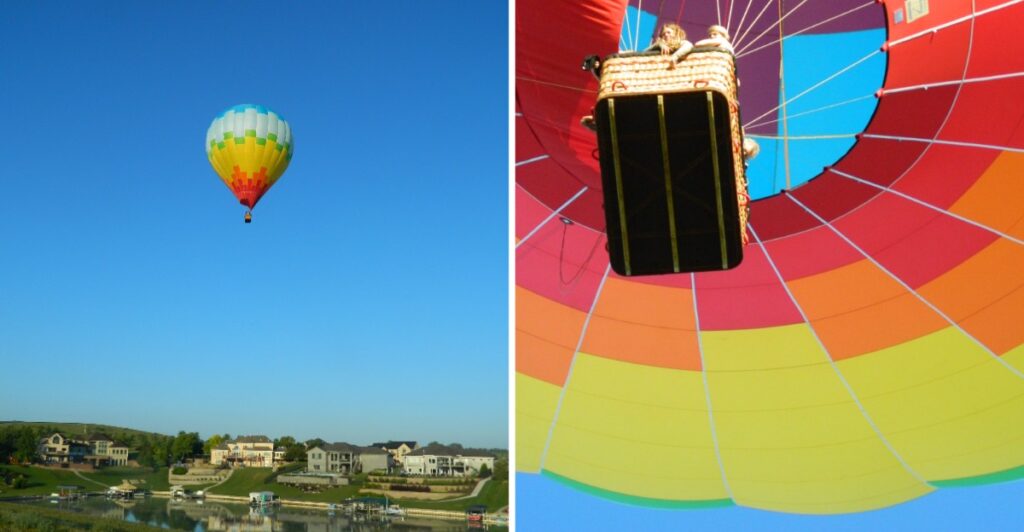
Set the alarm earlier than you normally would.
Trust me, sunrise looks different when you are waiting beside a balloon basket.
Once the burner fires and the ground starts dropping away, the whole morning changes pace.
There is no fixed route overhead.
The pilot follows the wind, which means the view can change quickly and the flight never feels too scripted.
Nebraska looks especially different when you are seeing it from a basket in the sky.
Wear good shoes, dress for the weather, and keep the rest of the morning loose.
You can choose the day.
After that, the sky gets a turn.
Sunrise Flights Start Before The Day Gets Busy
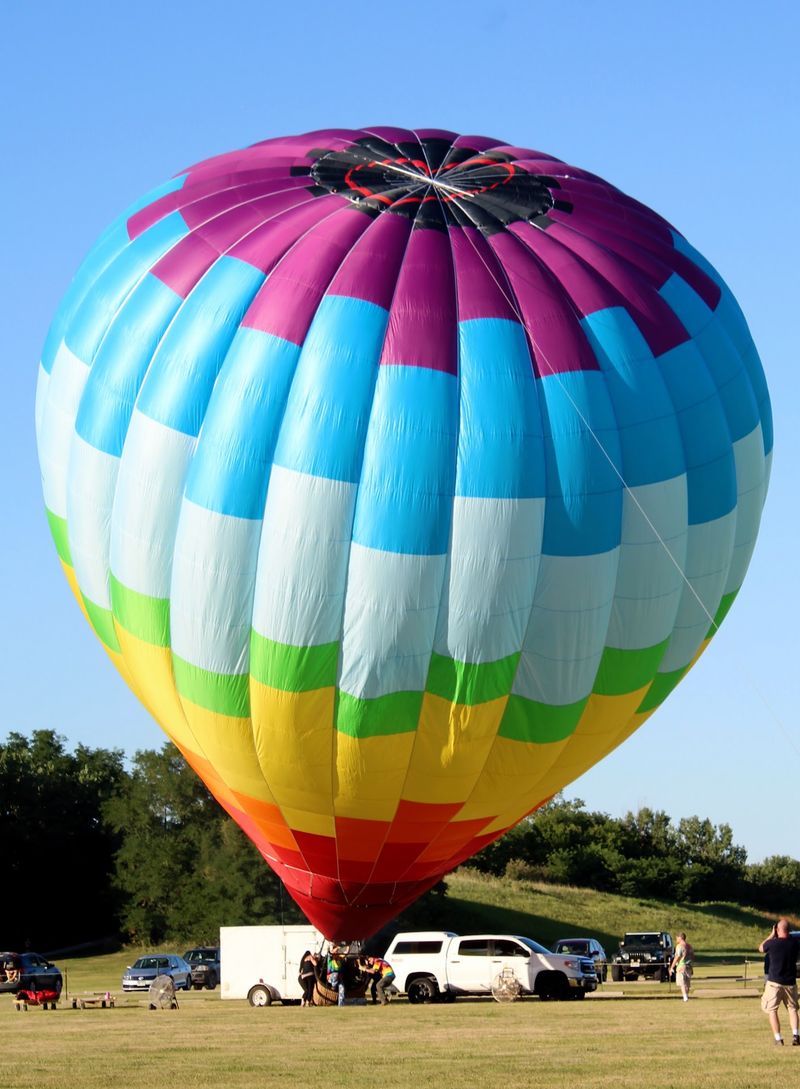
Morning flights usually begin with a meeting time about 15 minutes before sunrise.
Morning departures take advantage of the more stable air that often occurs around sunrise.
The exact launch site is not assigned far in advance. Wind direction and speed determine which open area gives the flight the best combination of safe takeoff, suitable airspace, and possible landing spots.
That means the first part of the morning may begin in one part of the metro area on one day and somewhere else on another.
Comfortable layers, sturdy closed-toe shoes, and longer pants make sense because landing areas can include grass, fields, or uneven ground.
A camera or phone can come along, but keep both hands free when the pilot gives instructions.
Morning light changes quickly, so there is no need to chase one perfect photograph. Look up, look down, and let the route reveal itself a few minutes at a time.
The Wind Determines The Route
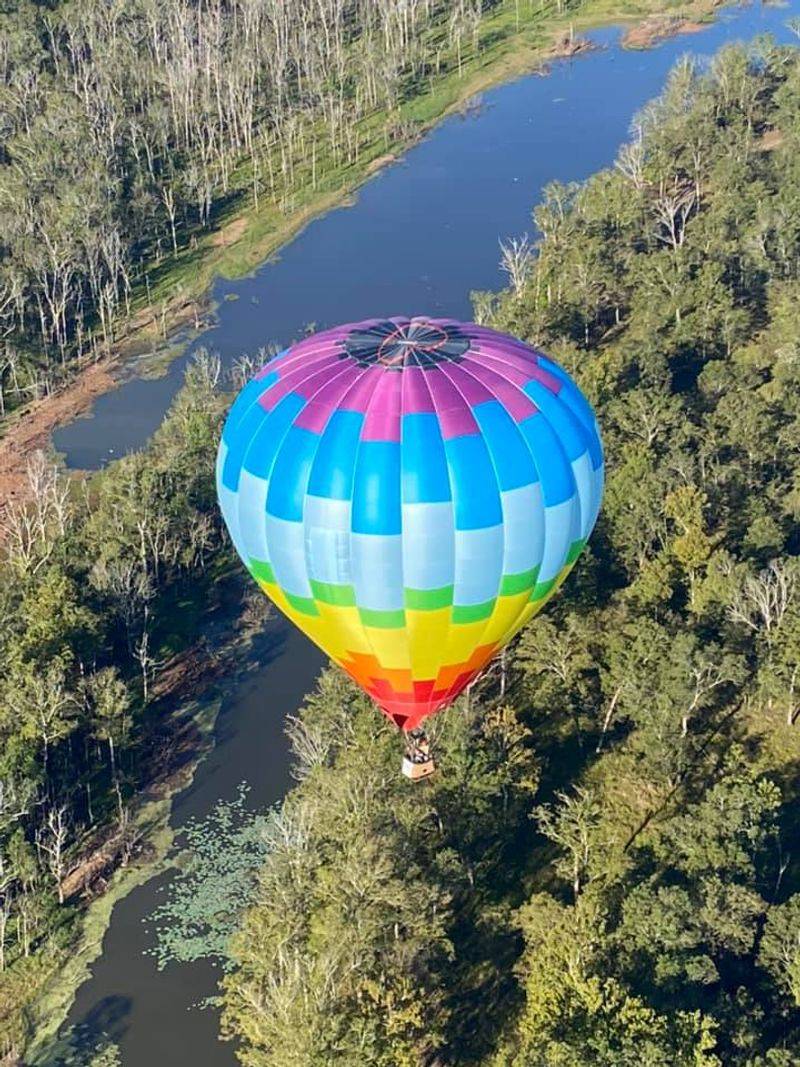
Hot air balloons do not steer like airplanes or helicopters.
The pilot controls altitude by heating or cooling the air inside the envelope. Winds at different heights can move in different directions and at different speeds, so changing altitude helps the pilot select the most useful air current available.
The forecast determines where the crew plans to launch. The landing point remains flexible because the balloon travels with the wind.
That is why several launch locations are used around the greater Omaha area rather than one permanent departure field.
The pilot also avoids routes that would create poor landing options or interfere with major aviation traffic around the metro area.
During the flight, a chase crew follows from the ground and stays in radio contact with the pilot. Once a landing area is selected, the crew heads toward that location to help with the balloon after touchdown.
The full outing takes longer than the airborne portion. Setup, inflation, flight, landing, packing, and the ride back can take roughly two to three hours depending on how far the wind carries the balloon.
Keep the next part of your day loose. Balloon travel follows conditions rather than a fixed timetable.
Omaha And Open Country Can Share The Same Flight
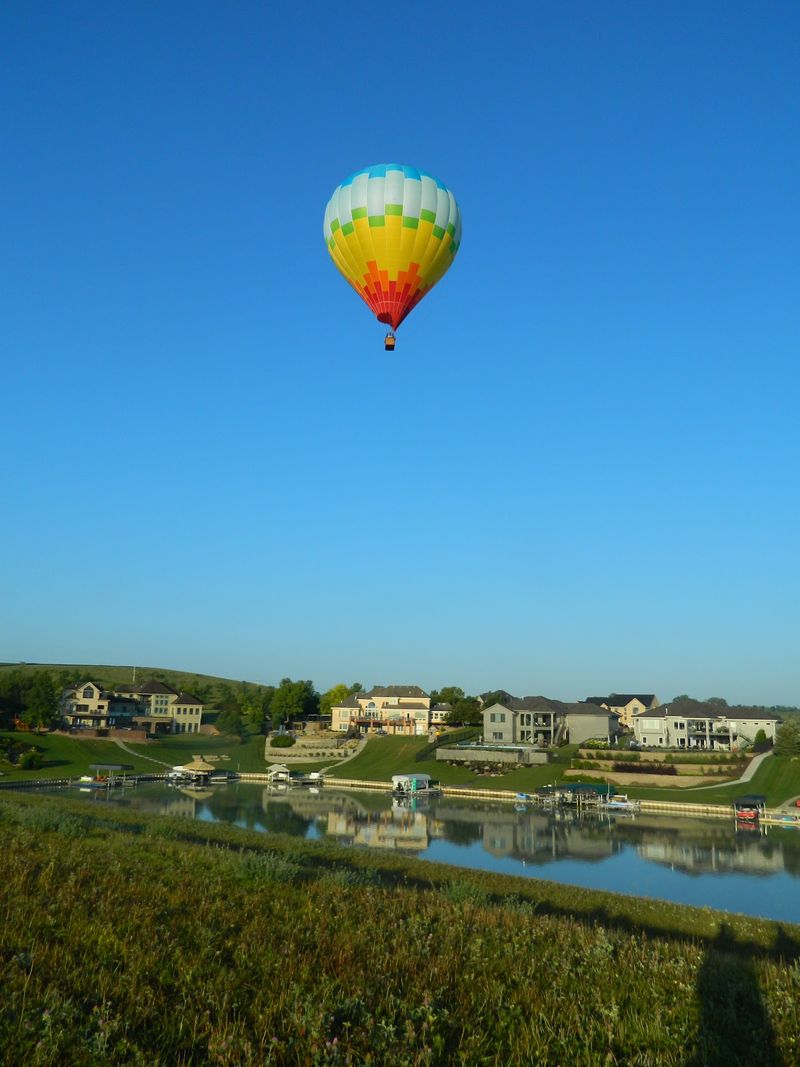
Scenic Wind operates across the greater Omaha and Council Bluffs metro area, including parts of eastern Nebraska and western Iowa.
The exact scenery depends on the launch point and wind direction. Flights may pass near neighborhoods, lakes, river corridors, or farmland before the pilot begins looking for a suitable landing area.
Depending on the wind, the basket may pass over developed areas, waterways, or open countryside.
Past flights have crossed West Omaha, Lake Zorinsky, Nebraska farmland, and other parts of the region, but no single route is guaranteed.
From the basket, streets and fields form larger patterns that are harder to notice from the ground. Roads connect to subdivisions, open land appears between developed areas, and waterways become easier to follow across the landscape.
The balloon moves with the surrounding air, so the sense of speed can be subtle. The burner interrupts the quiet from time to time as the pilot adjusts altitude.
If you know the area, keep an eye out for familiar shapes rather than expecting a checklist of sights. If you are visiting, use the view to get a broader sense of how the city and countryside fit together.
Weather Can Change The Plan Quickly
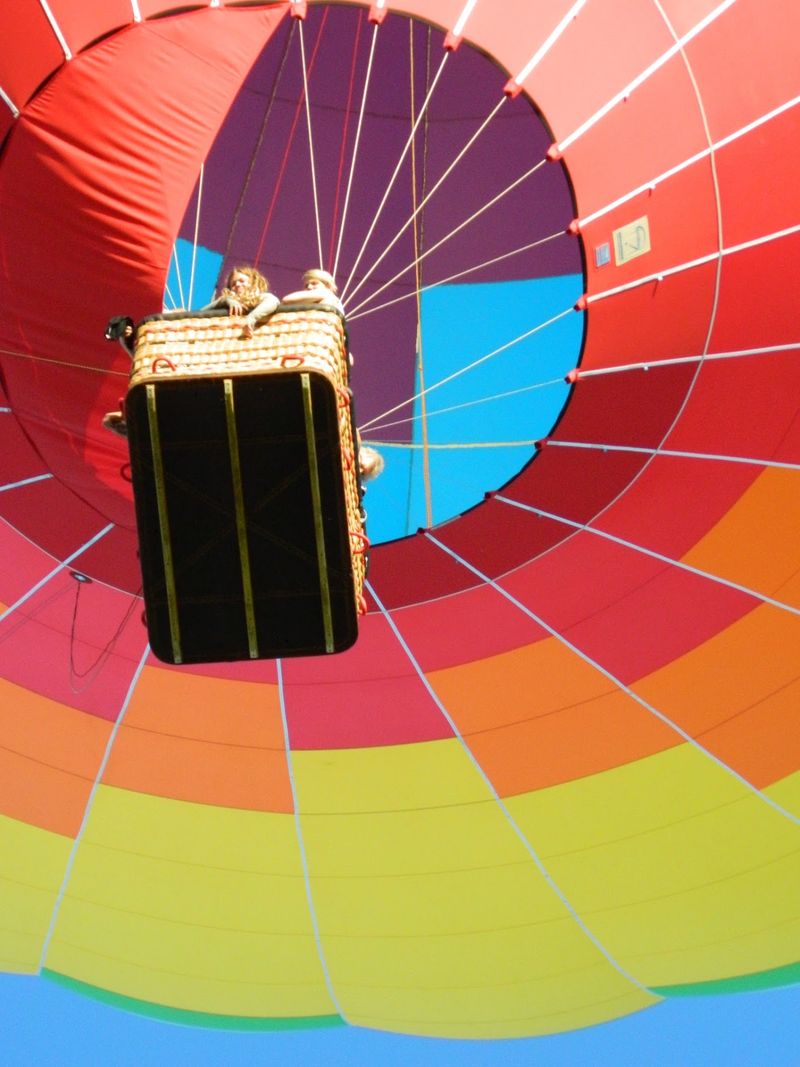
Every Scenic Wind flight is weather dependent.
Postponements are common because safe ballooning depends on suitable surface winds, winds aloft, visibility, and landing conditions.
A clear sky alone is not enough. Ground gusts may be too strong, higher-level winds may increase sharply, or heat and humidity may reduce the amount of weight the balloon can safely carry.
Morning and evening flights are scheduled around the more stable parts of the day. Evening passengers generally meet about two hours before sunset, while morning passengers usually meet shortly before sunrise.
The main seasonal schedule currently runs from late March through September. Weekend flights are typical from late March through May, daily flights are offered in June and July, and weekend service returns in August and September.
Off-season flights may be available depending on conditions.
Because postponements are part of balloon travel, building flexibility into your plans helps. Booking backup dates can make rescheduling easier when weather prevents the original flight.
Avoid placing the flight immediately before a hard departure time or the final morning of a tightly packed trip. A weather change can move the plan to another day with little warning.
The Pilot Has Decades Of Ballooning Experience
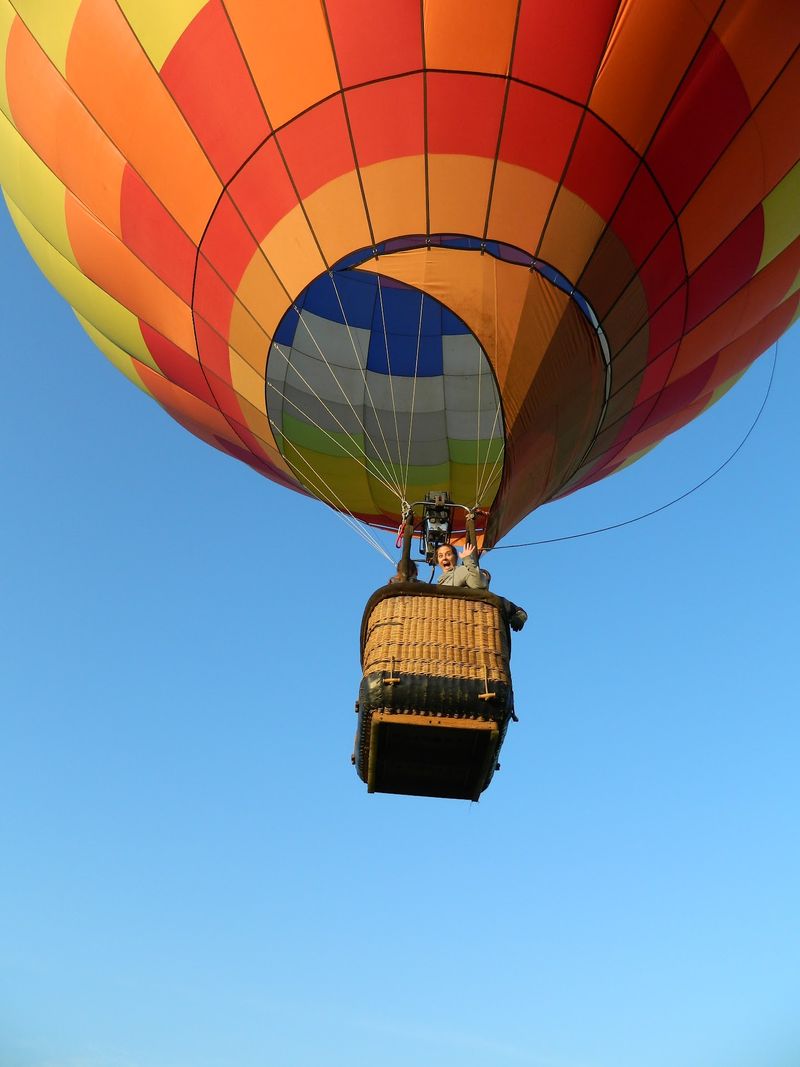
Owner and pilot Steve Lacroix first became involved with hot air ballooning in 1989 after helping with flights in California.
He spent years crewing for other pilots before becoming a pilot himself in 2003. Further training later led to his FAA commercial pilot certification.
Before and during each flight, the pilot monitors weather, wind layers, airspace, passenger weight, and potential landing areas.
Before launch, weather forecasts, wind direction, possible landing areas, nearby airspace, passenger weight, and ground conditions all factor into the decision to fly.
During the ride, the pilot watches altitude and wind layers while continuing to evaluate possible landing areas ahead.
The balloon itself is also regulated as an aircraft. Scenic Wind’s balloons are FAA registered and receive annual inspections for airworthiness.
Passengers sign waivers before flying and receive instructions for boarding, flight, and landing.
Landings vary with terrain and wind. Some are very gentle, while others can include a bump or brief drag before the basket stops.
Listen closely during the final approach and follow the pilot’s instructions rather than preparing for landing your own way.
The Largest Basket Has A Door For Easier Entry
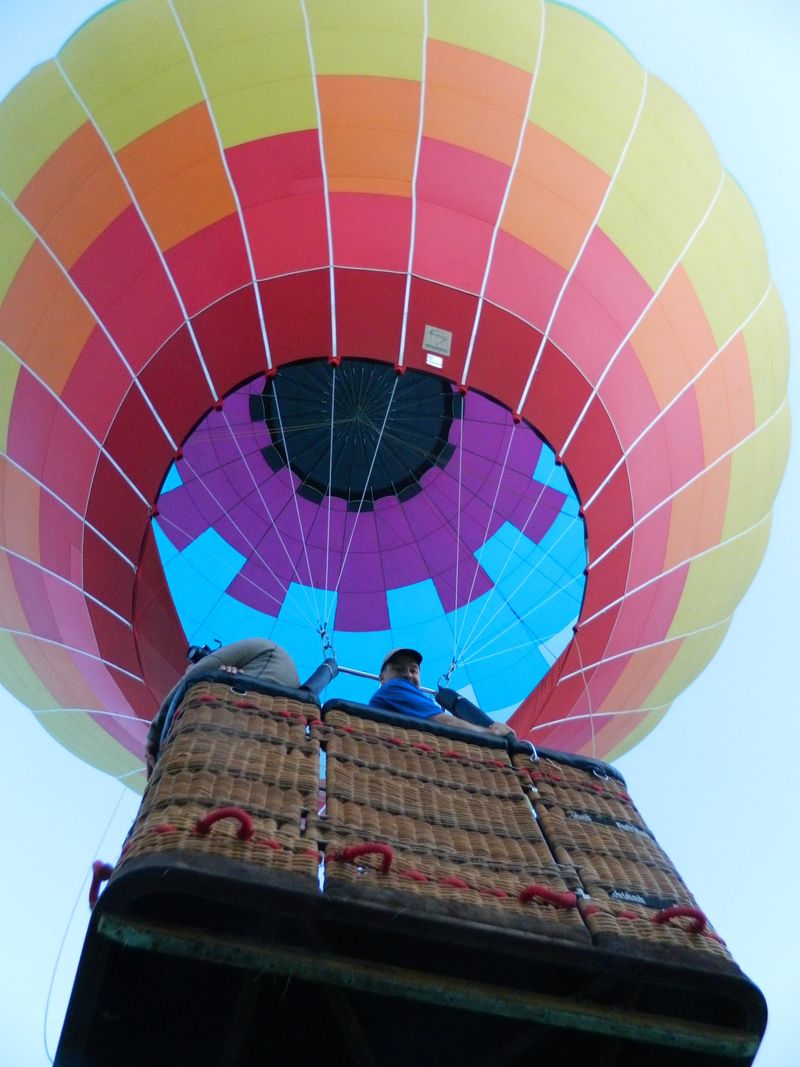
Scenic Wind currently operates two balloons, including Celebrate Too, the larger of the pair.
Celebrate Too has a 142,000-cubic-foot envelope and a basket rated for seven passengers plus the pilot. The basket includes a door, which allows passengers to step inside rather than climb over the basket wall.
Capacity can change with temperature because warmer outside air reduces how much weight the balloon can lift safely. On hotter days, the pilot may carry fewer passengers than the basket’s maximum rating.
Flights are shared rather than automatically private, so the group size depends on bookings, conditions, and weight limits.
The business address is 14411 Hascall Cir, Omaha, NE 68144. Launches do not necessarily take place there because the actual launch location is selected according to forecast winds and suitable landing options.
Passengers receive the planned meeting location closer to flight time.
The confirmed launch location, rather than the business address, is where passengers meet for the flight.
Once the launch site is confirmed, arrive on time, wear the recommended footwear, and be ready for the crew to adjust the plan if conditions change.
Every Flight Ends Somewhere Different
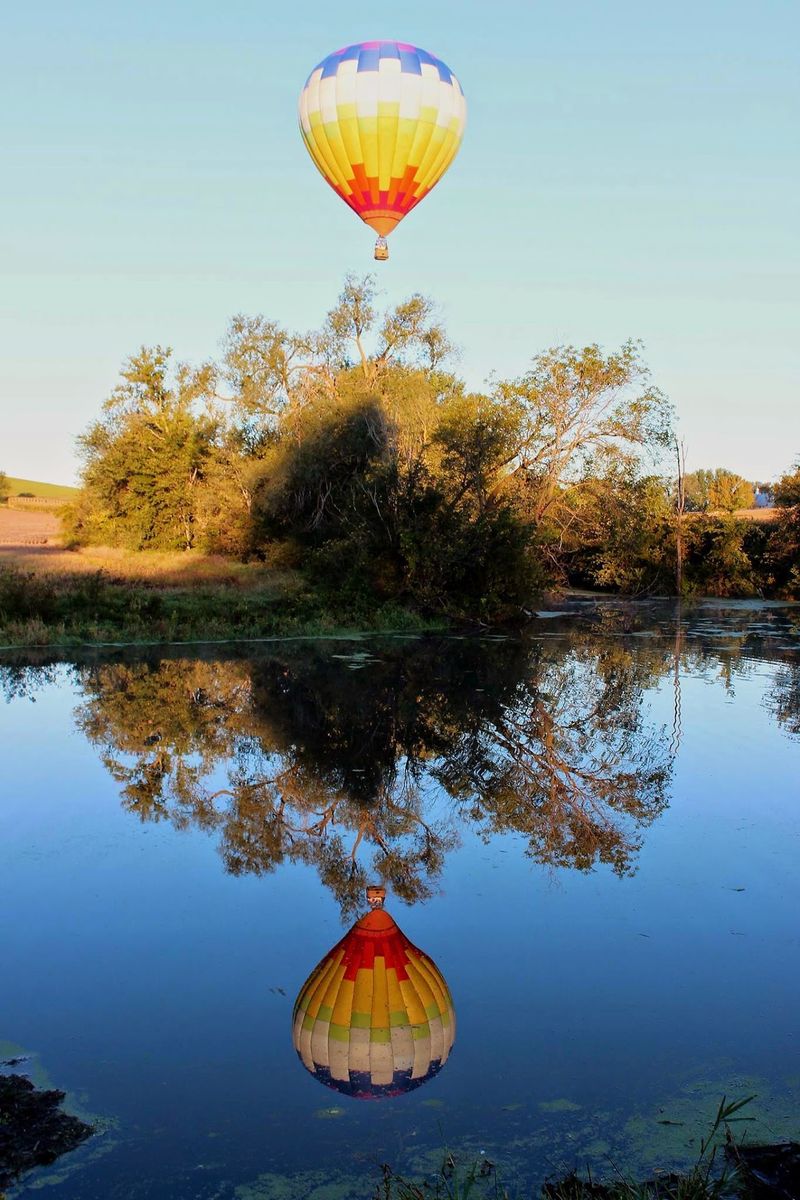
A balloon flight begins with a plan but not with a fixed endpoint.
The pilot knows the general wind direction before takeoff, but the final landing area is selected during the flight as conditions develop.
The chase crew follows from the ground and meets the balloon after landing. The crew then helps deflate and pack the envelope before passengers are transported back toward the launch area.
That full process is part of why the outing can take two to three hours even when the actual flight is much shorter.
If you are booking for a particular date, schedule early. Reservations can fill well before the end of the flying season, and postponed passengers may need later dates.
Children can fly if they meet the current age and height requirements, and everyone should be prepared to stand in the basket for the duration of the flight.
Bring a water bottle in a spill-resistant container, wear sturdy shoes, and avoid building the rest of the day around an exact landing time.
The scenery may change, the route may change, and the landing spot almost certainly will.
That unpredictability is built into ballooning, while the practical decisions stay simple: watch the weather, follow the pilot, and let the wind decide which part of the Omaha and Council Bluffs area you see from above.