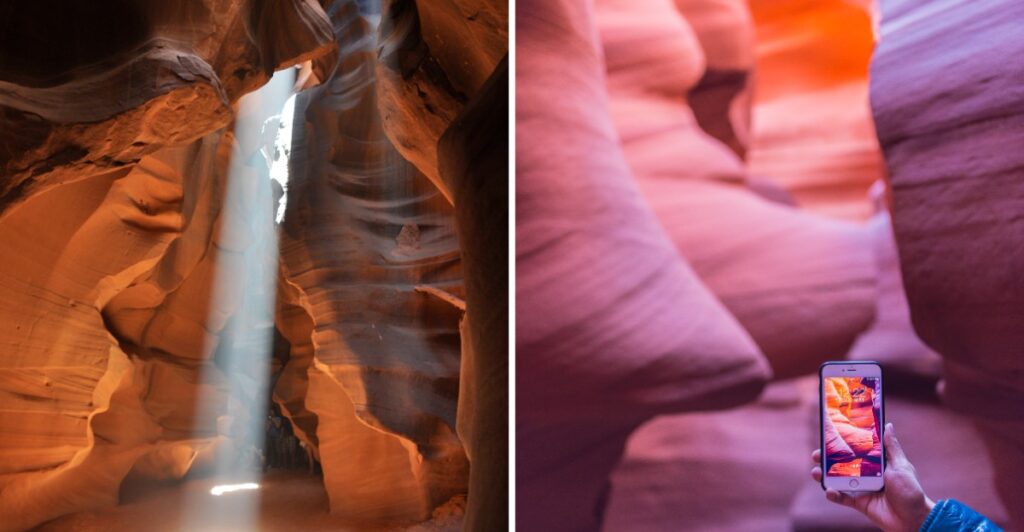
If sunlight could pick a stage, it would probably choose this canyon.
The walls are dramatic enough on their own.
Then the light slips through.
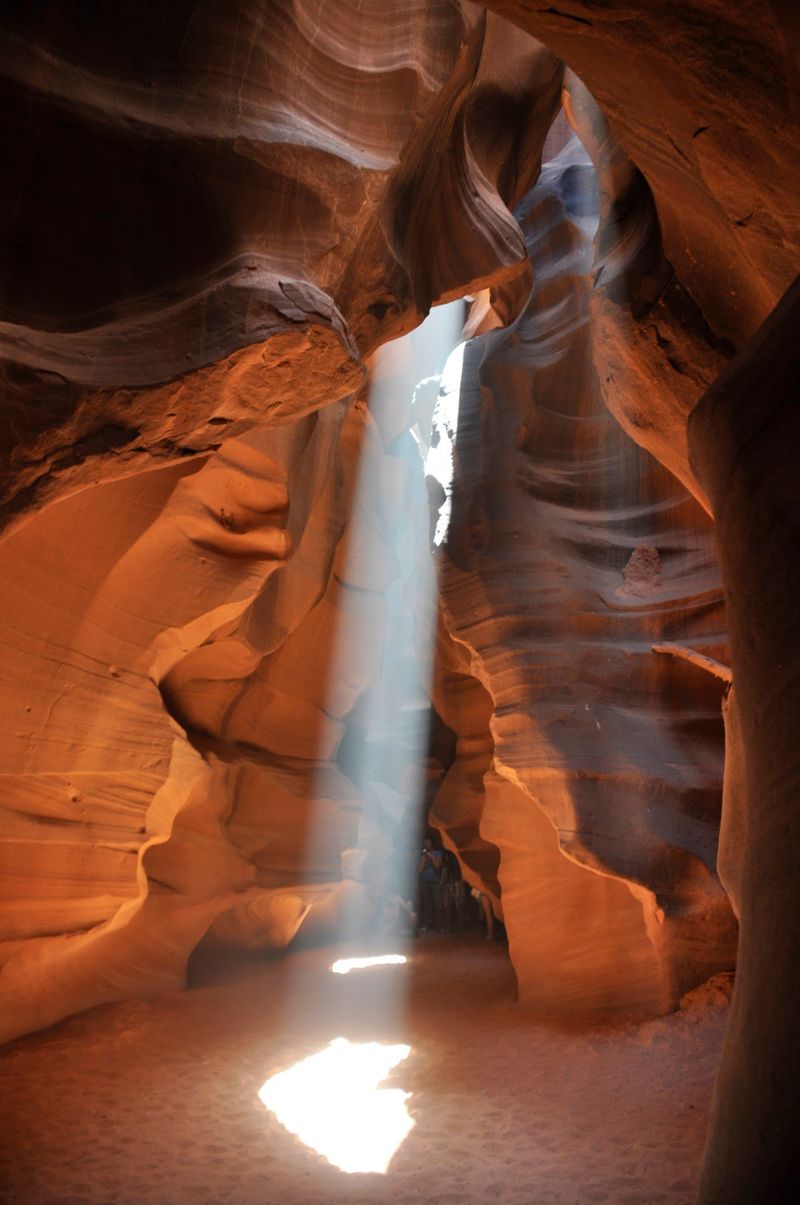
Orange deepens. Reds warm up. And if the timing cooperates, a bright shaft of sun cuts through and changes the whole mood.
This corner of Arizona does not give up the experience casually, though.
The canyon sits on Navajo Nation land and can only be visited with an authorized guide. Even its name hints at the forces that shaped these walls long before cameras started chasing the light.
Timing matters if you are hoping to catch the canyon at its most dramatic.
So, book the tour and let the light decide what kind of show you get.
Upper Antelope Canyon Can Glow Brightest Around Midday
Midday is the period most closely associated with Upper Antelope Canyon’s famous light beams. When the sun climbs high enough, narrow openings above can send concentrated shafts of light into the canyon.
The effect is seasonal rather than constant. Clear, sunny days from roughly April through September offer the strongest chance of seeing beams, with the most favorable window generally centered around late morning and midday.
Even then, nothing is guaranteed. Clouds can soften the light quickly, and the sun’s angle changes from month to month. A beam that reaches deep into the canyon in midsummer may look shorter or weaker near the edges of the season.
If the beams are the main reason for your visit, choose a departure near midday.
Do not write off an earlier or later tour, though. Upper Antelope Canyon changes color throughout the day as reflected light moves across the walls.
The practical choice is whether you care most about chasing the strongest chance of a light beam or seeing the canyon at a time that works better for the rest of your Page itinerary.
Narrow Sandstone Walls Shift From Gold To Orange And Pink
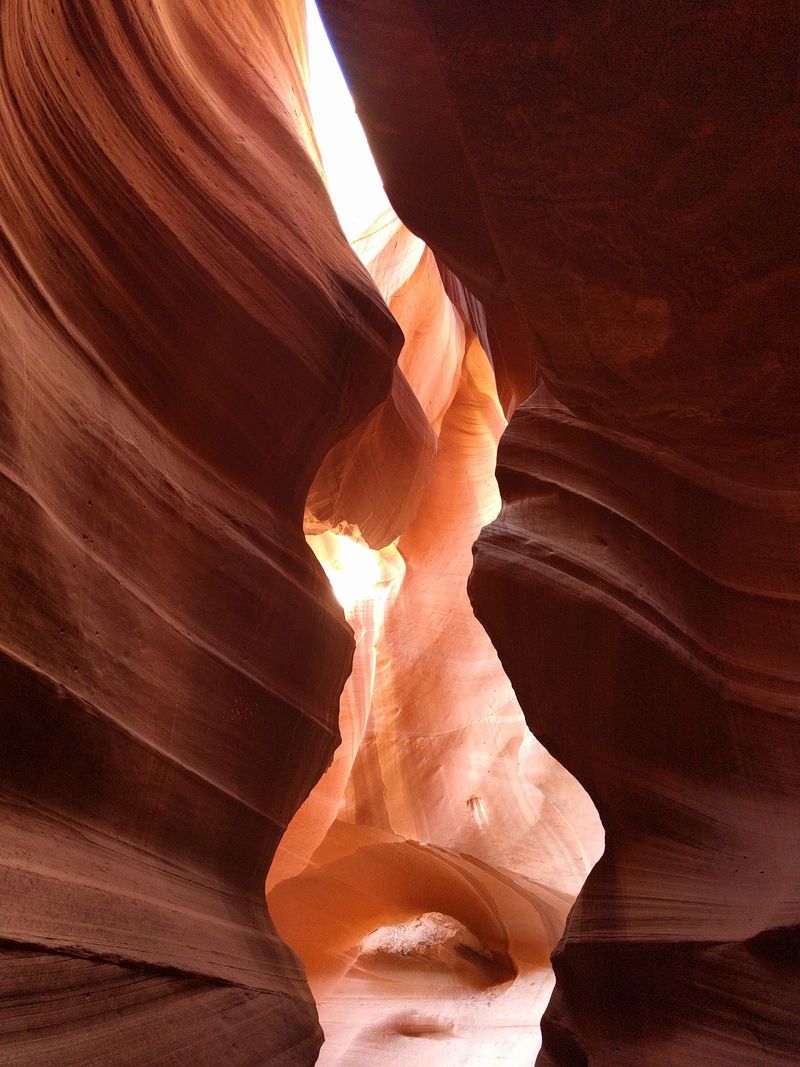
Upper Antelope Canyon is a slot canyon, which means its depth is far greater than the width of many passages through it. The narrow shape limits direct sunlight and creates the reflected glow associated with the canyon.
Light enters from above, strikes the sandstone, and bounces across curved surfaces before reaching deeper sections. That reflected light can shift the walls through gold, orange, red, and pink tones depending on the sun angle and your position.
The rock itself adds another layer. Navajo Sandstone formed from ancient windblown dunes, and its cross-bedded layers create sweeping lines through the canyon walls.
Upper Antelope Canyon sits at roughly 4,000 feet in elevation, and the canyon walls rise about 660 feet above the streambed. Its broader floor gives the upper canyon an A-shaped profile, with more room at the bottom than in some narrower slot canyons.
For photography, avoid spending the entire tour looking through a screen. Give your eyes time to adjust between bright openings and darker passages before deciding where to point the camera.
Small changes in position can alter the color dramatically. Step a little farther along the passage, look upward, and the same wall may appear warmer or cooler than it did moments earlier.
Spring And Summer Offer The Strongest Light-Beam Chances
The strongest light-beam season generally runs from spring through summer and into early fall. April through September is a useful planning range, although the effect changes across those months.
The reason is simple geometry. The higher the sun climbs, the more directly sunlight can enter the narrow opening above the canyon.
Around the middle of summer, the sun reaches a higher path across the sky, increasing the chance that light will penetrate farther into the slot around midday. Near the start or end of the season, beams may be shorter or appear for less time.
Winter brings a different experience. The sun stays lower, so the famous shafts are much less likely to reach deep into the canyon, but reflected light still creates changing colors along the walls.
Weather matters just as much as the calendar. Cloud cover can reduce or eliminate visible beams even during the strongest season.
Summer also overlaps with the Southwest monsoon season. Storms can produce dangerous flash floods, and canyon access may close when conditions are unsafe.
Build some flexibility into the trip if Upper Antelope Canyon is a priority. A backup day gives you more room when weather interrupts the original plan.
Entry Requires An Authorized Navajo Guided Tour
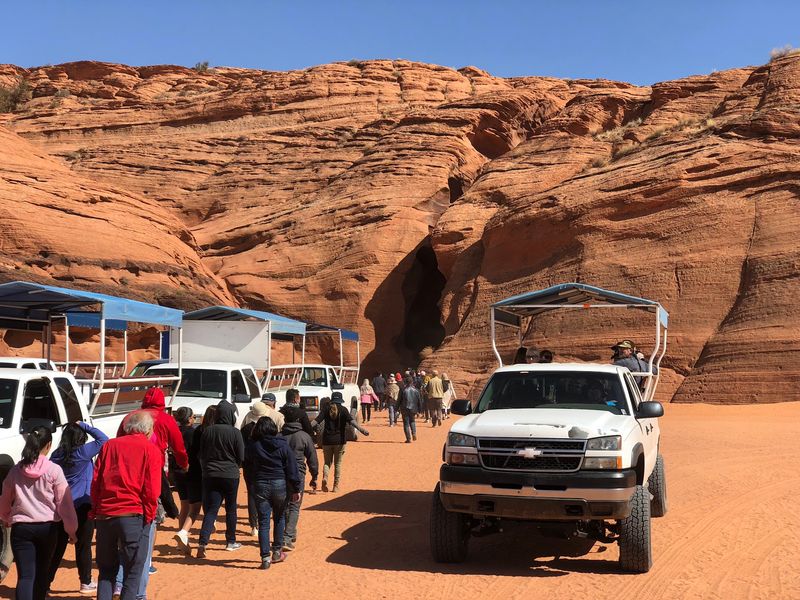
Upper Antelope Canyon cannot be visited independently. Entry requires an authorized guided tour through a permitted Navajo Nation tour operator.
Several authorized companies serve the upper canyon, and check-in locations, departure times, transportation arrangements, prices, and individual tour rules can differ.
That makes your booking confirmation important. Do not assume that another company’s office or departure point is the right place for your tour.
The Navajo name for Upper Antelope Canyon is Tse’bighanilini, meaning “the place where water runs through rocks.” The canyon is within the LeChee Chapter of the Navajo Nation and is part of Lake Powell Navajo Tribal Park.
A guided visit also keeps movement through the narrow canyon organized. Follow your guide’s instructions, stay with the group, and respect any rules covering photography, bags, equipment, and where you may stand.
Tours are not simply a way to reach the canyon. They are the required form of access to a protected landscape on Navajo Nation land.
Listen as well as look. The guide may provide cultural, historical, safety, or geological context that is easy to miss if all your attention stays on the next photograph.
Water And Sandstone Created The Canyon’s Curving Walls
Water shaped the narrow passage you walk through today.
Slot canyons develop as flowing water exploits cracks and weak points in rock. During flash floods, fast-moving water carries sand, sediment, and debris through tight channels, gradually enlarging and reshaping them.
Upper Antelope Canyon is carved into Navajo Sandstone, a rock unit formed from ancient windblown sand dunes. The sweeping layers visible in the walls preserve traces of those dune deposits long after they hardened into stone.
The smooth curves can make the rock look almost fluid, but the process that created them is powerful rather than gentle. Flash floods remain a real hazard in slot canyons.
Rain does not need to fall directly overhead for danger to develop. Water from storms elsewhere in a drainage can move rapidly into a narrow canyon.
That is why bad weather can lead to closures even when a tour was booked well in advance. Treat a weather cancellation as a safety decision, not an inconvenience to work around.
Inside the canyon, avoid scratching, carving, or climbing on the sandstone. Stay on the route your guide uses and let the walls remain exactly where they are.
The Colors Keep Changing Even When No Beam Appears
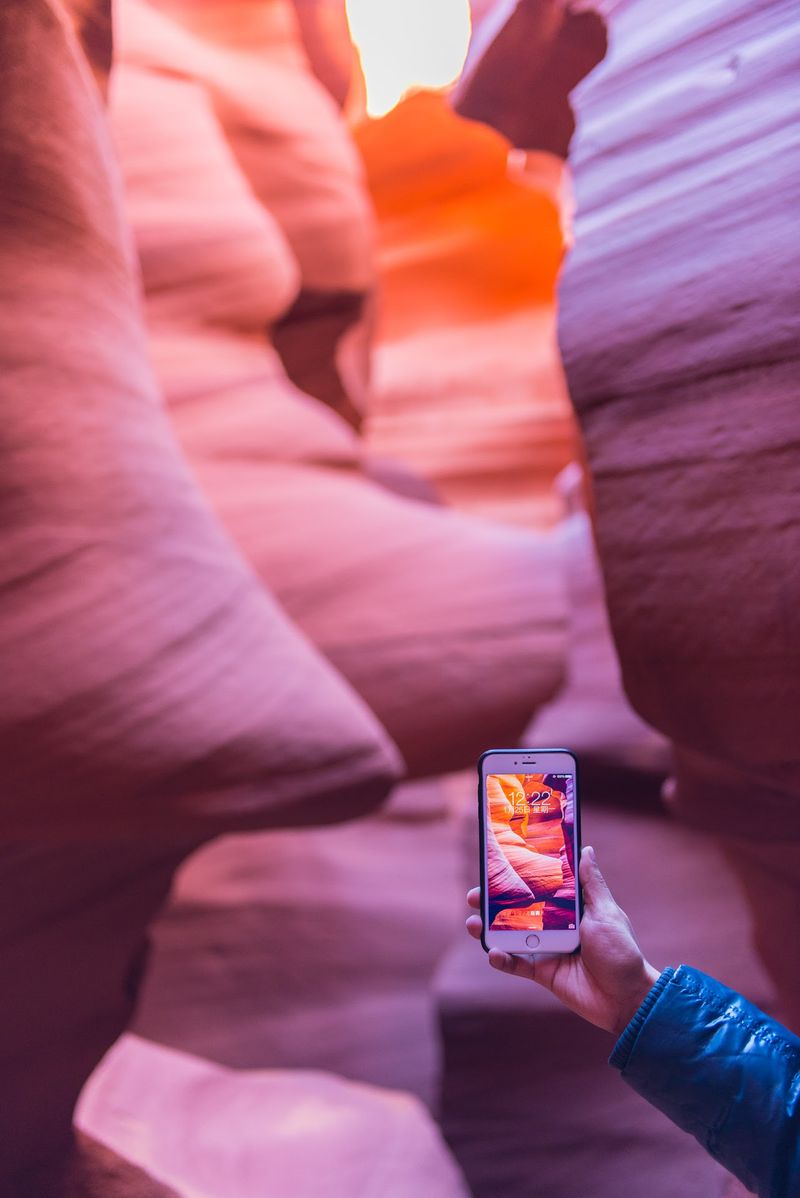
A visible shaft of sunlight is only one version of Upper Antelope Canyon.
Earlier in the morning, later in the afternoon, during winter, or under softer skies, reflected light still moves across the sandstone. Instead of one bright column, you may notice broader areas of amber, copper, rust, rose, or deeper shadow.
That can make photography a little different too. Strong midday beams create dramatic contrast between bright light and dark canyon walls, while softer illumination can reveal more detail across a wider part of the frame.
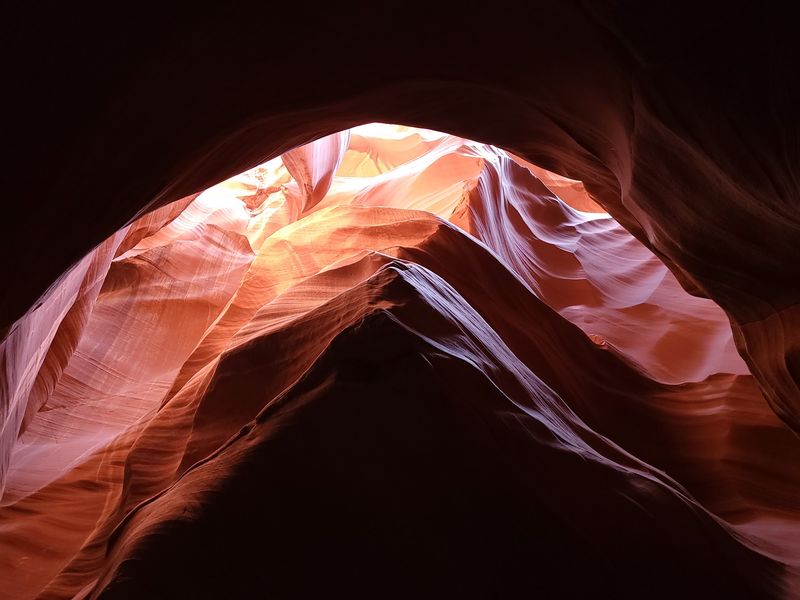
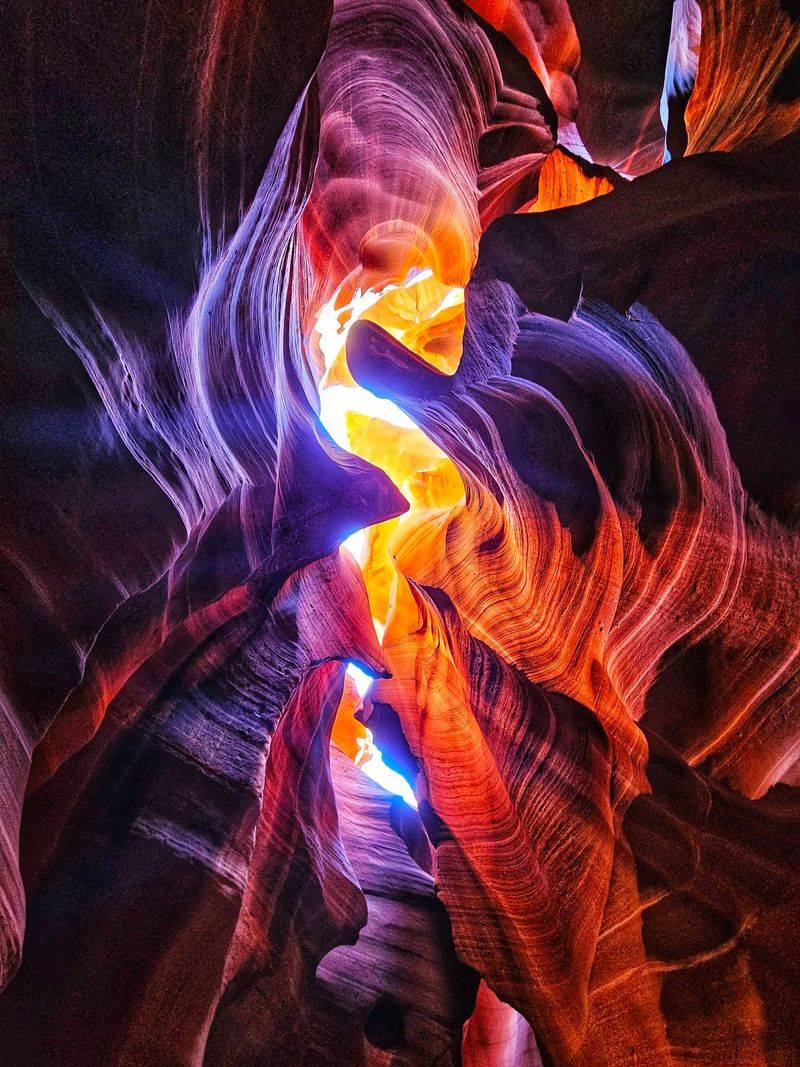
Try looking straight up occasionally. The narrow strip of sky between twisting walls shows just how tight the slot becomes above you.
Then look back toward the lower curves. Layers that appeared orange from one direction may shift toward red or brown as your angle changes.
Avoid treating the tour as a hunt for one exact photograph. The light is always moving, and no operator can control cloud cover or the sun.
Without a visible beam, reflected light still reveals the canyon’s shapes, cross-bedded sandstone, narrow passages, and shifting color.
What To Know Before Visiting
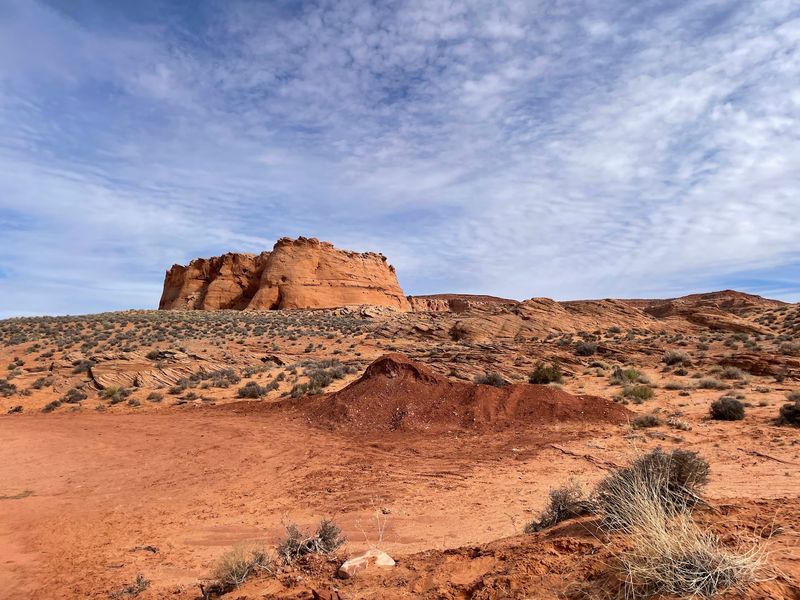
Upper Antelope Canyon is about three miles east of Page, near the junction of Arizona Highway 98 and Navajo Road 22B.
You will still need to follow the directions supplied by your authorized tour operator rather than driving independently to the canyon for entry.
Check-in locations vary, so read your confirmation carefully and arrive by the required time. Check the time listed on your booking confirmation carefully, since your operator’s stated check-in time controls your tour.
Wear comfortable shoes that can handle sand and uneven ground. Upper Antelope is generally easier to walk through than narrower slot canyons, but tour routes and exit arrangements can include stairs or raised walkways.
Bring water and dress for desert conditions before and after the canyon portion. Dust can also become noticeable when wind moves sand through the area.
The Lake Powell Navajo Tribal Park office in Page is at 337 N. Navajo Drive, Page, AZ 86040. That is not a universal tour check-in point, so use your booking instructions for the actual departure location.
Weather can change access quickly, particularly during the summer monsoon season. Check conditions before leaving for the tour and follow cancellation or rescheduling instructions if the canyon closes.
For the simplest visit, reserve first, confirm the exact meeting point and time, travel light, and arrive ready to follow your guide. Once inside, look up often. The light rarely stays the same for long.