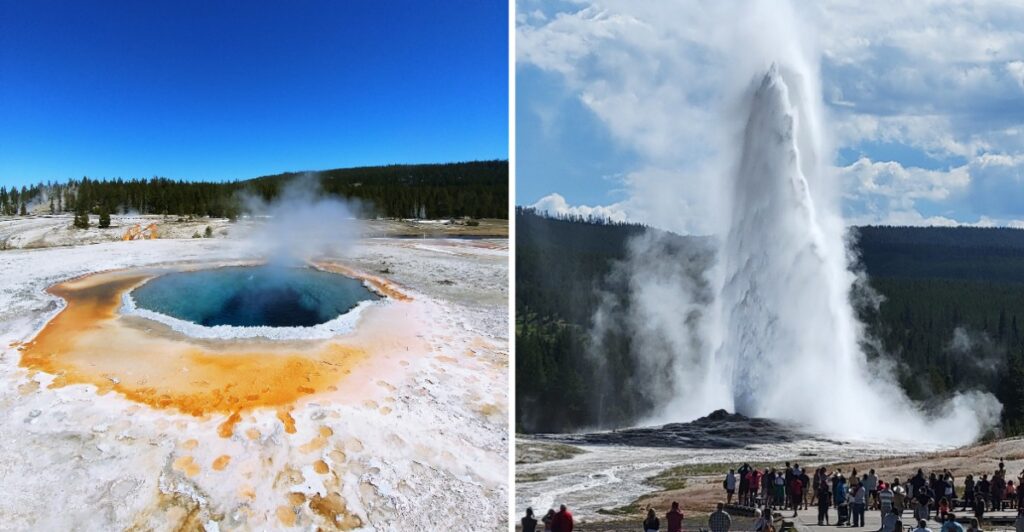
This geyser has a reputation for being punctual.
That does not mean it wears a watch.
The eruptions follow a rhythm, but not an exact appointment. Sometimes the wait stretches longer than expected, which only makes everyone stare at the ground a little harder.
Then the steam thickens.
That is your cue.
A few minutes later, boiling water is shooting into the Wyoming sky and the waiting suddenly feels very reasonable.
There is plenty nearby to keep you occupied in the meantime. Boardwalks pass steaming ground, bubbling pools, and other geothermal surprises.
Keep an eye on the predicted eruption time, but do not treat it like a dinner reservation.
This geyser may be famous for consistency, but it still prefers a dramatic entrance.
A Familiar Landmark In Yellowstone’s Upper Geyser Basin
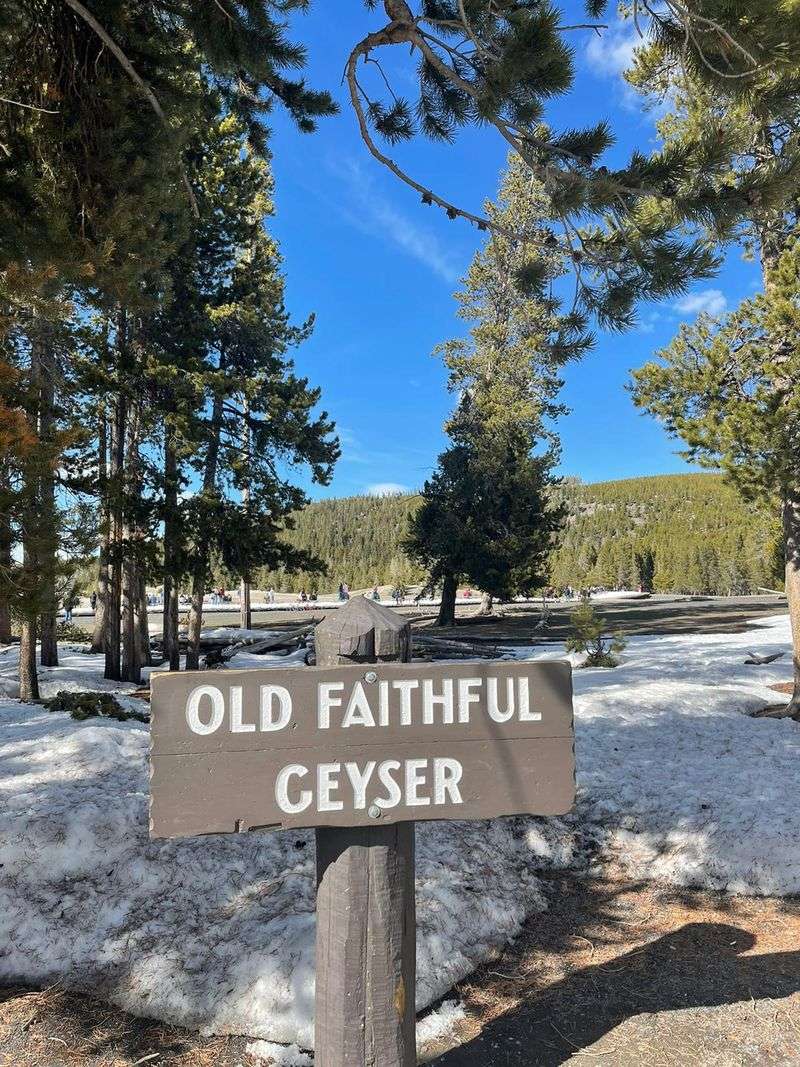
A broad viewing area curves around Old Faithful, giving visitors room to watch the cone from a safe distance. Beyond it, steam rises from other features scattered across the Upper Geyser Basin.
This part of southwestern Yellowstone contains one of the world’s largest concentrations of geysers. Hot springs, steaming vents, and mineral-colored runoff share the landscape, with boardwalks connecting many of the established viewpoints.
Old Faithful is not Yellowstone’s tallest geyser, nor is it the most regular. Its appeal lies partly in the combination of substantial eruptions and intervals that are short enough to make a visit practical.
You won’t need to climb a mountain or commit to a long hike to see it. The principal viewing area is a short walk from the visitor facilities, and accessible walkways provide a convenient approach.
Choose a place where you can see the cone clearly, then look beyond it at the surrounding basin. Even between eruptions, the ground releases steam through numerous openings.
There is plenty to observe before the main column of water appears. The surrounding thermal landscape offers a striking introduction to Yellowstone’s geothermal activity.
Hot Water And Steam Beneath The Surface
Old Faithful’s eruptions begin far below the ground, where water moves through cracks and channels in heated rock.
Rainwater and melted snow seep underground. Heat associated with Yellowstone’s volcanic system warms that water, while pressure from the water above allows deeper portions to reach temperatures higher than the normal boiling point at the surface.
As steam bubbles form, they push water upward through the geyser’s restricted passages. Pressure falls, more water flashes into steam, and the resulting expansion drives a powerful mixture of water and vapor from the vent.
An eruption usually lasts between one and a half and five minutes. The water can rise approximately 106 to 184 feet, although its height varies.
A single eruption may release roughly 3,700 to 8,400 gallons of water. Temperatures measured at the vent can reach around 203 degrees Fahrenheit.
Those figures give you something to consider while watching the plume change shape. One moment, water rises in a concentrated column; the next, wind spreads the steam across the sky.
Afterward, the geyser settles into its next period of underground heating and refilling.
Small Splashes Before The Main Eruption
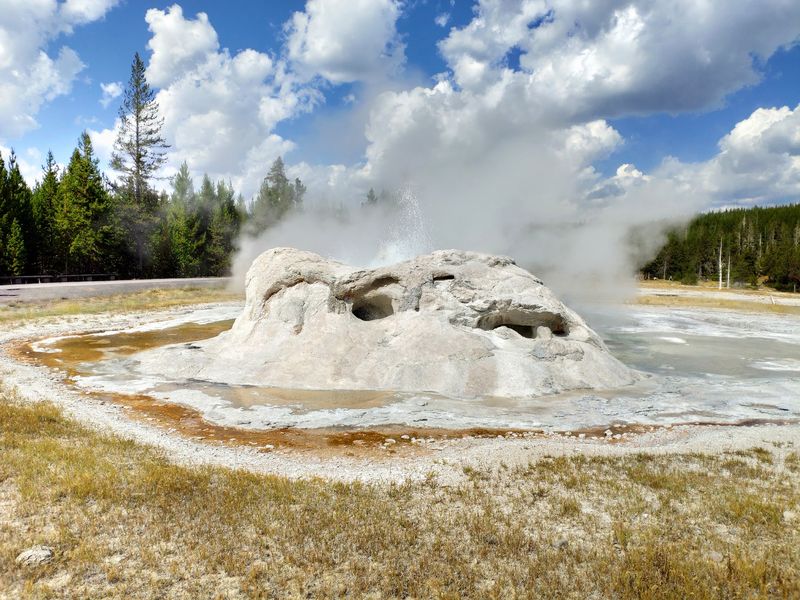
Waiting beside Old Faithful can be surprisingly interesting, especially when the vent begins showing signs of activity.
Small splashes sometimes appear before a full eruption. Water may rise briefly above the cone, fall back, and repeat the movement while steam continues drifting upward.
These preliminary bursts are often called preplay. They can provide a hint that activity is building, but they are not a precise countdown.
Watch the water rather than checking your phone every few seconds. The early splashes can become stronger before a sustained column shoots upward.
The main eruption builds quickly, with water and steam rising together. Its height changes throughout the event, and the wind can carry the vapor away from the cone.
From the viewing area, you can follow the movement without getting close to the vent. The water is extremely hot, and the surrounding ground is fragile.
When the eruption begins to weaken, the column drops and smaller bursts may continue briefly.
Try watching at least part of the eruption without a camera. The movement of the water, the sound, and the shifting steam are easier to appreciate when your attention stays on the geyser.
The Expedition That Gave Old Faithful Its Name
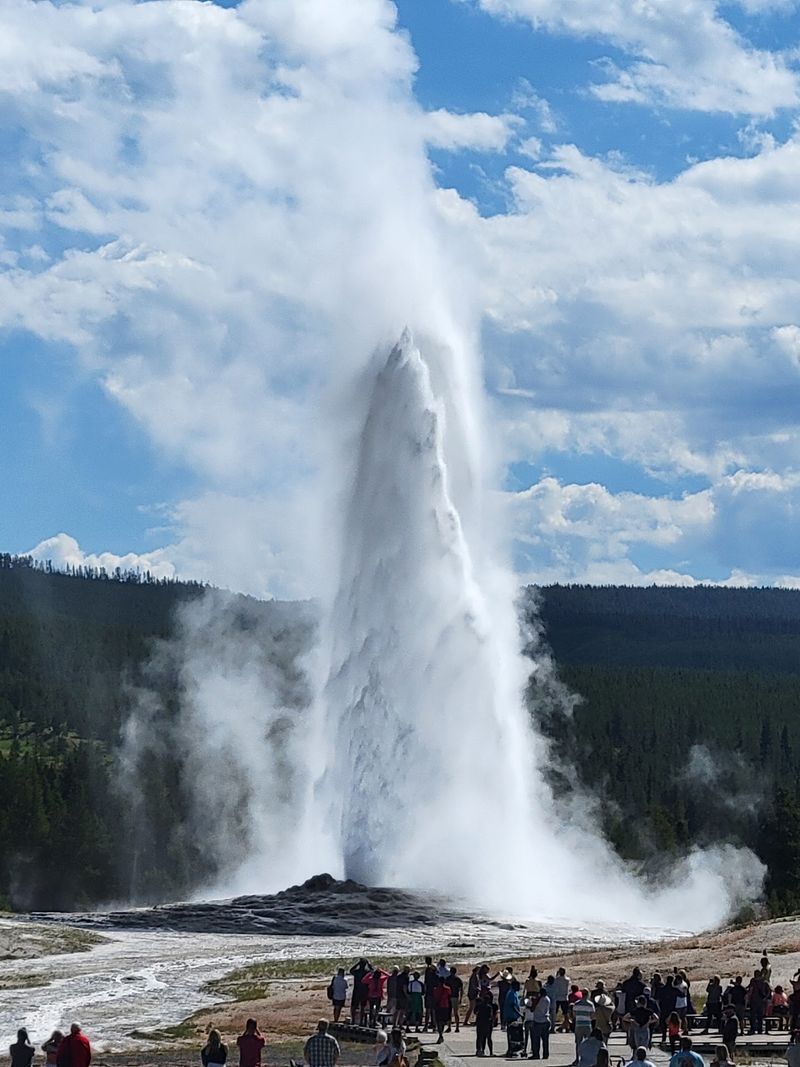
Old Faithful received its familiar name in 1870, when members of the Washburn Expedition explored the Yellowstone region.
They observed the geyser’s repeated eruptions and chose a name reflecting its comparatively regular behavior. The name remained, eventually becoming one of Yellowstone’s best-known landmarks.
Yellowstone was established as a national park in 1872, two years after the expedition. Old Faithful later became a central attraction within the park’s historic developed area.
The nearby Old Faithful Inn opened in 1904. Its enormous log structure and distinctive roofline remain important features of the surrounding landscape.
If time allows, take a look at the inn’s public spaces and exterior before returning to the geyser viewing area. The building offers a different perspective on the history of Yellowstone tourism.
The geyser itself continues to change. Eruption intervals have shifted over the decades, particularly following earthquakes that affected the underground system.
Despite those changes, the familiar sequence of steam, splashing water, and a rising plume remains part of the Old Faithful experience.
You can spend time with both the natural feature and the historic buildings without leaving this part of the park.
Why The Eruptions Don’t Follow A Perfect Schedule
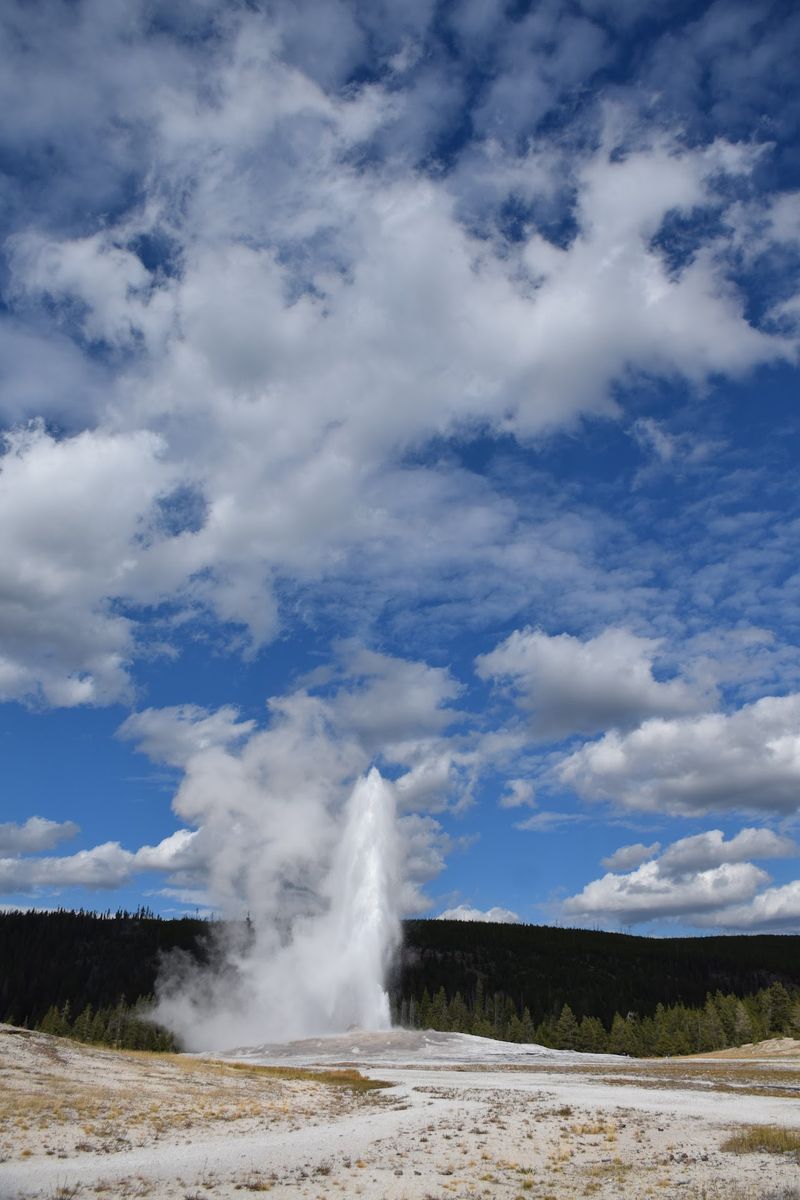
Ninety minutes sounds convenient, but Old Faithful has never operated like a clock. The time between eruptions varies, sometimes substantially.
Recent park measurements have placed the median interval at about 102 minutes, with individual gaps sometimes much shorter or longer.
One useful clue is the length of the previous eruption. A short eruption generally releases less water and heat, allowing the underground system to recharge sooner. A longer eruption usually requires more recovery time.
Observers use that relationship to estimate the next eruption. The prediction gives visitors a useful window, not an exact appointment.
Earthquakes have also affected Old Faithful’s behavior. Changes associated with the 1959 Hebgen Lake earthquake and later seismic events helped alter its eruption intervals.
If you’re visiting with children, try timing an eruption and comparing the result with the next predicted interval. It’s an easy way to turn the wait into a small geology lesson.
You don’t need to calculate anything to enjoy the experience, though. Simply check the latest prediction and allow enough time to settle into a viewing spot.
A delayed eruption doesn’t mean the geyser has stopped working. Its underground cycle continues on its own schedule.
Boardwalk Walks And Other Thermal Sights Nearby
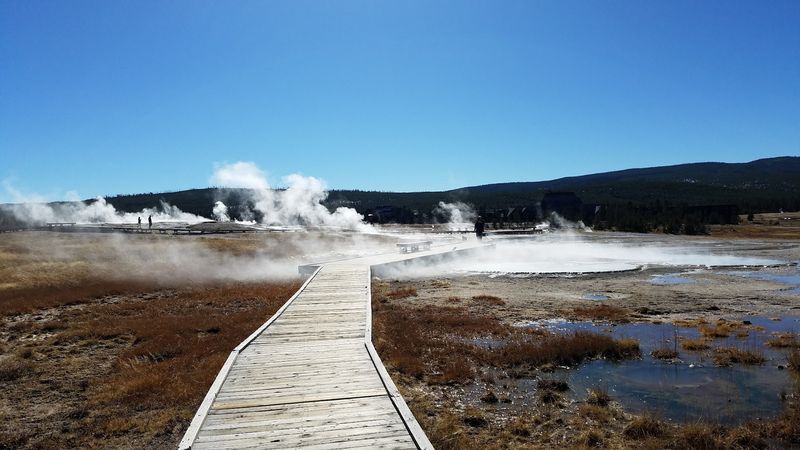
Old Faithful is only one feature in the Upper Geyser Basin. Boardwalks lead through an area filled with hot springs, geysers, steaming vents, and mineral deposits.
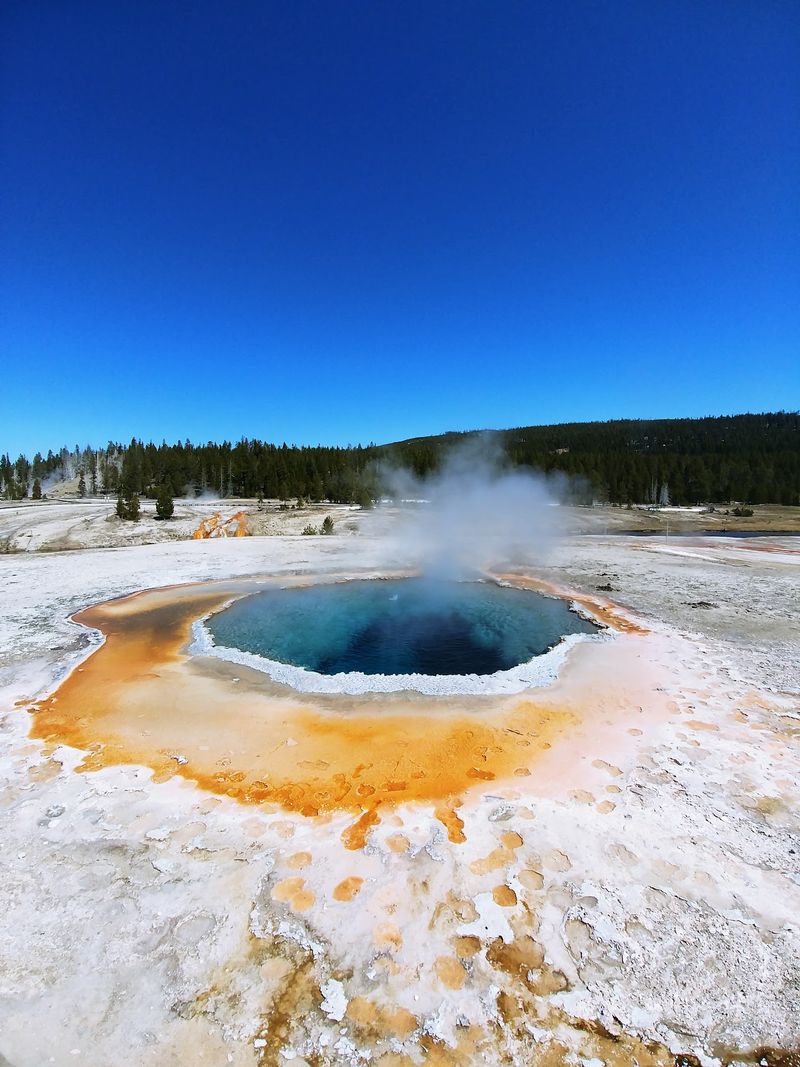
Some pools have brilliant blue centers, while others show bands of orange, yellow, or brown near their edges. Heat-loving microorganisms contribute to many of those colors.
Walk slowly enough to notice the smaller details. Steam may drift across a boardwalk, and nearby pools can look different as clouds pass overhead.
The designated paths are essential. Thin ground around thermal features can conceal dangerously hot water, so never step off a boardwalk or established trail.
Keep children close, and leave pets outside thermal areas. Wildlife also needs space. If bison appear nearby, watch from a safe distance rather than approaching for photographs.
The main viewing area has seating for visitors who prefer to wait without exploring the longer paths.
For a more elevated perspective, Observation Point Trail climbs to a viewpoint above Old Faithful. Its uphill grade makes it more demanding than the easy approach to the main viewing area.
Check trail conditions before setting out, especially when snow or ice may be present. A shorter boardwalk stroll can be just as satisfying when time is limited.
Eruption Predictions And Planning Your Visit
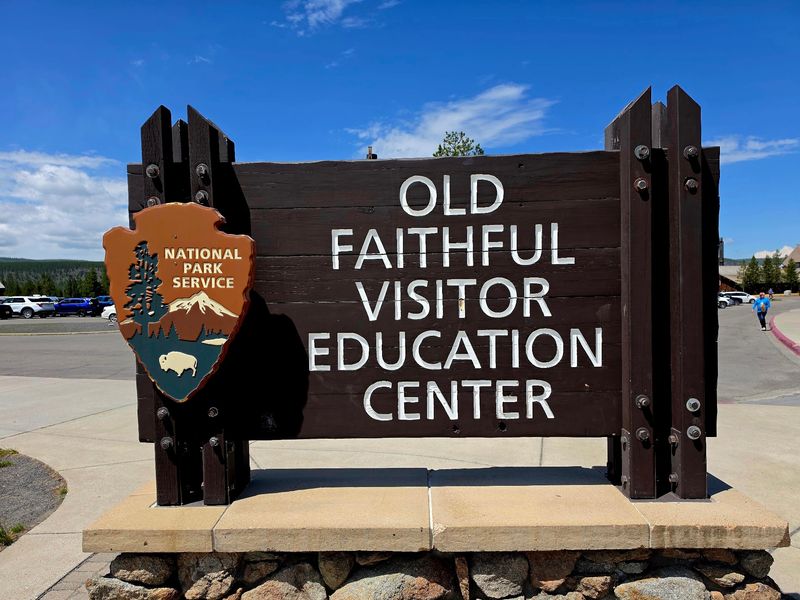
Start with the latest eruption prediction, available at the Old Faithful Visitor Education Center and through the official Yellowstone app. Predictions may also appear at nearby visitor facilities.
Allow time on either side of the estimated eruption. During busy periods, arriving earlier also gives you more choice of places to stand or sit.
Follow the signs to the Old Faithful area in Yellowstone National Park’s Upper Geyser Basin, where the main viewing area and visitor facilities are located.
The visitor area has parking and established walking routes, but spaces can fill during popular visiting hours. Yellowstone’s entrance fee applies, although there is no separate charge for watching the geyser.
The West Entrance road to Old Faithful is scheduled for regular vehicle access through October 31, 2026, weather permitting. Other approaches have their own seasonal schedules, and road conditions can change.
Bring drinking water, comfortable shoes, sunscreen, and layers suited to mountain weather. If you’re visiting in autumn, prepare for chilly mornings and the possibility of snow.
Keep the geyser’s prediction window in mind when exploring nearby features. You can always return to the main viewing area before the expected eruption.
Then find a comfortable spot, watch the steam drift above the cone, and listen for the first splashes. The exact moment belongs to the geyser.