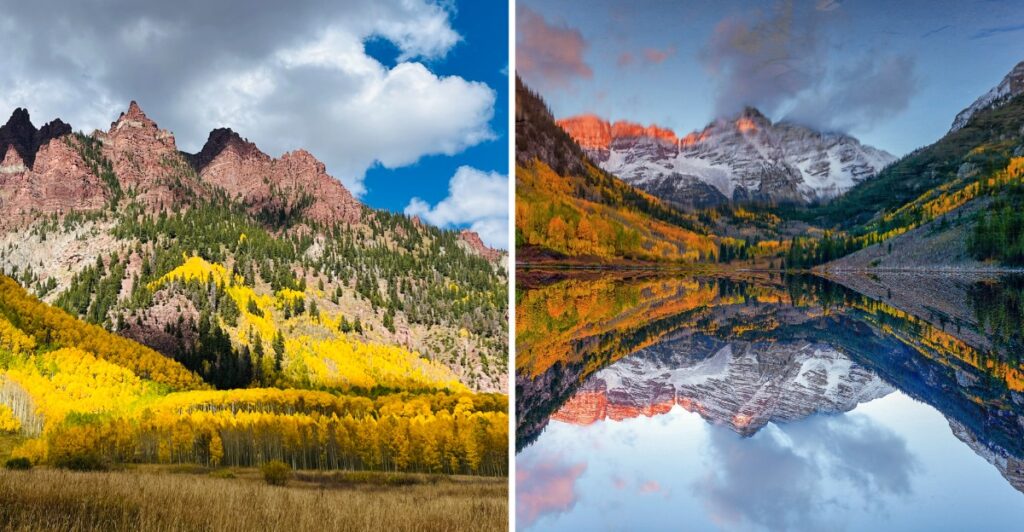
Okay, I need you to imagine the kind of fall view that makes everyone in the car go quiet for a second.
Red peaks in the background. Gold climbing through the aspens. A lake sitting there like it knows exactly what it is doing.
That is the scene.
You do not have to scramble up a mountain to earn it, either. Stay near the water, wander into the trees, and let the morning decide how long you stick around.
Colorado saves a pretty convincing argument for September up here.
The only part that needs some attention is getting in. Parking is limited, and shuttles can be part of the plan during busy periods.
Sort that out first.
Then give yourself enough time to stop saying, “Okay, one more photo.”
Two Fourteeners Above A High Mountain Valley
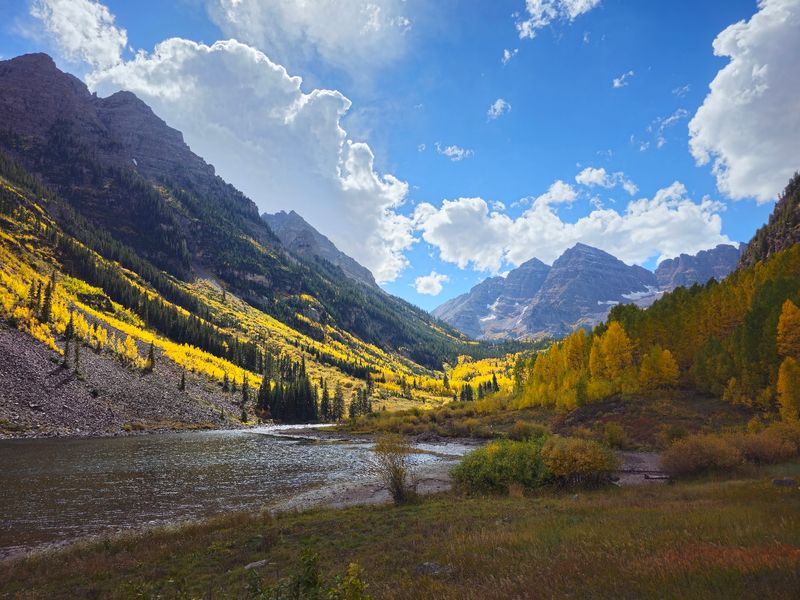
Maroon Peak rises above 14,000 feet, and North Maroon Peak also clears that elevation, making both mountains Colorado fourteeners. The pair forms the Maroon Bells, whose reddish slopes stand above the forests of the Elk Mountains.
The rock has deep maroon and brown tones, with bands and gullies visible across the peaks. Its color comes in part from iron-bearing minerals in ancient sedimentary rock.
The mountain faces are cut by steep channels, and lingering patches of snow may remain in sheltered places even when the valley is filled with fall color.
You’ll find the mountains in the Maroon Bells-Snowmass Wilderness, within the White River National Forest. Maroon Lake sits at roughly 9,580 feet, far below the summits but already high enough for cooler air and thinner atmosphere than in many valley towns.
The easiest introduction is the established viewing area near the lake. From there, look first at the two summits, then follow the ridgelines down toward the forest.
Climbing either summit is a serious mountaineering undertaking with exposed and loose terrain. The established lakeside viewpoints offer views of both summits without a mountain ascent.
Autumn Views From The Maroon Lake Shore
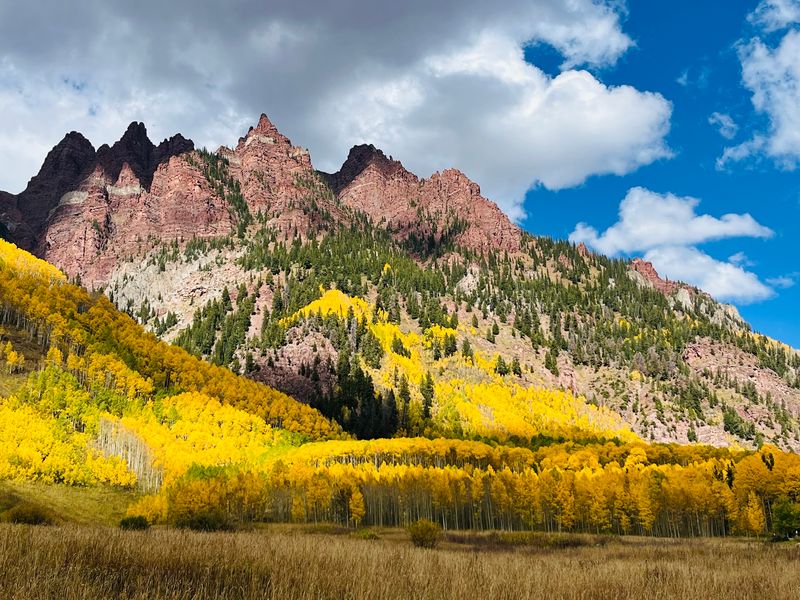
Maroon Lake provides the classic foreground for the two peaks. The shoreline, aspen groves, and reddish mountains fit into a single view, although the details change with the light and weather.
Early in the morning, sunlight may reach the high rock before it illuminates the trees below. On cloudy days, the water and slopes take on more muted colors.
Rather than counting on one perfect photograph, walk to the permitted viewpoints and compare how the composition changes.
Include some of the lake or shoreline vegetation in the foreground, then try another frame that focuses on the mountains.
There is no need to push through vegetation for a better angle. Shoreline protection signs and trail boundaries help keep sensitive ground from being trampled. Remain on established surfaces, especially near the water.
Do you want the wide mountain reflection or a closer image of the trees? Let that choice guide how long you spend beside the lake before starting a trail.
Golden Aspen Groves Beneath Reddish Peaks
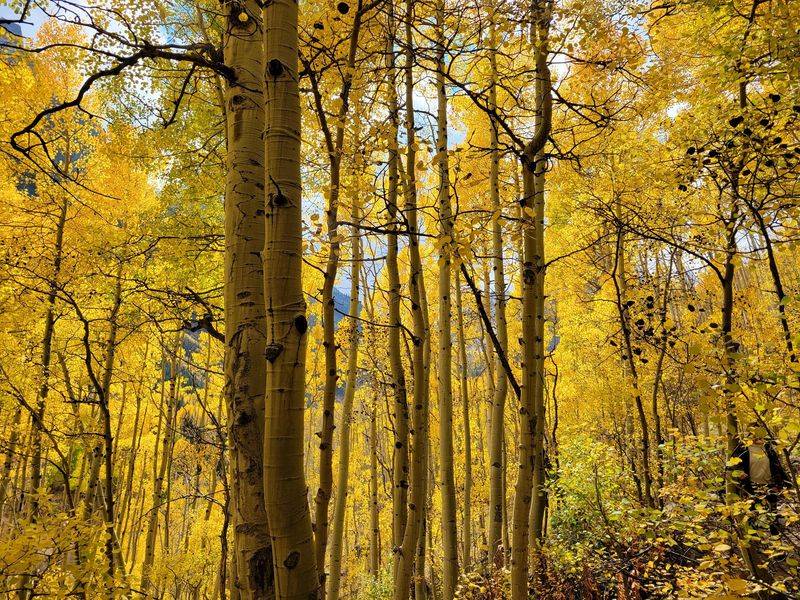
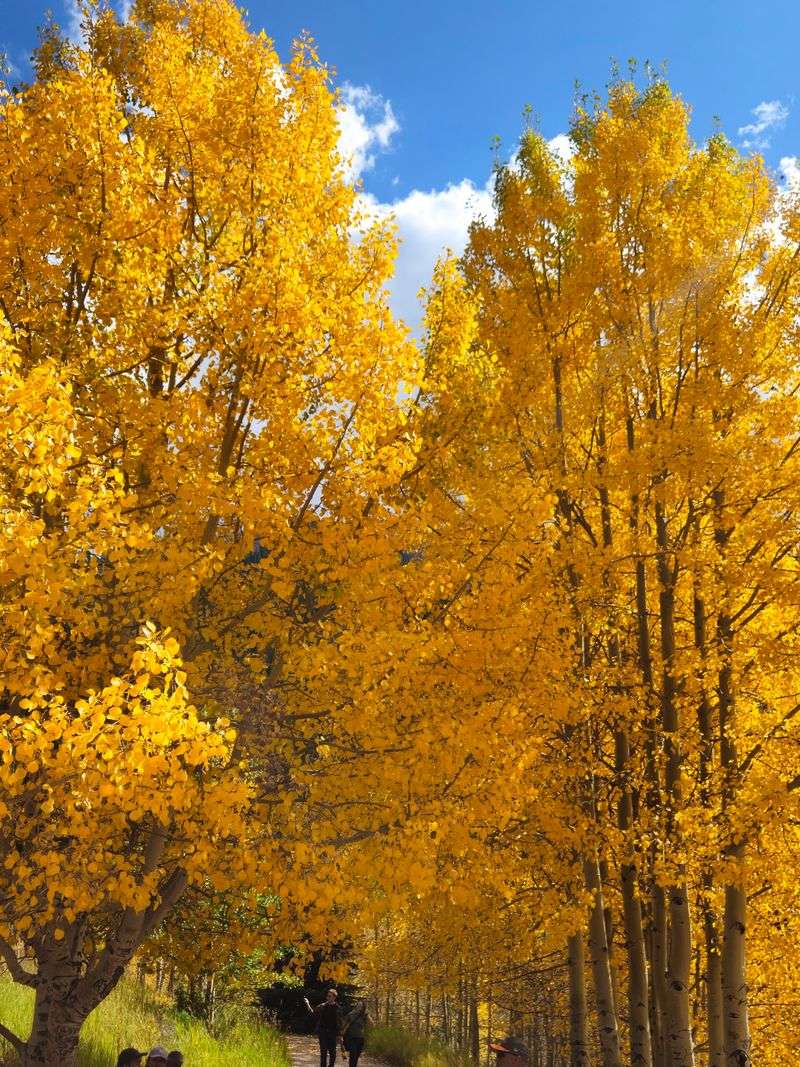
Listen on a breezy day and you may hear aspen leaves rustling overhead. Their flattened leaf stalks allow them to flutter, even in a light wind. In autumn, the leaves turn yellow and sometimes orange, while pale trunks create bright lines among the darker evergreens.
Aspen stands grow around the lower valley and on nearby slopes. From beside the lake, they form patches of gold beneath the maroon-colored rock. Move into the woodland paths and the same foliage becomes an overhead canopy rather than a distant hillside.
Aspens can reproduce through shared root systems, so many stems in a grove may be connected underground. Elevation, weather, and individual growing conditions also shape the timing.
Look along the edges of a grove for the contrast between white trunks and yellow leaves. Fallen leaves can cover the path later in the season, so watch your footing on damp or uneven ground.
When clouds drift across the mountain face, bright and shaded patches move through the same grove, changing the scene without a change in location.
Watch wildlife from a distance, never feed animals, and remain on established trails. Moose and other animals may appear in the surrounding forest, so give them plenty of space and avoid approaching them for photographs.
Reflections And Quiet Water At Maroon Lake
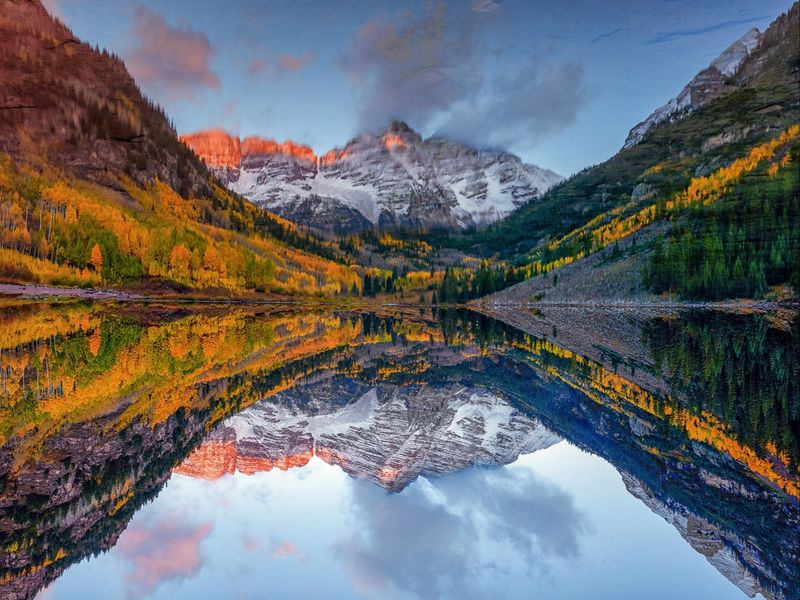
Calm water can turn one mountain view into two. When the lake surface is still, the peaks and aspen-lined slopes appear again in the reflection. A breeze breaks that image into ripples, replacing a mirror-like scene with shifting patterns of light.
The lake is close to the main arrival area, so a long hike isn’t necessary for the signature view. Maroon Lake Trail follows the shoreline and nearby terrain, offering a short way to explore beyond the initial lookout. It is not a complete loop around the entire lake.
The trail is suitable for a brief outing, but the high elevation can still make a gentle walk feel more demanding than expected.
Choose a stopping point with a clear view of the water, then watch what happens as the light changes. A reflection can become sharper or softer within minutes, depending on the wind.
Stay out of the water. Swimming, paddling, and boating are not allowed at Maroon Lake, and visitors should respect marked shoreline restrictions. The lake is a place for viewing, walking, and photography rather than water sports.
Bring a small snack for a designated rest area, but keep food secured and carry out wrappers.
Footpaths Through The Aspens And Toward Crater Lake
Lace up your walking shoes if you want to travel beyond the first viewpoint. Trails near Maroon Lake range from a short shoreline walk to steeper routes leading into the wilderness.
The Maroon Lake Trail is the easier option for a relaxed look at the water, aspen groves, and nearby stream corridor.
A bigger outing calls for the Crater Lake Trail. This route climbs through rocky terrain to a higher basin beneath the mountains. The approximately 3.6-mile round trip has rough footing and elevation gain, so sturdy shoes and sufficient time matter.
If the trail is icy or snowy, consider returning to the easier paths rather than pushing ahead. Fall weather can change quickly at this altitude, and late-season conditions may affect access to higher trails.
Take plenty of drinking water. There is no potable water at the Maroon Lake Trailhead, and water from the lake or streams must not be consumed untreated. Fill your bottle before traveling up the road.
Give yourself time to return before daylight fades. Stay on marked trails, keep a safe distance from wildlife, and avoid cutting across vegetation even when the next viewpoint looks close.
Finding September’s Best Aspen Color
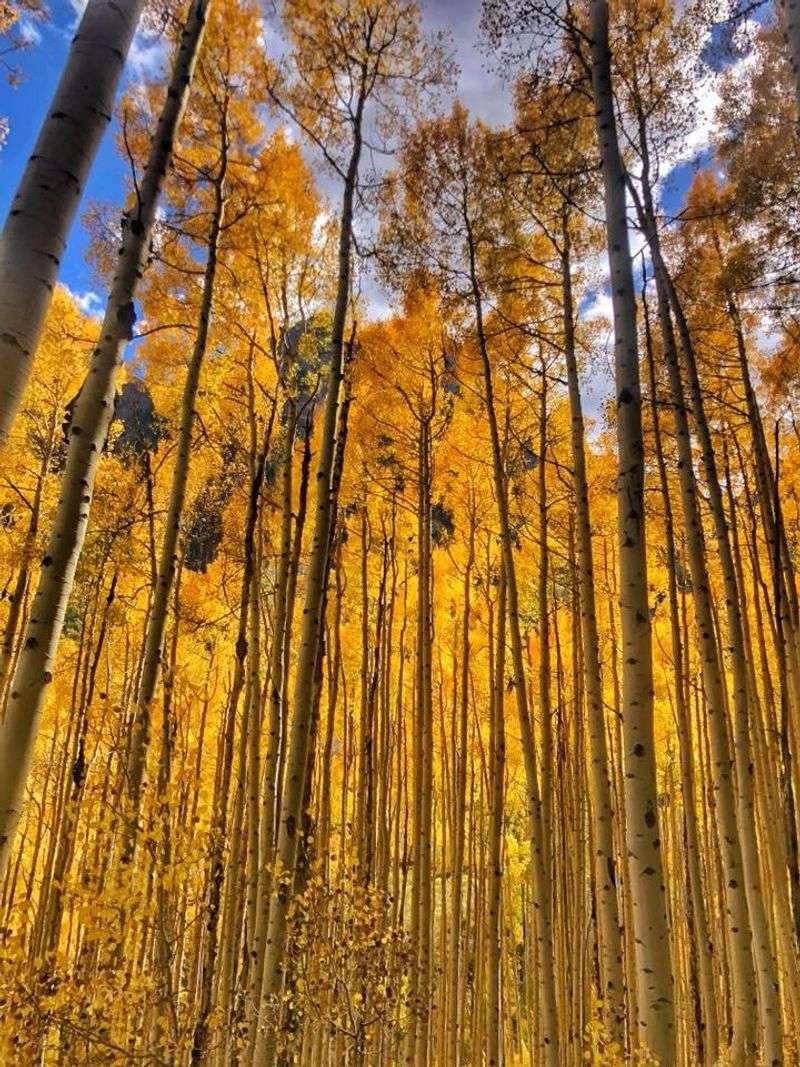
Mark your calendar, but hold the dates loosely. Aspen foliage in this part of Colorado often develops its golden tones in mid-to-late September, with the exact peak shifting according to temperature, moisture, and early mountain storms.
At lower elevations, some trees may still look green while groves closer to the mountains have already changed. Wind can remove bright leaves quickly, and early snow may cover upper slopes before autumn has finished in the valley.
Checking recent regional foliage conditions can help narrow your travel window.
Morning offers the possibility of clear reflections and cooler air. Later in the day, the light reaches the slopes differently, and shadows become longer.
During the fall visiting season, allow extra time for transport and trailhead activity. A weekday may offer more scheduling flexibility, but a reserved arrival time remains important whenever the shuttle or parking rules apply.
Bring layers you can add or remove. A sunny afternoon can feel comfortable while shaded paths and windy lakeside areas stay chilly.
Maroon Creek Road, Shuttle Tickets, And Trailhead Basics
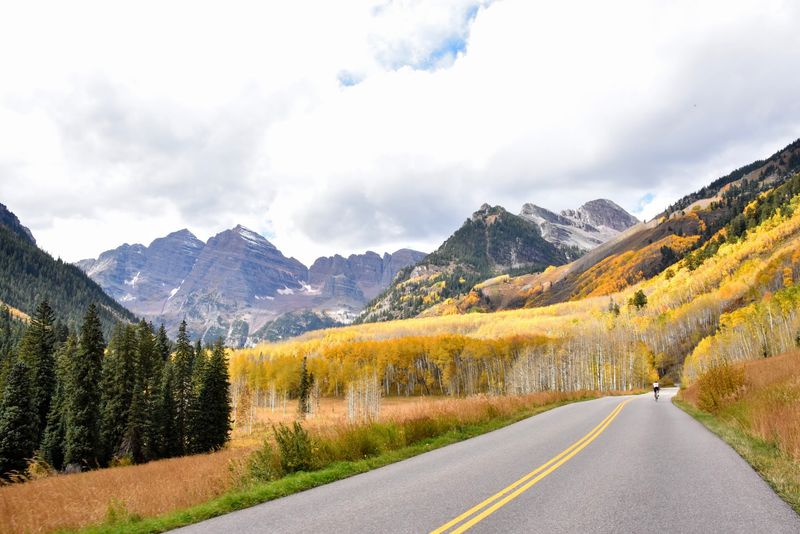
Follow Maroon Creek Road outside Aspen, CO 81611, to the Maroon Lake Trailhead, where the main viewing area and nearby trails begin.
For the 2026 season, shuttle service operates from the Maroon Bells Welcome Center at Aspen Highlands through October 18.
A shuttle reservation is required. The bus departs from Aspen Highlands, not from downtown Aspen, so allow time to get to the boarding area.
Parking directly at the trailhead requires its own reservation. During the main shuttle season, private vehicles with reservations must arrive before 8 a.m. or after 5 p.m. Parking reservations cost around 10 dollars per vehicle, with limited spaces available.
A shuttle ticket and trailhead parking reservation are different options: you generally need one or the other, not both. Shuttle riders can park at Aspen Highlands for an additional fee or reach the welcome center using local transit.
A bicycle is another way to use Maroon Creek Road, although the climb calls for effort. In 2026, e-bike riders pay an entry fee, while ordinary bicycles are exempt from that particular charge.
Cell reception is unreliable at the lake. Save reservation details and maps before departure. Restrooms are provided near the trailhead, but there is no potable water there.
Fill bottles at Aspen Highlands and carry what you need for your visit.
The road’s seasonal opening depends on snow and weather, so check access conditions before setting out, particularly late in autumn.
When it’s time to leave, the view of gold trees beneath the maroon peaks may be the last image you look back at before the road curves toward Aspen.