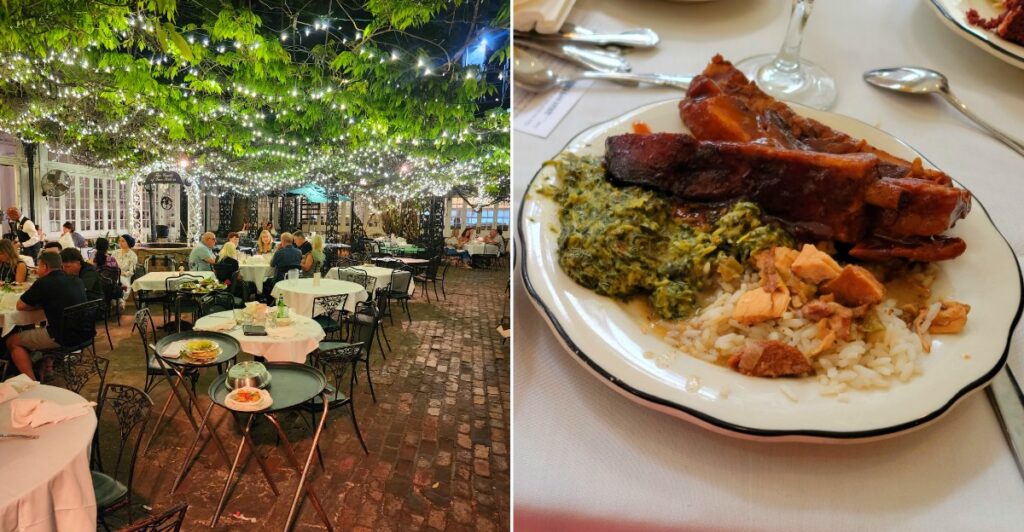
Royal Street already gives you plenty to look at, but the real surprise begins once the courtyard opens up. Beneath leafy branches and old French Quarter walls, live jazz drifts through the air while brunch plates fill with gumbo, grits, shrimp, and desserts.
The setting makes the meal feel unhurried, almost theatrical, without losing the easy pleasure of a buffet.
With live jazz, a historic courtyard, and a generous spread of Louisiana favorites, this New Orleans brunch turns a morning meal into part of the city’s story.
What I like most is the rhythm of it. You can build a plate, pause for the music, then circle back for something sweet without feeling rushed.
The food is comforting, the courtyard does half the decorating, and the whole experience feels tied to place. It is the kind of brunch that rewards appetite, curiosity, and enough time to linger a little longer.
The Courtyard Deserves Its Own Moment
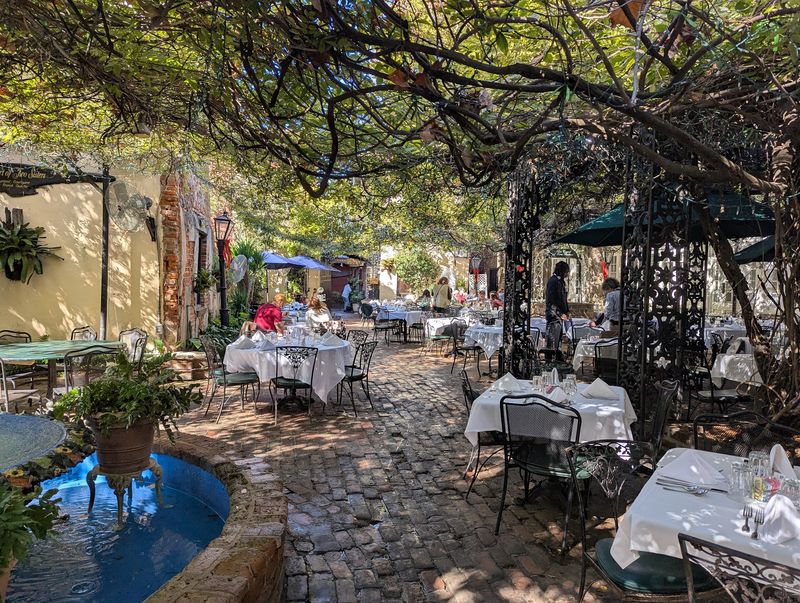
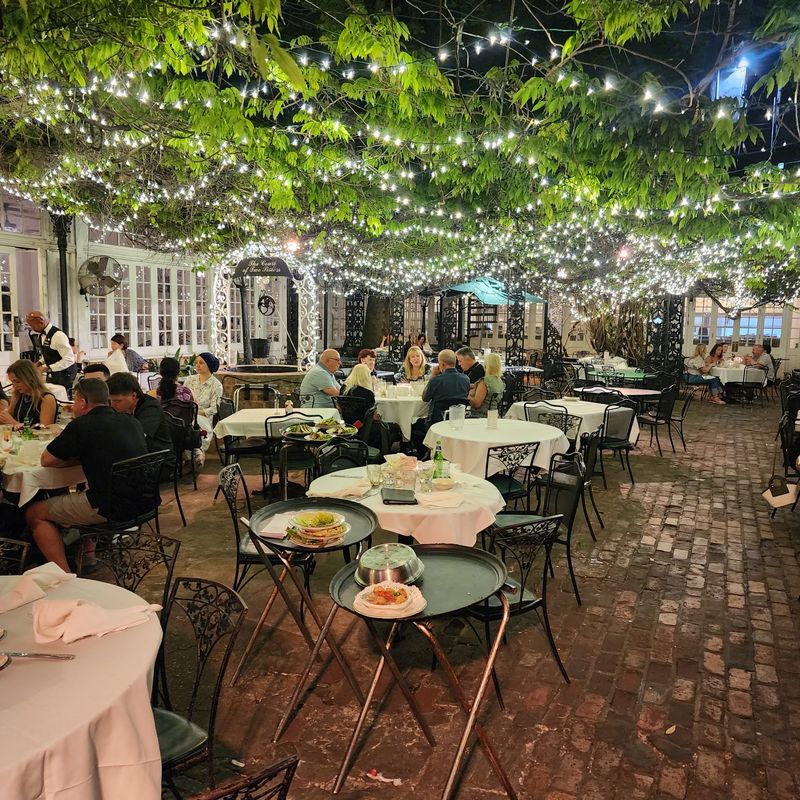
Brick, ironwork, and greenery give this dining space something a plain breakfast room cannot offer. The restaurant has one of the largest dining courtyards in the French Quarter, and its leafy setting is a major reason to linger.
Wisteria is part of the courtyard’s character, but do not plan your visit around guaranteed flowers. Blooming and leaf cover depend on the season, and an outdoor table always comes with weather considerations.
Request courtyard seating if that atmosphere is your priority. On a hot or rainy day, the indoor dining rooms may be the more comfortable choice.
Before heading toward the buffet, take a moment to look around. Courtyards historically helped provide privacy and ventilation, so this pretty setting also has a practical story behind it.
Breakfast tastes different when you remember that the room itself has something to say.
Royal Street Brings You Straight Into The Quarter
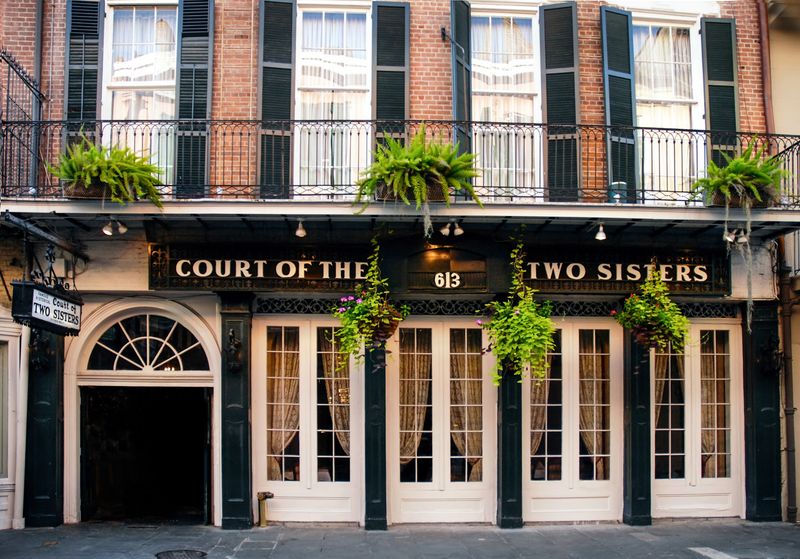
The Court of Two Sisters sits at 613 Royal Street in New Orleans, Louisiana, right in the French Quarter. Royal Street is the final approach, with the restaurant tucked into one of the district’s busiest historic blocks rather than set apart in a standalone building.
The last few blocks are pure French Quarter, with narrow streets, balconies, galleries, and steady foot traffic packed around you. Once you reach the 600 block of Royal, the restaurant’s historic facade blends into the streetscape, so slowing down and reading the storefronts is more useful than looking for a large sign.
Use a nearby public garage or legal street parking outside the busiest Royal Street blocks, then finish the trip on foot. From there, the entrance is right at street level, with the courtyard hidden behind the historic frontage.
Two Sisters Left More Than A Name
Emma and Bertha Camors were shopkeepers, not the creators of a brunch buffet. The restaurant’s name honors these Creole sisters, who ran a notions shop at this address in the late nineteenth century, selling garments, lace, and imported goods.
Knowing that changes how the entrance feels. A place now known for full plates once welcomed customers searching for fabric and finery.
The property’s history reaches further back, and a French townhouse-style building was constructed on the site in 1832. Joe Fein Jr. began preserving and developing the restaurant as a dining destination in 1963.
Give yourself a little time to notice the setting instead of treating it only as a route to breakfast. You do not need a history lecture before your omelet, but these details add depth to a meal already rooted in New Orleans traditions and daily life.
Let The Jazz Set The Pace
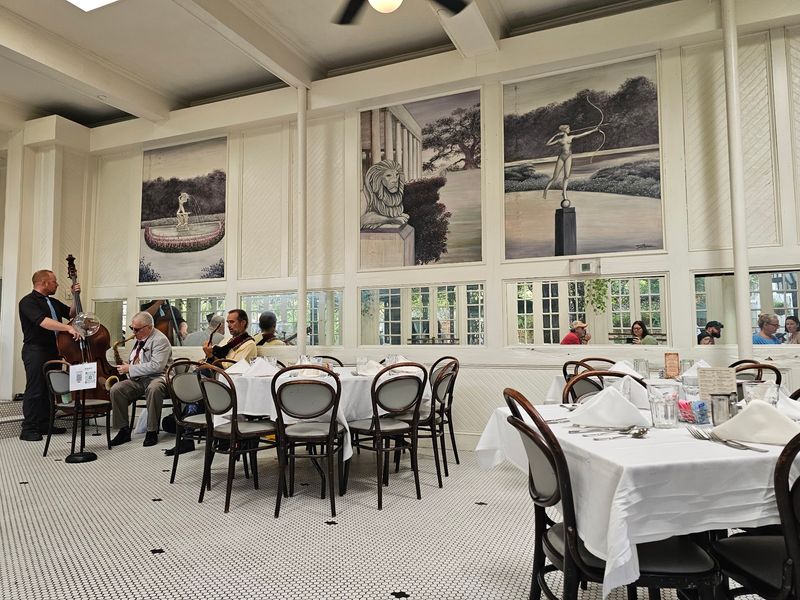
A live jazz trio gives brunch a rhythm beyond the clink of plates. Music is part of the restaurant’s daily brunch experience, tying the meal to a tradition that belongs firmly to New Orleans.
Rather than rushing between buffet visits, leave space to sit and listen. A few minutes with your food and the music can be more rewarding than another immediate trip for seconds.
If hearing the performance is central to your plans, ask the restaurant about the music schedule and seating arrangements. Daily jazz does not mean every table has the same view or that musicians play without breaks.
Keep conversation considerate near the performers, and avoid blocking paths while taking photographs. The best approach is simple: enjoy the music as part of the meal, not as background noise you only notice when it stops for a moment.
Survey The Buffet Before Committing
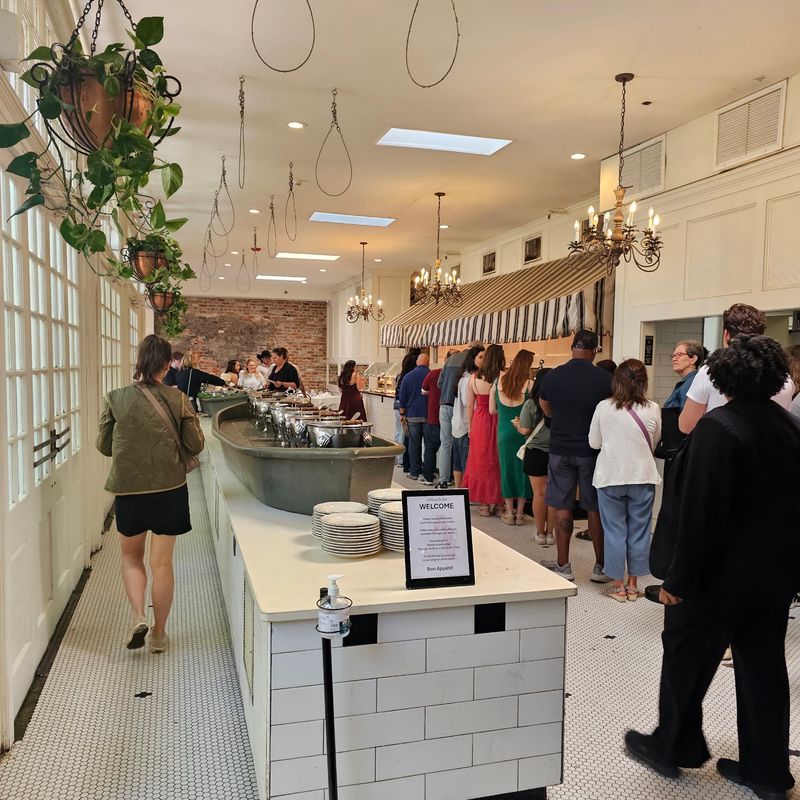
The first empty plate can make every dish seem urgent. Resist that small buffet panic and look over the selection before choosing anything.
The Court of Two Sisters advertises a broad spread of hot and cold dishes, with Creole specialties alongside familiar breakfast foods. Options can include eggs, meats, seafood, salads, vegetables, and desserts, so one crowded plate rarely gives everything a fair chance.
Start with small servings of the dishes you most want to understand. Keeping gumbo, sweet potatoes, and cold salads from mingling also helps you taste them separately.
Return for favorites rather than collecting food simply because it is available. Menus and station offerings can change, so treat published lists as guidance instead of a promise.
A quick look around gives you a useful plan and saves room for something unexpected that catches your eye later on.
Build Breakfast Around Grits And Grillades
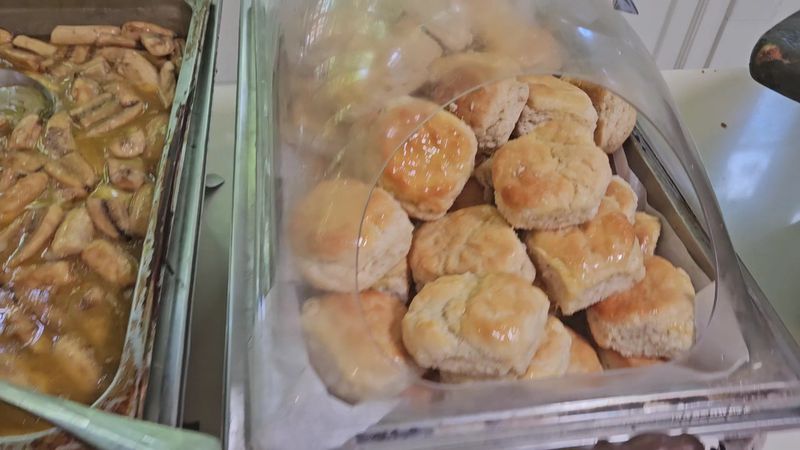
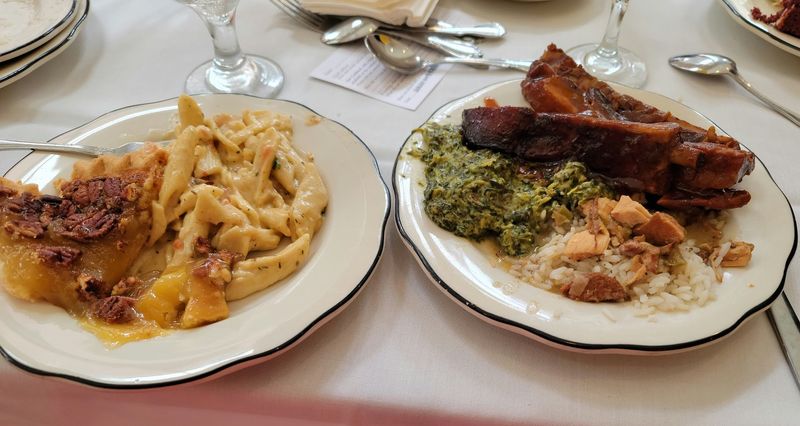
Grits and grillades make a strong case for slowing down at breakfast. The buffet lists Southern corn grits and braised veal grillades, a pairing that offers more local character than another plate built entirely around bacon.
Grillades are pieces of meat cooked until tender, usually served with a savory gravy. Beside grits, they bring together a soft base and a richer topping without requiring a mountain of food.
Take a modest helping first, especially if you also want to sample jambalaya or shrimp dishes. Eggs Benedict, scrambled eggs, and other breakfast favorites give less adventurous eaters familiar choices.
A made-to-order omelet station adds another option, but consider your appetite before combining everything. Breakfast here can easily become lunch halfway through the plate.
Choose the combination that interests you most, then leave yourself permission to skip the rest without any buffet guilt.
Give Gumbo A Separate Bowl
A small bowl of chicken and sausage gumbo offers a focused introduction to Louisiana cooking. It is one of the buffet’s listed soups, and it deserves a moment without several other sauces competing for attention.
Start with a tasting portion while your appetite is still fresh. Gumbo is a dish with many regional and household variations, so enjoy the restaurant’s version without expecting every bowl in New Orleans to taste alike.
Let hot soup cool enough before taking that first spoonful. This sounds obvious until a full buffet encourages everyone to move faster than necessary.
Anyone managing food allergies should ask staff about ingredients and shared serving equipment before sampling. A dish name cannot tell you everything in the pot.
Taking that extra minute makes the meal more relaxed and gives you a clearer sense of what you are actually eating.
Make A Small Louisiana Sampler
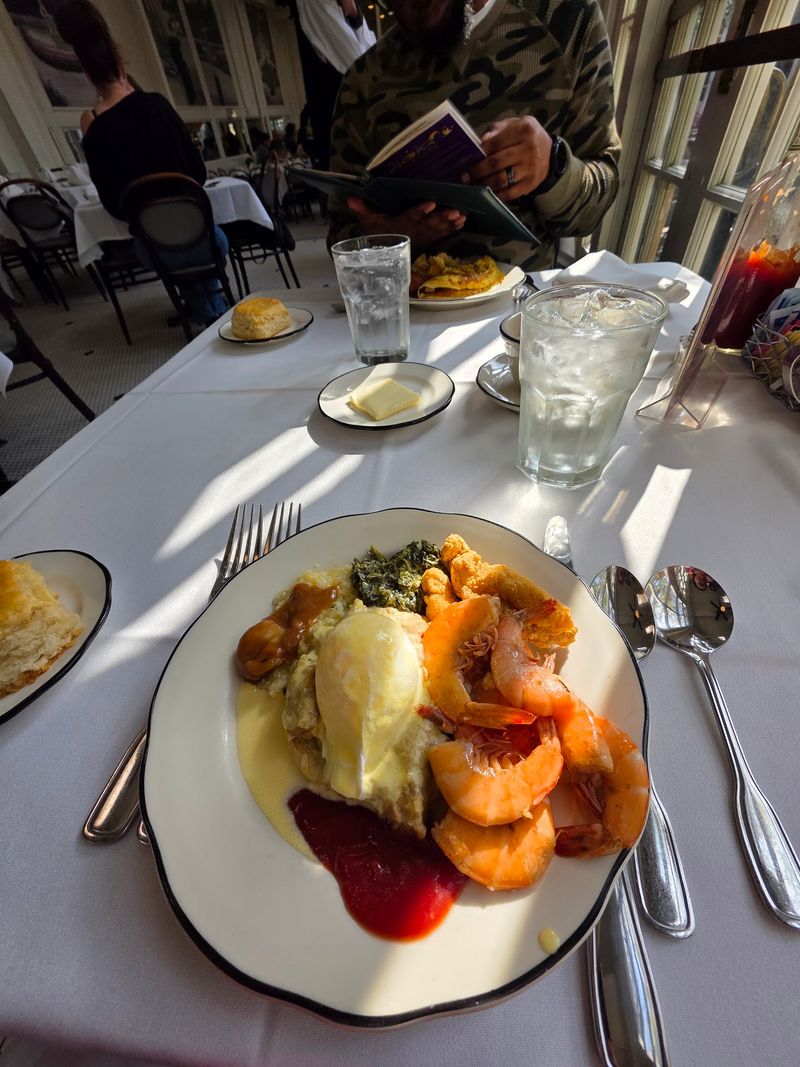
Shrimp étouffée, chicken and sausage jambalaya, and fried catfish turn the buffet into a useful tasting tour. These listed specialties offer different textures and preparations, making small portions more interesting than one oversized serving.
Étouffée brings shrimp together with a sauce, while jambalaya puts rice at the center of the dish. Fried catfish adds a crisp contrast when served freshly from the buffet.
Keep each sample in its own part of the plate. That simple habit helps you notice differences instead of ending up with a mixed spoonful that explains very little.
Seafood allergies require a direct conversation with staff, especially around shared utensils and buffet stations. If you are simply unsure about a new dish, ask what is in it.
Curiosity works better than bravado here, and a modest taste leaves room to return for the one you like best.
The Side Dishes Have Their Say
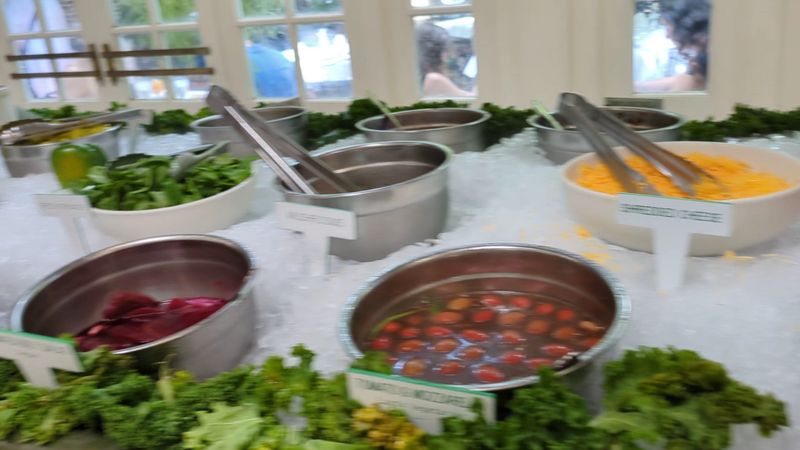
Corn maque choux and stewed okra may not get the first glance, but they help tell the story of this buffet. The listed sides also include creamed spinach, candied sweet potatoes, dirty rice, and garlic mashed potatoes.
Choose a vegetable or bean dish alongside a richer main instead of making every selection compete for heaviness. Red beans and rice can be especially useful when you want a Louisiana staple without another fried item.
The cold selections provide a different direction, with mixed greens, fresh fruit, assorted cheeses, and salads. A small serving can give your meal a welcome change of texture.
Ask about preparation if you avoid meat or dairy, since vegetable dishes may include either. A green ingredient does not automatically mean a dish fits your diet.
These quieter buffet choices deserve the same attention you give the carving station.
Save A Real Space For Dessert
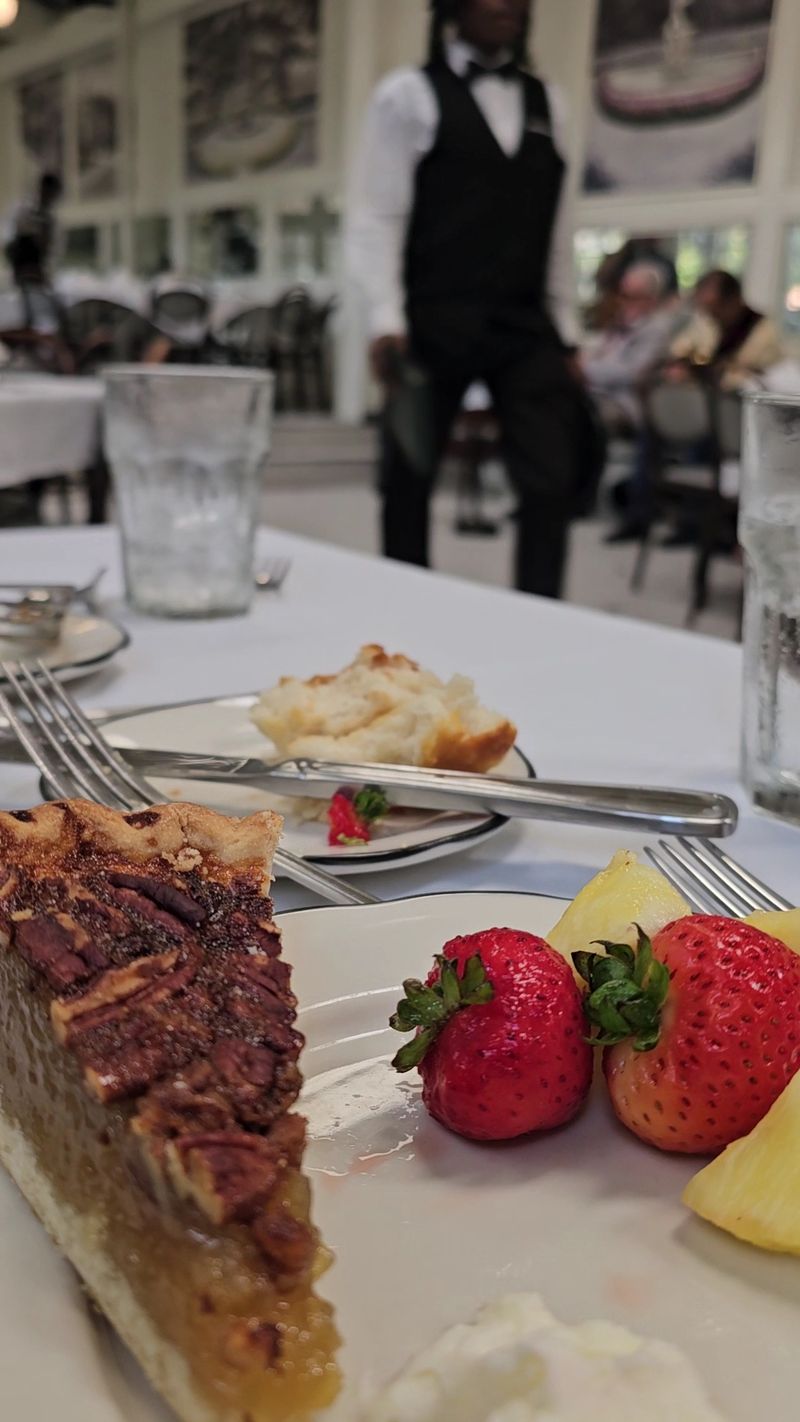
Pecan pie is easier to appreciate when dessert is not squeezed into the last available corner of your appetite. The buffet’s published sweet selections include pecan pie with homemade whipped cream, brownies, assorted cakes, and other restaurant favorites.
Look at the dessert offerings during your first walk around, then decide what genuinely appeals to you. Saving room works better when you have a specific finish in mind.
Start with a small portion rather than assembling a second meal made entirely of sweets. You can enjoy the contrast between a nutty pie filling and whipped cream without needing every cake on display.
Check ingredients with staff if you have nut, egg, or dairy allergies. After dessert, allow a final quiet moment at the table before returning to Royal Street.
The setting and music deserve an unhurried goodbye, not just a hurried photograph.