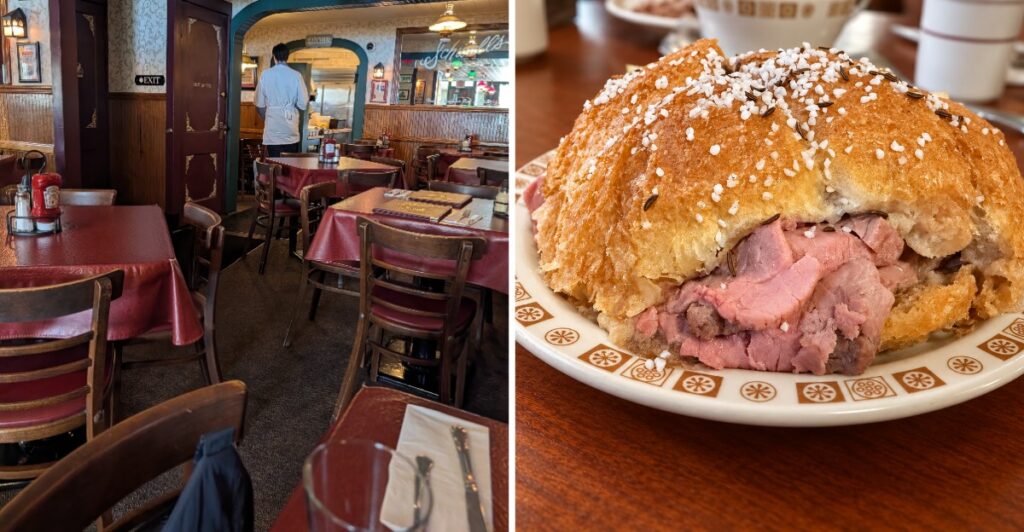
This is not a one-napkin sandwich.
Beef on weck looks simple until the horseradish gets involved. Then lunch wakes up fast.
The New York favorite keeps things straightforward. Warm roast beef lands on a salty kummelweck roll. Add horseradish if you want a sharper bite.
Nothing fancy. Nothing trying too hard.
That is probably why it has lasted.
This longtime spot has been serving Western New York for generations, and the sandwich still feels like the obvious place to start.
Its history reaches back to 1837, giving that first bite a little extra context. The menu goes beyond beef on weck, of course. You can add a side or try another carved meat later.
I would still start with the sandwich.
Once the salt, caraway, beef, and horseradish come together, the appeal makes sense quickly.
One practical thought before you dig in?
Keep the extra napkins right there beside you.
Schwabl’s Has Been Serving Western New York Since 1837
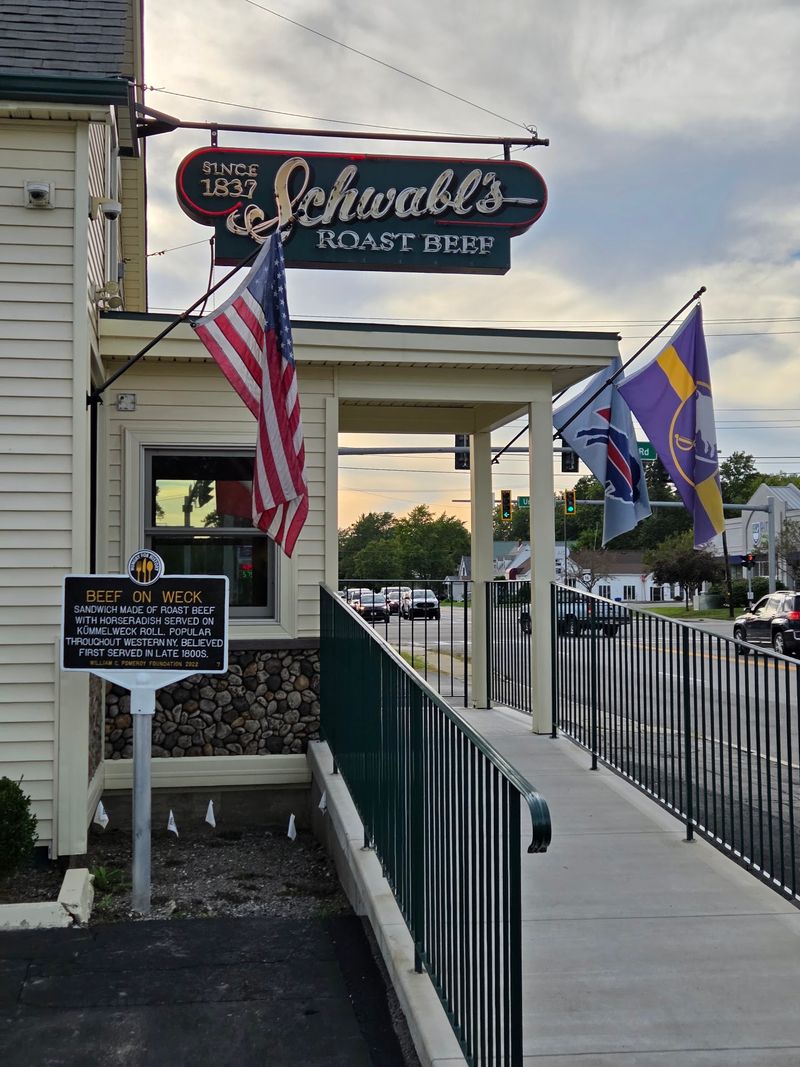
Some sandwiches are just lunch, but a few become part of a region’s identity. In West Seneca, just outside Buffalo, Schwabl’s serves beef on weck, piling hand-carved roast beef onto rolls topped with coarse salt and caraway seeds.
The restaurant’s history reaches back to 1837, long before its present location became home to the business.
The signature sandwich is substantial, but the details are simple: roasted beef, a kummelweck roll, and the option of adding a little horseradish.
There’s plenty else to consider, including German potato salad, pickled beets, and other carved-meat dishes. You can make a straightforward lunch of the sandwich alone or choose a plate with sides.
Start with the beef if this is your first visit. Then take a look around the dining room, where photographs and memorabilia trace a long stretch of Western New York food history.
Freshly Carved Roast Beef Makes Its Signature Sandwich Stand Out
The carving station puts the central ingredient in plain view. At Schwabl’s, roast beef is prepared in-house and hand-carved for each order.
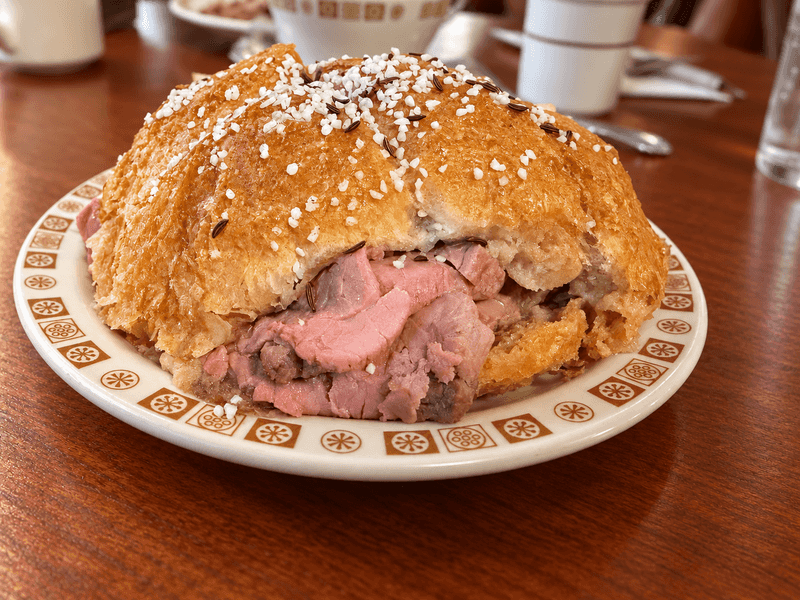
The signature sandwich contains a half-pound serving of roast beef. Customers can specify how they would like the meat carved, making thickness a choice rather than a fixed feature of every sandwich.
Start with beef on kummelweck, then choose how you’d like the roast beef carved.
Notice the slices beneath the top of the roll. The amount of beef gives the sandwich its height, while the salt and caraway on the bread provide a contrast to the roasted meat.
A larger appetite may call for one of the restaurant’s special plates, which pairs a main dish with selected accompaniments.
Not in the mood for a kummelweck roll? Another roast beef sandwich is served on bread with gravy. A separate sliced-beef option comes with au jus and bread and butter.
These are distinct choices, so decide whether you want the classic handheld sandwich or a meal built around beef and sauce.
The carving happens in view of the dining room. Watch the preparation if you can see the station from your seat, then give the roll a moment’s attention before adding anything extra.
Salt-Crusted Kummelweck Rolls Give Beef On Weck Its Distinctive Flavor
Crunchy salt crystals, caraway seeds, and a soft roll underneath make a combination particular to the Buffalo-area sandwich known as beef on weck.
The kummelweck isn’t an interchangeable detail; its seasoned top is part of what distinguishes the sandwich from roast beef on ordinary bread.
The name has German roots, with caraway and a bread roll reflected in its wording. Coarse salt gives the crust a pronounced salty edge, while caraway contributes a distinctive aromatic note.
Take a bite before adding condiments. That gives you a chance to taste the bread against the beef rather than covering both with horseradish immediately. If you prefer a sharper sandwich, add the condiment afterward, a little at a time.
The roll also makes the order practical. It keeps the beef in a handheld format, unlike the restaurant’s sliced-beef dish served with au jus. That distinction is worth remembering when you’re choosing between a quick sandwich and a plate that calls for a fork.
The next decision is the simplest one: leave the bread and roast beef to do most of the work, or bring horseradish into the mix.
Horseradish And Beef Juices Complete This Buffalo Classic
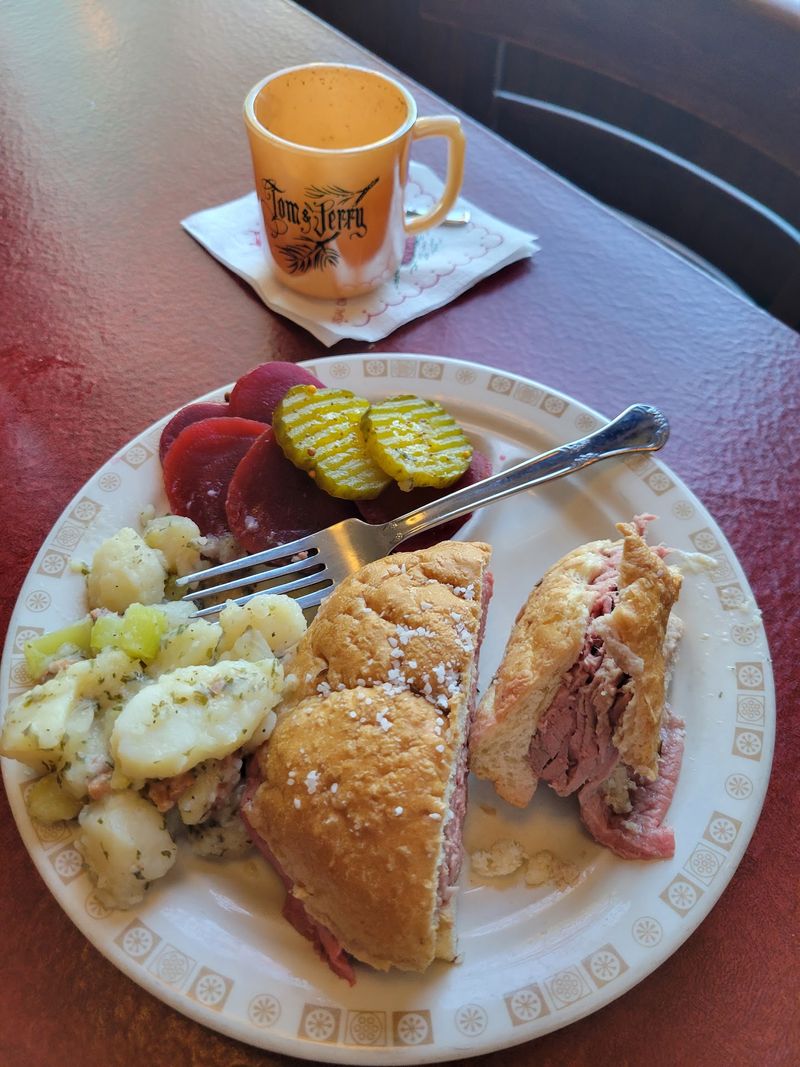
Brace yourself if you add a generous amount of horseradish. The condiment has a sharp bite, and a little can change the flavor of a roast beef sandwich quickly. Start with a small amount and build from there if you prefer more heat.
Horseradish is a traditional partner for beef on weck because its pungency contrasts with the roasted meat and salt-topped roll. It is an optional addition, not something every diner needs to use. Ask for it rather than assuming a particular condiment setup at every table.
Beef juices are another part of the broader roast beef menu, but ordering details matter.
Schwabl’s offers sliced roast beef with au jus and bread and butter as its own dish. The restaurant also has a roast beef sandwich on bread with gravy.
The classic kummelweck sandwich is served separately from the sliced-beef dish with au jus.
For a first visit, choose the sandwich on kummelweck if the seasoned roll is what brought you here. When gravy or au jus sounds more appealing, order the appropriate preparation directly.
Leave room for a side if you’re still deciding how substantial the meal should be. The potato salad, beets, and coleslaw offer a different set of flavors alongside the beef.
Traditional German Sides Add To The Restaurant’s Old-World Charm
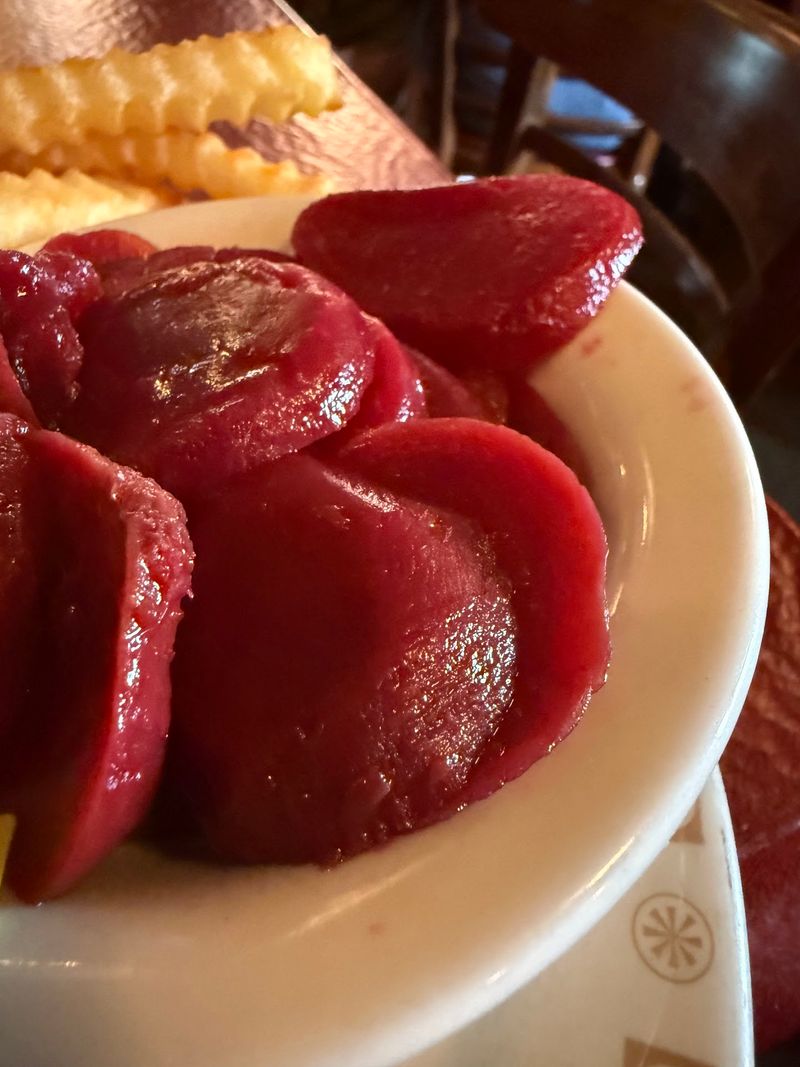
Ever ordered a sandwich and found yourself spending almost as much time choosing the side? Schwabl’s offers several accompaniments that reflect its German-American food traditions, including German potato salad, homemade pickled beets, and German-style coleslaw.
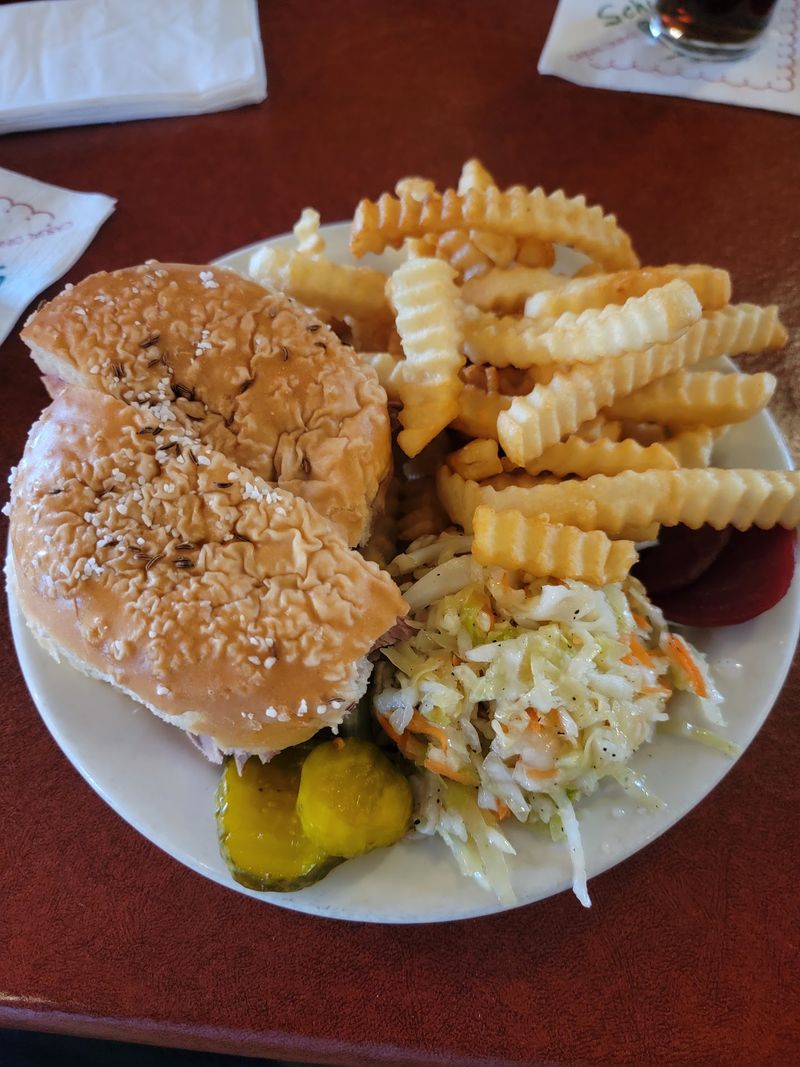
The potato salad gives you a different direction from a conventional serving of fries. Pickled beets bring acidity and a deep red color, while coleslaw offers a cooler, crisp element alongside the roast beef.
Choose a tangy side, a crunchy side, or another potato dish, depending on your appetite.
The ordering format deserves a closer look. Schwabl’s specials and plates include a choice of coleslaw, pickled beets, or garden salad, plus a choice of french fries, German potato salad, mashed potatoes, or sweet potato fries.
The Hungarian goulash is an exception to those standard plate combinations.
A sandwich ordered by itself isn’t the same as a special with included sides.
That gives you a simple lunch decision. Keep things focused with a beef on weck, or order a special if you’d rather have vegetables and potatoes alongside the main dish. Homemade soup is another menu option, with selections changing from day to day.
A Historic Dining Room Keeps Western New York’s Food Traditions Alive
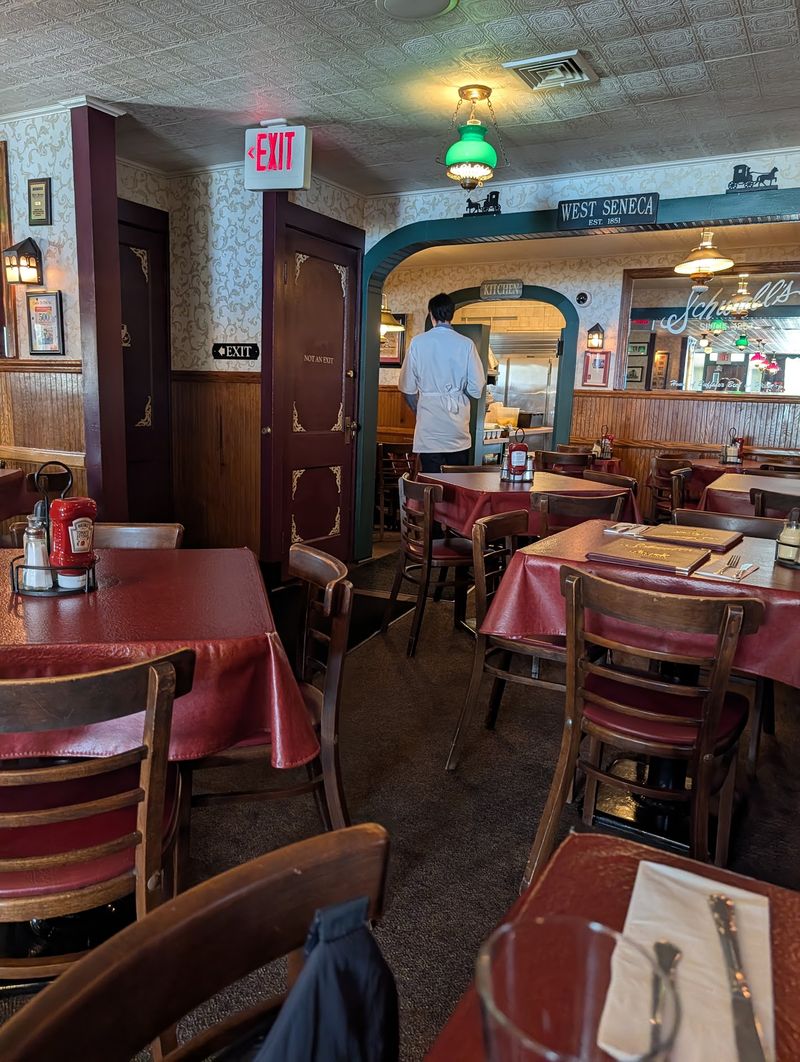
Old photographs, framed artwork, and historical memorabilia give the Schwabl’s dining room a connection to earlier chapters of Buffalo-area life. Take a moment to examine the photographs and historical objects displayed along the walls.
Among the displayed pieces are images connected to the Schwabl family, an old newspaper clipping, and material recalling Klein Deutschland.
There is also a watercolor given to Cheryl and Gene Staychock by employees, and a pen-and-ink work donated by a private collector.
Both offer something to examine alongside the photographs and older printed material.
A handbill distributed during the 1901 Pan-American Exposition offers another link to the restaurant’s earlier locations. Other displays refer to Semlitsch’s Tavern, which occupied the West Seneca building before Schwabl’s moved in.
Those objects make an interesting companion to lunch. You can begin with a sandwich and, before leaving, look for the references to the older restaurant, its former building, and the city’s exposition history.
The collection traces the restaurant’s history through several Buffalo-area locations before its move to West Seneca.
Traditional white staff uniforms are another longstanding feature of the restaurant. Traditional carved-meat dishes share the dining room with photographs, artwork, and memorabilia from the restaurant’s history.
Generations Of Local History Make Schwabl’s More Than A Sandwich Stop
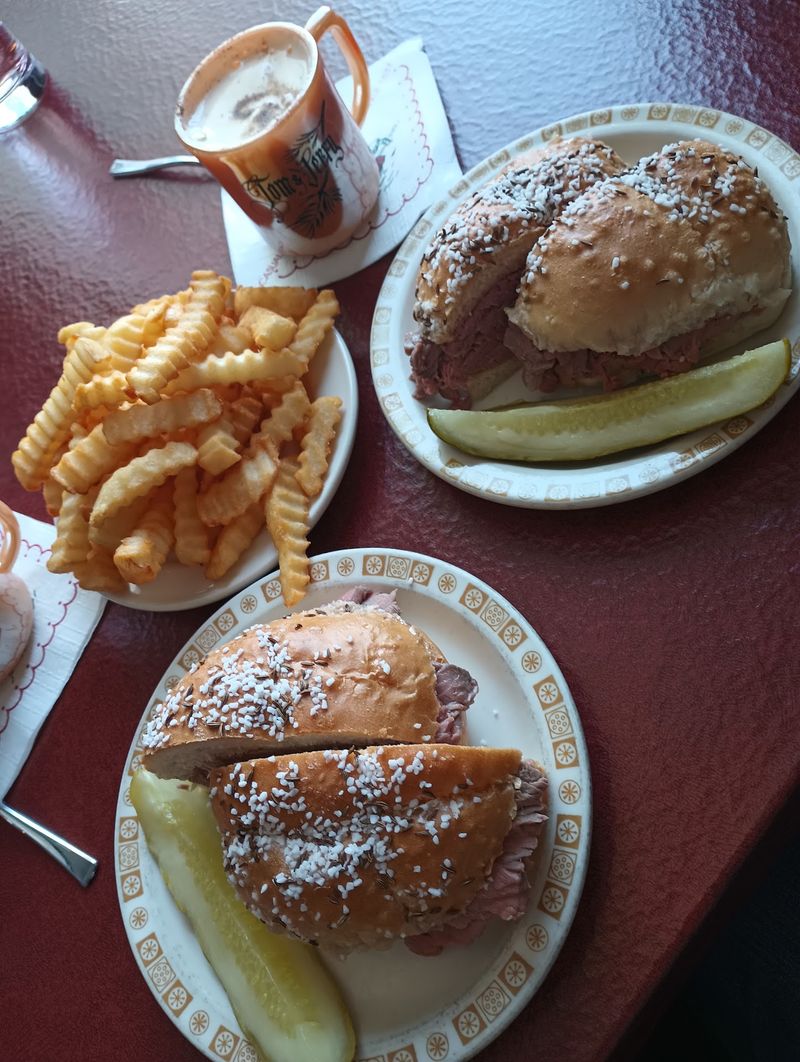
The signature beef on weck is a natural first order, but it isn’t the entire menu. Schwabl’s also prepares hand-carved turkey and ham, giving you other ways to build a sandwich or plate around freshly sliced meat.
Turkey can be served on kummelweck or on bread with gravy. The hot ham sandwich comes with a specialty tomato sauce seasoned with clove, while cold ham and cheese sandwiches offer a simpler alternative.
For another main dish, haddock appears on the menu as both a sandwich and a plate.
Saturday brings a more specific choice: Hungarian goulash with dumpling. The dish combines beef with a paprika-seasoned sauce and is offered on that day rather than throughout the week. Planning for it means choosing your visit accordingly.
Homemade soups provide another option, with varieties changing rather than remaining fixed every day.
Schwabl’s is open for seating and takeout Tuesday through Saturday, from 11:30 a.m. to 7:30 p.m. It is closed on Sundays and Mondays under its regular schedule. Holiday exceptions can affect a particular visit, so check before making a special trip.
If the roast beef is your priority, settle on kummelweck or bread with gravy before you arrive. For a longer lunch, consider a special with sides and take time to look around the dining room. Set your directions for 789 Center Road, West Seneca, NY 14224.