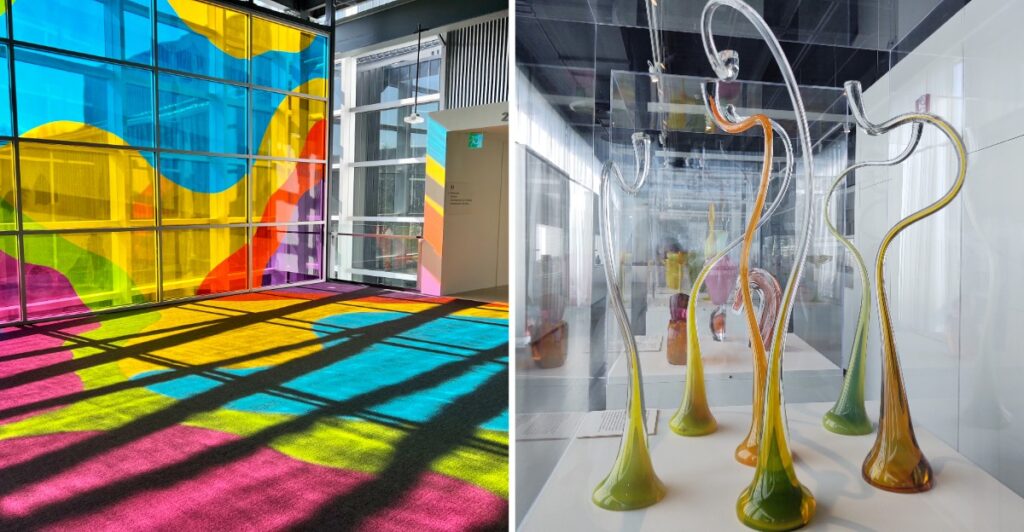
Most museums have one very clear rule: do not touch.
This one gets a little more interesting.
You can watch molten glass turn into something recognizable, then try a hands-on project of your own with expert help. That changes the whole museum mood pretty quickly.
The galleries cover thousands of years, but you do not have to march through them in order. Follow whatever catches your eye.
A strange shape.
A wild color.
A piece that makes you wonder how glass is even doing that.
This New York museum also lets you see artists working near the heat, which may ruin the idea that glassmaking looks easy.
And if you make something yourself?
I fully support showing it off at home like you just became a master glassblower.
A Birthday Gift That Grew Into A World-Class Museum
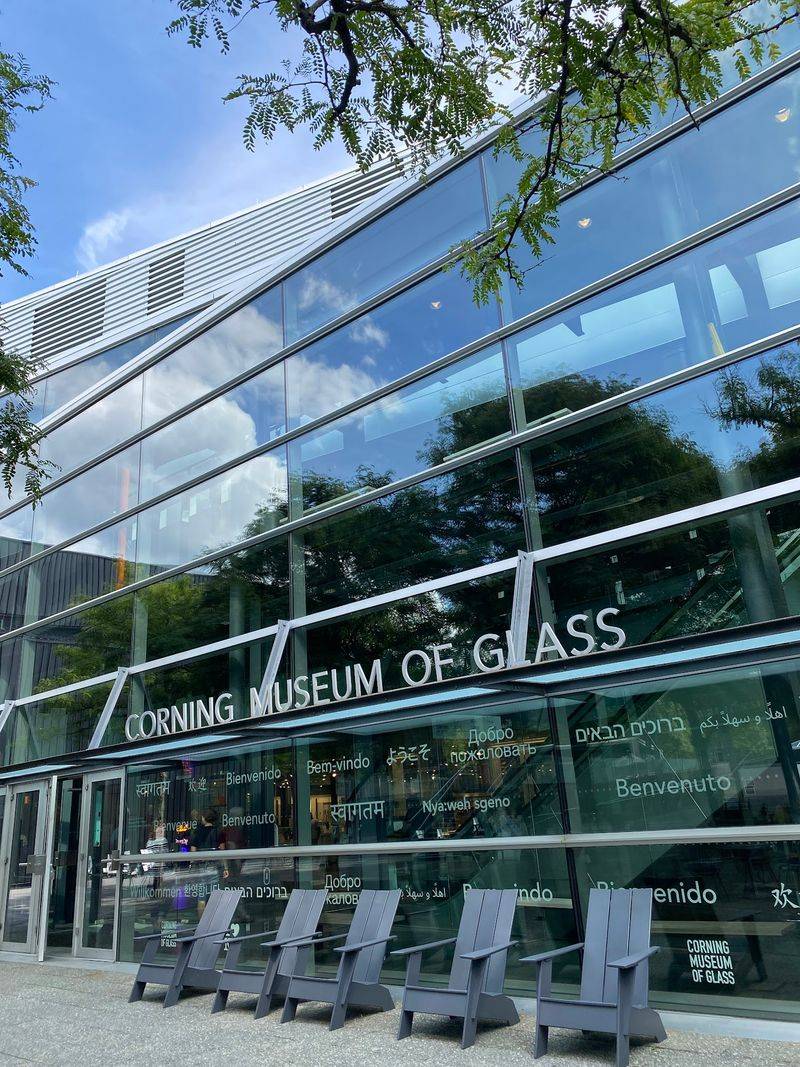
A birthday can involve a cake, a card, or, in Corning’s case, an entire museum. Corning Glass Works established the institution to mark its centennial, opening its doors on May 19, 1951.
The city already had a strong glassmaking identity, and the new museum gave that history a place to grow.
What began with a relatively small collection has become an independent nonprofit institution holding more than 50,000 glass objects. Its reach is global.
Alongside works made in America, you’ll encounter pieces from faraway places and eras when the tools for shaping glass looked very different.
The setting works for a short visit, but the collection has a way of pulling you into side paths. Keep a few open spaces in your schedule. Start with the larger galleries, but resist trying to examine every case in one sweep.
A vessel made for everyday use can be just as revealing as an elaborate sculpture. Notice the thickness of a rim, a surprising color, or the way light passes through a surface.
The museum pairs art with science and live demonstrations, so you can change gears when younger travelers need something more active.
General admission is valid for two consecutive days, an invitation to spread your visit out if your itinerary allows. With that much glass to see, there’s no need to race the clock.
Ancient Treasures That Survived 3,500 Years
Begin in the historical galleries with a small object that carries an enormous stretch of time. An ancient glass portrait of an Egyptian ruler, dated to about 1450 to 1400 BC, belongs to a world far removed from modern windowpanes and drinking glasses.
Its survival is remarkable, but so is the skill behind it.
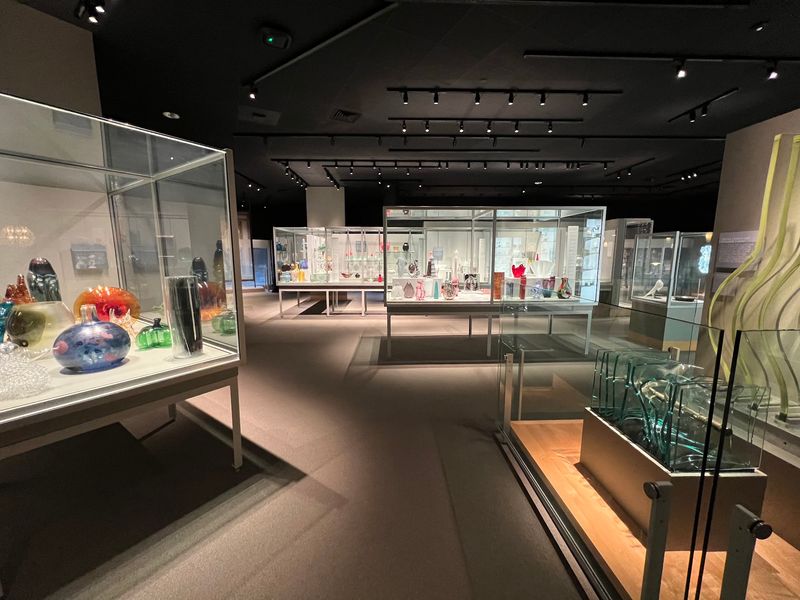
The collection represents more than 3,500 years of glassmaking. Look for changes in color, decoration, and purpose as you move between regions and centuries.
Early makers experimented with ingredients and heat long before today’s carefully controlled furnaces, producing everything from intimate ornaments to containers for daily life.
Roman glass offers another kind of surprise. Even objects intended for ordinary use can have graceful curves and delicate handles.
Later pieces reveal how craftsmen refined the material into intricate forms, working across traditions that influenced one another through trade and travel.
Try choosing one object in each gallery and looking closely before reading its label. Then read its story and see how close your guess came.
For families, comparing familiar shapes with ancient examples makes the distance between centuries feel smaller.
A Towering Green Giant And Bold Modern Designs
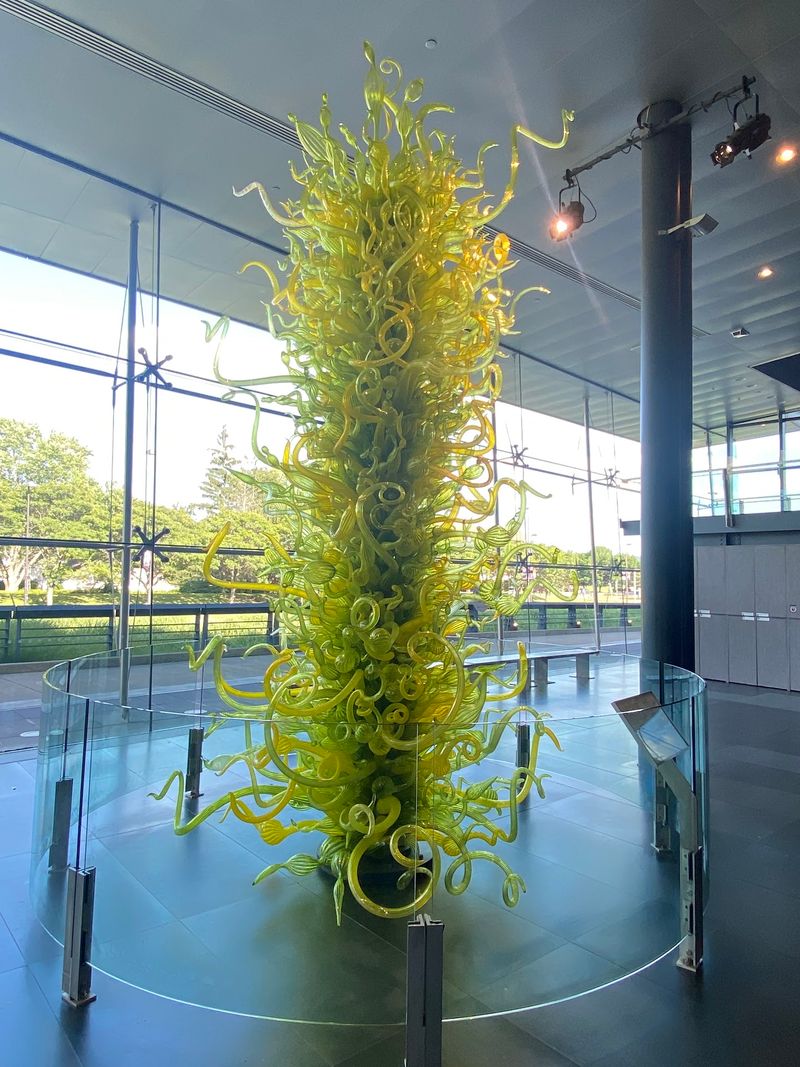
Before disappearing into the galleries, look up in the admissions lobby. Dale Chihuly’s Fern Green Tower rises about fifteen and a half feet, built from hundreds of curling green and yellow-green glass elements.
The sculpture seems to climb through the air, with each piece catching light at a different angle.
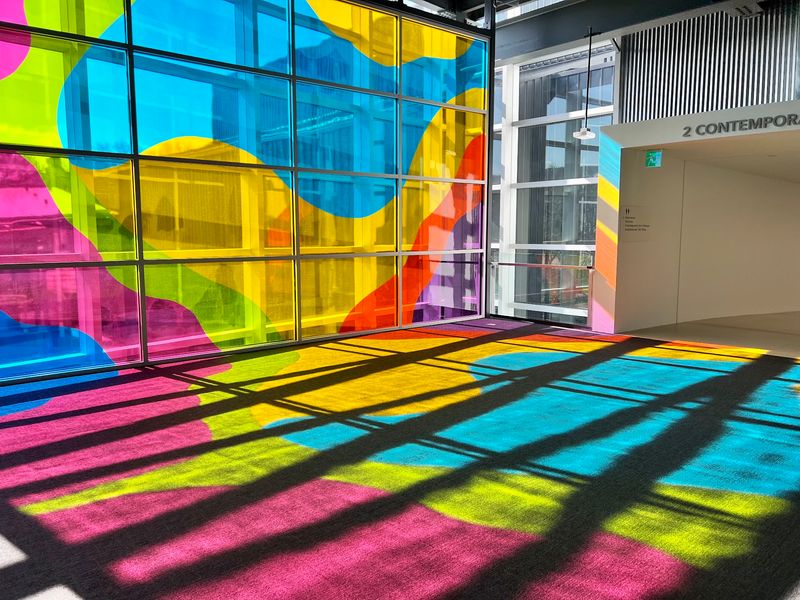
That vertical burst is a lively introduction to the museum’s contemporary collection. The Contemporary Art plus Design Wing, opened in 2015, gives large-scale installations room to breathe. Walk around a piece when the layout allows.
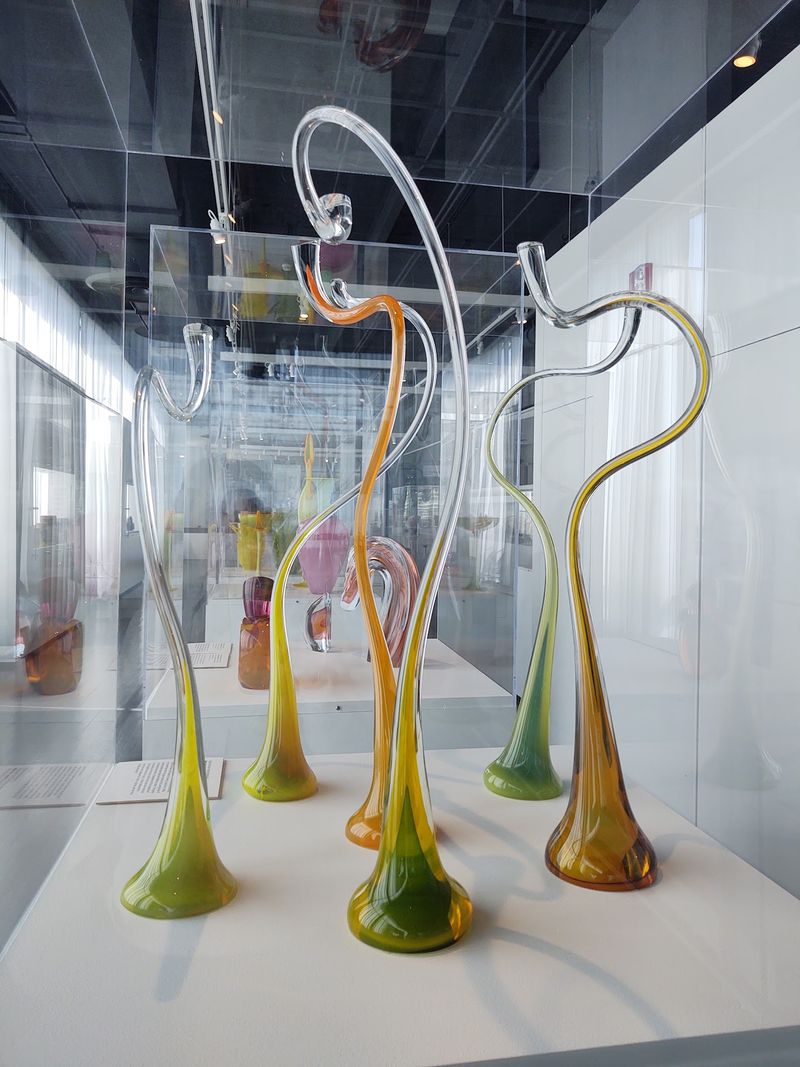
Glass can appear solid from one side, almost weightless from another, and completely different once the light hits its edges.
Some artists work with transparency; others use dense color, texture, or forms that resemble fabric and water. It’s worth checking whether a work is made of blown, cast, or assembled glass. The method can be as interesting as the final shape.
If you’re traveling with children, invite them to pick a sculpture they would never have guessed was glass. The fun lies in spotting the clues together.
Give your eyes a rest between rooms. Large installations make an impression quickly, but smaller details often emerge when you look a second time.
Molten Magic Happens Right Before Your Eyes
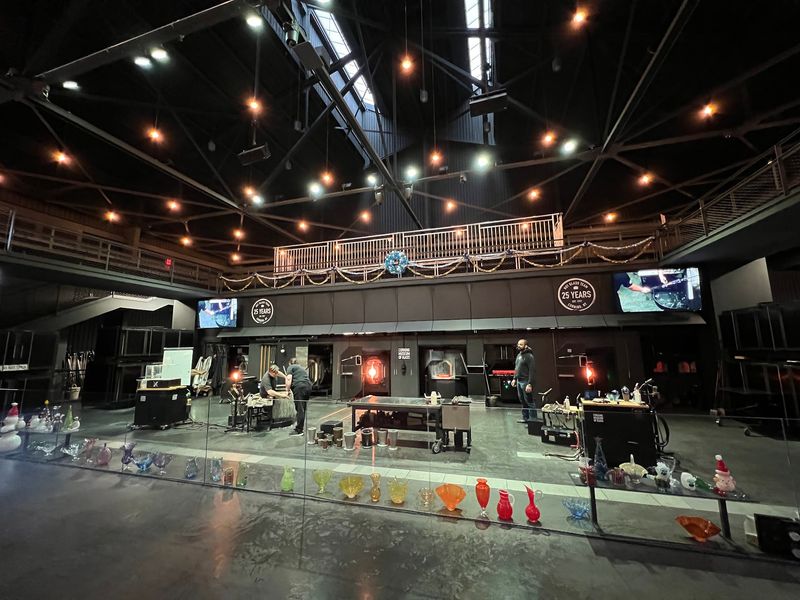
A glowing orange lump rests on the end of a long metal pipe. The glassmaker turns it steadily, working quickly enough to shape the softened material before it cools. Soon the gather begins to look like a vessel rather than a blob.
You can watch that change happen during the museum’s live hot glass demonstrations.
The artists narrate their work, bringing the tools and techniques into focus while the furnace does its bright, hot work.
Shaping the glass requires timing and teamwork. A small pause can affect a curve, while a carefully directed breath helps transform the molten glass into something hollow.
Check the daily demonstration schedule early, then fit the galleries around a presentation that interests you. Shows take place throughout the day, and glassworking demonstrations can also involve a torch, which is used for much smaller objects.
Watch how often the artist returns the piece to the heat, and how a paddle or other simple tool can change its outline.
When the finished piece is set aside, you’ll have a better idea of how much work hides inside even an uncomplicated glass cup.
Make A Glass Keepsake With Your Own Two Hands
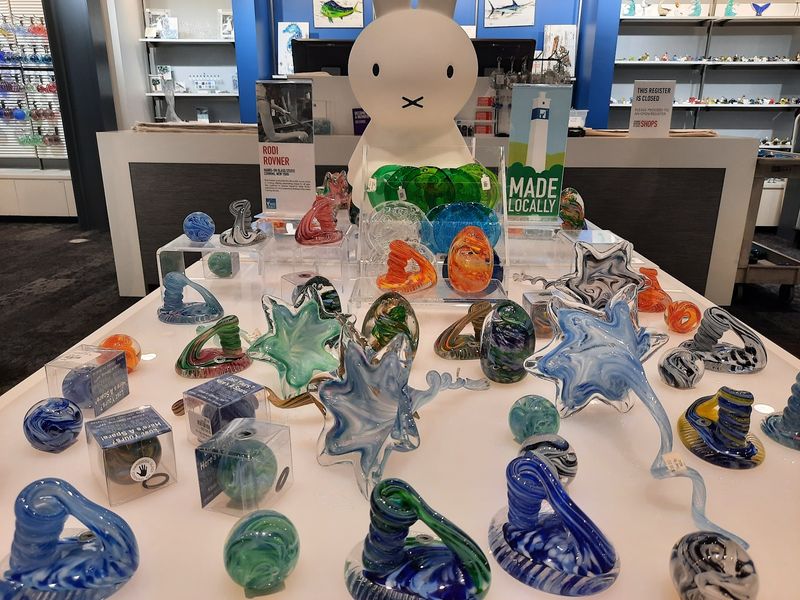
Watching glassmakers at work might leave you itching to try something yourself. That’s where Make Your Own Glass comes in.
The museum’s Studio offers guided projects using different methods, with professional glassmakers helping participants through the steps appropriate to their chosen activity.
Options include glassblowing, fusing, flameworking, and sandblasting, with age requirements that vary by project.
In a fusing session, for example, you arrange colored glass into a pattern that will be joined in a kiln. Sandblasting offers another approach, adding a design to a prepared glass object.
More intensive glassworking activities involve close supervision around heat and specialized tools.
Choose a project based on your group’s ages and the amount of time you want to spend in the Studio. Reservations are recommended, especially during school breaks and busy travel periods.
Most heat-worked pieces need to cool slowly overnight before they can be collected. Some engraved or sandblasted projects may be ready sooner. Arrange pickup or available shipping before leaving, rather than assuming your creation can ride home with you immediately.
A homemade keepsake may be small, but knowing exactly how its colors and shapes came together gives it a story to take home.
Where Science Shows Off Its Shiny Side
Glass doesn’t spend all its time posing on a shelf. It also helps move information, focus images, and protect the devices you carry.
The museum’s Glass Innovation Center brings that practical side into view through exhibits about light, optics, containers, windows, and modern technology.
Start with a familiar example: a lens. Its curves guide light in ways a flat pane cannot, which is why glass has long mattered to telescopes, microscopes, and cameras. Fiber optics take the idea in another direction, carrying light signals through slender strands.
Interactive displays give you a chance to test concepts rather than just memorize terms. Move from one station to another and see which ideas connect with the objects you’ve already encountered in the art galleries.
A window, a drinking vessel, and a delicate sculpture share some basic properties, though they are designed for very different jobs. Why should one kind of glass resist everyday bumps while another is chosen for its color or delicate shape?
After visiting this area, even the glass on your phone might look a little less ordinary. There’s a whole lot of clever thinking behind a surface you barely notice.
Smart Tips For Planning A Smooth Visit
Give yourself enough time to move between the galleries, demonstrations, and Studio without checking your watch every few minutes.
The museum generally opens daily from April through December, while winter schedules include Wednesday closures. Holiday exceptions apply, so confirm the hours for your visit before setting out.
Children and teenagers seventeen and under receive free museum admission, and regular admission remains valid for two consecutive days.
Make Your Own Glass is a separate activity that benefits from an advance reservation. If it’s your top priority, choose that session first and arrange everything else around it.
The museum has an accessible parking lot near the entrance, and a seasonal courtesy shuttle connects parts of Corning, including the historic downtown area. The shuttle’s operation varies by season, so don’t make it your only transportation plan.
Need a break? The museum café offers a place to pause between exhibits. You’ll also find a shop with objects ranging from everyday glass pieces to more elaborate creations.
It is located at 1 Museum Way, Corning, NY 14830. Once inside, start with the glass that catches your attention, save a little time for the furnace, and give your own creation the careful trip home it deserves.