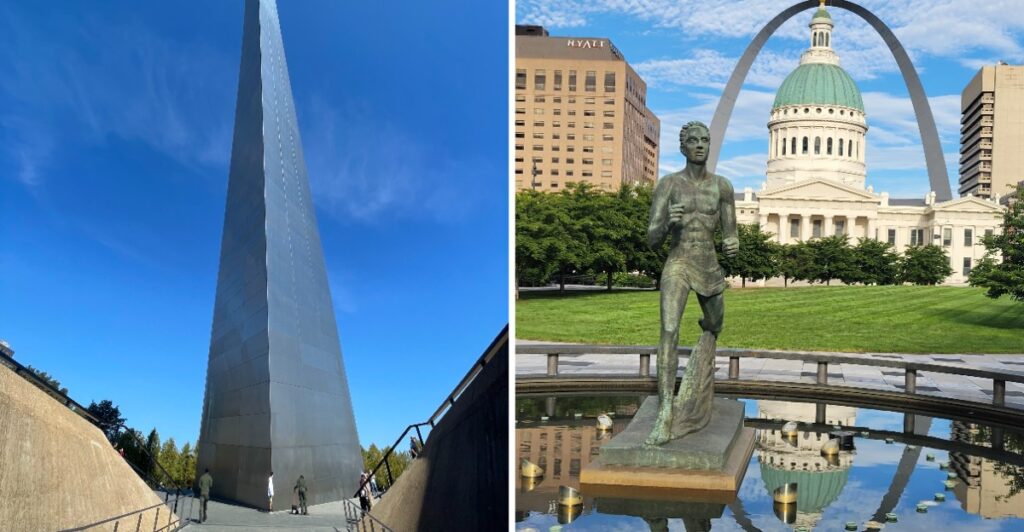
From the ground, it looks like a giant piece of sculpture.
Then you learn there is a tram inside it.
That changes the whole situation.
The ride climbs through the curved steel structure in compact little cars, eventually delivering you to a narrow observation deck 630 feet above the ground.
Missouri does not exactly ease you into the view.
Down below, the river cuts past the city while the arch turns the skyline into something instantly recognizable.
And if heights are not your thing, there is still plenty happening at ground level. The museum adds the history. The lawns give you room to take in the scale.
But the detail I keep circling back to is simple:
Someone built a monument shaped like a giant curve and then figured out how to send people through the inside of it.
That is commitment to the bit.
The Gateway Arch Towers 630 Feet Above The St. Louis Skyline
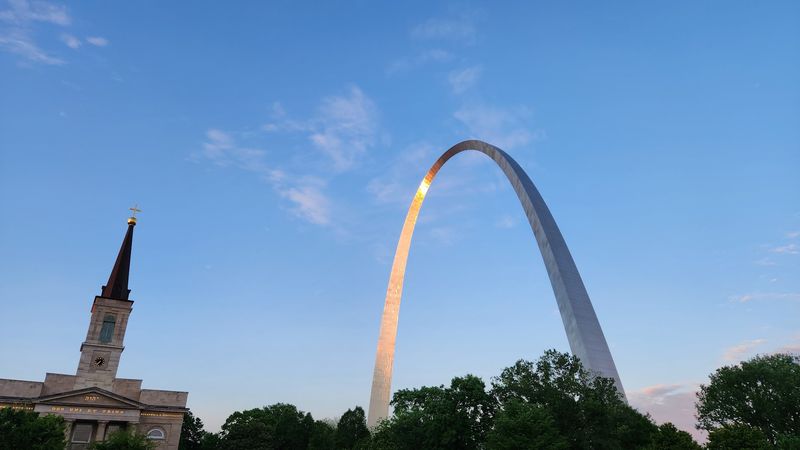
Tilt your head back near the base and the stainless steel legs sweep upward into one continuous curve. The Gateway Arch stands 630 feet tall, rising above the lawns of its national park beside the Mississippi River.
It is the country’s tallest human-made monument, but the view changes considerably depending on where you stand.
From close to one leg, the curve extends beyond the frame of a typical phone photograph.
Move farther back on the park paths and you can see both legs, the narrow summit, and the open space beneath the structure.
The steel surface reflects its surroundings. Bright skies can make it appear almost white, while clouds create patches of muted gray across the exterior. At other times, the curves pick up warmer light toward the end of the day.
Want the whole monument in one picture? Walk toward the wider lawns and experiment with a vertical frame before trying a panorama. Keep to the paths and leave room for people moving through the park.
Comfortable shoes make it easier to explore several angles without turning every photograph into an elaborate expedition. The lawns also offer space to pause between stops. Short on time?
Choose a spot farther back on the lawns for a clear view of the full Arch.
A Riverside Giant That Measures Just As Wide As It Stands Tall
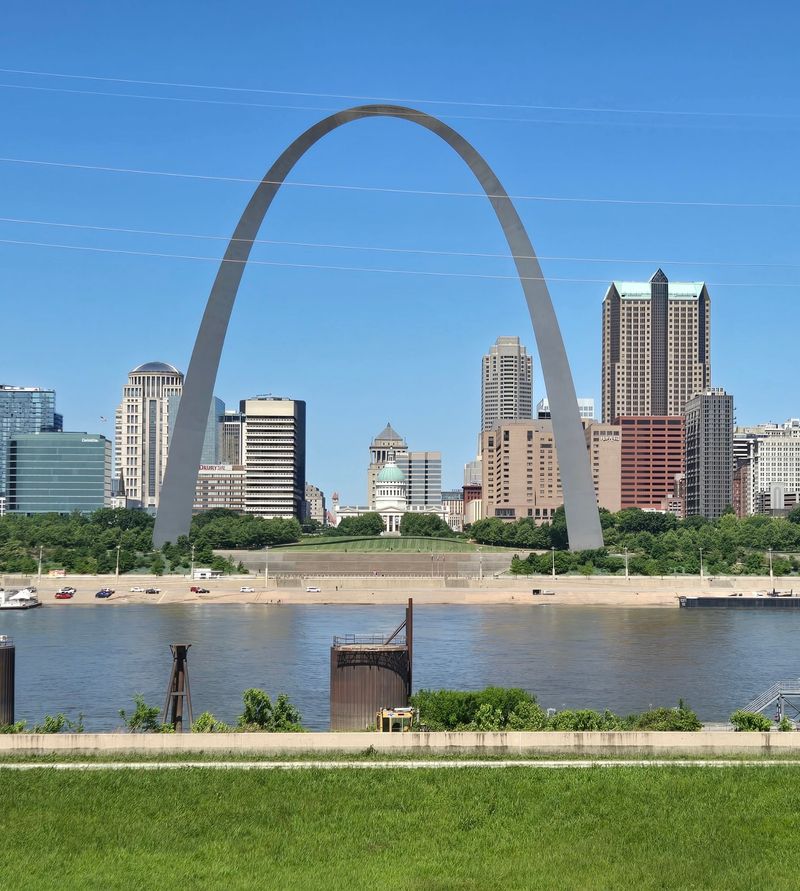
Here’s a measurement that may catch you off guard: the Gateway Arch is 630 feet wide between the outer edges of its legs, exactly matching its height. The equal measurements help explain its broad, balanced appearance from a distance.
The monument occupies a landscaped national park along the Mississippi waterfront.
Paths link the lawns, museum entrance, and nearby riverfront, so you can spend time outside even if you’re skipping the tram.
Trees and grassy spaces provide a change of pace from the surrounding downtown streets.
From the riverside, look back toward the Arch with the city beyond it. Across the water lies Illinois, and bridges connect the two sides of the metropolitan area. Boats and working river traffic may be visible, depending on conditions and the time of day.
Summer weather in St. Louis can be hot and humid. Bring drinking water and sun protection if you plan to walk the grounds, and use the museum for an indoor break when needed.
A short outdoor circuit pairs easily with a museum visit, while anyone looking for a longer stroll can continue along public paths near the waterfront.
Check the weather before setting out, especially when thunderstorms or extreme heat might change your plans.
Eero Saarinen Dreamed Up A Curve Unlike Any Other
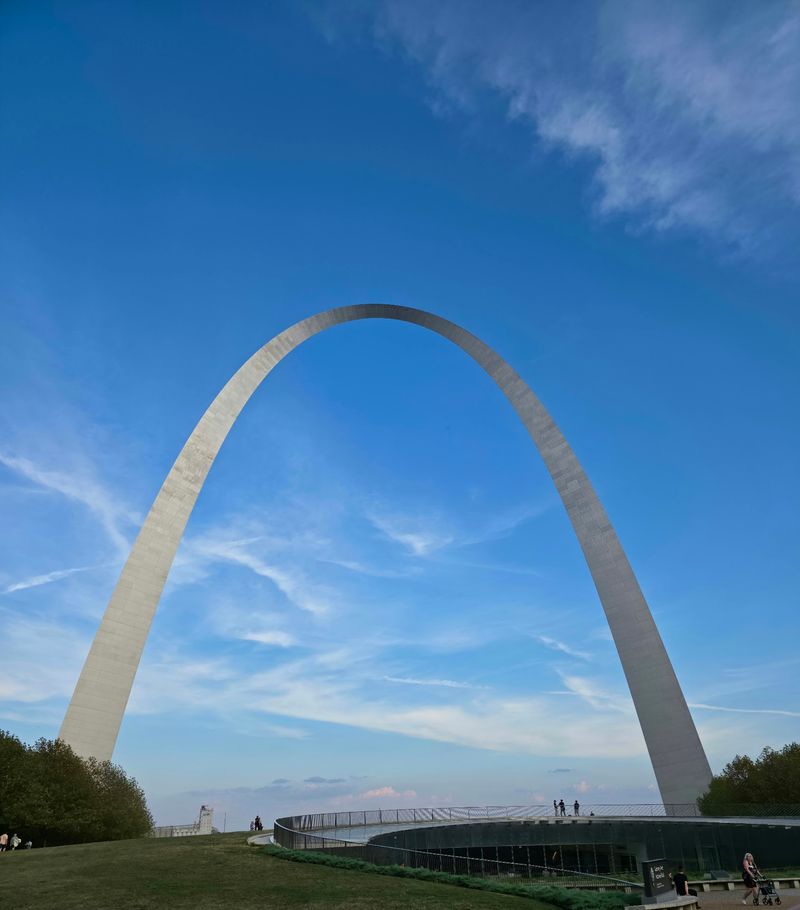
Finnish-American architect Eero Saarinen designed the Gateway Arch as a sweeping, unbroken form rather than a traditional monument with statues and columns.
His proposal won a national design competition, and the finished structure became one of St. Louis’s most recognizable shapes.
The Arch follows a weighted catenary curve. Imagine a chain hanging between two points, then turn its curve upside down.
That gives you the basic idea, although the monument’s precise shape accounts for how its weight is distributed instead of copying an ordinary chain exactly.
Each leg has a triangular cross-section that becomes narrower as it climbs. Near the base, the legs are substantial enough to contain the visitor entrances and tram machinery. Higher up, they taper toward the observation area where the two sides meet.
The clean outline makes the construction details worth a second look. Stand far enough away to see how the legs emerge from the ground, then move closer to examine the angled steel faces.
You don’t need an architecture textbook to follow the lines, just a little time and a clear view from the park.
Squeeze Into A Tiny Tram For A Four-Minute Climb
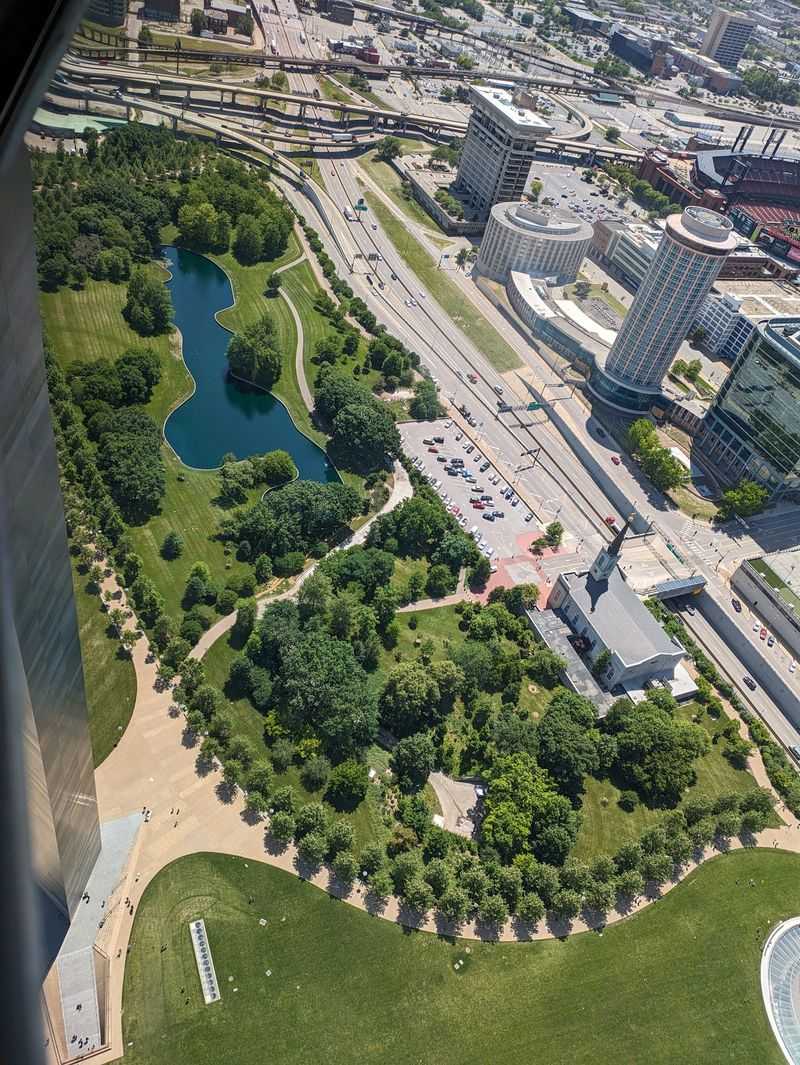
The ride to the top uses a tram built specifically for the Arch’s curved interior. Small capsules travel inside the legs, gently adjusting their position as they climb. The upward journey takes about four minutes, and each capsule seats five people.
The cabins are snug, with limited headroom and a small window in the door.
If enclosed spaces make you uncomfortable, consider looking at the replica tram capsule near ticketing before deciding whether to ride.
Tram reservations are recommended because popular departures can sell out.
There is an important accessibility limitation. Visitors must manage at least 96 stairs across six flights during the round trip. Wheelchairs, walkers, mobility scooters, and strollers cannot travel in the tram or reach the observation deck.
There are no benches or restrooms at the top, and parts of the experience can involve standing in line.
The museum and park grounds provide more accessible alternatives, including a display that offers views from the summit.
For the tram, enter the visitor center from the west side facing Fourth Street and the Old Courthouse, then allow time for security screening before your scheduled departure.
The four-minute climb is only one part of the full visit.
Families should also remember that young children need appropriate adult supervision during the ride, and that compact cabins may not suit every traveler.
Thirty-Two Little Windows Frame A Very Big View
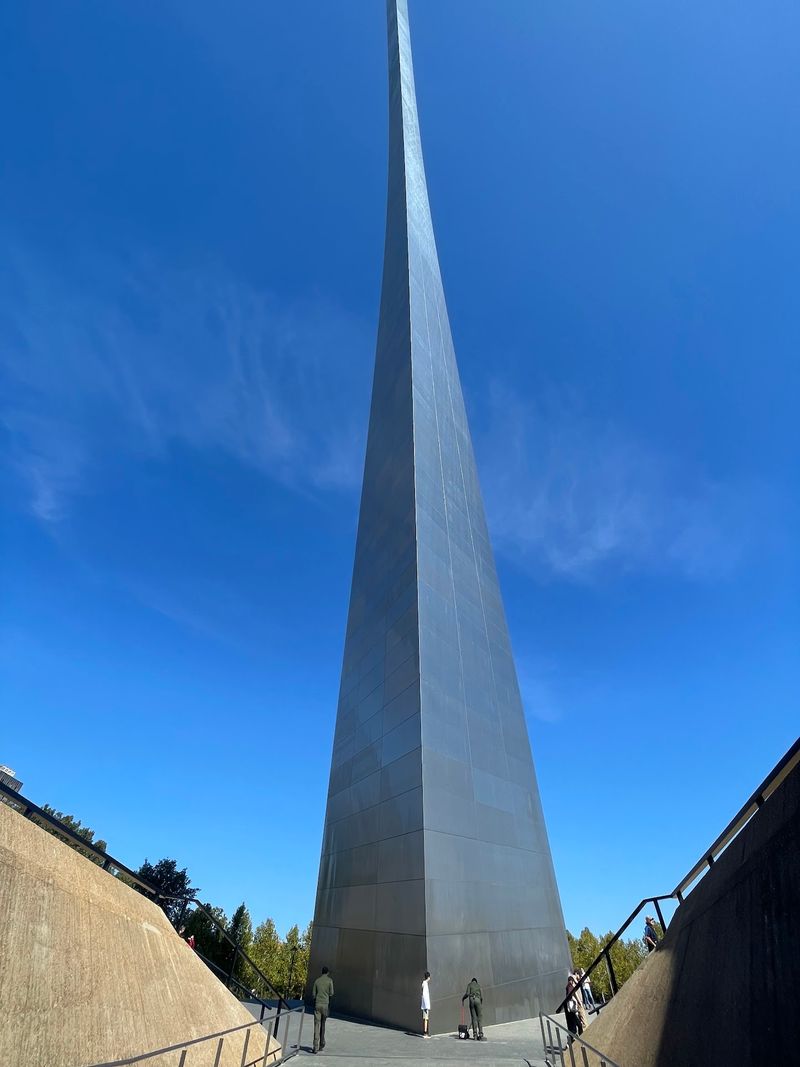
At the summit, the tram opens into a narrow observation area running across the top of the Arch. There are 32 small windows, divided evenly between its east and west sides.
Look west for downtown St. Louis, with streets and buildings stretching away from the river. Turn toward the eastern windows for the Mississippi, its bridges, and the Illinois shoreline.
Visibility changes with weather, so a clear day reveals more of the surrounding landscape than a hazy one.
The windows sit low along the curved walls, and you may need to bend or lean toward the glass to see out. The floor also follows the shape of the Arch rather than resembling a flat, spacious rooftop terrace.
Time at the top is usually around eight to ten minutes, so decide which side you’d like to look at first. If you’re taking pictures, hold your camera close to the glass to reduce reflections without pressing heavily on it. Then cross to the other side for a contrasting view.
Remember that the complete tram activity, including boarding and returning, takes considerably longer than the ride upward. Plan the museum and any outdoor exploring around your reserved time.
Gleaming Stainless Steel Joined The Skyline In 1965
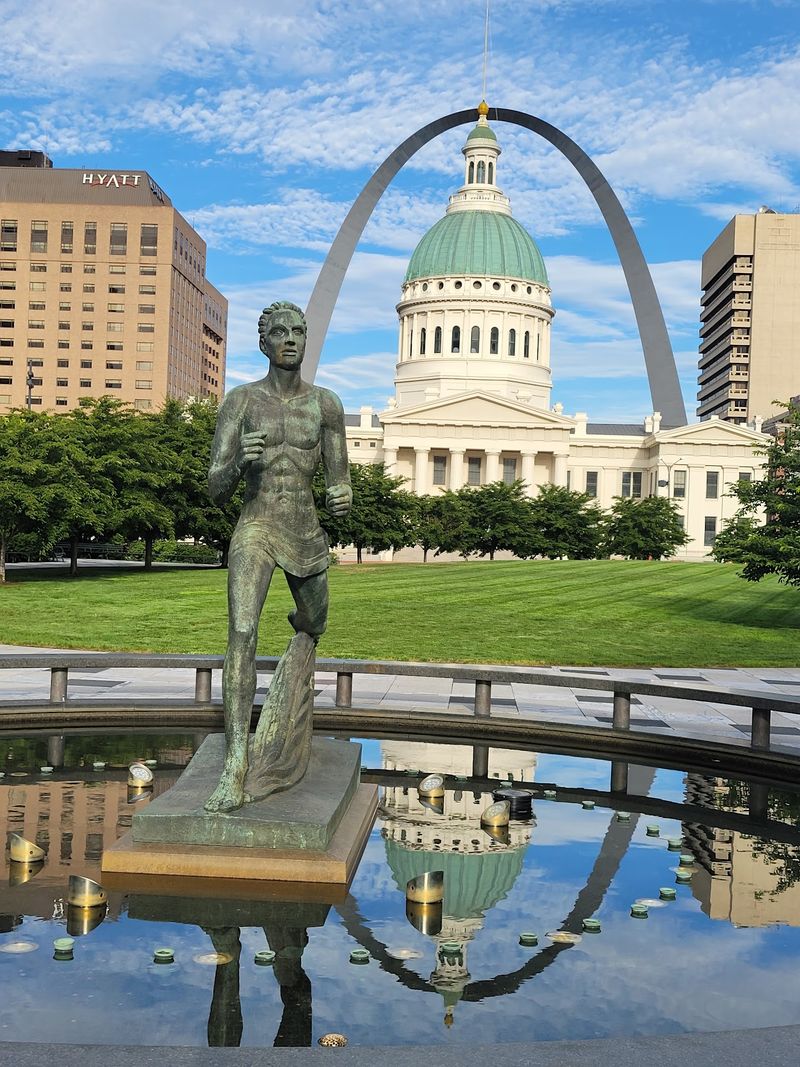
The Gateway Arch was completed on October 28, 1965, after workers constructed its two massive legs upward from opposite sides. The final connecting section required careful alignment as the legs approached one another high above the ground.
Its exterior consists of stainless steel, chosen in part for durability and the way it handles outdoor conditions. The material reflects the sky throughout the day, giving the monument noticeably different tones in sunshine, cloud cover, and evening light.
Although the structure was finished in 1965, public tram service arrived later. The first tram began carrying visitors in 1967, and the second followed in 1968. That distinction matters if you’re comparing the construction date with the history of riding to the top.
For a closer look at how the pieces came together, make time for the museum’s construction displays or documentary film. They provide photographs and engineering details that are difficult to appreciate from ground level alone.
Afterward, step back onto the paths and look up at the summit where the two legs join. At night, park lighting offers another way to see the outline, but use designated pedestrian areas rather than stopping a car beside a busy street.
The polished surface conceals a remarkable amount of structural work underneath.
Stories Of The Westward Journey Wait Below Your Feet
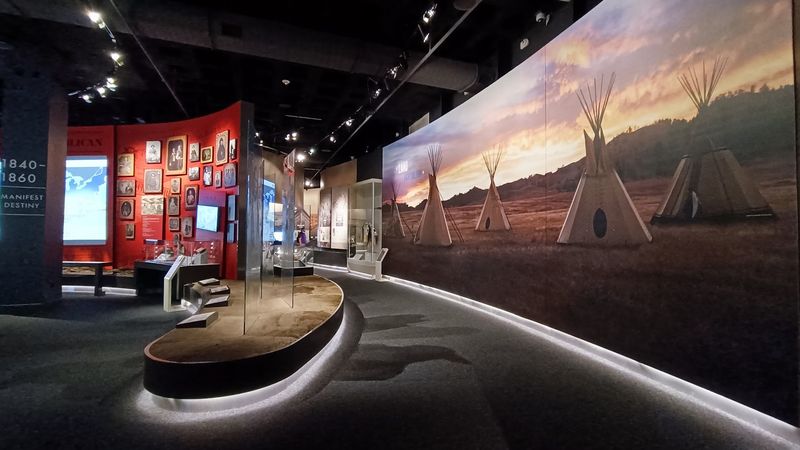
Beneath the Arch, the Museum at the Gateway Arch explores the history of St. Louis and the wider region. Its galleries cover the city’s growth, trade and transportation, westward migration, and the people whose lives were changed by that movement.
The story includes Indigenous communities and the displacement and disruption they experienced during United States expansion.
Exhibits also examine the role of the Mississippi River, frontier settlement, and the construction of the monument itself.
Give yourself time to follow more than one perspective rather than heading straight for the tram queue.
The museum is free to enter, and you can visit without booking a ride to the observation deck. Films and interactive exhibits offer additional ways to explore the history, while the onsite café provides a convenient break between activities.
If you’re combining everything in one visit, start by checking your tram departure, then fit the museum around it. You’ll enter through the west-facing visitor center and pass through security on the way inside.
For navigation, Gateway Arch National Park is at 11 North 4th Street, St. Louis, MO 63102. After the museum, take a walk across the lawns or toward the riverfront. It’s an easy way to see the steel curve from the outside after getting to know the stories beneath it.