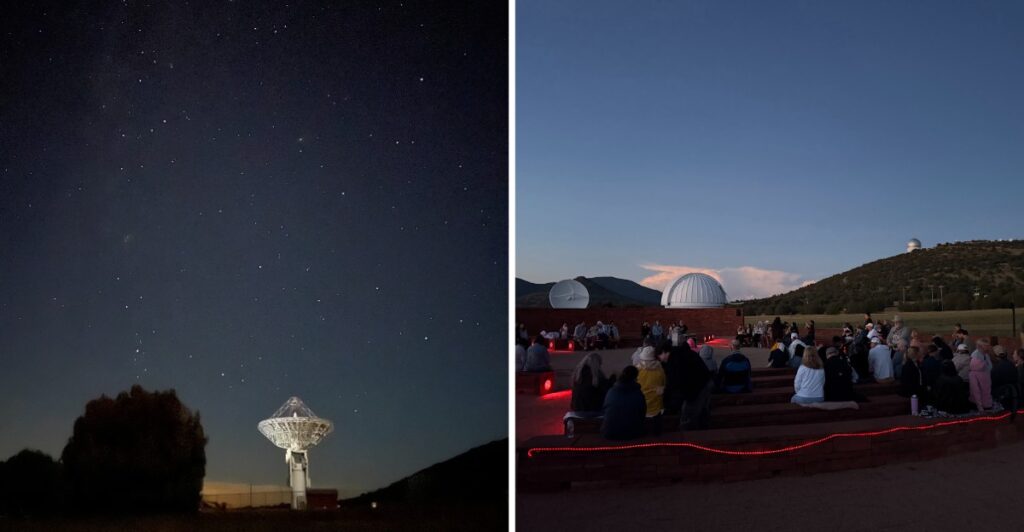
You forget how many stars are up there until city lights get out of the way.
That is what makes a night in West Texas feel so different.
The public Star Parties are built around looking up. Astronomers point out what is visible, then telescopes give you a closer look at planets, stars, and other objects in the night sky.
The huge research telescopes are not part of the public viewing.
Those are busy doing science.
Instead, smaller telescopes are set up for visitors, and what you see depends on the season and the weather.
That keeps every night a little different.
One thing is much easier to predict.
It gets colder after sunset than you might expect.
So yes, even in Texas, stargazing may require an extra layer.
Why The Davis Mountains Keep The Night So Dark
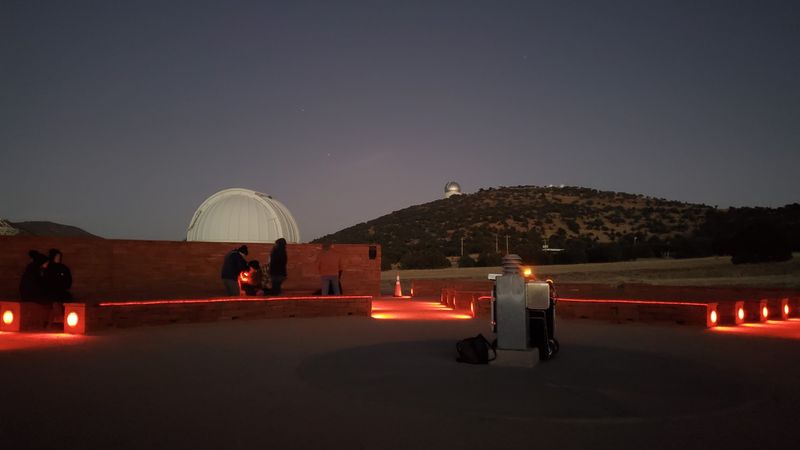
The Davis Mountains rise above the broad landscape of Far West Texas, away from the bright lights of major cities.
That relative isolation gives the observatory access to some of the darkest night skies in the continental United States.
On a clear, moonless night, faint stars become easier to pick out once your eyes have adjusted to the darkness.
Outdoor lighting ordinances in nearby counties encourage fixtures that direct light toward the ground instead of spilling it into the sky.
The observatory supports regional dark-sky efforts, and the Greater Big Bend International Dark Sky Reserve includes the surrounding landscape.
During evening programs, keep your phone tucked away. Light-emitting screens are prohibited in the amphitheater and telescope park because even a brief glance can interfere with dark adaptation.
Leave bright flashlights, light-up accessories, and personal laser pointers out of the evening plan.
Choose closed-toe shoes and a warm jacket before heading outside for the night. A clear forecast does not necessarily mean a warm one.
From A 1939 Research Hub To A Stargazer Favorite
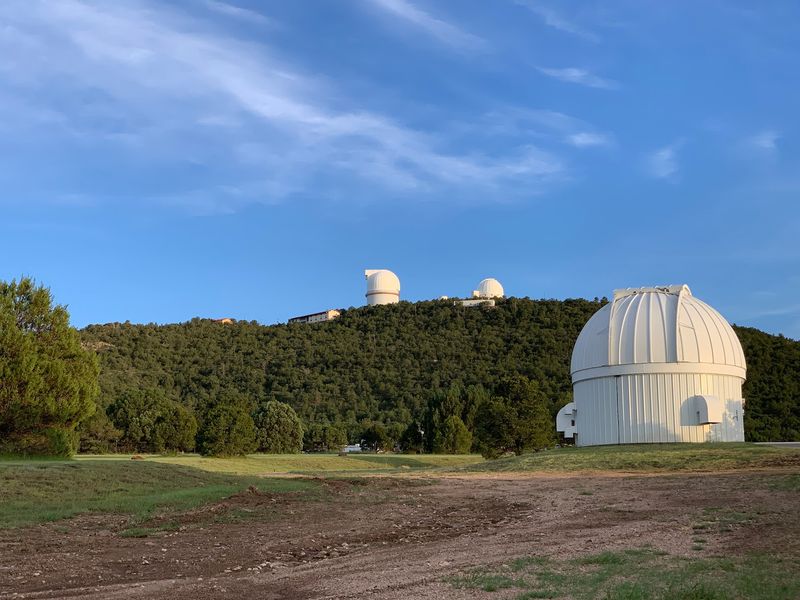
McDonald Observatory was dedicated on May 5, 1939, and its original large instrument was the telescope now known as the Otto Struve Telescope.
The observatory remains a working research facility operated by The University of Texas at Austin, with instruments positioned on Mount Locke and Mount Fowlkes.
The Frank N. Bash Visitors Center provides a different kind of entry to that science. Exhibits introduce astronomy, telescopes, and research conducted in the Davis Mountains.
General admission also gives visitors access to public areas, while scheduled programs offer more structured ways to explore.
Want to see the mountains before the stars appear? Consider a daytime guided tour. These tours begin at the Visitors Center and typically visit the Harlan J.
Smith Telescope on Mount Locke and the Hobby-Eberly Telescope on Mount Fowlkes. Guides discuss the instruments and their research, but the tour does not include looking through either research telescope.
Solar-viewing programs provide another daytime option on scheduled dates.
Do not look at the Sun through ordinary binoculars or a personal telescope; solar observation requires equipment designed for that purpose.
Check the program calendar when combining a daytime visit with an evening ticket.
Constellation Tours That Turn Strangers Into Sky Watchers
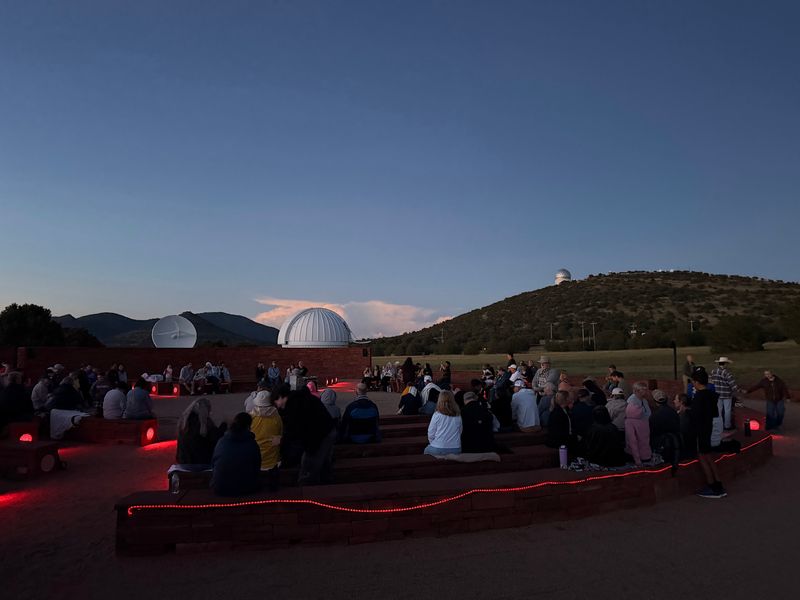
A Star Party normally starts at the Frank N. Bash Visitors Center, where guests check in and gather at the outdoor amphitheater. Arrive about fifteen minutes before the scheduled program so you have time to find your seat and settle in.
The full evening lasts approximately two hours.
An opening introduction covers the program and objects that may be available for viewing. As the sky darkens, a constellation tour helps you recognize bright stars and familiar patterns.
Presenters combine sky orientation with some of the mythology associated with constellations and the science behind what you can see.
The constellation portion generally lasts about thirty to forty-five minutes. After the introduction, you can stay for the tour or go directly to telescope viewing. Both options leave time to explore the instruments during the evening.
Choose your clothes for sitting outdoors after sunset rather than walking around in afternoon sunshine. The higher elevation can bring cold evenings, particularly from fall into early spring. Hats, gloves, and extra layers can be useful depending on the forecast.
Listen for the names of bright stars and constellations visible that season.
Ringed Planets, Glowing Nebulae, And Faraway Galaxies
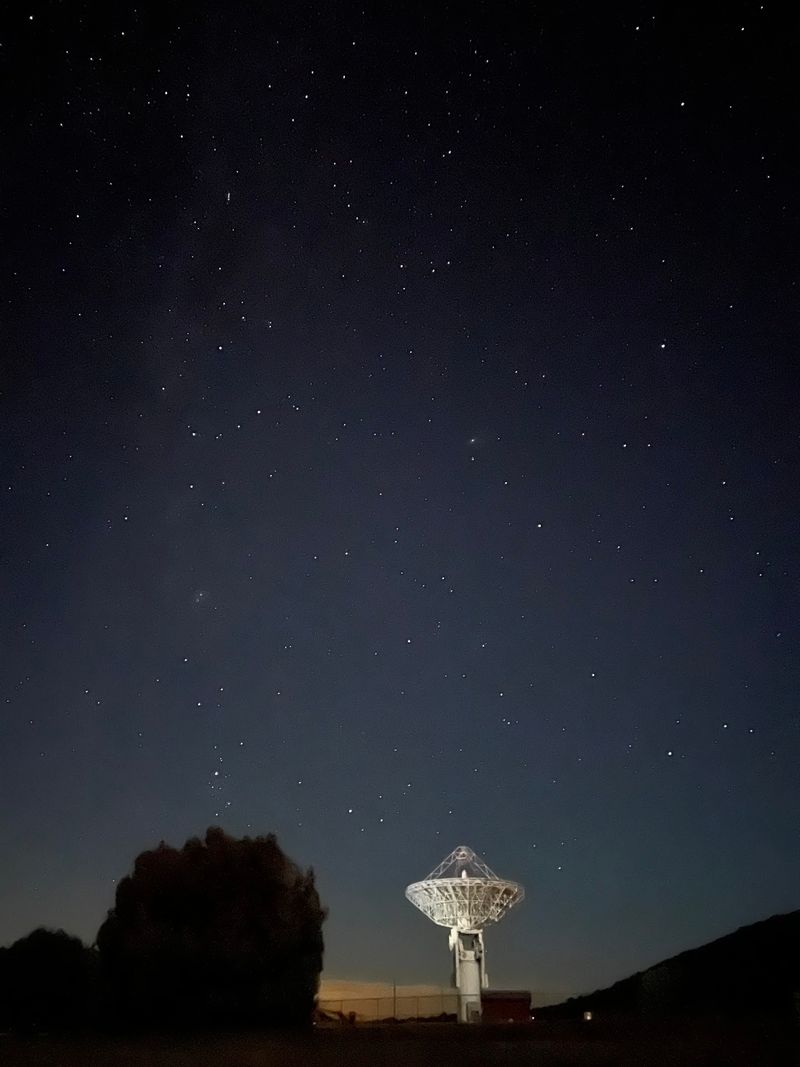
The targets at a Star Party change with the season, the time of night, and viewing conditions. On one visit, a planet may be prominent; on another, the telescopes may be aimed toward star clusters, nebulae, or distant galaxies.
There is no fixed promise that a particular object will be visible on your chosen date.
Saturn’s rings can be visible through a telescope when the planet is well placed, while Jupiter may show cloud bands and some of its large moons.
The Moon can reveal craters and sharply defined shadows along the boundary between sunlight and darkness. Its brightness, however, makes faint deep-sky objects harder to observe.
On suitable nights, viewers may encounter clusters of stars or dim galaxies. A galaxy can look like a pale patch of light, and a nebula may appear delicate rather than dazzling.
For darker skies, consider a date near the new Moon. A bright Moon can be interesting to observe through a telescope, so the choice depends on whether you would rather see lunar detail or attempt fainter targets.
Clouds can change the evening. If telescope viewing becomes impossible, the observatory may substitute live indoor talks, demonstrations, or a virtual sky tour. Watch the email tied to your reservation for weather-related updates and options before setting out.
Exploring The Rebecca Gale Telescope Park
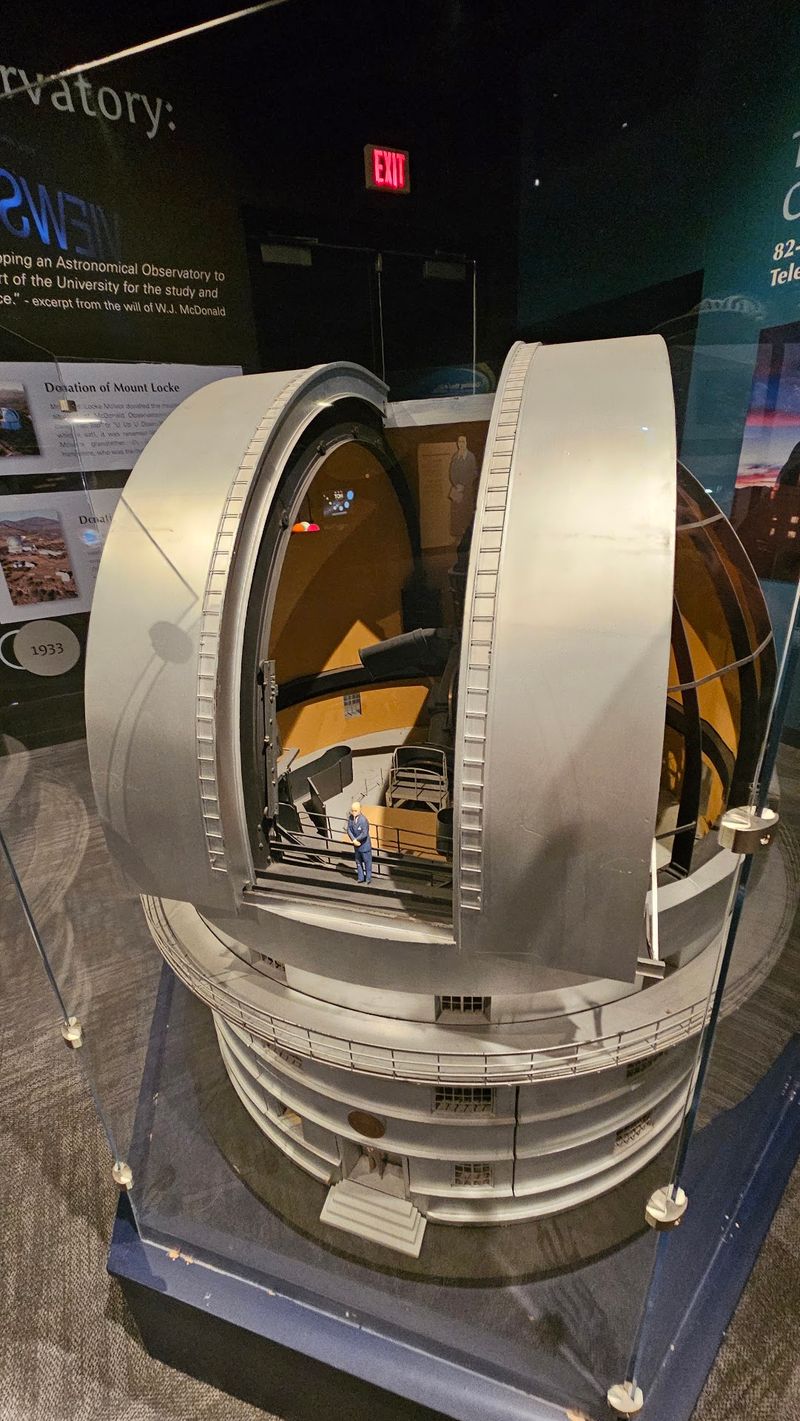
The Rebecca Gale Telescope Park sits behind the Frank N. Bash Visitors Center and contains instruments used in public astronomy programs. During Star Parties, guests rotate among selected telescopes with guidance from staff and volunteers.
Not every instrument in the park is available at every event.
The collection includes telescopes of several designs and sizes, among them instruments with mirrors measuring up to twenty-two inches across.
Some stand in domes, while other telescopes are arranged for outdoor use. Telescope operators handle the equipment and help visitors identify the object under observation.
At the eyepiece, move carefully, avoid touching the telescope, and follow the operator’s directions. An object may look clearer after you give your eye a moment to adjust.
Glasses may need to stay on or come off depending on your vision and the eyepiece; the operator can help you position yourself.
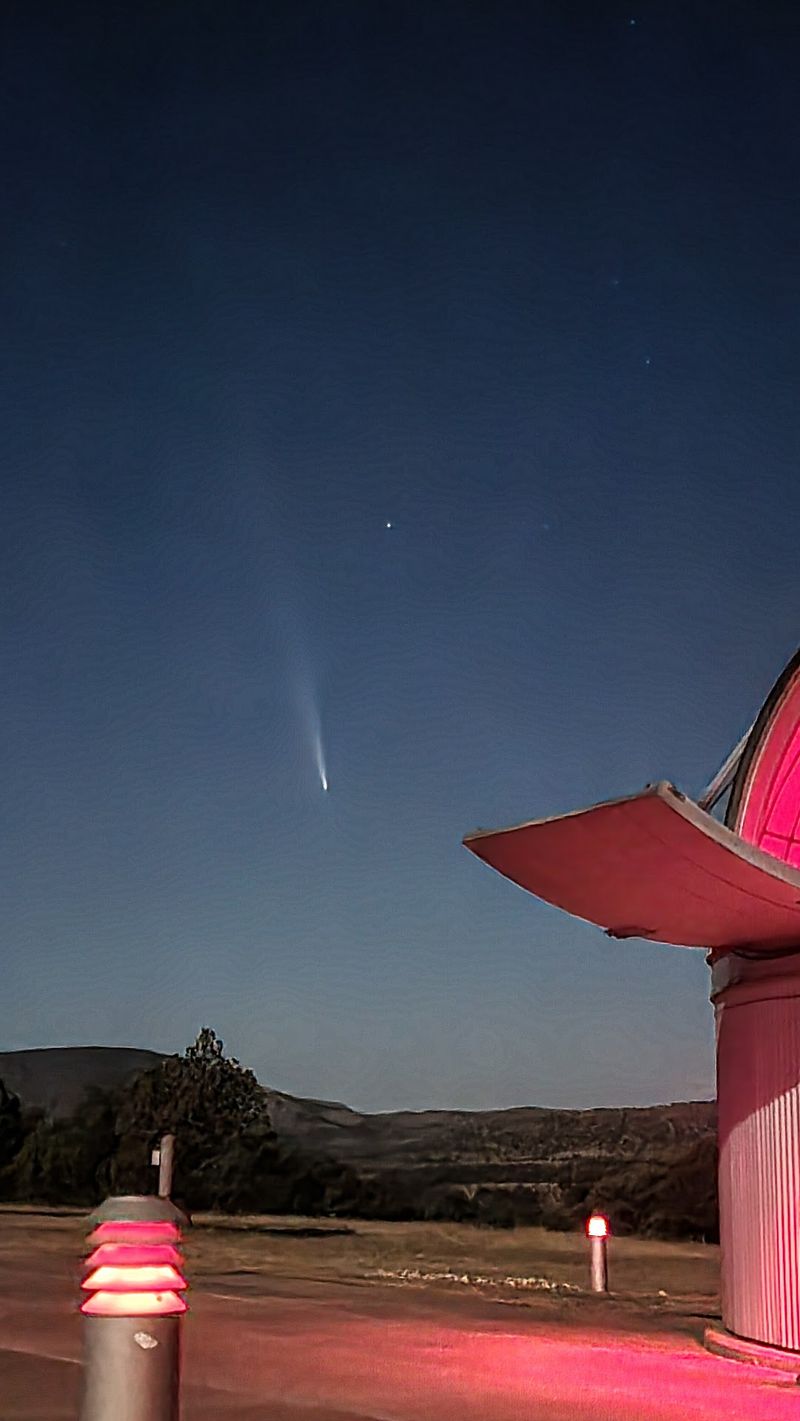
Red lighting guides movement through the darkened area. Keep pathways clear and do not use your phone screen to find your way. Telescope viewing involves standing and moving between stations, so comfortable footwear makes the program easier.
The Visitors Center is at 3640 Dark Sky Drive, Fort Davis, TX 79734. Download directions in advance because cellular reception can be unreliable along the mountain roads, and public Wi-Fi is not available at the Visitors Center.
Plan your arrival around check-in rather than trying to explore unfamiliar summit roads in the dark.
Meeting The Giant Hobby-Eberly Telescope
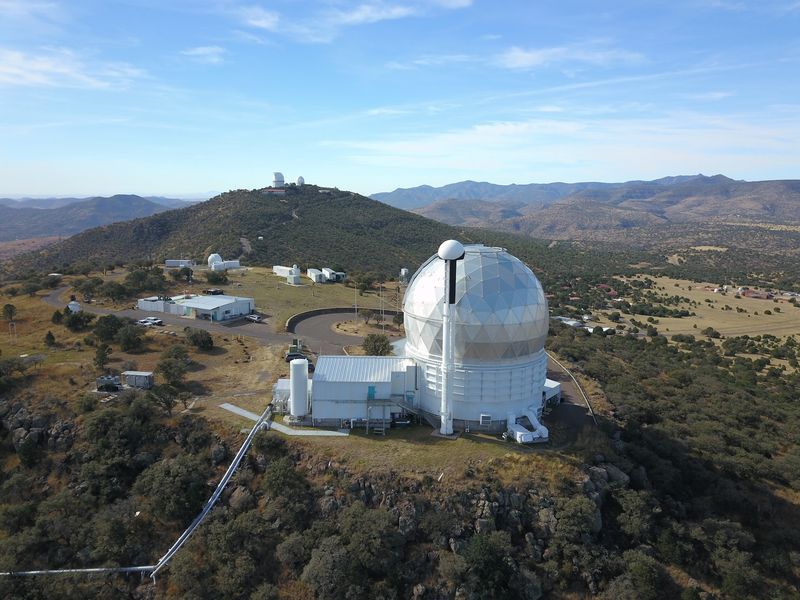
The Hobby-Eberly Telescope stands on Mount Fowlkes, separate from the smaller instruments used during standard Star Parties.
It is one of the world’s largest optical telescopes and serves professional research, including studies of galaxies and dark energy. Its scientific purpose is different from the viewing offered at the public telescope park.
A daytime guided tour brings visitors to the research facilities, subject to the scheduled route and operating conditions.
At Mount Fowlkes, you can learn about the Hobby-Eberly Telescope’s distinctive design and the projects that use it.
A gallery provides videos and a large window with views of the instrument.
You do not look through the research telescope during this visit.
The nearby Mount Locke facilities include the Harlan J. Smith Telescope. General-admission visitors may explore designated public areas there, including a lobby exhibit about the instrument.
The Otto Struve Telescope is not open for ordinary self-guided access.
Visitors may use their own vehicles for summit travel when permitted, but steep roads and limited turning areas create restrictions. RVs and trailers over twenty feet are not allowed at the summits.
Guided tours have limited shuttle capacity, with priority for visitors who need assistance or cannot use their vehicles on those roads.
Picking The Right Night And Reserving Tickets
Start with the calendar rather than choosing a night at random. Star Parties operate on scheduled evenings, and their start times change with sunset through the year. Advance reservations are important because program capacity is limited.
Tickets are required for children as well as adults, and minors must attend with an adult.
The Visitors Center generally operates Tuesday through Saturday, from noon until five in the afternoon, with regular closures on Sunday and Monday and certain holidays.
Evening program admission follows the time on your specific ticket rather than ordinary daytime opening hours. Check both schedules if you intend to visit twice in one day.
Keep an eye on the weather, especially during seasons when cloud cover or storms can interrupt observing. When viewing is unlikely, reservation staff may contact ticket holders about alternatives.
A substitute indoor program can still cover astronomy, but it does not provide the same telescope views.
Fort Davis is the nearest town for accommodation and supplies. The observatory operates on Central Time, an important detail if you are driving from El Paso, which follows Mountain Time.
You will not need special astronomy knowledge or your own telescope. What you do need is a reservation, a realistic weather plan, and enough time to reach the Visitors Center before the program begins.