Billboards with two cartoon peas swinging a hammer and chisel kept popping up along the highway, and somewhere around the fifth one, my stomach started paying attention. I expected a quick, forgettable roadside lunch on a long drive through California.
What I found instead was a story nearly a century old, a bowl of soup that turned skeptics into fans, and a dining room that felt frozen in the best possible way. Pull up a chair, because this humble green soup has a bigger history than you might guess.
A Roadside Landmark on the Avenue of Flags
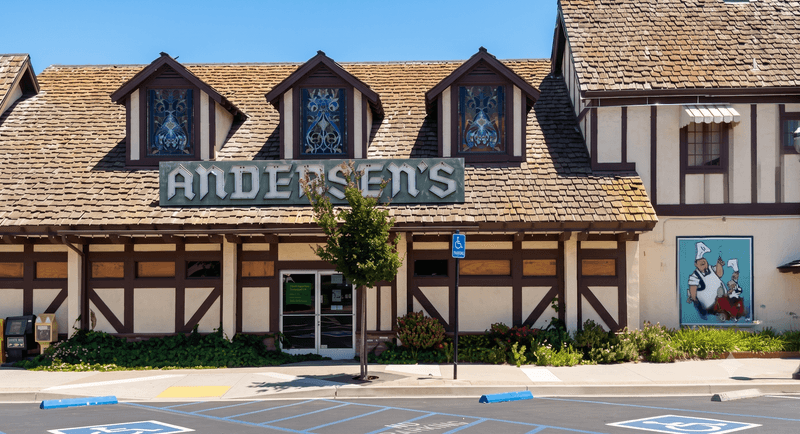
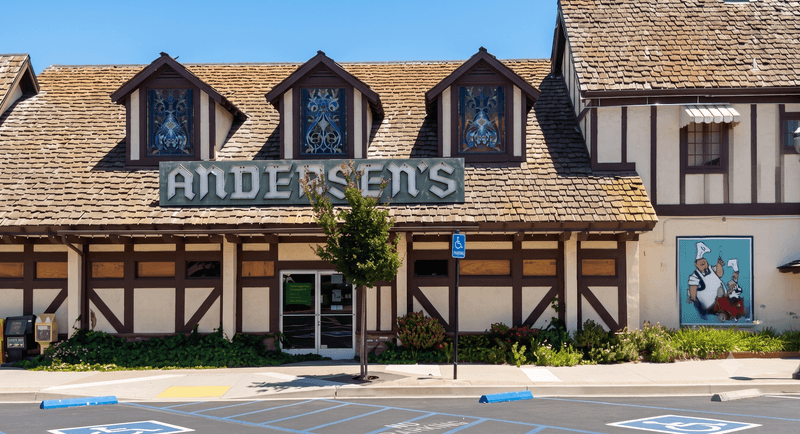
Halfway between Los Angeles and San Francisco, right where Highway 101 bends through the Santa Ynez Valley, sits a building that generations of drivers have used as a mileage marker. Pea Soup Andersen’s stands at 376 Avenue of Flags in Buellton, a small town that proudly calls itself the Home of Split Pea Soup.
Officially listed as a Danish restaurant, the place has always been more than a spot to grab lunch. Its classic, memorabilia-filled rooms served wholesome American comfort food, with split pea soup as the undisputed star.
Nearby Solvang adds to the Danish flavor of the whole area, so the windmill-and-gable look fits right in.
Travelers have long described the property as a fantastic place to stretch your legs for a minute or settle in for a night. A hotel sits next door, and the grounds once held a bakery, a gift shop, and even a tiny history museum.
Big changes have come recently, though. The original restaurant closed in January 2024 for redevelopment, just shy of its 100th birthday.
Still, the name, the recipe, and the legend remain very much a part of California road trip culture.
From Electrical Cafe to Soup Legend
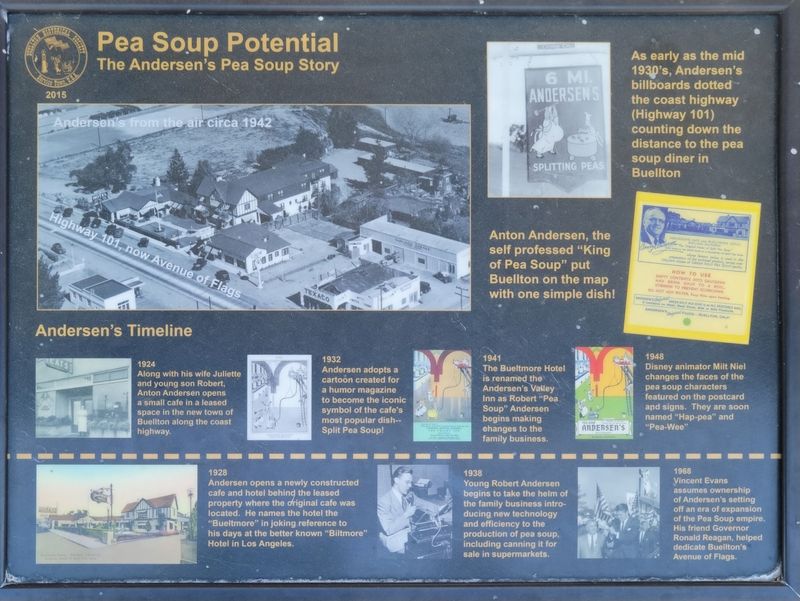
June 13, 1924, marked the start of everything. Anton and Juliette Andersen, a Danish and French couple, opened a modest cafe in Buellton and named it Andersen’s Electrical Cafe.
The unusual name was a proud nod to their brand-new electric stove, which was quite the novelty back then.
Early menus were simple. Sandwiches, pancakes, and coffee kept salesmen, tourists, and truck drivers fueled as they rumbled along the main road that would later become U.S.
Highway 101. Location did a lot of the heavy lifting, since nearly everyone traveling the coast passed right by.
Growth came fast. By 1928, the Andersens had added a hotel and a proper dining room, turning their little cafe into a full roadside attraction.
During World War II, the restaurant paused public service, and its rooms housed military personnel while meals went to servicemen and their families.
The famous name arrived in 1947. Son Robert Andersen had cheerfully nicknamed himself Pea Soup Andersen, and the family decided the label suited the business perfectly.
Honestly, could any name have been more honest about what made people stop?
Juliette’s Split Pea Recipe
Three months after opening day, Juliette pulled out her family recipe for split pea soup. Nobody could have predicted that one humble pot would end up defining an entire town.
Diners quickly fell for it, and the numbers grew almost silly. In 2012, the kitchen reportedly ladled out 500 to 600 gallons a day, and at its peak the restaurant served up to 2 million bowls a year.
That is a whole lot of peas.
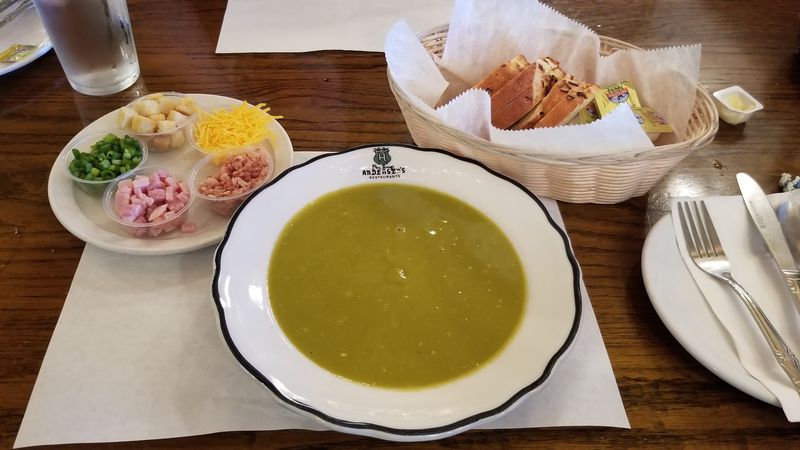
Part of the surprise for first-timers is what the soup leaves out. It is vegetarian and gluten-free, with no chunks of ham floating around.
Visitors often describe it as creamy, rich, and light all at once, and not overly salty. Several self-declared pea soup doubters admit they walked out as converts, saying it tasted nothing like the chalky canned version from childhood.
Bowls typically arrived with two kinds of bread, including dark pumpernickel and the much-loved onion cheese bread. Optional toppings let you dress things up.
Better still, the soup was available at breakfast, lunch, and dinner, so there was never a wrong time to order it.
Hap-Pea, Pea-Wee, and a Trail of Billboards
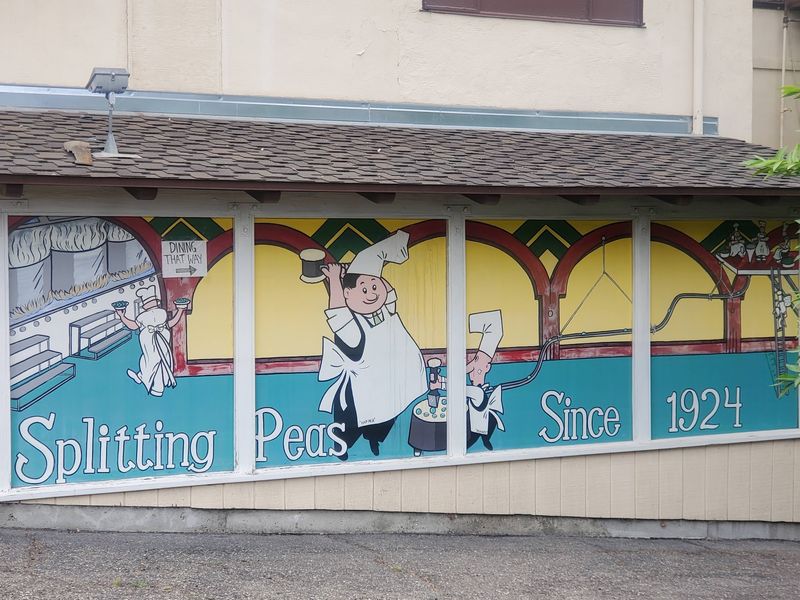
Long before social media, Robert Andersen figured out how to go viral the old-fashioned way. He planted billboards up and down California, teasing hungry drivers mile after mile until stopping felt almost required.
Starring on those signs were two cheerful mascots, Hap-Pea and Pea-Wee. The duo was designed by Milt Neil, an artist trained at Disney, and their gag was perfectly simple: one holds a chisel while the other swings a mallet, splitting peas for the soup.
Kids loved them, and grown-ups smiled whether they meant to or not.
Plenty of people still say the ads are exactly why they pulled off the freeway. Some visitors recall spotting the cartoon peas as children, then returning decades later to snap photos of the novelty signs outside.
That kind of loyalty is hard to manufacture.
Even with the original restaurant now closed, the mascots matter. City plans call for preserving historic elements such as the mascot signs and the stained glass, along with the attached Bueltmore Hotel building.
So Hap-Pea and Pea-Wee may keep greeting travelers for years to come.
The Traveller’s Special and a Menu Beyond the Bowl
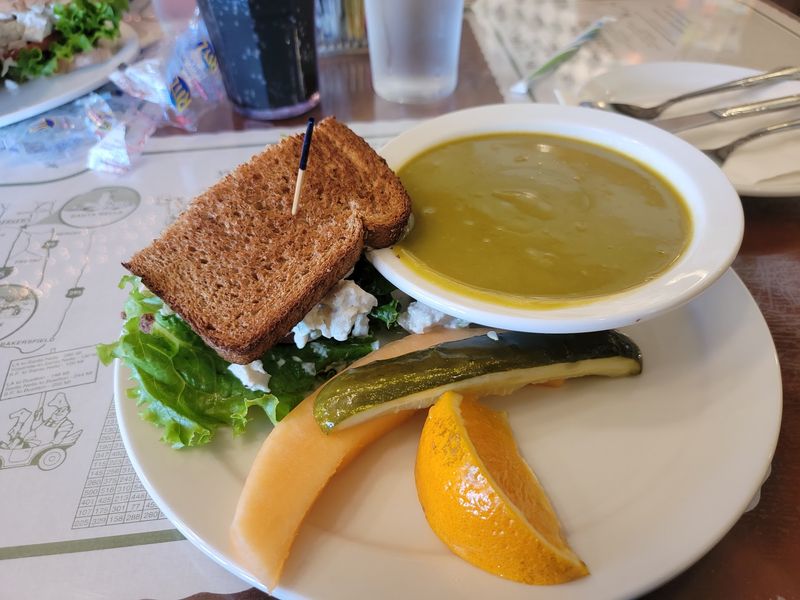
Bottomless soup sounds like a dare, and the Traveller’s Special happily accepted it. For years, this all-you-can-eat deal brought unlimited pea soup, bread, and a milkshake.
Diners who tried it called it very filling, especially after a few refills.
Soup was the headliner, but the supporting cast earned real fans too. The Monte Cristo sandwich, sometimes listed as the Count of Monte Cristo, came up again and again as a must-order.
Chicken pot pie won praise for its creamy, well-seasoned filling and thick, flaky top crust. Longtime regulars swore by the split pea bread bowl.
Other favorites included pot roast, Danish sausage with onion gravy, fish and chips in generous portions, and a chicken salad sandwich paired with a cup of soup. For dessert, honey bread pudding and those thick shakes made a sweet finish.
Not every dish was a hit, to be fair. Some guests found the meatloaf and chili disappointing, and a few felt prices had crept higher than expected for an old-time roadside cafe.
Most agreed, though, that sticking with the classics was the smart move.
Bakery Cases, Souvenirs, and a Pocket-Sized Museum
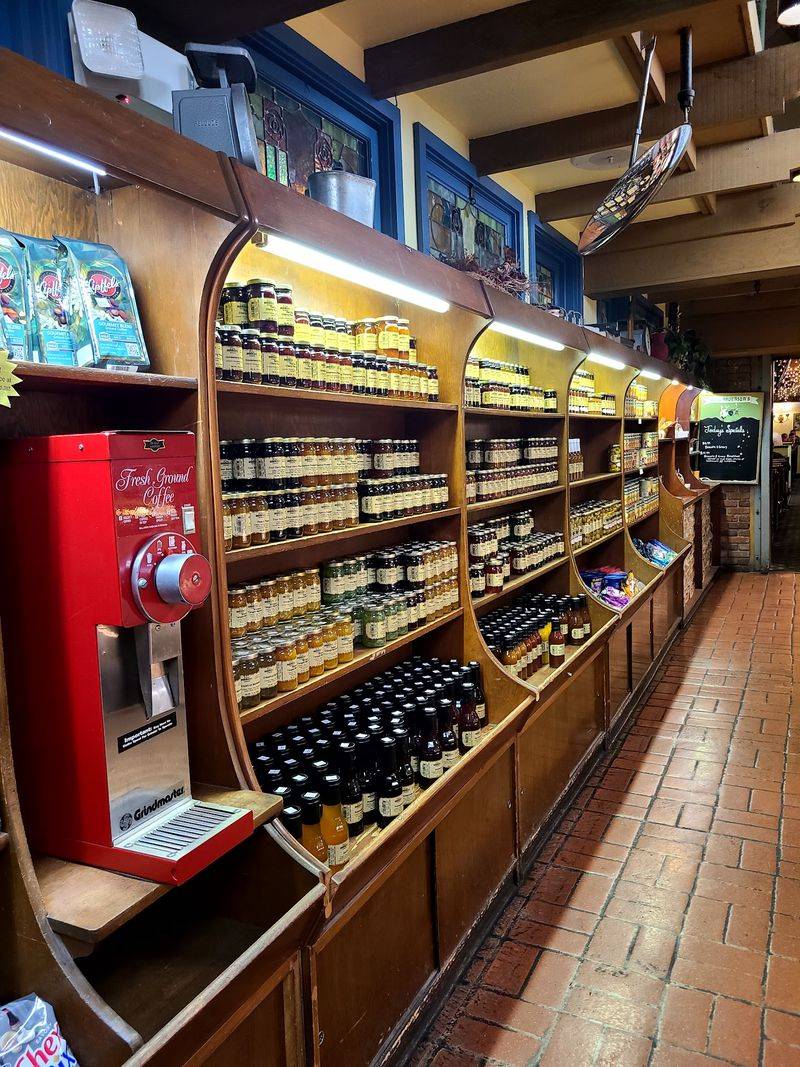
Walking in hungry and leaving with a bag of goodies was practically tradition. Before you even reached a table, the building pulled you through a travel store, a bakery, and a gift shop stacked with souvenirs.
Bakery cases held authentic Danish pastries that guests urged others not to skip. Over in the shop, samples of onion cheese bread with cheese spread had a way of convincing people to buy a loaf.
Shelves stocked cans of the traditional pea soup and Andersen’s seasoning, so fans could recreate the experience at home. One section sparkled with Christmas decorations, adding to the cozy, slightly whimsical feel.
At the south end sat a general store and a small museum run with the town’s historical society. Displays explained Buellton’s story and the highway that kept the restaurant busy for so long.
Guests waiting on takeout often wandered through to pass the time.
That mix made a stop feel like a mini field trip. You learned something, picked up a treat, and found a gift for someone back home, all before ordering a single spoonful.
Stained Glass Charm in a Time-Capsule Dining Room
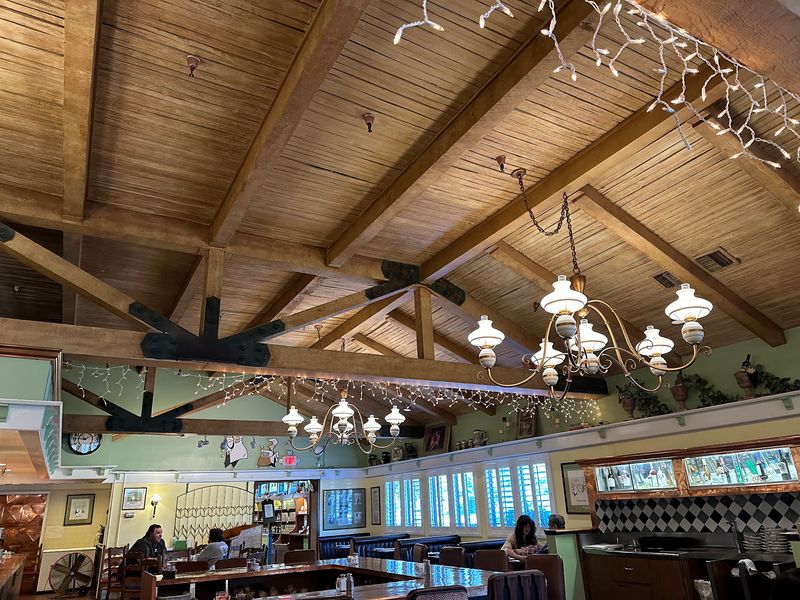
Stepping inside felt a lot like time travel. The dining room looked as though it had barely changed in fifty years, and the music playing overhead matched that vintage mood.
For lovers of quirky, historic spots, it was pure delight.
Stained glass windows stole much of the show, still glowing and in great shape after all these decades. One seating area reminded a guest of a garden solarium rather than a diner.
Others said the whole place felt part Danish getaway, part classic American coffee shop.
Charm came with some wear, though. Many visitors described the decor as dated and the building as in need of freshening up, while others shrugged and called that part of the experience.
Service earned mostly kind words, with friendly, hustling servers and fast, generous plates.
So who enjoyed it most? Road-tripping families, nostalgic grandparents retracing childhood stops, and curious travelers who love kitsch all found something to like.
Weekend crowds tended to arrive around noon, so early birds who showed up near 10 a.m. usually slid right into a booth without waiting.
Planning a Visit Now and a Fond Final Word
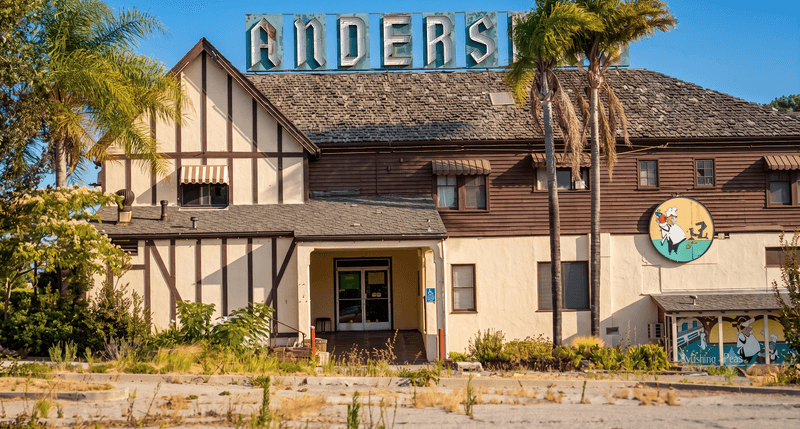
Before you set your GPS for Buellton, here is the key update. The original Pea Soup Andersen’s restaurant closed in January 2024 for redevelopment, so you cannot sit down for a bowl at the old dining room anymore.
City leaders later approved removing parts of the restaurant building for safety reasons while saving the Bueltmore Hotel building, stained glass, and mascot signs.
Good news still exists for soup seekers. A sister restaurant in Santa Nella, California, opened in 1976 and continues serving the famous recipe near Interstate 5.
Back in Buellton, Pea Soup Andersen’s Inn, open since 1969, still welcomes Highway 101 travelers who want to stay where the legend began.
A spring or autumn drive through the Santa Ynez Valley pairs nicely with a look at the landmark and a stroll around nearby Solvang. Grab a few photos, read up on the history, and maybe plan a detour to Santa Nella for that bowl.
Few roadside stops ever earned this much affection. For nearly a hundred years, one humble soup gave California drivers a reason to pull over, and that story deserves a moment of your road trip.