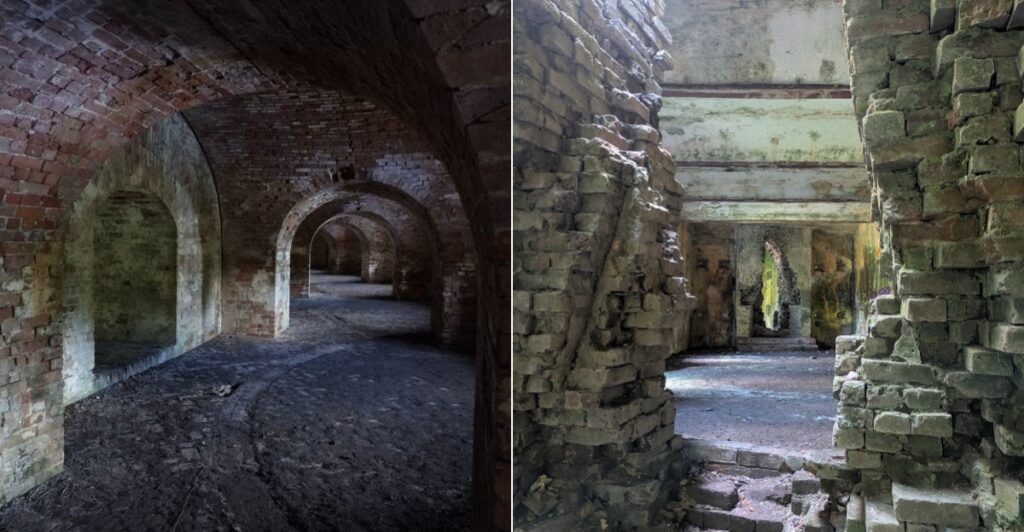
A brick fort built to guard a city now sits crumbling into the water while trees grow from its walls. Hollywood noticed. Its eerie ruins starred in the finale of True Detective’s first season.
Beyonce filmed parts of Lemonade here too. That’s quite a guest list for a place the public officially can’t enter.
I like how this spot sits right beside a busy Louisiana highway, yet feels like another century. Drivers zoom past every day without a second glance. The walls hold stories of soldiers, storms, and slow surrender to nature.
I can’t imagine standing guard here in the 1800s, staring at the pass and waiting. Today the fort waits too, mostly for rocks, roots, and tides to decide its future. So how did a mighty coastal defense end up as a ghostly ruin at the edge of the bayou?
A Brick Guardian Built To Watch The Water
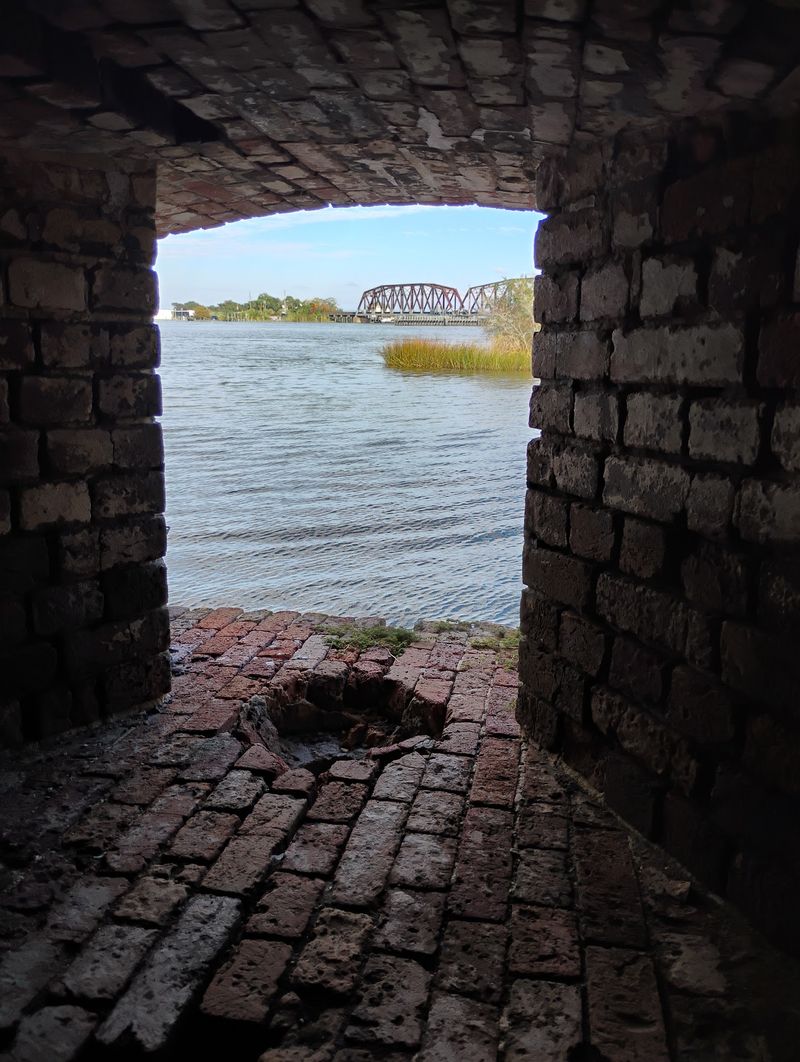
Fort Macomb started life with a serious job. Builders broke ground in 1822 to protect New Orleans from attack by sea.
Leaders still remembered the War of 1812 clearly. They wanted strong forts along every water route into the city.
The fort became part of the Third System of coastal defenses. President James Monroe backed that big plan for guarding American shores.
Work wrapped up by 1827, which is pretty quick for a brick fortress. Picture all that masonry rising in hot, buggy Louisiana weather without modern machines.
The location made total sense back then. Chef Menteur Pass links the Gulf side waters with Lake Pontchartrain.
Any enemy ship slipping through could reach New Orleans. So the fort sat right there, ready to say no thanks.
French engineer Simon Bernard helped shape the design. His work also guided nearby Fort Pike, which makes the two forts close siblings.
Knowing this backstory changes how the ruins look. Those broken walls once stood as a front door lock for an entire city.
That’s a lot of responsibility for a pile of bricks. Respect the bricks.
The Fort Wore A Different Name First
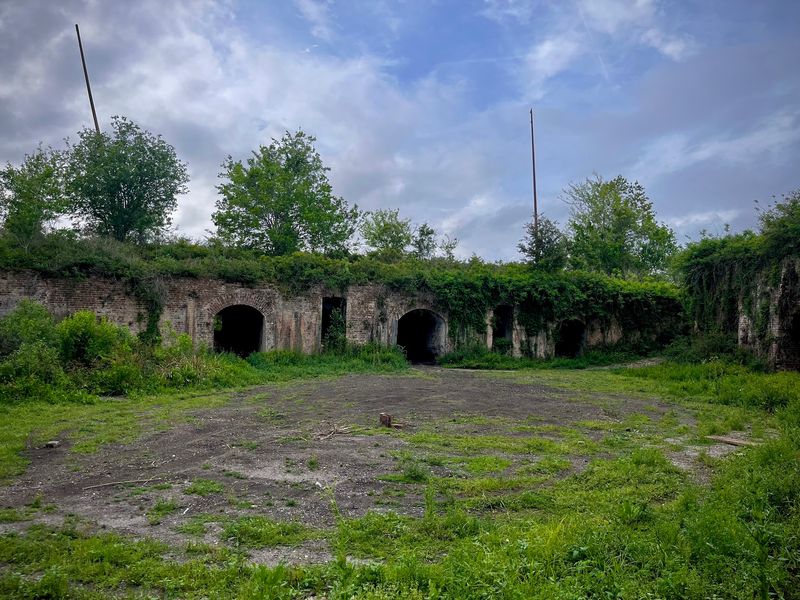
Plenty of people don’t know the fort had an earlier identity. It was first called Fort Wood in 1827.
The name changed in 1851. Leaders renamed it to honor Major General Alexander Macomb, a respected Army officer.
Name swaps like this happened often with military posts. Still, it’s a fun bit of trivia to pull out during a road trip.
Fort Macomb’s early years were fairly quiet. The fort never faced a major attack from enemy ships.
Instead, it served as a supply staging area. That role came during the Second Seminole conflict and the Mexican-American conflict.
Think of it as a busy warehouse with very thick walls. Supplies moved through, and soldiers kept watch over the pass.
That quiet duty might sound boring at first. Yet it shows how forts did more than wait for battles.
They helped keep troops supplied far from home. They also signaled strength to anyone thinking about sailing too close.
Sometimes the best defense is simply looking tough. Fort Macomb nailed that look for decades.
Shaped Like A Slice Of Pie For A Smart Reason
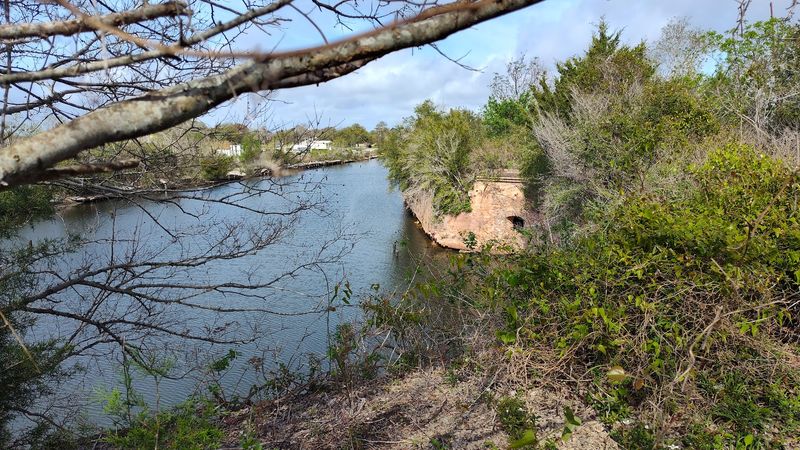
Forget squares and rectangles. The fort has a pie wedge shape, with its curved front facing the channel it guarded.
That curve wasn’t just for style. It helped cannons cover the water from different angles.
The landward side got protection too. Builders added demi-bastions and a full bastion facing land.
Bastions are pointy sections that stick out from the walls. They let defenders fire along the walls at attackers.
Two wet ditches circled the fort, working like moats. Extra defensive outworks sat between those ditches.
Yes, this Louisiana fort basically had a double moat. Castle fans, take note.
Inside, a citadel stood on the parade ground. It served as defensive barracks and a last refuge if the outer walls fell.
So the fort had layers, like a very serious onion. Attackers would face water, walls, then another stronghold.
Looking at the ruins today, it’s easy to miss this clever planning. Trees and vines hide many lines that engineers drew with care.
Spotting the curved front from a distance still feels rewarding.
Civil War Years Brought Big Changes And Proud History
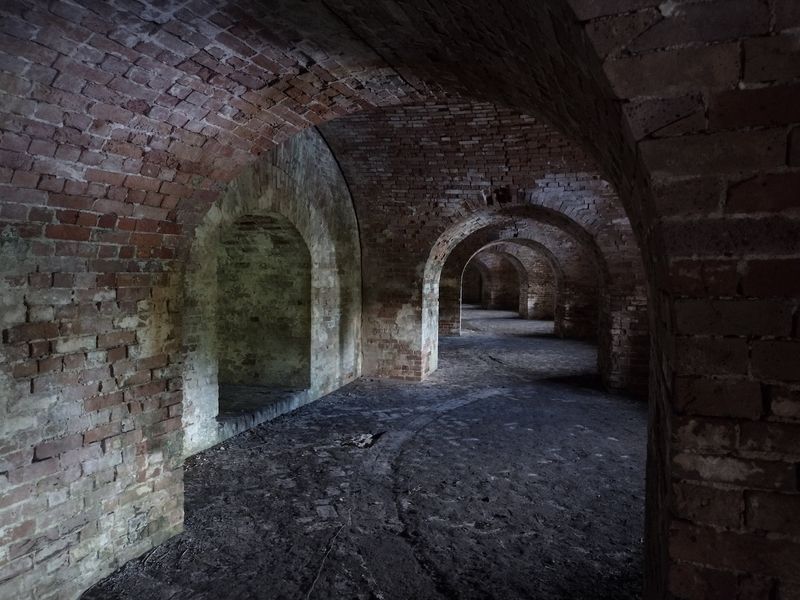
On January 28, 1861, Confederate forces took over Fort Macomb. They held it until Union troops regained control in 1862.
That switch happened as New Orleans itself came under Union control. The fort changed hands without the big battle you might expect.
The most meaningful chapter came next. The First Louisiana Native Guard performed guard duty here.
This unit ranked among the earliest all-Black regiments in the Union Army. Their service makes these walls part of an important American story.
Many visitors only know the fort from television. This piece of history deserves far more attention.
Reading about the Native Guard before you go helps a lot. No signs on site explain this story, so do your homework first.
Libraries and local history websites cover the regiment well. Ten minutes of reading turns a ruin into a real place with real people.
Those soldiers stood on this same patch of Louisiana shoreline. Their watch over the pass helped shape what came after.
That’s worth remembering every time the fort comes into view.
A Fire Ended The Fort’s Army Days
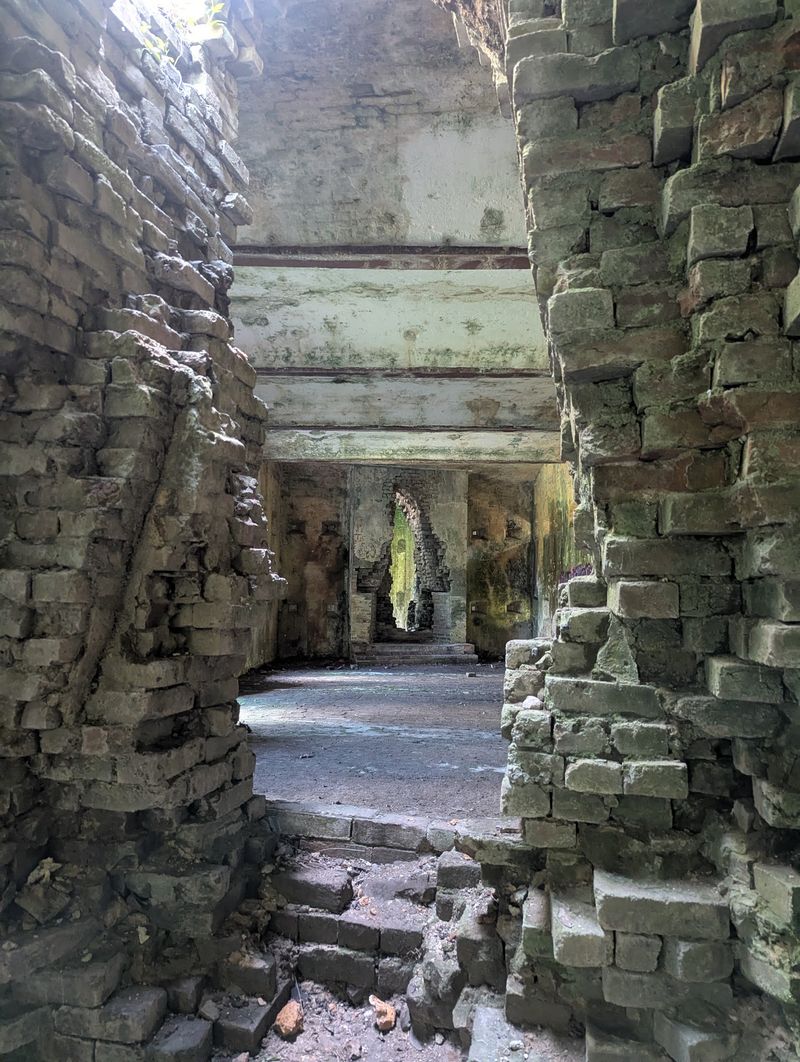
Busy forts don’t usually fade overnight. For Fort Macomb, one event sped things up in a big way.
In 1867, the barracks caught fire. Soon after, the U.S. Army walked away from the post.
Official decommissioning followed in 1871. Just like that, the guardian of the pass lost its job.
Then nature clocked in. Trees, shrubs, and vines began moving into every crack and corner.
Hurricane Katrina hit hard in 2005. The storm caused major damage and pushed the decline even further.
Today the State of Louisiana owns the fort and the land around it. Riprap, a layer of large rocks, helps shield it from erosion.
Those rocks fight a slow, steady battle against the water. Without them, more of the fort might already be gone.
It’s strange to see something so solid look so fragile. Brick walls meant to stop cannonballs now struggle against roots and waves.
That contrast is exactly why the place feels like a lost world. History and wilderness are tangled together here.
Hollywood Scouts Fell Hard For These Spooky Walls
True Detective fans, raise your hands. The first season finale used the fort for its unforgettable climax.
Online comments still mention Carcosa, the creepy name from that story. The show clearly left a mark on this spot.
The screen credits don’t stop there. Into the Badlands filmed scenes at the fort as well.
Beyonce shot parts of her visual album Lemonade on site too. That’s a serious upgrade from storing military supplies.
NCIS: New Orleans also used the fort. Season 4, Episode 17 featured it in a closing scene.
Why do directors keep calling? The answer is mood, plain and simple.
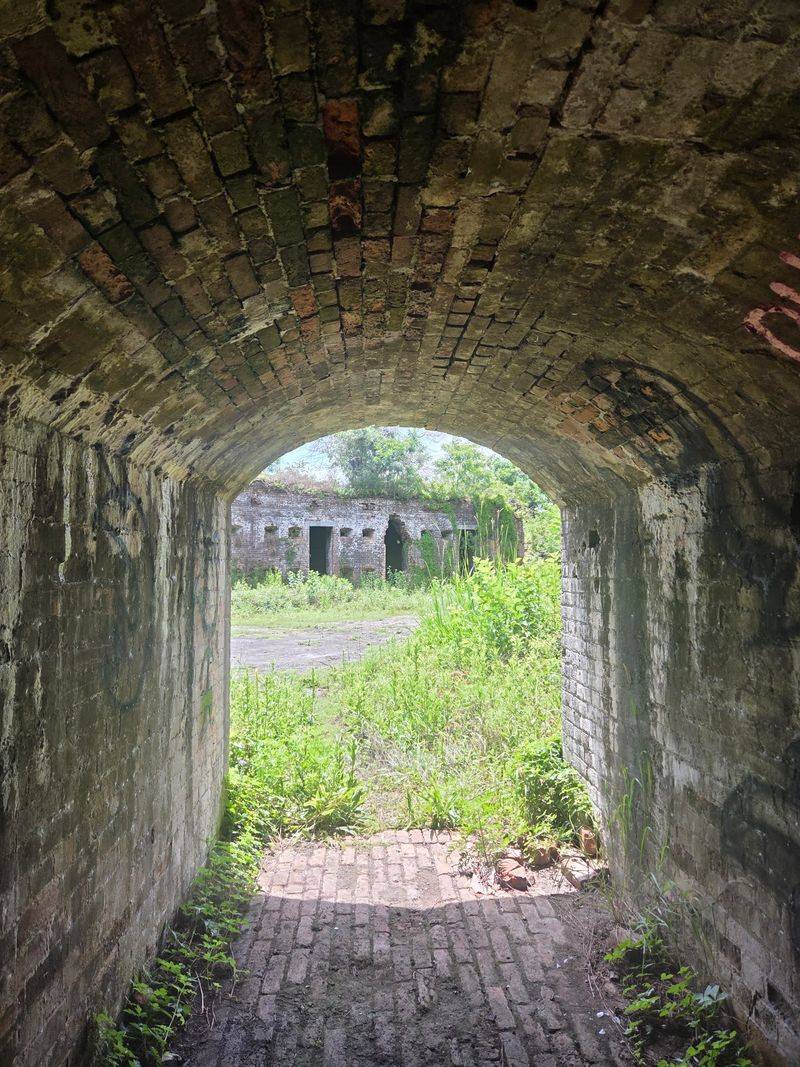
Crumbling brick, dark arches, and thick greenery create instant tension. No set designer could fake that much age.
Fort Macomb proves that a ruin can have a whole second career. It went from defense post to screen star without moving an inch.
Watching those episodes before you head out adds extra fun. You’ll recognize the shapes and textures right away.
Just don’t expect a red carpet.
Finding It Is Easier Than You Might Expect
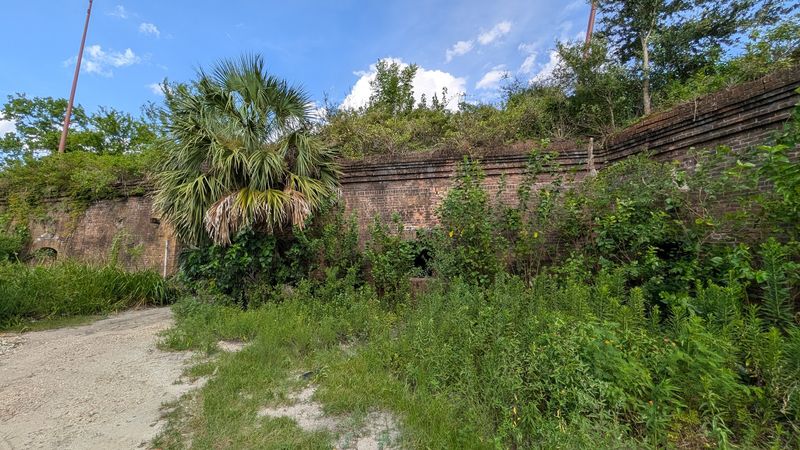
Good news for road trippers. The fort sits along US-90, also known as Chef Menteur Highway.
The address is 20700 US-90 / Chef Menteur Hwy, New Orleans, LA 70129. It’s out in eastern New Orleans, far from French Quarter crowds.
The drive from central New Orleans runs around half an hour. That makes it an easy add-on to a Louisiana day trip.
You can spot the remains from the highway itself. Keep your eyes on the western shore of Chef Menteur Pass.
A nearby marina offers another viewing angle. Boaters passing through the pass also get a striking look at the walls.
Here’s a smart tip for drivers. Pull over only where it’s safe and legal, since US-90 traffic moves quickly.
Bring bug spray, because this is bayou country. Mosquitoes here take their work very seriously.
Sturdy shoes and water help too. The area feels wild, so plan like you’re heading somewhere remote.
Charge your phone camera first. You’ll want plenty of battery for that silhouette.
Admire From A Distance And Keep Everyone Safe
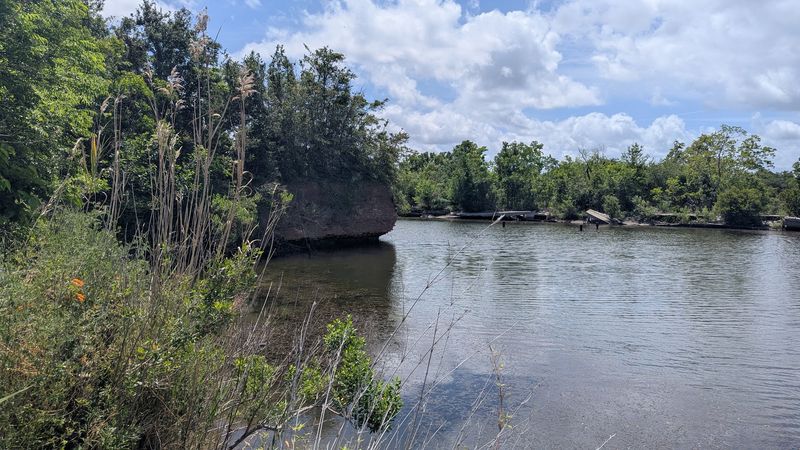
Officially, the gates stay shut to the public. The fort’s condition is dangerous, so the state keeps it closed.
Some efforts in the late 1900s aimed to open it for limited tourism. Safety concerns ended that plan.
Crumbling bricks and unstable ground are no joke. A ruin this old can shift without warning.
So enjoy the view from outside. The silhouette alone makes the trip worthwhile.
Viewing from afar has perks too. You can take in the whole shape against the water and sky.
Photographers often find that wide shots tell the best story. Walls, trees, and water all fit into one frame.
Please treat the site with respect. Sadly, vandalism and trash have shown up around it.
Leaving no trace helps protect what remains. Future visitors deserve to see the fort too.
Fort Macomb is listed on the National Register of Historic Places. That status recognizes its value, even in its weathered state.
Think of it like a museum piece behind glass. You admire it, but you don’t climb on it.
Make It A Double Fort Day With Its Sibling Nearby
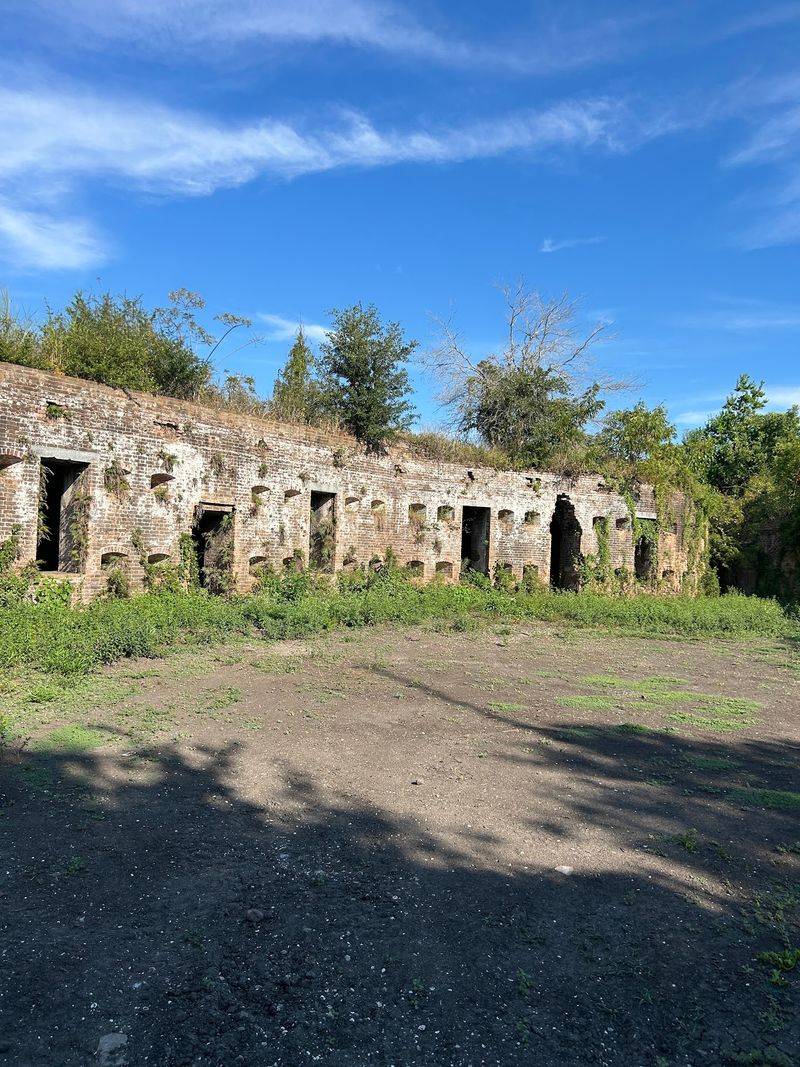
Siblings often share a resemblance. Fort Macomb and Fort Pike share nearly the same blueprints.
Both forts followed plans tied to engineer Simon Bernard. Both guarded water routes into Lake Pontchartrain.
Fort Pike sits farther east along US-90 near the Rigolets. Seeing both shows how this Louisiana coast was defended as a system.
Check Fort Pike’s current status before driving out. Storm damage and repairs have affected access over the years.
Pairing the two makes the history click. One pass, then another, each with its own brick guardian.
Along the way, the scenery stays mostly water and marsh. The open views feel worlds away from city streets.
Back at Fort Macomb, slow down for one last look. Trees rise from the walls, and the pass keeps flowing like it always has.
It’s a little sad and a little beautiful. Mostly, it’s unforgettable.
Few places let you see history and nature wrestle in real time. This one does, right beside the highway.
Wave goodbye to the old guardian. It’s still on duty, in its own way.