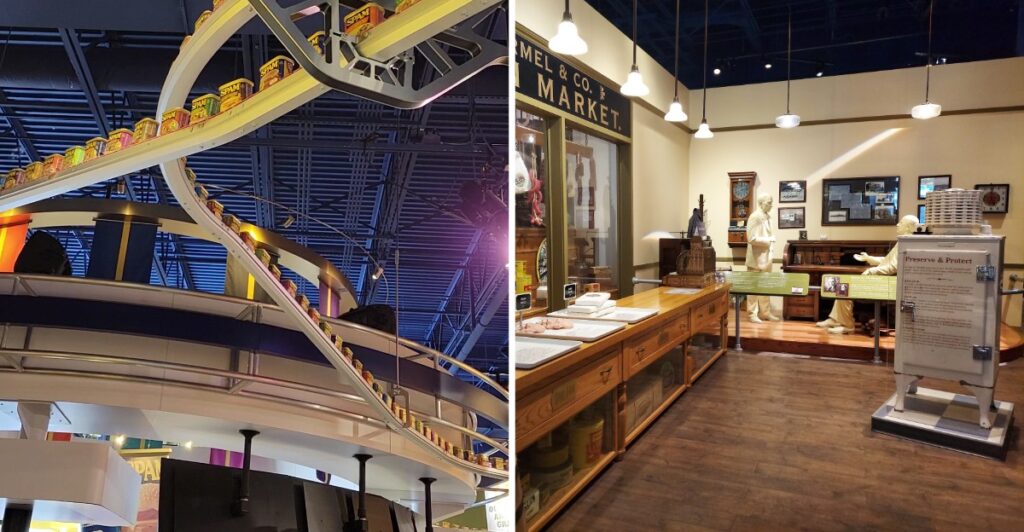
A conveyor belt 390 feet long carries canned meat in a loop all day. Nobody eats it. It just rides around, like a pork product on a very slow vacation.
I have spent more time at museums arguing with myself over the gift shop than reading the plaques. This one might finally break me, because the shop sells every variety of the product.
The staff hand out free samples on pretzel sticks while you wander. Admission costs nothing, too. In my book, a free museum that feeds you beats a fancy one that scolds you for touching things.
Minnesota has plenty of lakes and forests to brag about. Yet one small downtown here built a whole museum around a pink, salty rectangle.
Who decided bluegrass instruments made from cans belonged in a museum?
A Free Museum That Feeds You Is A Rare Deal Worth Grabbing
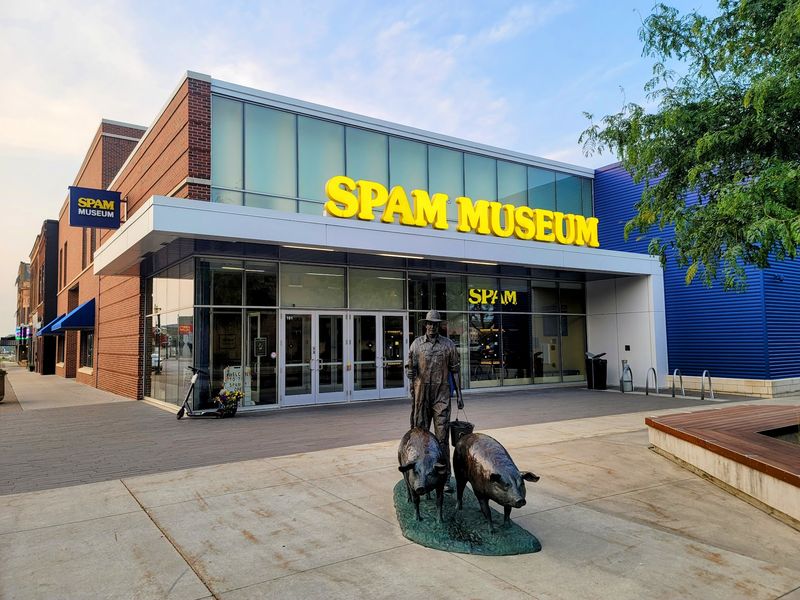
Free admission sounds nice. Free admission plus snacks sounds almost too good, yet that’s exactly the deal at the SPAM Museum in Austin, Minnesota.
The museum celebrates the canned meat that Hormel Foods introduced in 1937. It also tells the bigger story of Hormel, a company founded right here in 1891. No wonder the town calls itself Spamtown, USA.
You get about 14,000 square feet to explore, packed into seven main galleries. The tour is self-guided, so you can move at your own speed. Kids can race ahead while grown-ups linger over the old ads.
Friendly staff members called SPAM ambassadors roam the floor. They answer questions and can lead guided tours lasting around 30 to 45 minutes. Planning a special trip?
Reaching out ahead of time is a smart move for a guided tour.
The whole layout sits on one level, which keeps things simple. It also makes the museum easy for strollers and wheelchairs to roll through.
Bring curiosity and maybe an empty stomach. Samples, nicknamed SPAM™ples, appear while you explore. That’s a museum perk most art galleries will never match, no matter how famous their paintings are.
Watch Twenty Flavors Ride A Conveyor Belt That Never Quits
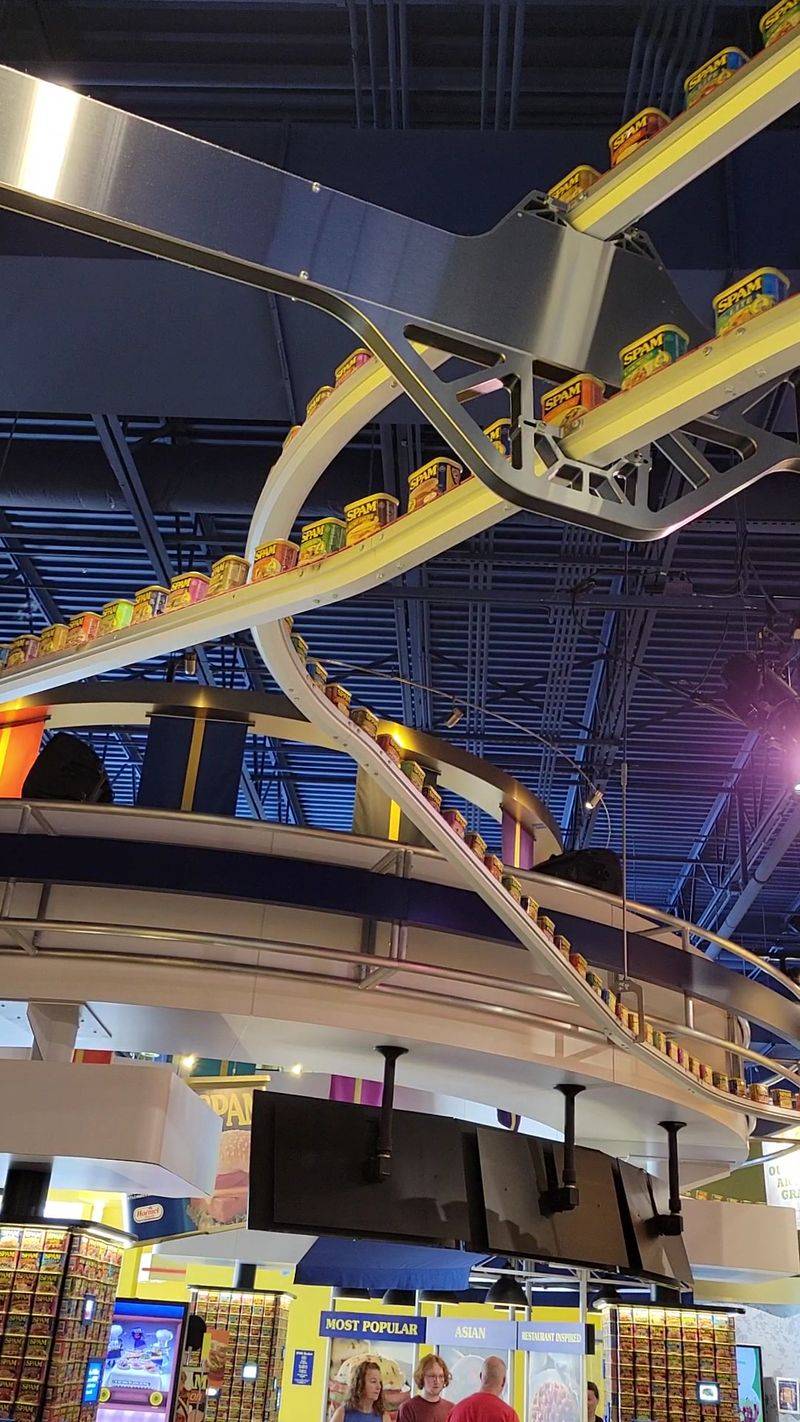
Some museums have dinosaur bones hanging overhead. This one has canned meat cruising along a track like tiny pink commuters.
A 390-foot conveyor belt winds through the building. It carries 20 different varieties of SPAM products on a continuous loop. One full trip takes about 18 minutes.
That means you could follow a single can around the room if you’re feeling patient. Most people just glance up and grin. Either way, it’s a clever reminder of how factories move products from start to finish.
Spotting flavors on the belt can turn into a fun little game. Try to name each can before it disappears around the corner. Younger visitors tend to love this kind of challenge, and it keeps them looking up instead of at a screen.
The belt also shows just how many types exist. Most shoppers only know the classic can from the grocery aisle. Here you’ll realize the lineup is much larger than you’d guess.
Snap a photo when a few colorful cans line up together. It makes a great picture for friends back home. Good luck explaining it without laughing.
Your Kids Will Try To Pack A Can Faster Than A Factory
Here’s a job interview nobody fails. Families can test their packing skills at the SPAM Brand 101 exhibit, and it’s surprisingly competitive.
The gallery explains how the famous meat gets made. It also introduces the many varieties sold today. Then comes the fun part: an assembly game where you simulate packing a mock can.
Spoiler alert: real factories move much faster. You’ll likely discover your packing speed wouldn’t win any awards. That’s part of the charm, and plenty of parents end up laughing at their own slow hands.
Curious about what goes inside the can? The classic recipe keeps things short and simple. It uses pork with ham, salt, water, modified potato starch, sugar, and sodium nitrite.
Learning that list can surprise people who assumed something mysterious hid in there. Knowing the basics makes the product feel less like a punchline. It might even convince a picky eater to try a sample later.
Give younger kids a few tries at the game. Each round gets a little smoother. By the end, they might ask for a job application, or at least a can to take home.
Travel The World Without Leaving A Single Building
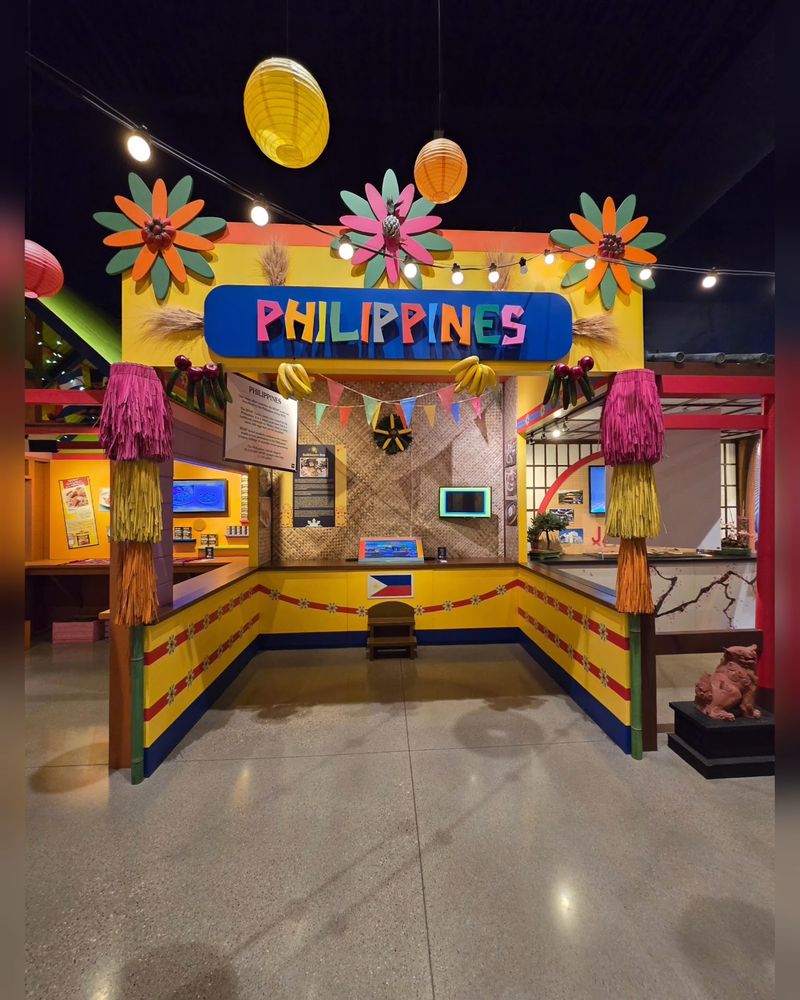
Passports are optional in the World Market gallery. You’ll still feel like you hopped across several oceans in about ten minutes.
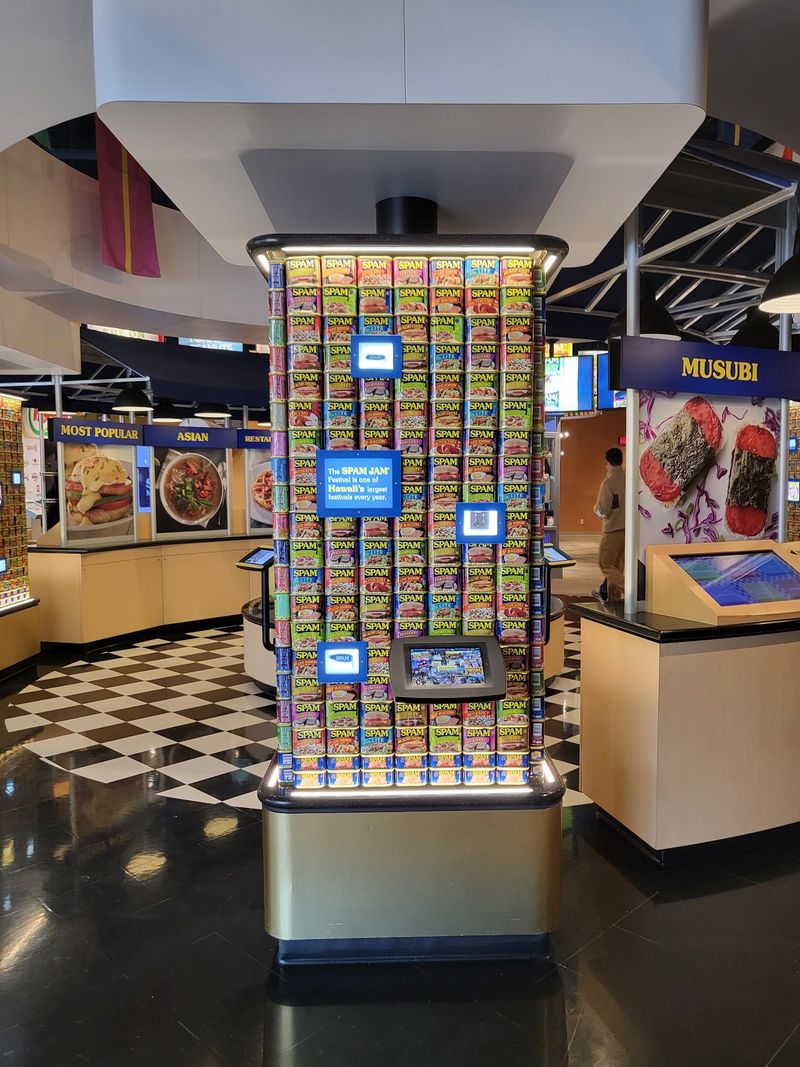
The exhibit shows how SPAM products are sold and enjoyed in more than 40 countries. Displays highlight places like the United Kingdom, Japan, South Korea, the Philippines, China, Latin America, and Hawaii.
Each area shows how different cultures welcomed the same can. Advertising styles change from country to country. Some of the packaging looks wildly different from the version in a Minnesota pantry.
Hawaii fans will feel right at home here. The islands have a famous love for the meat, and musubi lovers often treat this stop like a pilgrimage. South Korea also has a strong fondness for it, especially in gift sets.
Take your time in this section. It’s one of the best spots for learning something you never knew. Read a few fun facts aloud to your group and watch the reactions.
You might leave with a new recipe idea from another country. That alone makes the gallery worth a slow walk. Your next grocery trip could suddenly get a lot more international.
Learn Why Soldiers Knew This Can So Well
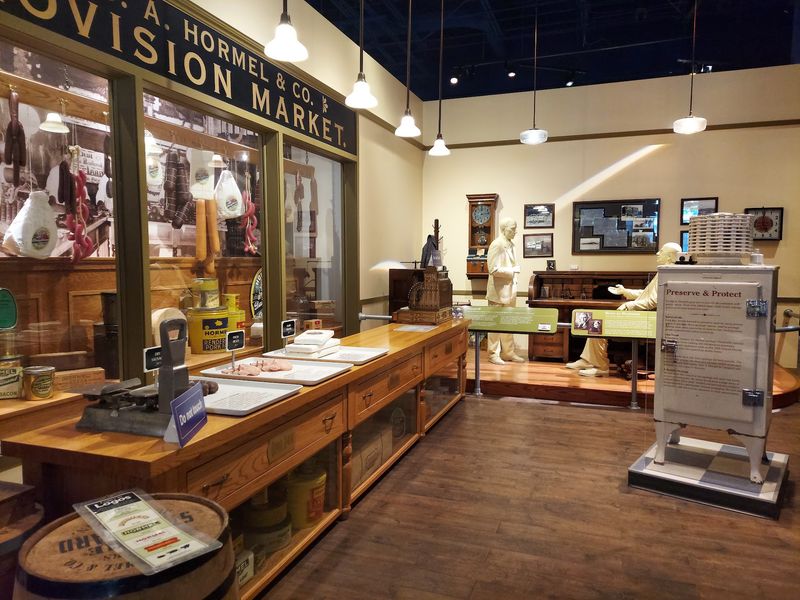
Long before it became a pop culture joke, this canned meat had a serious job. It helped feed American troops during World War II.
The museum’s World War II and beyond exhibit tells that story. It explains how the meat became a food staple for soldiers. It also covers Hormel’s wider connection with the military over the years.
Canned food made sense for troops far from home. It stayed shelf-stable and traveled well. That practical design helped the product spread to many corners of the globe.
This history also explains the World Market gallery you’ll see elsewhere. Many countries first met the product through wartime supplies. Afterward, people kept cooking with it and created their own beloved dishes.
The section offers a quieter, more thoughtful moment in a mostly playful museum. Older visitors with family military ties may find it especially meaningful. Grandparents sometimes have stories to add, so bring them along if you can.
Pause here before heading back to the games and samples. Knowing this chapter makes the rest of the museum click. Suddenly that humble can feels like a real piece of history.
Quirky Treasures Steal The Show In Every Corner
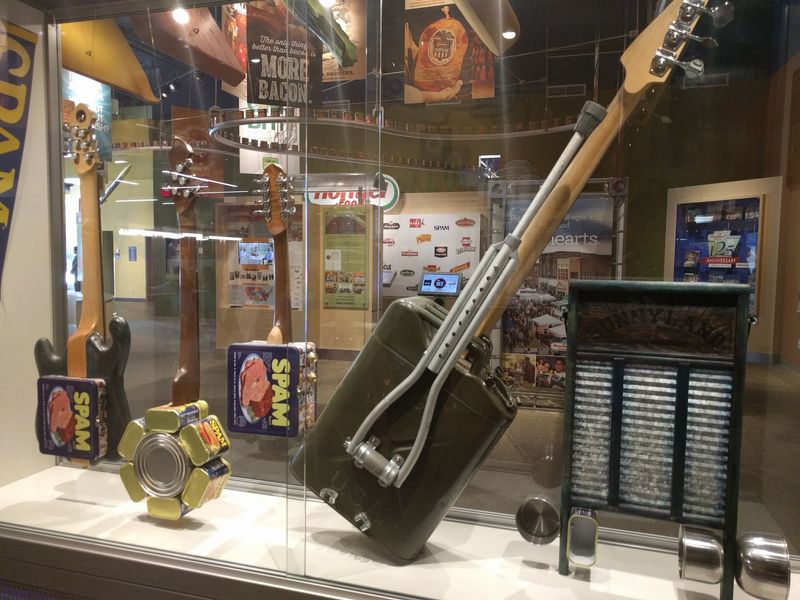
A banjo made from a meat can sounds like a joke your uncle would tell. At this museum, it’s a real display.
A collection of bluegrass instruments crafted from SPAM cans sits on view. They’re now just for looking, so no jam sessions allowed. Still, the craftsmanship is impressive, and it’s hard not to smile.
Then there’s the rocket. It stands 12 feet tall and weighs about 60 pounds, decked out in SPAM style. Nobody expected meat to aim for outer space, yet here we are.
Fans of packaging design should check out Can Chronicles. The exhibit shows how the famous can has changed over time. It’s a fun peek at how branding grows up.
The museum also features a personality quiz. It tells you which variety matches your personality best. Comparing answers with friends makes for easy laughs, especially when someone lands an unexpected flavor.
These odd bits are perfect for photos. They also make great conversation starters on the drive home. Don’t skip the corners, because that’s where much of the wackiness waits for you.
Save Room In Your Suitcase For The SPAM Shop
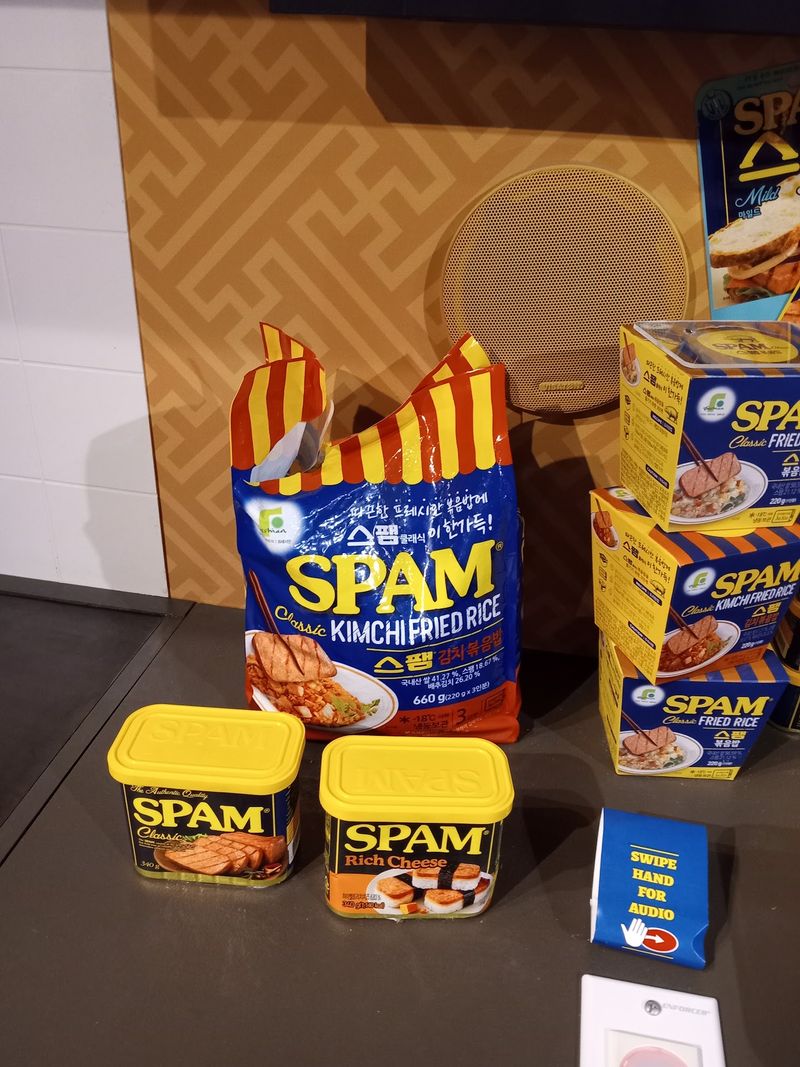
Consider yourself warned. The SPAM Shop connected to the museum is where wallets go to get a workout.
Shelves hold SPAM memorabilia and every available variety of the product. That means you can stock up on flavors you may never spot at your local store. Maple SPAM, introduced in 2023, is one of the newer options to hunt for.
Shopping here works well for quirky gifts. Think stocking stuffers, white elephant swaps, or a treat for that friend who loves odd souvenirs. Branded goods fill the space with plenty of kitschy charm.
The SPAM Shop is open daily from 10 a.m. to 5 p.m., one hour later than the museum. Leave time at the end of your visit so you’re not rushing. Browsing takes longer than you’d expect.
Here’s a practical tip. Outside food and drinks aren’t allowed in the museum, so plan snacks for before or after. The free samples inside help bridge the gap, though.
Grab a few cans for the pantry and one silly shirt for yourself. Every road trip deserves a souvenir that makes people ask questions. This one will definitely spark some.
Plan Your Stop With These Easy Visitor Tips
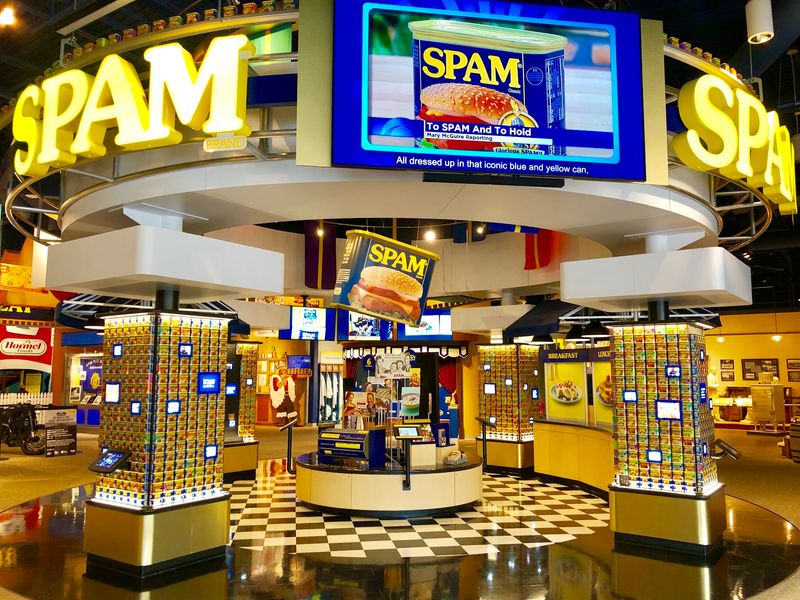
Good news for road trippers: getting there is the easy part. You’ll find the museum at 101 3rd Ave NE, Austin, MN 55912, right in the heart of downtown.
Free parking is available in a lot behind the building. Limited street parking is nearby too. RVs and buses even get a designated 12-hour parking area, which is a big help for travelers in Minnesota.
Hours run from 10 a.m. to 4 p.m. Monday through Saturday. On Sundays, the museum is open from 10 a.m. to 4 p.m.
The museum closes on New Year’s Day, Easter, Thanksgiving, and Christmas. Keep that in mind if you’re traveling during the holidays.
Accessibility gets real attention here. Motion-detected doors, a single-level layout, and loaner wheelchairs make visits smoother. Restrooms and a water fountain are on-site as well.
Service animals are welcome, but other pets need to stay behind. Can’t make the trip? Free virtual tours are available by appointment.
Either way, the SPAM Museum makes it simple to say yes to one very unusual adventure.