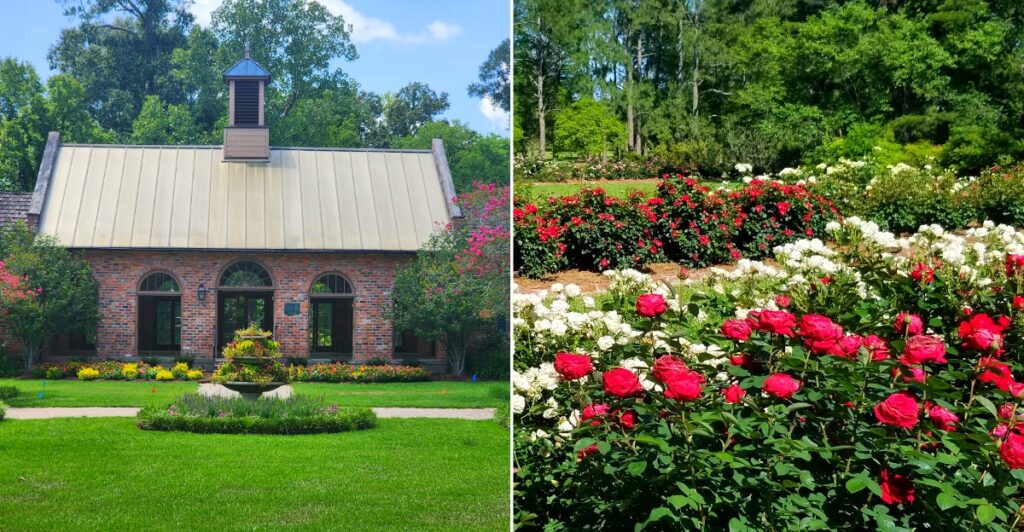
More than 450 named camellia varieties grow in one collection here, and every one traces back to a single couple’s backyard hobby. Violet and Hank Stone spent over 50 years gathering them. Some of those blooms were varieties the Stones introduced themselves.
That alone would make a garden worth the trip. This one also earned the title of International Camellia Garden of Excellence. I like how a personal passion turned into something the whole public can stroll through.
Then there’s a second collection built to rescue 19th-century American camellias that were slipping away. One woman spent a lifetime tracking them down. Now they grow side by side, sorted by their country of origin.
And the best part for anyone in Louisiana? Admission to these flowering treasures costs nothing at all. So why aren’t more people talking about it?
A Rescue Mission For Forgotten 19th-Century Camellias
Florence Crowder spent her lifetime chasing plants that history almost misplaced. Her goal was simple but huge: find and preserve 19th-century American camellia varieties before they vanished.
Her work lives on in the Florence and Charles Crowder Camellia Collection. It was dedicated in 2017 inside the Barton Arboretum at the gardens. The Baton Rouge Camellia Society planted the shrubs in 2016.
What makes this collection clever is its layout. The camellias are organized by country of origin. Many came from Europe, while others started in the United States.
So a stroll here works almost like a flower map. You can see how varieties from different places compare in color, size, and form. History buffs and garden lovers both get something out of it.
Think of it as a living library. Instead of dusty books, the shelves are leafy shrubs with blooms that people grew more than a century ago.
I can’t imagine the detective work it took to locate these plants. Old nurseries, family gardens, and handed-down cuttings all probably played a part. Every shrub here feels like a small victory against forgetting.
Over 450 Camellia Varieties Started As One Couple’s Obsession
The LSU AgCenter Botanic Gardens at Burden are at 4560 Essen Lane in Baton Rouge, Louisiana. Leave Interstate 10 at Exit 160 for Essen Lane and head toward the garden property’s entrance.
The grounds are entered from Essen Lane close to the interstate, where the landscaped campus begins beyond the gate. The new Welcome Center is the practical landmark for orienting yourself among the separate gardens and trails.
Drive into the property, follow signs to the Welcome Center parking area, and check in as required. Ask for the current route to the Stone Camellia Collection, since camellia plantings extend across different parts of the grounds.
Time Travel Through Camellias Planted Before 1900
Here’s a fun test for your next garden visit. Can you guess which camellias your great-great-grandparents might have admired?
The Early American Camellia Garden answers that question. Located in the Barton Arboretum, it showcases camellias introduced to the American landscape before 1900. It pairs nicely with the Crowder collection nearby.
Camellias weren’t always a common sight in Southern yards. They arrived over time, and certain varieties became favorites long before modern hybrids showed up. This garden lets you see those early stars up close.
The Barton Arboretum itself adds to the charm. Steele Burden designed it, and it features a pond with a gazebo. The James Wandersee Palmetto Walk also runs through this area.
That means you can mix your camellia hunting with a calm pond break. Sit by the gazebo, catch your breath, and then head back for another look at your favorite blooms.
Kids might enjoy this spot too. Ask them to imagine people in long dresses and top hats admiring these same flower types. Suddenly a plant lesson turns into a history adventure that actually sticks.
You Might Linger Longer Than Planned In Windrush Gardens
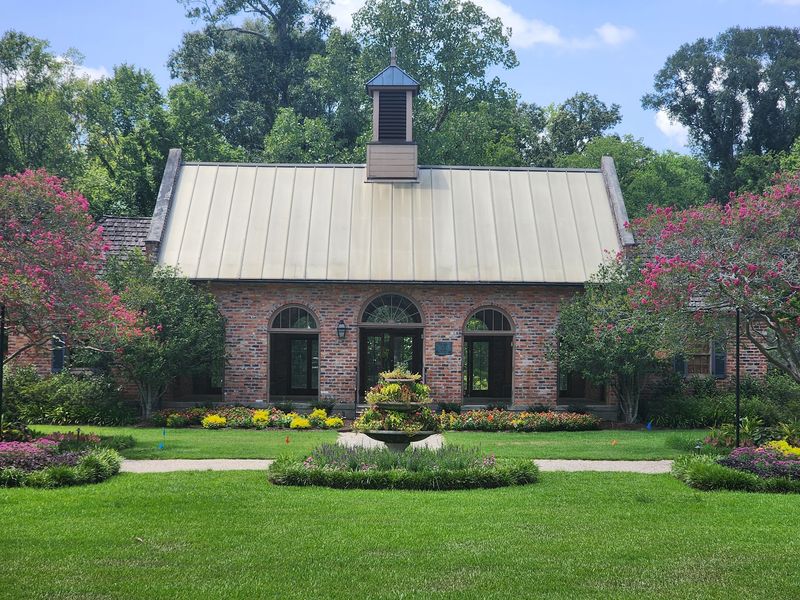
Live oaks, azaleas, ancient crepe myrtles, and camellias all share space in one semi-formal garden. That’s Windrush Gardens, and it’s part of the larger Burden property.
Steele Burden designed these gardens. He’s the same creative mind behind the Barton Arboretum. His style shows up in the way paths, trees, and shrubs work together.
Windrush also features a collection of older camellia varieties popular in South Louisiana. So if the Stone and Crowder collections leave you wanting more, this is your bonus round. It shows which blooms local gardeners loved over the years.
The name has deep roots too. The whole property began as Windrush Plantation in the late 1800s. The Burden family later donated it to the LSU System, starting in 1966.
Windrush Gardens has a small admission fee, unlike the free Botanic Gardens. It’s a modest add-on for the shade of those big oaks alone.
Wear comfy shoes and slow your pace. Gardens like this reward people who stop, look up, and notice how old trees frame the flowers below them.
Free Admission Makes Repeat Visits Way Too Easy
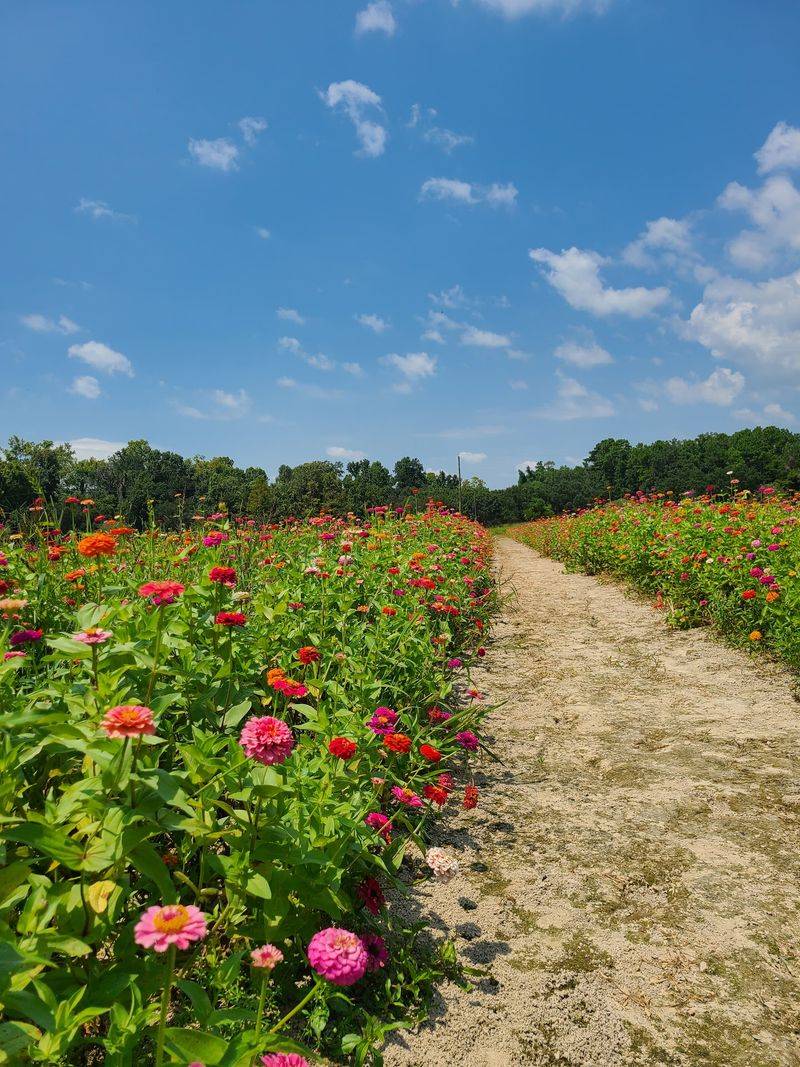
Good news for your wallet. Admission to the LSU AgCenter Botanic Gardens is completely free.
That makes it easy to come back in different seasons. Camellias bloom in the cooler months, while other gardens shine later in the year. Free entry means you can catch them all without guilt.
You’ll find the gardens at 4560 Essen Lane in Baton Rouge, Louisiana 70809. They’re open daily from 8 a.m. to 4:30 p.m., and the grounds stay accessible until 5 p.m.
Plan around a few holidays, though. The gardens close on New Year’s Day, Easter Sunday, Thanksgiving Day, Christmas Eve, and Christmas Day.
Every visitor needs to check in at the Welcome Center first. It’s a quick step that helps you get oriented. Free parking and restrooms are available in several spots across the grounds.
Planning photos? Casual snapshots are fine. Professional-style cameras require a photography pass, so grab one at check-in if you’re bringing serious gear.
Dogs can come along too. Just keep them on a leash so everyone, including the camellias, stays happy.
Gingers Steal The Spotlight Once Summer Heats Up
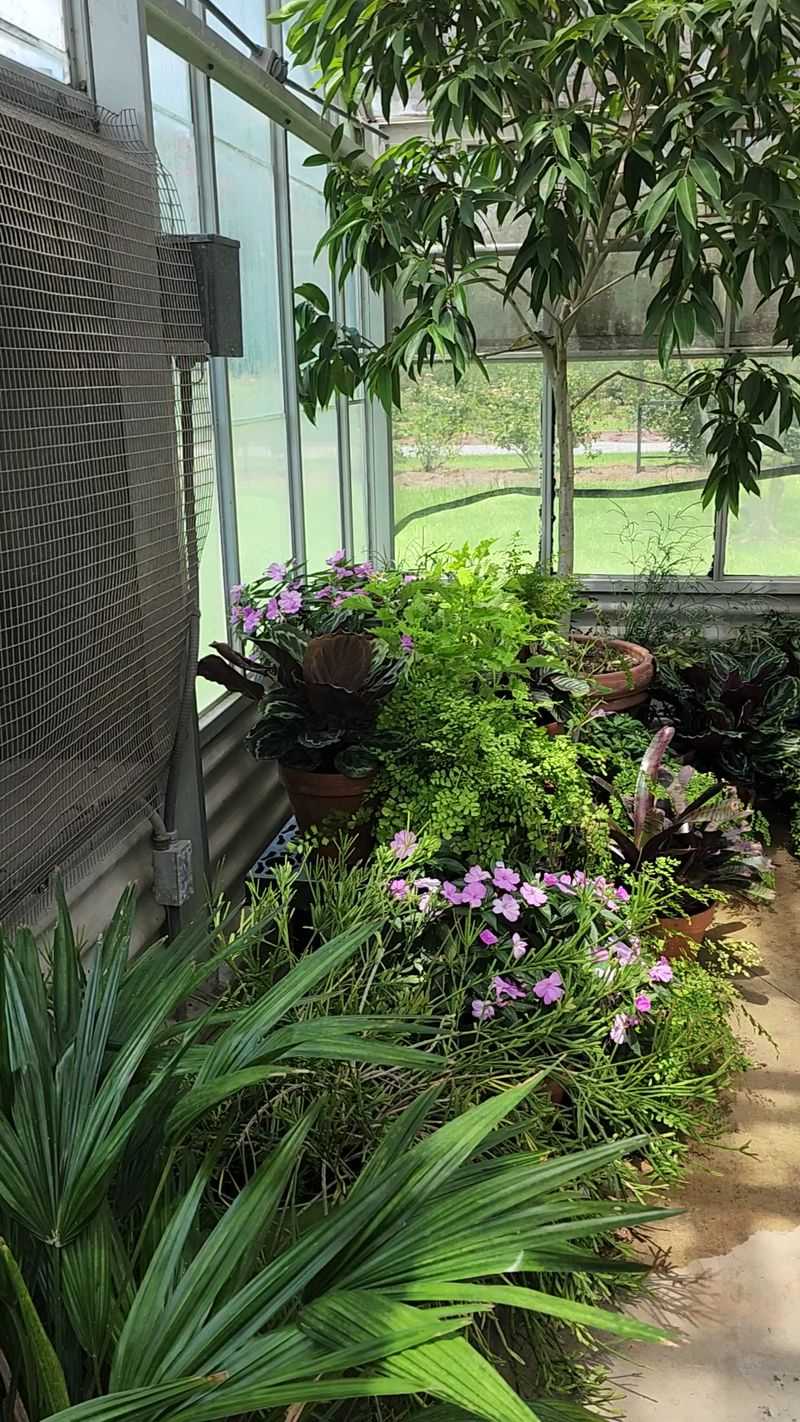
Camellias rule the cool season. When July rolls around, the Tropical Garden takes over the show.
It houses one of the largest collections of gingers in the United States. That’s a surprising claim for a garden better known for winter blooms. It proves this place doesn’t take months off.
Gingers aren’t the only stars. You’ll also find plumeria, bromeliads, alocasia, and colocasia. Big leaves, bold shapes, and bright colors make the area feel like a mini trip to the tropics.
The best time to visit this collection runs from July through September. Yes, that’s the heart of a Louisiana summer. Bring water, a hat, and maybe a sense of humor about humidity.
Here’s a smart plan. Visit once in winter for camellias and again in late summer for gingers. You’ll see two completely different personalities from the same garden.
Gardeners can pick up ideas here too. Many of these plants handle Southern heat well. Seeing them in person helps you decide which leaf shapes and colors might work in your own yard.
A Swamp Over 200 Years Old Waits At The End Of The Boardwalk
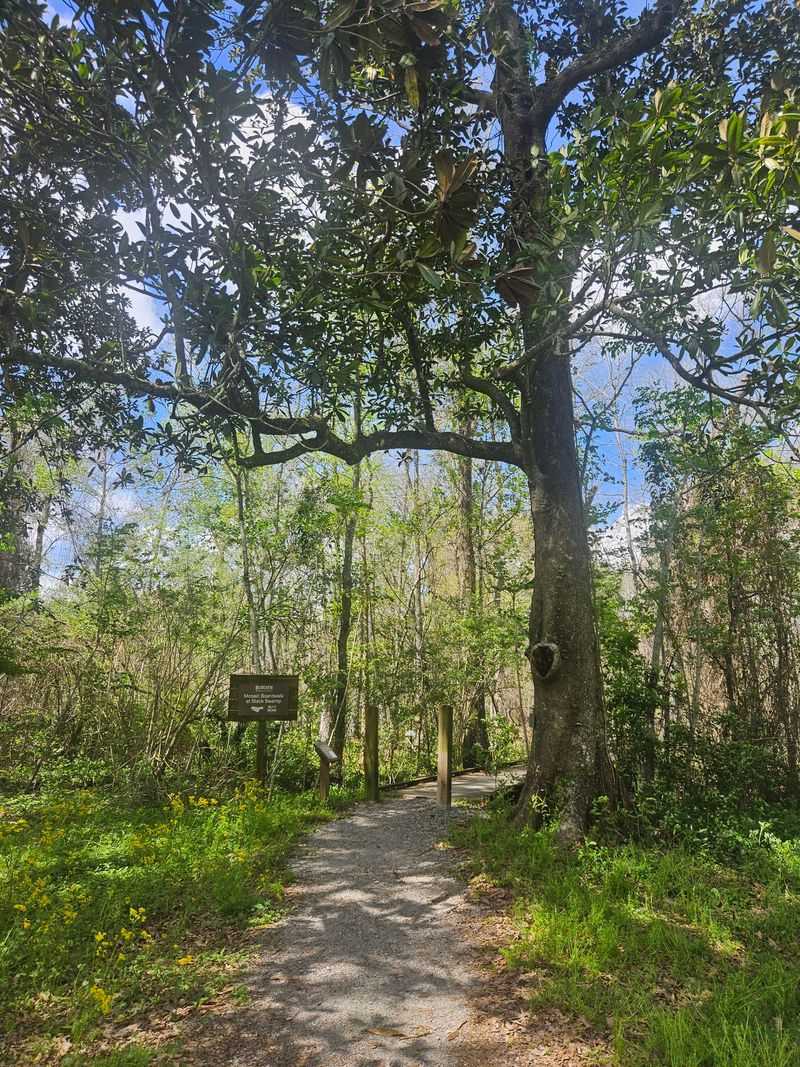
Flower beds are lovely. A hardwood swamp that’s over 200 years old is a whole different kind of wow.
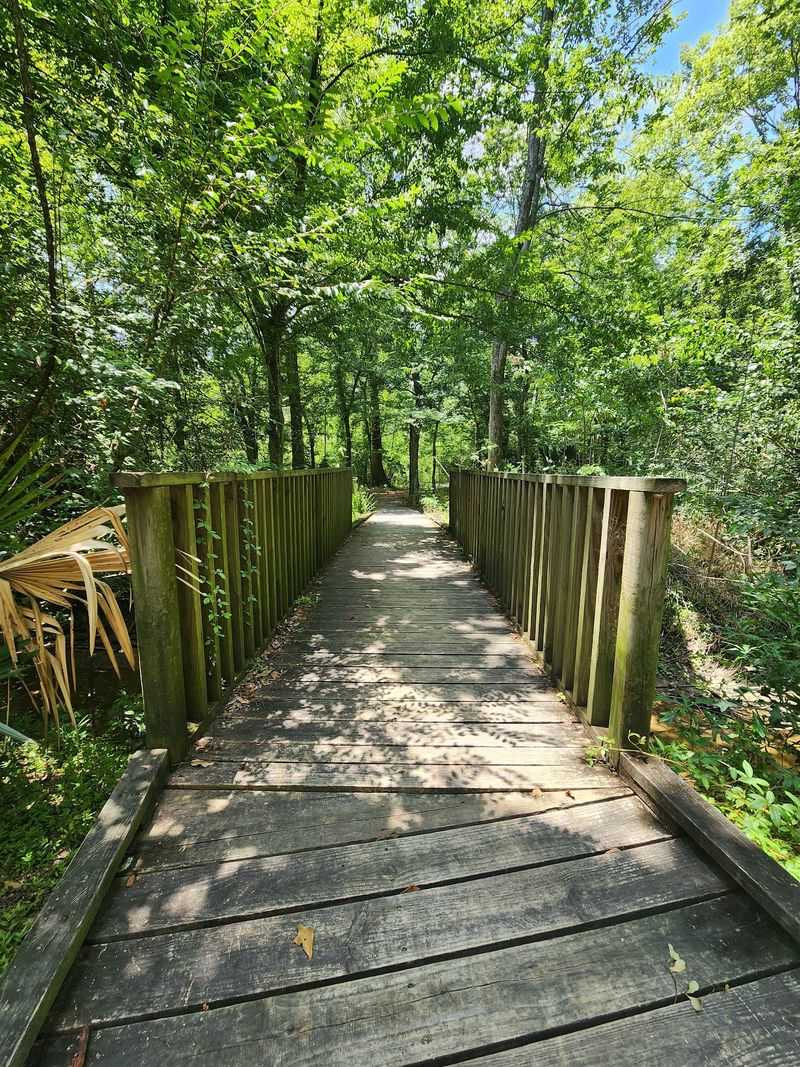
The Black Swamp sits within the Burden property. A Mosaic Boardwalk guides you through it, so your shoes stay dry while you explore.
That boardwalk makes the swamp feel welcoming instead of intimidating. You get close to the trees and water without wading in. Kids especially tend to love anything that feels like a nature adventure.
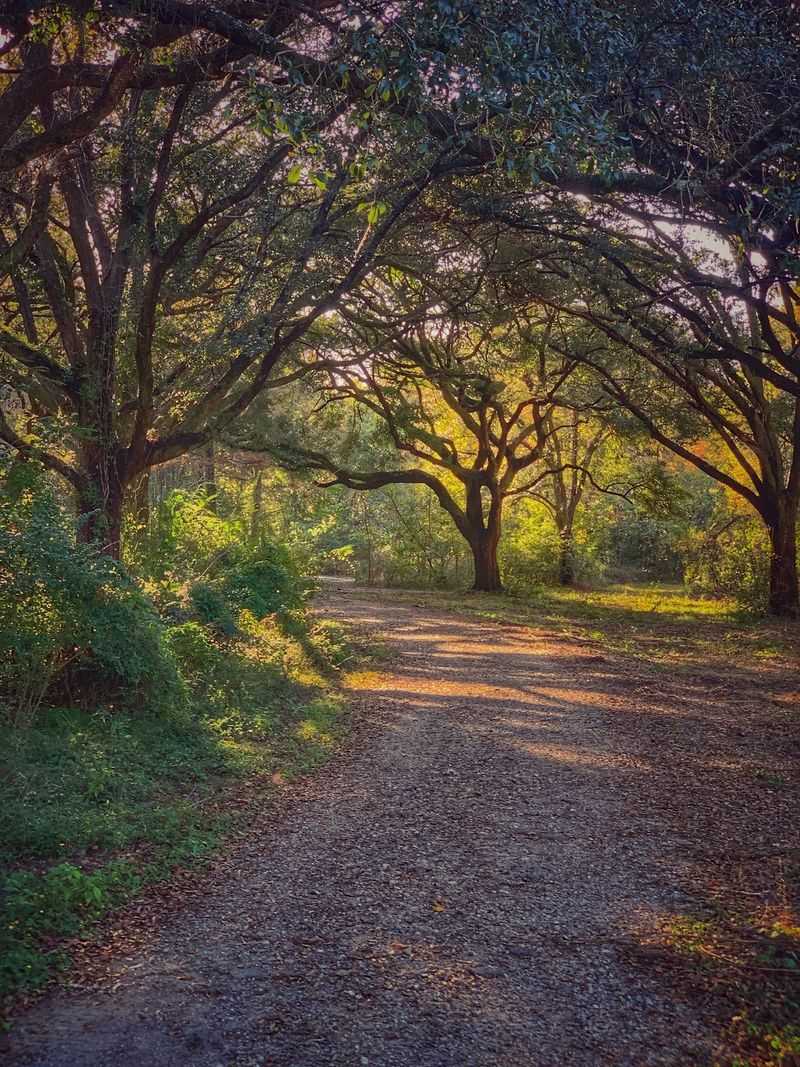
The swamp connects to the bigger network of trails here. Visitors can explore roughly 3 to 5 miles of walking paths through the Burden Woods. The property also includes woodlands, wetlands, and arboreta.
So after admiring camellias, you can switch gears completely. One moment it’s tidy garden beds. The next, it’s tall trees and quiet water that feel far from city traffic.
Pace yourself on longer walks. Bring water, wear sturdy shoes, and grab a map at check-in. With miles of paths, a little planning keeps the outing fun rather than exhausting.
Roses, Herbs, And A Garden Built For Kids
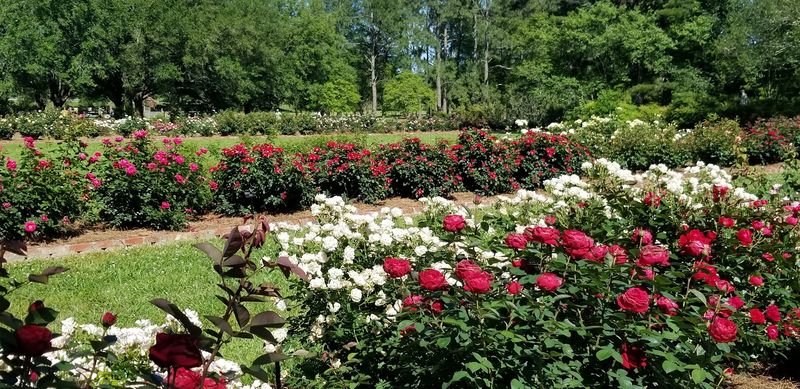
Variety is the secret ingredient at the LSU AgCenter Botanic Gardens. Beyond camellias, a whole lineup of specialty gardens keeps things interesting.
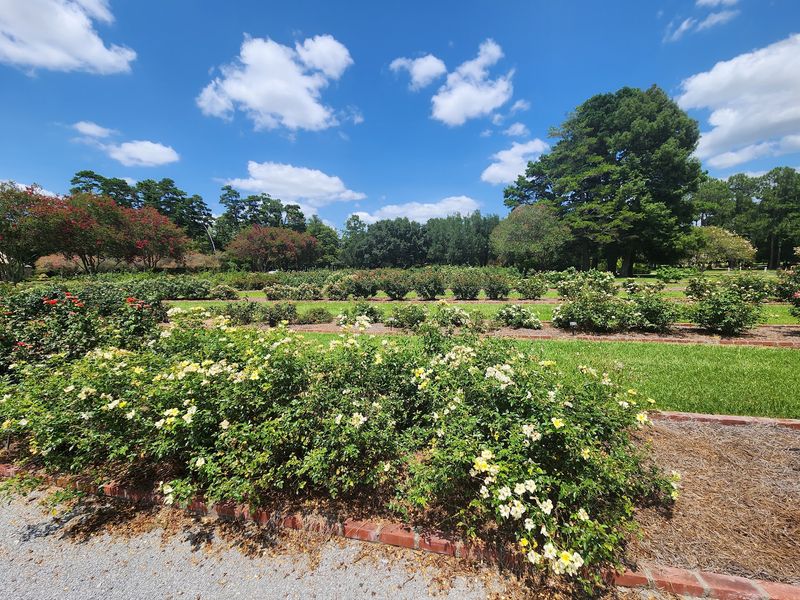
There’s a Rose Garden for classic blooms. An Herb Garden shows off useful plants you might grow at home. A Memory Garden and an Oak Grove offer quieter, reflective spaces.
Families should head to the Children’s Garden. It’s a great way to get younger visitors curious about plants. A little hands-on learning beats any textbook.
Garden nerds, this one’s for you. The All-America Selections Display Garden is Louisiana’s official trial site for these plants. That means you can preview flowers and vegetables tested for strong performance.
Why does that matter? It helps home gardeners choose plants with a better shot at thriving. Think of it as a sneak peek before you shop.
Mix these gardens into your camellia route. A rose here, a sniff of herbs there, and suddenly a quick visit becomes a full morning. Each area has its own mood, so nothing feels repetitive.
Save Energy For A World-Famous Outdoor Museum Next Door
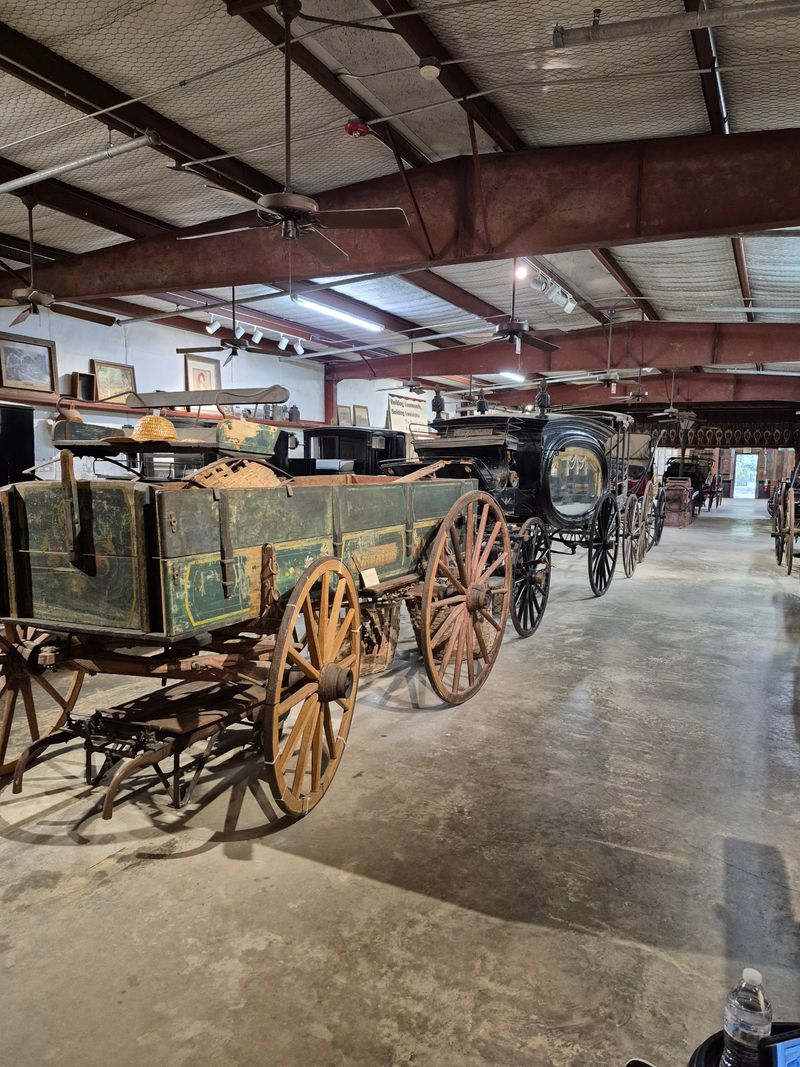
The British Museum named it one of the Top 10 Outdoor Museums in the World. That’s high praise for a spot sharing land with a camellia garden.
The LSU Rural Life Museum is part of the 440-acre Burden Museum and Gardens property. It covers more than 25 acres and includes 32 outbuildings. It transports visitors to rural Louisiana life in the 18th and 19th centuries.
Unlike the free Botanic Gardens, the museum charges admission. Still, pairing the two makes for a fuller day. Flowers in the morning, history in the afternoon sounds like a solid plan.
The connection makes sense. When the Burden family donated the land, they asked that it support horticultural research and the Rural Life Museum. They also wanted it to serve as green space for public enjoyment.
That wish clearly came true. Gardens, woods, a swamp, and a museum all share one property.
Event planners take note too. The Ione Burden Conference Center, the French-style Steele Burden Memorial Orangerie, and the Burden Pavilion are all available to rent. Imagine a celebration surrounded by camellias. Hard to beat that backdrop.