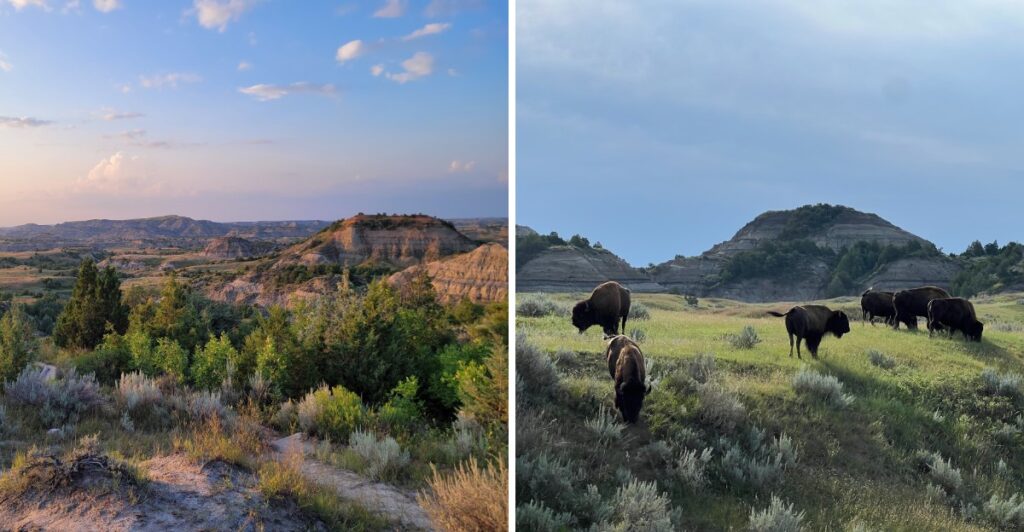
Wild horses roam one corner of this North Dakota park, and hundreds of bison graze its wide grassy ridges.
I’m calling dibs on the passenger seat for that scenic drive.
The rock here formed about 60 million years ago, striped with layers of mudstone, sandstone, volcanic ash, and coal-like lignite.
A young New Yorker reached Dakota Territory in 1883, became a rancher, and later reshaped how America protects wild places.
The park stays open 24 hours a day, year-round, which suits early birds and night owls equally well.
Those striped badlands have been posing for photos for millions of years, and they still refuse a bad angle.
The Hills Wear Stripes, And They Earned Every One
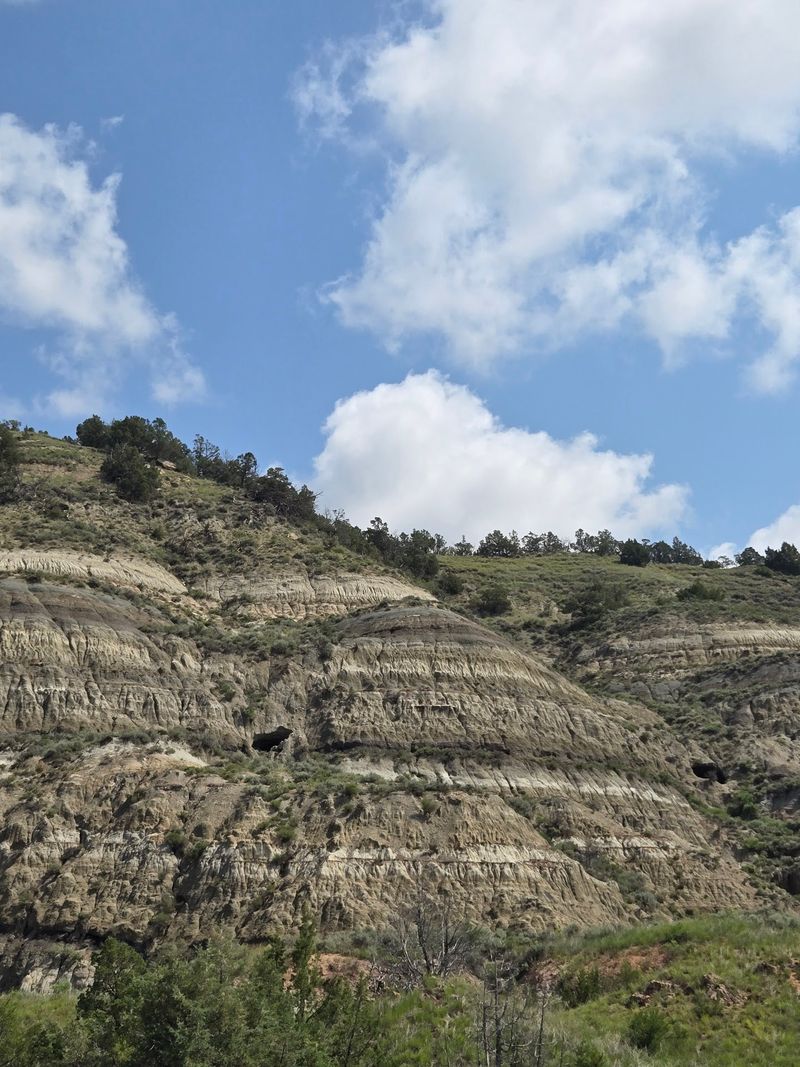
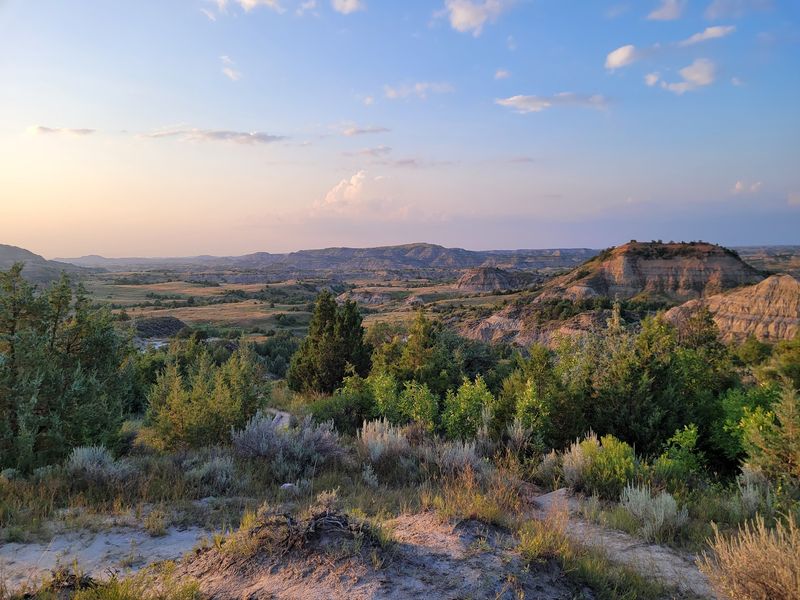
Theodore Roosevelt National Park protects some of the most colorful badlands in the country. The Little Missouri River and its smaller streams carved the soft rock into ridges, buttes, and steep little canyons.
Each stripe tells a piece of the story. You’ll see bands of mudstone, sandstone, volcanic ash, and lignite stacked like a layer cake.
That cake is old, too. The rock layers date back roughly 60 million years, which makes your fridge leftovers look pretty fresh.
Light changes everything here. Early morning and late evening bring out warmer colors, while midday shows sharper details in the layers.
Painted Canyon is a great first look. Its visitor center sits off I-94 at Exit 32 and operates seasonally, so check current opening dates before visiting.
Don’t rush past the overlooks. A few quiet minutes let your eyes pick out the reds, tans, grays, and darker coal seams.
Bring a camera, but also bring patience. The badlands reward people who stop, stare, and look again from a different angle.
Honestly, it feels like the ground is showing off. Nobody would blame it, since few landscapes in North Dakota look this bold.
Bison Rule The Road, So Plan To Brake For Them
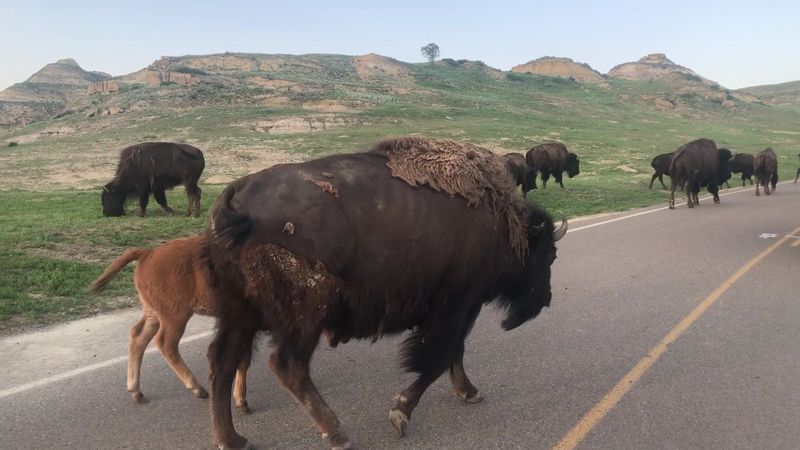
Traffic jams here sometimes weigh close to a ton each. American bison have the right of way, and they seem to know it.
Bison were brought back to the park in 1956. Today, hundreds of bison roam across the park’s North and South Units.
That’s a true comeback story. Young Theodore Roosevelt hunted bison in this region when the animals were growing scarce across the West.
Now they graze on open grasslands and wander along the scenic drives. You may spot a small herd on a hillside or one big fellow strolling down the pavement.
Keep your distance, though. Bison are wild animals, and they can move much faster than their sleepy look suggests.
Your car makes a great viewing spot. Pull over safely, turn off the engine, and let the herd move at its own easy pace.
Binoculars are a smart thing to pack. They let you study shaggy coats and curved horns without crowding anyone.
Spring may bring reddish-orange calves to the herds. Watching them bounce around the prairie might become the highlight of your whole trip.
Wild Horses Steal The Show In The South Unit
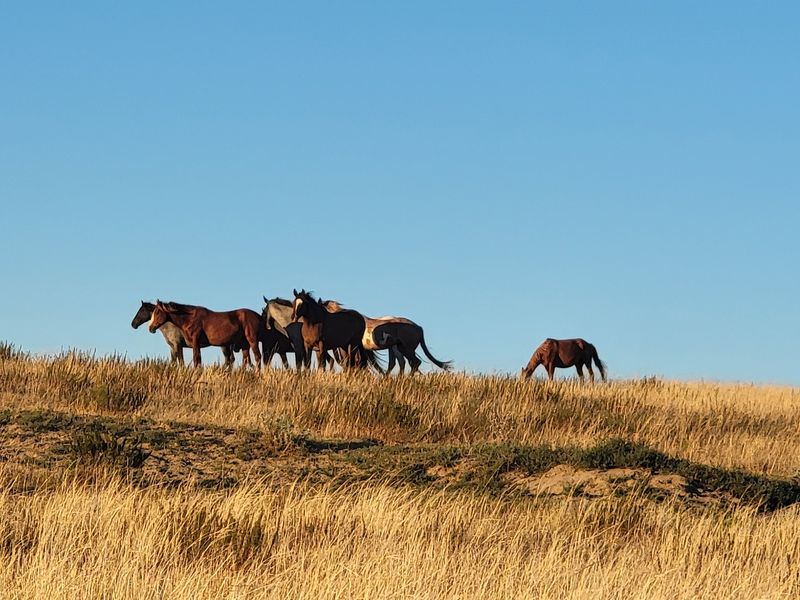
Bison may be the headliners, but the horses bring serious star power. The South Unit is home to feral horses that roam the hills freely.
Not every national park can say that. Seeing a band of horses against the striped buttes feels like a scene from an old Western film.
They tend to travel in small groups. Some are dark, some are pale, and many have wild, wind-tossed manes.
Spotting them takes a little luck. Scan ridgelines, grassy flats, and spots near water as you drive the park roads.
Early mornings and evenings are smart times to look. Many animals are more active when the air cools down.
Remember these horses aren’t pets. Stay well back, skip the snacks, and use a zoom lens instead of your feet.
Kids especially love this part. Turning the drive into a horse-counting game can keep the back seat busy for miles.
Here’s a fun bonus. Horses and bison sometimes share the same stretch of prairie, giving you two famous residents in one view.
Thirty-Six Miles Of Loop Road Packed With Surprises
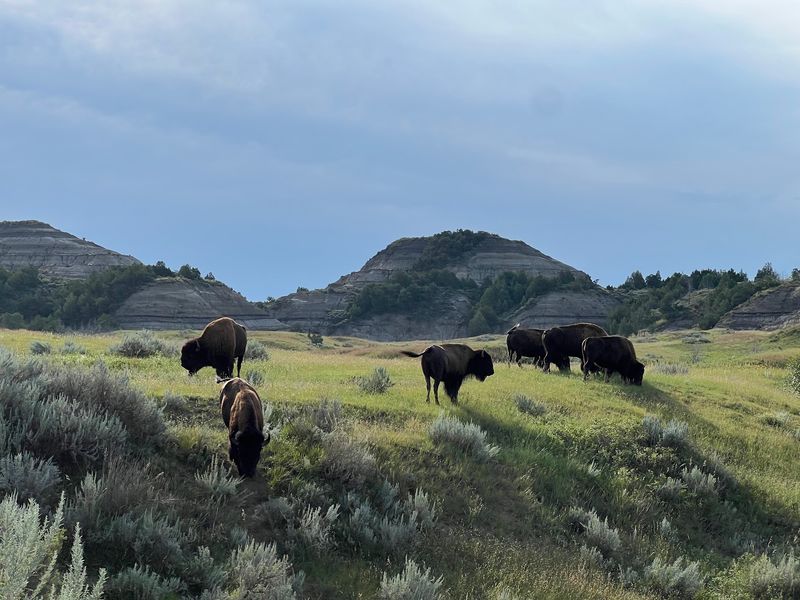
Some road trips need a full tank and a long weekend. This one needs a 36-mile loop and a free afternoon.
The South Unit’s scenic drive wraps through the heart of the badlands. Overlooks and pullouts show off canyons, buttes, and wide prairie views.
Wildlife often joins the ride. Bison, prairie dogs, and wild horses may appear right beside the pavement.
Drive slowly and stay alert. Prairie dog towns sit close to the road, and those little critters dash across with zero warning.
Winter can change the plan. Snow and ice sometimes close park roads for a while, so check conditions before you head out.
Pack water and snacks for the drive. You’ll want to linger at the stops instead of hurrying back for lunch.
Wind Canyon is one stop worth slowing down for. Its short trail looks over a bend in the Little Missouri River.
Sunset makes the loop even better. The buttes glow in warm colors, and the evening light brings out the animals.
Prairie Dogs Will Bark At You, And It’s Adorable
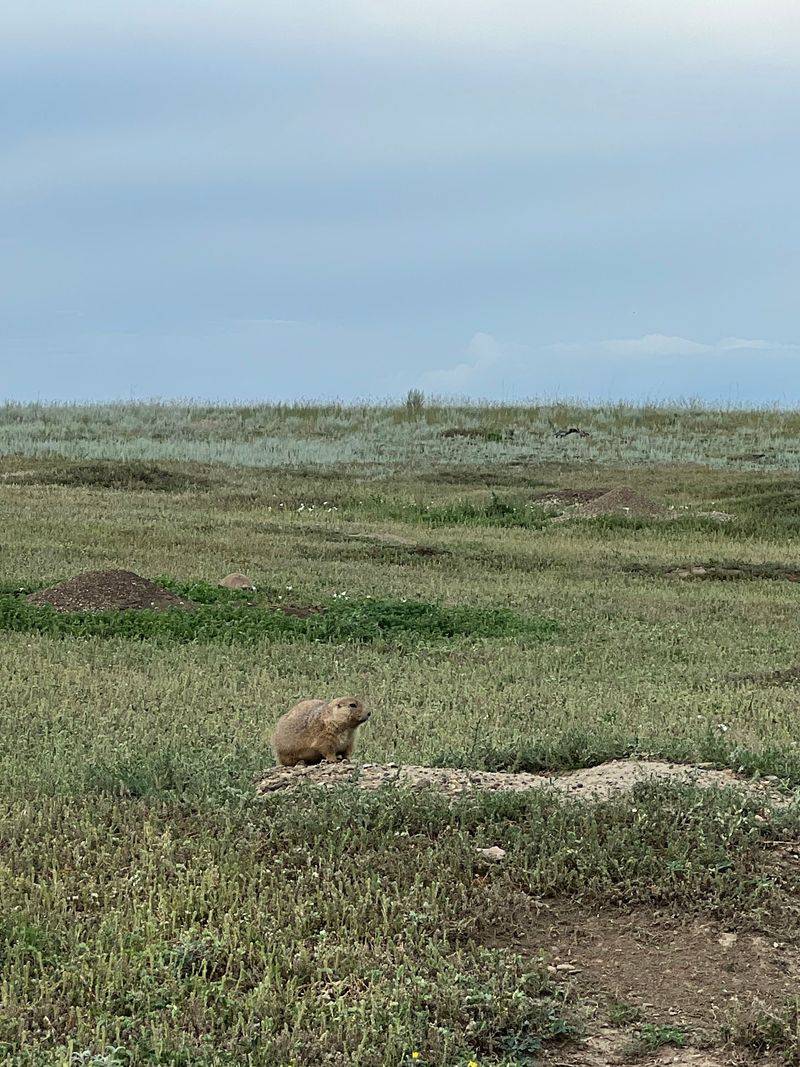
Small, chubby, and very loud. Black-tailed prairie dogs live in busy towns of burrows across the park’s grasslands.
Watch one long enough and you’ll catch its famous call. They stand up straight, squeak a warning, and pop back down their holes.
These little diggers matter more than you’d guess. Their burrows and grazing shape the prairie for many other animals and plants.
The towns are easy to find from the scenic drives. Look for flat, bare patches dotted with dirt mounds and tiny lookouts.
Bring patience instead of crumbs. Feeding wildlife harms them, and the park asks visitors to let animals find their own food.
Slow down near the colonies. Prairie dogs often run across the road, and a gentle foot on the gas keeps them safe.
Young visitors usually adore this stop. It’s like watching a tiny neighborhood where everyone has an opinion about strangers.
Grab a photo from your car window. The pups peeking out of their burrows make some of the cutest pictures in North Dakota.
A President’s Old Cabin Waits Near The Front Door
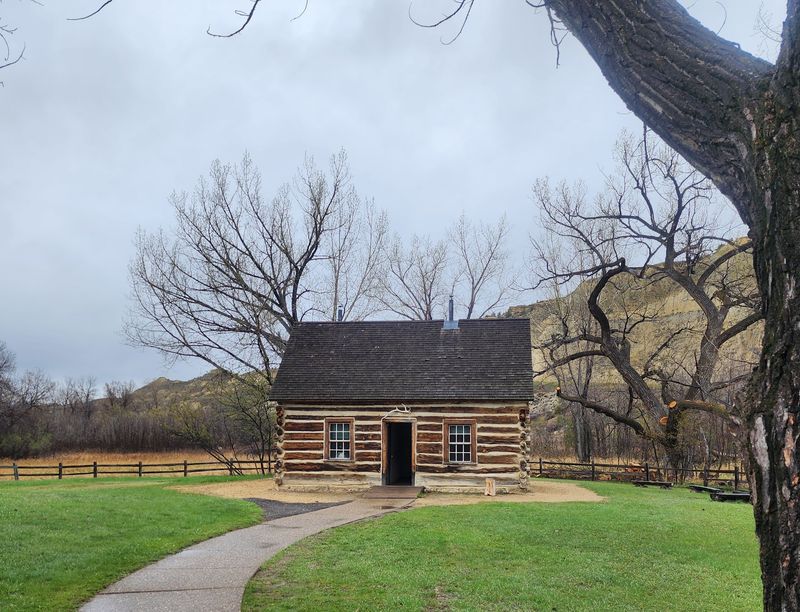
Long before the White House, there was a log cabin on the prairie. Theodore Roosevelt first arrived in the Dakota Territory in 1883 to hunt bison.
He stayed to try ranching. Those rugged years shaped the man who later became a major champion of conservation.
His Maltese Cross Cabin sits near the South Unit Visitor Center. It offers a real-life peek at his frontier days.
The visitor center is the best place to start. You’ll find it at 201 East River Road North, Medora, ND 58645.
Inside, displays cover Roosevelt’s life along with fossils and local wildlife. Rangers can also help you plan your route.
Hours change with the seasons. Arrive earlier in the day if you want time inside before the doors close.
The park started as a national memorial park in 1947. It became Theodore Roosevelt National Park on November 10, 1978.
History buffs can dig deeper at the Elkhorn Ranch Unit. It protects the site of Roosevelt’s home ranch along the Little Missouri River.
Lace Up For Trails That Go From Easy To Epic
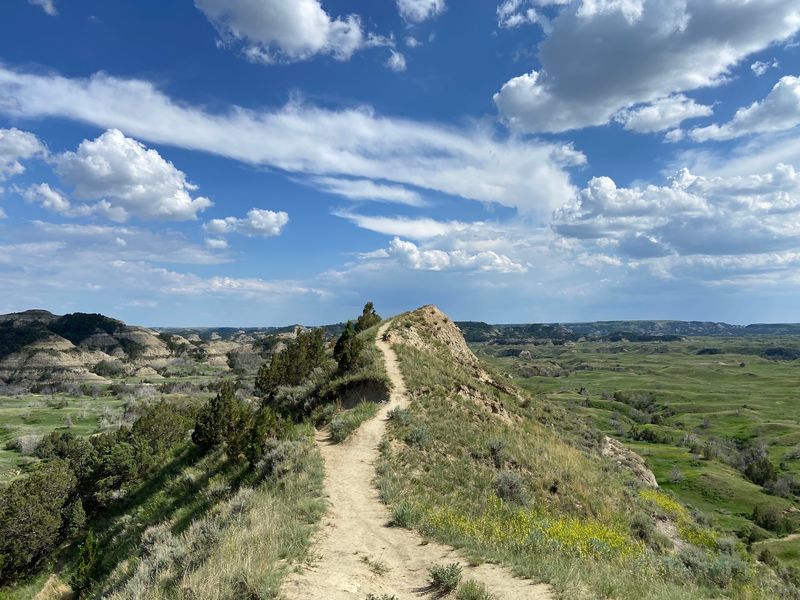
Paved paths for strollers, rugged routes for wanderers. The trail list here covers just about every energy level.
Wind Canyon offers a short climb with big river views. Skyline Vista is another quick stop that pays off fast.
Coal Vein Trail shows what happens when an underground coal seam burns. The landscape still carries the marks.
Buck Hill gives you a high view over the South Unit. The Petrified Forest trail leads to ancient stumps that turned to stone.
Pick trails that match your crew. Short walks keep little legs happy, while longer routes suit seasoned hikers.
Leave Fido in the car plan behind. Leashed pets are allowed in the park, but they aren’t permitted on trails.
Carry more water than you think you’ll need. The badlands get hot, dry, and windy, and shade can be hard to find.
Wear sturdy shoes with good grip. Clay soil turns slick after rain, and nobody wants to slide down a butte on purpose.
Sleep Under The Stars, But Book It Early
Cottonwood trees, a picnic table, and a fire ring. That’s the simple setup at the park’s two main campgrounds.
Cottonwood Campground sits in the South Unit near the Little Missouri River. Juniper Campground serves the North Unit.
Equestrian groups have their own spot, too. The Roundup Group Horse Camp is set aside for riders and their horses.
Planning matters for 2027. Since May 1, 2026, every campsite must be reserved ahead of time through Recreation.gov.
These campgrounds keep things basic. There are no electrical hookups or showers, so pack accordingly.
Water service changes with the seasons. Bring your own supply if you’re camping early or late in the year.
The reward is worth it. Waking up inside the badlands means you’re already close to the dawn wildlife action.
Night skies can be a treat too. Clear evenings far from city lights make this a fine place for stargazing.
Pack layers, since prairie nights can turn chilly fast. A warm hoodie might become your favorite camping buddy.