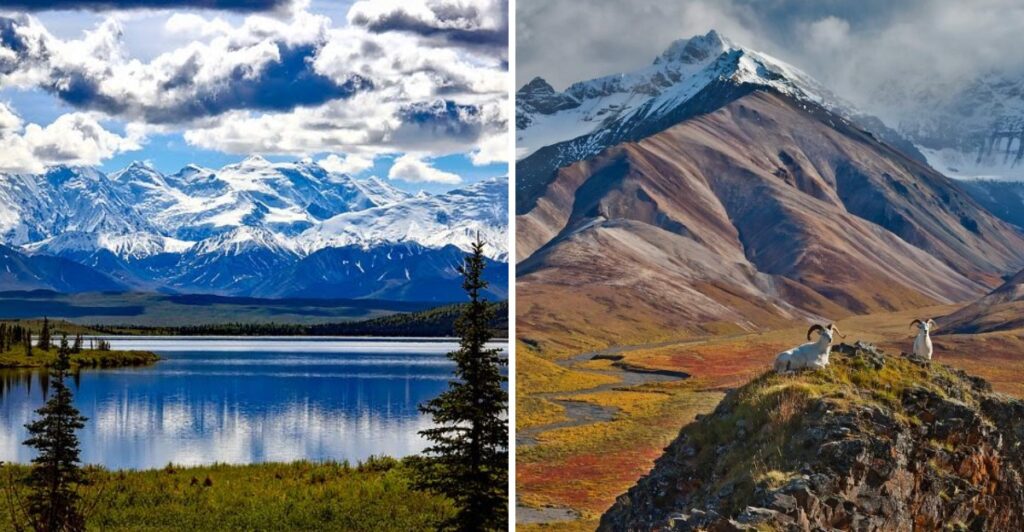
Measured from base to peak, this Alaskan mountain rises about 18,000 feet above the land around it. That’s a bigger vertical jump than Everest makes, and my brain is still catching up.
The summit tops out at 20,310 feet, the highest point in North America. Its original Koyukon Athabascan name means “The High One,” which might be the most honest name on any map.
The park around it covers more than 6 million acres, home to grizzlies, wolves, moose, caribou, and Dall sheep. Private cars can drive only a short stretch of the park road, so buses carry visitors deeper in.
Bus tickets and campsites open up months ahead, so an early start on planning pays off here.
The mountain has waited a few million years, but those bus seats won’t wait nearly as long.
The Mountain Is So Big It Makes Its Own Headlines
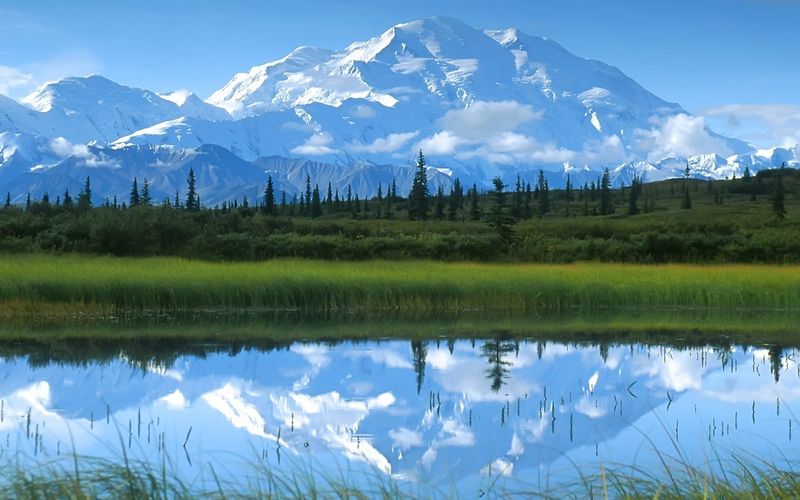
Mountains don’t usually come with a vertical rise this dramatic. At Denali National Park and Preserve, the star attraction climbs about 18,000 feet from its base.
That makes it the tallest mountain on land when measured base to peak. Everest starts on a high plateau, so it gets a head start. Denali just rises from the lowlands like it has something to prove.
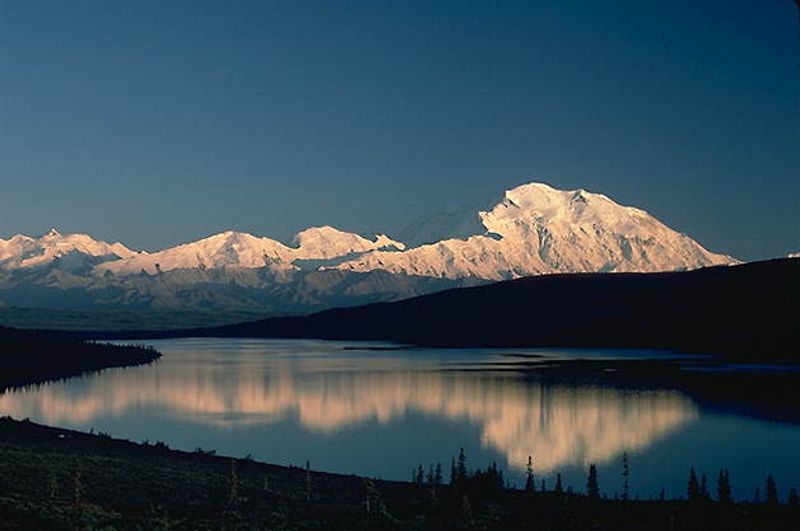
The summit reaches 20,310 feet above sea level. That’s North America’s highest point, no contest. Clouds often wrap around the peak, so a clear view feels like a lucky prize.
Weather is the real boss here. The mountain can hide for days at a time. Planning a few days in the area gives you more chances to catch it.
The name has its own story. Denali comes from the Koyukon Athabascan language. It means “The High One” or “The Tall One.”
A 2025 executive order sought to rename the mountain Mount McKinley. The park’s name, however, stayed the same. Either way, the peak itself doesn’t seem bothered.
Leave The Car Behind And Let The Bus Do The Work
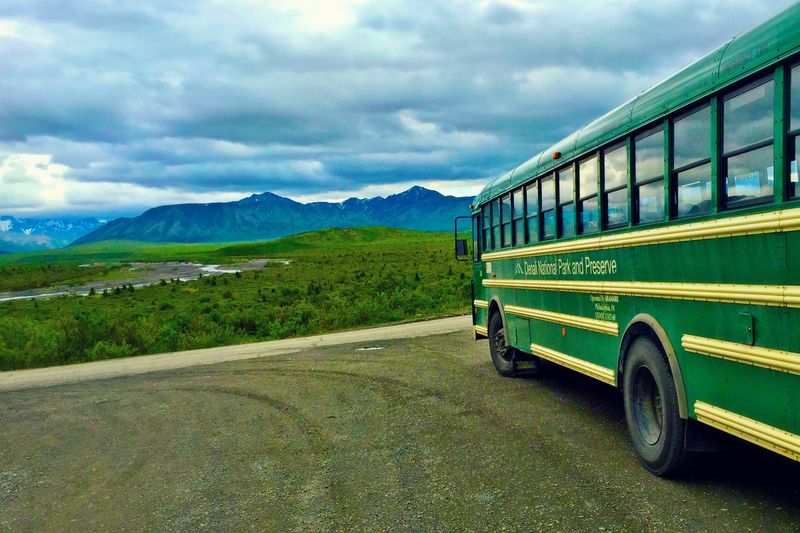
Here’s a twist most road-trippers don’t expect. Private vehicles generally can’t drive past Mile 15, at Savage River, on the 92-mile Denali Park Road.
Beyond that point, shuttle and tour buses take over. It keeps traffic light and wildlife less stressed. Your steering wheel gets a well-earned vacation.
Some news for 2027 planning matters a lot. A landslide at Pretty Rocks, near Mile 45.4, closed the road west of the East Fork bridge at Mile 43.
The Pretty Rocks Bridge was completed in September 2026, and full public bus service along Denali Park Road is expected to resume for the summer 2027 visitor season. Check the park’s updates before you book anything.
Know what you’re buying, too. Some bus trips are long rides focused on wildlife and scenery. Popular front-country trails near the entrance can be reached by car or free shuttle.
So match the bus to your goals. Want animals and big views with a guide? A tour fits.
Want hiking? The entrance area may be your sweet spot.
Bus tickets can be reserved as early as December 1 of the year before. Early birds get the seats.
You Can Thank Some Very Fancy Sheep For This Park
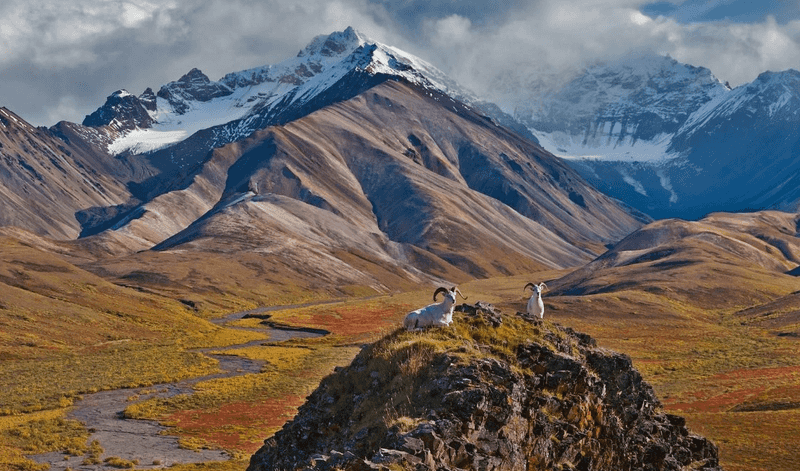
Back in 1917, protecting wildlife was the big goal. Dall sheep were a major reason the park was created on February 26 of that year.
Back then, it carried a different name: Mount McKinley National Park. Those white sheep with curling horns got a protected home. Not a bad deal for some cliff-loving animals.
Things grew from there. In 1976, the area became an International Biosphere Reserve. That label honors places with important natural systems worth studying.
Then came the major glow-up. On December 2, 1980, the Alaska National Interest Lands Conservation Act expanded the park to over 6 million acres.
That same law gave it the name Denali National Park and Preserve. It also officially adopted the Indigenous name for the area. It felt like a fitting nod to people who knew this land first.
Knowing this history makes a visit feel richer. Spotting a Dall sheep on a rocky slope suddenly means more. Those animals are basically the founding members of the whole place.
Bring binoculars. Sheep often look like tiny white dots on high slopes.
Keep Your Eyes Peeled For The Famous Big Five
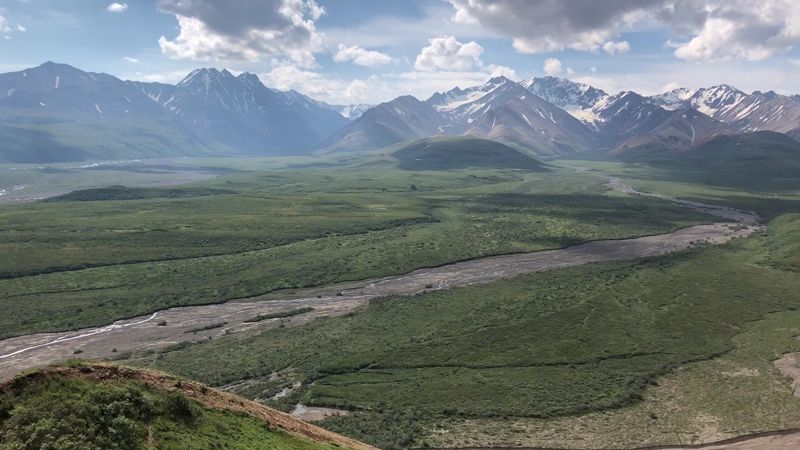
Grizzly bears, wolves, moose, caribou, and Dall sheep. That’s the Big Five, and Denali is famous for all of them.
Seeing even one feels like winning a small lottery. Seeing several in one day? You’ll talk about it for years.
Timing helps a lot. Dawn and dusk are often the best times for wildlife viewing. Summer sunrises come very early in Alaska, so an alarm clock becomes your best friend.
The East Fork of the Toklat River, around Mile 43, is a well-known viewing area.
Sable Pass, around Miles 37–42, allows visitors to travel along the road, but off-road hiking and photography are restricted to protect wildlife. That closure protects the animals living there.
Moose can show up surprisingly close to the entrance area too. Stay alert even near parking lots and trails. These animals are big, and they don’t care about your schedule.
Safety comes first in bear country. Give every animal plenty of space. Learn the park’s wildlife rules before you head out.
A good zoom lens and binoculars make a huge difference. Many sightings happen far away. Let the animals stay wild while you enjoy the show from a respectful distance.
Lace Up For Trails That Range From Easy To Leg-Burning
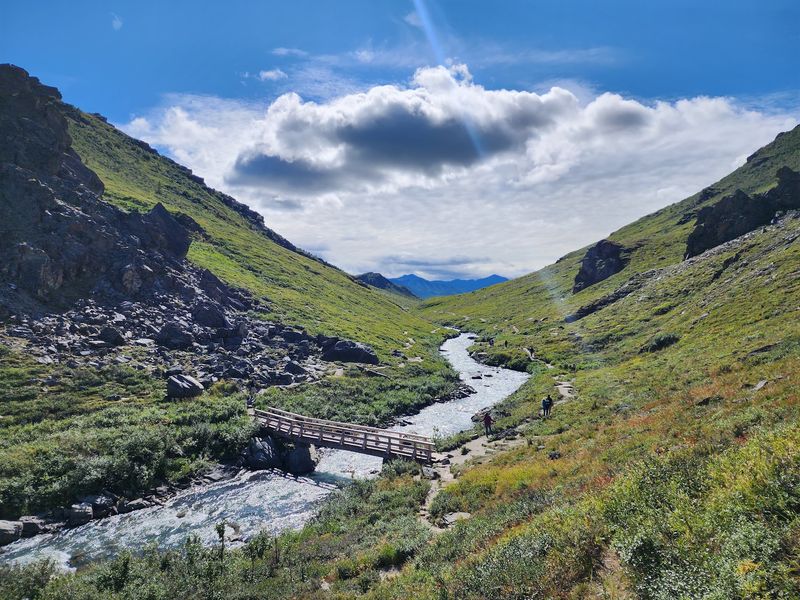
Some of the best hiking sits right near the park entrance. That’s great news for anyone without a backcountry permit.
Horseshoe Lake Trail is an easy, popular pick. It leads to a lake shaped, yes, like a horseshoe. Sometimes nature names things very literally.
The Savage River Loop Trail is another easy option. It sits near Mile 15, where private cars must stop. Families and casual hikers often start here.
Craving a challenge? The Mount Healy Overlook Trail is far more strenuous. It climbs steadily, and the payoff is a sweeping view of the area.
Bring layers, water, and snacks for every hike. Weather changes fast in Alaska. Snow can show up in any month, even summer.
Denali also has huge stretches of trail-free wilderness. Hikers can explore the backcountry without permits on day hikes, but overnight backpacking trips require a free backcountry permit.
Pack bear spray and know how to use it. Talk loudly in brushy areas so animals hear you coming. Nobody wants to surprise a moose around a blind corner.
Start Smart At The Visitor Centers Near The Entrance
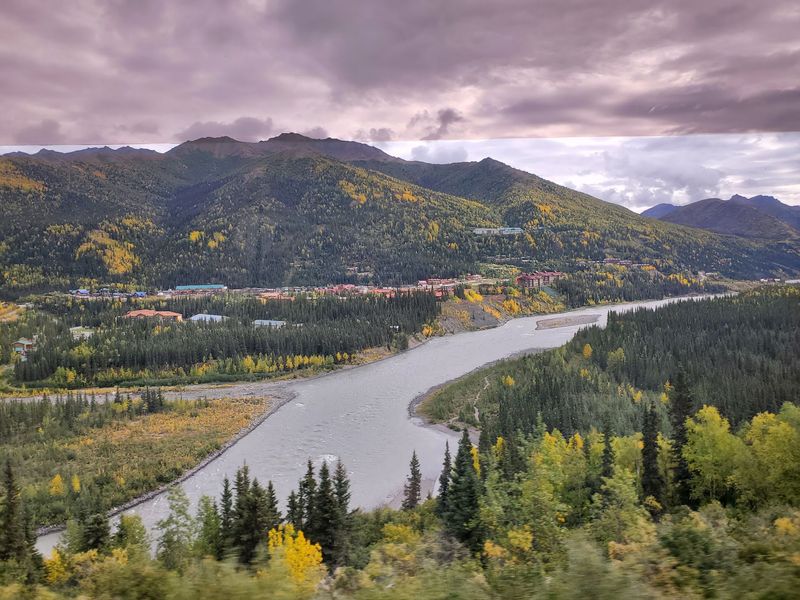
Good trips start with good information. Near the entrance off Mile 237, George Parks Highway, Denali Park, AK 99755, the park’s main hubs help you plan.
The Denali Visitor Center usually runs from early May through late September. Rangers there can answer questions about trails, wildlife, and weather. Asking for advice early can save you hours.
The Denali Bus Depot, formerly called the Wilderness Access Center, sits near Mile 1 of the park road. It handles bus tickets and campground reservations, while the nearby Backcountry Information Center issues overnight backpacking permits.
Winter travelers have an option too. The Murie Science and Learning Center stays open year-round. It serves as the winter visitor center when other buildings close.
Yes, the park stays open all year in Alaska’s interior. Facilities just change with the seasons. Winter brings quiet, snowy scenery and temperatures that can drop to minus 40.
That’s cold enough to make your eyebrows rethink their choices. Dress seriously if you visit then.
For most travelers, summer offers the widest access. Late spring through early September is the sweet spot. That window keeps more services open and more roads busy with buses.
Pick Your Bedtime View Before Someone Else Does
Sleeping options here run from simple tent sites to remote wilderness lodges. Your choice depends on how close to the action you want to be.
Riley Creek Campground sits near the park entrance. It’s an accessible spot for first-timers. You’re close to trails, visitor centers, and shuttle stops.
Wonder Lake Campground remains closed through 2026, but access is expected to return for the 2027 visitor season as bus service resumes along the park road.
Check the latest updates before counting on it.
Backcountry lodges add a special twist. Kantishna Roadhouse and Denali Backcountry Lodge sit deep in the park. During the 2026 road-access restrictions, reaching these remote lodges may require a flight, but road access is expected to return for the 2027 visitor season.
That sounds like an adventure on its own. Arriving by small plane feels very Alaska.
Hotels and cabins also line the area just outside the entrance. Denali Crow’s Nest Log Cabins and Denali Princess Wilderness Lodge are two examples. Both keep you near the park gate.
Timing matters most. Campground reservations open as early as December 1 of the year before. For a 2027 trip, mark December 2026 on your calendar right now.
See The Peaks From The Sky Or The River
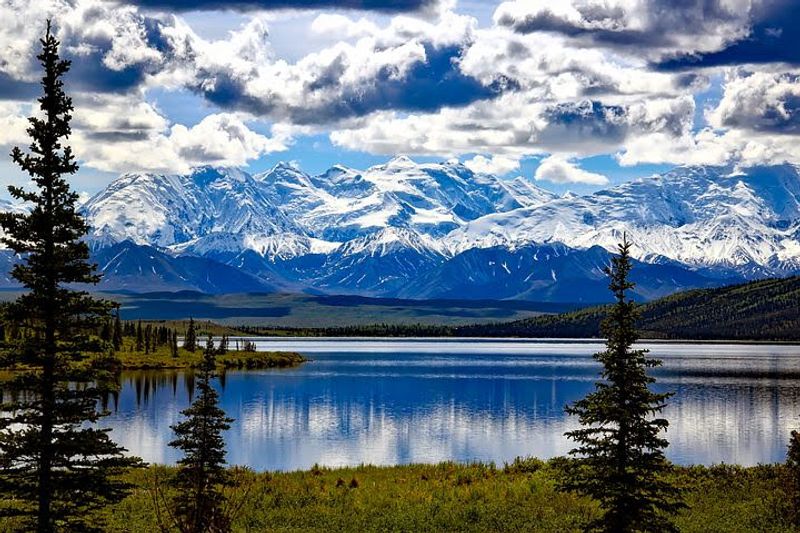
Flightseeing might be the ultimate way to meet a mountain this huge. Small planes carry visitors over the peaks and glaciers of the Alaska Range.
From the air, the scale finally makes sense. Ice rivers spill down valleys. Ridges stack up farther than your eyes can follow.
Clear weather makes these flights shine. Clouds can roll in quickly around Denali. Build flexible days into your schedule so you can wait for a good window.
Prefer to stay closer to the ground? Rafting on the Nenana River is another popular choice. The river runs near the park entrance area.
Trips range in style and intensity. Some feel calm and scenic. Others bring splashes, cold water, and lots of happy shouting.
Either activity adds variety to your visit. Pair a bus tour with a flight or raft trip for a full picture.
Dream trips deserve a little extra planning. Denali rewards people who book early, pack layers, and stay flexible. Start mapping out 2027 now, and the High One may just step out from the clouds to say hello.