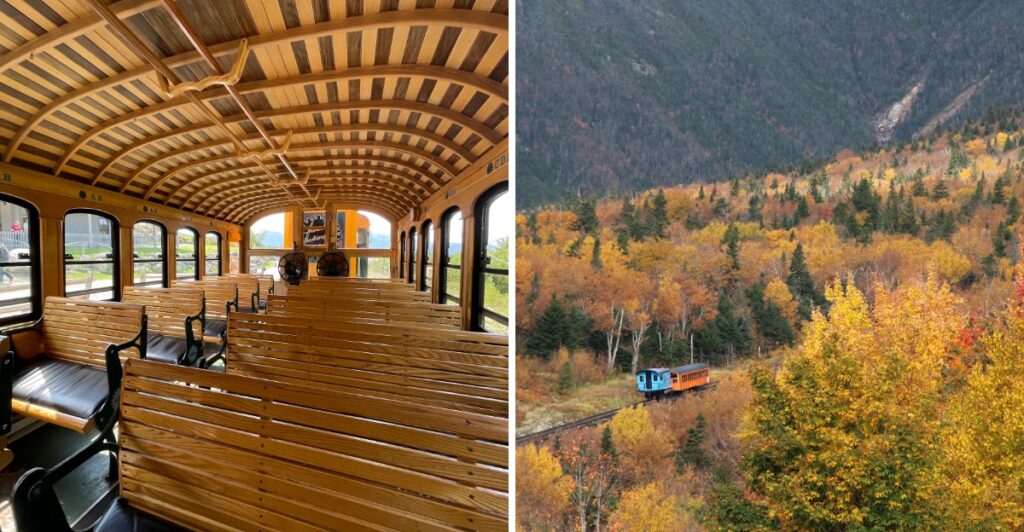
Lawmakers once joked that a man might as well build a railway to the moon. He built it anyway, and his train still climbs a 37 percent grade today.
That steepest stretch even has its own nickname, which feels well deserved. I get winded on a gentle ramp at the mall, so a train tackling that slope earns my full respect.
This New Hampshire ride climbs through three ecological zones on its way to a summit that looks like Arctic Canada. In fall, the hardwood forest below blazes with color while the top wears tundra like a cold-weather costume.
That might be New England’s most dramatic seasonal outfit change. The moon is still waiting, but the world’s second-steepest rack railway makes a pretty convincing first draft.
The World Laughed, Then The World Bought Tickets
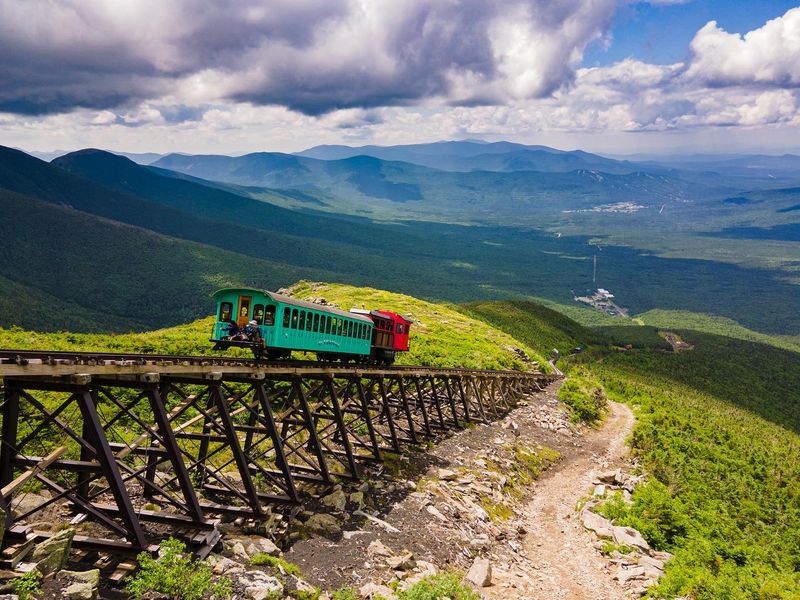
Back in 1857, Sylvester Marsh nearly lost his way during a rough hike on Mount Washington. Instead of swearing off mountains, he decided people deserved an easier ride up.
The New Hampshire Legislature granted his charter, though some members teased him about building a railway to the moon. Construction started in May 1866, right after the Civil War ended.
The Mount Washington Cog Railway became the world’s first mountain-climbing cog railway. Paying passengers first rode as far as Jacob’s Ladder on August 14, 1868.
By July 1869, the track reached the summit. President Ulysses S. Grant took a ride that same year, which is a pretty strong opening-season review.
The railway has operated since 1869, traditionally running seasonally before expanding to winter excursions in 2020.
That kind of staying power makes most modern gadgets look flimsy.
Early engines burned wood until 1910, when they switched to coal. The original locomotive, Peppersass, dates to 1866 and still sits on display at the base.
Spend a minute with it before boarding. Knowing the backstory makes the climb feel less like a tourist ride and more like riding a stubborn dream that actually worked.
Steam Or Biodiesel, Pick Your Kind Of Puff
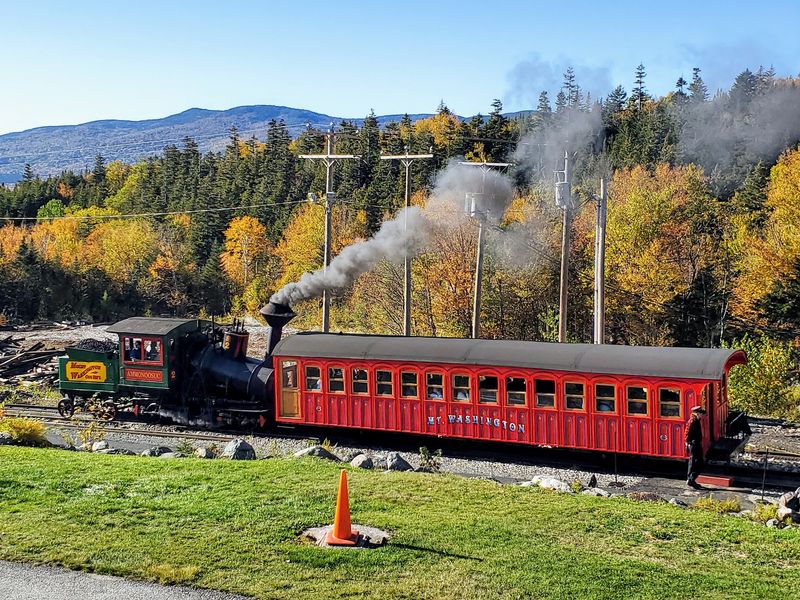
Two kinds of engines push coaches up this mountain. Modern biodiesel locomotives handle much of the work, while century-old coal-fired steam engines run on select schedules in warmer months.
The first custom biodiesel locomotive arrived in 2008. By 2019, the Cog had built seven of them, which says plenty about how seriously they take engineering here.
Steam fans get the drama, though. Those engines must stop for water during the climb, so the trip takes a bit longer than the biodiesel ride.
Each locomotive pushes its coach from below rather than pulling it. That setup feels odd at first, then completely logical once you see the slope.
During peak foliage, extra steam trips are often added. Those runs usually travel only as far as Waumbek Station at 4,000 feet, so check the destination before booking.
Here’s a handy tip if you pick biodiesel. Try choosing a departure close to a steam train so you can watch the old engine chug away.
Either way, you win. One option is efficient and modern, and the other basically looks like a history book breathing smoke.
Your Stomach Will Notice Jacob’s Ladder
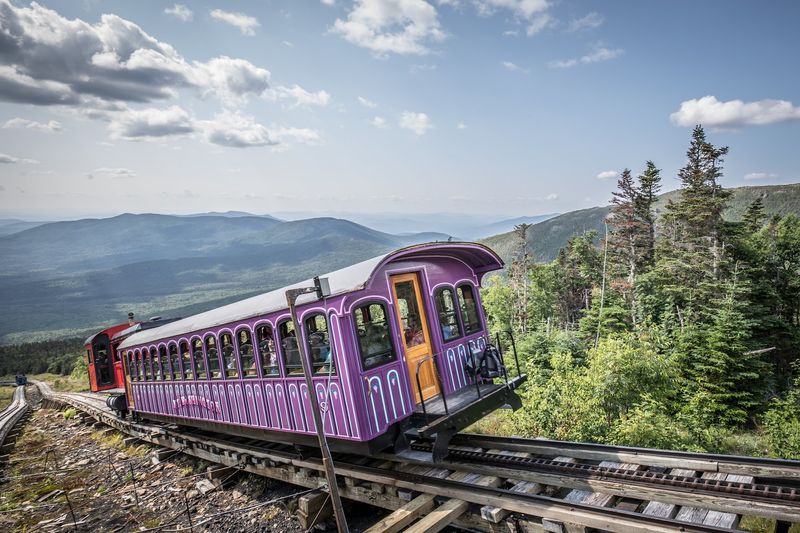
Thirty-seven percent. That number describes the grade at Jacob’s Ladder, the famous steep stretch of track on this climb.
For comparison, the average grade across the whole route tops 25 percent. That ranks the Mount Washington Cog Railway as the second-steepest rack railway in the world.
A rack-and-pinion system makes it possible. A toothed gear under the locomotive grips a center rack between the rails, so the train climbs like it’s using a zipper.
Front row seats let you look forward at the track through the windows. If you like seeing exactly what you’re about to climb, book those spots early.
Nervous about heights? The ride moves slowly and steadily, and the coaches are fully enclosed with windows.
The ascent on biodiesel takes approximately 45 minutes. Coming down takes roughly an hour, giving you a second chance at every view.
Brakemen and brakewomen narrate the whole way, explaining how the system works. They make the physics sound fun, which is a rare talent.
By the time you pass Jacob’s Ladder, you’ll understand why folks once called the idea impossible.
Fall Colors Below, Arctic Tundra Above
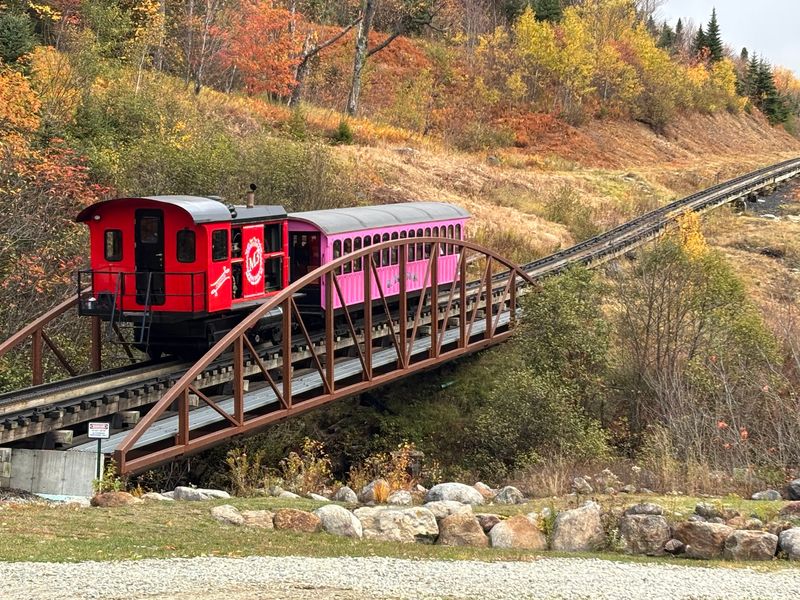
Autumn on this mountain works like a layered cake. The bottom layer glows red, orange, and gold, while the top stays rocky and wild.
The climb passes through three ecological zones. Dense northern hardwood forests cover the lower slopes, and alpine tundra takes over above about 4,500 feet.
That tundra resembles the landscape of Arctic Canada. Riding from leafy color into bare subarctic ground in one trip feels a little like cheating geography.
Peak foliage on Mount Washington usually runs from late September through mid-October. Higher elevations change first, so the colors creep downhill as the weeks go by.
Timing matters a lot. After mid-to-late October, the high-country trees have dropped their leaves, and trips may be shorter.
Fall weekends see extreme ticket demand, and trains often sell out. Booking ahead online is the smartest move you can make for a foliage trip.
Seat choice helps too. Many riders prefer the three-seat side for valley views, so plan which window you want before you buy.
Do that homework, and the leaves do the rest of the work.
The Base Station Deserves More Than A Quick Shrug
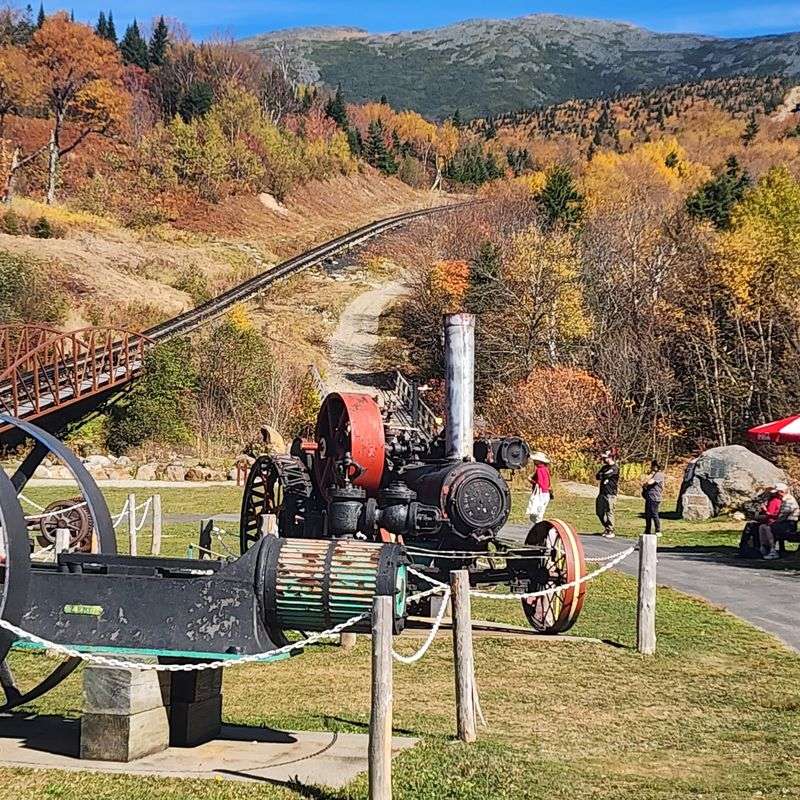
A jet engine mounted on train wheels sits on display here. It’s a retired snow-clearing machine, and it looks exactly as wild as it sounds.
Marshfield Base Station sits at about 2,700 feet at 3168 Base Station Rd, Mount Washington, NH 03589. It’s the highest year-round, full-service facility on the mountain.
The free Cog Railway Museum offers interactive exhibits about the railway’s past. It’s a smart stop while you wait for your boarding time.
An observation deck wraps around the station. From there, you can watch trains head uphill and take in the mountain itself.
Hungry? A food court and convenience store serve hot and cold snacks.
The gift shop carries Cog merchandise and local treats, including maple products. Few souvenirs feel more New Hampshire than maple.
Restrooms are available at the base, and that matters. There are no restrooms on the trains, so plan accordingly before the climb.
Parking is free and roomy for cars, buses, and RVs. The station itself is fully accessible, though the historic coaches have narrow aisles, so call ahead about mobility needs.
Bring A Jacket, Even If The Valley Feels Like Sweater Season
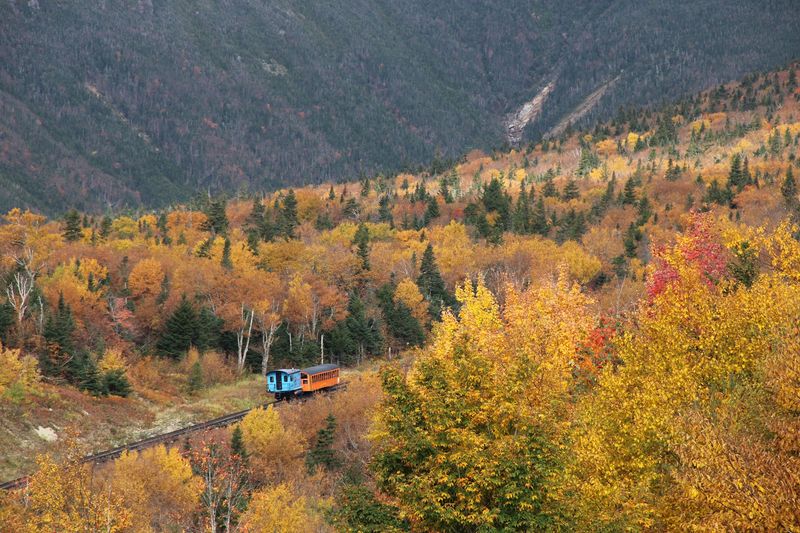
Mount Washington’s summit has a reputation for some of the most severe weather on the planet. Strong winds can roar through, and snow can show up even in summer.
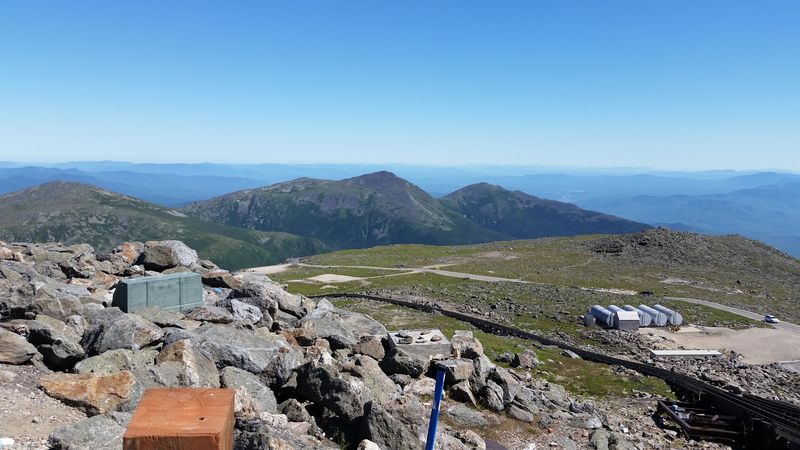
The top stands at 6,288 feet, making it the highest peak in the Northeast. It’s subarctic tundra up there, much like northern Canada.
Fall adds an extra twist. The valleys might feel mild while the summit turns cold and windy, so dress for the top, not the parking lot.
Layers work best. Grab a warm jacket, long pants, and sturdy shoes, because the summit ground is very rocky.
Sandals are a bad bet here. Wear them, and your toes will file a complaint with management.
Views are never guaranteed. Clouds can wrap the peak completely, and conditions can change fast during a single visit.
Still, a clear day pays off big. On those days, you can see five states, the Atlantic Ocean, and southern Quebec.
Treat the weather as part of the adventure. Few places let you ride a train straight into a forecast this dramatic.
Your Hour At The Top Goes Fast, So Have A Plan
Mail a postcard from the top of New England. The summit Post Office stamps it with a special Mount Washington postmark.
A round trip runs just under three hours, including about an hour at the summit. That layover vanishes quickly, so pick your priorities before you arrive.
The summit belongs to Mount Washington State Park. Inside the Sherman Adams Visitor Center, you’ll find restrooms, a cafeteria, two gift shops, and a rooftop observation deck.
Weather lovers should check out Extreme Mount Washington, an interactive exhibit inside the visitor center. It explains why this peak is famous for its punishing conditions.
Next, visit the Tip Top House Museum. Built in 1853, it was the original summit hotel and is believed to be the oldest existing mountaintop hostelry in the world.
The Mount Washington Observatory also sits up here. Public weather station tours require separate advance reservations through the Observatory, not the railway.
Hang onto your return ticket the whole time. You’ll need it to board for the trip down.
A little planning turns a quick hour into the highlight of your day.
Smart Booking Moves Make The Whole Trip Smoother
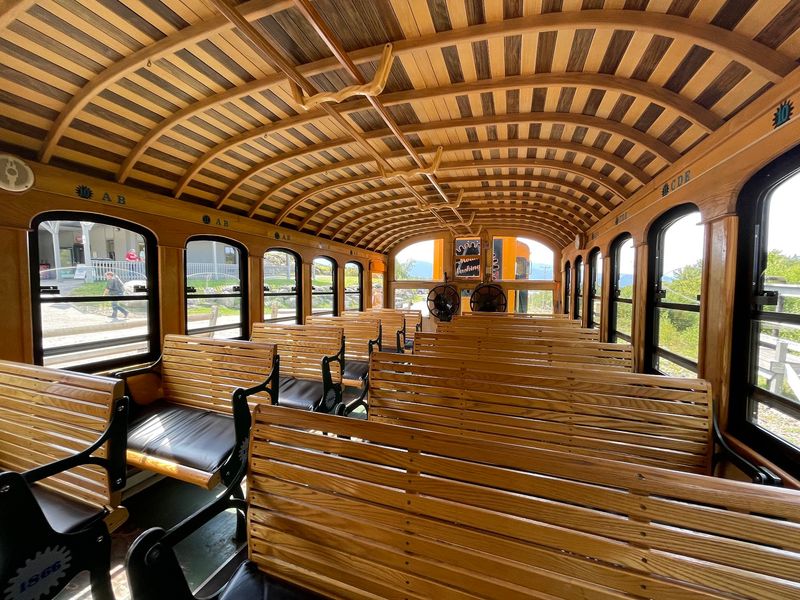
Good seats go first, and the best ones disappear fast. Advance reservations are highly recommended, especially for steam trips and fall foliage dates.
The coaches are hand-built with bench seats and windows. Some rows face the track ahead, and riders often aim for the front for that forward view.
Google lists base hours starting at 7 AM daily, though trains follow a set schedule. Arrive early enough to use the restroom and browse the museum.
The Cog sits on the western side of Mount Washington, about 6 miles east of Route 302. It’s near the Omni Mount Washington Hotel in the White Mountains of northern New Hampshire.
Watch the weather before you go. A clear day dramatically changes what you’ll see from the summit.
Bring some cash too. Riders commonly tip the brake crew, and you’ll usually have a different person going up than coming down.
Those crew members keep the train safe and the stories flowing. Their narration covers history, mountain weather, and the terrain outside your window.
Book early, dress warm, and pick your side. The mountain handles everything else, including the showing off.