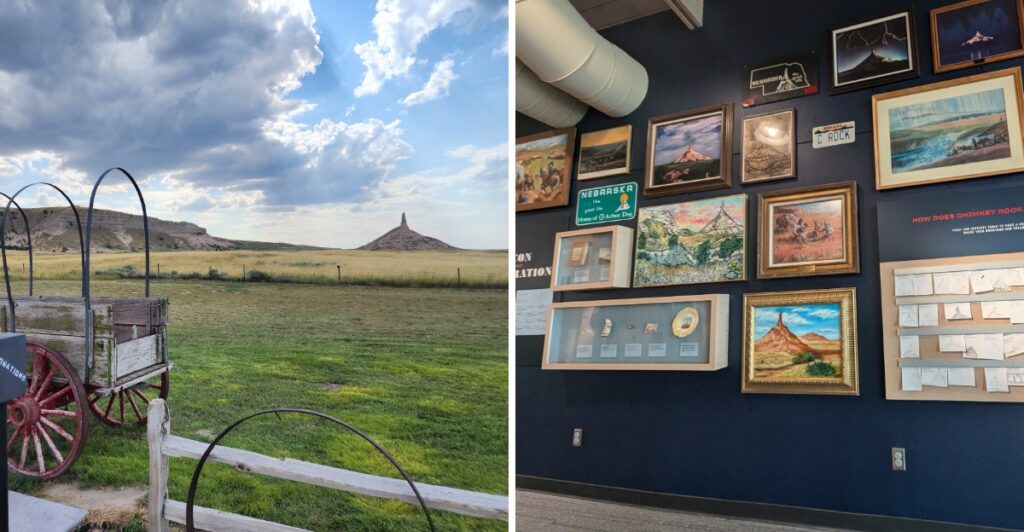
More pioneer diaries mention this western Nebraska rock than any other landmark on the trail west. Travelers wrote about it for days before arriving, because it popped up on the horizon that early.
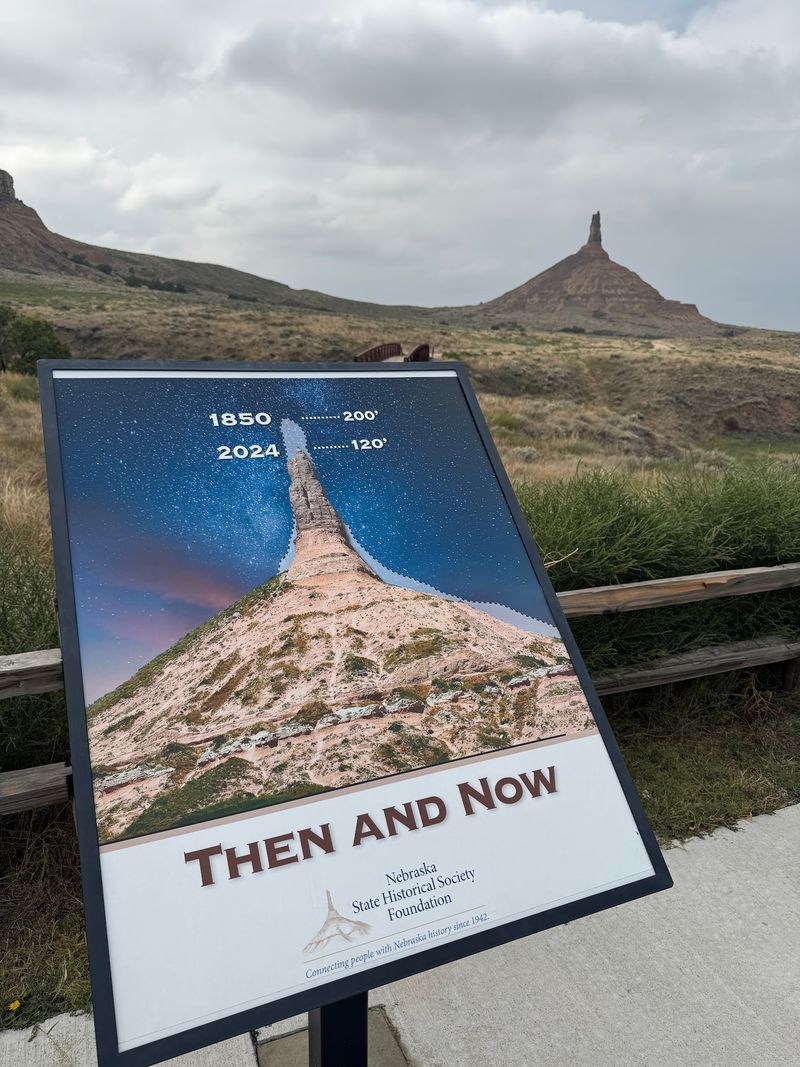
The whole formation rises about 325 feet from its base, and the narrow spire on top accounts for roughly 120 of those feet. Wind and lightning keep chipping away at it, giving it a very slow natural haircut.
It still towers over a wide river valley, the same view wagon families saw on their long trip west. Those travelers scribbled about it nonstop, like the trail’s original group chat.
All these years later, it’s still the most talked-about rock on the route. Not bad for a landmark that never posted a single selfie.
The Spire That Filled More Diaries Than Any Other Trail Stop
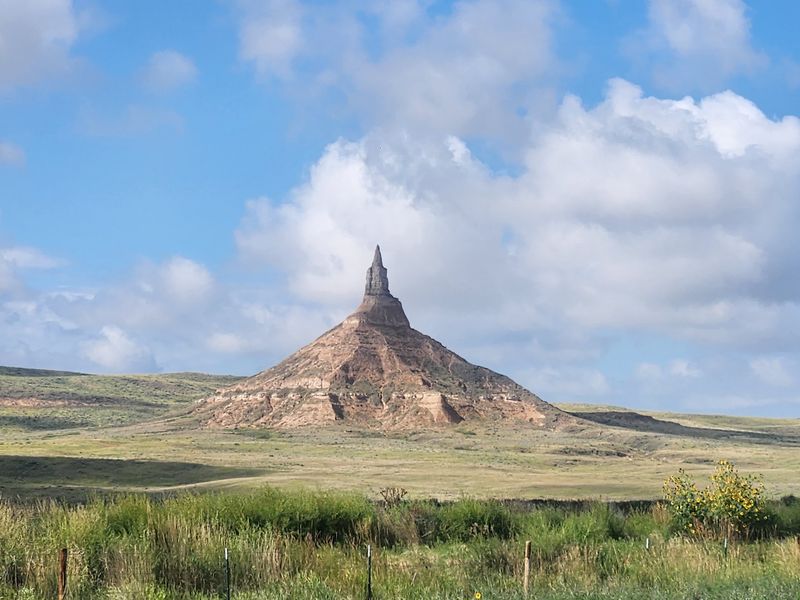
Pioneers had plenty to write about, from river crossings to broken wheels. Yet Chimney Rock National Historic Site earned more diary mentions than any other Oregon Trail landmark.
The reason is simple once you see it. A tall, skinny spire popping out of flat prairie is impossible to ignore.
Emigrants on the Oregon, California, and Mormon Pioneer trails all passed this way in the mid-1800s. Pony Express riders galloped by it too. For many travelers, it signaled real progress on a long and tiring journey west.
That progress mattered a lot. Spotting the rock meant the flat plains were giving way to rougher country ahead.
Diary writers compared it to a chimney, a tower, and even a funnel. Some tried sketching it, with mixed artistic results. Their notes still help historians understand how people felt on the trail.
You can stand in roughly the same valley they crossed. The view hasn’t changed nearly as much as the traffic has.
Bring a notebook if you feel inspired. Writing a few lines here puts you in very good company, about two centuries late.
Layers Of Clay, Ash, And Sandstone Hold This Tower Together
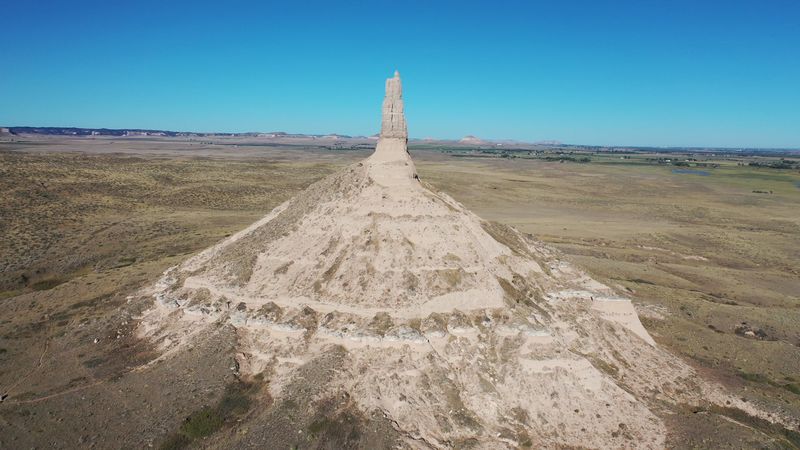
Geology class gets a lot more fun with a rock formation rising about 325 feet from its base. The spire is made mostly of Brule clay mixed with layers of volcanic ash.
Arikaree sandstone sits higher up the formation. Those harder sandstone layers on top act like a hat, protecting the softer rock below from wearing away too fast.
Still, nature keeps chipping at it. Wind, rain, and lightning have all shaved off bits over many years.
Historical accounts even suggest soldiers once fired cannons at the rock. That’s one strange way to spend an afternoon on the frontier.
The whole formation rises more than 300 feet above the North Platte River valley. Its peak reaches 4,228 feet above sea level, which surprises folks who picture Nebraska as totally flat.
Look closely and you can spot the bands of different rock. Each layer tells a piece of a story millions of years in the making.
Kids who love rocks will have endless questions here. Adults might too, especially about that cannon business.
Bring binoculars for a sharper look at the layers. The details pop when you get a closer view.
The Visitor Center Packs A Lot Of Trail Story Into Its Rooms
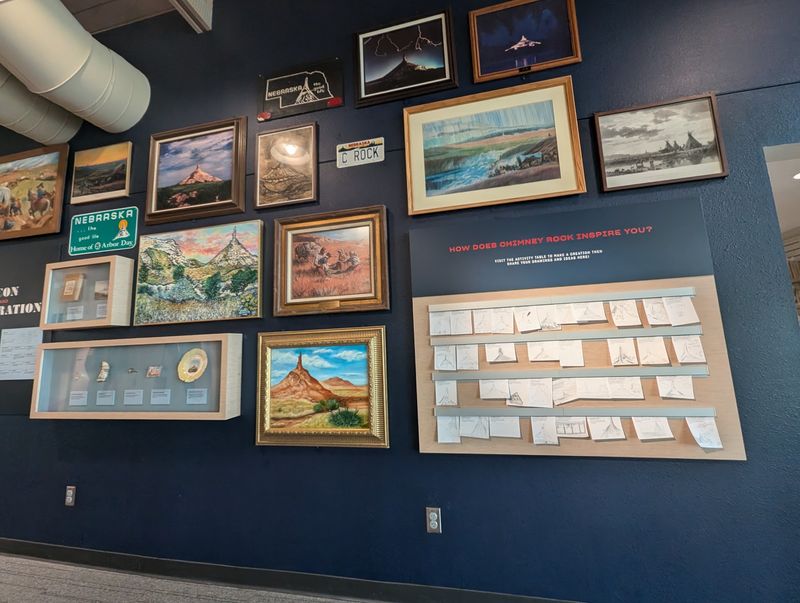
Exhibits come first at the Ethel and Christopher J. Abbot Visitor Center. It sits at 9822 County Road 75, Bayard, NE 69334, about 1.5 miles south of Highway 92.
The museum inside covers more than just covered wagons. Displays explore Native American history, fur traders, and the overland travelers who came later.
A video presentation walks you through westward migration. It’s a handy primer before you head outside for the real view.
Interactive exhibits make the history easy to grasp. Original trail artifacts add a touch of the real thing to the story.
History Nebraska runs the site as an affiliated area of the National Park Service. That partnership keeps the stories well researched and thoughtfully told.
A modest admission fee applies to the museum. Restrooms are available here too, which every road-tripper appreciates.
Hours change with the seasons, and the center isn’t open every day. Checking ahead before your drive saves you from a closed door.
Plan for a relaxed stop rather than a rushed one. The exhibits reward a little curiosity and an unhurried pace.
Your Kids Can Pack A Wagon Without Leaving Anything Behind
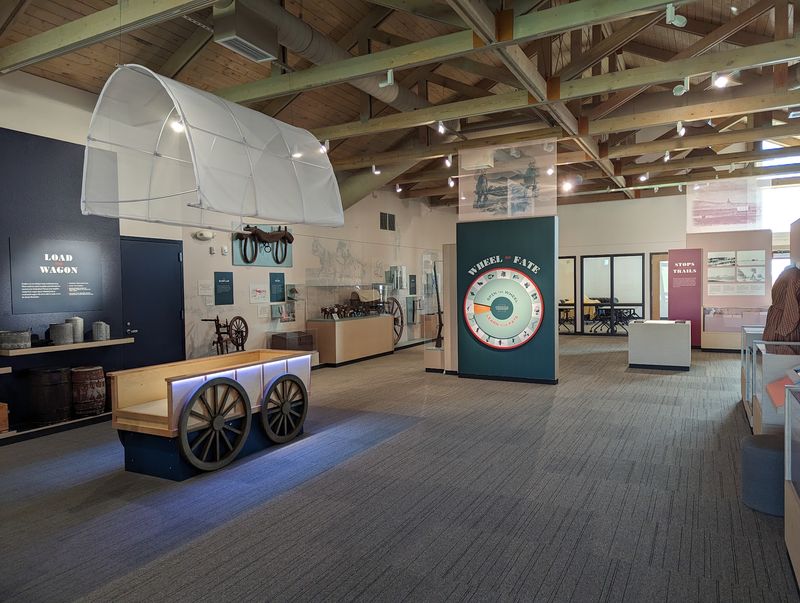
Packing for a road trip is hard enough with a trunk. Pioneers had to fit their entire lives into a single wagon.
The interactive exhibits at Chimney Rock National Historic Site let younger visitors try that challenge themselves. A wagon-loading display turns tough choices into a hands-on game.
Do you bring the flour or the fancy furniture? Kids quickly learn that weight mattered more than sentimental value.
That lesson sticks better than any textbook chapter. Hands-on learning has a way of making history feel personal and real.
Adults often end up joining in, too. It’s surprisingly tricky to decide what a family truly needs for months on the trail.
Other exhibits explain the risks travelers faced on their journey. Everything is presented in a way that feels approachable for different ages.
This makes the stop a smart pick for families crossing western Nebraska. It breaks up long drives with something active and memorable.
Let the kids take the lead inside. Their questions might teach you something new about life on the old trails.
A Short Trail Brings The Spire Much Closer
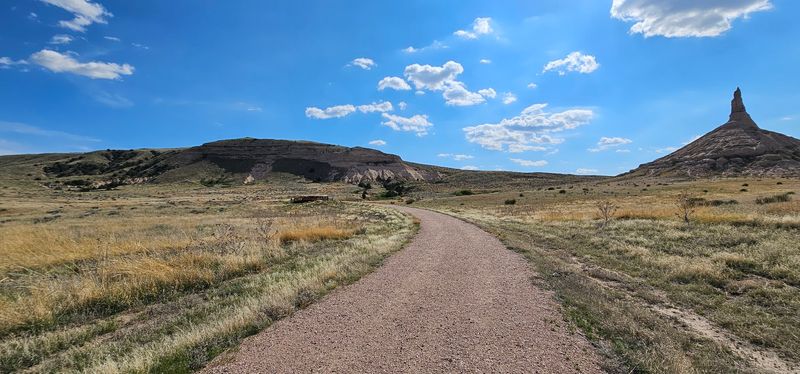
Photos from the parking lot are nice, but closer is better.
For a closer look at the landmark and some great photo opportunities, head to Chimney Rock Trail at Chimney Rock Trail, Bayard, NE 69334, United States.
Here, you can enjoy scenic views of the towering rock formation.
The Walk to the Rock trail system offers several routes, ranging from 0.20 to 1.76 miles, that bring visitors closer to Chimney Rock.
The walk gives you a fresh angle on the spire. Every few steps, it seems to grow taller against the sky.
Prairie grass lines the route, so dress for open country. Sturdy shoes and water make the outing much more comfortable.
Here’s a practical tip worth remembering. Posted signs warn visitors to watch for rattlesnakes, so stay on the path and keep your eyes open.
Shade is limited out on the prairie. Sunscreen and a hat are smart choices, especially on summer afternoons.
Morning or late-day light can make photos especially striking. The rock takes on warmer tones as the sun sits lower.
Take your time and pause often. The quiet setting helps you picture what pioneers saw as their wagons rolled past.
Remember that climbing the formation itself isn’t the goal. Enjoy it from the trail and let the spire do the showing off.
Names Carved Long Ago Have Mostly Faded Away
Long before social media check-ins, pioneers left their mark the old-fashioned way. Many carved their names right into Chimney Rock.
It was a way of saying they made it this far. For families on a grueling trek, that felt like a big deal.
Sadly, the soft rock didn’t hold those signatures for long. Erosion has wiped away most of the inscriptions over time.
That loss tells its own story about the formation. The same forces that shrank the spire also erased those hopeful names.
It’s a good reminder for modern visitors. Leaving the rock untouched helps protect it for travelers who come after you.
Instead of carving, take plenty of pictures. Your photos will last far longer than any scratch in soft sandstone.
The museum’s exhibits help fill in who these travelers were. Their diaries and belongings survive even when their carvings did not.
Standing here, you can almost hear their wagon wheels creaking along. Their names faded, but their journey still shapes the story of this place.
Check Your Pocket Change For A Familiar Face
Some landmarks get postcards. Chimney Rock got its own spot on a coin.
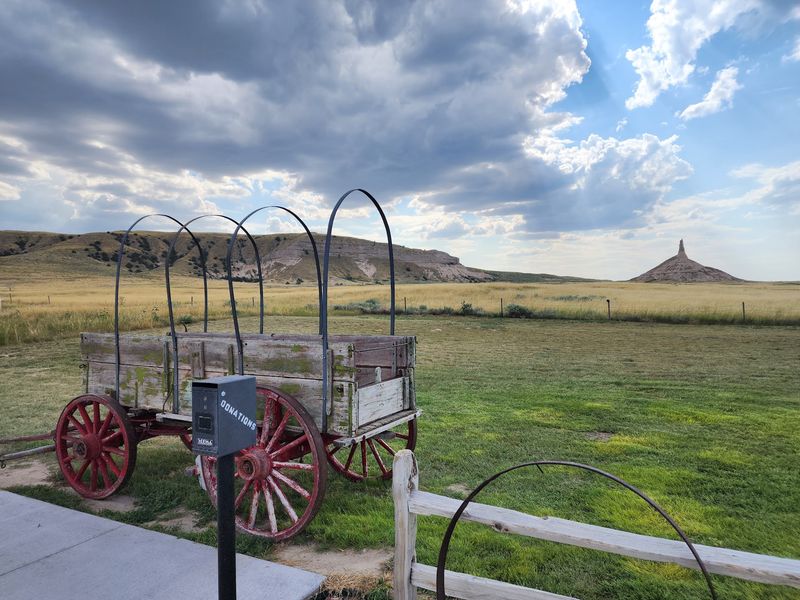
The Nebraska State Quarter was released on March 1, 2006. It shows a covered wagon rolling past the famous spire.
That design choice says a lot about the rock’s importance. Out of everything in the state, this formation was picked to represent it.
Official recognition came well before the coin. The site became a National Historic Site on August 9, 1956.
Ten years later, on October 15, 1966, it joined the National Register of Historic Places. Those honors help protect it for the long haul.
The name itself goes back even further. Early fur traders may have used the name Chimney Rock, but its earliest known recorded use dates to 1842.
Here’s a fun challenge for your trip. Try finding one of these quarters before you arrive, then snap a photo holding it up to the real thing.
It’s a cheap souvenir with a great story. Plus, it fits easily in your pocket.
Grab A Souvenir And A Passport Stamp Before Leaving
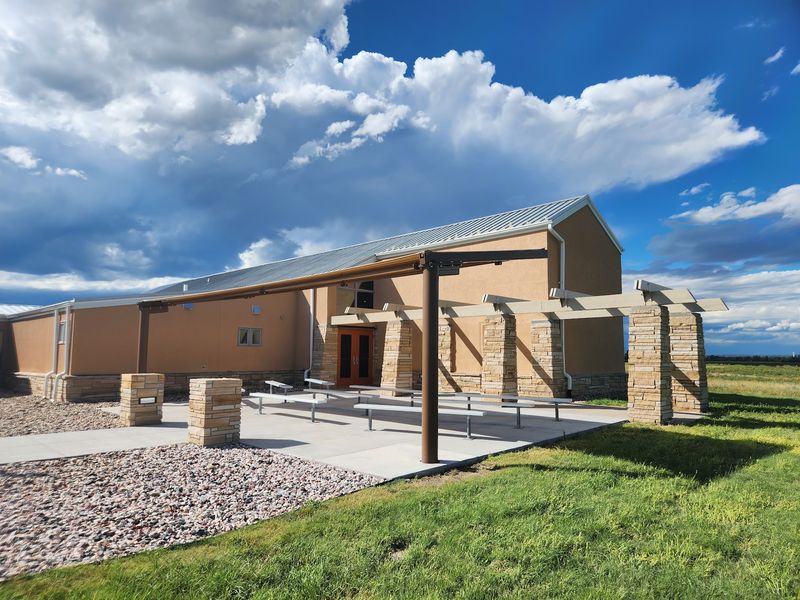
Souvenir hunters, your moment has arrived. The visitor center includes a gift shop and bookstore stocked with trail-themed finds.
Past merchandise has included magnets, postcards, and some quirky t-shirts. One design even promoted prairie sasquatches, which is exactly the kind of humor a long drive needs.
History lovers can browse books about the Oregon Trail and westward travel. It’s an easy way to keep learning once you’re home.
Many travelers also collect passport stamps here. If you carry a park passport book, bring it along for the visit.
Postcards remain a classic pick. Mailing one from western Nebraska feels fitting at a place famous for travel diaries.
Remember that shop hours follow the visitor center schedule. Arriving during open hours keeps you from missing out.
Small purchases also support the site’s ongoing work. That helps keep the exhibits and grounds in good shape.
Choose something that sparks a memory later. A simple magnet on the fridge can bring back that first view of the spire.