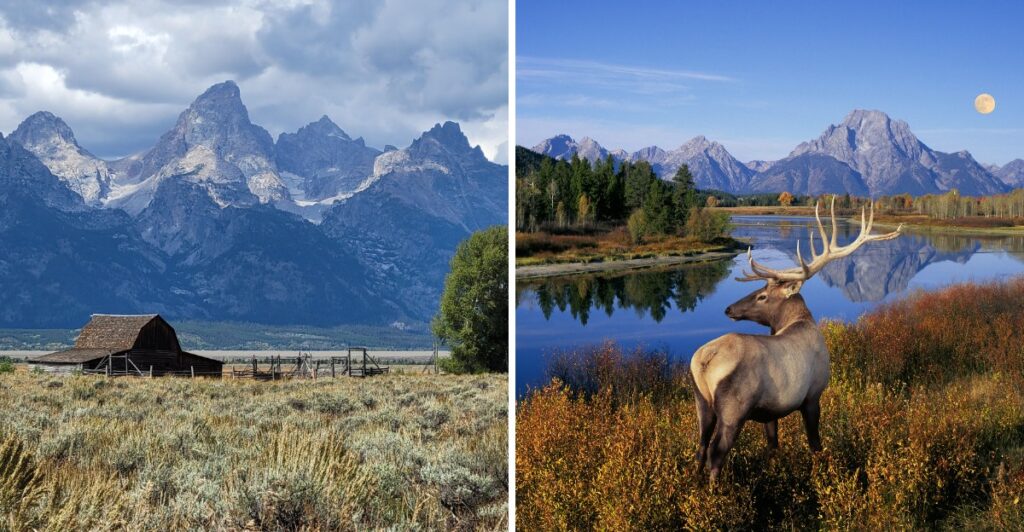
These Wyoming mountains skipped the foothills entirely. The tallest peak shoots more than 7,000 feet straight up from a flat valley floor, with zero warm-up.
The fault that built them has shifted nearly 30,000 feet in total, lifting one side into peaks while the other sank into a valley. It’s also one of the youngest ranges in the Rockies, which might explain the dramatic attitude.
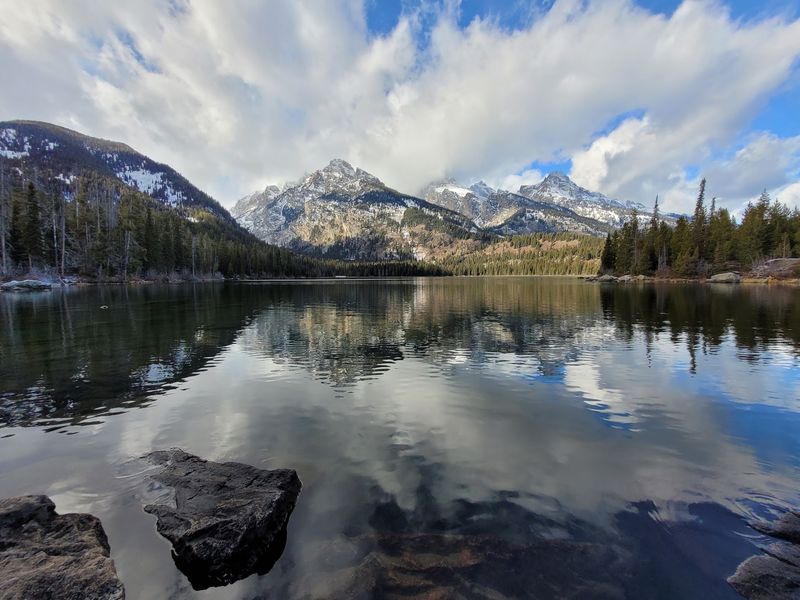
Glaciers later carved canyons and left lakes that reflect the summits on calm mornings. From the road, the whole view looks so sharp it almost seems photoshopped.
The range sits in northwestern Wyoming, right next door to a much busier national park. That neighbor got the geysers, but these peaks got the jawline.
Blame A Fault Line For That Jaw-Dropping Skyline
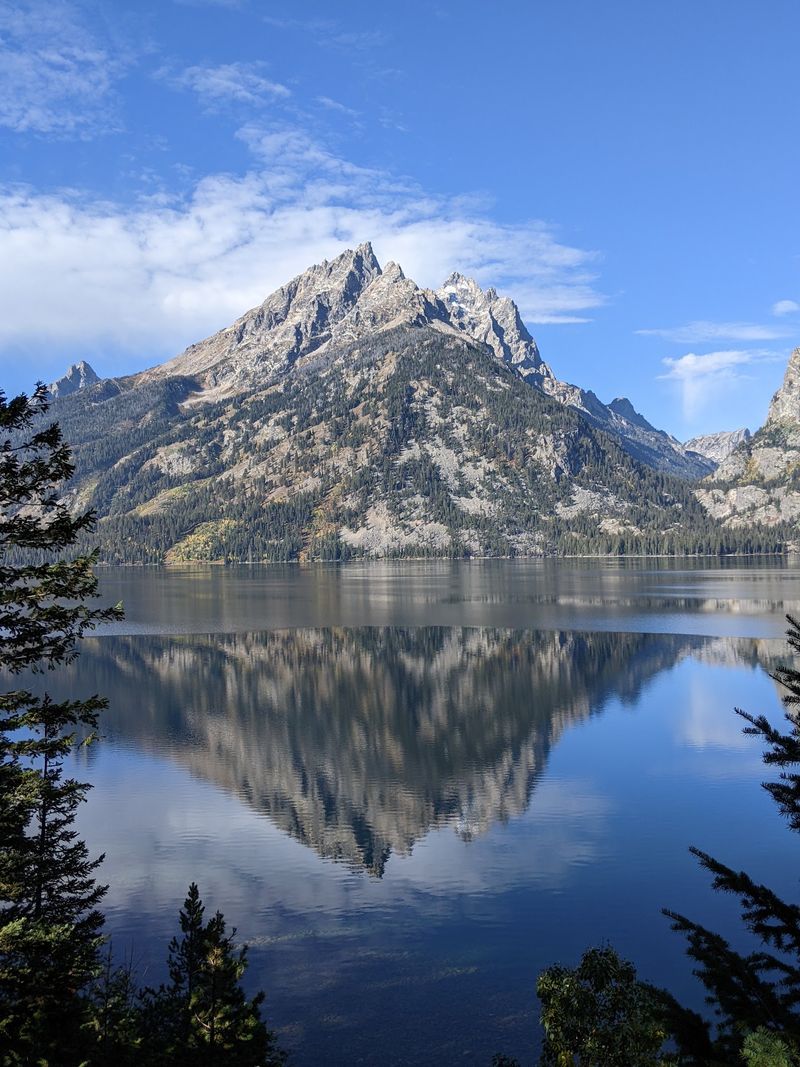
Grand Teton National Park protects one of the strangest mountain profiles in America. The peaks just stand up out of flat ground, like someone forgot to build the ramp.
The reason is the Teton fault, a north-south crack in the earth’s crust. Over the last 6 to 9 million years, the western block lifted while the eastern block dropped.
That sinking side became Jackson Hole, the broad valley you drive through today. The rising side became the Teton Range, about 40 miles long.
Total movement along the fault adds up to nearly 30,000 feet. Much of that offset is buried under valley sediment, so what you see is only part of the story.
Here’s a fun twist for geology fans. These mountains rank among the youngest in the Rockies, which explains their sharp, jagged look.
Older ranges have had more time to wear down into rounded shapes. The Tetons still have their pointy edges intact.
Stop at the Craig Thomas Discovery and Visitor Center for exhibits on how it all formed. Rangers there can also help you plan a route that matches your time and energy.
Meet The Peak That Almost Tops All Of Wyoming
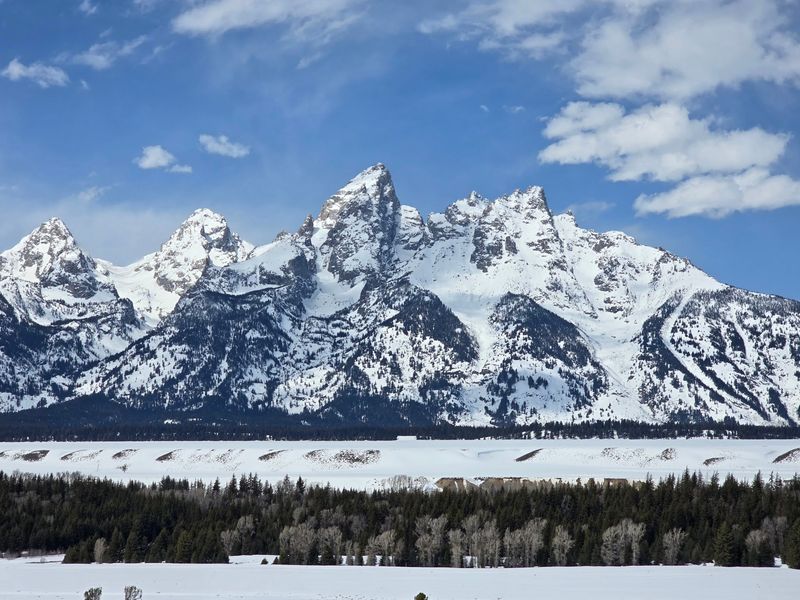
At 13,775 feet, the Grand Teton is the tallest peak in its range. It misses the title of highest point in Wyoming by a small margin, since Gannett Peak sits slightly higher.
Still, height alone doesn’t explain the drama. The Grand rises more than 7,000 feet above the valley floor, and you see every bit of it.
Many mountains look shorter in person because foothills block the base. Here, nothing gets in the way, so your eyes take in the whole climb at once.
The name has an amusing backstory. Early 19th-century French fur trappers called the three main peaks “Les Trois Tetons,” a name that roughly translates to “the three breasts.”
Yes, one of America’s most admired skylines carries a cheeky nickname. Kids will giggle, and adults may pretend not to.
Climbers from around the world come to test themselves on this rugged granite. Summit attempts are serious mountaineering, so most visitors admire it from below.
That’s no letdown. A pullout, a pair of binoculars, and a clear morning will give you plenty to stare at for a long time.
Glacier-Made Lakes Will Steal Your Afternoon
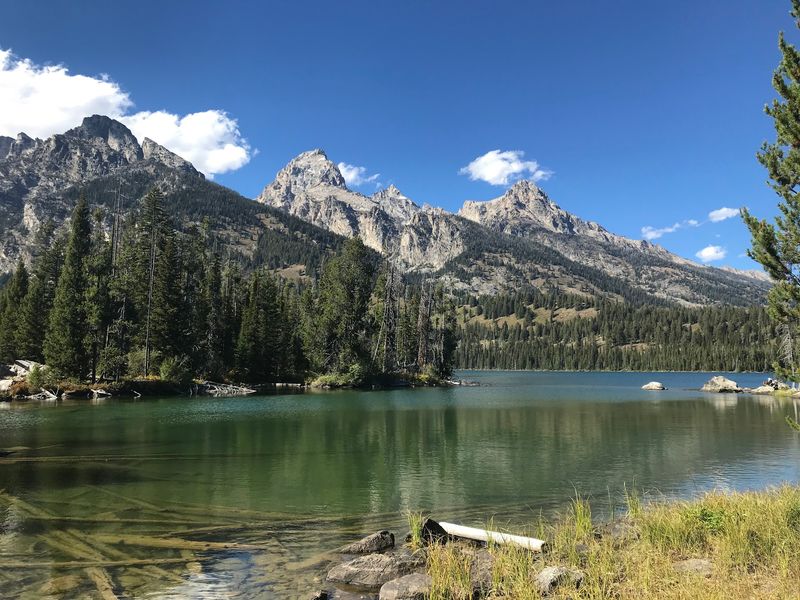
Long ago, glaciers carved deep valleys into the Tetons. When they melted back, they left a string of lakes sitting right at the base of the mountains.
Jenny Lake is the superstar of the bunch. You can take a boat across, rent a kayak, or hike around it on a trail with peaks overhead.
The shuttle boat also gives your legs a head start toward Hidden Falls and Inspiration Point. That’s a smart move if you want canyon views without the full loop.
Jackson Lake is the largest lake in the park. It welcomes many kinds of watercraft, and boat cruises run on it too.
Colter Bay sits on its shore with wide views across the water toward the range. Benches and a beach make it an easy place to pause with a packed lunch.
String Lake and Leigh Lake are favorites for paddling. Phelps Lake and Taggart Lake reward hikers with calm water framed by forest and peaks.
Bring layers on the water. Mountain weather can turn breezy fast, even on a sunny summer day.
Keep Your Eyes Peeled For Moose, Bison, And Bears
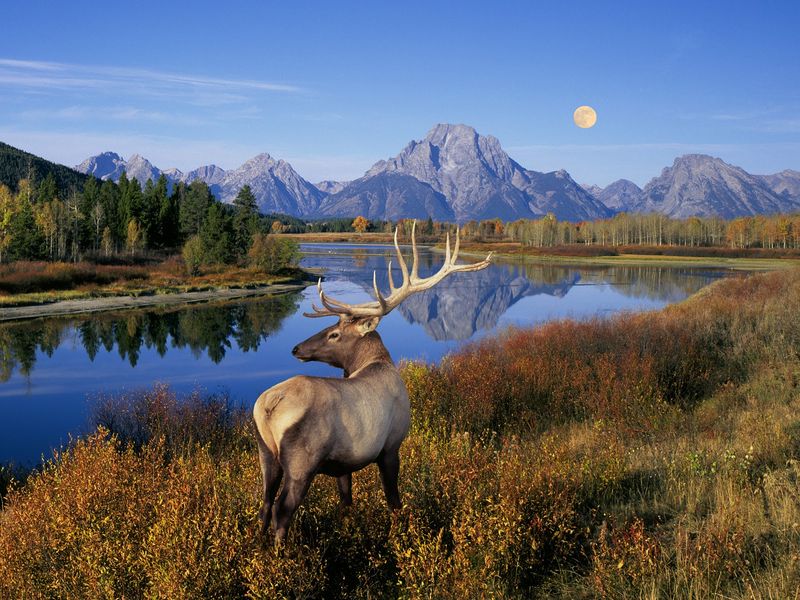
Moose get top billing here, and for good reason. These lanky giants often hang out near willows and water, looking oddly calm about their own size.
The cast list keeps going. Bison, elk, pronghorn, black bears, and grizzly bears all live in and around the park.
Bird watchers get their share as well. Bald eagles and ospreys patrol the rivers and lakes looking for a fish dinner.
Certain areas give you better odds. Oxbow Bend, Antelope Flats Road, Mormon Row, Moose-Wilson Road, and the Kelly Loop are all popular for spotting animals.
Early morning and evening tend to be active times for many species. Midday can feel quiet, so don’t give up if the meadows look empty at noon.
Give every animal plenty of space, and use binoculars or a zoom lens. A good photo never requires walking closer to a moose.
Bear safety matters too. Store food and scented items properly, carry bear spray on trails, and know how to use it before you need it.
Lace Up For Trails That Climb Into The Canyons
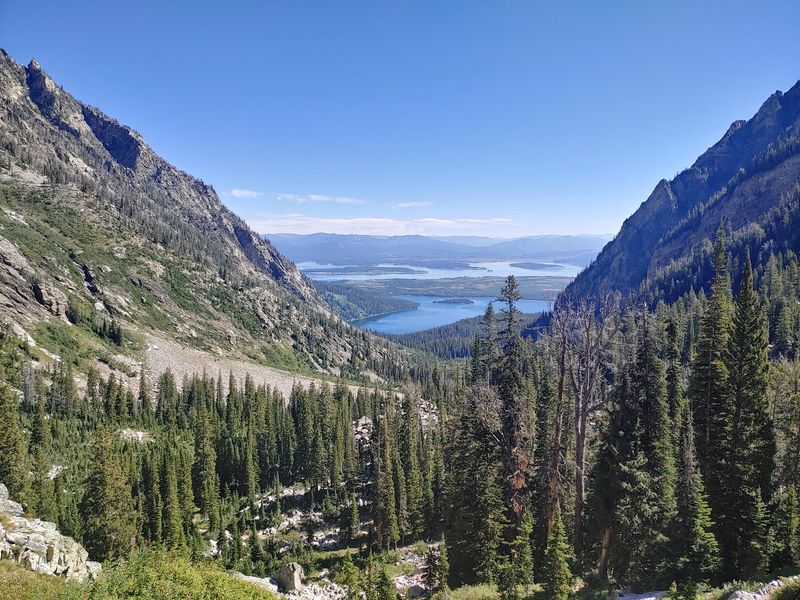
More than 200 miles of trails wind through the park. That’s a lot of choices, from lakeside strolls to leg-burning climbs.
Easy days can mean a loop near Jenny Lake or a walk to Taggart Lake.
Planning a 2027 visit? The Taggart Lake Trailhead and trail will be closed from May 1 through November 15, but you can still reach the lake via the Valley Trail.
Both give big mountain views without a brutal effort.
Ready for more? Cascade Canyon leads deep between granite walls, showing off the U-shaped shape glaciers left behind.
Serious hikers aim higher. Surprise Lake and Amphitheater Lake sit in alpine basins, and the climb to reach them is no joke.
Delta Lake has also grown hugely popular in recent years. Expect company on that trail in summer rather than quiet solitude.
Timing matters on high routes. Some higher trails can still hold snow in late May and early June, so check conditions before heading out.
Pack water, snacks, sun protection, and a paper map. Cell service can disappear in parts of the park, and a map never runs out of battery.
Start early, too. Parking lots at popular trailheads fill up during peak season.
Float The Snake River For A Lazy Look At The Peaks
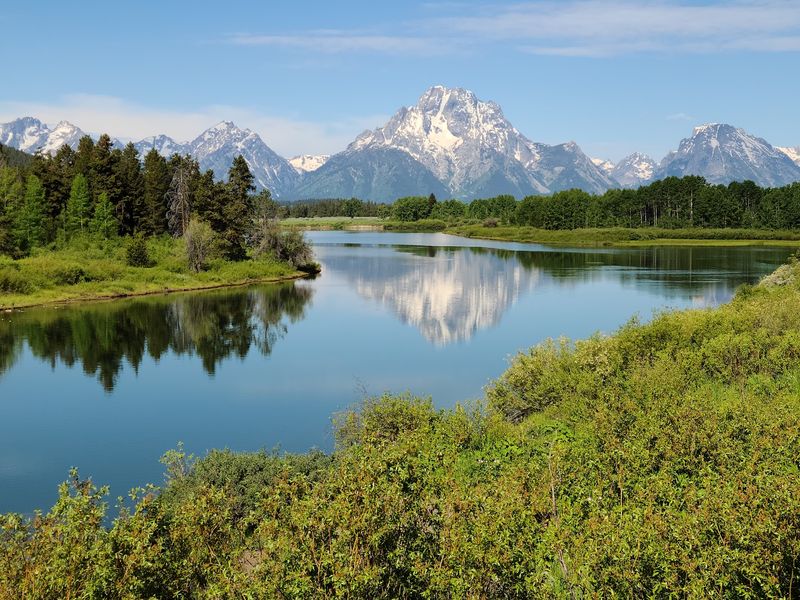
Not every great view requires sweat. A scenic float on the Snake River lets the current do the work while the Tetons slide past.
These trips are calm rather than wild. Think gentle water, wide sky, and a fresh angle on the range you’ve been staring at from the road.
From the river, the mountains often stay visible for long stretches. That steady backdrop makes floats a favorite for photographers who don’t love hiking.
The riverbanks also attract wildlife. Bald eagles, ospreys, and moose can show up along the water, though nothing is ever guaranteed.
Licensed outfitters run guided floats inside Grand Teton National Park. Going with a guide means someone else handles the oars and the river knowledge.
Experienced paddlers can explore on their own, but the Snake has tricky spots. Check park rules, permits, and river conditions before launching any boat.
Dress for changing weather and bring sun protection. The water stays cold, and summer sun at this elevation feels stronger than you might expect.
A Secret Land Deal Helped Build The Park You See Today
The first version of the park, created on February 26, 1929, was surprisingly small. It protected the Teton Range and a few glacial lakes at the base, but not much of the valley.
That left the flats open to development. John D. Rockefeller Jr. stepped in and quietly began buying land in Jackson Hole to protect it.
His purchases stirred up plenty of debate at the time. In 1943, the Jackson Hole National Monument was established across much of the valley.
Everything came together in 1950. The original park, the monument, and Rockefeller’s donated lands merged into today’s Grand Teton National Park.
The final result covers roughly 310,000 acres. Those famous valley views exist largely because someone thought ahead.
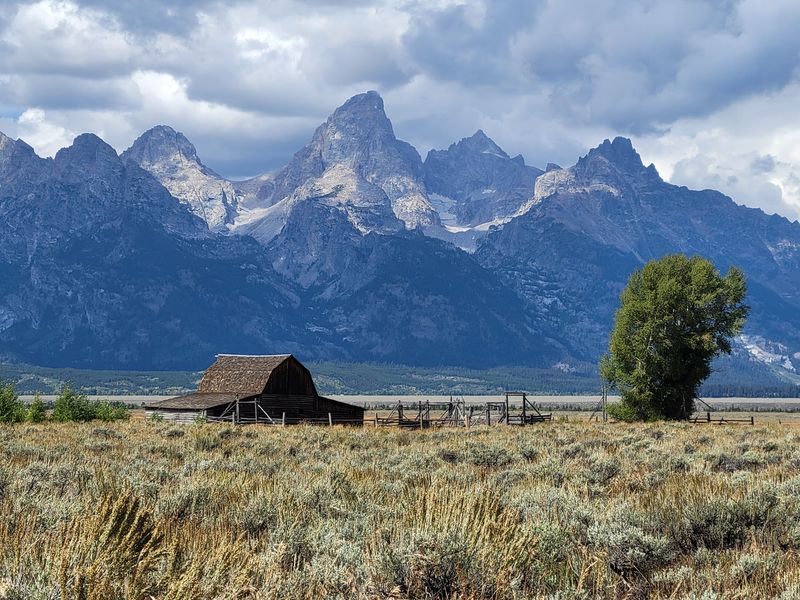
You can still see traces of earlier life here. The homesteads on Mormon Row offer a glimpse of the ranching families who once worked these flats.
The Laurance S. Rockefeller Preserve continues that conservation story. It has its own visitor center and trails leading toward peaceful Phelps Lake.
Plan Smart So 2027 Becomes Your Teton Year
Good planning turns a rushed drive into a real adventure. Start at the Craig Thomas Discovery and Visitor Center, located in Moose, WY 83012.
From there, explore Grand Teton National Park’s scenic roads, lakes, and viewpoints.
You’ll find plenty of opportunities to photograph the dramatic mountain scenery.
Other visitor centers sit at Colter Bay, Jenny Lake, and the Laurance S. Rockefeller Preserve. Each offers help, maps, and ranger know-how.
The park stays open all year, but not every road does. Teton Park Road typically closes to cars from around November 1 to May 1.
Winter brings its own fun. Cross-country skiing and snowshoeing turn the quiet valley into a snowy playground.
Late May through early fall is the busy season for most visitors. Arrive early each day for easier parking at hot spots like Jenny Lake.
Overnight options range widely. Campgrounds include Gros Ventre, Jenny Lake, and Signal Mountain, while the historic Jackson Lake Lodge offers rooms with big views.
Yellowstone sits just to the north, so many people pair the two parks. Give the Tetons at least a couple of days, because that skyline deserves more than a drive-by glance.