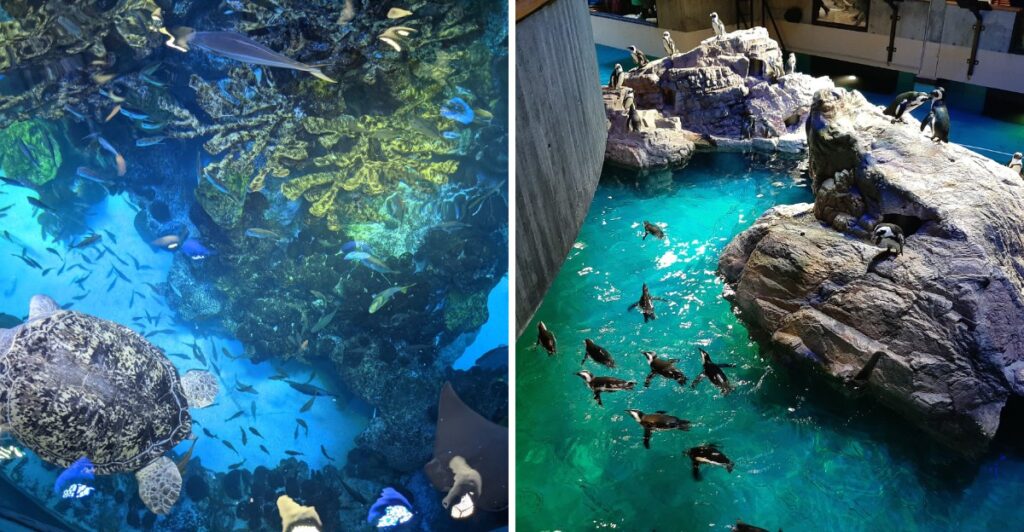
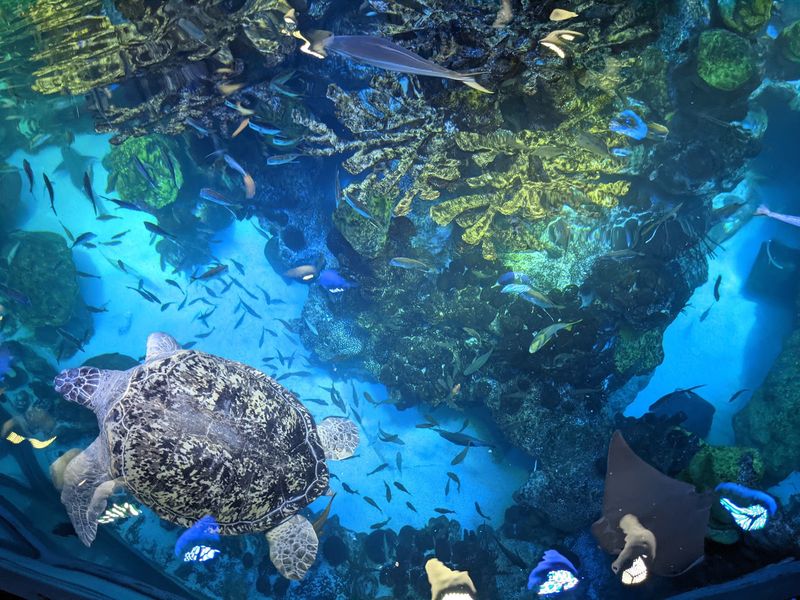
One resident of this Massachusetts aquarium has outlasted bell-bottoms, disco, and dial-up internet. She’s a green sea turtle somewhere between 70 and 90 years old, and she’s lived in the same tank since June 1970.
Builders put her tank in first and then built the aquarium around it. Most of us fight for a parking spot, and she got an entire building designed around her.
Her place holds 200,000 gallons of saltwater and climbs four stories high, so this is basically a penthouse with fins.
Penguins, sharks, rays, and more than 100 reef species live nearby, but she still has the most seniority.
More than five decades in one apartment, and not a single complaint about the rent.
You Will Want To Walk Every Inch Of This Four-Story Spiral
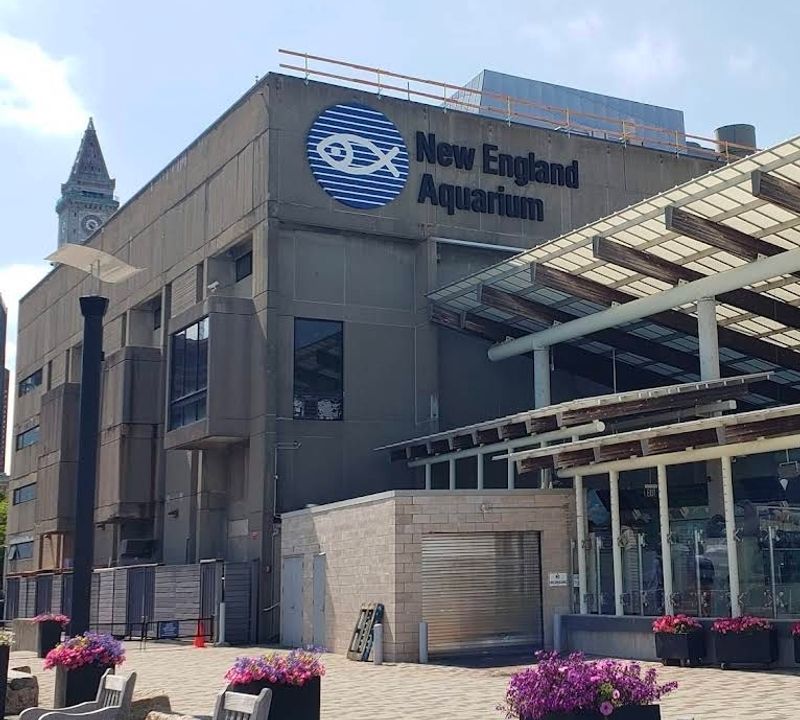
Few aquariums get built backward, but the New England Aquarium did exactly that. Crews finished the Giant Ocean Tank first, then wrapped the rest of the building around it.
The result is a massive glass cylinder that rises four stories through the middle of everything. It holds 200,000 gallons of saltwater and measures 23 feet deep and 40 feet wide.
A spiral walkway curls around the outside like a giant seashell. Dozens of viewing windows line the route, so you can watch the same reef from many angles.
Inside, the tank mimics a lively Caribbean coral reef. Hundreds of animals from over 100 species share the space, which makes every window feel like a new channel.
Here’s a smart move for your visit. Some folks ride the elevator to the top and stroll down the spiral, which keeps your legs happier.
When the tank opened in 1970, it ranked as the largest aquatic display of its kind in the world. That’s a big claim for a Boston waterfront building.
Plan to linger here more than anywhere else. The tank changes with every step, and you’ll spot something new on each level.
Say Hello To Myrtle, The Turtle Who Runs The Place
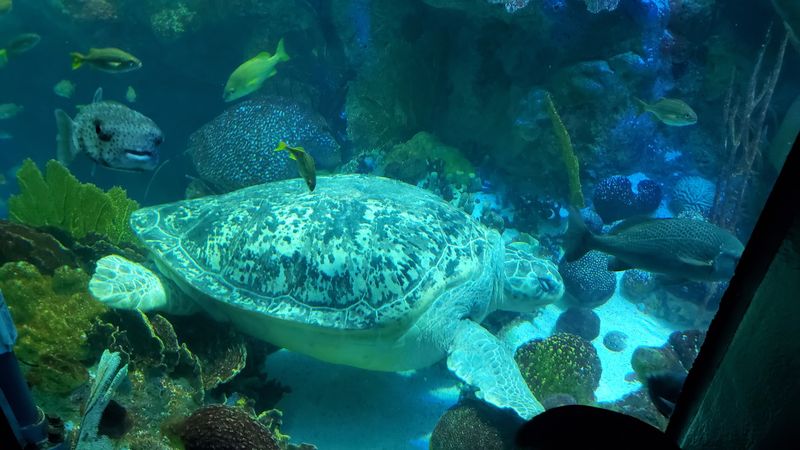
Myrtle moved into the Giant Ocean Tank in June 1970. Some apartment tenants stay a few years, but she has stayed over five decades.
She’s a green sea turtle estimated to be between 70 and 90 years old.
She also weighs more than 500 pounds, which makes her one hefty celebrity.
Myrtle doesn’t hog the spotlight alone, though. Loggerhead sea turtles named Retread and Carolina also share the reef with her.
Spotting the turtles is half the fun. They glide past the windows slowly, so keep your eyes open as you climb the spiral.
The big turtles often make the whole tank feel calm. Kids tend to press their noses to the glass, and adults usually aren’t far behind.
Why do these turtles matter so much? They help visitors connect with real ocean animals that need protection in the wild.
Bring a little patience when you look for Myrtle. A turtle her age has earned the right to move at her own pace.
Once she cruises by, you’ll understand the fuss. Few animals carry this much history on their shells.
Penguins Steal The First Floor Without Even Trying
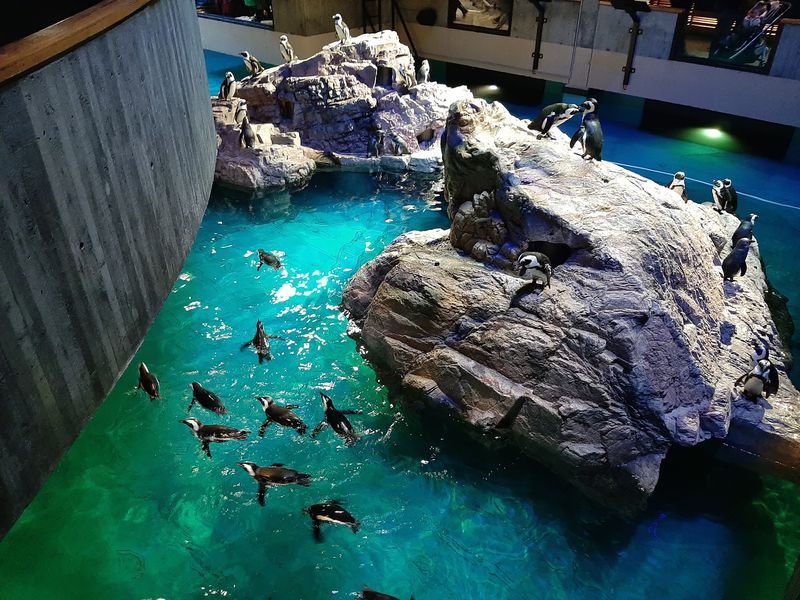
Tuxedos are the dress code at the bottom of the Giant Ocean Tank. That’s where the penguin colony lives, right at the base of the big reef.
The exhibit holds African penguins and southern rockhopper penguins. Rockhoppers are the ones with spiky yellow eyebrow feathers, so they always look a bit surprised.
African penguins have neat black-and-white markings and a classic waddle. Watching both species side by side is like a fashion show with very different styles.
The colony sits on the ground floor, so you’ll see it early. Many people circle back again before they leave, because penguins are hard to resist twice.
Families with strollers will appreciate the layout here. The open space around the exhibit lets little ones get a good view.
Look closely and you’ll notice each bird has its own habits. Some swim laps while others stand around like they’re waiting for a bus.
Give yourself a few extra minutes here. The penguins never seem to run out of things to do, and neither will your camera.
Roll Up Your Sleeves For The Biggest Touch Tank On The East Coast
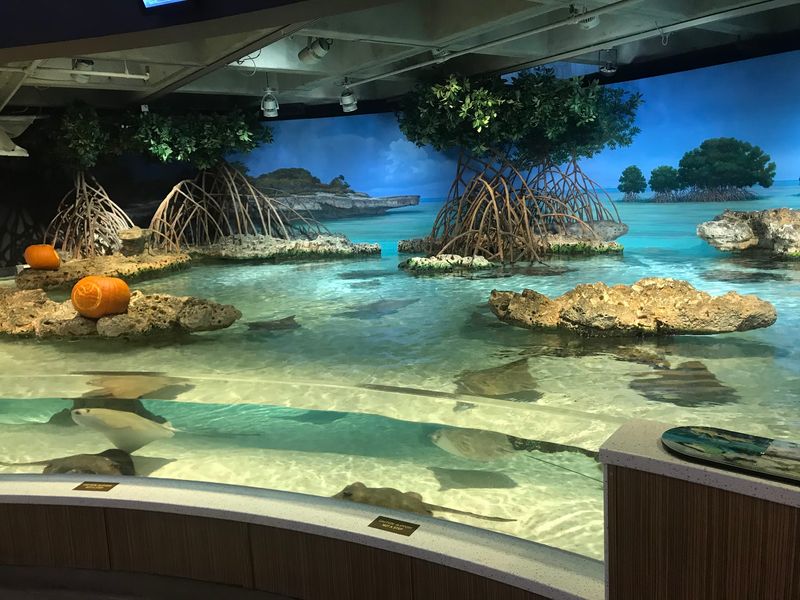
Touching a shark sounds like a dare. At the Trust Family Foundation Shark and Ray Touch Tank, it’s actually encouraged.
This exhibit is known as the largest touch tank on the East Coast. It holds cownose rays, Atlantic rays, and epaulette sharks.
The tank sits near the main entrance, so it’s one of the first stops. Expect it to stay busy, since hands-on fun is a big draw for every age.
Here’s how to make it work. Keep your hand flat and gently touch the animal’s back as it swims by, avoiding its head and tail.
Rays glide close to the edge, and they feel smooth and a little slippery. Epaulette sharks are small and spotted, which makes them less scary than their cousins.
Patience pays off at this tank. Animals choose when to come near, so letting them approach is part of the experience.
Kids who visit Massachusetts often name this as a favorite moment. Adults secretly love it too, even if they pretend they’re just helping.
Wash your hands afterward and keep exploring. Your fingers will remember this one for a while.
Sea Lions And Fur Seals Put On A Show Outdoors
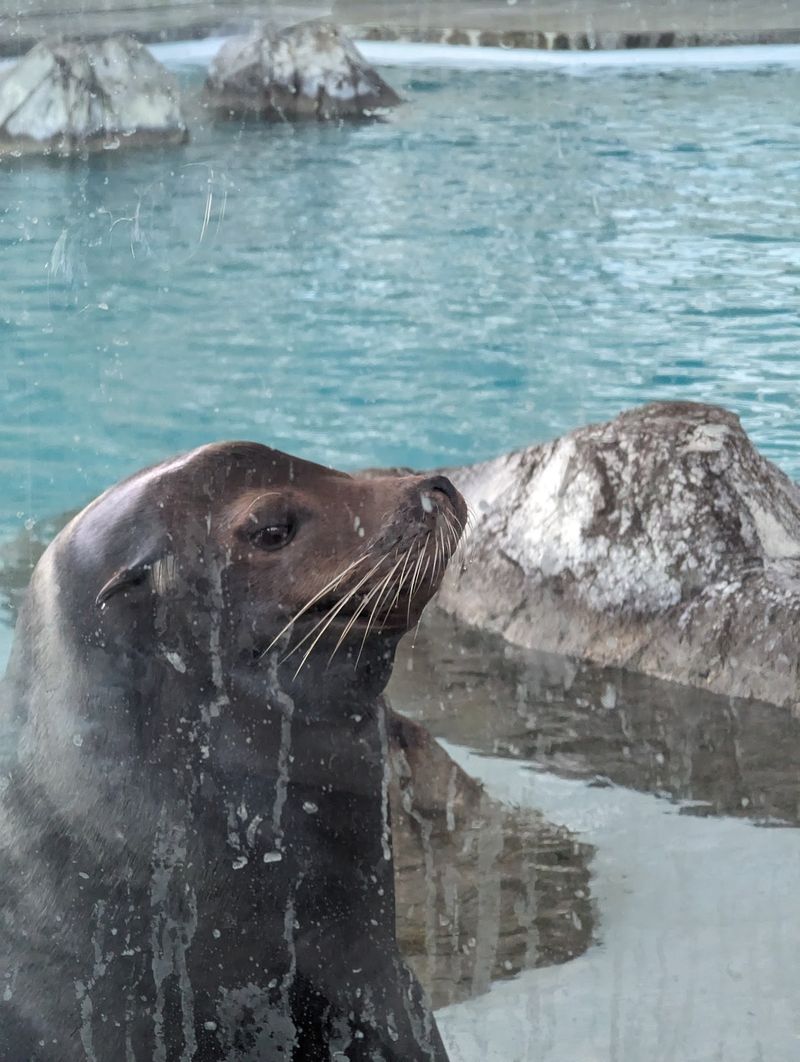
Some of the most playful residents live outside the main building. The New Balance Foundation Marine Mammal Center is an open-air exhibit on the waterfront.
California sea lions and northern fur seals share this space. Sea lions are famous for their loud barks and big personalities.
Northern fur seals have thick, cozy coats and big dark eyes. Comparing the two is a fun game for kids who love spotting differences.
Here’s a nice bonus. The outdoor exhibit sits right along the harbor, so fresh sea air comes with the view.
Keep in mind that the Atlantic harbor seal exhibit is temporarily closed. The aquarium is improving that habitat, so check before you go if harbor seals are your favorite.
Trainers work with the animals during sessions that help keep them healthy and active. Those moments often show off how smart these mammals really are.
Bundle up in colder months, since this spot is outdoors. Boston wind off the water has strong opinions.
Still, a splashing sea lion makes chilly fingers worth it. You’ll probably leave grinning.
Piranhas, Jellies, And Lobsters Wait Around Every Corner
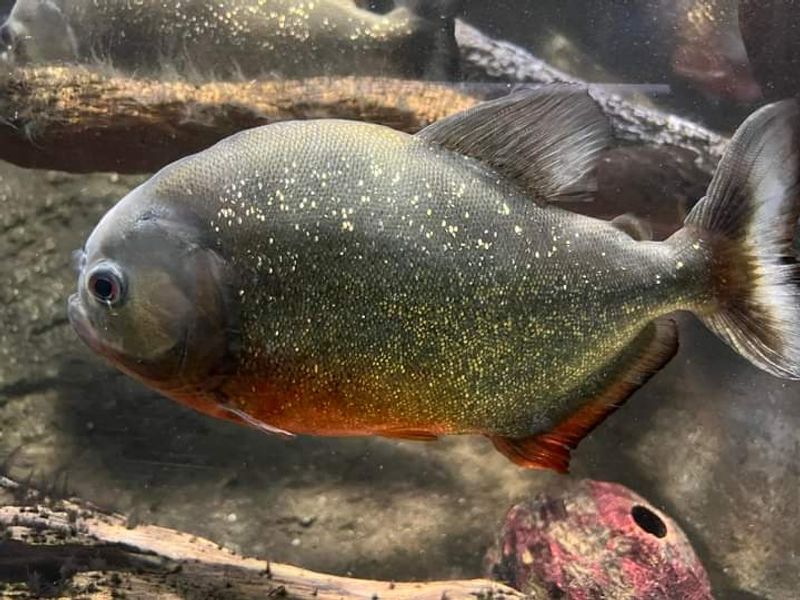
Red-bellied piranhas and anacondas aren’t what most people expect in New England. The Amazon Rainforest exhibit brings them anyway, along with electric eels and poison dart frogs.
Living plants fill that space, too. It feels like a quick trip to South America without the long flight.
Right after that, you can swing back to local waters. The Gulf of Maine gallery shows lobsters, cod, halibut, dogfish sharks, and shorebirds.
That gallery is a great reminder of what swims off the Massachusetts coast. Kids may never look at a lobster the same way again.
Next, slow down at the Sea Jellies exhibit. The jellies pulse and drift so gracefully that it almost feels like a nap for your eyes.
Shark fans should find Science of Sharks. It explains how these animals adapted over time and how scientists help protect them.
These smaller galleries line the outer path around the big tank. Skipping them would mean missing some of the coolest surprises.
Take your time on each level. The variety here keeps things fresh from top to bottom.
Nearly Five Stories Of Screen And A Whale Watch Right Out The Back Door
A screen nearly five stories high sounds like overkill until a whale swims across it.
The Simons Theatre shows nature films, and some play in 3D.
It’s a nice break after climbing the spiral. You get to sit down and still see amazing animals.
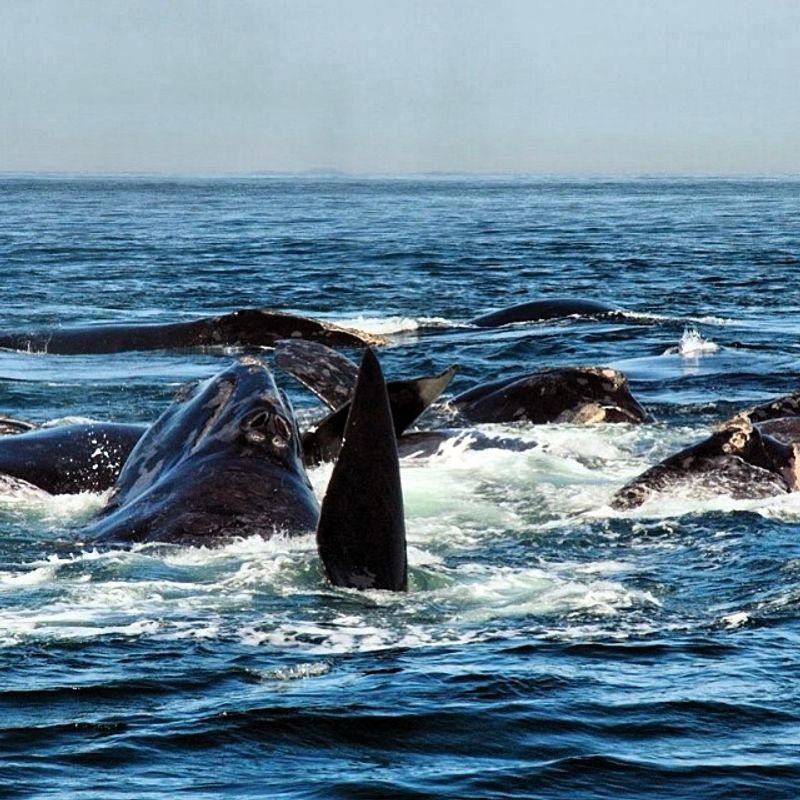
Want the real thing instead? The New England Aquarium Whale Watch departs right from the aquarium’s dock.
Trips typically run from mid-May through November. Boats head out to Stellwagen Bank, a famous spot for whales, dolphins, and other marine life.
Seeing a whale in the wild is a whole different feeling. The size alone can leave the whole boat quiet for a moment.
Pack layers if you book a whale watch. Ocean air can feel much cooler than the city streets back on land.
These add-ons are separate from regular admission, so plan ahead. Buying tickets online can make the day easier on busy weekends.
Pairing the theater, the aquarium, and a whale watch makes for a packed adventure. Your camera roll will thank you later.
Rescued Turtles And A Prime Waterfront Spot Make It Even Better
The aquarium’s rescue program helps hundreds of sick and injured sea turtles, with many recovering enough to return to the wild.
That’s a pretty amazing success rate.
The work happens at an Animal Care Center in Quincy. It also holds animals during exhibit renovations and cares for new arrivals.
The Anderson Cabot Center for Ocean Life adds serious science, too. Its long-running studies help protect the North Atlantic right whale.
Visiting is simple. You’ll find the New England Aquarium at 1 Central Wharf, Boston, MA 02110, right on the downtown waterfront.
The MBTA Blue Line Aquarium station sits about 100 yards from the entrance. That might be the shortest commute to penguins in Massachusetts.
Long Wharf sits next door, and Faneuil Hall is a short walk away. You can easily turn your visit into a full Boston day.
The aquarium also has a café and a gift shop on-site. Grab a snack, pick up a souvenir, and soak in the harbor view.
Every ticket supports a nonprofit that helps ocean animals. Myrtle would definitely approve.