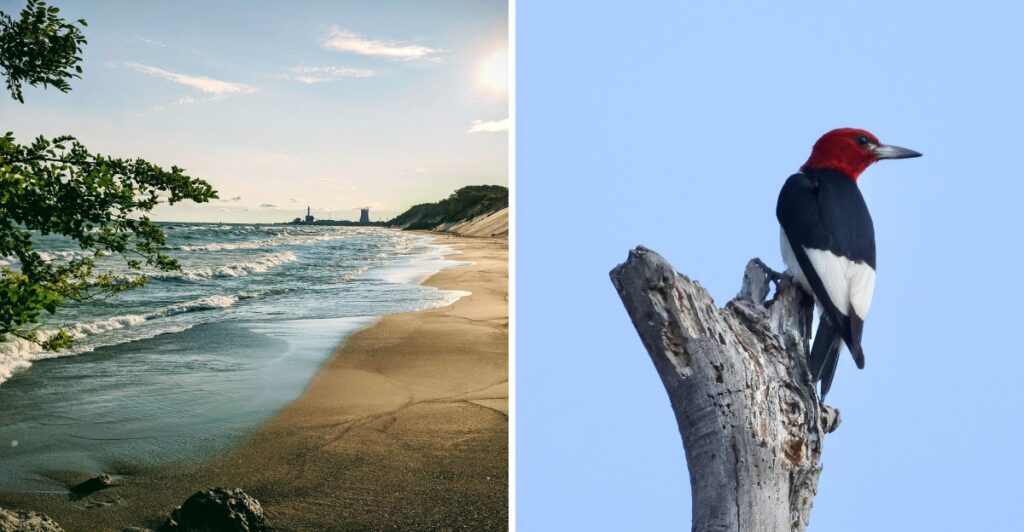
One sand dune in this Indiana park creeps about four feet a year. It’s basically a mountain with commitment issues.
A neighboring state park has a dune that rises roughly 192 feet above a Great Lake. On clear days, you can even spot a big-city skyline across the water from the beach. It feels like a glitch in the map.
More than 1,100 plant species and over 350 bird species share the area. Scientists studied these dunes so closely that the spot earned the title of birthplace of American ecology.
Throw in 15 miles of shoreline and more than 50 miles of trails, and your legs will have opinions by sunset. The beach is ready for you, even if one of its dunes keeps trying to leave.
You Will Want To Pack A Towel Because The Shoreline Goes On For Miles
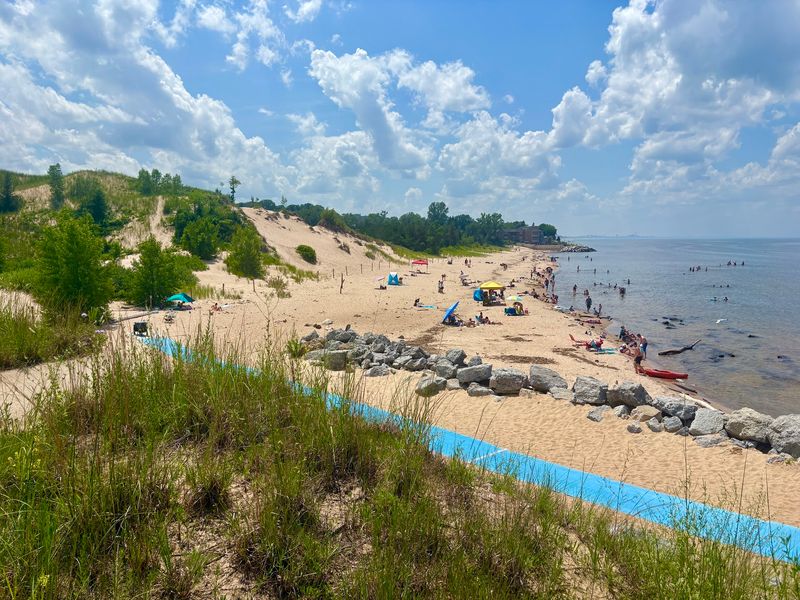
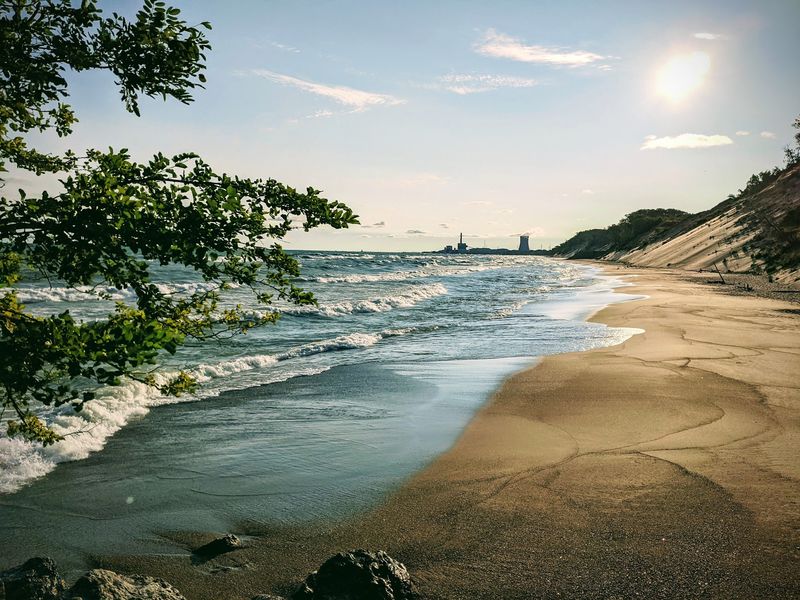
Fifteen miles of sandy beach sit inside Indiana Dunes National Park. That’s a lot of shoreline for a state most people link with cornfields.
West Beach is a popular starting point for good reason. It has a bathhouse, a mile-long boardwalk, and seasonal lifeguards.
Swimming, sunbathing, and long lakeside walks are all fair game here. Lake Michigan stretches so far that the horizon can look like an ocean.
Other beaches spread the fun around the park. Kemil Beach, Dunbar Beach, and Central Avenue Beach each give you another patch of sand to claim.
Most close at 11 p.m., but West Beach and Porter Beach close at 9 p.m., while Kemil Beach is open 24 hours.
Arriving early is a smart move on hot summer weekends. Parking lots near the water can fill fast when the sun is out.
Pack sunscreen, water, and a snack before you leave home. Beach days feel much better when you’re not hunting for supplies.
Check swim conditions before you jump in. Lake Michigan can get rough, and lifeguards aren’t on duty every day of the year.
Your Legs Will Have Opinions About The 3 Dune Challenge
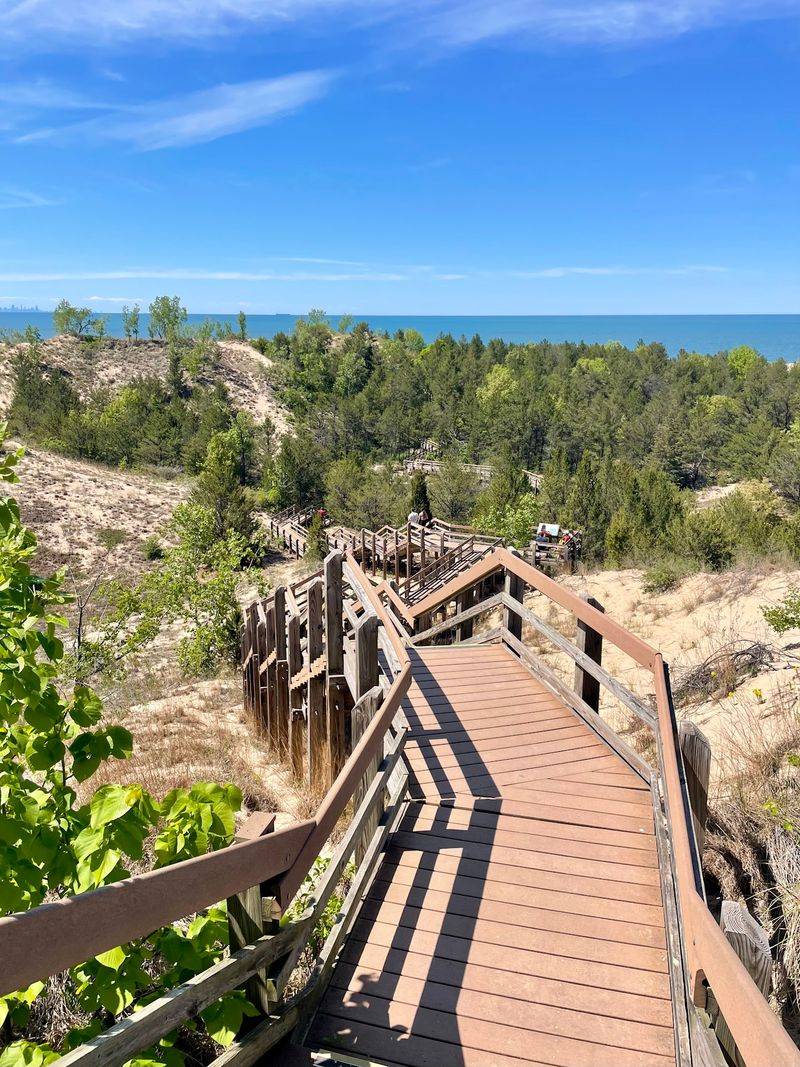
Here’s a workout with a view. The 3 Dune Challenge sends you up the three tallest dunes in the area.
The route covers 1.5 miles and gains 552 vertical feet. That number sounds small until your calves start filing complaints.
Mount Tom tops the list at about 192 feet above Lake Michigan. Mount Tom, Mount Holden, and Mount Jackson make up the trio.
The challenge sits in the separate Indiana Dunes State Park, which charges its own entrance fee. It’s surrounded by the national park, so many visitors combine the two in one trip.
Back inside the national park, the Dune Succession Trail at West Beach offers its own leg day. It includes 270 stairs through shifting landscapes.
Sand makes every step harder than it looks. Your feet sink a little, and your energy goes with them.
Wear sturdy shoes and carry plenty of water. Summer heat on open sand can feel intense, even on short climbs.
Take breaks at the top and soak in the scenery. You earned that view, and the lake looks even better from up high.
A Dune That Moves Four Feet A Year Deserves Your Attention
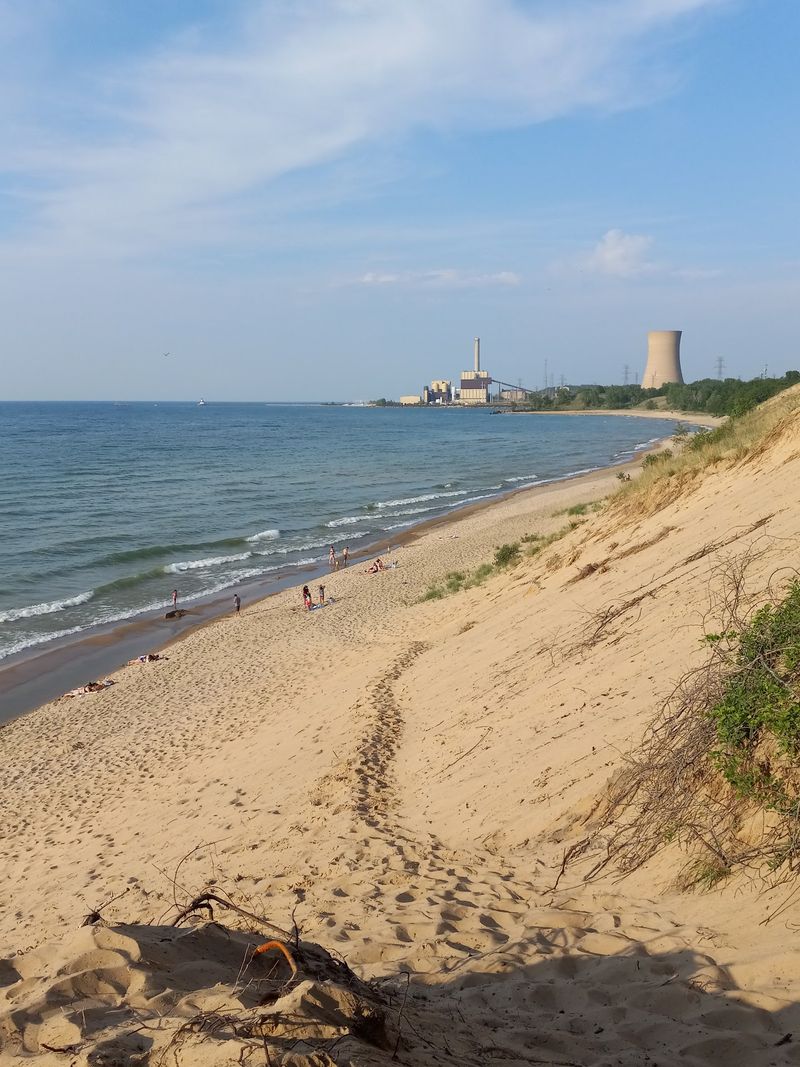
Most landmarks stay put. Mount Baldy did not get that memo.
This famous “living dune” shifts about four feet every year. Wind pushes the sand inland, slowly swallowing whatever stands in its path.
That steady creep makes Mount Baldy one of the most fascinating features in Indiana Dunes National Park. You’re looking at a landscape that’s actively changing.
Moving sand also brings safety concerns. Parts of the area can close when conditions shift, so access isn’t always guaranteed.
Always check the park’s current alerts before heading out. A quick look can save you a wasted drive.
When trails are open, stay on marked paths. Rangers protect fragile areas for good reasons, and fresh plant growth helps hold the sand in place.
Mount Baldy is a great lesson in how nature works. Wind, water, and time shape the dunes right in front of you.
Kids especially love the idea of a wandering hill. It’s a science class that doesn’t feel like homework.
Bring a camera and compare it on a future visit. Your photos might show just how far this restless dune traveled.
Bird Lovers Can Rack Up An Impressive List Here
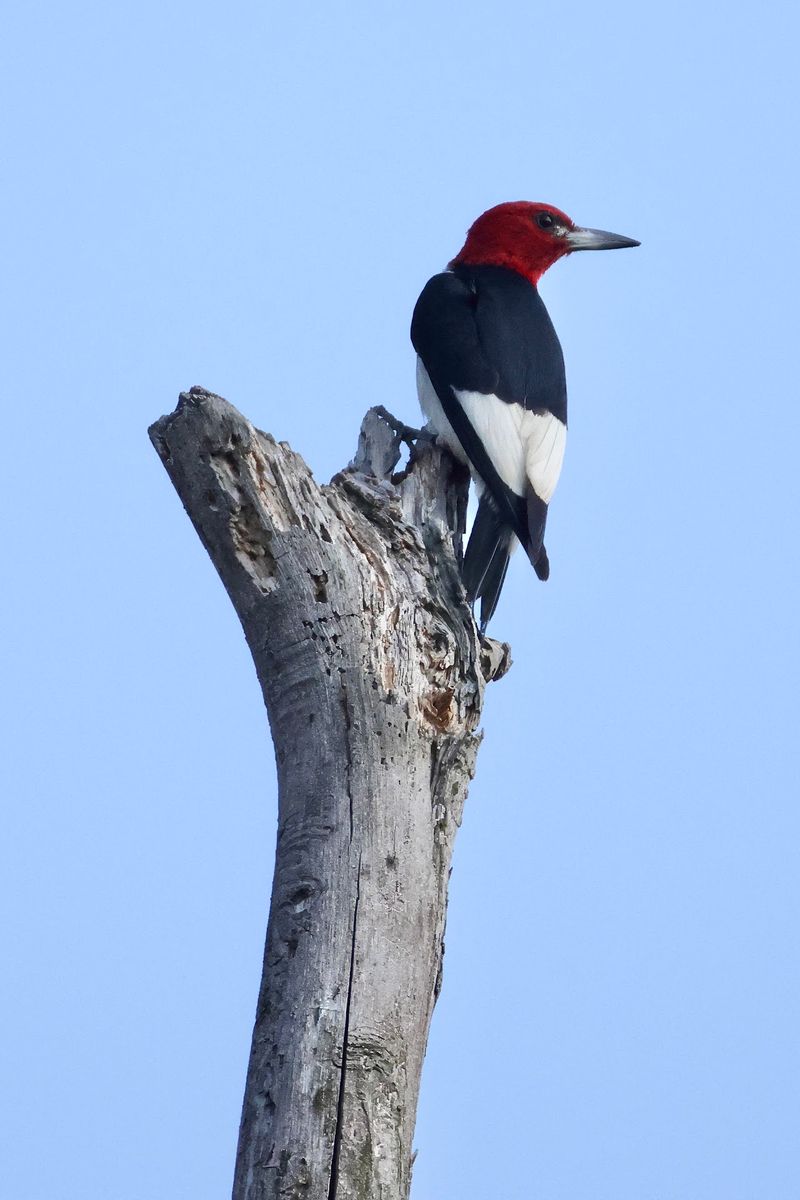
More than 350 bird species have been recorded in this park. Grab binoculars, because your bird list is about to grow.
The park ranks among the most biologically rich areas in the National Park System. It’s also home to over 1,100 plant species.
That variety comes from a wild mix of habitats. Dunes, oak savannas, swamps, bogs, marshes, prairies, rivers, and forests all share the space.
Each habitat attracts different creatures. A short drive can take you from beach birds to wetland waders.
Pinhook Bog, Miller Woods, and Cowles Bog stand out as important natural areas. Each one shows off a different side of Indiana Dunes National Park.
The Great Marsh Trail is a strong pick for birding fans. Wetlands like this give birds food, shelter, and plenty of hiding spots.
Early mornings are often the best time to look and listen. Birds tend to be more active before the day heats up.
Bring bug spray during warmer months. Wetlands are great for birds, and mosquitoes enjoy them too.
A field guide or birding app helps you identify what you spot. Patience pays off out here.
Science Fans, This Is Where American Ecology Got Its Start
Back in 1899, a botanist named Henry C. Cowles published a major study on these dunes. His work helped launch the science of ecology in America.
Cowles studied plant succession, or how plant communities change over time. The dunes made a perfect outdoor lab because they show those changes side by side.
Bare sand near the water gives way to grasses. Farther inland, shrubs and forests take over, telling a story of slow growth.
That’s why the Dune Succession Trail feels so fitting. You can literally climb through the ideas Cowles studied.
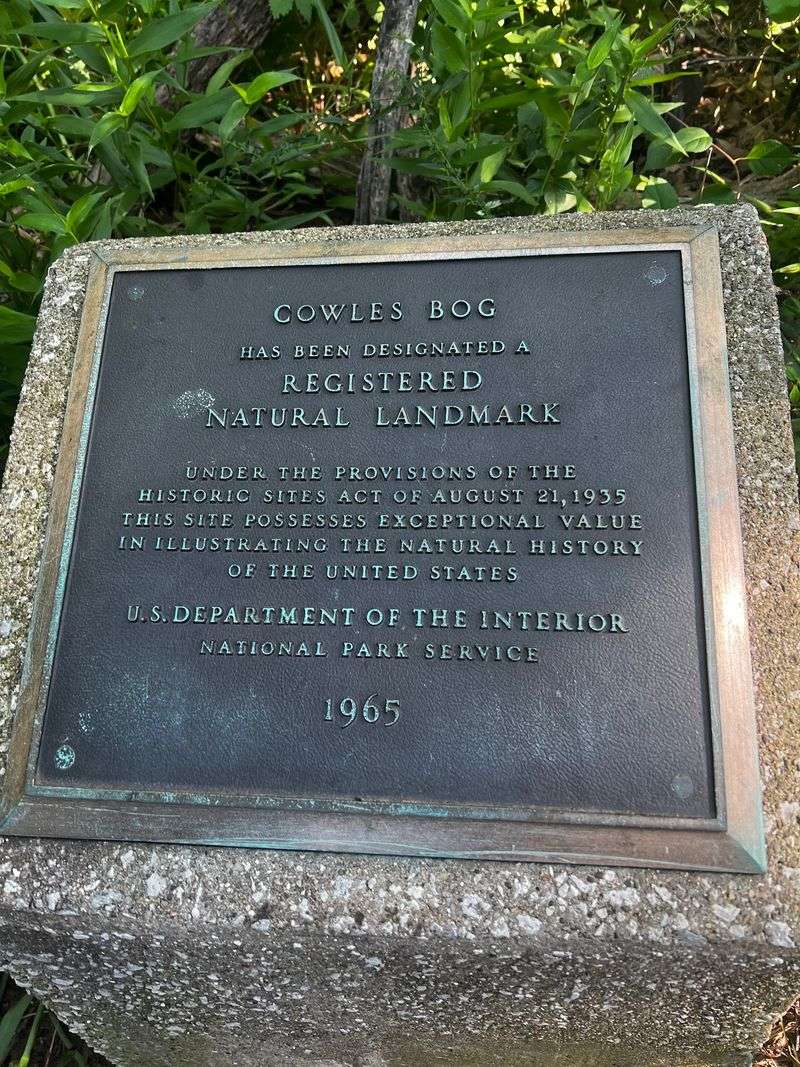
Cowles Bog is now a National Natural Landmark named in his honor. It’s a meaningful stop for anyone who loves science or nature.
Conservation history runs deep here too. Dorothy Buell and the Save the Dunes Council, formed in 1952, fought hard to protect the area.
Their efforts helped Congress create Indiana Dunes National Lakeshore in 1966. On February 15, 2019, it became Indiana Dunes National Park, the nation’s 61st national park.
Knowing that history makes every walk feel richer. These dunes changed how people understand the natural world.
Houses From A 1933 World’s Fair Ended Up On This Shoreline
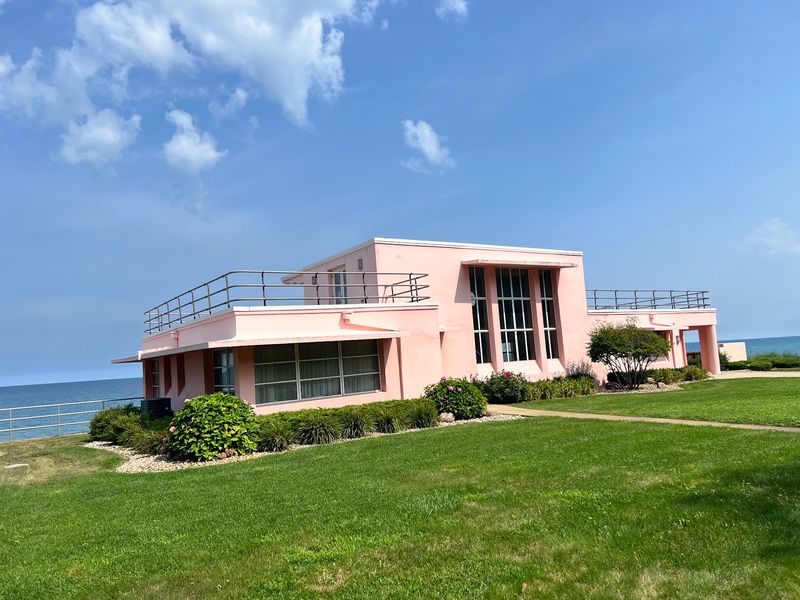
Some of the coolest buildings in the park started life at a Chicago World’s Fair. Five Century of Progress homes now sit within the park’s boundaries.
These houses were built for the 1933 to 1934 fair in Chicago. They showed off futuristic ideas about how people might live.
Today, the homes are federally owned, with several leased to private residents through a preservation program.
You can admire them from the outside, but please respect the residents’ privacy.
History buffs have even more to explore. The Bailly Homestead was home to a 19th-century fur trader.
Nearby, Chellberg Farm tells the story of a Swedish immigrant family. It offers a peek at farm life from a very different era.
A short trail connects these historic areas. It’s an easy walk that works well for families with little ones.
These sites add a fun twist to a beach trip. You can swim in the morning and time travel in the afternoon.
Visiting during scheduled programs can give you more insight. Rangers often share stories that bring these places to life.
Bring curiosity and comfortable shoes. History here sits right beside the sand.
Spend The Night Under The Stars At Dunewood
Day trips are great, but staying overnight lets you see more. Dunewood Campground is the main camping spot inside the park.
It offers 67 campsites in total. That includes 54 drive-in sites for RVs or tents and 13 tent-only sites.
Dunewood runs from April 1 to November 1 each year. Restrooms and showers are available for campers.
There are no electric or water hookups, so plan ahead. RV travelers who need power may want to look at other options nearby.
Five walk-in tent sites also sit at Central Avenue. Those are open from May 1 to September 29.
Reservations are required for every campsite. You can book up to six months in advance through Recreation.gov.
Popular summer dates can disappear quickly. Mark your calendar and book the moment your window opens.
Camping also opens the door to stargazing. Clear nights can turn the sky into a free light show.
Pack a lantern, warm layers, and bug spray. Evenings near the lake can cool off fast, even in summer.
Start Smart At The Visitor Center Before You Hit The Trails
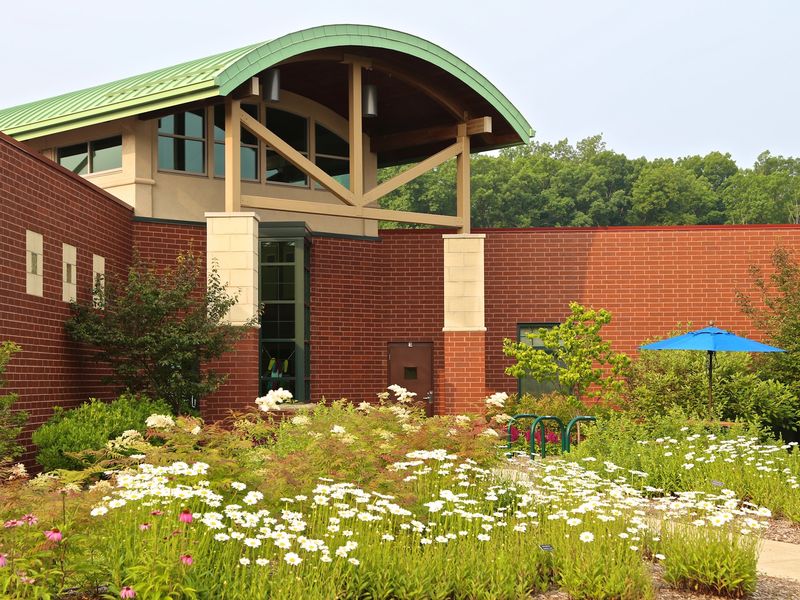
A little planning goes a long way at this park. Sections are spread out, with roads and neighborhoods between some areas.
The Indiana Dunes Visitor Center is the best first stop. You’ll find it at 1215 North State Road 49, Porter, IN 46304.
National park rangers and Indiana Dunes Tourism agents staff the center. They can help you match trails to your time and energy level.
The building is wheelchair accessible and offers public WiFi. Both come in handy when you’re mapping out your day.
The park’s mailing address is 1100 North Mineral Springs Road, Porter, IN 46304. Keep both addresses handy while you explore.
Guided programs are a big perk here. The park hosts nearly 500 guided tours and activities each year, including ranger-led hikes.
Joining a program can show you spots you might miss alone. Rangers know the stories behind the scenery.
The Paul H. Douglas Center for Environmental Education also serves visitors. It’s another helpful place for maps and advice.
Grab your national park passport stamp while you’re there. Collectors will want that one.