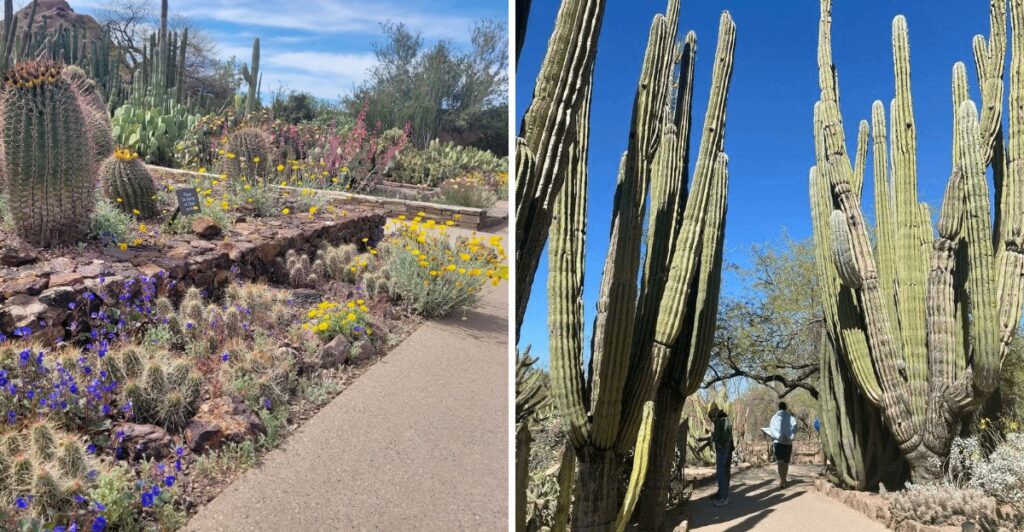
A cactus planted in 1939 still stands tall at this Arizona garden. It started a collection that now tops 50,000 desert plants, and the family has only grown since.
Saguaros here tower more than 50 feet high, and some may be over a century old. Stand beneath one, and it feels like meeting desert royalty.
Trails wind across 140 acres, past rare and endangered species from deserts around the world. It’s a global desert tour with zero airport lines.
Late 2026 brings glowing paths, festivals, and cooler evenings made for wandering. Just admire everyone from a respectful distance, because these locals aren’t big on hugs.
You Will Want To Start With The Cactus That Started Everything
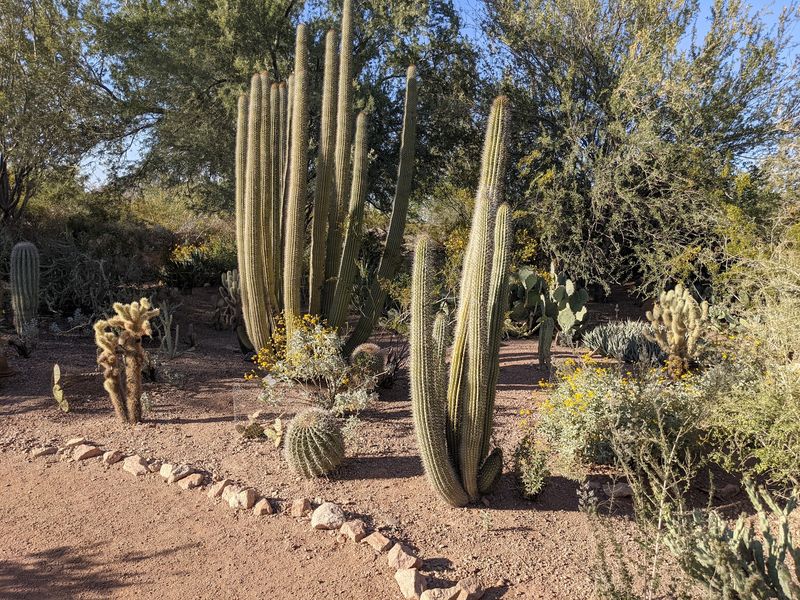
Back in 1939, one cactus went into the ground at Desert Botanical Garden. It became the first plant in the official collection, and it still grows in the Kitchell Family Heritage Garden.
That spot also features Mexican giant cardons, which can reach around 30 feet tall. Standing next to them feels a bit like meeting a family of very prickly giants.
The garden itself began with the Arizona Cactus and Native Flora Society in 1937. Swedish botanist Gustaf Starck and local leader Gertrude Divine Webster helped make it happen.
Webster worried that fast city growth would wipe out the desert around Phoenix. Her slogan was simple and bold: Not to destroy, but to glorify.
That idea still shapes the place today. The garden focuses on research, education, conservation, and the display of desert plants.
It has grown into a global leader in protecting desert plants. Hundreds of rare and endangered species live here, safe and well cared for.
Start your visit with this history in mind. Every trail suddenly feels less like a stroll and more like a story.
Plus, saying hello to an 87-year-old cactus is a pretty great way to begin any morning.
Prickly Never Looked This Organized
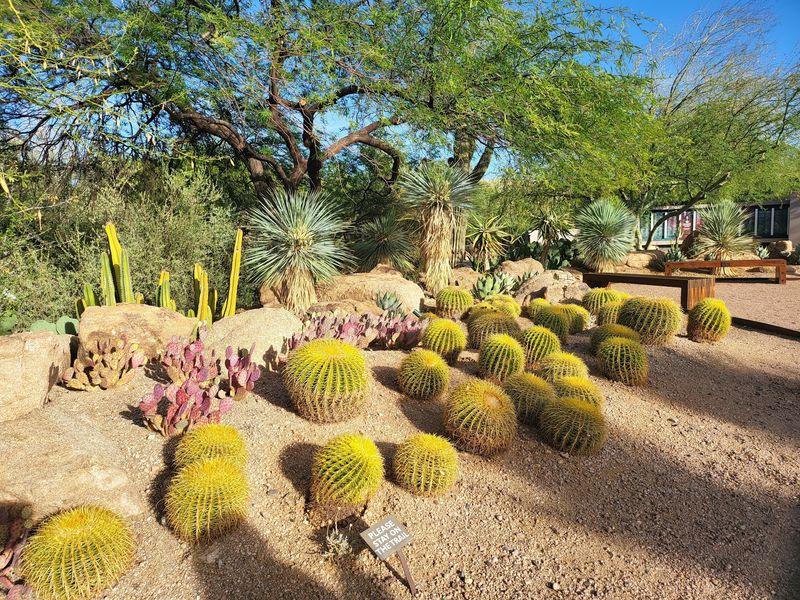
Nearly 14,000 cactus plants live here, spread across more than 1,300 kinds. That number makes your windowsill succulent look a little lonely.
The Sybil B. Harrington Cactus and Succulent Galleries are a great place to see that variety up close. You’ll find shapes that look round, tall, fuzzy, spiky, and sometimes all four at once.
Keep an eye out for prickly pear, organ pipe, cholla, and barrel cacti. Each one has its own clever way of saving water in the dry desert.
The garden has a special focus on the Opuntia group. That’s the genus that includes prickly pears with their flat, paddle-shaped pads.
Signs along the trails explain what you’re looking at. They make it easy to learn while you wander, even if botany class was never your thing.
One friendly tip: look, but keep your hands to yourself. Cholla spines are famous for grabbing onto anything that brushes too close.
Take your time in this section. The more closely you look, the more tiny details pop out, from curly spines to bright flower buds.
Saguaros Taller Than A Five-Story Building Rule These Trails
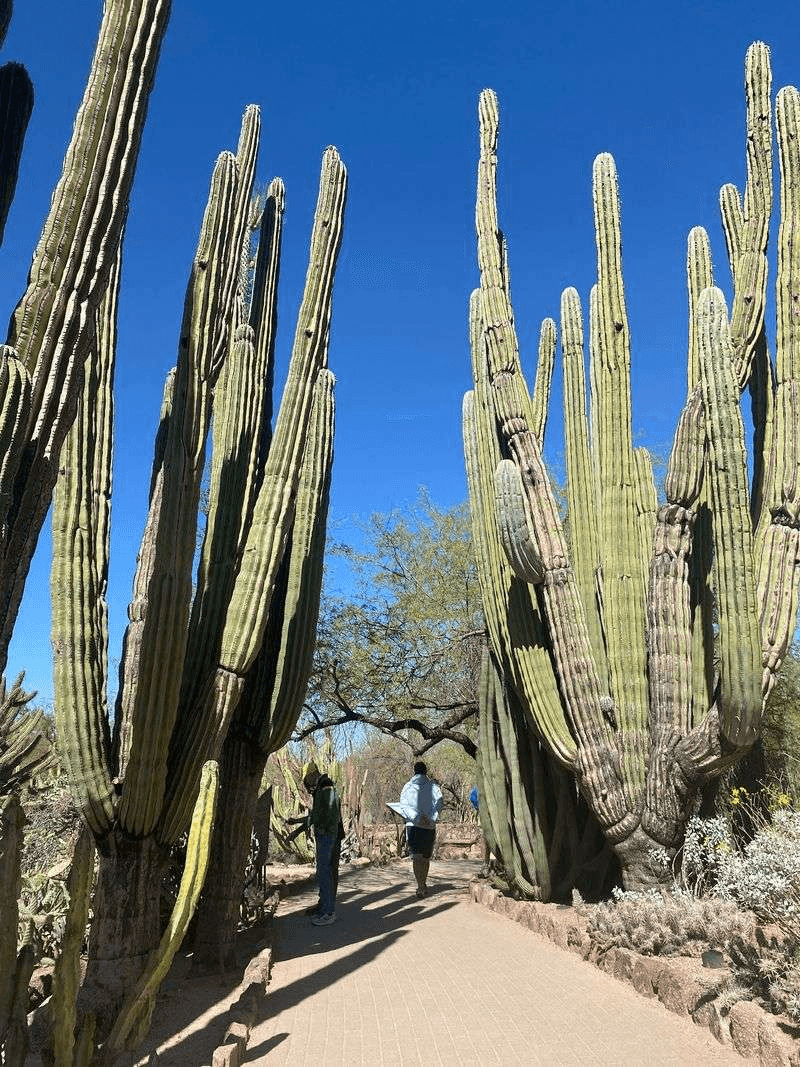
Fifty feet is a lot of cactus. Some saguaros along these paths stretch past that mark, and a few may be more than a century old.
The Desert Discovery Trail is the main loop for first-timers. It shows off those famous saguaros, plus plenty of other cacti that look like they came from a cartoon.
Here’s a fun bit of trivia for your next road trip. The saguaro blossom is the official state flower of Arizona.
You’ll also spot palo verde trees, which hold the title of Arizona’s state tree. That makes this loop a bit like a living state symbols lesson.
The five themed trails add up to about 1.3 miles. Most of the paths are paved, easy, and friendly for strollers and mobility devices.
Shade structures and benches show up along the way. They’re handy when you want to rest or just stare upward for a while.
Early morning and evening are smart times to walk. The saguaros glow, and the nearby buttes turn red as the sun sets.
Bring a camera and a little patience. These tall locals have been posing for decades.
A Forest Made Of Agaves Is Exactly As Wild As It Sounds
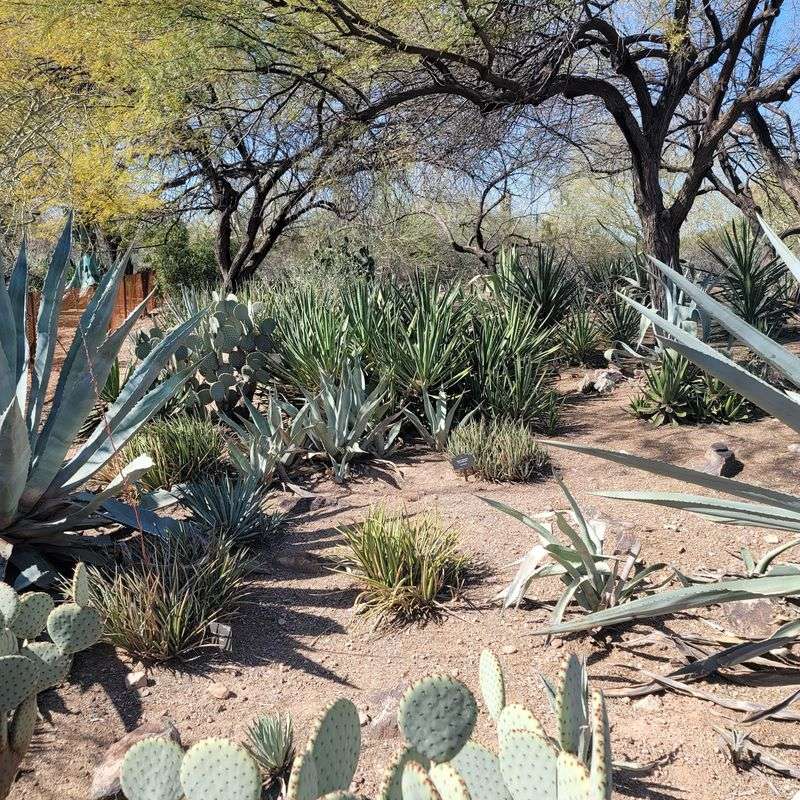
Most forests have trees. The Berlin Agave Yucca Forest has spiky rosettes instead, and honestly, that’s way more interesting.
Desert Botanical Garden grows over 4,000 agave plants from about 248 different kinds. That makes it one of the richest agave collections you’ll find anywhere.
Agaves come in bold blue, soft green, and striped patterns. Some look like giant artichokes, while others seem ready to star in a sci-fi movie.
Yuccas join the party with tall stalks and sharp leaves. Together, they create a landscape that feels both tough and surprisingly pretty.
This area is a great reminder that the desert isn’t just sand. It’s packed with plants that solved the water problem in very creative ways.
Photographers tend to love the strong shapes here. Morning light and late afternoon shadows make every leaf edge stand out.
If you garden at home in a dry climate, pay attention. Many of these plants could give you ideas for a low-water yard.
Just don’t try to hug one. Agave tips are sharp enough to win any argument.
Wildflowers And Hummingbirds Steal The Show On One Special Path
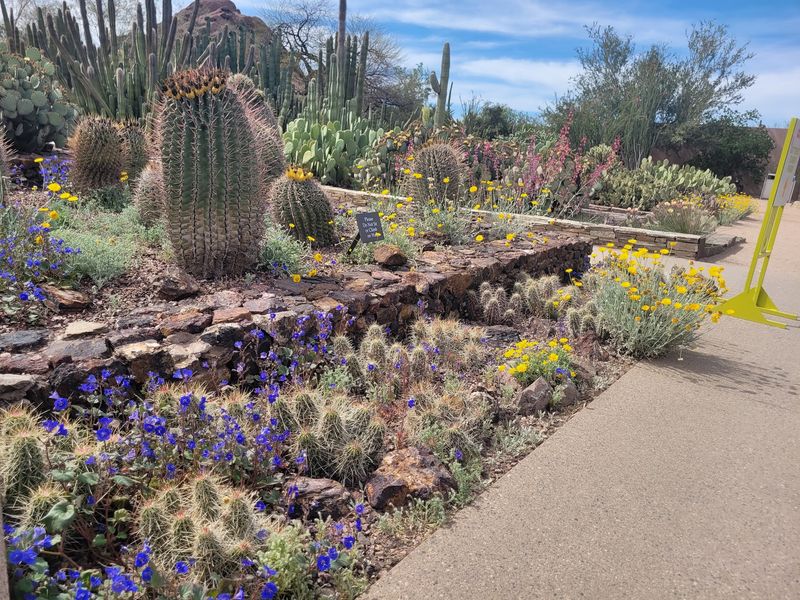
Color lovers, this one’s for you. The Harriet K. Maxwell Desert Wildflower Trail is the best spot in the garden for blooms.
It also pulls in butterflies and hummingbirds. Watching tiny birds zip from flower to flower is pure entertainment, and it costs nothing extra.
Peak bloom usually arrives in late March or April. That’s when wildflowers and cactus flowers put on their brightest show of the year.
Visiting before 2026 ends still has perks, though. Winter brings cooler weather, which makes slow walks much more comfortable.
Nearby, the Christensen Family Desert Oasis offers a change of pace. It has palms, a color garden, and a shady grove with running water.
That sound of water feels extra special in the middle of the Sonoran Desert. It’s a nice place to cool down and catch your breath.
For a scenic bonus, try the Sonoran Desert Nature Trail. It’s short but steep, and it rewards you with views of the Papago Buttes.
Sunset from up there is a strong contender for the best few minutes in Phoenix.
Thousands Of Glowing Lights Turn December Into Something Magical
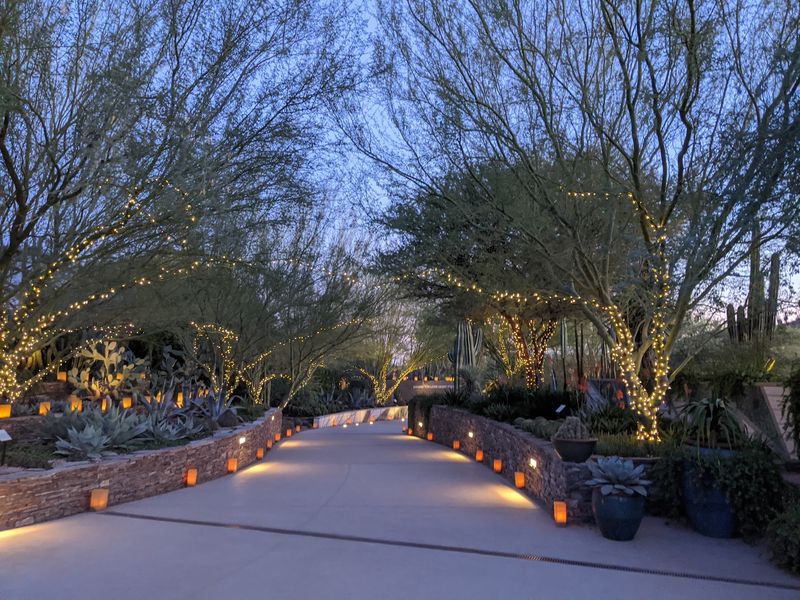
Paper bags filled with light might not sound exciting. Line thousands of them along desert paths, though, and everything changes.
Las Noches de las Luminarias is the garden’s popular holiday event in December. Glowing luminarias, bright light displays, and live entertainment fill the grounds.
Fall brings plenty of fun too. The Día de Muertos Celebration runs November 6 through 9, 2026, with live performances, an evening procession, and a mercado.
Food fans should mark November 13 through 15 for the Chiles and Chocolate Festival. It’s three days of food vendors, samples, and music.
The fall display runs October 1 through November 15. Look for pumpkin trees, gourd towers, and botanical wreaths around the garden.
Flashlight Nights ran through September 2026, while Fall Garden After Dark offers illuminated trails through November 15.
Fall Garden After Dark lets you explore illuminated pathways, colorful botanical displays, and glowing art installations after sunset.
Holiday hours change a bit, so plan ahead. The garden closes on Thanksgiving Day and Christmas Day.
These events are a big reason late 2026 is such a great time to visit. The desert simply looks different under all that glow.
Butterflies, Old Ways, And Smart Yard Ideas Keep Kids And Grown-Ups Busy
Hundreds of live butterflies flutter around the Cohn Family Butterfly Pavilion. It’s a seasonal exhibit, and kids usually find it hard to leave.
Since it may close during extreme summer heat, fall and winter are a nice time to catch it. Check the schedule before you go so nobody ends up disappointed.
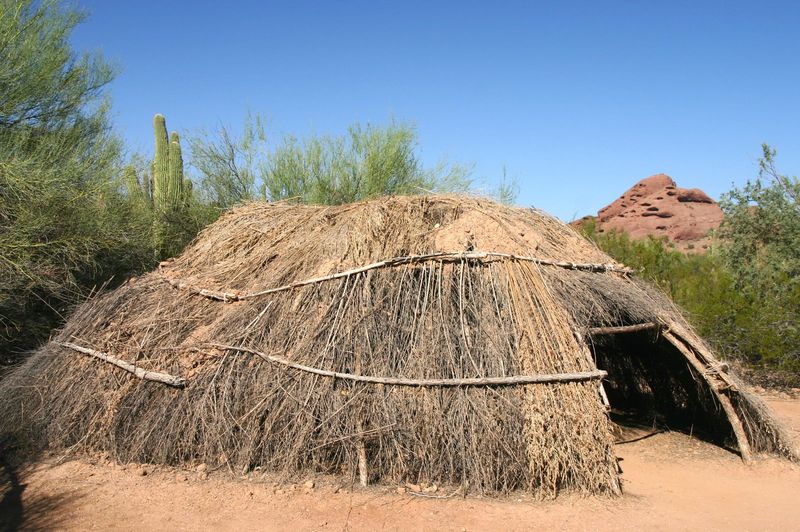
The Plants and People of the Sonoran Desert Trail tells a different kind of story. It explores how native cultures used desert plants and includes replicas of traditional dwellings.
It’s a great way to show kids that the desert has always been a home. People found food, tools, and shelter in plants that many folks now just walk past.
Grown-ups with yards should check out the Center for Desert Living Trail. It shows sustainable gardening and drought-friendly landscaping ideas.
You might leave with a whole new plan for your backyard. Fewer thirsty lawns, more clever desert plants.
Families will also appreciate the paved paths and frequent benches. Little legs and tired feet both get a break.
Every trail teaches something new without feeling like homework. That’s a rare trick in Arizona or anywhere else.
A Few Smart Moves Make Your Visit Even Better
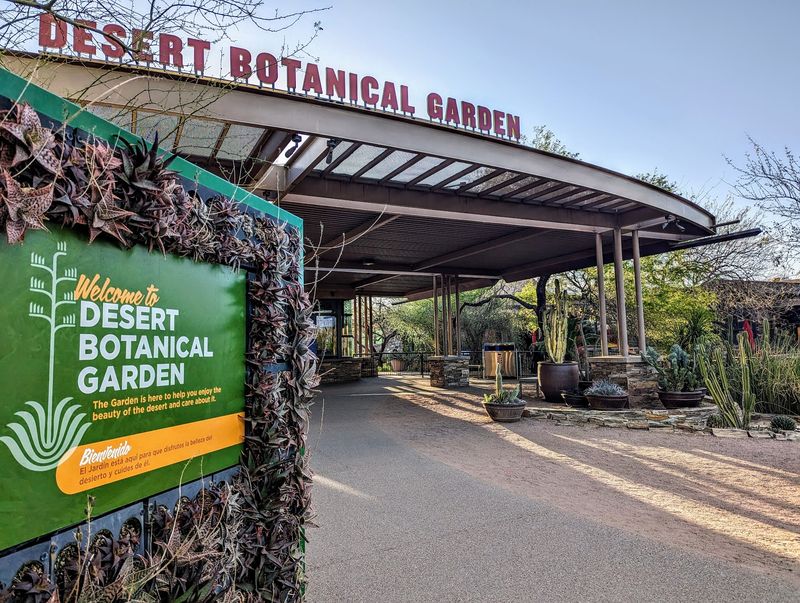
Timing matters in the desert. From October 1 through December 31, 2026, the garden is generally open from 7 a.m. to 10 p.m.
It is closed on Thanksgiving Day and Christmas Day.
Those long hours give you options. Go early for cool air, or arrive near sunset for glowing cacti and red buttes.
You’ll find Desert Botanical Garden at 1201 N. Galvin Parkway in Phoenix, AZ 85008. It sits inside Papago Park, and parking is free.
Want to save some money? Community Day offers pay-what-you-can admission on the second Tuesday of each month, allowing visitors to choose an amount that works for them.
Most visitors spend around two hours here. Plant fans can easily stretch that into half a day or longer.
Only service animals are allowed, except on special Doggy Days. Leave the picnic basket at home too.
The neighborhood is packed with things to do. The Phoenix Zoo and Hole-in-the-Rock are right nearby in Papago Park.
Tempe Town Lake and Old Town Scottsdale are only 10 to 15 minutes away. Pair them with the garden and you’ve got a full Arizona day without much driving.
Just make sure the giant cacti come first.