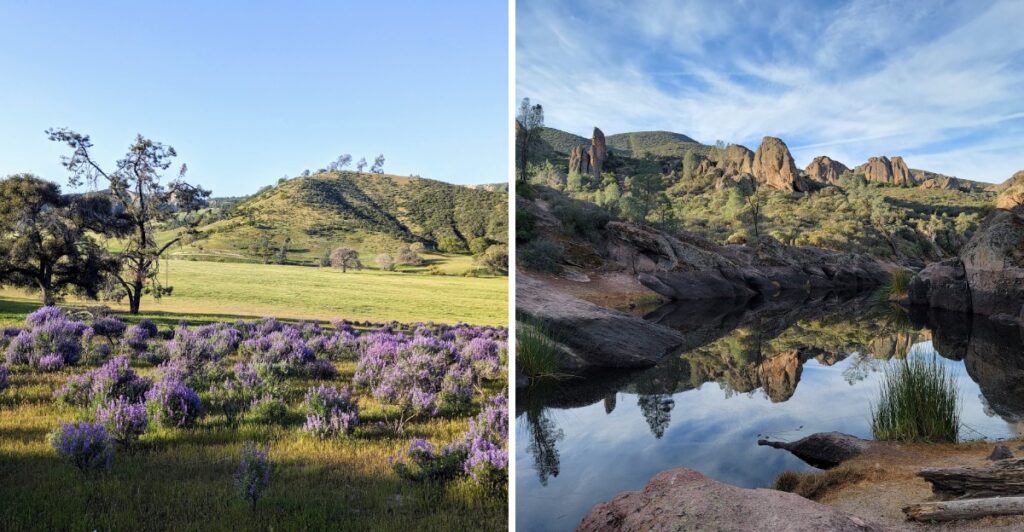
A wild condor with a wingspan up to 9.5 feet can glide right over your head at this California park. Many wear numbered wing tags, so it’s basically a flyover with name tags.
The rock spires below them started out as part of an ancient volcano. A major fault line then dragged them nearly 200 miles north over millions of years, which makes for one very slow road trip.
You can squeeze through dark boulder caves with a flashlight in hand. Then come narrow cliffside steps. Why choose between spooky and scenic?
The park sits in central California, just a short drive from busy cities.
With condors overhead and volcano leftovers underfoot, it somehow still flies under the radar.
A Volcano Moved Nearly 200 Miles To Build This Skyline
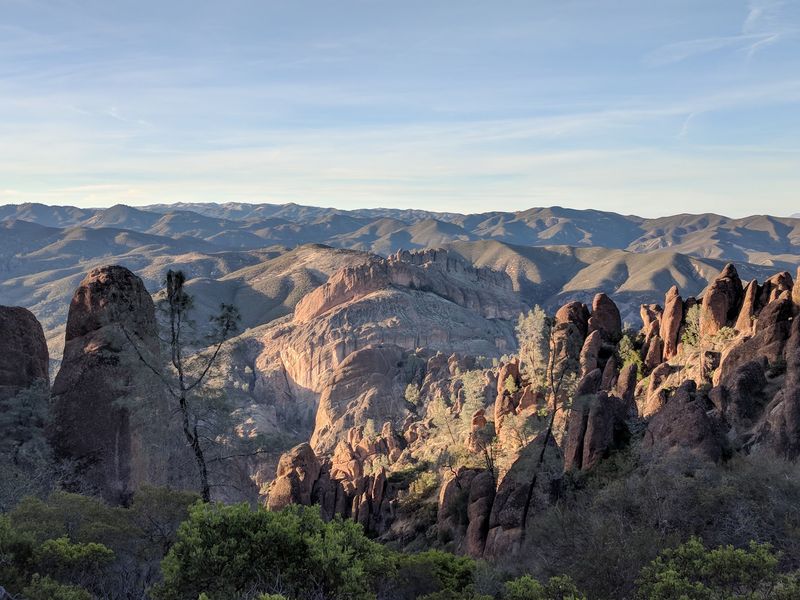
Most mountains stay put, but these did not. Pinnacles National Park sits on the remains of a volcano that erupted over 23 million years ago.
The San Andreas Fault then carried roughly two-thirds of the volcanic field nearly 200 miles north.
The remaining third stayed behind near Lancaster, far to the south. Talk about a family split.
Wind, water, and time carved the rock into the spires, monoliths, and sheer canyon walls you see now. Some formations look like stacked loaves, while others rise like stone fingers. You’ll want your camera ready on almost every trail.
The area became a national monument back in 1908, thanks to President Theodore Roosevelt. President Barack Obama then signed it into a full national park in 2013. That makes it one of the newer national parks in California.
Visitor centers on both sides of the park explain this wild geology with exhibits and maps. Stopping there first helps the scenery make way more sense. Kids especially seem to love the idea of a traveling volcano.
Once you know the backstory, every jagged ridge feels a little more amazing. It’s basically a skyline with frequent-flyer miles.
Keep Your Eyes Up Because Giant Condors Patrol These Peaks
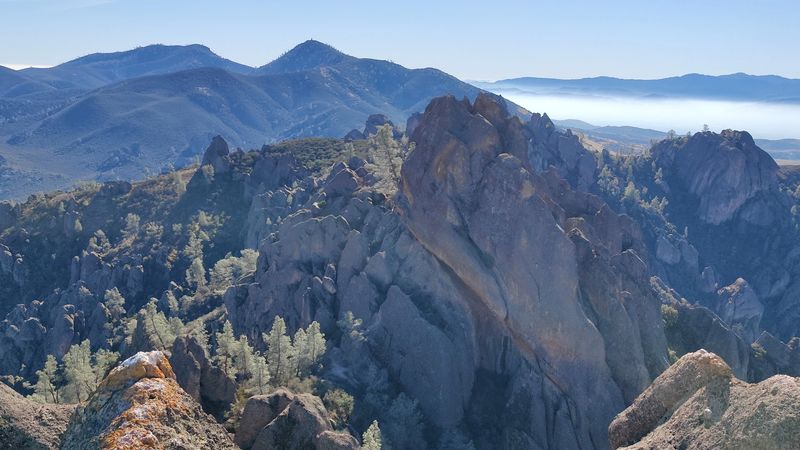
North America’s largest land bird calls these cliffs home.
California condors can stretch their wings up to 9.5 feet across, which is wider than most cars are wide.
These birds nearly vanished from the wild in the 1980s. Pinnacles National Park now serves as an official release and management site for the recovery program. Every bird you spot is part of a big comeback story.
Telling a condor from a turkey vulture takes a little practice. Look for white patches on the underside of the wings and a much bigger size. Many condors also carry numbered tags on their wings for tracking.
The High Peaks area, accessible by hiking trails from either entrance, gives you a strong chance of spotting a condor.
Early morning works well, since the birds often perch before warm air currents lift them up. Bring binoculars if you own a pair.
Patience matters here too. Find a rocky spot, sip some water, and watch the sky for a while.
When one finally sails past, you’ll probably forget how tired your legs feel. Few wildlife moments in California hit quite this hard.
Bring A Flashlight For These Spooky Boulder Caves
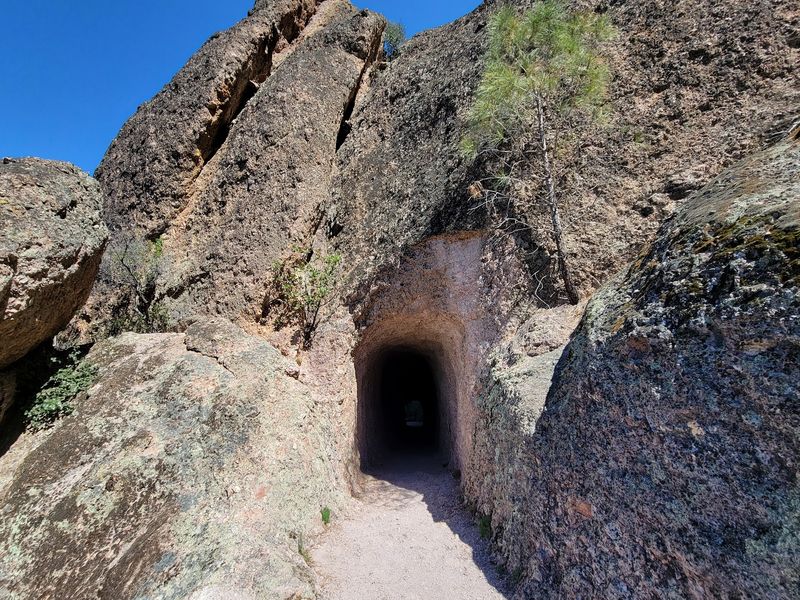
Forget the usual caves with drippy crystals. The caves at Pinnacles are talus caves, formed when giant boulders tumbled into narrow canyons and wedged overhead.
The result is a set of dark, twisting passages with light peeking through cracks. Bear Gulch Cave sits on the east side, while Balconies Cave is easier to reach from the west. Both deliver a real sense of adventure.
A flashlight or headlamp is required gear. Some sections get very dim, and you may need to duck or scramble over rocks. Shoes with good grip will make you much happier.
Here’s a fun twist: the caves also shelter Townsend’s big-eared bats. To protect these tiny residents, the park closes parts of the caves during pupping and hibernation seasons. Check cave status on the park’s official page before you go.
Inside, the air often feels cooler than the trail outside. On a warm afternoon, that alone feels like a reward.
Plan for a little mud, a little crouching, and a lot of grinning. Nobody leaves these caves looking fancy, and that’s part of the charm.
The High Peaks Trail Features Stone Steps And Metal Handrails
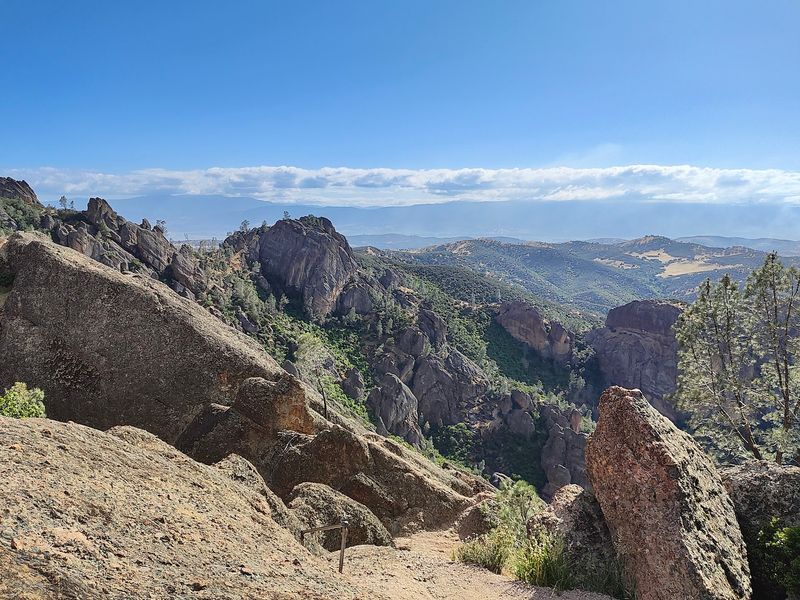
Stone steps chiseled into cliffs, metal handrails, and drop-offs on the side. That’s the Steep and Narrow section of the High Peaks Trail, and it’s a thrill.
This route climbs right up among the tallest spires in the park. The climb is strenuous, so it suits hikers with solid legs and good balance. Your reward is a sweeping view of jagged rock in every direction.
Many hikers build a loop by pairing it with the Condor Gulch Trail from the east side. Others start from the west and connect through Juniper Canyon. Either way, give yourself plenty of daylight.
Shade is scarce up top, and the sun can feel intense. Pack more water than you think you need, plus snacks and sun protection. Starting early in the day makes the whole trip much more pleasant.
Watch the sky while you catch your breath on the ridgeline. The High Peaks are a favorite hangout for condors.
Is it hard work? Yes. Will your phone fill up with photos?
Also yes. Those carved steps make a great story at dinner later.
Easy-Going Trails Lead To A Surprise Reservoir
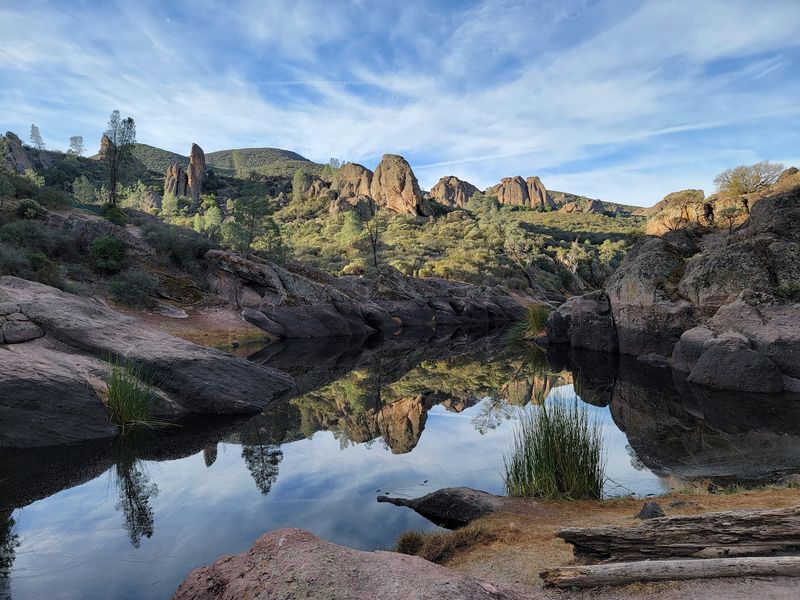
Not every hike here needs to test your stamina. Pinnacles National Park offers more than 30 miles of trails, and several work well for families and casual walkers.
The Moses Spring to Rim Trail Loop is a fan favorite. It runs roughly 2.2 miles with moderate climbing. Along the way, it can lead through Bear Gulch Cave when the cave is open.
At the top waits Bear Gulch Reservoir, a calm pool tucked among tall rock walls. After all that rugged terrain, seeing water feels almost unreal. It’s a great spot for a quick break and a few photos.
On the west side, the Balconies Cliffs Trail offers big views of towering rock faces. It pairs nicely with Balconies Cave for a fun loop.
Spring and fall bring the most comfortable hiking temperatures. Summer days can turn hot quickly, so morning starts make sense.
Kids can also join the Junior Ranger program at the visitor centers. Earning a badge gives them a goal, which may cut down on the classic question about how much farther. Fewer complaints, more exploring.
Camp Under Oaks And Then Cannonball Into A Pool
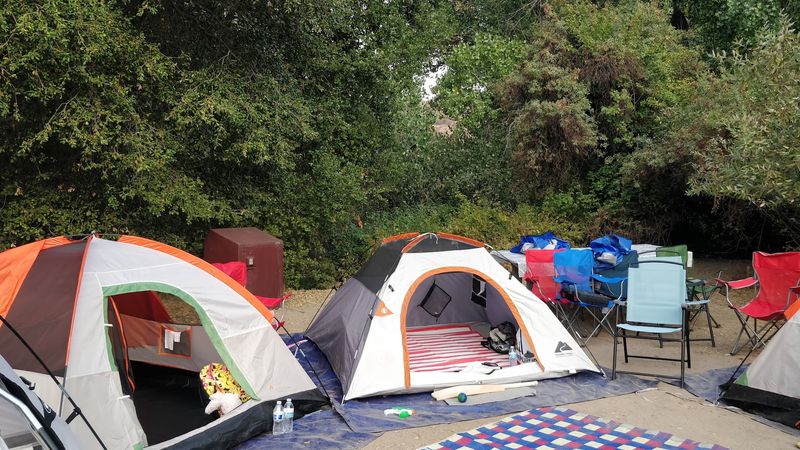
A swimming pool in a national park campground sounds like a made-up rumor. At Pinnacles Campground, it’s real, and it usually opens from April through September.
The campground sits on the east side and stays open year-round. You can pick from tent sites, group sites, and RV sites, and many sit under shady oaks. Reservations are handled through Recreation.gov.
Campers get flush toilets, hot showers, and a campground store for supplies and souvenirs. Sites include picnic tables and fire rings. Fire rules can change during dry seasons, so check before you pack firewood.
Keep your food locked away at night. Raccoons around here know exactly what a cooler looks like. They are cute, but they are also skilled little thieves.
During busy seasons, a shuttle has run between the campground area and Bear Gulch trailheads. Schedules vary, so confirm the current plan close to your trip.
Spending a night lets you catch the park at dawn and dusk. Those quiet hours are prime time for spotting deer and maybe a condor. Then you can cool off with a splash after the trail.
Pick Your Entrance Wisely Because The Two Sides Never Meet
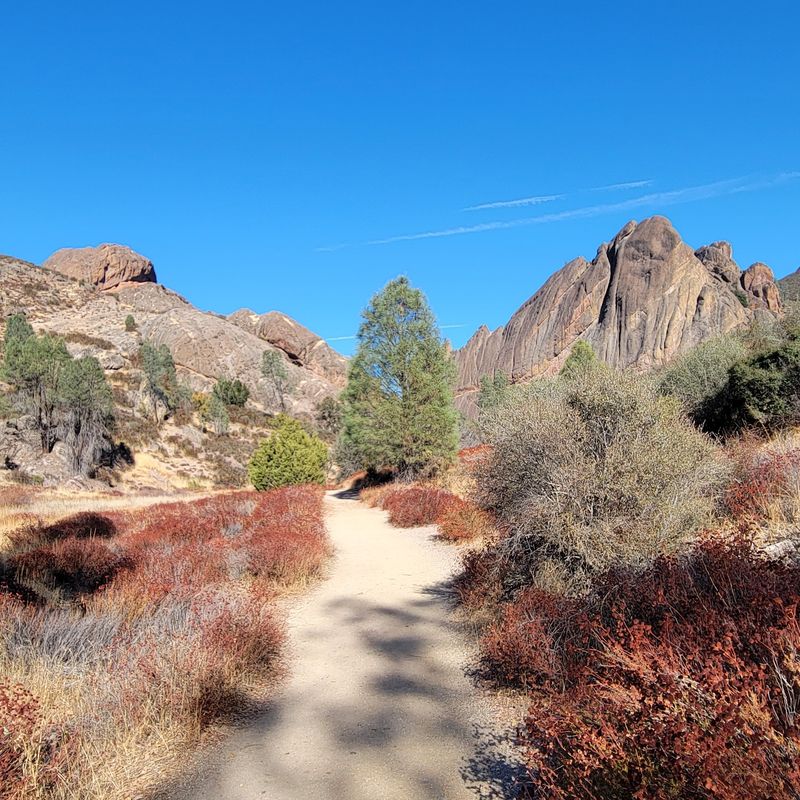
Here’s a quirk that trips up plenty of first-timers. Pinnacles has an East Entrance and a West Entrance, and no road connects them inside the park.
The East Entrance sits at 5000 East Entrance Road, Paicines, CA 95043, reached from Highway 25. It stays open 24 hours. This side holds the campground, the main visitor center, and the Bear Gulch area.
The West Entrance is reached from Highway 101 near Soledad. Its gate opens for day use, generally from 7:30 a.m. to 8 p.m. The access road is narrow and winding, so big RVs should stick with the east side.
Driving between the two takes over an hour around the outside. Hikers can cross on foot through the High Peaks or Balconies areas, though.
Choose based on what you want most. The east side suits campers and the Bear Gulch Cave crowd. The west side works great for Balconies Cave and dramatic cliff views.
Pick one side per day if you can. Trying to cram both into one afternoon is how road trips turn grumpy.
Smart Timing Makes A 2027 Trip Even Better
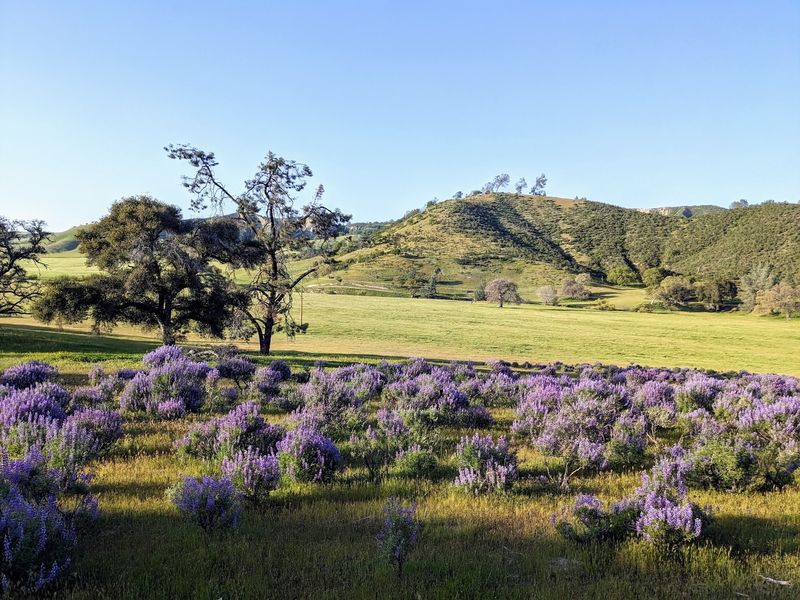
Timing can make or break a visit here. Pinnacles National Park stays open year-round, but spring and fall usually bring the friendliest hiking weather.
Summer heat often climbs fast on exposed trails, and shade can be hard to find. Winter tends to be cooler and quieter, with mossy rocks after rain. Each season has its own flavor.
Weekends and holidays in spring can get busy, especially at Bear Gulch. Parking near popular trailheads is limited. Arriving early in the morning gives you the best shot at a spot.
Pack a flashlight for the caves, sturdy shoes, sun protection, and lots of water. Food options inside the park are limited, so bring snacks and lunch. A picnic near the trailhead makes a nice midday break.
Check cave status, shuttle schedules, and fire rules on the official park page before leaving home. Conditions can change with the seasons.
The park sits within a couple hours of the San Francisco Bay Area and Monterey. That makes it an easy add to a bigger California road trip. Circle a weekend for 2027 now, and the condors can handle the rest.