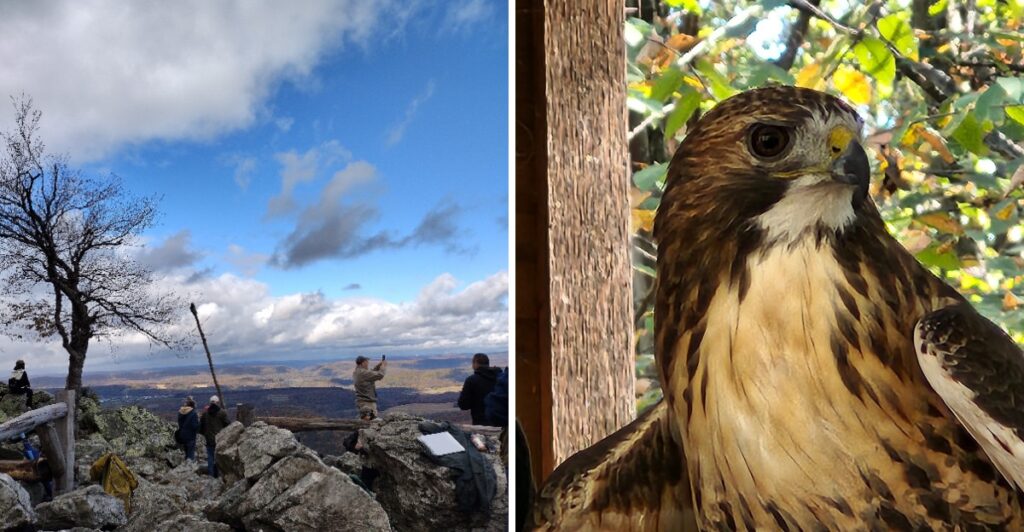
This Pennsylvania mountain became the world’s first refuge for birds of prey, though it didn’t start out that way. Hawks weren’t exactly welcome here in the early days.
In 1934, a New York activist leased 1,400 acres and hired wardens to protect the birds. That same year, one warden started counting the raptors flying past.
His count still runs today as the longest raptor migration count on Earth. One person with a notebook started a record that has lasted more than 90 years, which is quite the side project.
Around 16,000 raptors now glide past this ridge each autumn, and some September days bring thousands at once. The mountain that once gave hawks a hard time now welcomes them with binoculars.
The World Got Its Very First Raptor Refuge Right Here
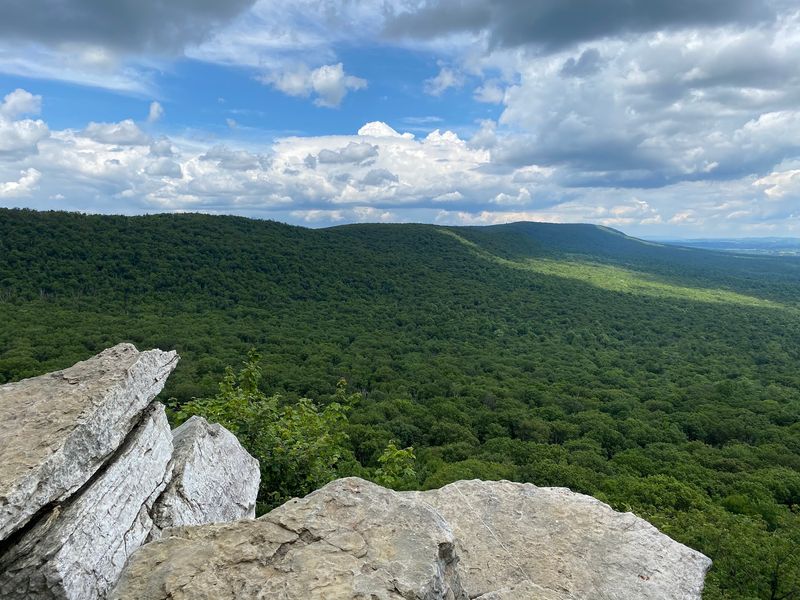
Rosalie Edge was not a woman who sat quietly. In 1934, the New York conservation activist leased 1,400 acres of mountain land to protect birds of prey from hunters.
That land became Hawk Mountain Sanctuary, the first refuge for raptors anywhere in the world. Before Edge stepped in, people gathered on these rocks to shoot migrating hawks and eagles for fun.
Edge hired Maurice and Irma Broun as wardens, and they shut down the shooting immediately. Maurice also began a careful count of every raptor flying past that first season.
The Sanctuary opened to the public in 1935. A few years later, in 1938, the Hawk Mountain Sanctuary Association became an official nonprofit in Pennsylvania.
Big honors followed over the decades. The site became a National Natural Landmark in 1967 and joined the National Register of Historic Places in 2022.
Today the protected area covers about 2,600 acres. That’s a pretty impressive glow-up for a ridge once known for target practice.
Knowing this backstory makes every bird sighting feel a little more meaningful. Each hawk sailing past is part of a comeback story that started with one stubborn conservationist.
Watch The Weather Map Before You Watch The Sky
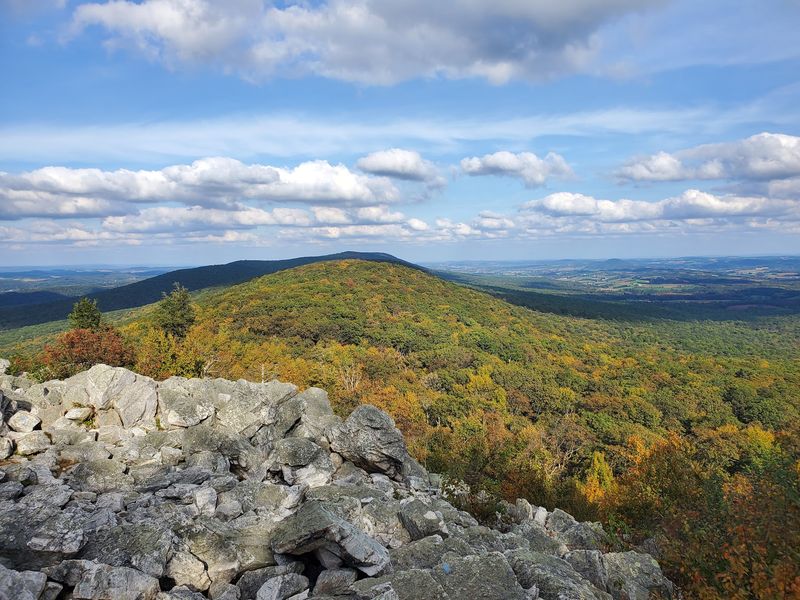
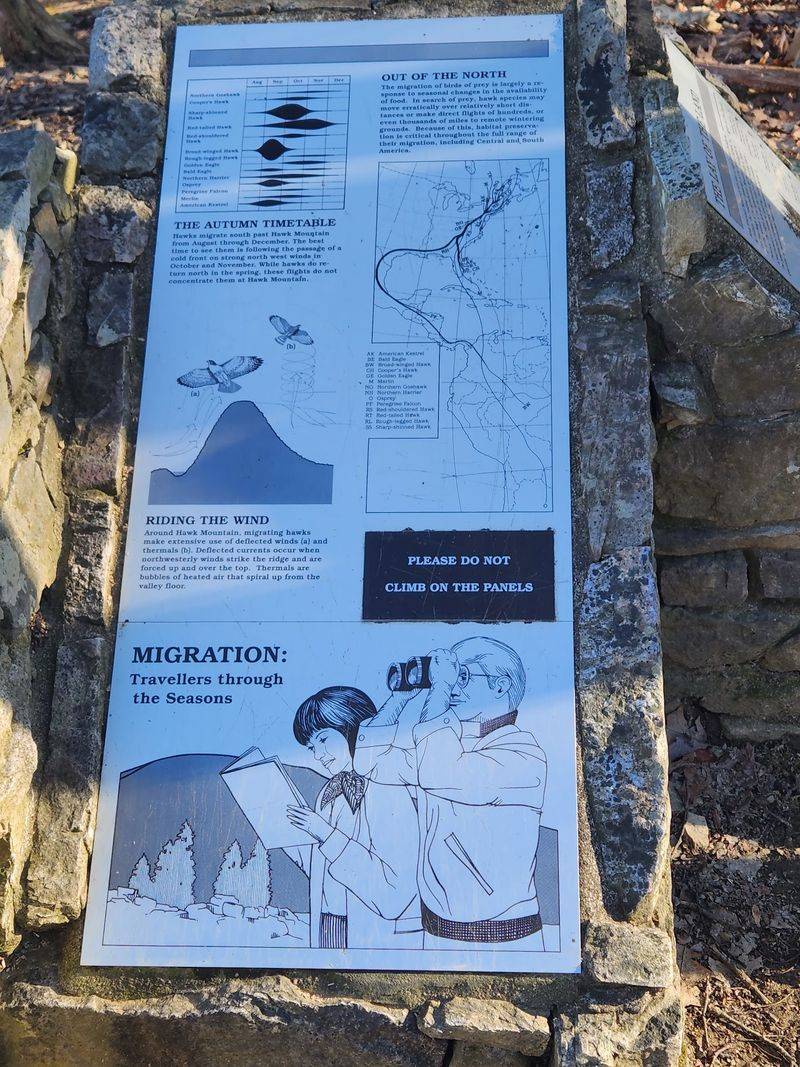
Cold fronts are a hawk watcher’s best friend. The strongest flights usually happen one to two days after a front moves through.
Northwest winds are the magic ingredient. They hit the ridge and bounce upward, creating lift that raptors ride like an invisible highway.
Calm, sunny days can be sneaky, though. Birds often climb so high at midday that they become tiny specks or vanish from view.
For better odds, aim for mid-to-late morning, roughly 9:30 to 11:30. Mid-to-late afternoon, around 2:30 to 4, can also be productive.
A beautiful windless day might give you great views and very few birds. Bring patience, because nature doesn’t follow a schedule.
Daily counts are posted online, which is handy for planning. Checking recent numbers can show you what’s moving and whether the action is heating up.
Pack layers too, since conditions on an exposed ridge can feel colder than the parking lot. A warm hat and a thermos of cocoa make the wait far more pleasant.
Treat the forecast like a treasure map. Read it right, and the sky can deliver a real show.
Golden Eagles Save Their Big Entrance For Late Fall
Timing is everything on this ridge. The Autumn Migration Hawkwatch runs daily from August 15 through December 15, and each stretch brings different flyers.
Mid-September belongs to the Broad-winged Hawks. Thousands can pass in a single day, swirling together in groups called kettles as they ride rising warm air.
Late September and early October deliver big numbers of Sharp-shinned Hawks and Ospreys. October is the month with the greatest variety, so bird nerds should circle it on the calendar.
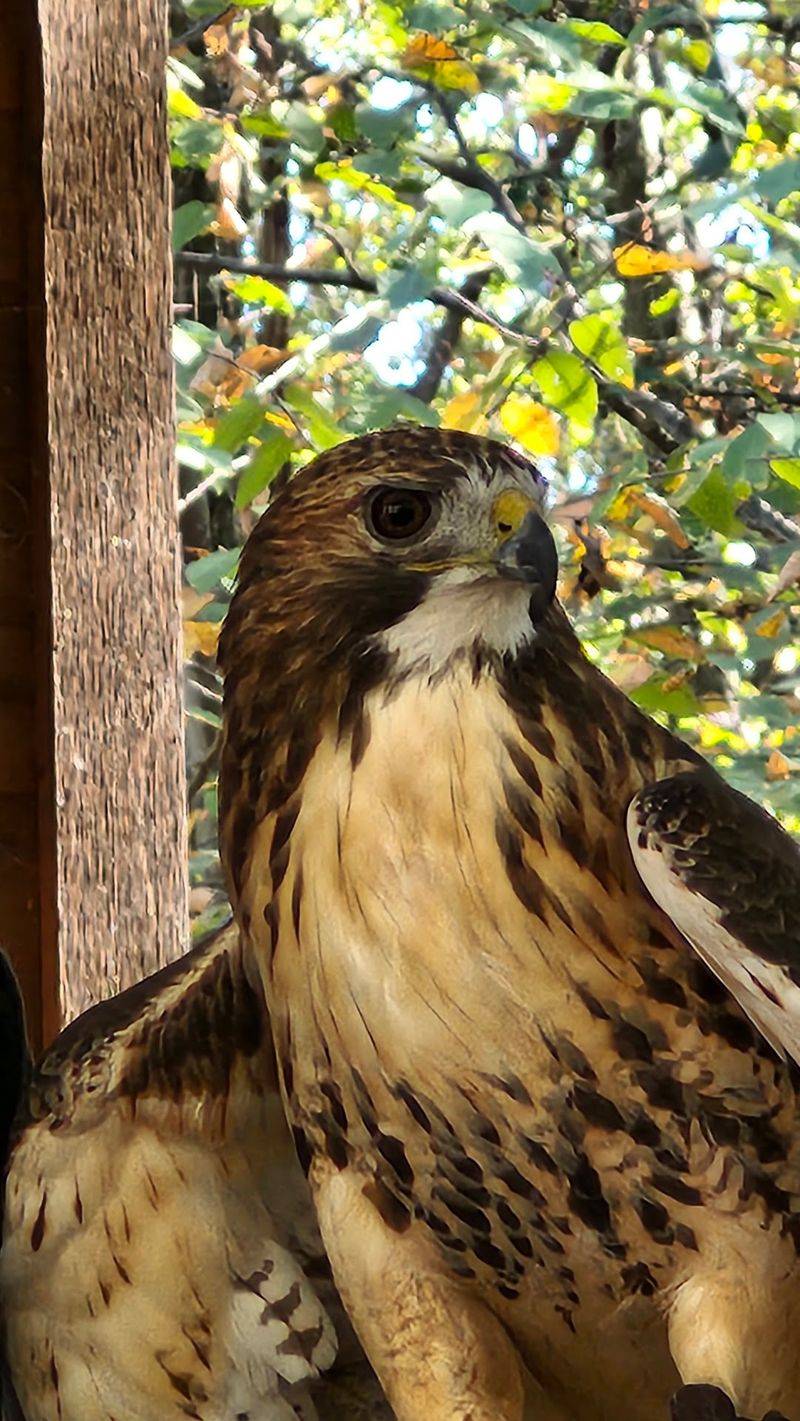
Want the heavy hitters? November and December are best for Red-tailed Hawks, Bald Eagles, and Golden Eagles.
Those bigger, heavier birds need stronger lift to travel, and late fall winds deliver it. A Golden Eagle cruising past the overlook is a sight worth bundling up for.
Across the whole season, about 16 species pass over Hawk Mountain Sanctuary. That’s an average of roughly 16,000 raptors every autumn.
Picking your month depends on your goal. Choose September for sheer numbers, October for variety, and the chilly end of the season for eagles.
Rocky Trails Lead To The Legendary North Lookout
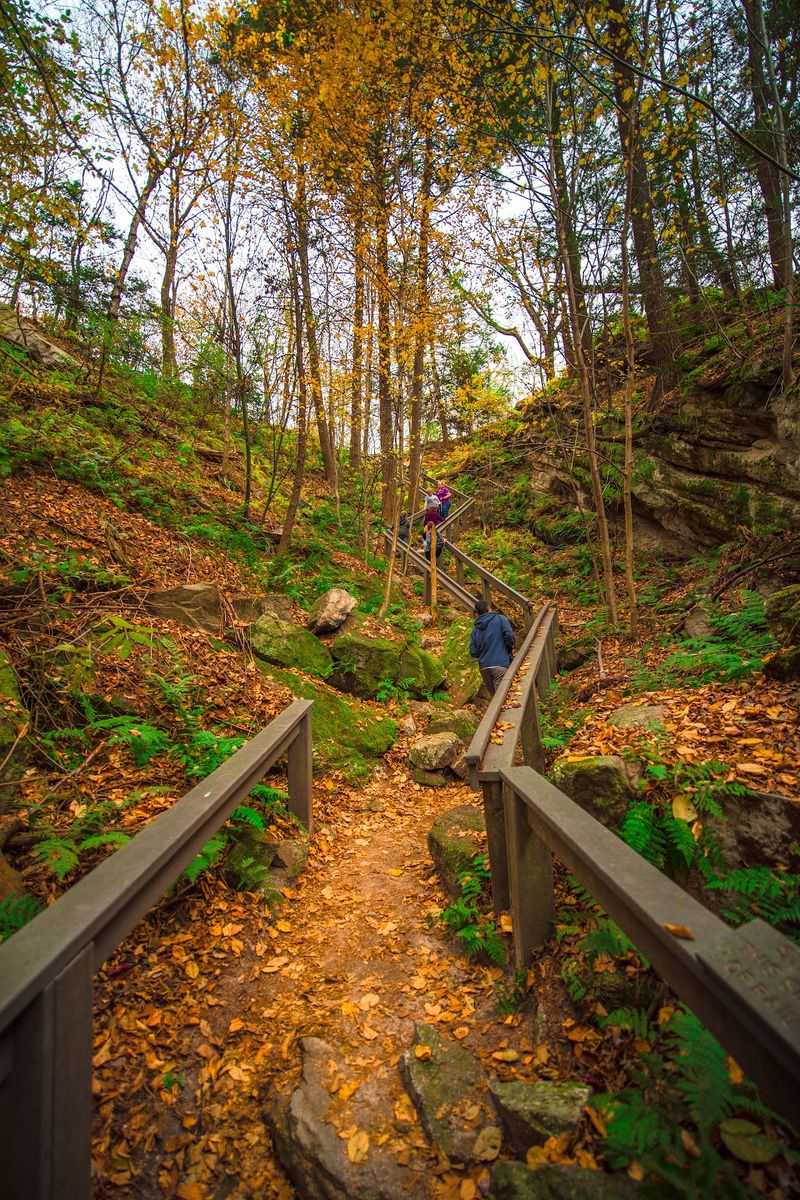
Nearly nine miles of hiking trails wind across Hawk Mountain Sanctuary. Some are easy strolls, and others feel more like climbing a giant pile of stone stairs.
First-timers should head for the North Lookout. The walk usually takes at least an hour, so don’t plan on a quick sprint.
Up top, the overlook opens onto wide views of the Berks County countryside. It’s also one of the prime spots for scanning the sky for raptors.
Fair warning: the rugged trails ask a lot from your ankles. Sturdy shoes with good grip are a smart choice over flimsy sneakers.
Some routes are considered unsuitable for children under six. Families with little ones should stick to the gentler paths and save the tough stuff for later.
Bigger adventures exist for experienced hikers who crave a challenge. Just remember that trails are not maintained in winter, so icy rocks become a real concern.
A light snack and water bottle are worth tossing in your bag. Few lunch spots in Pennsylvania come with a view this good or a chance at a passing eagle.
Everyone Gets A Front Row Seat At The South Lookout
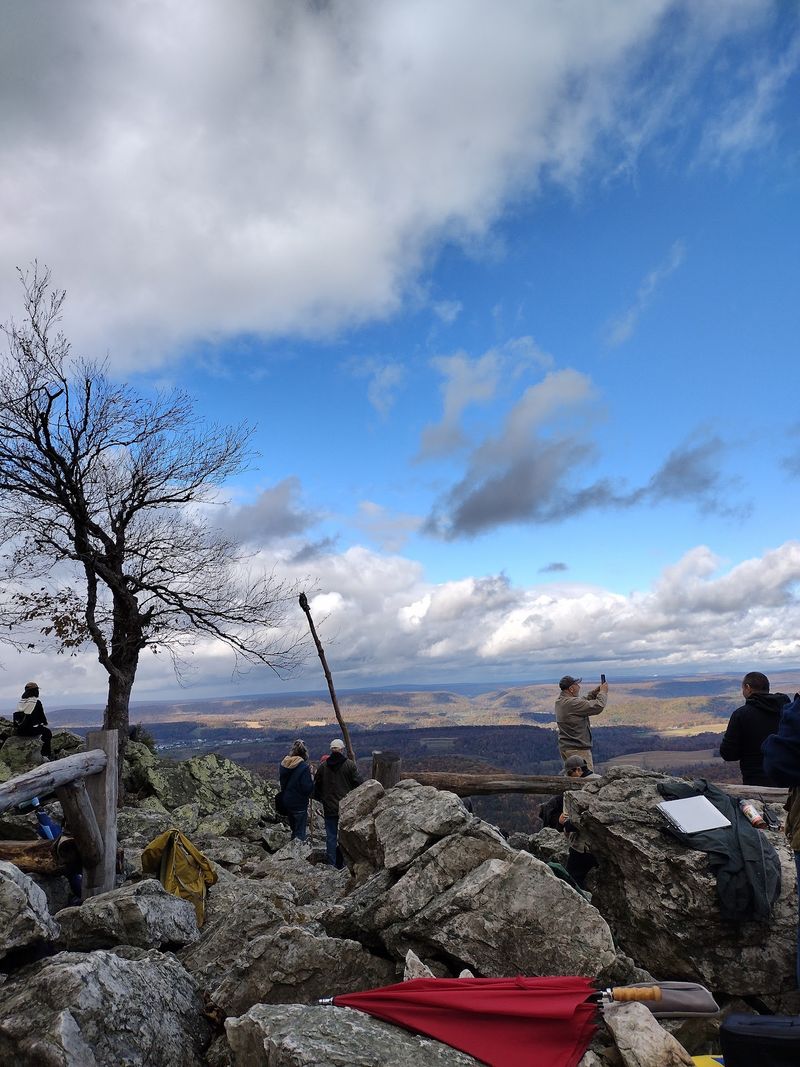
Good news for anyone who’d rather skip the boulder scramble. The Silhouette Trail offers a wheelchair-accessible route straight to the South Lookout.
That gentle path still pays off with sweeping ridge views. You get a solid chance at raptor sightings without needing mountain-goat skills.
It’s a great option for grandparents, strollers, or anyone nursing a sore knee. Nobody should miss a hawk migration just because the trail looks intimidating.
The South Lookout also makes a nice warm-up stop. Hikers heading farther can pause here, scan the sky, and decide how ambitious they feel.
Sanctuary staff, trainees, and volunteers help spot birds at the lookouts. Having those extra sharp eyes around makes the experience friendlier for beginners.
Bring binoculars if you own a pair. A raptor that looks like a dot to the naked eye can turn into a jaw-dropping close-up through good lenses.
Accessibility here feels thoughtful rather than tacked on. It means the whole crew can share the moment when a kettle of hawks starts circling over the ridge.
Friendly Bird Spotters Turn Dots Into Names
Spotting a hawk is one thing, but naming it is a whole other skill. Luckily, you don’t have to figure it out alone at Hawk Mountain Sanctuary.
Staff members, trainees, and volunteers are stationed at the lookouts during migration season. Their job includes helping visitors find and identify the raptors drifting by.
These folks are also part of the famous count that started in 1934. Every bird they tally adds to the longest-running raptor migration record in the world.
Forgot your binoculars at home? Rentals are available at the Visitor Center, so you won’t be stuck squinting.
Asking questions is part of the fun. Learning the difference between a Sharp-shinned Hawk and a Red-tail can turn a casual hike into a new hobby.
Kids especially enjoy having an expert point out a bird before it disappears. It’s like a live nature show where the host stands right beside you.
Take a moment to appreciate the effort behind those numbers. All that careful counting helps scientists understand how raptor populations are doing across the globe.
The Visitor Center Is Way More Than A Ticket Window
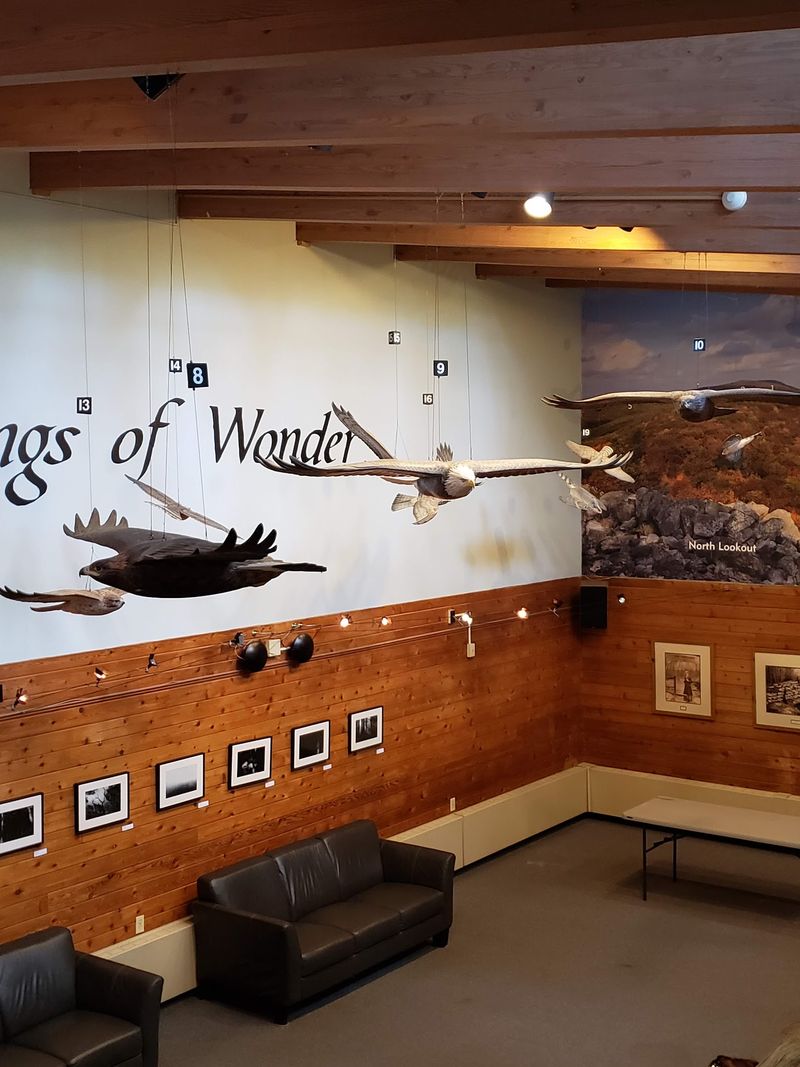
Call it the hub of the mountain. The Visitor Center sits at 1700 Hawk Mountain Rd in Kempton, and it’s where most adventures begin.
Inside, an interactive history display tells the story of the Sanctuary. The Wings of Wonder gallery adds even more to explore before or after your hike.
A bird feeder watch station lets you study smaller feathered guests up close. It’s a cozy spot to rest tired legs while still doing some bird watching.
The Mountain Bookstore is hard to walk past. Shelves hold field guides, books, apparel, hats, patches, pins, mugs, and stuffed animals.
Regionally sourced snacks are also on hand for a quick boost. Kids’ activities and stationery round out the mix nicely.
Outside, a native plant garden shows off plants that belong in this part of Pennsylvania. Nearby, a pond invites you to look for amphibians and turtles.
Programs, lectures, and workshops happen here throughout the year too. Plan a few extra minutes, because this building deserves more than a quick bathroom break.
Serious Science Happens Behind All Those Binoculars
Birdwatching here comes with a big brain attached. Hawk Mountain Sanctuary runs research projects both in Pennsylvania and around the world.
The Acopian Center for Conservation Learning opened in 2001. It serves as the headquarters for the conservation science program and houses visiting scientists and students.
Researchers study raptor movement, population trends, and environmental health. Satellite tracking and long-term monitoring help them follow birds far beyond the ridge.
One current project runs from 2026 through 2029. It focuses on Northern Harriers, a grassland raptor that’s threatened in the state.
The team is looking at the harriers’ habitat needs, travel patterns, and conservation challenges. That kind of work helps protect birds long after they leave the overlook.
Regular visitors can join in the learning too. The free Autumn Lecture Series and live raptor programs like Raptors Up Close bring experts and birds right to you.
Bigger plans are underway as well. A new Visitor Center and Center for Global Raptor Conservation is expected to open in fall 2028, and the Sanctuary will stay open during construction.