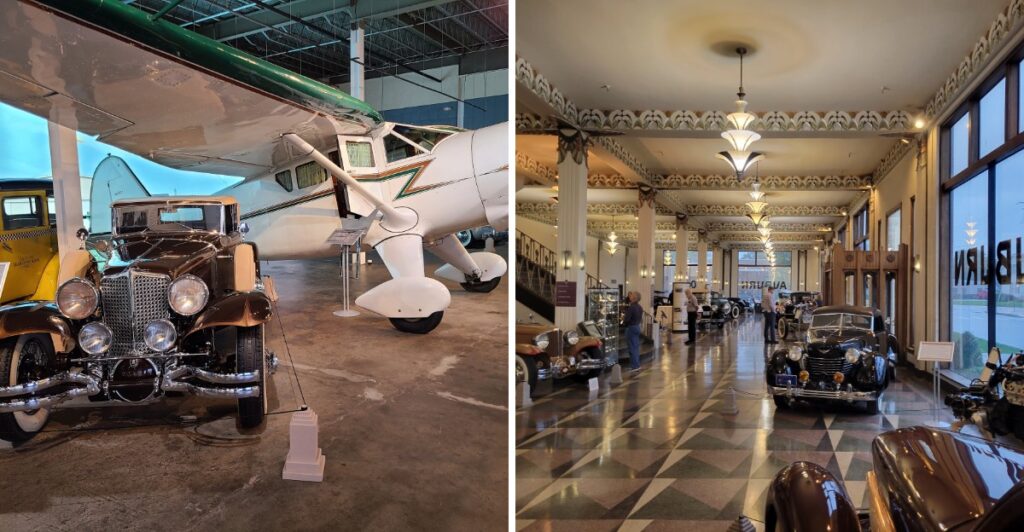
Frank Lloyd Wright once owned a 1930 Cord L-29 Cabriolet. These days, it’s parked in an Indiana museum, and you can’t take it for a spin.
I’d promise to be careful, but something tells me the staff has heard that one before.
The building deserves just as much attention as the cars. This Art Deco beauty was the automaker’s original headquarters and showroom, complete with hand-painted ceilings and geometric terrazzo floors.
Even the floor looks dressed for a black-tie event.
More than 120 classic cars fill the museum, with a grand staircase leading to restored executive offices. And the whole thing is indoors, so Indiana’s unpredictable weather can’t crash your visit.
Wright may have designed architectural masterpieces, but his taste in cars was pretty well built, too.
The Building Is The First Masterpiece You See

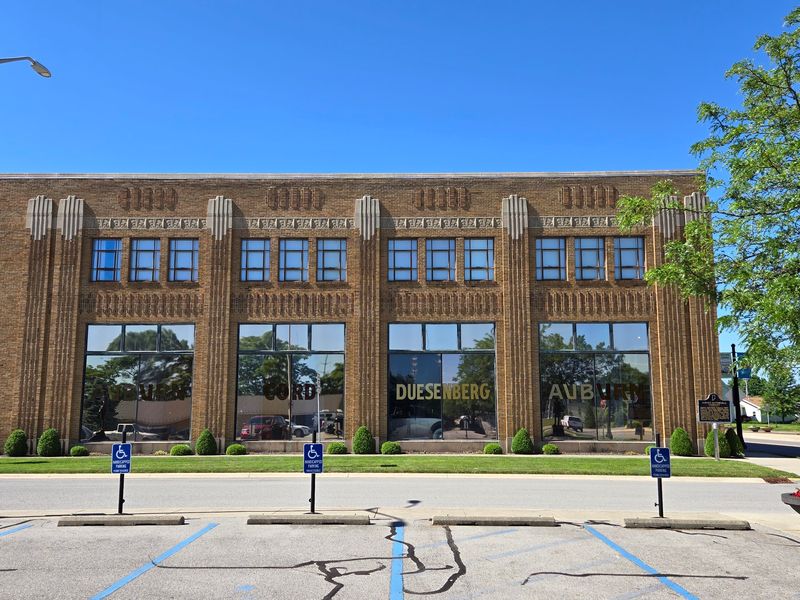
Architect Alvin M. Strauss designed this place in 1930 for the Auburn Automobile Company. Today it houses the Auburn Cord Duesenberg Automobile Museum, and the building steals scenes like a movie star.
The outside shows off brickwork laid in bold geometric shapes. It looks sharp and orderly, like the car company wanted to impress customers before they reached the door.
Inside, the original showroom features a geometric terrazzo floor. Look down for a minute, because the patterns are part of the show.
Then look up at the hand-painted ceilings. They add color and detail you won’t find in a modern car dealership.
The museum calls itself the only automobile museum in the world housed in its original headquarters. That means the cars sit where buyers once admired brand-new models.
History buffs will like the official honors too. The site became an Indiana State Historic Site in 1992 and a National Historic Landmark in 2005.
Give the building real attention before rushing to the cars. Treat it like the opening act that nearly upstages the headliner.
Duesenbergs Bring Serious Luxury Energy
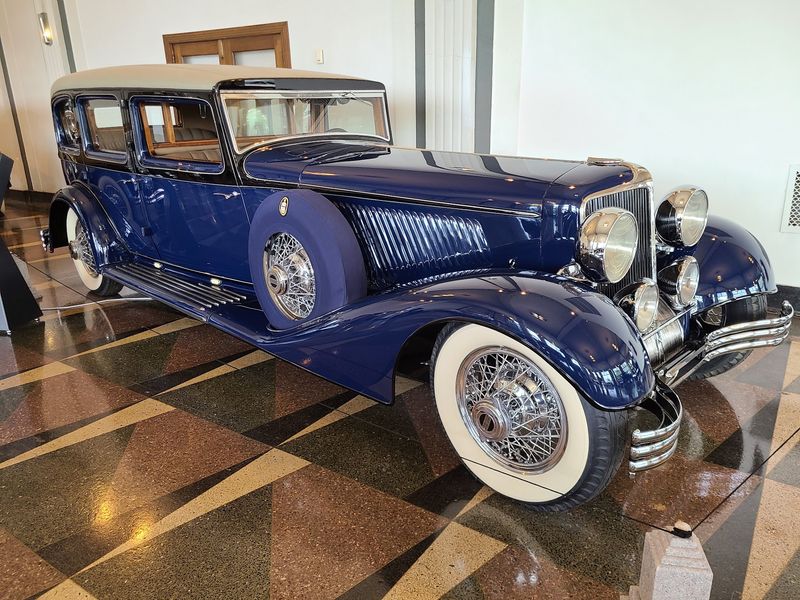
Duesenbergs were luxury cars built to make an entrance. At this museum, you can admire several of them up close.
Highlights include the Duesenberg Model X, while a rare Model Y prototype was previously exhibited on loan.
Both connect to the brand’s story of high performance and fine design.
Keep an eye out for the Castle Duesenberg too. It was the first Duesenberg sold to the public, which makes it a true starting point for car history fans.
The company story adds extra drama. E. L.
Cord gained control of the Auburn Automobile Company by late 1925, then acquired Duesenberg in 1926.
That move tied these famous names together in one Indiana story. You’ll see that connection come alive as you move through the galleries.
Read the signs near each car instead of just snapping photos. The details explain why these machines still feel special nearly a century later.
Bring patience for photos, since chrome and shiny paint love reflections. Step slightly to the side, and your picture will show the car instead of your own surprised face.
Famous Owners Left Their Mark On These Cords
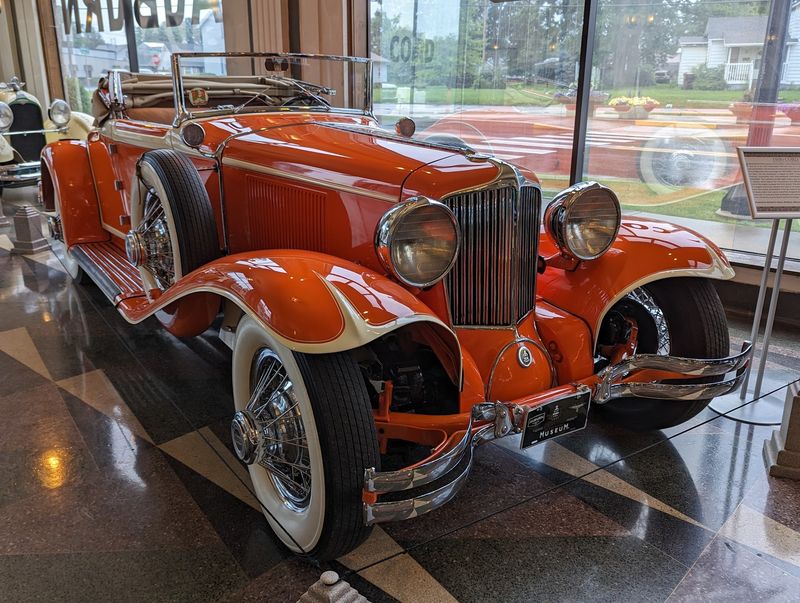
Frank Lloyd Wright, the famous architect, once owned a 1930 Cord L-29 Cabriolet. That exact car is part of the museum’s story, and it’s a fun one to find.
The Cord L-29 matters for more than celebrity reasons. Introduced in 1929, it was the first mass-produced front-wheel drive car available in the United States.
That was a big engineering step for its time. Many cars on today’s roads use front-wheel drive, so this car helped point toward the future.
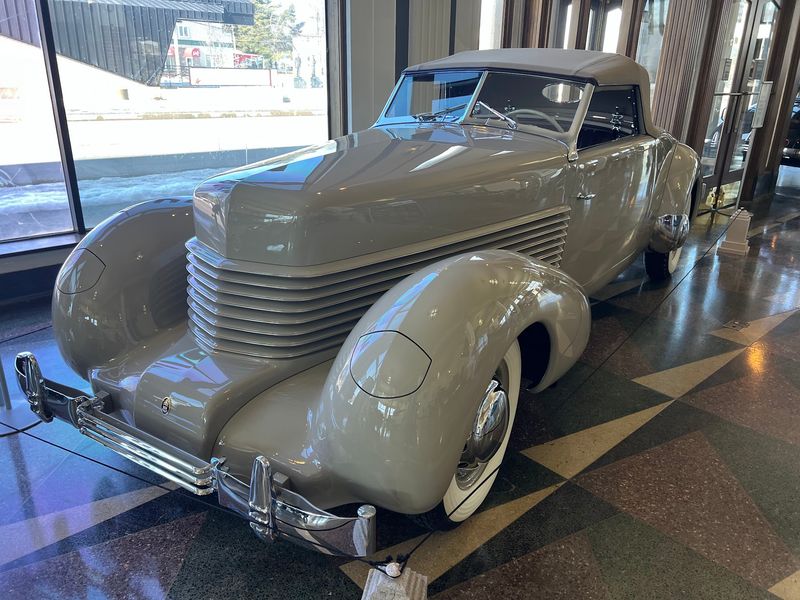
Another favorite is a 1937 Cord 812. It’s similar to one owned by aviator Amelia Earhart, so it adds a dash of adventure to the gallery.
The Cord 812 has a look many people remember right away. Its long, smooth shape feels stylish without trying too hard.
Here’s a smart tip for families. Ask kids to spot the car linked to Wright, then the one tied to Earhart’s story.
A little scavenger hunt keeps young visitors curious. It also helps grown-ups slow down and notice the details that make each Cord different.
Seven Galleries Mean You Should Not Rush
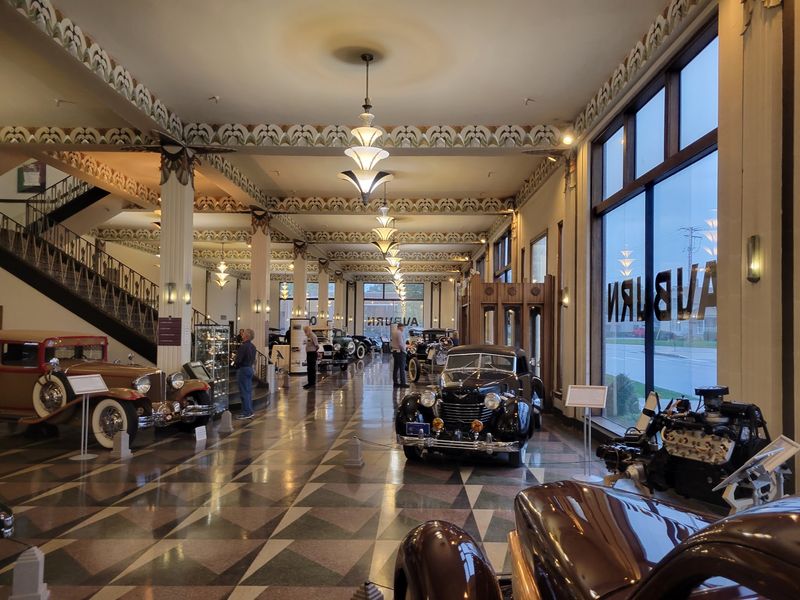
More than 120 cars fill the collection at the Auburn Cord Duesenberg Automobile Museum. That’s a lot of chrome for one afternoon, so pace yourself.
The museum is organized into seven main galleries. Each one tells a different part of the automotive story.
Themes include classic cars, Indiana-built cars, and racing and engineering exhibits. You get variety without feeling like you’re seeing the same thing over and over.
The cars span production years from 1894 to 2002. That wide range shows how much driving changed in about a century.
Not every car in the museum was built by these three companies, either. A 1911 Metallurgique appeared in the movie The Great Race, and the one-off 1940s Tasco adds rare style.
Here’s a cool fact for gearheads. The museum says 113 of its 120 displayed cars keep functioning inner mechanisms.
Plan a few relaxed hours if you love details. Wear comfy shoes, and save energy for the upper floors, because the good stuff keeps going.
Upstairs Offices Reveal How Cars Got Made
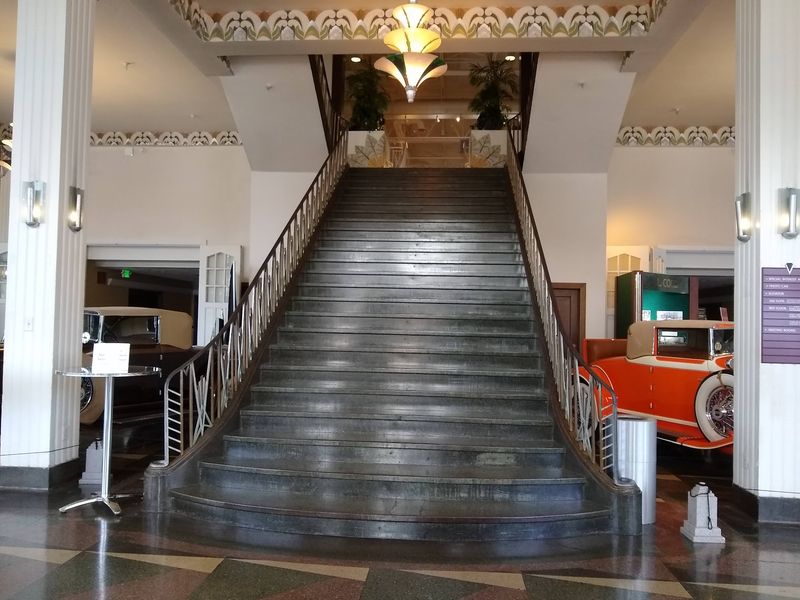
Behind every gorgeous car, someone sat at a desk and figured out the plan. Upstairs, you can see restored spaces from the Auburn Automobile Company.
Visitors can explore original offices from the company’s working days. These rooms help you picture business decisions happening in the same building.
The engineering department is another standout. It shows the technical side of building cars, beyond paint and polish.
Don’t skip the design department either. It connects the stylish shapes downstairs to the people who sketched and planned them.
Interactive kiosks appear in some exhibits too. You can hear car sounds and view related videos and photographs.
That’s a nice break for kids who learn best by listening and watching. It also helps adults who skipped the car history homework before arriving.
The second level includes an automotive-themed art gallery. Car art may sound niche, but the bold design style here fits the Art Deco mood perfectly.
Take your time on this floor. It turns a beautiful car display into a real story about work, creativity, and big ambitions.
An Airplane Waits Among The Automobiles
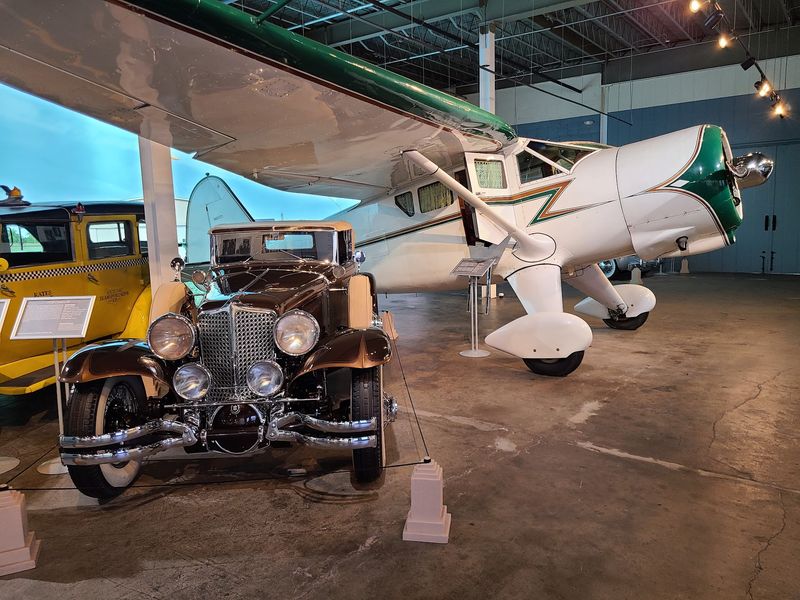
Cars get most of the attention, but a vintage airplane gets its moment too. The museum features a Stinson Junior airplane.
Its history here makes it even better. The plane was exhibited in the building when it first opened in 1930.
That means it’s not just a random extra for variety. It links today’s museum to the showroom’s earliest days.
Planes and cars shared a big moment in the early twentieth century. Both changed how people moved, worked, and dreamed about travel.
Standing near the Stinson helps you see that bigger picture. Speed and style were showing up on roads and in the sky.
Kids may find the airplane a fun surprise in a car museum. It’s an easy conversation starter about early flight and old-fashioned engineering.
Special exhibits have also covered interesting topics. One featured 150 car mascots and hood ornaments from 1911 to 1957.
Exhibits can change, so check what’s showing before your trip. You might catch a themed display you’d otherwise miss.
Before It Was A Museum, Auburn Fought To Save It
Auburn’s car story began with horseless carriages. The Eckhart Carriage Company started making them in town in 1904.
Over the years, the Auburn Automobile Company grew into a famous name. Then it filed for bankruptcy by 1937, closing a major chapter.
The building didn’t sit idle right away. A business selling original and reproduction parts for these brands operated there until 1960.
Later, the community stepped in to protect this piece of Indiana history. The nonprofit Auburn Automotive Heritage, Inc. helped raise money to buy and restore the building.
That effort paid off in 1974. The museum officially opened to the public on July 6 that year.
This history makes the visit feel more personal. People cared enough to save the place where these famous cars were sold and planned.
The Auburn Cord Duesenberg Automobile Museum stands at 1600 S Wayne St, Auburn, IN 46706. Its location keeps the story rooted in the town that helped build it.
Look at the building as a comeback story. It earned its shine twice.
Plan Your Indoor Visit With Ease
Rain, snow, or a scorching afternoon won’t ruin this plan. The museum is open daily from 9 a.m. to 5 p.m.
It closes only on New Year’s Day, Thanksgiving Day, and Christmas Day. That makes it an easy pick for a winter break or holiday-week outing before 2026 ends.
Families get practical help too. The museum is wheelchair accessible and welcomes strollers and service animals.
Changing tables are available in all restrooms. Parents will appreciate that small detail more than any shiny hood ornament.
Docent-led tours are available for an added cost. You’ll need to schedule one at least two weeks ahead.
A guided tour works well for groups wanting deeper stories. Solo visitors can still explore at their own speed.
The paved parking area makes arrival simpler. A newer Education and Exhibit Plaza also has parking for buses, RVs, coaches, trucks, trailers, and cars.
Overnight parking, electricity, and pets are allowed in that plaza area. Road trippers in Indiana can treat it as a handy base for a car-loving day.