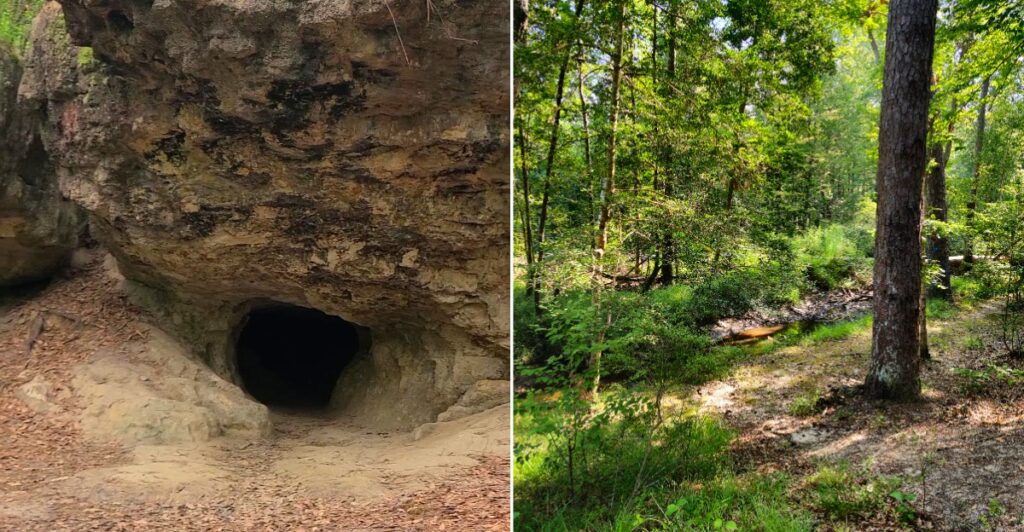
People were ducking under this sandstone overhang around 2500 BC. That makes it the oldest known human shelter in all of Louisiana.
The rock itself is far older, formed from layers laid down 24 to 30 million years ago. Ancient hunters came here to gather chert and shape it into tools. They also camped here for short stays beside a quiet creek.
I like how close it sits to the parking area. The walk takes about five minutes, so nobody needs serious hiking legs. Kids, grandparents, and leashed dogs can all make the trip.
Then there are the stories. Outlaws, wolf puppies, and Civil War rumors all cling to these rocks. I can’t imagine a better way to spend an afternoon in the pines, can you?
Ancient Toolmakers Treated These Rocks Like A Hardware Store
Around 4,500 years ago, people needed good stone for sharp tools. They found it right here.
Archaeologists call Wolf Rock Cave a lithic procurement area. In plain words, it was a place to gather chert for crafting tools.
Chert is a hard stone that breaks with sharp edges. Skilled hands could turn it into points, scrapers, and cutting tools.
The Late Archaic people who came here lived roughly from 2500 to 1000 BC. They were hunter-gatherers who moved with the seasons and the food supply.
Artifacts linked to Archaic Indians show how varied their lives were. The list includes stone tools, bone needles, fishhooks, beads, and hairpins.
Antler tools and grinding stones also appear in that record. Each object hints at sewing, fishing, cooking, and even a little personal style.
I love thinking about those early craftspeople working beside the creek. They chose this spot for practical reasons, and their choice still teaches us today.
If you enjoy history that feels hands-on, this is it. The rocks around you were once raw material for survival.
You Are Looking At Louisiana’s Only Known Natural Rock Shelter
Wolf Rock Cave is within the Vernon Unit of Kisatchie National Forest near Leesville, Louisiana. Approach the forest access roads toward Parish Road 455 and the Wolf Rock trail area rather than heading into downtown Leesville.
The cave is a short walk from the designated forest parking area along Bundicks Creek. The wooded creek corridor is the most useful natural landmark, and the terrain is rougher than a paved park path.
Leave your vehicle only at the authorized trail access point and follow the established footpath toward the rock shelter. Confirm current road and trail conditions with the ranger district before visiting.
Short Stays Under Stone Made Life A Little Easier
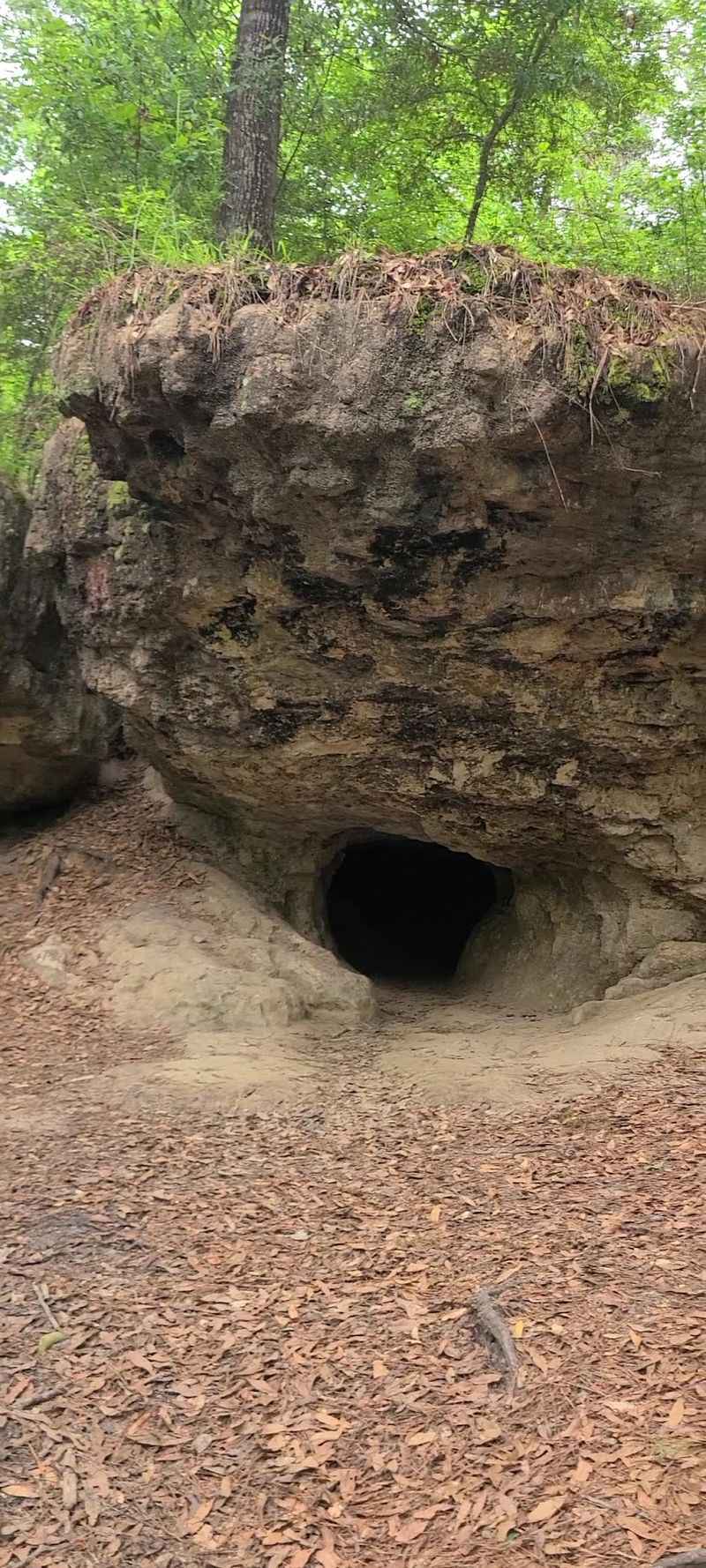
A roof of solid rock beats a pile of branches any day. Early people clearly agreed.
Besides gathering chert, Archaic visitors used Wolf Rock Cave as a small habitation site. Evidence suggests they stayed for short periods rather than settling in for good.
That fits the hunter-gatherer way of life. Groups moved often, following game, fish, and wild plants through the year.
A dry overhang beside Bundick’s Creek offered real perks. There was water close by, shelter from rain, and stone for tools all in one place.
Honestly, it sounds like the ancient version of a well-stocked campsite. Location really was everything, even thousands of years ago.
When you stand at the shelter today, try looking at it through their eyes. Notice how the rock shields the space and how the creek runs just below.
Those small details suddenly make a lot of sense. You start to see why people kept coming back.
It’s a quiet reminder that comfort and convenience mattered long before modern houses. Good real estate never goes out of style.
Thirty Million Years Of Slow Sculpting Built This Spot
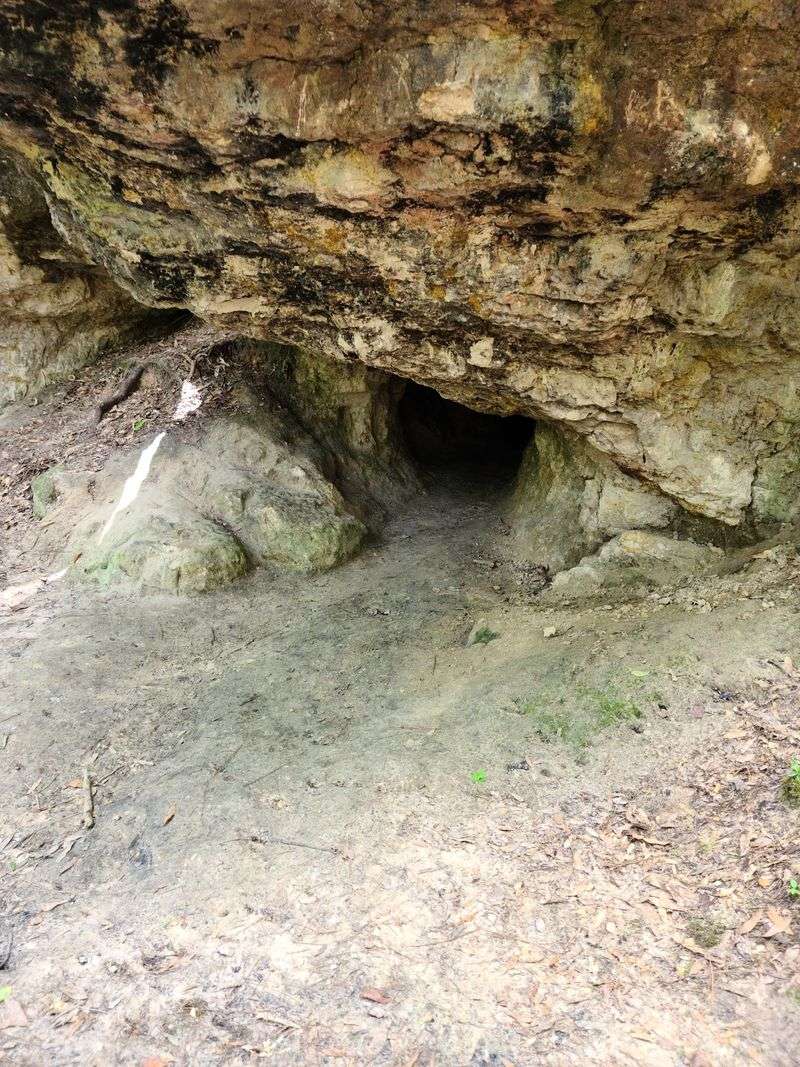
Long before any human arrived, nature was already busy carving. The work took millions of years.
Wolf Rock Cave formed through erosion acting on the Catahoula Formation. This geological layer holds sandstones, sands, clays, and conglomerates.
Those layers were deposited 24 to 30 million years ago. That puts their origins in the Oligocene period, a stretch of time almost too big to picture.
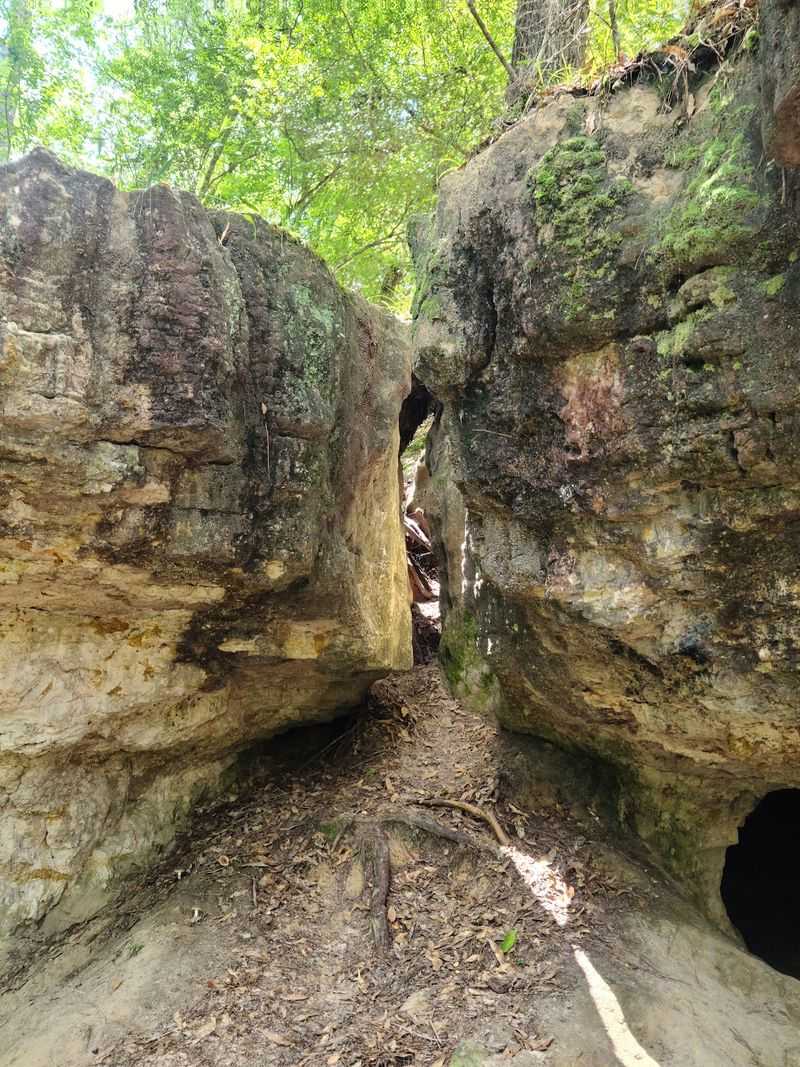
Water and weather slowly wore away softer material. Tougher rock stayed behind, leaving the overhangs you can see today.
Here’s a fun way to think about it. The rock had a head start of millions of years before the first toolmaker ever showed up.
Take a close look at the stone when you visit. Layers and textures tell part of the story without saying a word.
An informational sign at the trailhead helps explain the area. It’s worth a quick read before you head down to the shelter.
Kids especially might enjoy hunting for different textures in the rock. Just remember to look and touch gently, since this place is irreplaceable.
Wolf Puppies, Outlaws, And Rumors Give The Cave Its Legend
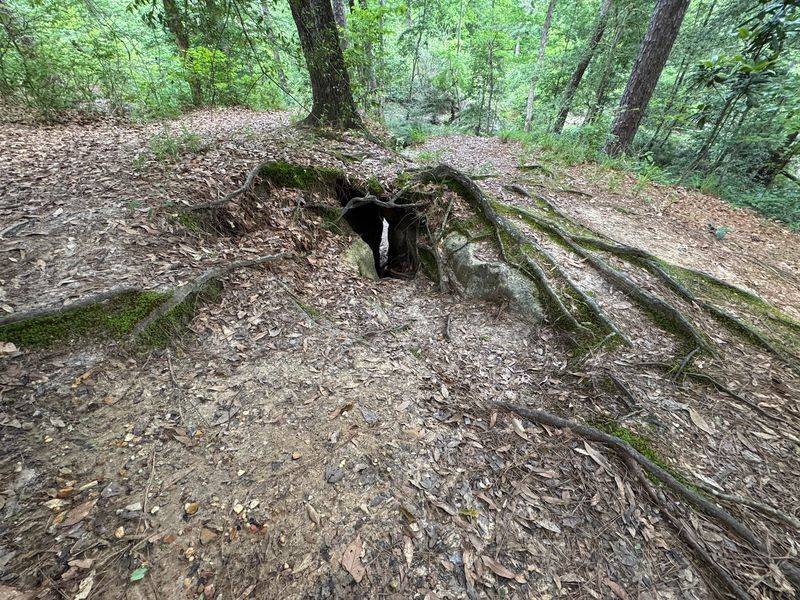
Two pioneer boys named Bailey went fishing and heard something whimpering. According to the story, they followed the sound and found wolf puppies inside the cave.
That tale is how Wolf Rock Cave reportedly got its name. It’s charming, a little spooky, and easy to picture as you approach.
Local legends don’t stop with wolves. Some stories claim the outlaw John Murrell hid here, and possibly even Jesse James.
Another rumor says the cave served as a Union barracks and garrison during the Civil War. Horses and supplies were supposedly hidden away nearby.
Are these stories true? Nobody can say for sure, so treat them as folklore rather than fact.
Still, legends tell you how much a place meant to the people around it. This one clearly captured imaginations for generations.
During the 1950s and 1960s, the cave was a popular spot for local hunters, fishers, and teenagers. It’s easy to see why the stories kept spreading.
Share a legend or two with your group on the walk. It makes the shadows under the rock feel extra mysterious.
Some Back Rooms Got Sealed, But The Main Chamber Still Waits
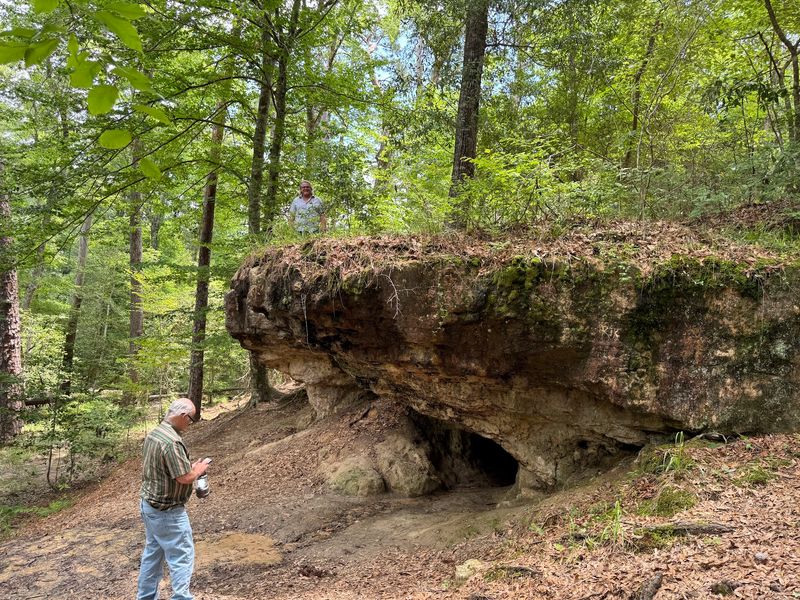
In the 1970s, the U.S. Forest Service took jurisdiction over the cave. Officials decided some of the back rooms were unstable.
Their solution was dramatic. They used explosives to seal off those risky areas for good.
The good news is that the main chamber remains accessible. You can still see the heart of Wolf Rock Cave up close.
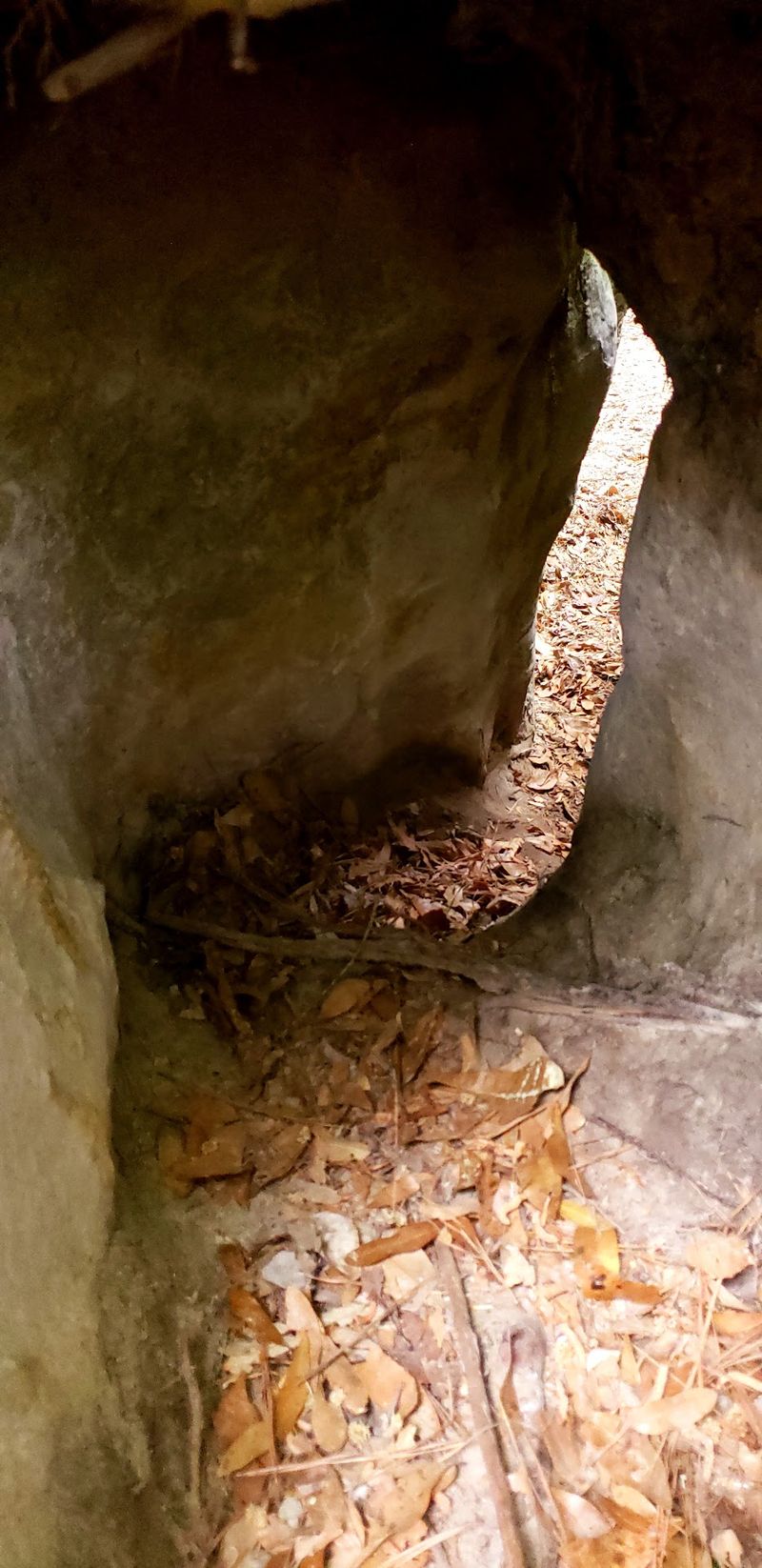
Expect a shallow, low space rather than a walk-in tunnel. Much of it is more crawl than stroll, so tall visitors may be doing some creative bending.
A small flashlight helps if you want a better look inside. Clothes you don’t mind getting dusty are also a smart call.
Please treat the space with respect while you explore. This is a protected archaeological site, not a playground.
Stay out of any closed areas and avoid digging or moving rocks. Those rules protect both you and the clues that remain.
Honestly, the sealed rooms add to the mystique. What was back there? Your imagination gets to fill in the blanks, and that’s half the fun.
A Five-Minute Walk Is All That Stands Between You And History
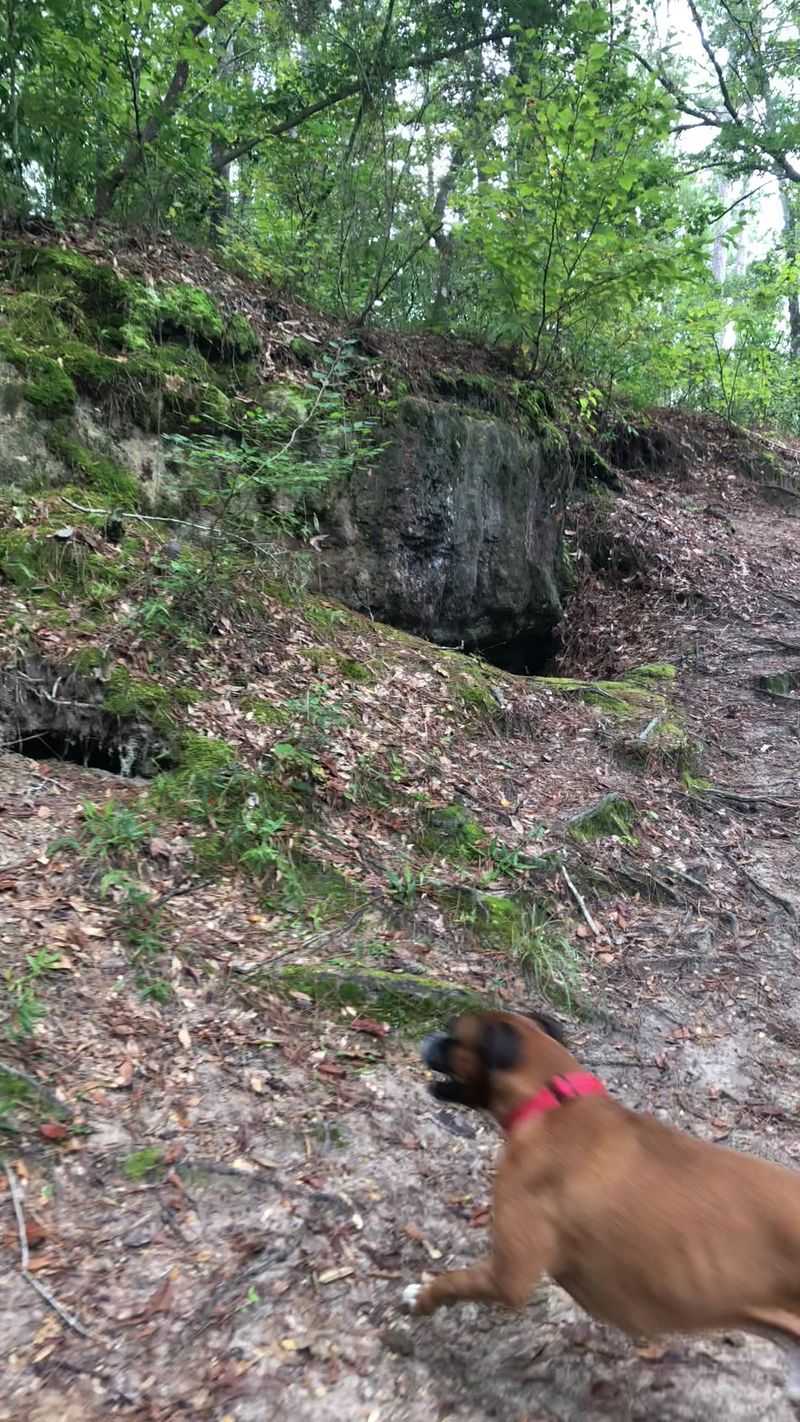
Good news for anyone who dreads long hikes. The walk from the parking area takes roughly five minutes.
That short stroll makes the site friendly for families. Young kids and older visitors can usually manage it without trouble.
Dogs are welcome too, as long as they stay leashed. Your pup gets an adventure, and the wildlife stays undisturbed.
The terrain near the cave does get rugged, though. Wear shoes with good grip, because sandals and slick soles won’t do you any favors.
Watch your footing on slopes close to the creek. Uneven ground can catch you off guard if you’re busy staring at rocks.
Look for the informational sign at the trailhead before you start. It gives helpful background that makes the shelter more meaningful.
Since the walk is so quick, you’ll have plenty of time to linger. Sit for a while, listen to Bundick’s Creek, and soak in the forest.
It’s the rare historic site where the best part arrives before you finish your water bottle. Easy access, big payoff.
Pack Smart, Because The Forest Provides Zero Extras
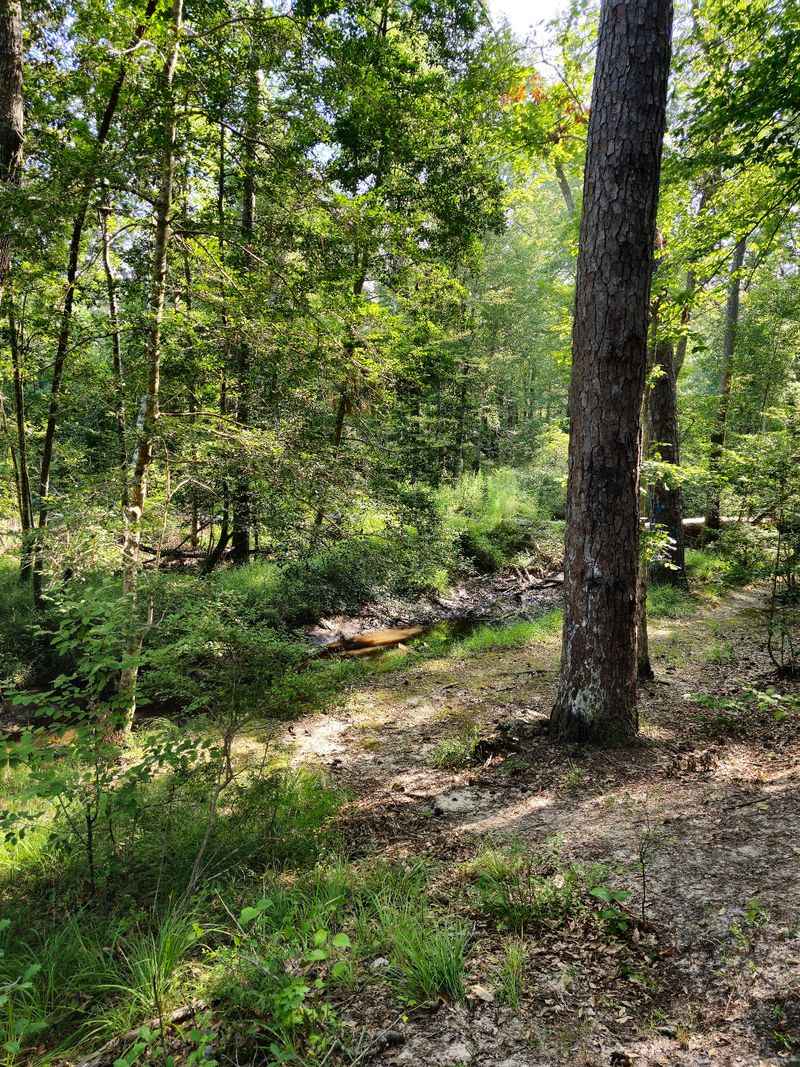
No restrooms, no benches, and no trash bins. That’s the deal at this rustic site.
Plan your pit stop before you arrive. There are no facilities at the parking area or along the trail.
Bring a small bag for your trash and carry everything back out. Visitors are expected to pack out all waste, every wrapper included.
Leaving a place cleaner than you found it is a great habit. Picking up a stray bit of litter helps protect this special spot for the next family.
Water is a must, especially during warm months in Louisiana. The forest can feel steamy, even under the shade of the trees.
Bug spray is another smart addition with a creek running nearby. A flashlight will help if you plan to peek into the shelter.
Snacks are fine, but keep crumbs and wrappers with you. Wildlife doesn’t need your leftovers.
A little planning turns this trip from okay into great. Think of it as being a good guest in a home that’s thousands of years old.
Gravel Roads And Pine Woods Lead The Way In
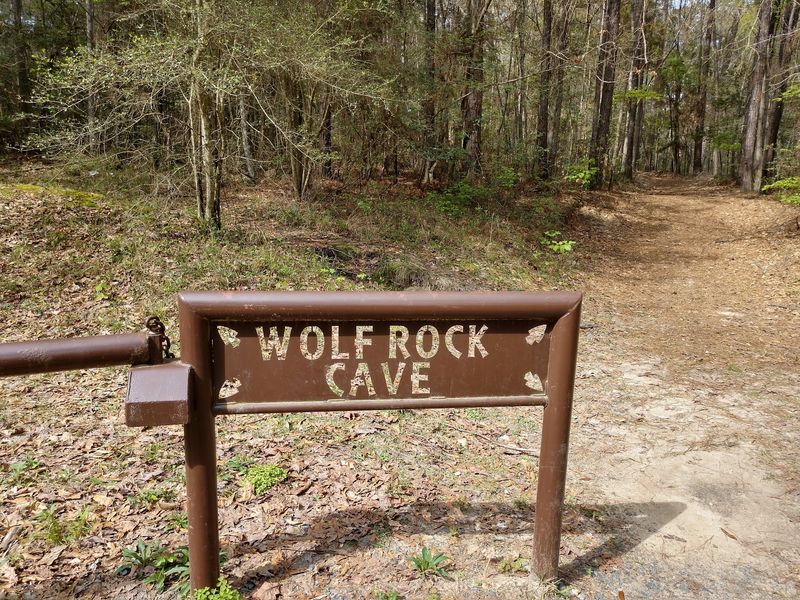
Paved roads eventually give way to gravel on the approach. That’s your sign you’re getting close.
The site is listed at Wolf Rock Cave, Vernon Unit of Kisatchie National Forest, Parish Road 455, Leesville, Louisiana 71446. GPS may also show it under nearby Johnsonville Road.
From Rosepine, head east on Bailey Road. Turn left onto Parish Road 455, also called Providence Road.
Stay on it until the pavement ends. Then follow the gravel road to the parking area.
Coming from Highway 171 in Pickering, take LA-10 east about 4.6 miles. Turn right at the caution light and stay on LA-10 for about 1.7 miles.
Next, turn right onto FS Road 421 for about 0.1 mile. Then go left on FS Road 403 for about 2.3 miles to the parking area.
Want current road conditions? The Calcasieu Ranger District office in Boyce can help.
Wet weather can make gravel roads tricky, so drive slowly. The site is open year-round, so cooler months make a pleasant time to explore this slice of Louisiana history.