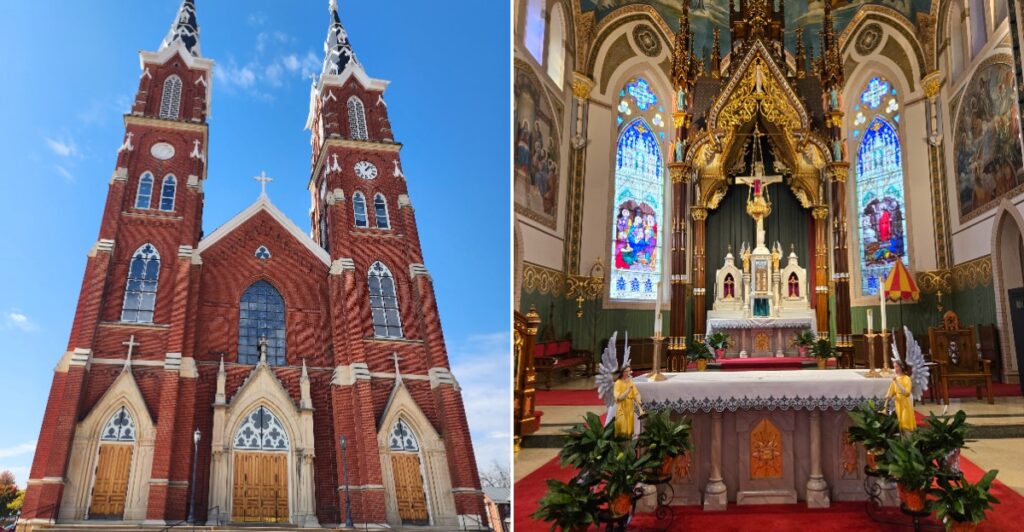
Pilots have used a pair of church spires as landmarks over the farm fields. Each one rises 212 feet, then adds a 14-foot cross on top for good measure.
That alone would earn a detour in Iowa. But the inside holds 64 large windows installed in 1889, plus a high altar of Italian marble and Mexican onyx.
The honors are just as big. In 1956, Pope Pius XII named this church a minor basilica, making it only the twelfth in the country.
It is one of only two basilicas in Iowa, and its setting in a small farming town makes the honor even more remarkable.
I appreciate places that refuse to act small just because their zip code is. For me, a Gothic giant rising out of cornfields sounds like a very good reason to pull off the highway.
So how did a farm town end up with something this grand?
A Pope Gave This Farm-Country Church A Rare Promotion
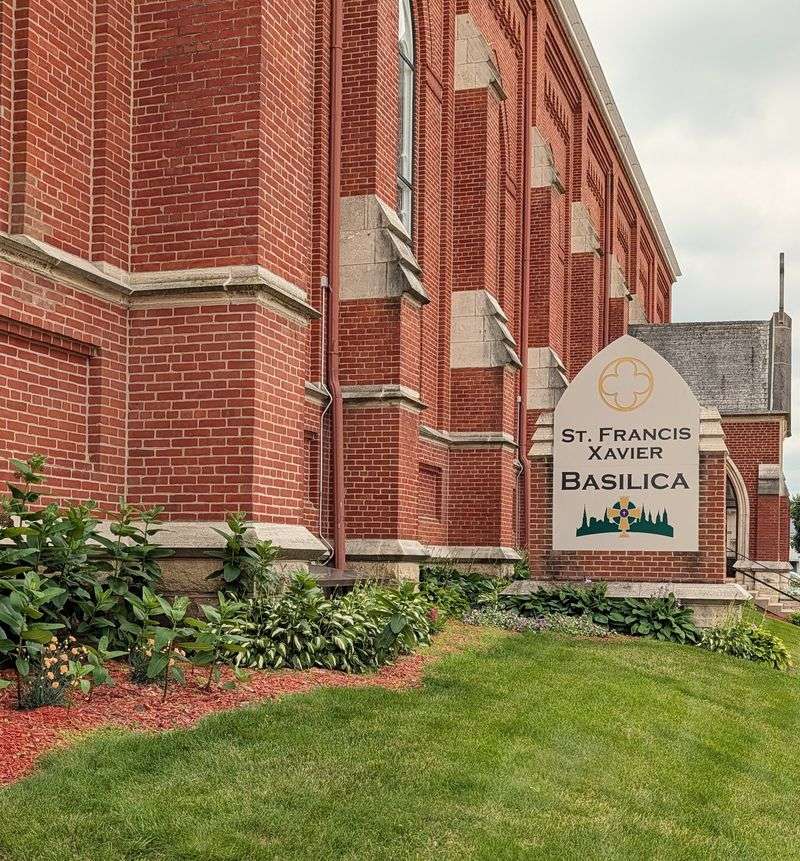
Very few churches get a title upgrade from the Vatican. The Basilica of St. Francis Xavier in Dyersville, Iowa, got one on May 11, 1956.
Pope Pius XII raised the church to the rank of minor basilica that day. It became only the twelfth church in the United States to earn the honor.
Today, the country has 94 minor basilicas. Many sit in big cities with skyscrapers for neighbors.
This one stands in a small farming community, making its grand architecture particularly striking.
That makes the setting part of the fun. You’re not fighting city traffic or hunting for a parking garage.
You’re in a friendly small town where the church simply owns the skyline.
Iowa only has two basilicas in the whole state. This one happens to be the one surrounded by rolling farmland instead of downtown blocks.
The parish itself dates back to 1859. Its first church opened in 1862 and doubled in size by 1869 as the Catholic community kept growing.
Those early families clearly had big plans. Within a few decades, they were ready to build something far more ambitious.
The result still makes first-timers stop on the sidewalk and stare straight up.
Those Twin Spires Can Spot You Before You Spot Them
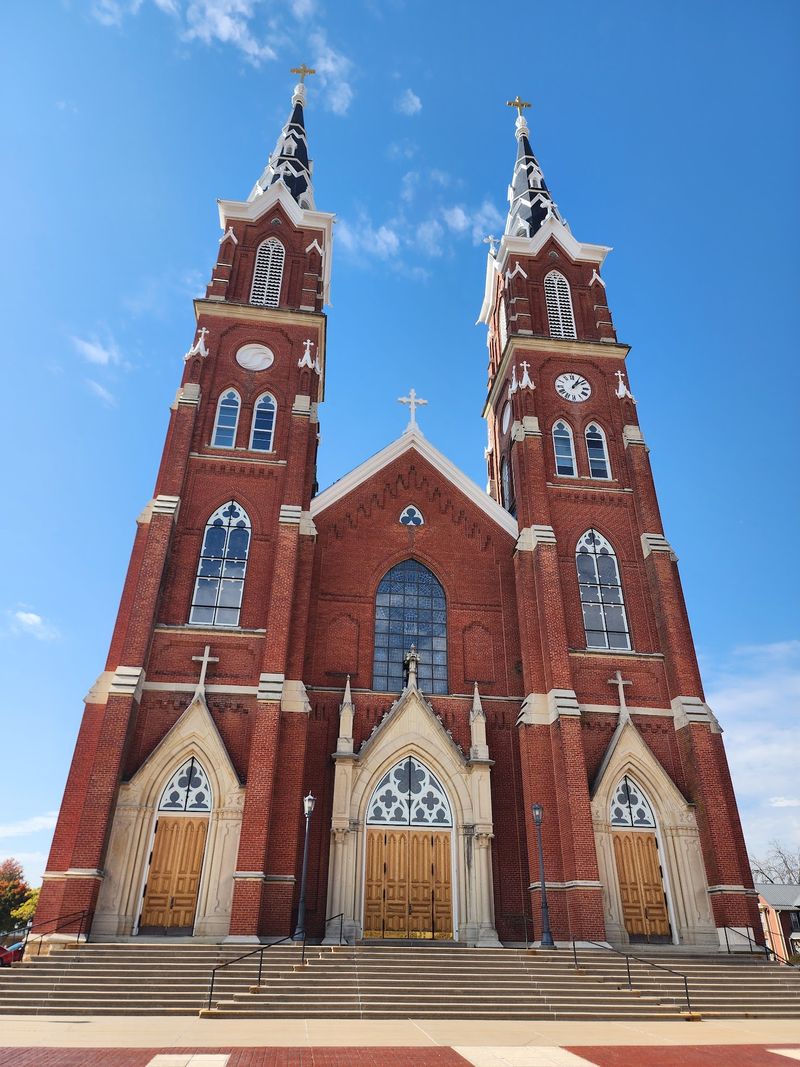
Two steeples, 212 feet each. Add a 14-foot cross on top of both, and you get a skyline that farm fields simply can’t compete with.
The spires are visible for miles across the surrounding countryside. Pilots have used them as landmarks, which is a pretty great job for a church tower.
For drivers, they work like a built-in GPS. Head toward Dyersville and keep your eyes up.
The towers usually announce the town long before any welcome sign does.
Photographers should plan a few extra minutes here. Shooting from a block or two away helps fit both spires into one frame without tilting your phone sideways.
The main building is no shrimp either. It measures 174.5 feet long, 70 feet wide, and 76 feet high.
Pair those numbers with the steeples, and the scale starts to make sense. This was built to be seen and remembered.
Here’s a fun way to judge the height. The spires stand taller than many grain elevators across the region.
In a state known for tall silos, that’s a bold flex for a building started in 1887.
Gothic Style Landed In Iowa And Decided To Stay
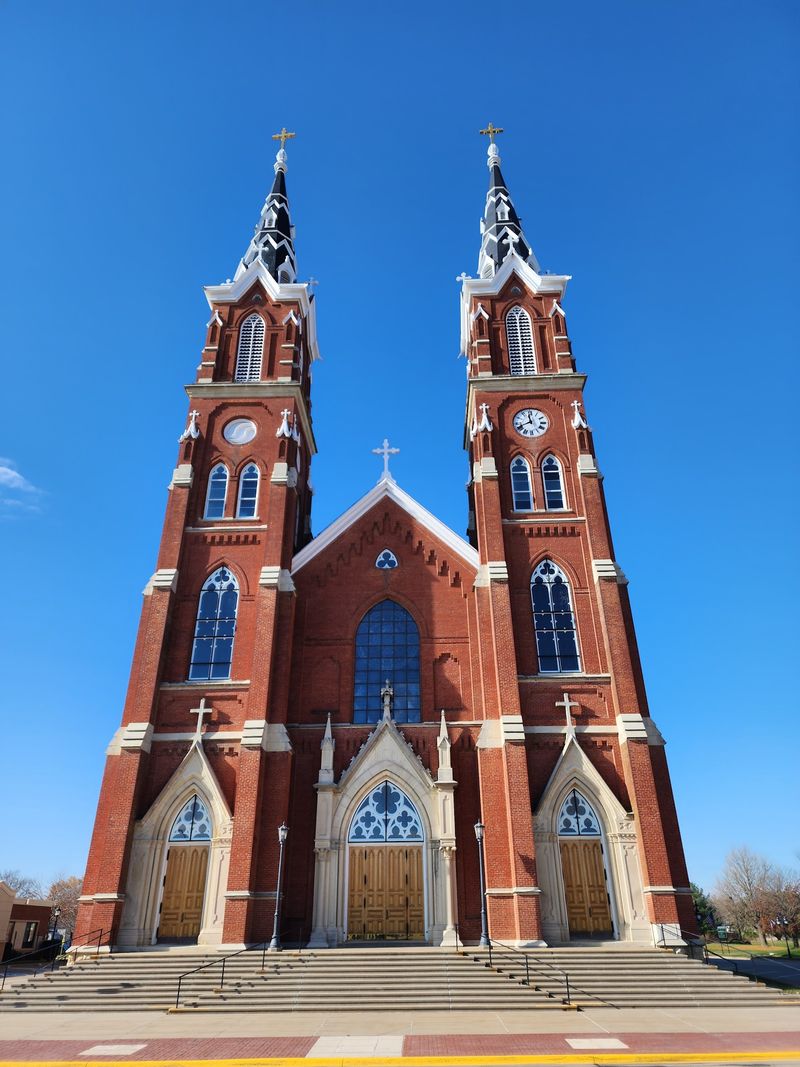
Ruskinian Gothic Revival is a mouthful. In plain terms, it means pointed arches, soaring lines, and plenty of colorful detail inspired by medieval European churches.
The basilica is considered one of the finest examples of Gothic architecture in the Midwest. That’s high praise in a region full of proud old churches.
Construction began in September 1887. The cornerstone went down on June 3, 1888, and Bishop John Hennessy dedicated the finished church on December 3, 1889.
The original price tag came to roughly $100,000. That was a huge sum for a rural parish in the 1880s, so the community clearly went all in.
Take your time on the outside before heading in. Notice how the arches pull your eyes upward toward the towers.
That vertical pull is a classic Gothic trick. Builders wanted visitors to feel small and to look up.
History buffs will like this extra detail. The church and its 1935 rectory were listed together on the National Register of Historic Places in 1999.
So the building isn’t only pretty. It’s officially recognized as part of the nation’s architectural story, which feels fitting for something this ambitious.
Look Up, Because The Ceiling Deserves Your Attention
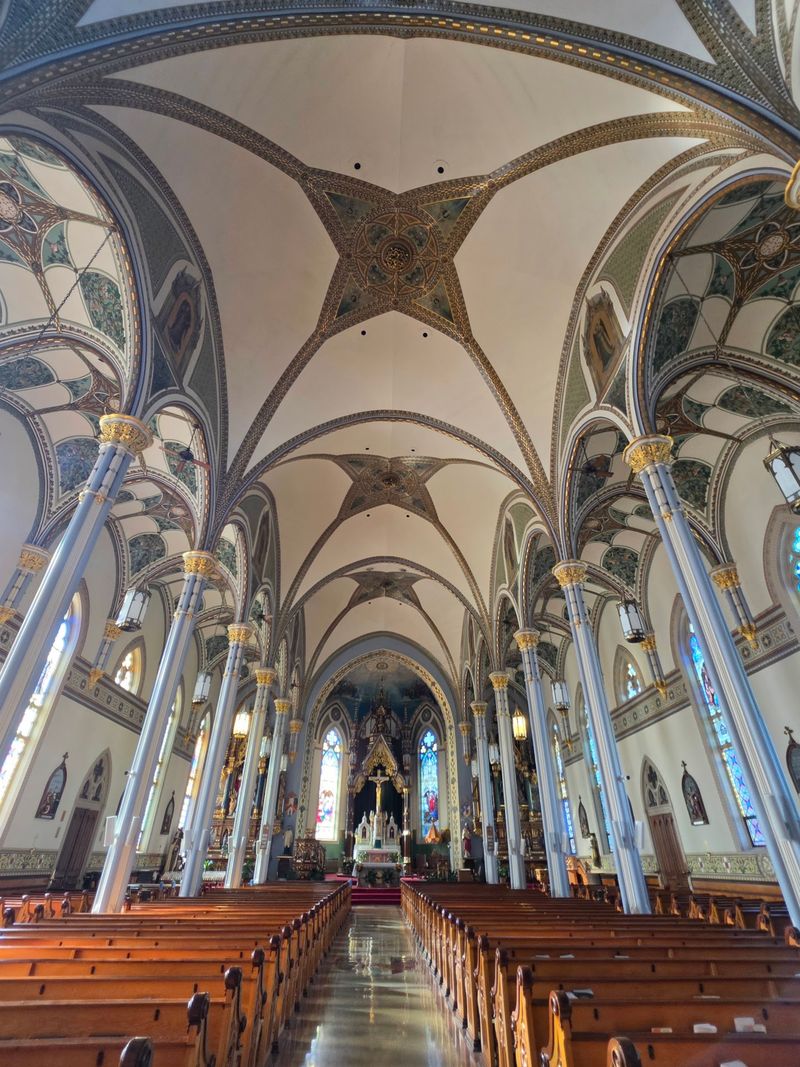
Neck strain is a real risk inside this place. The vaulted ceilings and tall columns practically demand that you tilt your head back.
Much of the decorative painting came from Milwaukee artists Clotilda and Alphonse Brielmaier. They completed the work between 1904 and 1905.
Over a century later, that artwork got some careful attention. A restoration in 2000 and 2001 brought the painted details back to life.
The basilica underwent extensive restoration work during that period. Clearly, the parish takes care of what earlier generations built.
The space is roomy too. Seating capacity runs somewhere between about 1,000 and 1,285 people, which is a lot of pews for a small town.
A tip for first-timers: walk slowly down the side aisles. You’ll catch details on the columns and arches that are easy to miss from the back.
Then find a pew, sit for a minute, and simply look. The ceiling patterns reward patience.
Watch for the ceremonial Umbrella and Basilica Bell, displayed on poles. Those two symbols mark a church’s basilica status, and spotting them feels a little like finding a secret badge.
Sixty-Four Windows Make Sunshine Do Extra Work
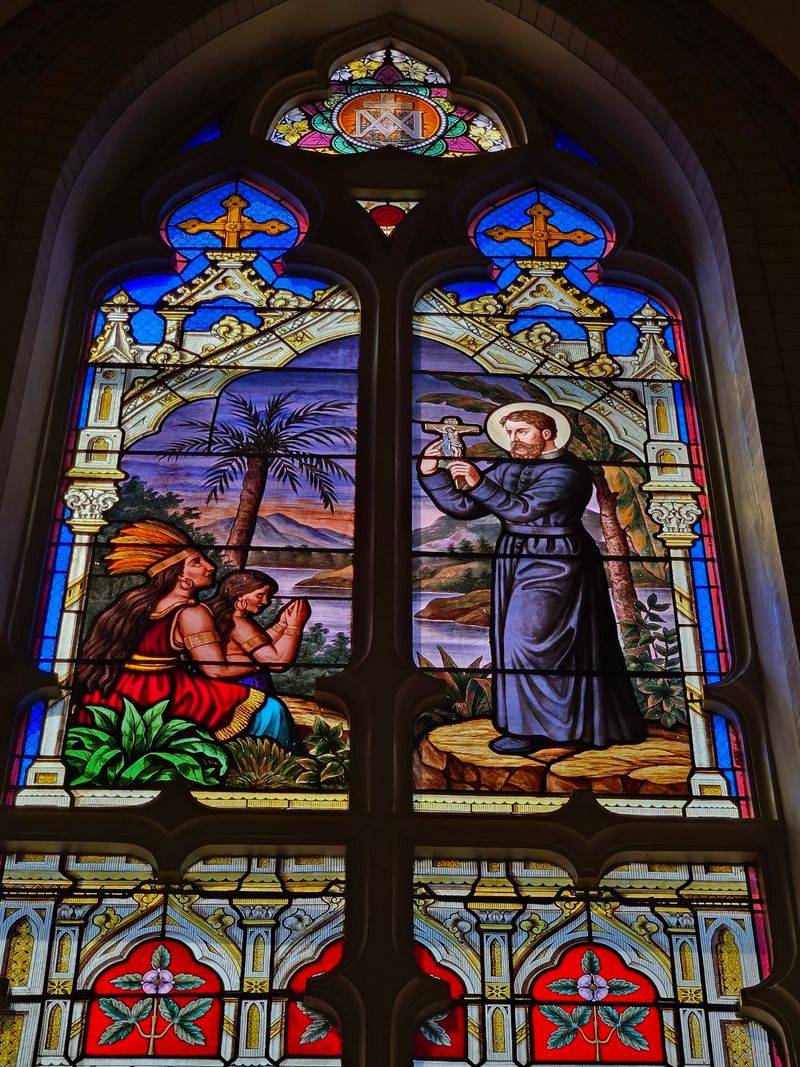
Count the windows if you dare. There are 64 large cathedral glass windows here, and they’ve been in place since 1889.
Ten of them show scenes from the life of Christ and His saints. The rest feature geometric designs, which give the room a steady rhythm of color.
Bright days are the best time to notice them. Sunlight passing through the glass changes how the whole interior feels from hour to hour.
Then turn toward the main entrance and look high. A rose window with a Native American motif sits above the doors.
That window arrived much later, in 1959. It’s a striking addition and a reminder that this building kept growing even after its dedication.
Families with kids can turn this into a small game. Ask them to find the ten picture windows among all the geometric ones.
It keeps young eyes busy and teaches them to look closely. Grown-ups might find it oddly satisfying too.
Bring a camera, but keep your visit respectful. People do come here to pray, so a quiet click beats a full photo shoot.
Your best shots may simply come from standing still and waiting for the light.
Marble, Onyx, And A Canopy Taller Than Most Houses
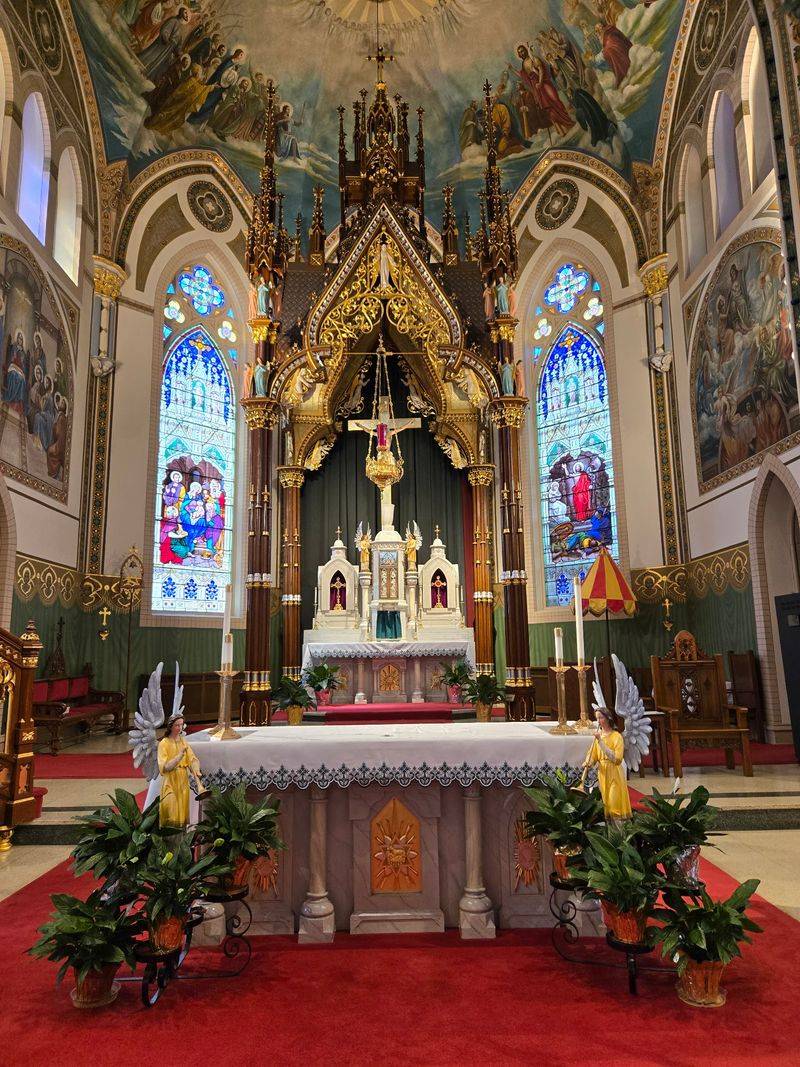
Fifty-two feet of carved butternut wood rises over the high altar. That canopy, called a baldacchino, frames the crucifix like a giant wooden crown.
The high altar itself is made from Italian marble and Mexican onyx. It rests on a solid rock foundation, which sounds appropriately serious.
Above the altar hangs a wood-carved crucifix from 1873. It came from the parish’s first St. Francis Xavier Church, linking the grand new building to its humble start.
Two side altars add even more craftsmanship. Each measures 36 by 15 feet and is also made of butternut wood.
One honors Mary with a theme called The Coronation. The other honors Joseph with The Holy Family.
Woodwork fans, don’t skip the confessionals either. Two carved butternut confessionals, built by the Dubuque Altar Company, were installed in 1897.
That’s a lot of one wood species in one room. Butternut is a softer, warm-toned hardwood, and here it shows up again and again.
Stand near the front and compare the stone of the high altar with the carved wood around it. The contrast is part of what makes the sanctuary feel so rich and layered.
Catch A Mass And Let That Big Organ Fill The Room
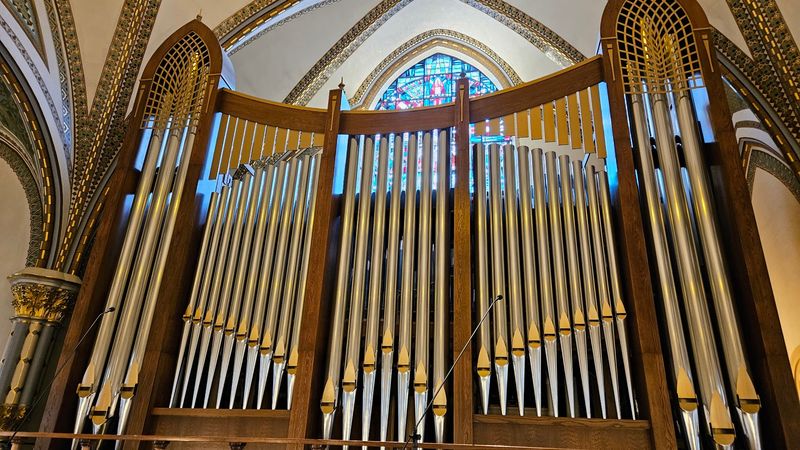
Music changes a building. In 1971, the basilica installed a 37-rank Wicks Organ, and a space this tall gives sound plenty of room to travel.
Attending Mass is the simplest way to experience the church fully. Weekday and Sunday Masses are offered, with current service times published through the parish.
The weekend schedule includes Saturday at 4:30 p.m. Sunday Masses are at 8:30 a.m. and 10:30 a.m.
Schedules can shift around holidays and special events. Check with the parish before you build your whole trip around a time, especially if you are looking for a service in a particular language.
Quiet prayer is part of life here too. The basilica offers Eucharistic adoration year-round, including Friday from 7:30 to 8:30 a.m.
Not Catholic? Visitors are welcome to come in and sit quietly.
Simple manners go a long way. Silence your phone, keep voices low, and hold off on photos during services.
If you’re a church-architecture fan, a Mass also shows the building doing its actual job.
A grand Gothic interior makes the most sense when it’s used for worship, with music, voices, and people filling those long rows of pews instead of just tourists admiring them.
Plan Your Visit Without Any Guesswork
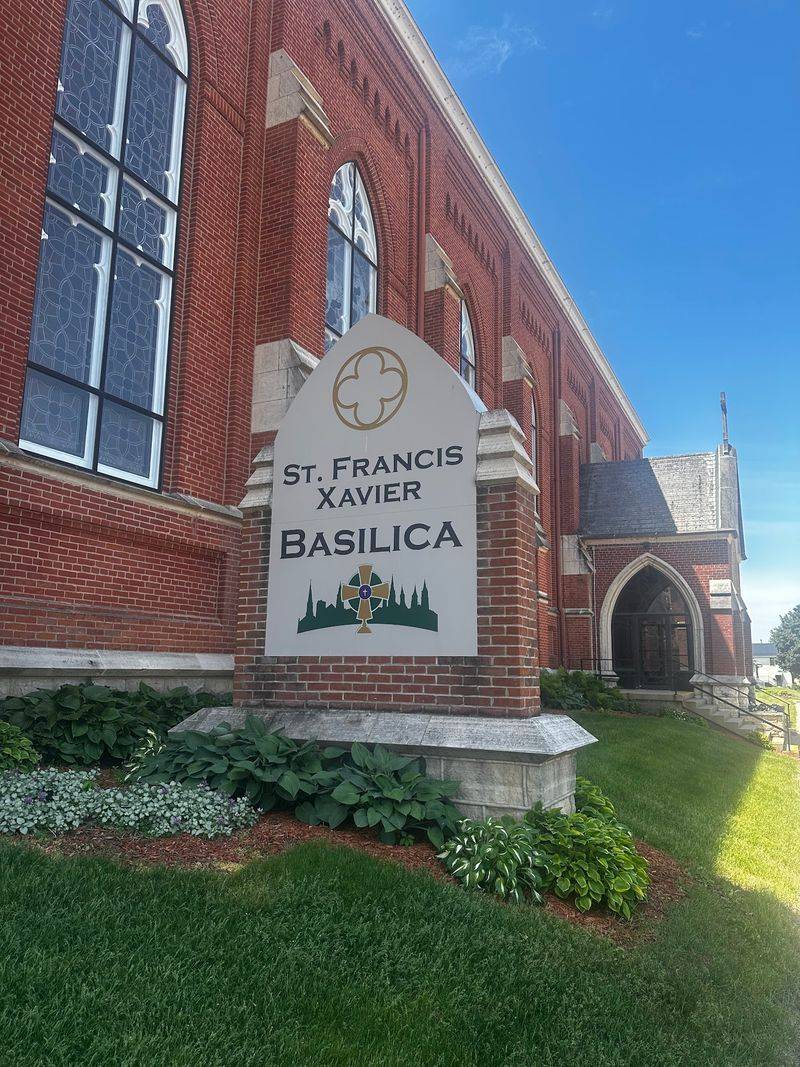
Good news for road-trippers: you don’t need a reservation to look around. The basilica welcomes individual visitors for prayer and quiet visits.
Head to 104 3rd St SW, Dyersville, IA 52040. The side doors are normally open daily from 7 a.m. to 8 p.m., though special events may affect access.
Inside, look near the back pew for self-guided walking tour brochures. They help you match names and dates to what you’re seeing.
Traveling with a crowd? Group tours can be arranged through the parish office.
Call at least one week ahead to set one up. Ask about any applicable group-tour donations or other arrangements when booking.
Solo visitors can take things at their own pace. Thirty minutes covers the highlights, but detail lovers could easily linger longer.
Comfortable shoes help, since you’ll want to circle the outside too. The spires look different from every corner of the block.
One more tip: keep weekend services in mind when timing a casual stop. Walking around during Mass isn’t ideal.
Arriving between services gives you the freedom to explore the aisles, read the brochure, and soak in every carved and painted corner.
Pair It With A Famous Baseball Field For One Great Day
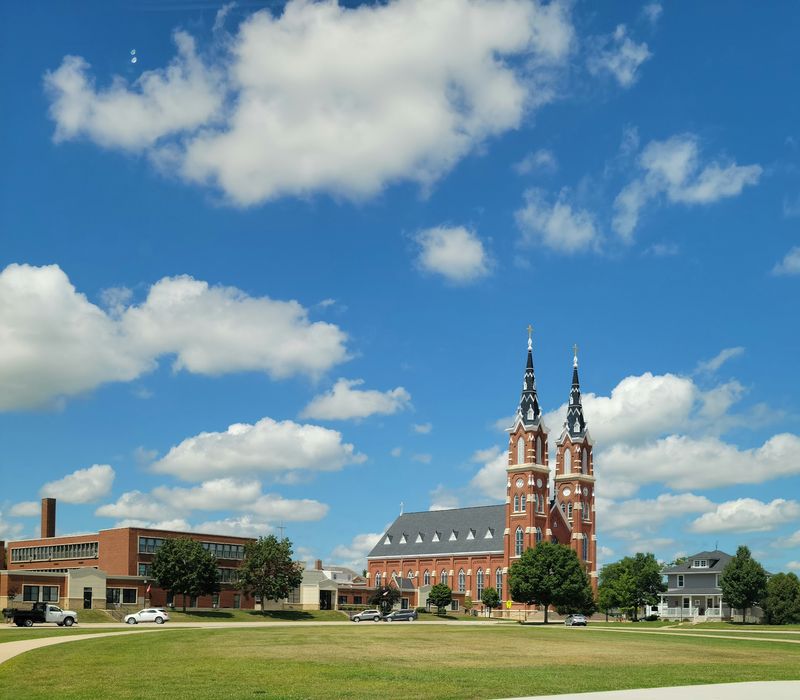
Baseball and a basilica make an unexpectedly perfect duo. Dyersville is also home to the Field of Dreams movie site, and the two stops fit easily into one outing.
Many travelers visit the basilica as part of a trip to the famous field. Catholic pilgrims come too, which makes for a nice mix of reasons to show up.
Here’s an easy plan for the day. Start with the ball field and its cornfield backdrop, then head into town for the church.
The basilica makes a calm counterpoint after time outdoors. Sitting in a quiet pew feels pretty good after wandering around a sunny diamond.
Dyersville gives Iowa travelers a lot of personality for one small town. Few places can offer movie history and a papal honor within a short drive of each other.
Bring the whole crew. Sports fans, history lovers, and architecture nerds all get something to talk about on the ride home.
So if your road trip map already has a dot on Dyersville, give yourself extra time. The Basilica of St. Francis Xavier is the kind of stop that turns a quick detour into the highlight of the day.