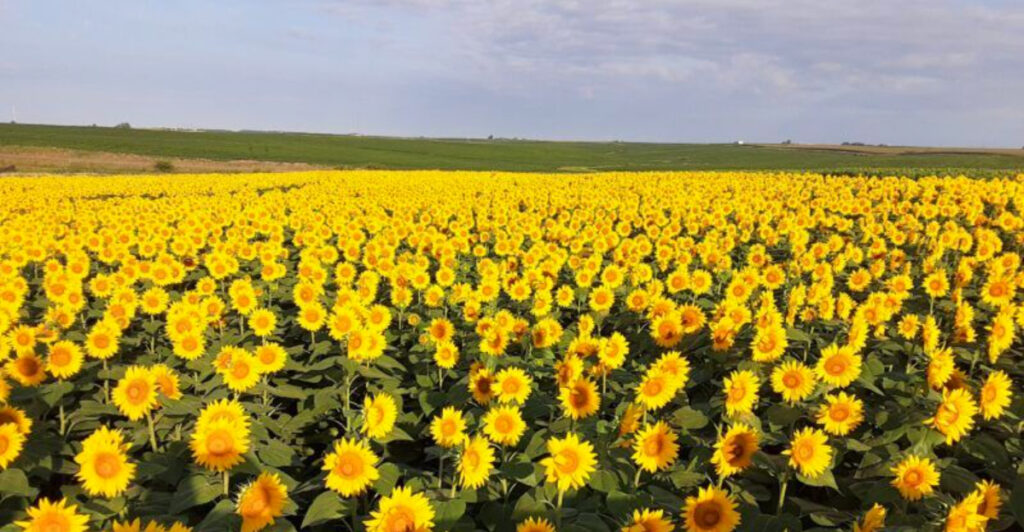
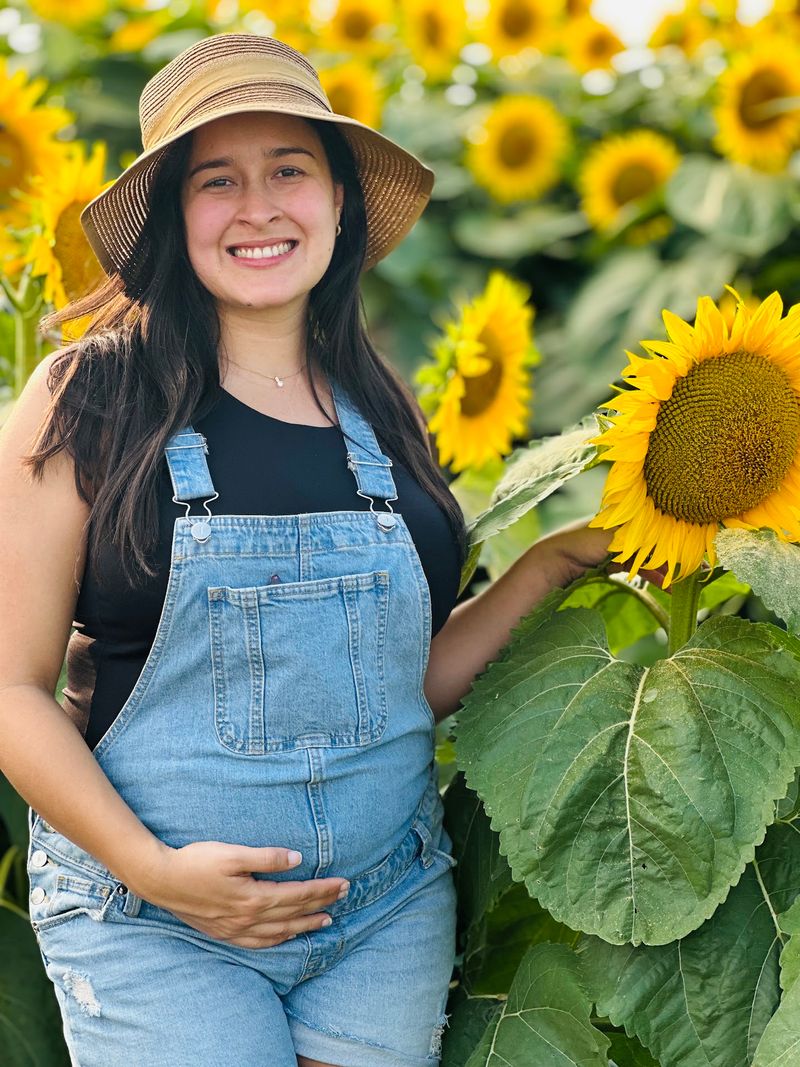
For most of the year, this looks like working Iowa farmland. Then late summer arrives and suddenly whole sections of it turn yellow, burgundy, pink, and red.
Sunflowers rise over mown paths, cutting gardens fill with dahlias and zinnias, and visitors wander with clippers deciding which bloom deserves the ride home. Staggered plantings keep the color coming well into the stretch when other fields are already starting to fade.
The best view may be from one of the platforms near evening. From up there, the rows stop looking like individual flowers and become one enormous patch of color glowing in the last light.
A Family Farm That Traded Hogs For Blooms
Ann and Eric Franzenburg started farming in 1992, and their early years looked nothing like the fields I walked through. Row crops.
Farrow-to-finish swine. Practical Iowa agriculture.
Diversification came slowly and in stages: culinary herbs first, then medicinal herbs, then fresh produce, and finally cut flowers. That last pivot changed everything about how the public sees the property.
The Sunflower Experience opened in August 2019, and a public flower-cutting operation followed in 2020. What started as a smart way to use their acres turned into a seasonal draw that pulls carloads of people down gravel roads every August.
I liked hearing that history while standing in the middle of it, because it explains the tone of the place. Nobody is pretending this is an amusement park.
It is a working farm that decided to invite the neighbors in.
You will find Pheasant Run Farm – Sunflower Experience at 7310 13th Ave, Belle Plaine, IA 52208, roughly between Cedar Rapids and Des Moines on the map. The turnoff is unremarkable, which somehow makes the first glimpse of yellow more fun.
Mown Paths Through Five To Ten Acres Of Yellow
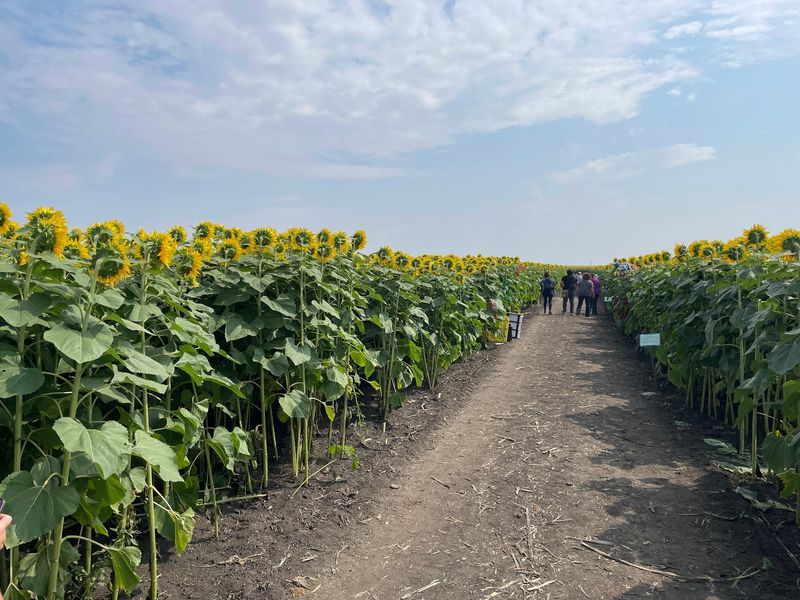
Five to ten acres of sunflowers sounds like a number until you are standing inside it.
The mown paths are wide enough for two people, and the stalks close in overhead in places, so you lose sight of the parking area within a minute.
Most of the blooms reached well above my head. I am five foot nine and spent a lot of time looking up at the backs of flower heads.
Worth knowing before you go: sunflowers face the direction they face, and it is not always toward you. One honest thing I noticed is that the rows nearest the entrance can look tired late in a bloom cycle, while sections deeper in are still fresh.
So keep walking. The good pockets are usually past the point where you assume you have seen it all.
Sound is part of it too. Leaves the size of dinner plates rattle when a breeze moves through, and bees work the heads constantly without paying you any attention.
Give yourself an hour minimum. Two if you are the type who stops every ten feet.
Cutting Your Own Sunflower To Take Home
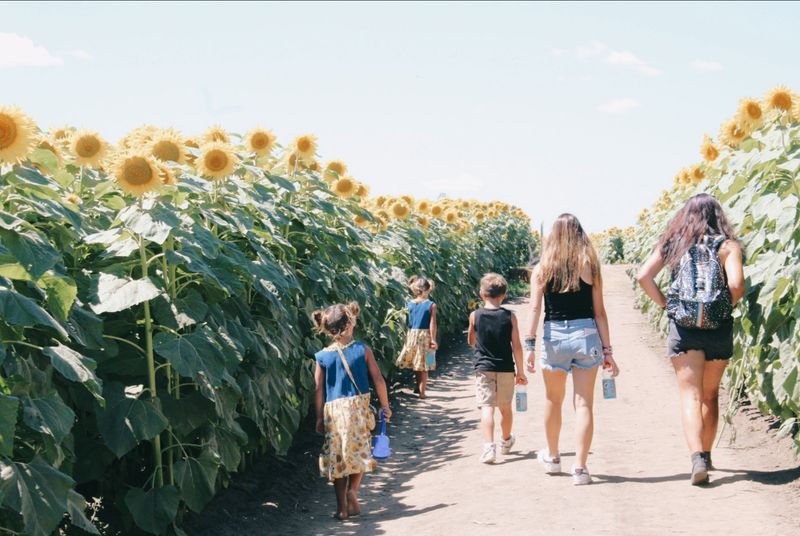
Admission normally includes one sunflower you cut yourself, and that small detail changes how you walk the field. Instead of drifting, you start scouting.
I compared roughly forty flowers before committing. Petal condition, stem strength, whether the center had that clean dark ring or looked past its prime.
Extra blooms have run around two dollars each in past seasons, and there have been options for unlimited cutting when the fields allow. Prices and details shift year to year, so check ahead rather than assuming.
Practical tip from personal error: bring a bucket or a tall cup with a little water for the ride home. A cut sunflower stem in a hot car does not hold up well on a forty-minute drive.
Cut lower than you think you need to. You can always trim at home, and a longer stem gives you more options for a vase.
Kids take this part seriously in the best way. I watched one boy reject a perfectly good flower because it was, in his words, looking the wrong direction, and honestly he had a point.
The Cutting Garden And Its Wilder Colors
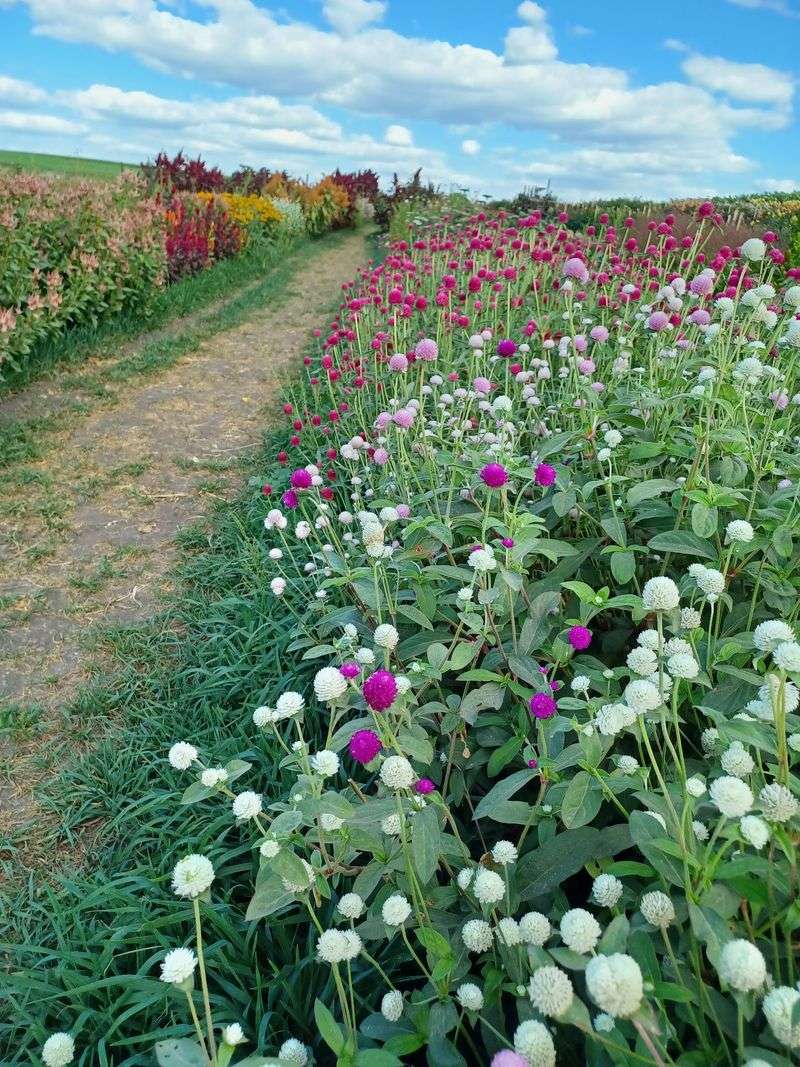
Sunflowers get the headlines, but the cutting garden is where I lost track of time.
Early to mid July onward, those rows fill with zinnias, celosia, gladiolas, lilies, dahlias, and filler flowers you almost never see in a grocery store bucket.
The farm hands you clippers and a cup, and the cup is the measurement. In past seasons that has worked out to somewhere around twenty-five to thirty-five stems depending on how thick your choices are.
My advice: build your bouquet like a real florist would. Pick a few tall spiky things first, then round blooms, then something small and airy to fill the gaps.
Celosia was the surprise for me. The velvety brain-shaped kind feels almost fake to the touch and holds color for ages once dried.
Contrast is the fun part here. Deep burgundy dahlias next to acid-green filler make the yellow sunflowers look completely different when you get everything home.
Come to this section before the sunflower fields if you want the better selection and cooler air.
Climbing The Viewing Platforms
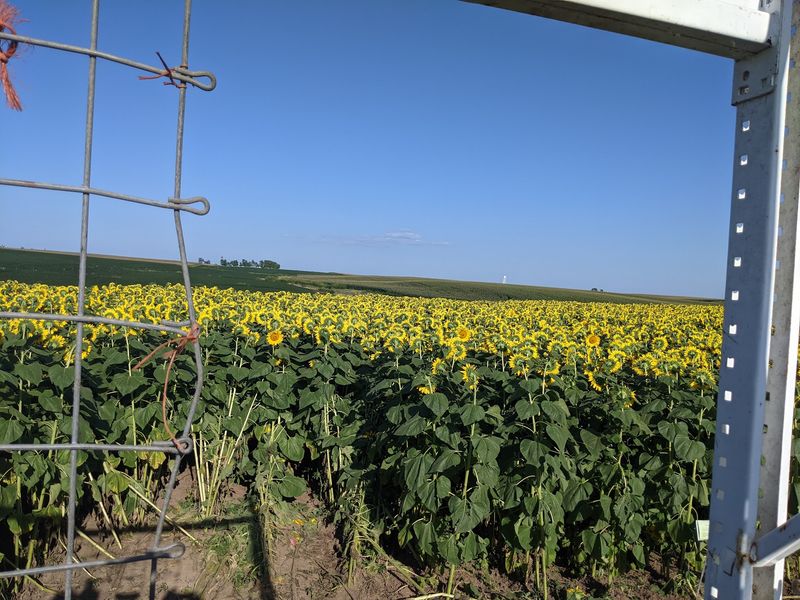
Ground level shows you one thing. The platforms show you another entirely.
A few steps up and the field flattens out into a solid sheet of yellow and green running toward the tree line. From down in the rows you cannot tell how big the planting really is.
Past seasons have had at least two of these viewing stations placed at different points, which matters because the light hits each one differently. Late afternoon on the west-facing side is where I got my best photos.
Heads up for anyone with knee trouble or a stroller: reaching the top means stairs. No way around that part.
Photo tip that actually helped me. Have your group stand a few rows into the flowers rather than on the path, then shoot down from the platform so the sunflower heads frame them on all sides.
Phone panoramas do this scene more justice than a standard photo. Just hold steady, because the stalks move.
I climbed up twice, once at arrival and once before leaving, and the second trip looked like a different farm.
Tractors, A Corn Box, And Snacks For Kids
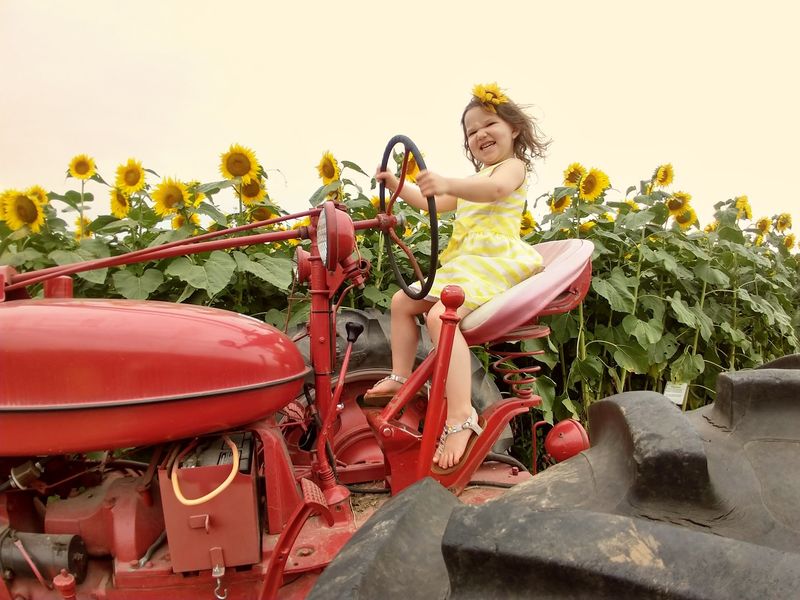
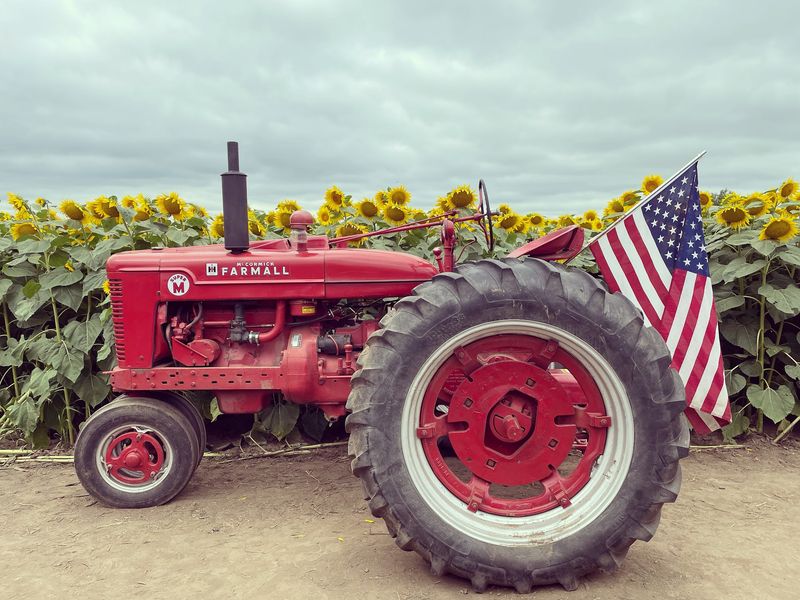
Antique tractors parked in the field pull double duty as photo props and climbing structures, and the kids I saw treated them like the main event.
Hay bales are scattered around too, positioned in spots where the flowers frame nicely behind them. Small props, big difference for anyone taking family pictures.
The kids’ corn box is the sleeper hit. Dried corn kernels instead of sand, cool to the touch, and it gives short legs a break from walking the paths.
Fair warning to parents. Corn kernels get into shoes, pockets, car seats, and possibly your washing machine.
Concessions have been available on site for snacks and drinks, and past seasons have included ice cream bars, which buys parents an extra fifteen minutes of goodwill.
Restrooms sit in the market area, with porta-potties and hand-washing stations placed out in the fields. That second detail matters more than it sounds when you are half a mile into sunflowers with a four-year-old.
Bring water regardless. The rows block wind and hold heat, and August in Iowa does not negotiate.
Why Bloom Dates Are Announced Late
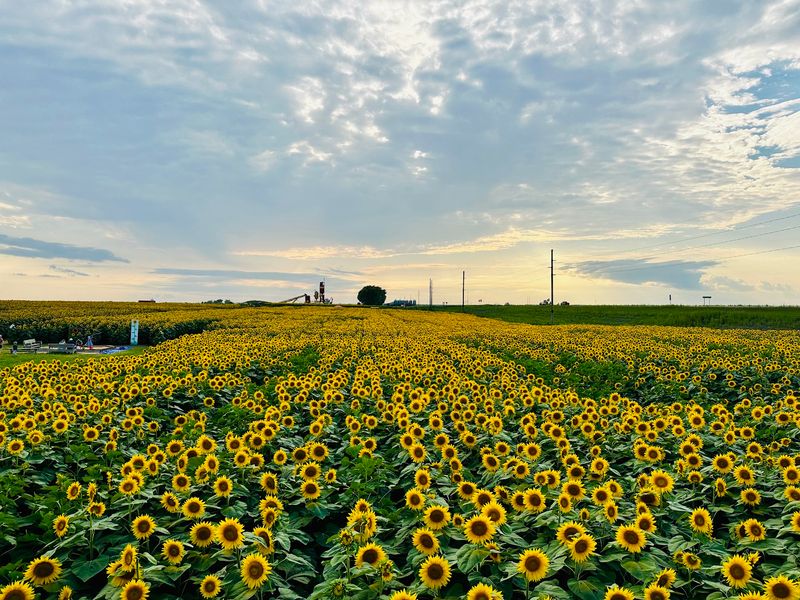
No fixed opening date exists here, and that frustrates planners like me until you understand why. Weather decides.
The Franzenburgs announce bloom timing close to when it happens, because a hot stretch or a wet week can shift things by days. Sunflowers typically bloom in mid-July, early and mid-August, and early September.
Additional plantings stretch the season into September, which is exactly why late summer stays colorful here while other fields have gone brown and droopy.
Check the website or their social pages before you drive out. Openings, closures, and rain days all get posted there, and a two-minute look saves an hour of disappointment.
For the current 2026 bloom, hours run Friday, August 28 from 4 PM to 7:30 PM, Saturday from 9 AM to 7:30 PM, Sunday from noon to 6 PM, and Monday, August 31 through Thursday, September 3 from 9 AM to 7:30 PM. Confirm current hours by phone or online, since seasonal schedules change.
My take after one visit: the staggered planting is the smartest thing about the operation. Instead of a single perfect weekend, you get several decent weeks.
Show up mid-window rather than opening day. Fresh blooms without the first-weekend crowd.
What It Costs And How Parking Works
Admission has hovered around eight dollars per person for ages four and up in recent seasons, and reviews from earlier years mention six and seven dollar rates. Cheap entertainment by any measure.
Payment is easy. Cash, cards, and Venmo have all been accepted, so no frantic glove-box coin hunt required.
Parking is on farm ground with plenty of room, and reserved spots sit closer to the entrance for anyone with mobility needs. A golf cart service has carried guests into the main sunflower area, which is a thoughtful touch you do not see at every operation.
Understand that some walking still comes with the territory. Paths are mown grass and dirt, not pavement, so wheels of any kind will bump along.
Footwear advice: closed shoes. Grass paths hold dew in the morning and dust by afternoon, and sandals lose either way.
Sunscreen matters more than you expect. The sunflowers are tall, but they do not shade the paths at midday.
Confirm current pricing before you go, since rates and included extras vary from one season to the next.
Dahlia Days And What Comes Next On The Farm
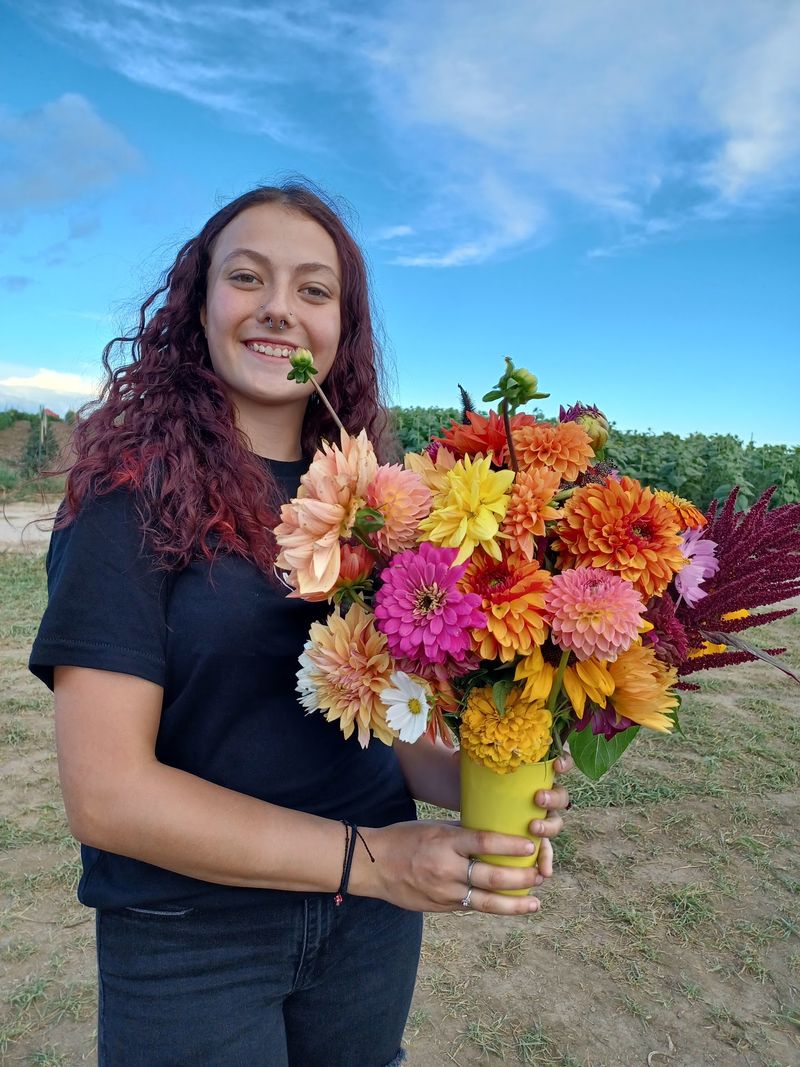
September brings Dahlia Days, and it is the reason I want to go back. Dahlias come in shapes that barely look related to one another, from tight little balls to dinner-plate blooms wider than your hand.
Mid-September timing keeps plenty of color on the farm even as the season changes. Cooler air and softer light make it an especially appealing time to visit.
Floral design classes have also popped up on the schedule, taught by Ann herself out in the cutting garden. Sessions run about sixty minutes, materials provided, though you can bring your favorite clippers.
Learning proper cutting technique changed how long my bouquet lasted at home. Cut in the cool part of the day, get stems into water fast, strip the lower leaves.
The farm keeps experimenting too. It has begun raising farm-fresh shrimp as another part of its diversified operation, alongside flowers, produce, fruits, and medicinal herbs, which is not a sentence I expected to write about a sunflower farm in Iowa.
You can also catch their flowers at the Iowa City Farmers Market on Saturdays from May through October, along with selected Cedar Rapids farmers market dates during the growing season.