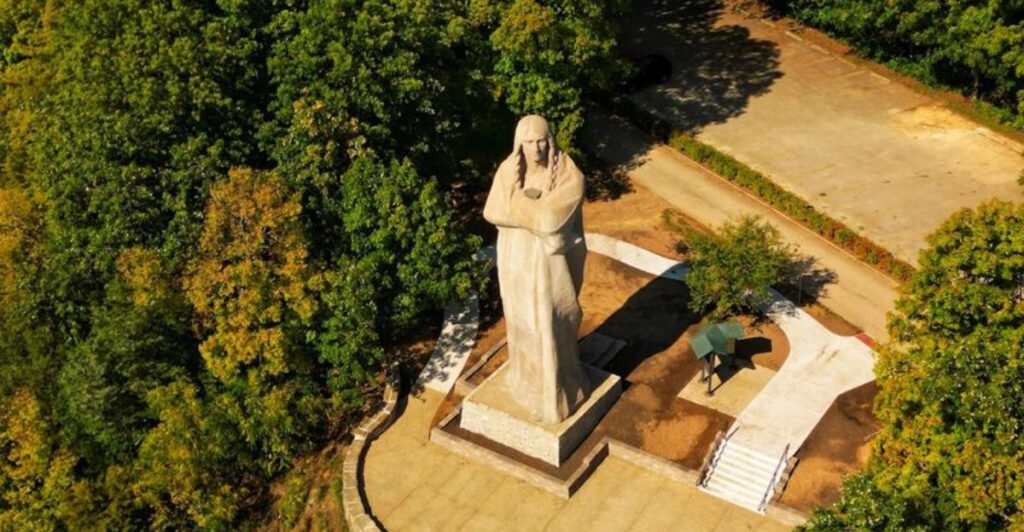
Rising high in Illinois, this massive Native American sculpture captures the eye and sparks awe in every visitor, and you won’t be an exception.
Many travelers pass by without knowing it exists, but it’s worth stopping. This towering figure is one of the most impressive outdoor sculptures in the Midwest, and it surprises everyone who sees it.
Seeing it in photos is impressive, but experiencing it in person is on a whole different level. History, art, and adventure come together in one amazing experience.
At 48 feet tall and perched for great views of the landscape, it’s a spot where visitors can pause, explore, and enjoy something truly remarkable. The sculpture is simple in form, yet it evokes a powerful mix of emotions.
Seeing it in person is worth every mile of the journey!
Warrior Who Refused To Give Up His Land
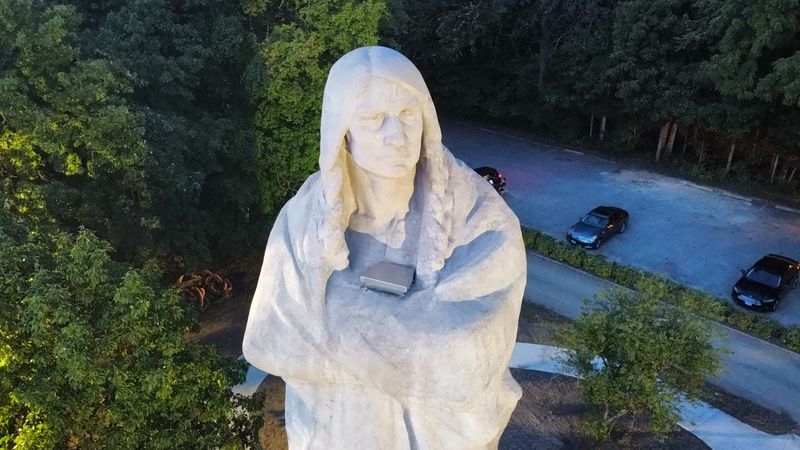
Before you even set foot at the statue, it helps to know the story behind the man it honors.
Black Hawk, whose Sauk name was Ma-ka-tai-me-she-kia-kiak, was a warrior and leader of the Sauk people.
He was born around 1767 near the Rock River in what is now Illinois. Black Hawk is best known for leading a group of Sauk and Fox people back into Illinois in 1832, in what became known as the Black Hawk War.
He refused to accept the 1804 treaty that had signed away his people’s homeland.
That kind of courage and loyalty to his community made him a figure of deep respect, even among many of his opponents.
After being captured, Black Hawk was taken on a tour of eastern U.S. cities, where enormous crowds came out to see him.
His autobiography, published in 1833, became one of the first Native American autobiographies ever printed. He passed away in 1838.
The statue in Oregon, Illinois, was not built to mark a battle. It was built to honor a man who stood up for his people and his homeland.
Standing beneath it, you can feel the weight of that story. It is a reminder that the land you are standing on has a deep and layered history worth knowing.
The Sculptor Behind The Statue
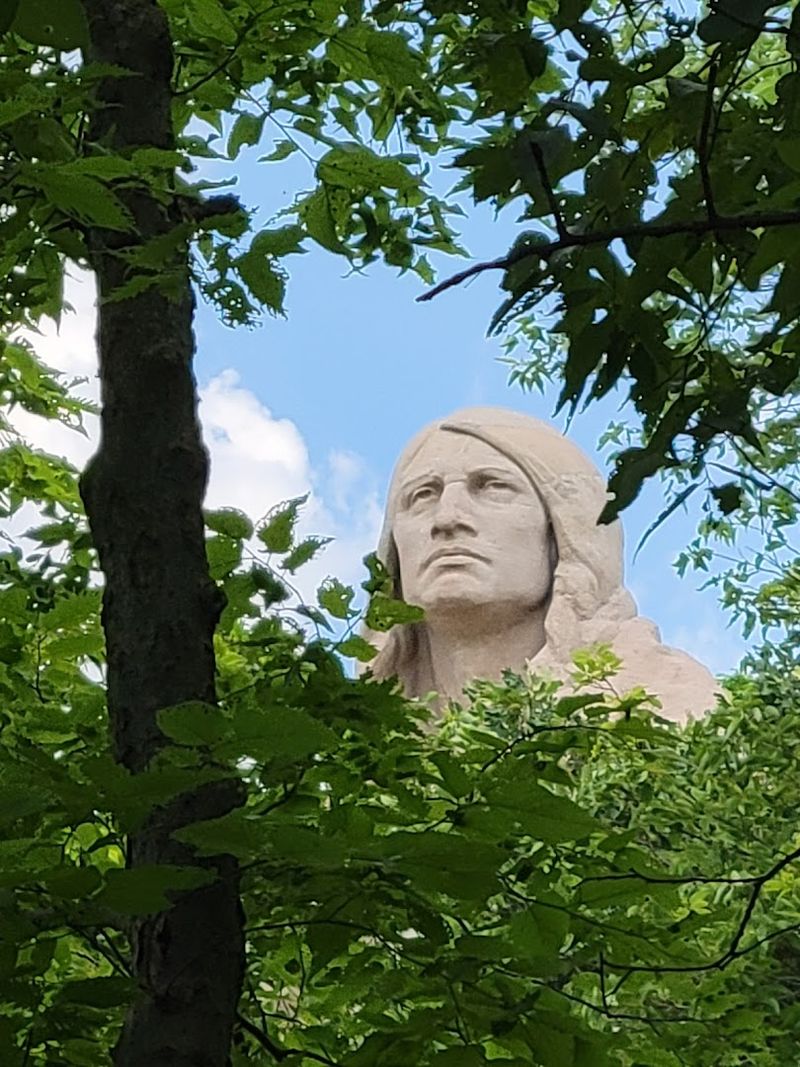
Not everyone knows the name Lorado Taft, but his work has left a permanent mark on American public art.
Born in Elmwood, Illinois, in 1860, Taft studied in Paris and became a highly respected sculptor and art professor in Chicago. He spent summers at Eagle’s Nest, an artists’ retreat near Oregon, Illinois, where he developed the idea for the Black Hawk Statue.
Completed in 1911, it was built using an innovative hollow concrete method.
The figure stands 48 feet tall and weighs an impressive 268 tons. Taft called it “The Eternal Indian,” and that name still appears in some historical references today.
What makes Taft’s work so powerful is that he was not just making something big.
He was trying to capture something timeless. The statue does not depict Black Hawk in battle.
Instead, it shows a dignified figure with arms folded, gazing peacefully over the land he once called home.
That choice says a lot about the respect Taft wanted to convey through his art.
What To Expect When You Arrive At Lowden State Park
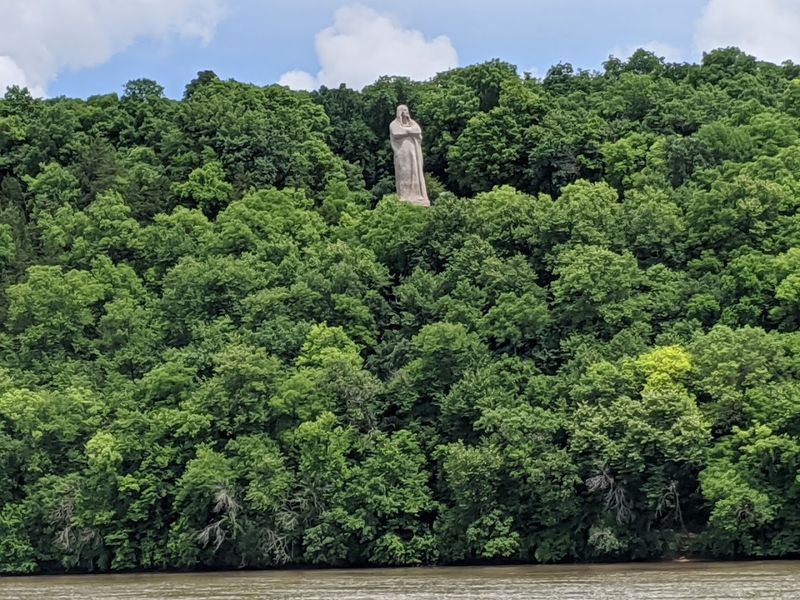
The park sits along the western bank of the Rock River, and the landscape is all rolling hills, tall trees, and wide open sky. It is the kind of place where you immediately want to slow down and look around.
The park covers about 207 acres and is managed by the Illinois Department of Natural Resources. Admission is free, which makes it one of the best no-cost outdoor experiences in the state.
Parking is available near the trailhead, and from there it is a short, easy walk to reach the statue.
The trail leading up to the Black Hawk Statue is well-maintained and not too steep, making it accessible for most visitors.
Families with kids, older adults, and casual hikers all make the trip regularly. The walk takes just a few minutes, but the payoff at the top is absolutely worth every step.
Once you reach the statue, you are standing on a high bluff with panoramic views of the Rock River valley stretching out in every direction.
On a clear day, the scenery is stunning.
You will want to capture this view. The combination of the towering statue and the natural beauty surrounding it creates a moment that is hard to forget.
Up Close With The Statue
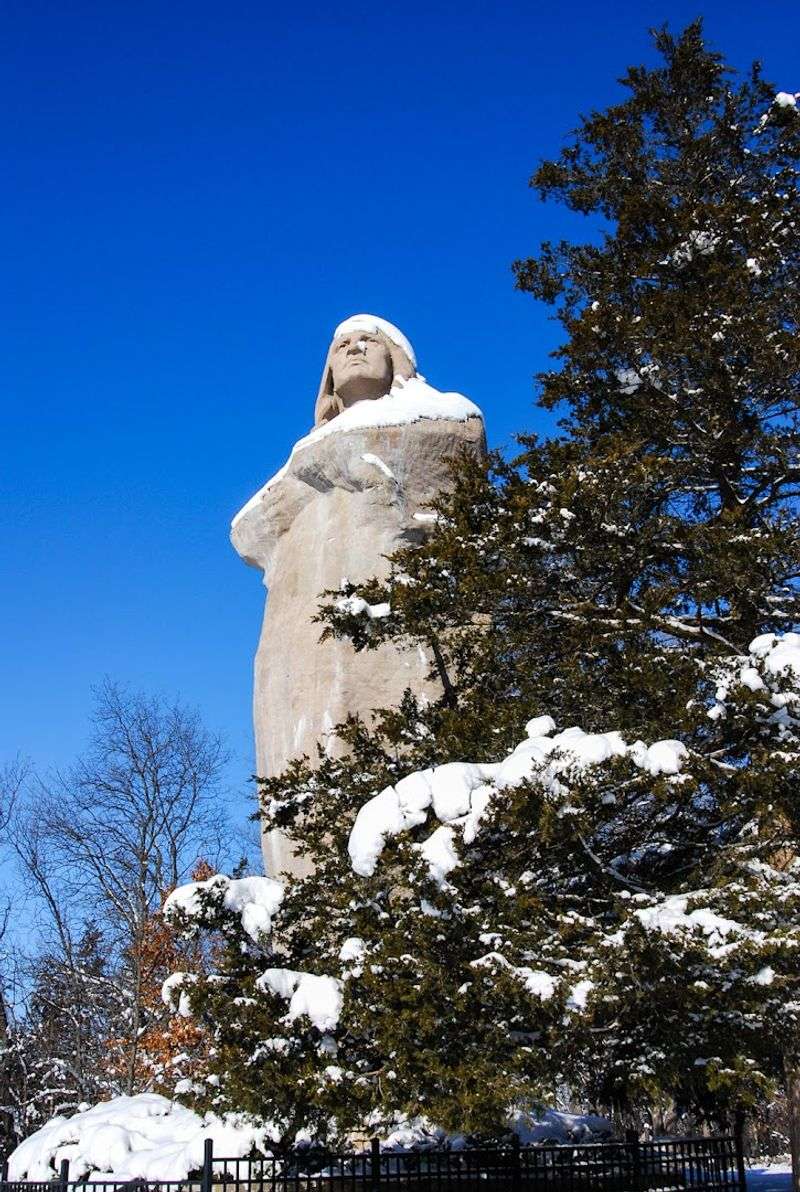
Standing right at the base of the Black Hawk Statue is a completely different experience from seeing it in photos.
The scale is hard to believe until you are actually there. At 48 feet tall, the figure towers above you in a way that feels both impressive and deeply moving.
The statue was constructed using reinforced hollow concrete, a technique that helped manage the enormous weight while keeping the structure stable over time.
Despite being over 110 years old, the statue remains remarkably well-preserved. Restoration work has been done over the decades to keep it in good condition.
Look closely at the face and you will notice the careful detail Taft put into the expression.
The figure is calm, steady, and forward-looking. The arms are folded across the chest in a posture that reads as both protective and proud.
There is nothing aggressive about the pose. It communicates dignity above everything else.
One fun fact that surprises a lot of visitors: the statue is hollow on the inside.
At certain points in its history, people could actually climb inside the statue, though that is no longer permitted for safety reasons.
Still, knowing that adds a layer of wonder to the experience. You are not just looking at a solid block of concrete.
You are looking at a carefully engineered work of art that has stood the test of time beautifully.
The View From The Bluff
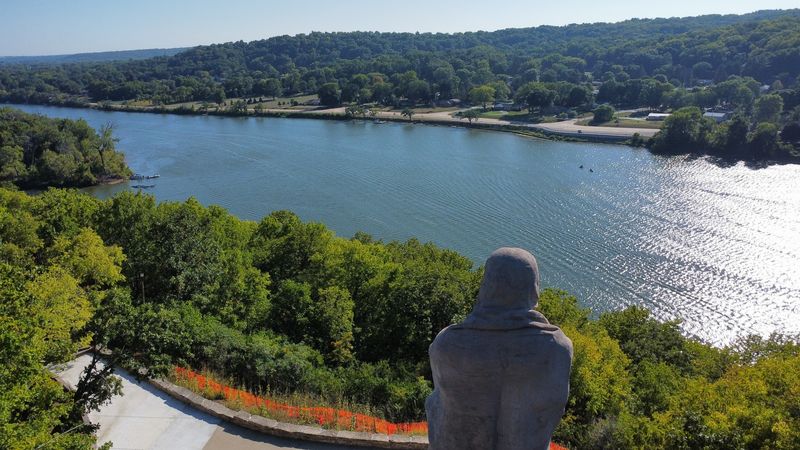
Even if you had never heard of the Black Hawk Statue before today, the view from the bluff alone would make the trip worthwhile.
From the top, the Rock River winds below like a silver ribbon through a patchwork of trees and fields. It is exactly the kind of view that makes you stop talking and just look.
The Rock River has been a central part of this region’s history for thousands of years. Native peoples, French explorers, and early American settlers all traveled along its banks.
Standing on the bluff, it is easy to understand why Black Hawk and the Sauk people loved this land so deeply. The river valley is genuinely beautiful in every season.
Spring brings fresh green color to the hills and the river runs full and clear.
Summer fills the park with families, picnickers, and hikers. Fall is arguably the most spectacular time to visit, when the surrounding trees turn brilliant shades of orange, red, and gold.
Even winter has its own quiet charm, with the statue standing stark and powerful against a gray sky.
Many visitors say the view from the bluff is one of the best in all of northern Illinois.
That is not an exaggeration. Pack a snack, find a spot near the edge of the bluff, and take your time soaking it all in.
Moments like this are exactly what road trips are made for, and this one will stay with you long after you drive home.
History Woven Into Every Corner Of Oregon
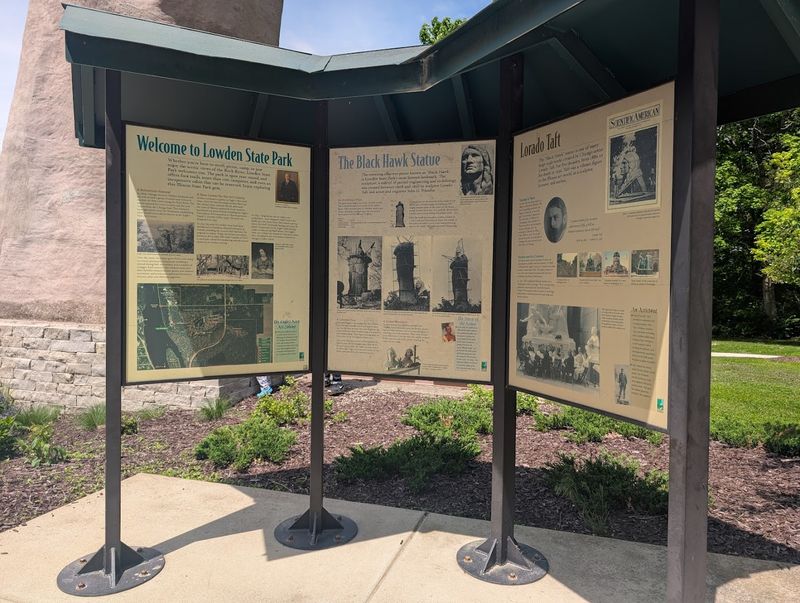
Oregon served as a gathering spot for artists and intellectuals in the late 19th and early 20th centuries, largely because of Lorado Taft.
Writers, painters, poets, and sculptors all spent time here, drawn by the beauty of the landscape. That creative legacy still shapes the character of the town today.
Downtown Oregon has a charming, unhurried feel that is a welcome change from busy city life.
You will find locally owned shops, a few great spots to grab a bite, and friendly faces everywhere you go.
The Ogle County Courthouse is a beautiful historic building worth a quick look while you are in town.
Oregon also sits along the Great River Road, a scenic byway that follows the Mississippi and Rock River corridors through multiple states.
That means a visit here can easily be part of a longer road trip through some truly spectacular Midwest scenery.
The town is about 100 miles west of Chicago, making it a very doable day trip or weekend getaway. History, art, nature, and small-town charm all in one place.
That is a combination worth seeking out.
Activities And Things To Do Around The Park
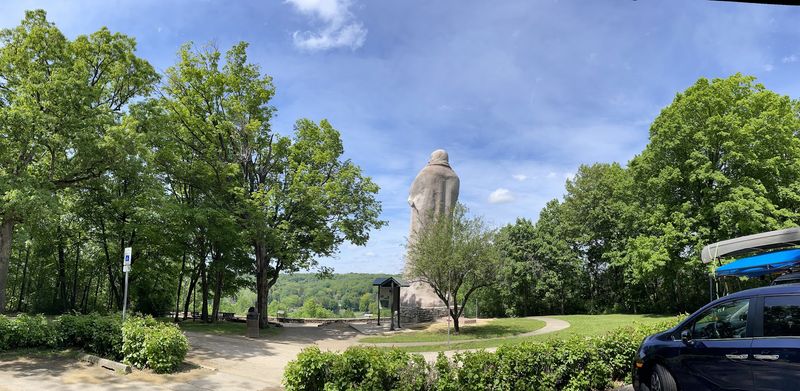
Lowden State Park offers more than just the statue. Once you have taken in the view from the bluff, there is plenty more to explore right within the park boundaries.
It is a great place to spend a full afternoon, especially if you are traveling with family. The park has picnic areas with tables and grills, making it easy to pack a lunch and enjoy a meal surrounded by nature.
There are also several hiking trails that wind through the woods and along the riverbank.
The trails range from flat and easy to slightly more challenging, so there is something for every fitness level.
Fishing is popular along the Rock River near the park.
Anglers can expect to find smallmouth bass, walleye, and catfish. If you bring your gear, the riverbanks offer peaceful and productive spots to cast a line.
Just make sure to check current Illinois fishing regulations before you go. Birdwatching is another activity that draws visitors to this area.
The bluff and surrounding woodlands provide habitat for a wide variety of species, including great blue herons, bald eagles, and various songbirds. Bring binoculars if you have them.
Early morning visits tend to offer the best wildlife sightings. Whether you spend two hours or a full day here, Lowden State Park delivers a satisfying outdoor experience that goes well beyond a single photo opportunity.
It is a place that keeps giving the longer you stay and explore.
Best Times To Visit And Practical Tips For Your Trip
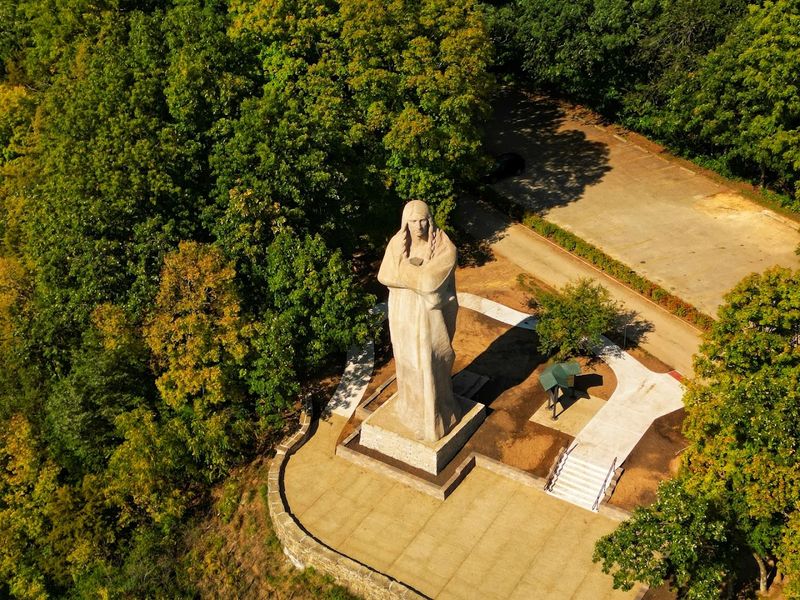
Planning your visit a little in advance can make a big difference in how much you enjoy the experience.
Lowden State Park is open year-round, but the best times to visit are generally late spring through early fall, when the weather is comfortable and the park is at its most vibrant.
Fall is a particularly popular time, and for good reason. The trees surrounding the bluff turn into a stunning display of color, and the cooler temperatures make hiking much more enjoyable.
Weekday visits in October tend to be less crowded than weekends, so if your schedule allows it, a Tuesday or Wednesday trip can feel almost magical.
The park is free to enter, and parking is available near the trailhead.
Wear comfortable walking shoes since the path to the statue involves some uphill terrain. The walk is short, but good footwear makes it more comfortable.
Bringing water and sunscreen is always a smart move during warmer months.
Cell service in the area can be spotty, so it is worth downloading a map of the park before you arrive.
The address is 1411 N River Rd, Oregon, IL 61061, and GPS generally navigates there without issues.
Restrooms are available at the park, which is always a nice detail to know ahead of time.
Rushing through a place like this would be a shame. Take your time and enjoy every moment of it.
Why This Statue Deserves A Spot On Every Illinois Bucket List
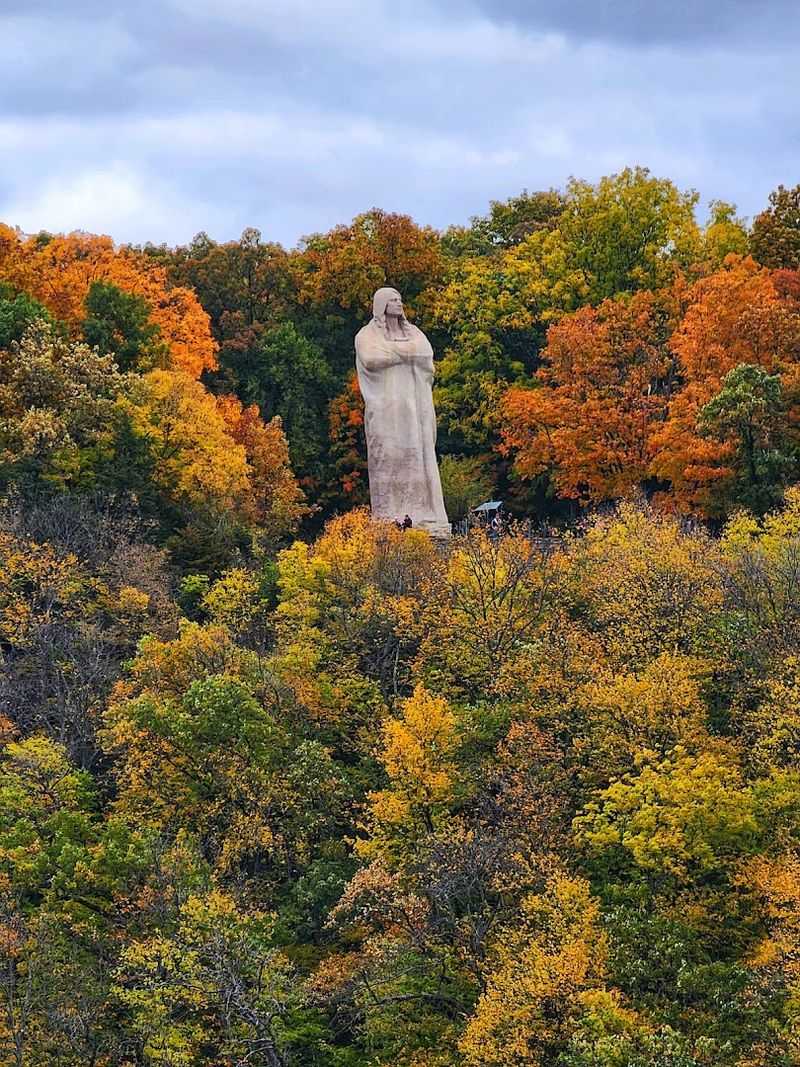
Illinois is full of roadside attractions and historic sites, but few combine art, nature, and history like the Black Hawk Statue.
It’s more than a large sculpture. It is a landmark with a story and a setting worth experiencing.
Art lovers will appreciate it as one of the finest examples of early 20th-century American monumental sculpture.
History fans can connect with the story of the Sauk people and the region’s past. Outdoor enthusiasts will enjoy the park and bluff views.
Families will find it a meaningful outing. Kids can learn about Black Hawk and the history behind the statue, leaving with more than just a photo.
It’s a place where history feels alive.
The statue has watched over Illinois for more than a century and will continue for generations. Visiting it connects you to a piece of history most people have never seen.
It’s a stop worth making on any northern Illinois trip.