
Some roadside attractions feel strange in the best possible way, like someone turned a wild idea into concrete, color, and pure determination.
A one-of-a-kind stop in Kansas filled with odd sculptures, bold symbolism, historic personality, and handmade imagination can make a regular drive feel like a detour into another century.
This is not polished, predictable sightseeing. It is the kind of place that makes you tilt your head, smile, wonder what inspired it all, and keep looking because every detail seems to have its own story.
The charm comes from how personal it feels, as if the whole attraction was built by someone who absolutely refused to be boring.
I have always loved places that make me say, “I have never seen anything like this,” and a Kansas roadside stop this unusual would definitely earn my full attention.
The Man Behind The Madness: S.P. Dinsmoor
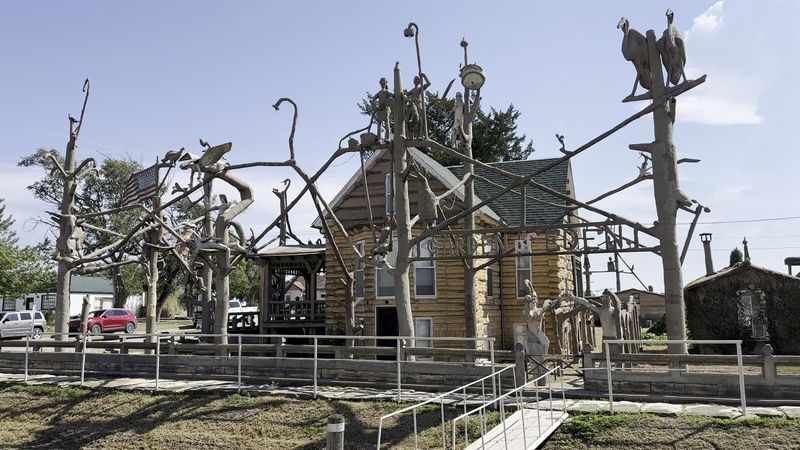
Not every artist starts building their masterpiece in their 60s, but S.P. Dinsmoor was not every artist.
Born in Ohio in 1843, Samuel Perry Dinsmoor served in the Civil War before eventually settling in Lucas, Kansas, where he would spend decades transforming his property into something the world had never seen.
He began constructing the Garden of Eden around 1907, at the age of 64, using local limestone and hand-mixed concrete to craft roughly 150 figures across his yard and home.
Dinsmoor had strong opinions about politics, religion, and social justice, and he poured every single one of those opinions into his sculptures.
His Ohio roots shaped a man who believed deeply in the rights of ordinary working people.
That fierce conviction became the soul of everything he built, turning a modest Kansas lot into a monument to one man’s unfiltered worldview.
A Limestone Cabin Unlike Any Other
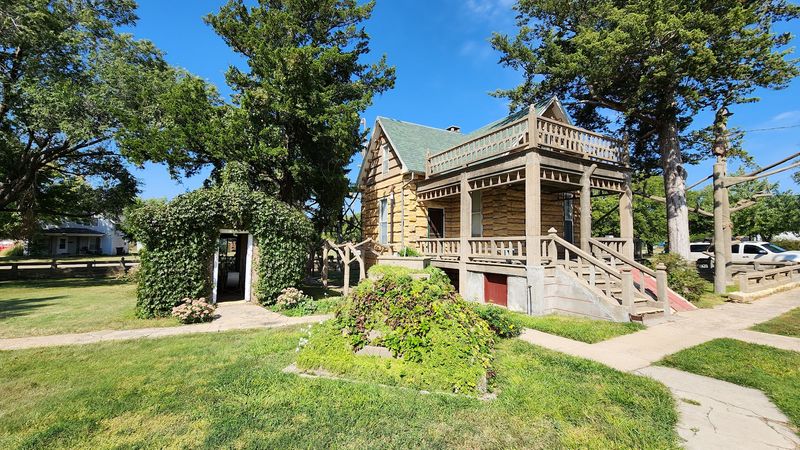
At first glance, the house at the center of the Garden of Eden looks like a classic frontier log cabin.
Look a little closer, though, and you realize the logs are actually hand-carved limestone blocks, shaped to mimic timber with remarkable precision.
Dinsmoor quarried the limestone from nearby sources and crafted each block himself, stacking them to create the illusion of a wooden structure.
The result is a building that feels both rustic and surreal, like something out of a storybook that forgot to stay fictional.
The interior is equally fascinating, featuring detailed woodwork on doorframes, banisters, tables, and a wardrobe that Dinsmoor crafted by hand.
Touring the home feels like stepping into a giant time capsule, where every surface tells a story about the man who built it and the era he lived through.
Concrete Sculptures That Cover Every Inch Of The Yard
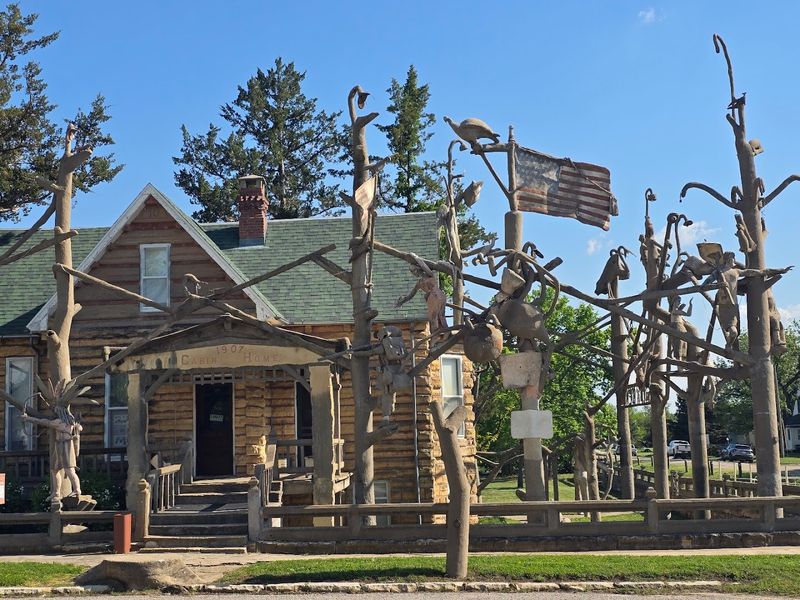
The yard surrounding the house is where the Garden of Eden truly earns its reputation.
Dinsmoor filled nearly every square foot of his property with concrete sculptures, creating a dense, layered world of figures that climb, reach, and interact with one another across the space.
The sculptures depict scenes from the Bible alongside sharp political commentary, often blending the two in ways that feel both clever and confrontational.
Adam and Eve share space with figures representing labor, capitalism, and justice, making the garden feel more like an outdoor political manifesto than a traditional art installation.
Many of the pieces were also wired for electric lighting, a detail that must have been absolutely stunning for visitors in the early twentieth century.
Walking through the yard today, the sheer density and ambition of the work is still genuinely jaw-dropping, a testament to one man’s relentless creative drive.
The Famous Crucifixion Of Labor
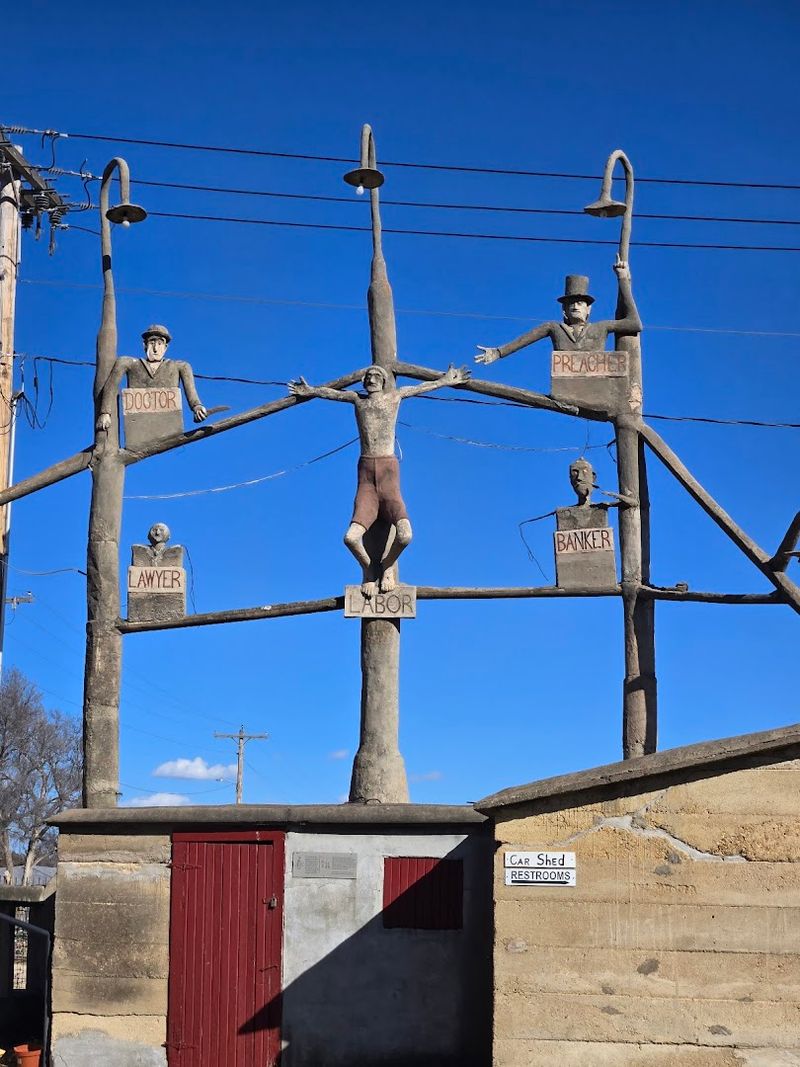
Among all the sculptures at the Garden of Eden, the Crucifixion of Labor stands out as the most politically charged and visually striking piece on the property.
Dinsmoor created this large concrete tableau to express his populist beliefs about the exploitation of working-class people by banks and big business.
The scene depicts a worker being crucified by figures representing capitalism and monopoly, with a devil looking on approvingly. It is blunt, unapologetic, and impossible to ignore, which was absolutely the point.
Dinsmoor grew up in Ohio during a time of intense social and economic upheaval, and those early experiences clearly left a permanent mark on his worldview.
The Crucifixion of Labor is the clearest window into what he actually believed, and seeing it in person carries a weight that photographs simply cannot capture. It is art as protest, carved permanently into concrete.
A Mausoleum He Built For Himself
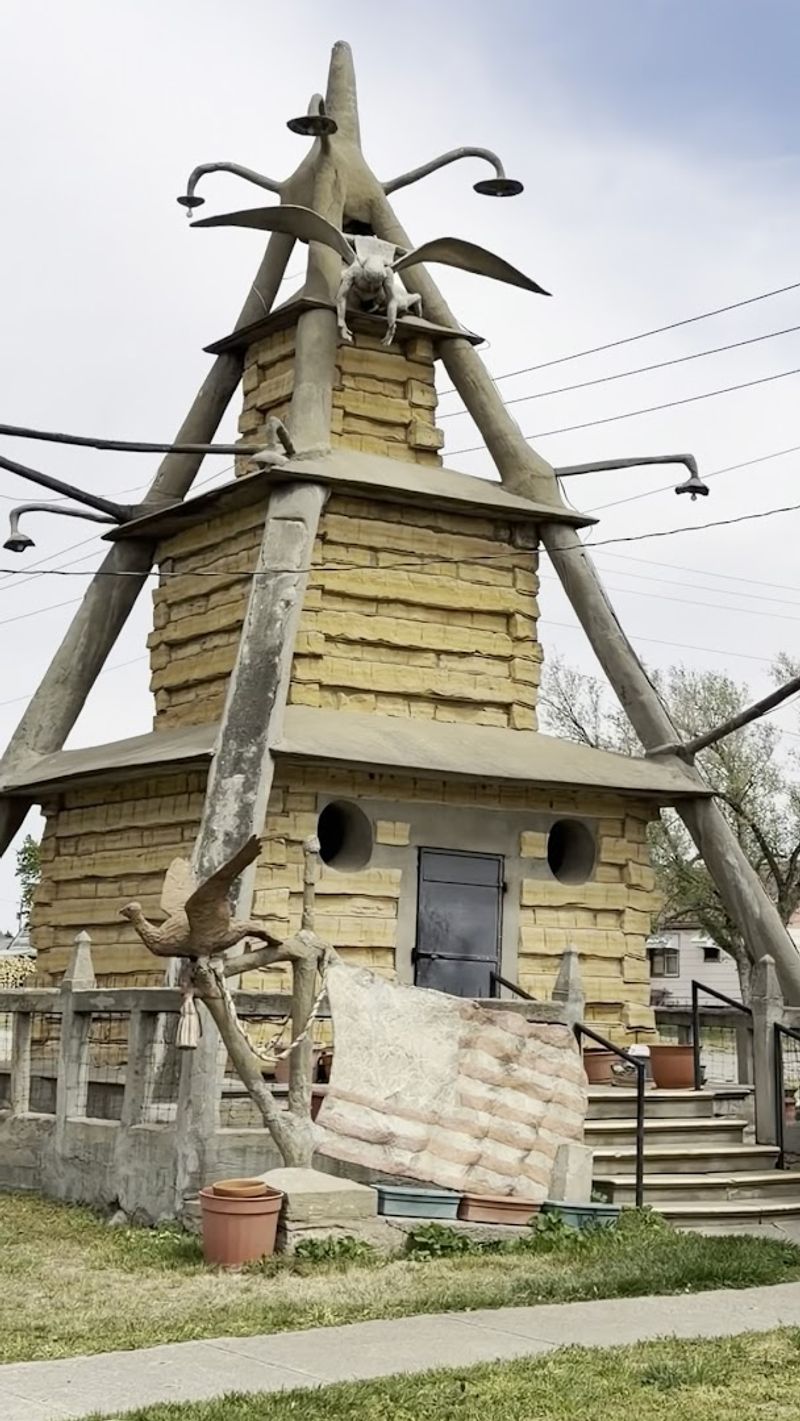
Few artists plan their final resting place quite as thoroughly as S.P. Dinsmoor did.
Right on his property, he constructed a concrete mausoleum designed specifically to hold his own remains, complete with a glass-lidded coffin so that future visitors could see him long after he was gone.
Dinsmoor passed away in 1932 at the remarkable age of 89, and true to his plans, he was placed in the coffin he had prepared.
His preserved remains are still viewable today during tours, making this one of the most unusual and memorable parts of the entire experience.
Photography is not permitted inside the mausoleum, which adds to the solemn, otherworldly atmosphere of the space.
For visitors who grew up in Ohio or anywhere else in the Midwest, this kind of deeply personal, homemade monument to mortality feels both deeply strange and strangely moving at the same time.
Biblical Imagery Woven Throughout The Property
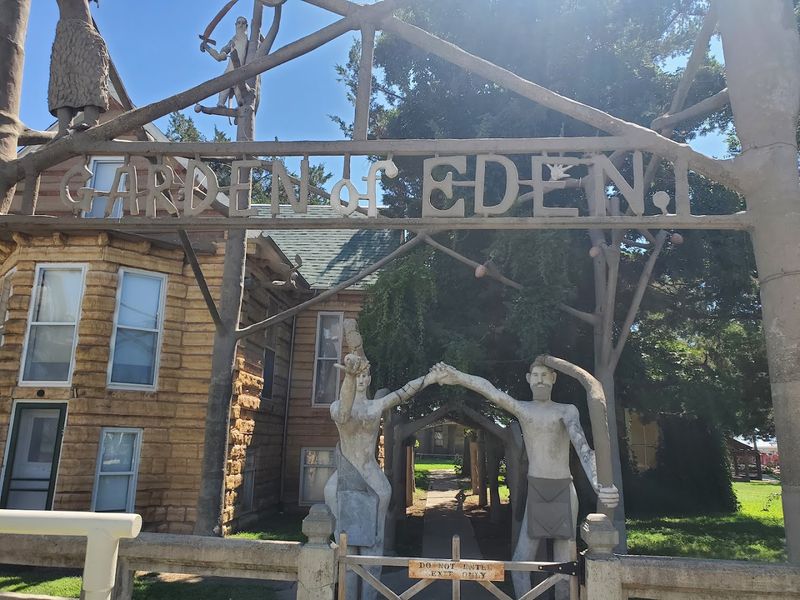
The name Garden of Eden is not just a catchy title.
Dinsmoor genuinely structured much of his outdoor sculpture program around the creation story from the Bible, placing Adam, Eve, the serpent, and other familiar figures throughout the yard in a loose narrative sequence.
What makes the Biblical imagery so interesting is how Dinsmoor used it as a framework for his political ideas.
The familiar stories provided a structure that his audience would instantly recognize, and then he twisted those stories to carry messages about labor, justice, and corruption.
The blend of the sacred and the political is unusual and thought-provoking, giving the Garden of Eden a layered quality that rewards careful attention.
Visitors who take the time to read the connections between the religious and political figures often leave with a much deeper appreciation for just how carefully Dinsmoor planned every single element of this extraordinary place.
The Guided Tour Experience
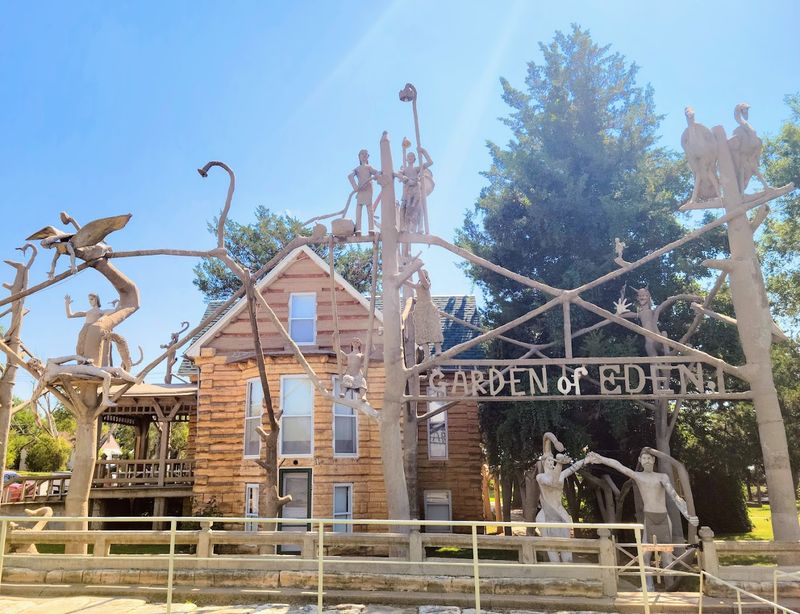
Showing up and wandering the grounds on your own is possible, but taking the guided tour is where the Garden of Eden truly comes alive.
Knowledgeable guides walk visitors through the property, explaining the symbolism behind each sculpture and sharing stories about Dinsmoor’s life, beliefs, and creative process.
The tour typically runs about 45 minutes and covers the yard sculptures, the interior of the limestone cabin, and the mausoleum.
A short introductory video is shown at the start, giving helpful context before you step outside into the sculpture garden itself.
Guides have been praised consistently for their enthusiasm and depth of knowledge, turning what could be a confusing jumble of concrete figures into a coherent, fascinating story.
Whether you come as a history enthusiast, an art lover, or simply a curious road-tripper passing through Kansas, the tour format makes the whole experience feel personal and genuinely engaging from start to finish.
A Hub For Grassroots Art In Lucas, Kansas
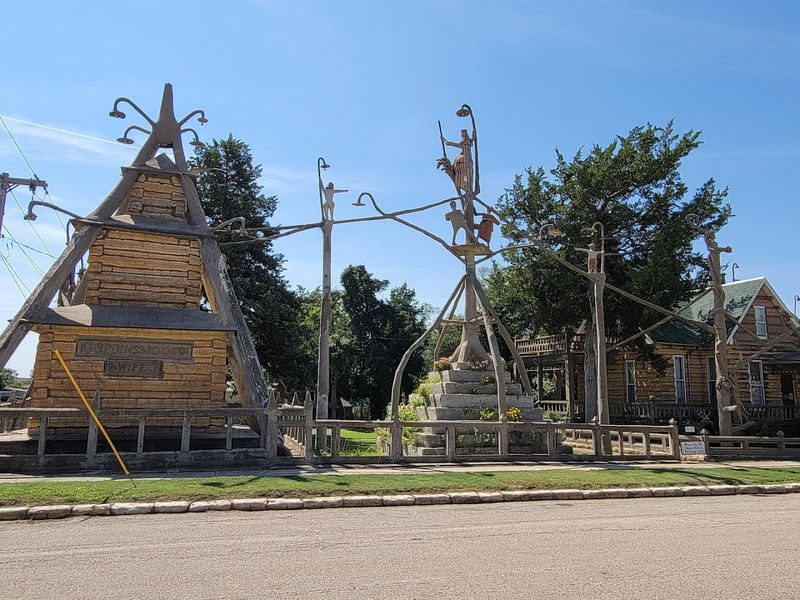
The Garden of Eden did not just create a landmark for itself. It helped transform the entire town of Lucas, Kansas into a destination for lovers of outsider art and grassroots creativity.
The energy that Dinsmoor sparked on his corner lot seems to have spread outward over the decades, attracting other artists and unusual installations to the surrounding area.
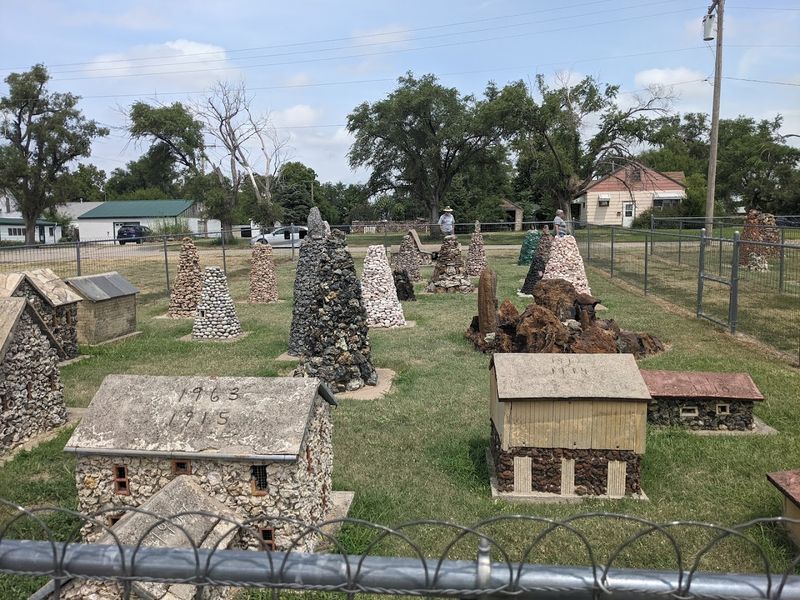
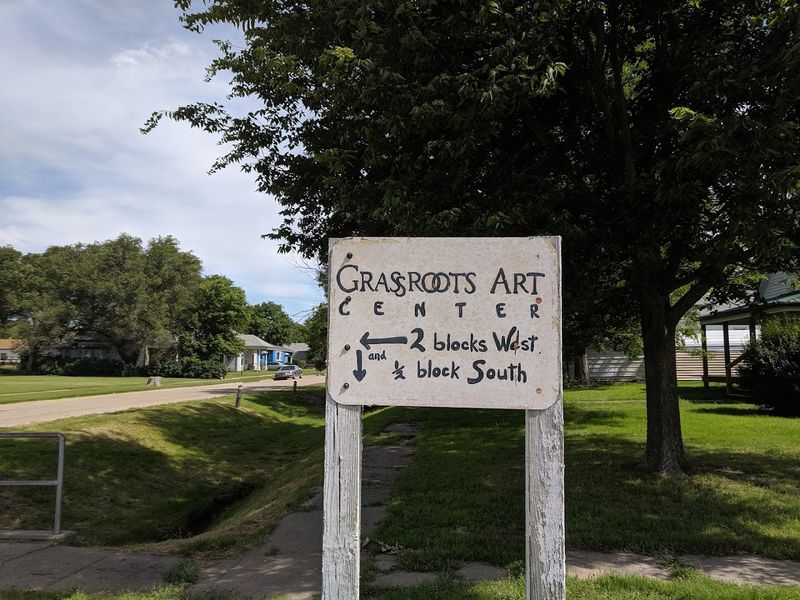
The nearby Grassroots Art Center and the remarkable Bowl Plaza are just two examples of how Lucas has leaned into its identity as a hub for unconventional creativity.
Visitors who stop at the Garden of Eden often find themselves wandering further into town, discovering more surprises around every corner.
It is the kind of small-town creative ecosystem that feels increasingly rare in modern America, and it has roots that trace directly back to Dinsmoor’s original vision.
Ohio has its own folk art traditions, but few places in the entire country can match the concentrated artistic energy of Lucas, Kansas.
Practical Visiting Information And Tips
Planning a stop at the Garden of Eden is straightforward, and the property is set up to welcome visitors comfortably.
The site is located at 305 E 2nd St, Lucas, KS 67648, and guided tours are offered daily from 10 AM to 5 PM from May through October, making it easy to fit into a June road trip schedule.
Admission is required for the indoor tour and mausoleum visit, and a small gift shop near the entrance sells postcards, lapel pins, and a handy guidebook.
Clean, updated bathrooms are available behind the house, which is a welcome detail for anyone arriving after a long drive across the Kansas plains.
The exterior sculptures can be viewed even when the building is closed, so a drive-by or exterior walk is always an option.
Why This Place Feels Like It Belongs To Another Era
There is something about the Garden of Eden that resists easy categorization.
It is not quite a museum, not quite a park, and not quite a monument, yet it manages to be all three things at once in a way that feels completely natural and utterly original.
Dinsmoor built this place at a time when ordinary people did not have many platforms to express their views on politics and society.
His response was to carve those views permanently into concrete and invite the world to come look, a move that feels almost radical even by today’s standards.
The fact that this creation survives intact in a small Kansas town, drawing visitors from Ohio, from the coasts, and from countries around the world, says something profound about the staying power of genuine, unfiltered human expression.
The Garden of Eden is proof that one person’s vision, built with enough conviction, can outlast almost everything else around it.