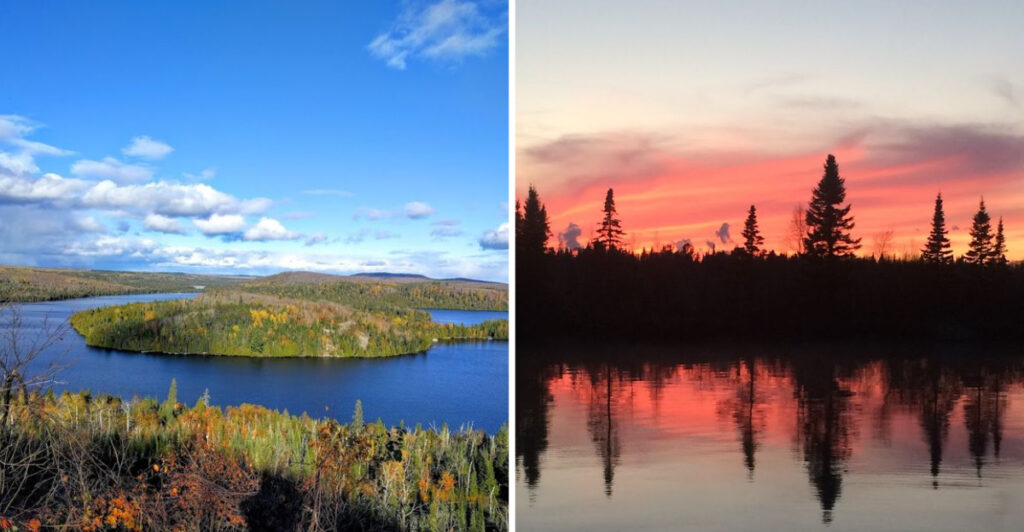
What kind of place makes you want to put your phone away and just look around? There are beautiful places all across the country, but this one feels truly unique.
Minnesota is home to over 10,000 lakes, but not all of them are created equal. Some are so clear you can see straight to the bottom, like looking through a giant glass of water.
These lakes are the kind of places that stop you in your tracks and make you forget whatever was on your mind five minutes ago.
If you love clean water, stunning scenery, and that feeling of pure calm that only nature can deliver, you are going to want to bookmark every single one of these.
Burnside Lake
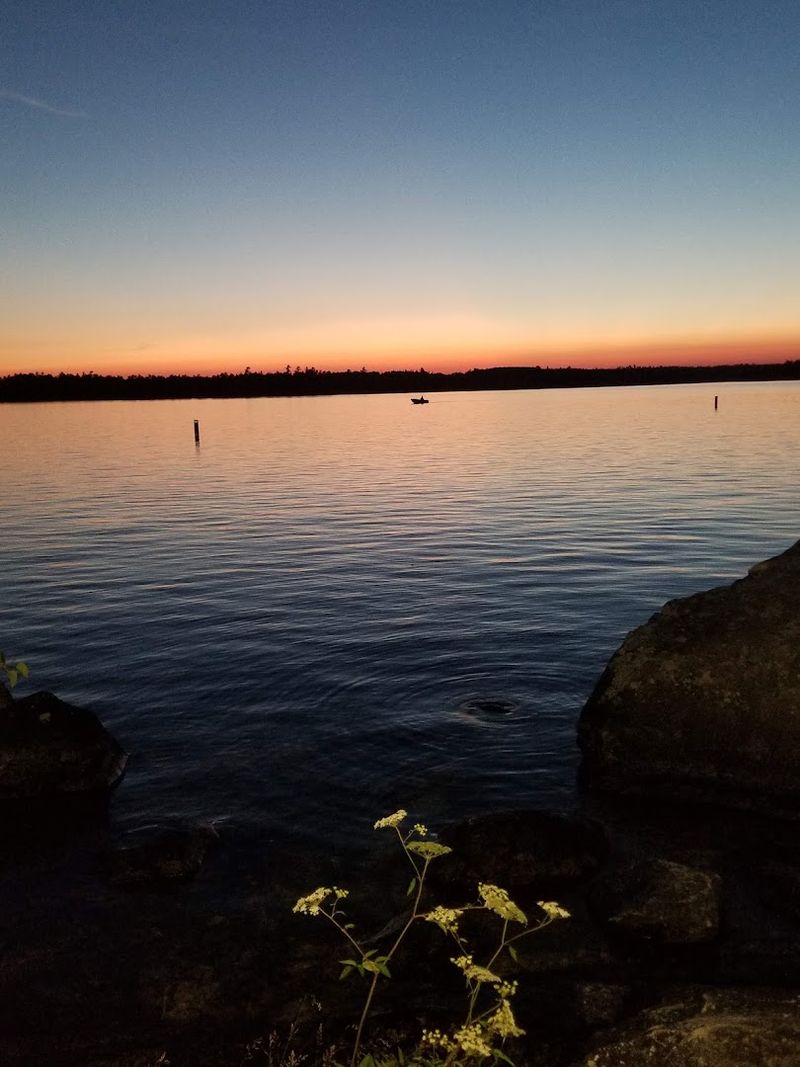
This lake makes even the darkest nights feel special.
Right outside the town of Ely in St. Louis County, Burnside Lake is one of those places that reminds you why people fall in love with Minnesota in the first place.
The lake stretches across roughly 4,000 acres and is known for its clean, cold water that stays refreshingly clear through most of the year.
Ely is famously the gateway to the Boundary Waters Canoe Area Wilderness, and Burnside shares that same wild, untouched energy without requiring a permit to enjoy.
Rocky points jut into the water, creating natural coves that are perfect for swimming or anchoring a kayak on a warm afternoon.
Walleye, northern pike, and smallmouth bass all thrive here, making it a favorite among anglers who appreciate both the fishing and the scenery.
Because the surrounding land is largely undeveloped, light pollution is minimal and stargazing from the shoreline at night is absolutely worth staying up for.
Burnside Lake is the kind of place you visit once and spend years trying to get back to.
Namakan Lake
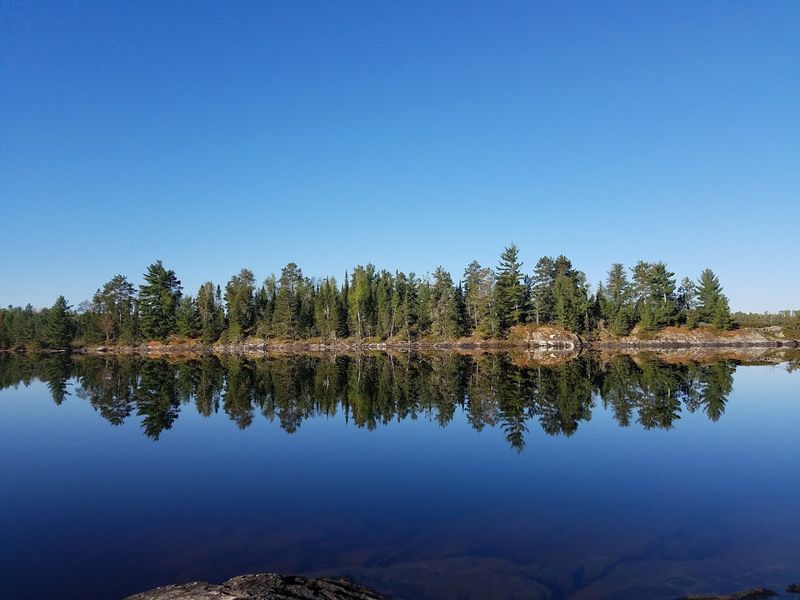
Who would not want to spend a little longer in a place like this?
Spanning the border between Minnesota and Ontario, Namakan Lake sits inside Voyageurs National Park in Koochiching County and carries a wild, frontier energy that is hard to find anywhere else.
The lake is part of a chain of interconnected waterways that once served as a major travel route for French-Canadian fur traders, and that history gives every paddle stroke a certain weight.
Water clarity in Namakan is exceptional for a lake of its size, largely because the surrounding watershed is protected from development and agricultural use.
Rocky Canadian Shield islands dot the surface, creating sheltered bays where the water turns a deep, transparent green that looks almost tropical against the granite.
Houseboating is one of the most popular ways to explore Namakan, allowing visitors to anchor in a quiet cove and wake up to nothing but loons and morning mist.
Wildlife sightings are common here, with bald eagles, black bears, and timber wolves all calling the park home.
Namakan Lake rewards the visitors who are willing to go a little off the beaten path, and the payoff is absolutely worth it.
Big Trout Lake
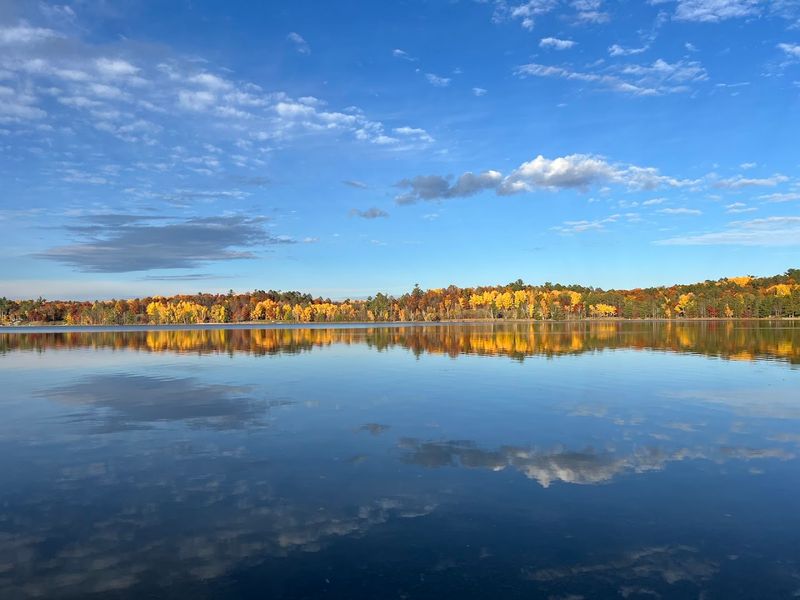
Not every lake earns the word “big” in its name, but Big Trout Lake in Itasca County absolutely justifies it.
Located in the Grand Rapids area of north-central Minnesota, this lake is prized for its impressive water clarity and the cold-water fish species that depend on it.
Lake trout are the star attraction, and because these fish require exceptionally clean, well-oxygenated water to survive, their presence here is a reliable indicator of just how pristine the conditions are.
The lake sits within a landscape of mixed boreal and northern hardwood forest, giving the shoreline a lush, layered look that changes beautifully with the seasons.
Canoe camping opportunities in the area allow visitors to experience the lake at a slower pace, drifting along the edges and watching osprey hunt in the shallows.
Spring and early summer are ideal times to visit, when snowmelt keeps the water temperatures low and clarity at its peak.
Big Trout Lake is one of those quietly spectacular places that Minnesotans tend to keep to themselves, and honestly, it is easy to understand why.
Rainy Lake
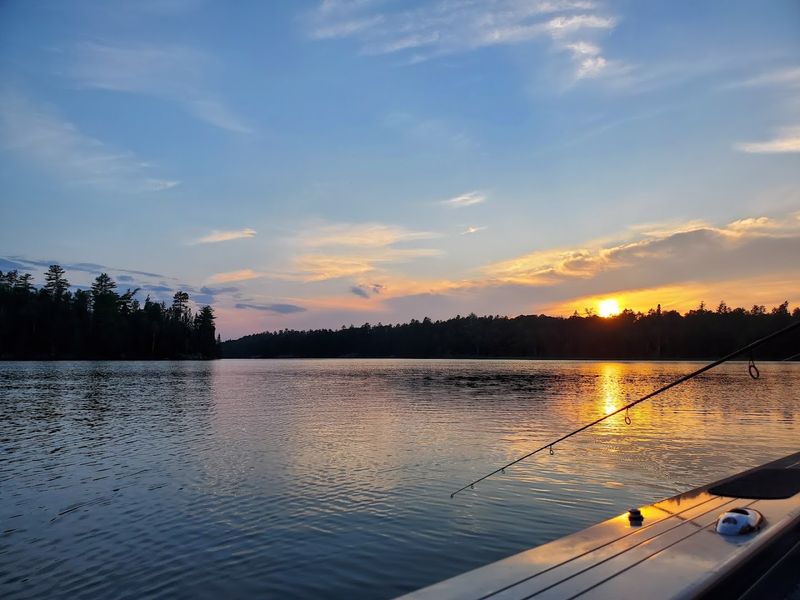
Rainy Lake sits along the Minnesota-Ontario border in Koochiching County and is one of the largest lakes in the entire state, covering nearly 360 square miles of open water.
Despite its size, the lake maintains impressive clarity thanks to its rocky Canadian Shield basin and the protected wilderness that surrounds it within Voyageurs National Park.
Boating on Rainy Lake feels genuinely adventurous because the lake is dotted with thousands of islands, many of them uninhabited and accessible only by water.
Fishing for walleye and northern pike is world-class here, and the lake draws anglers from across North America every summer season.
The town of International Falls on the western shore serves as the main gateway, offering lodging, outfitters, and boat rentals for visitors of every experience level.
Bald eagles are a near-constant presence overhead, and spotting a family of common loons calling across the open water is practically guaranteed on any given morning.
Rainy Lake is the kind of destination that makes you reconsider every beach vacation you have ever taken.
Lake Vermilion
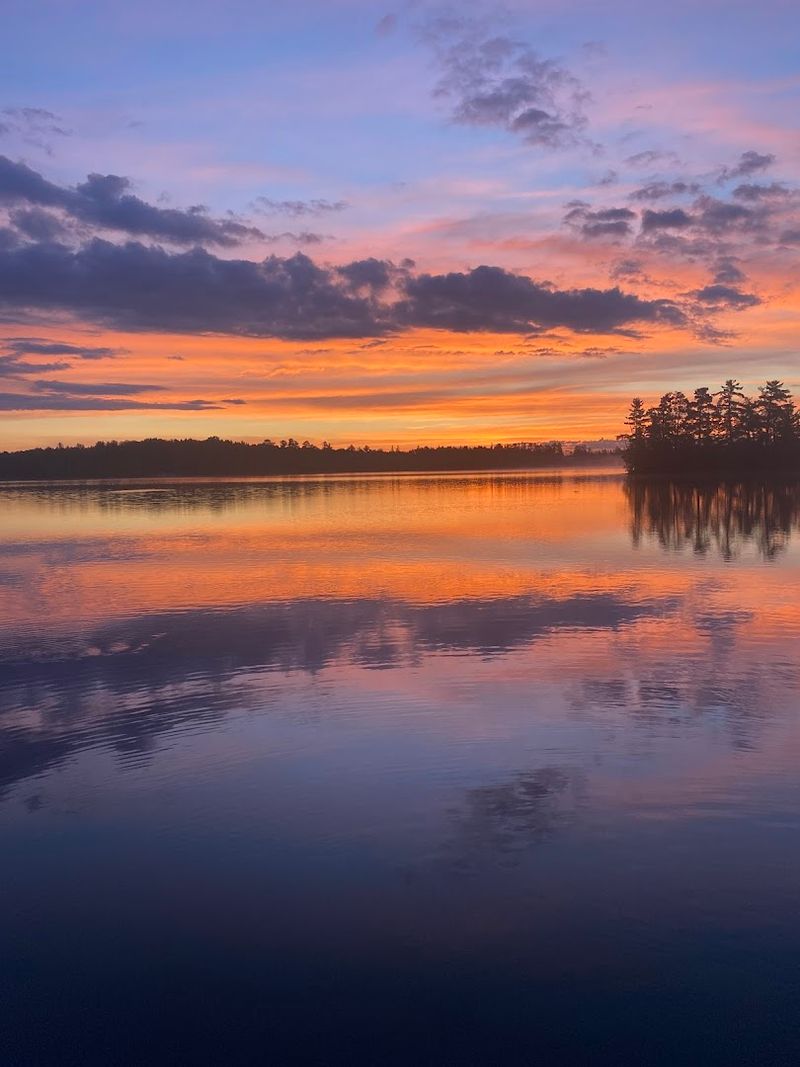
With over 1,200 miles of shoreline and nearly 365 islands, Lake Vermilion in St. Louis County is one of the most visually dramatic lakes in all of Minnesota.
Located near the town of Tower in the Iron Range region, Vermilion has long been a favorite retreat for families, anglers, and anyone who appreciates genuinely clear water in a spectacular natural setting.
The lake sits on the Canadian Shield, which means its basin is carved from ancient bedrock rather than soft sediment, a geological fact that contributes directly to its exceptional water quality.
Walleye, muskie, and smallmouth bass are all abundant, and the fishing pressure is spread across enough water that the experience never feels crowded.
Kayaking between islands is one of the most rewarding ways to explore Vermilion, with each rocky outcrop offering a new view and a new reason to stop paddling for a moment.
The lake also holds a fascinating piece of history: gold was discovered nearby in the 1860s, briefly turning the region into a minor boomtown.
Lake Vermilion is big, beautiful, and endlessly explorable.
Caribou Lake
Have you ever looked down into a lake and seen the bottom so clearly it felt almost unreal?
Caribou Lake in Cook County, northeastern Minnesota, gives you exactly that experience.
Located near the town of Lutsen along the North Shore, this lake sits in a region shaped by ancient glaciers and thick boreal forest.
The water clarity here is genuinely remarkable, with visibility that can reach impressive depths on a calm day.
Anglers love it for its healthy populations of lake trout and smallmouth bass, and paddlers appreciate how peaceful the shoreline feels away from busy tourist corridors.
Because Cook County receives relatively low levels of agricultural runoff, the water stays naturally clean and cold year-round.
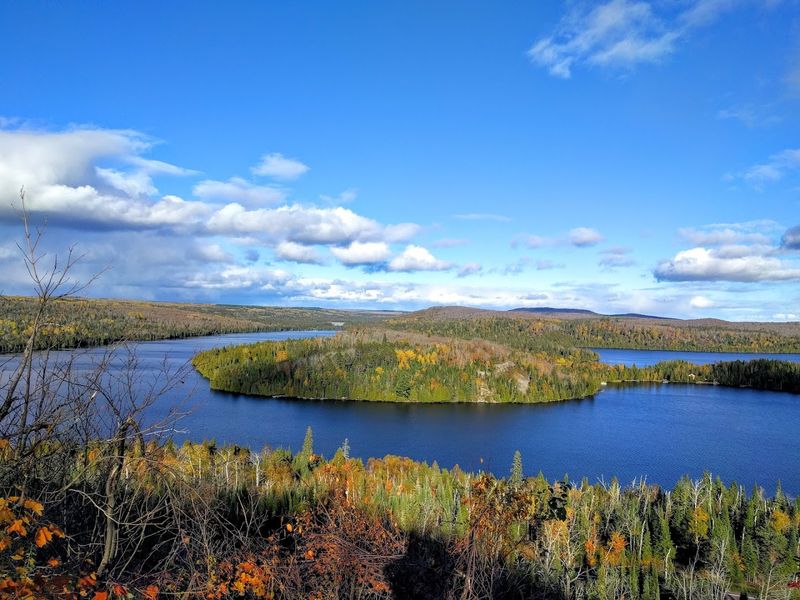
Fall is a particularly magical time to visit, when the surrounding maples and birches turn gold and orange, and their colors reflect perfectly off the still surface.
If you are planning a trip to the North Shore, Caribou Lake deserves a dedicated stop rather than just a passing glance from the highway.
Clearwater Lake
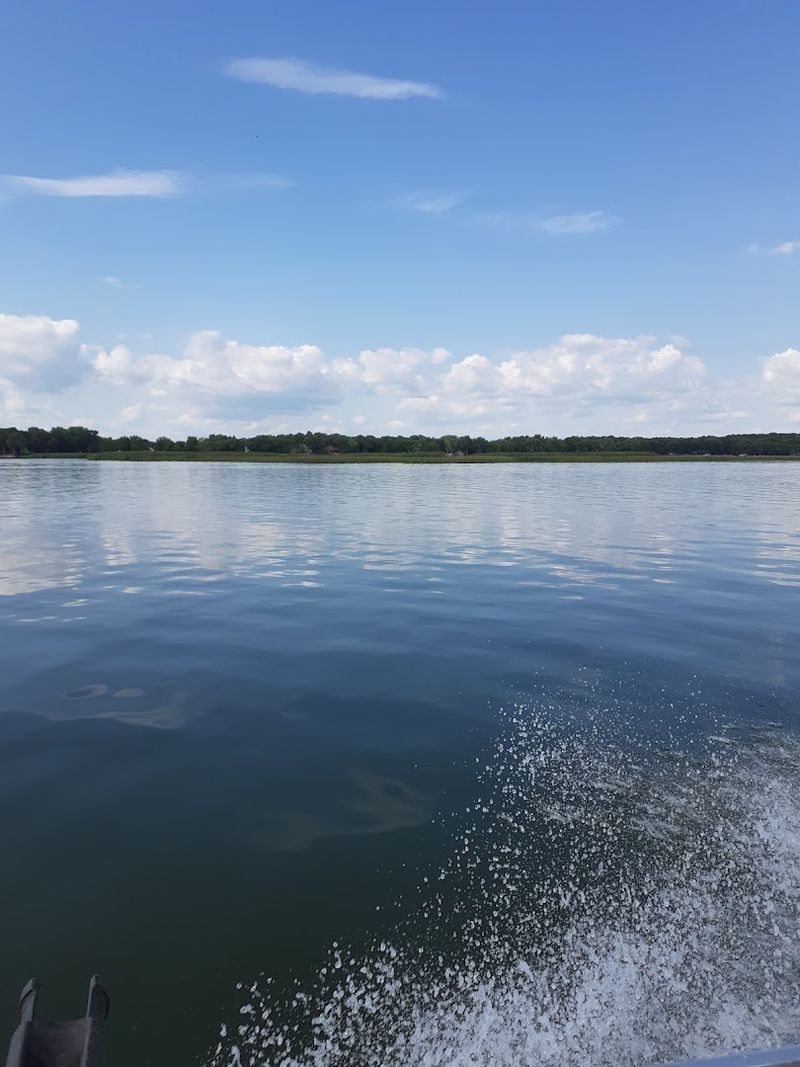
The name says it all, and Clearwater Lake in Wright County actually lives up to it.
Located near the town of Clearwater in central Minnesota, this lake is a popular destination for Twin Cities residents looking for a quick escape that does not require a four-hour drive north.
The water clarity here is impressive for a lake in the more developed central part of the state, and local conservation efforts have worked hard to keep it that way over the decades.
Swimming is a highlight, with sandy access points that are especially popular with families during the summer months.
Fishing for walleye, crappie, and bluegill keeps anglers busy, and the lake is calm enough for beginners to feel comfortable in a small boat or kayak.
The surrounding community takes obvious pride in the lake, and you can feel that care in the well-maintained public access areas and clean shoreline.
Clearwater Lake proves that you do not always have to travel to the far north of Minnesota to find water worth celebrating.
Sometimes clarity is closer than you think.
Saganaga Lake
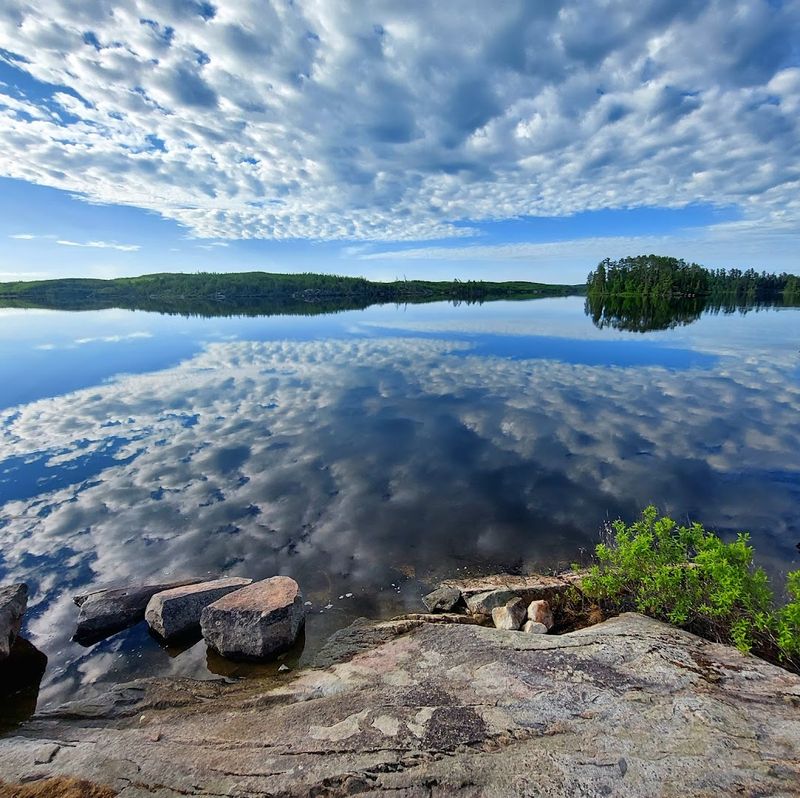
Sitting right on the Minnesota-Ontario border at the far northeastern tip of Cook County, Saganaga Lake is as remote as it is beautiful.
The lake is the largest in the Boundary Waters Canoe Area Wilderness and can only be reached by paddling or by a long drive up the Gunflint Trail from Grand Marais.
That remoteness is exactly what keeps the water so remarkably clear, with no nearby development or agricultural runoff to cloud the deep, cold basin.
Visibility in Saganaga can be extraordinary on calm days, allowing you to watch lake trout holding in the depths far below your canoe.
The lake covers roughly 13,000 acres and spans both countries, giving it a genuinely international feel that adds to its sense of scale and adventure.
Camping on the Canadian side requires an Ontario parks permit, while the Minnesota side falls under BWCA regulations, so a little planning goes a long way.
Loons, moose, and the occasional wolf track in the mud along the shoreline remind you that this is their home first.
Saganaga is not just a lake; it is an experience.
Lake Itasca
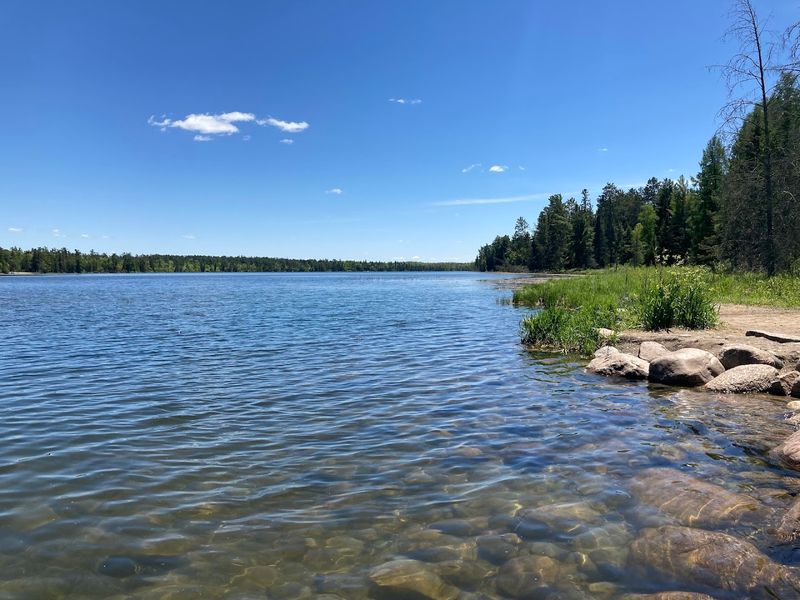
Every river has to start somewhere, and for the mighty Mississippi, that somewhere is the remarkably clear, shallow waters of Lake Itasca in Clearwater County.
Located within Itasca State Park near the town of Park Rapids, this is one of the most historically significant lakes in the entire country, and the water is clean enough that visitors actually wade across the river’s official source point on stepping stones.
The lake covers about 1,774 acres and is surrounded by old-growth pine forest, some of which includes trees that were already mature when European explorers first arrived in the region.
Clarity in Lake Itasca is consistently high, supported by the park’s strict environmental protections and the absence of heavy motorized boat traffic on the lake.
Cycling the paved trails around the park, swimming at the designated beach, and watching the sunset paint the pines in shades of copper are all experiences that draw visitors back year after year.
The park also offers excellent wildlife viewing, with white-tailed deer, bald eagles, and great blue herons all commonly spotted near the water.
Lake Itasca is where history and natural beauty meet in the most unexpected and quietly moving way.
Greenwood Lake
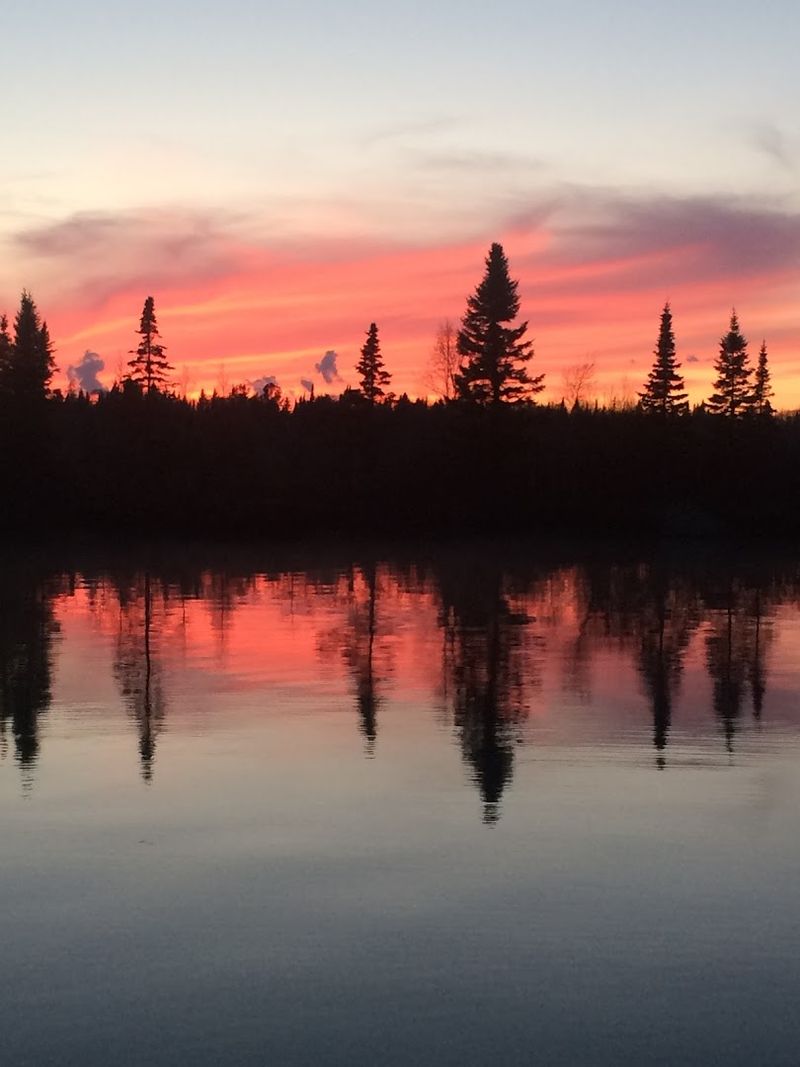
Some lakes feel like they belong in a painting, and Greenwood Lake in Lake County is absolutely one of them.
Greenwood Lake is located within the Superior National Forest.
This place sits far from busy roads and crowded boat launches, which is a big reason its water stays so remarkably clear.
The lake is popular with anglers chasing walleye and smallmouth bass, but even non-fishers find plenty of reasons to linger.
Paddling across its glassy surface on a calm morning feels almost meditative.
The quiet out here adds to the experience.
Instead of traffic and crowds, you get forested shoreline, open sky, and the kind of stillness that makes you want to stay longer than planned.
Bring a mask and snorkel if you have one.
Seeing the rocky bottom up close is genuinely unforgettable.
On sunny days, the water can look so clear that boats seem to float above the lake instead of on it. It is the kind of place that makes you slow down, look around, and appreciate just how beautiful Minnesota’s lake country can be.