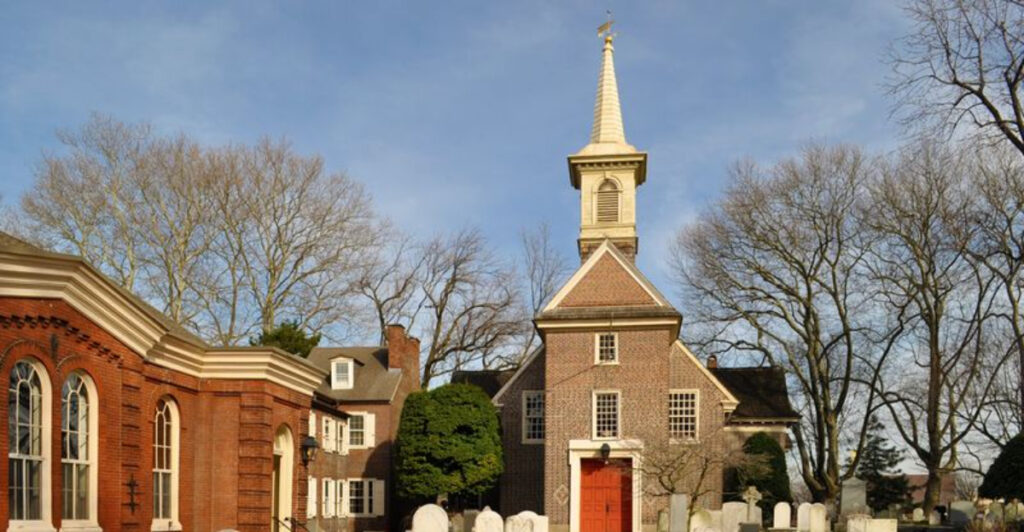
Pennsylvania is full of history, and some landmarks have stories that span centuries. One stone church has stood strong for over 300 years, quietly witnessing the city grow and change around it.
Its walls hold countless tales, from early settlers to modern visitors, and every brick seems to whisper a piece of the past. You can admire the craftsmanship, the ceilings, and the details that have lasted through time.
Architecture lovers will notice the unique design, while anyone with curiosity will enjoy spotting the small touches that make this church special. Walking the surrounding streets, it’s easy to imagine the generations who once passed through.
This is a place where history feels alive, and exploring it can turn an ordinary day into a journey through the past. For travelers who love stories, design, and discovery, this church is a must-see.
A Church That Has Outlasted Empires
Think about everything that has happened in 300 years. Wars were fought, cities were built, and entire generations came and went, yet this stone church on South Swanson Street still stands.
Gloria Dei Old Swedes Episcopal Church, located at 916 S Swanson St, Philadelphia, PA 19147, is one of the oldest churches in the United States. That fact alone is worth letting sink in for a moment.
Built by Swedish settlers in the late 1600s, the church officially opened around 1700.
The thick stone walls were constructed to last, and they clearly delivered on that promise.
Walking up to the building, visitors can feel the weight of its age in every carefully placed stone.
What makes this place so special is not just its age, but its consistency. Services have been held here for centuries without interruption.
The church was designated a National Historic Landmark, which means the entire country recognizes its importance.
Have you ever stood somewhere and felt like time had genuinely slowed down? This is one of those rare places where that feeling is not imagined.
The grounds are peaceful, the architecture is honest and unembellished, and the history wraps around visitors like something warm and familiar.
Swedish Roots Run Deeper Than Most Expect
Most people associate Pennsylvania with English Quakers or German immigrants, but the Swedish influence here runs surprisingly deep.
Gloria Dei Church was founded by Swedish Lutheran settlers who arrived in the Delaware Valley long before Philadelphia was formally established. That is a remarkable timeline that most visitors do not anticipate.
Swedish settlers made this area their home starting in the 1640s. They first worshipped in a log building before constructing the sturdy stone church that still stands today.
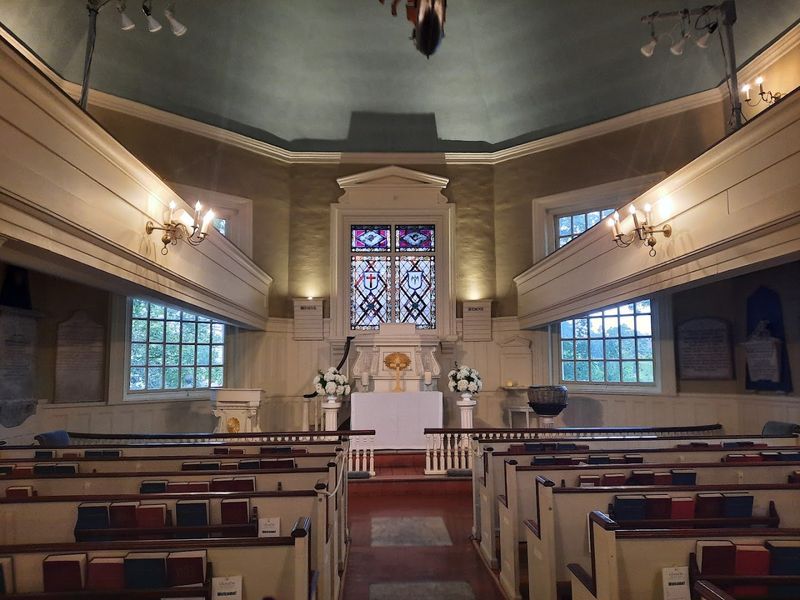
Inside, a model ship hangs from the ceiling, a nod to Swedish maritime traditions. Sailors would donate ships as thanks for safe journeys, and this small detail connects visitors to the people who crossed the ocean to start a new life.
Seeing that ship makes history feel real. It’s not flashy or dramatic, but it shows the determination and care that went into building something meant to last.
Over the centuries, the Swedish government has kept ties to the church, honoring it as part of shared heritage.
Imagine crossing the Atlantic in a tiny wooden boat and creating a building that’s still standing 300 years later. It’s a story that hits home in every detail.
The people who built Gloria Dei did exactly that, and their work continues to speak for itself every single day.
The Architecture Tells Its Own Quiet Story
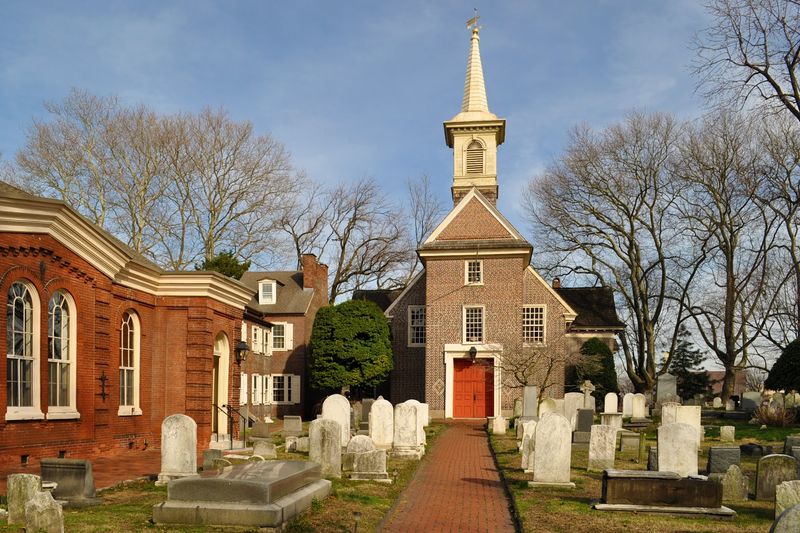
Not every historic building wears its age gracefully, but this one does. The stone exterior of Gloria Dei Church has a texture and solidity that modern construction simply cannot replicate.
The walls are thick, the lines are clean, and the overall design reflects a practical colonial sensibility that valued durability over decoration.
The building sits low and grounded, almost as if it has settled comfortably into the earth over three centuries.
The roofline is modest, the windows are small and deep-set, and the entrance carries a quiet authority that invites visitors in without overwhelming them.
Inside, the wooden pews are original, and the ceiling has a warm simplicity that encourages stillness.
Architecture enthusiasts will find genuine pleasure in the details here.
The craftsmanship reflects what was possible with the tools and materials available in the late 1600s, which makes each joint and stone placement feel intentional and earned.
There are no grand flying buttresses or elaborate stained glass windows. What exists instead is honest, purposeful building that has withstood centuries of Philadelphia weather without apology.
Visiting in the morning light is especially rewarding when shadows play across the stone facade in a way that photographs can barely capture.
National Historic Landmark Status Means Something Real Here
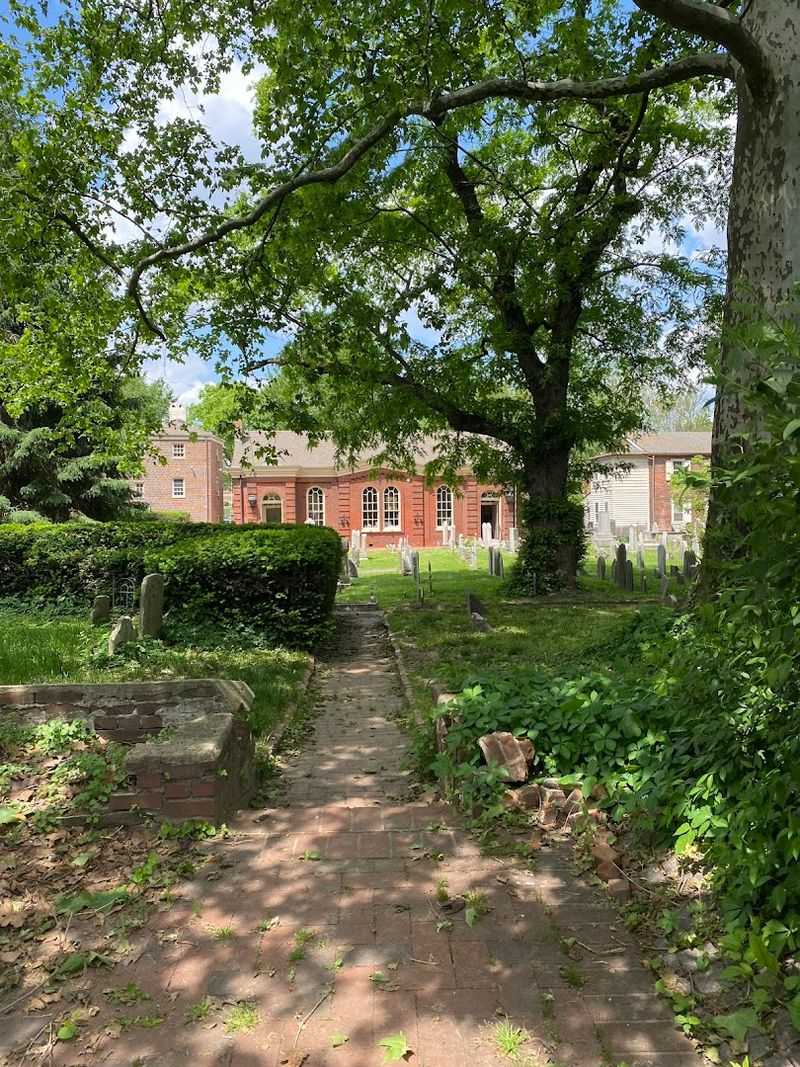
Not every old building earns National Historic Landmark status.
The designation is reserved for places that carry exceptional value to the history and culture of the United States.
Gloria Dei Church earned that recognition, and walking through its gates with that knowledge changes how the visit feels. The landmark designation means the property is protected and preserved at a federal level.
It cannot be casually altered or demolished. That kind of protection ensures that future generations will still be able to stand in the same spot and experience the same sense of connection to early American life.
For visitors today, it is a reassurance that what they are seeing is authentic and carefully maintained.
Philadelphia has no shortage of historic sites, but not all of them carry this level of official recognition.
Gloria Dei sits in a quieter part of the city compared to Independence Hall or the Liberty Bell, which actually makes the visit feel more personal and less rushed.
There are no long lines here. There are no crowds pressing in from every direction.
What visitors find instead is a genuine landmark that rewards those who seek it out rather than stumbling upon it. Does a place feel more meaningful when you have to look for it?
Many travelers say yes, and Gloria Dei seems to confirm that instinct. The effort of finding it is small, but the reward is genuinely outsized compared to what most people expect from a neighborhood church.
Weddings Have Happened Here For Centuries
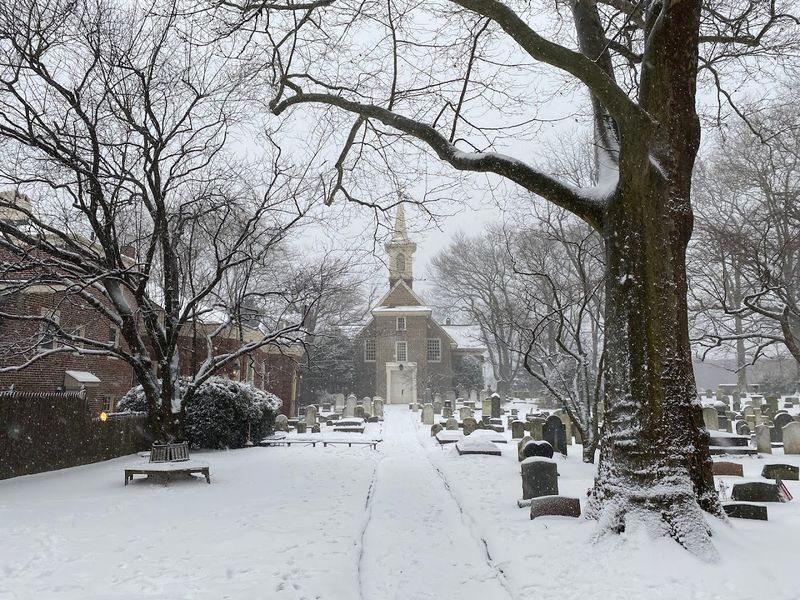
There is something quietly romantic about a church that has hosted weddings for over 300 years. Gloria Dei is still an active house of worship, and couples continue to choose this historic space for their ceremonies today.
Standing at the altar here means standing in the same place where generations of Philadelphia families marked their most important moments.
The church became part of the Episcopal Church in the early 1800s, and it has continued to serve its congregation ever since.
Weddings held here carry a weight of continuity that few venues anywhere in the country can honestly offer.
The wooden pews, the stone walls, and the soft light filtering through the windows create an atmosphere that feels both solemn and warm at the same time.
For couples who care about history and meaning, this is not just a beautiful backdrop. It is a living tradition.
The church staff takes pride in maintaining the space and welcoming visitors who come to see it, whether they are planning a ceremony or simply exploring the neighborhood.
A ceremony at Gloria Dei carries that feeling naturally without any need for extra decoration or staging.
The building itself does the work.
The Surrounding Neighborhood Adds To The Experience
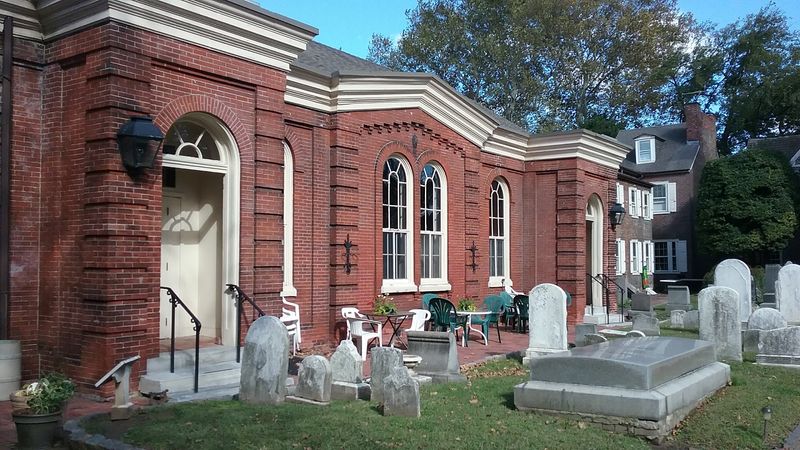
Exploring the streets around South Swanson Street feels truly alive. Row houses stretch along tree-lined sidewalks, and the pace here is calm, a nice break from the busy city nearby.
Everyday life happens all around you. People walking dogs, kids riding bikes, neighbors chatting on stoops.
From here, it’s just a short stroll to the Delaware River waterfront. You can wander along the water, watch boats drift by, and enjoy a mix of history and fresh air in one outing.
Penn’s Landing isn’t far, adding even more charm to a simple afternoon.
Gloria Dei itself sits right in the middle of all this energy. The old stone walls tell stories, but the real magic comes from seeing them surrounded by life in motion.
It’s history you can touch, and a neighborhood you can feel.
And the best part? Every corner holds a little surprise that makes you stop, look, and smile.
The Churchyard Holds Stories Worth Pausing For
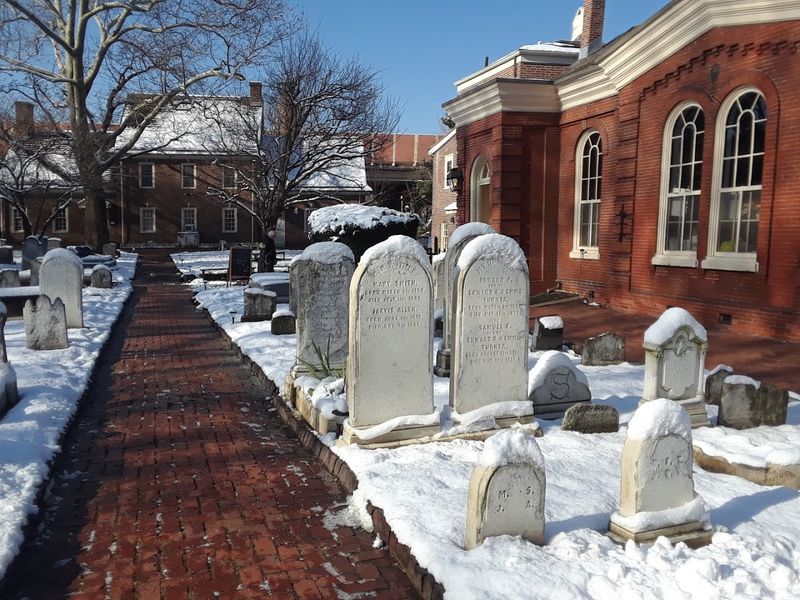
Behind the stone walls of Gloria Dei lies a churchyard that holds some of Philadelphia’s oldest grave markers.
The gravestones date back centuries, and many of them carry names and dates that connect directly to the earliest days of Swedish settlement in the Delaware Valley.
Walking through the churchyard is a slow, thoughtful experience that feels very different from touring a museum exhibit.
The inscriptions on some markers are worn smooth by weather and time, which only adds to the sense of genuine age.
Others remain legible, offering fragments of names and years that spark quiet curiosity.
The churchyard is small and enclosed, giving it a sheltered, contemplative atmosphere that stands in pleasant contrast to the open streets just outside the gate.
Many visitors spend more time in the churchyard than they initially planned, which is a reliable sign that a place has real pull.
There is no audio tour or guided narration required. The space speaks on its own terms and invites visitors to slow down and look carefully.
The churchyard is freely accessible during visiting hours, and it rewards anyone willing to spend fifteen or twenty quiet minutes simply paying attention to what is there.
Planning A Visit Is Easier Than Most People Think
Visiting Gloria Dei Church does not require elaborate planning or a packed itinerary.
The church is reachable by car, public transit, or on foot from several nearby neighborhoods.
Street parking is available in the surrounding blocks, and the walk from the nearest transit stops is short and pleasant.
The church grounds are generally open to visitors during daylight hours, though it is always a good idea to check current hours before heading out since schedules may vary around services or private events.
The visit itself moves at whatever pace feels right. Some people spend thirty minutes, others linger for over an hour exploring the building, the churchyard, and the surrounding streets.
Morning visits tend to offer softer, more flattering light on the facade, while afternoon visits can feel warmer and more relaxed.
There is no admission fee to visit the grounds, which makes this one of Philadelphia’s most accessible historic experiences.
Gloria Dei rewards the curious traveler who is willing to step slightly off the main path and spend time with something genuinely, quietly extraordinary.
A visit here is easy to fit into any Philadelphia trip and difficult to forget afterward.