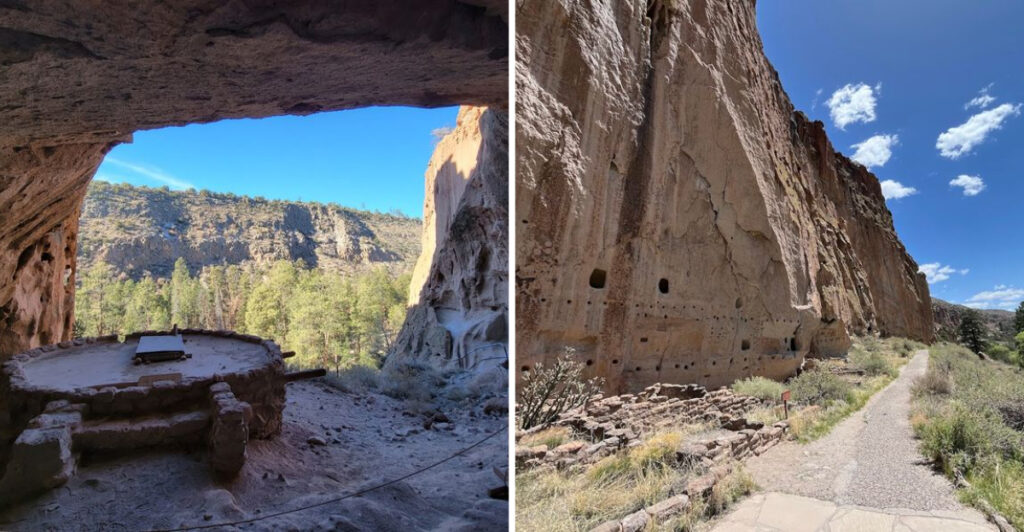
Some hikes make you wait for the payoff. This one starts delivering almost right away.
In New Mexico, a short stretch of trail pulls you into a landscape shaped by both nature and human hands, where carved rock walls and open canyon views share the spotlight. The path stays approachable, yet every step reveals something that feels layered and meaningful without slowing the pace. Ladders add a spark of fun, the terrain keeps shifting just enough to stay interesting, and the setting never feels crowded or overworked.
It is the kind of place where a simple walk turns into something you remember long after the dust leaves your shoes. New Mexico does this especially well, blending scenery and story in a way that feels natural instead of forced, and this trail is a perfect example of that balance.
A Short Trail With A Huge Payoff
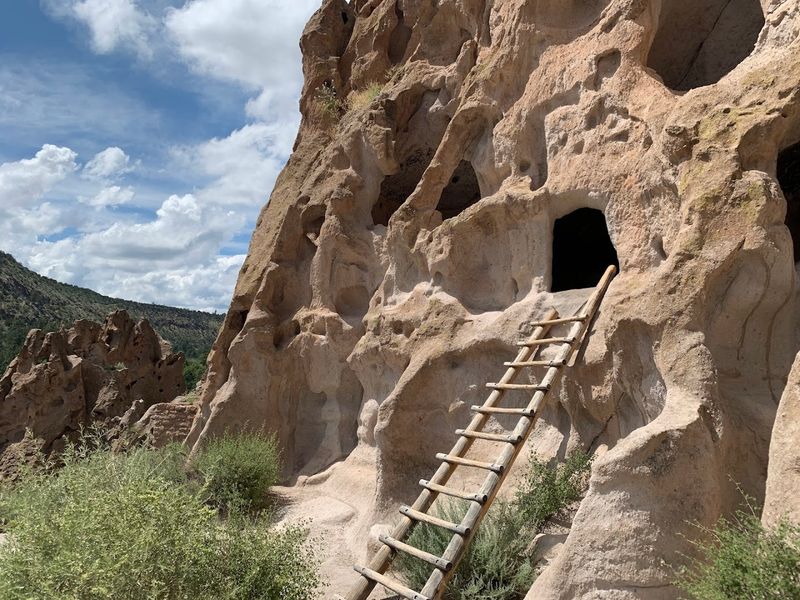
Here is the surprise: the walk is short, but the feeling is enormous. Bandelier National Monument packs ancient architecture, canyon scenery, and a remarkable sense of place into a trail that does not demand a full day of endurance.
The route most visitors remember best follows Frijoles Canyon and brings the past into plain view almost immediately.
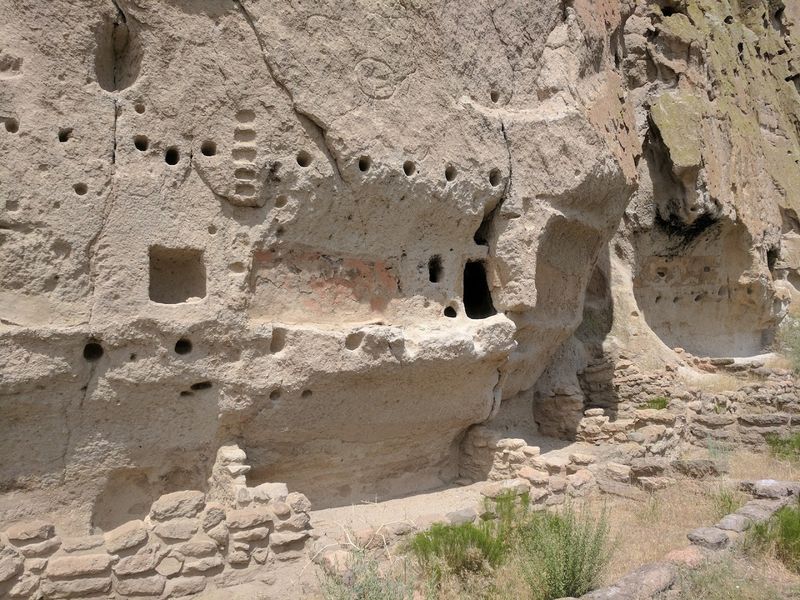
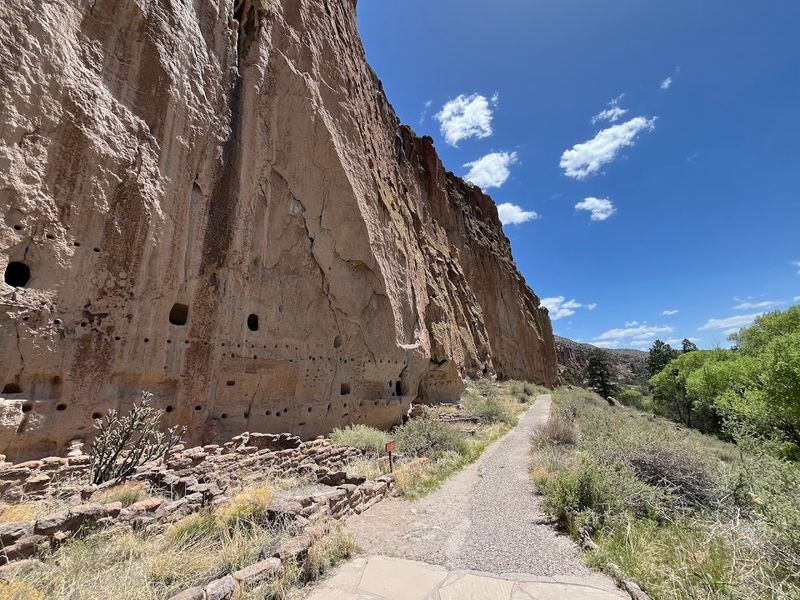
Instead of staring at ruins from far away, visitors move beside masonry walls, stand below cave-like cavates carved into soft volcanic tuff, and see how daily life once fit naturally into this landscape.
That easy access is part of the magic.
Families, casual hikers, and history lovers can all enjoy a meaningful visit without turning the outing into a grand athletic mission.
In New Mexico, where dramatic scenery is hardly rare, this place still stands out because it combines geology and human history so closely. A mile here can hold more fascination than many much longer hikes, and that is a very good bargain for dusty boots.
Where The Canyon Story Begins
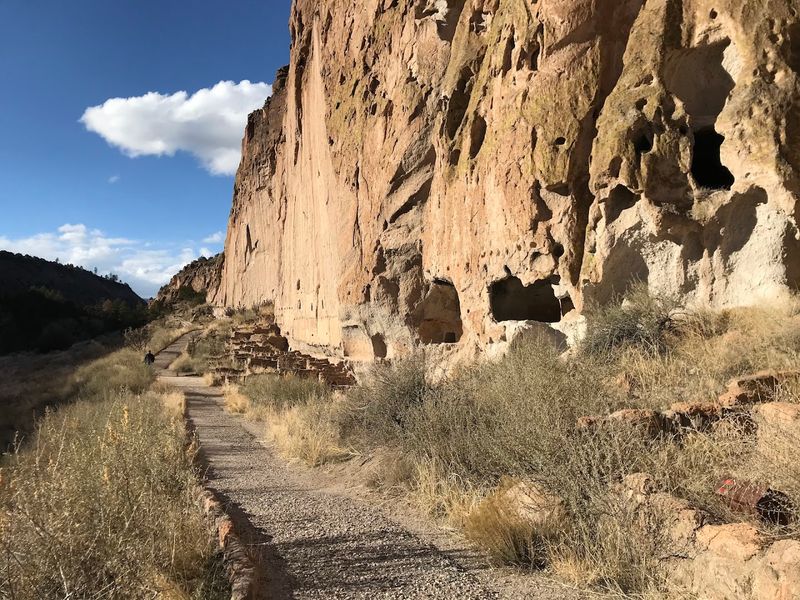
First things first: location matters, and this one is easy to pin down. Bandelier National Monument sits at 15 Entrance Rd, Los Alamos, NM 87544, in the canyon and mesa country of northern New Mexico, and that setting shapes every step of the visit.
The monument protects archaeological sites linked to Ancestral Pueblo people, along with broad swaths of rugged terrain that make the cultural story feel grounded in real topography, not museum glass.
Cliffs, ponderosa pines, open sky, and tan volcanic rock all work together to create an arrival that feels scenic before the first trail marker even appears.
That context helps the short hike land with more force. Visitors are not simply walking toward old walls.
They are entering a landscape where homes, ceremonies, food storage, travel, and community once fit into the canyon in practical and creative ways.
It is the kind of place where the map looks straightforward, but the atmosphere starts doing the heavy lifting long before the shoes hit the main path.
The Ancient Village On The Canyon Floor
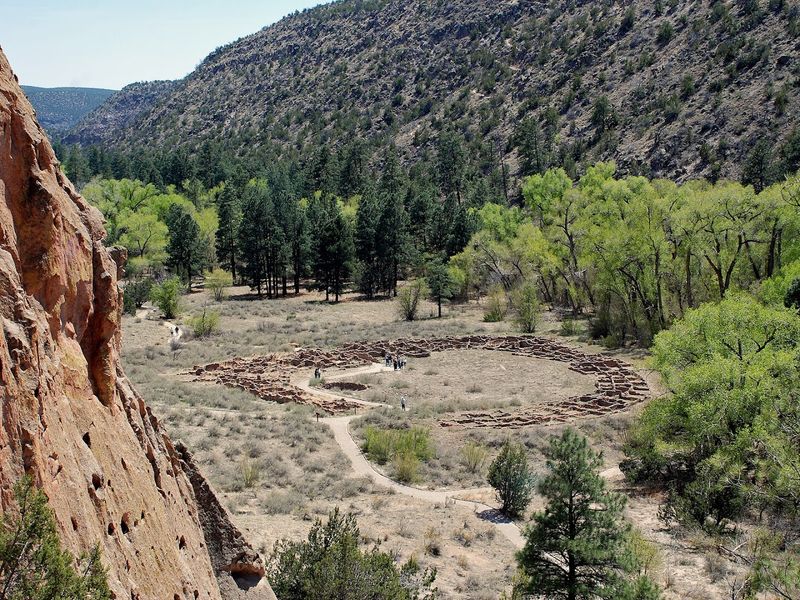
Then comes the village itself, and it is hard not to stop for a moment. Tyuonyi, the large ancestral pueblo on the canyon floor, gives the trail a powerful center and shows how substantial this community once was.
The remains form a broad circular footprint that helps visitors picture apartments, shared spaces, and the organized rhythm of daily life.
Even in ruin, the layout feels deliberate rather than mysterious, which is one reason Bandelier National Monument leaves such a strong impression.
There is no need for wild imagination or dramatic embellishment. The stonework, the scale, and the surrounding cliff dwellings already tell a compelling story about how people used this canyon intelligently and efficiently.
What makes the experience especially memorable is how close the trail brings visitors to these features.
Instead of reading a distant plaque and moving on, people can slow down and absorb details in the masonry, the terrain, and the relationship between the open village and the cliffside rooms above it.
History feels less abstract here, and that is the whole trick.
Ladders Into The Cliff Dwellings
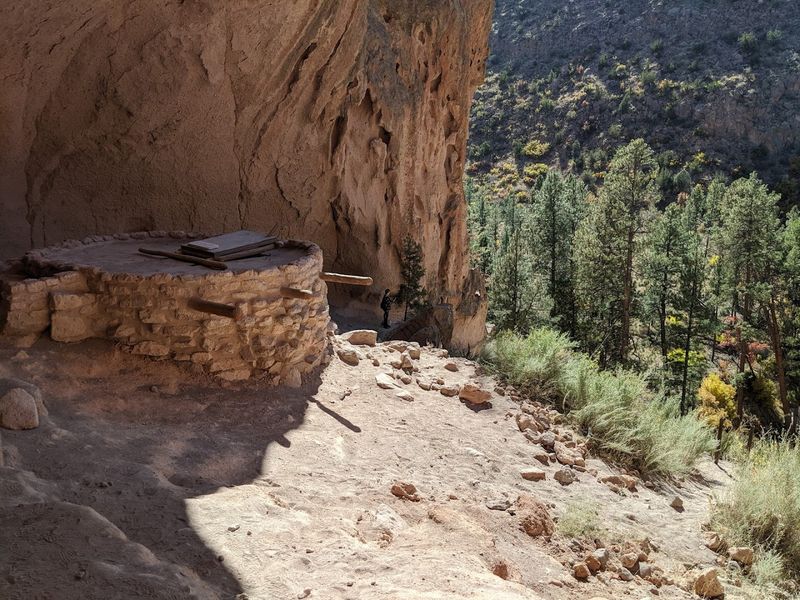
Yes, the ladders are the crowd favorite, and for good reason. Few places let visitors climb directly into human-carved rooms tucked into a cliff wall with such a clear sense of connection to the site.
These cavates were hollowed into soft volcanic tuff, then used alongside masonry fronts to create practical living spaces.
Looking inside them reveals smoke-darkened ceilings, compact interiors, and a stronger understanding of how architecture here depended on both craftsmanship and geology.
The physical act of climbing a short ladder changes the visit. It turns passive sightseeing into a more engaged experience, while still keeping the main trail approachable for people who prefer to stay on the ground.
That mix of access and choice is one of the smartest parts of Bandelier National Monument. Visitors can keep things gentle, or they can add a little vertical fun and step into rooms that make the past feel startlingly near.
For a short outing in New Mexico, it is an unusually hands-on way to appreciate an ancient site without losing the calm tone of the canyon.
Why The Rock Looks Like It Was Meant For Homes
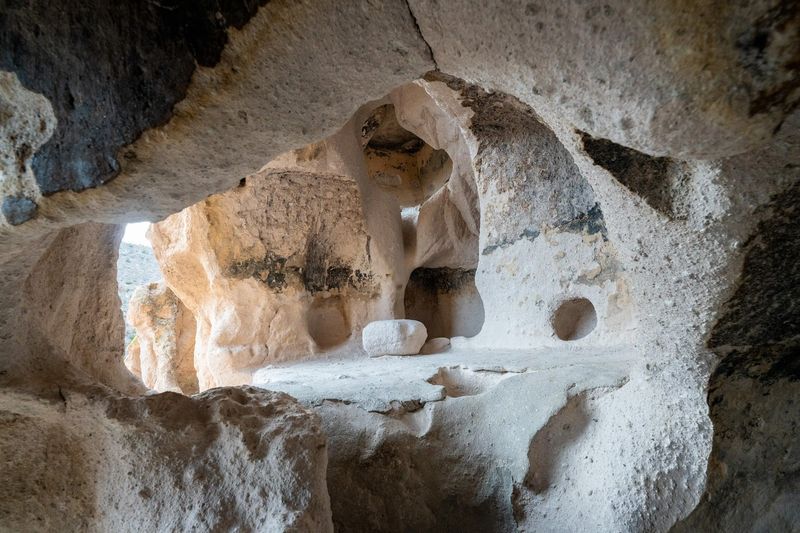
Look closely at the canyon walls and the geology starts stealing scenes. The soft volcanic tuff at Bandelier National Monument is not just pretty rock.
It is the reason so many dwellings could be carved directly into the cliffs.
This material formed after volcanic eruptions blanketed the region in ash, which later compacted into stone that is relatively easy to shape compared with harder rock.
That gave residents options. Rooms could be hollowed into the cliff, then expanded with masonry walls and connected to the broader settlement below.
The result feels elegant and practical at the same time. Architecture here was never separate from the land.
It grew out of what the canyon offered.
That is part of what makes the trail so satisfying for curious visitors.
Every step reveals a useful link between natural history and human ingenuity, and the landscape never feels like a backdrop pasted behind the story.
In New Mexico, where landforms often dominate the conversation, Bandelier quietly proves that rock can also explain community, shelter, and daily routine with impressive clarity.
Alcove House Adds A Dose Of Adventure
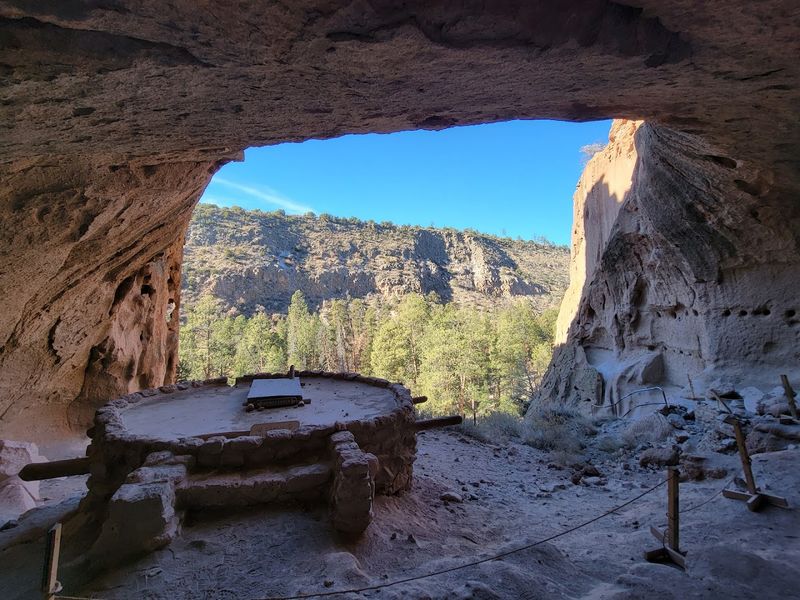
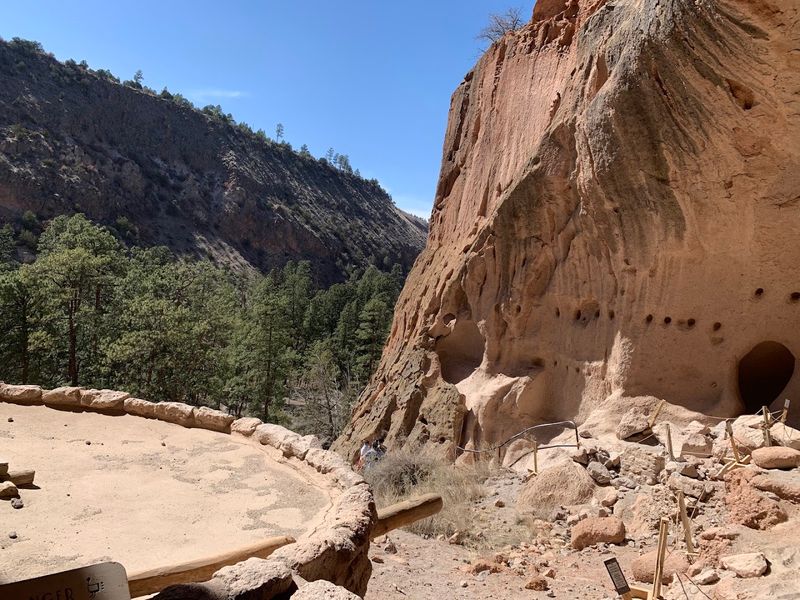
Want the trail to raise the stakes a little. Alcove House is where the easygoing walk picks up an adventurous edge, adding steep ladders and a perch high above the canyon floor.
Reaching it takes more effort than the gentler sections near the main loop, but that extra challenge is exactly what gives the site its punch.
The route climbs through a dramatic alcove where a reconstructed kiva helps visitors understand the ceremonial side of life in the canyon, not just the residential one.
The payoff is not only historical.
The elevated perspective opens wider views across Frijoles Canyon, making the monument feel larger and more layered than it first appears near the visitor area.
Conditions and access can change, so it is wise to check the latest trail status before pinning the whole day on this section.
Still, when open, Alcove House gives Bandelier National Monument a memorable jolt of vertical excitement that pairs beautifully with the more reflective pace of the village walk.
It is the part that makes calves complain and cameras celebrate.
Scenery That Never Plays Second Fiddle
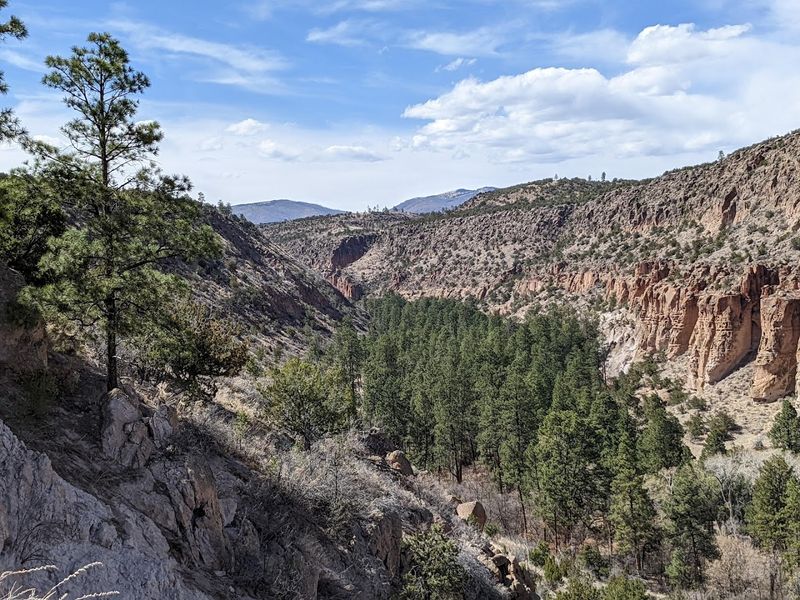
History may headline the visit, but the scenery refuses to be a supporting actor. Frijoles Canyon delivers shady stretches, tall cliffs, mesas, and open sky in a combination that keeps the walk visually lively the whole way.
Ponderosa pines soften parts of the trail, while exposed sections reveal the broad structure of the canyon and the layered textures of the rock. The balance is appealing.
One minute the path feels intimate and cool, and the next it opens into wider views that remind visitors they are moving through a much larger landscape.
That variety matters because it gives the archaeological features room to breathe. The dwellings are impressive, but they gain even more power when seen as part of a functioning canyon environment rather than isolated curiosities.
This is where New Mexico really earns a bow. The light is crisp, the colors shift gently through the day, and even short pauses can feel rewarding.
A camera helps, of course, but the place works just as well for people who prefer to store the view the old-fashioned way and let memory do the editing.
A Place Of Culture, Not Just Ruins
The most important thing to remember is simple: this is not a collection of random old structures. Bandelier National Monument protects places connected to Ancestral Pueblo communities, and that cultural context gives every wall, kiva, and carving greater meaning.
The site is often described as immersive because visitors do more than read labels. They move through spaces where people cooked, gathered, stored food, and carried out community life.
That immediacy can be deeply affecting without the monument needing to turn theatrical or sentimental.
It also helps explain why the visit feels different from some more heavily built-up heritage attractions. The canyon still carries a quiet, grounded atmosphere, so attention naturally shifts toward respect, observation, and careful curiosity.
For travelers exploring New Mexico, this matters.
The monument offers a chance to engage with the region’s Indigenous history in a way that feels direct and place-based rather than detached.
That sense of continuity is the real takeaway, and it lingers longer than any single photo stop or viewpoint ever could.
How To Make The Most Of A Visit
A little planning goes a long way here. The trails near the main archaeological sites are approachable, but altitude, sun, and limited parking can still turn a relaxed visit into a mildly sweaty puzzle if timing gets ignored.
Arriving earlier in the day is often the smartest move, especially during busier seasons when popular areas fill up faster.
Good walking shoes help with uneven sections, and water is important even on shorter routes because the dry air in northern New Mexico does not waste time reminding people who is in charge.
Visitors traveling with kids or less experienced hikers will appreciate that there are meaningful sights close to the visitor facilities.
Those wanting more distance can add longer trails and overlooks, but the core experience does not require a marathon mindset.
It is also worth giving the place more time than the trail mileage suggests.
Bandelier National Monument rewards lingering, reading exhibits, and pausing at overlooks rather than racing to tick off features.
This is one of those destinations where an unhurried pace does the storytelling better than any sprint ever could.
The Mile That Stays With You
Some destinations impress through scale, others through detail. Bandelier National Monument manages both, which is why a relatively short trail can feel so complete by the time the walk circles back.
There are cliff dwellings to climb into, village ruins to study, canyon walls that explain the geology, and views that keep reminding visitors they are in a striking part of New Mexico. Nothing about the experience feels padded.
Each stretch adds another layer, and the monument never needs to oversell itself.
That is what makes the one-mile idea so appealing. It sounds modest on paper, then quietly delivers one of the most memorable cultural walks in the Southwest.
For travelers who want history without a classroom mood, scenery without a punishing trek, and a destination that feels both accessible and genuinely meaningful, this place hits a sweet spot.
Bandelier proves that a trail does not have to be long to feel rich, and a village does not have to be standing whole to speak clearly.
By the end, the canyon has said plenty, and it says it with remarkable style.