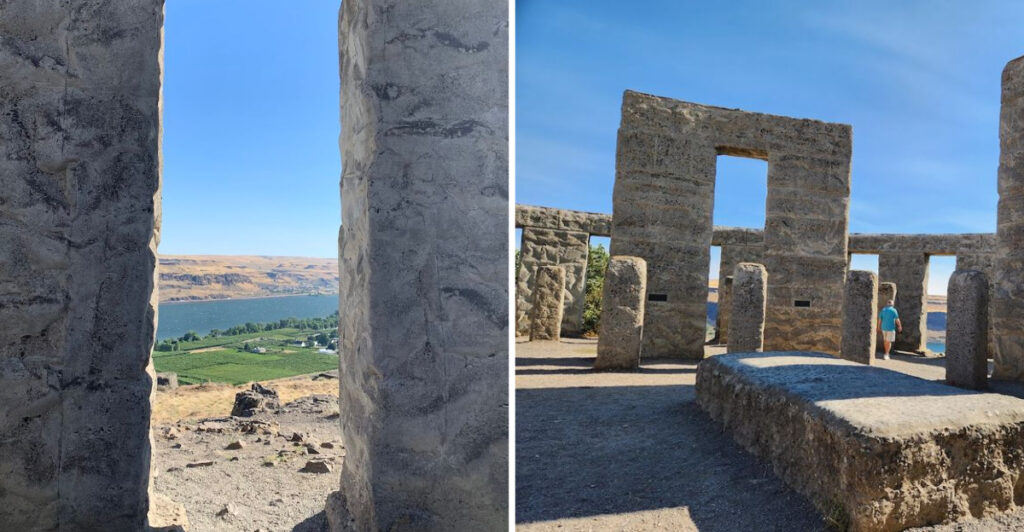
A full-scale Stonehenge replica in Washington?
That already sounds like a road trip worth talking about.
Then you get there, and it hits differently.
The scale is huge, the setting is dramatic, and the whole place has a strange, powerful presence that makes you stop and take it in a little longer than expected.
It is not only a roadside oddity or a photo stop.
It feels bigger than that, with history, scenery, and just enough mystery to make the experience stick.
This monument gives you massive views, a memorable story, and one of the most unusual landmarks in the state.
If you like places that feel a little eerie, a little beautiful, and completely unlike anything else around them, this Washington stop is very easy to get excited about.
A Monument Built For A Reason
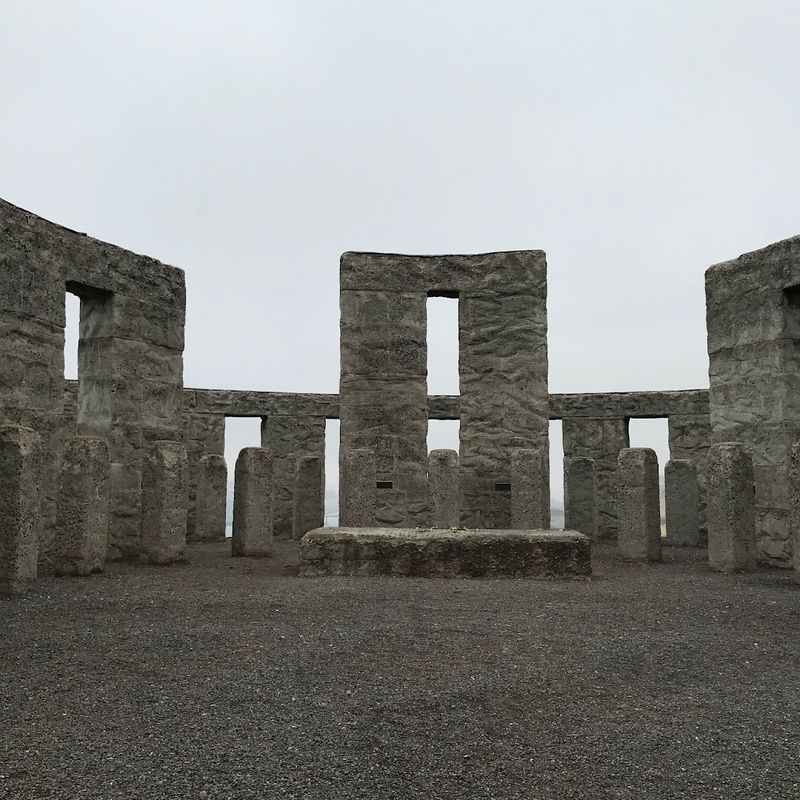
This place is much more than a strange roadside surprise.
Most roadside monuments come with a plaque and a parking lot.
This one comes with a full story that rewrites what you expect from a war memorial.
The Maryhill Stonehenge was constructed as a tribute to soldiers from Klickitat County who lost their lives during World War I.
The man behind the project believed that the original Stonehenge in England had once been used for human sacrifice, and he wanted to draw a symbolic parallel to the sacrifice of soldiers in war.
That connection gives the whole site a weight that sneaks up on you.
You walk among the columns expecting spectacle, and instead you feel something more solemn and meaningful.
Construction began in 1918, making this one of the earliest World War I memorials in the entire United States.
The dedication ceremony was held in 1929, with additional honors added later.
Knowing that history changes how you look at every single stone pillar standing before you.
The Man With A Vision
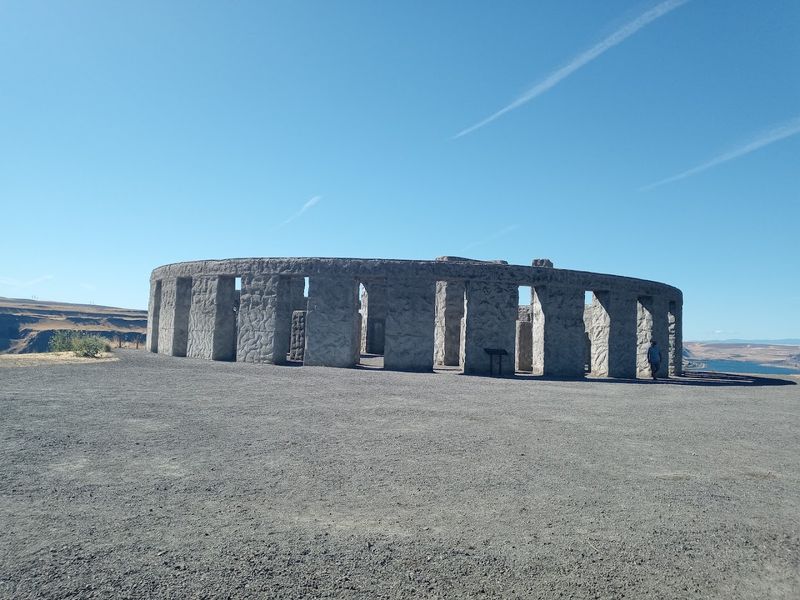
Big landmarks usually start with one person thinking unusually big.
The project was driven by a wealthy entrepreneur and road advocate who had deep ties to the Pacific Northwest.
He was passionate about good roads, peace, and public art, and he channeled that passion into building something that would outlast him by generations.
His name has become permanently linked to the region, and several landmarks in the area carry his legacy forward.
He deliberately chose the bluff above the Columbia River.
The elevated position, the sweeping views, and the dramatic landscape all felt fitting for a memorial of this scale and intent.
What makes his story particularly compelling is that he was not a politician or a military figure.
He was a private citizen who simply believed that sacrifice deserved to be honored in a lasting, visible, and unmistakable way.
That conviction is carved into every inch of the structure.
Where Exactly You Are Standing
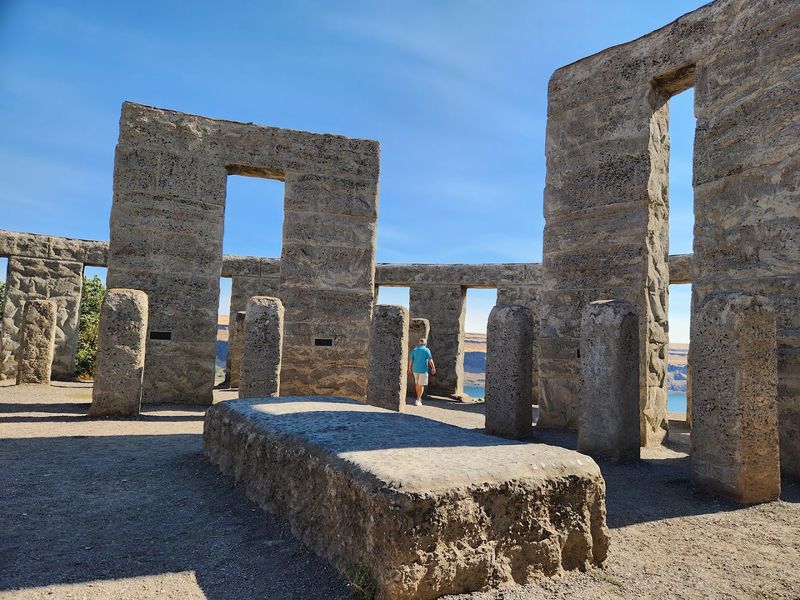
The location alone gives this place serious impact.
The site sits on a high basalt bluff on the Washington side of the Columbia River Gorge, just a short distance from the Maryhill Museum of Art.
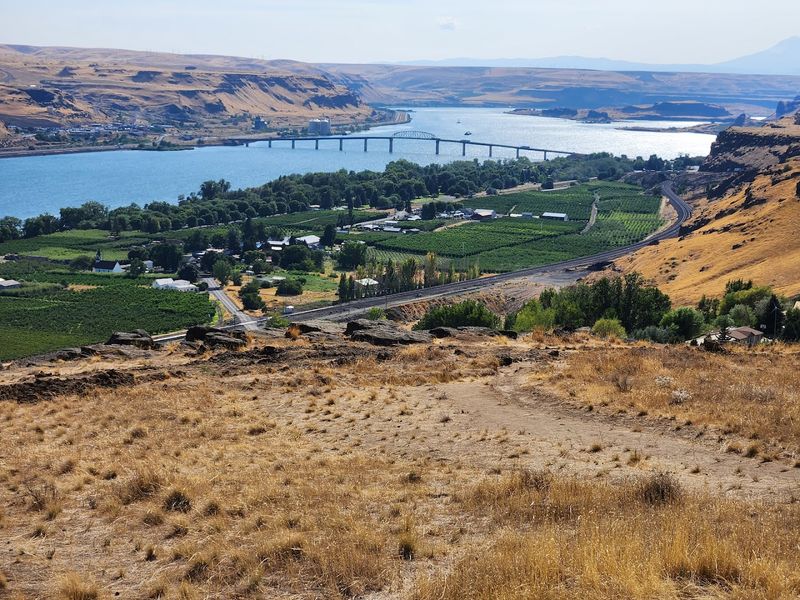
The elevation gives visitors unobstructed sightlines in nearly every direction, with the river cutting a wide path through the landscape far below.
Goldendale itself is a small, quiet town in Klickitat County, and the Stonehenge memorial is one of the main reasons visitors make the trip out this way.
The area has a rugged, open beauty that feels very different from western Washington’s forested coastlines.
On clear days, the views stretch across into Oregon, and the contrast between the arid plateau and the deep river gorge is genuinely dramatic.
Standing inside the stone circle, you feel both very small and very much a part of something much larger than the moment you’re in.
The address is Stonehenge Drive, Goldendale, WA 98620, and the drive in already tells you something special is ahead.
How It Compares To The Real Thing
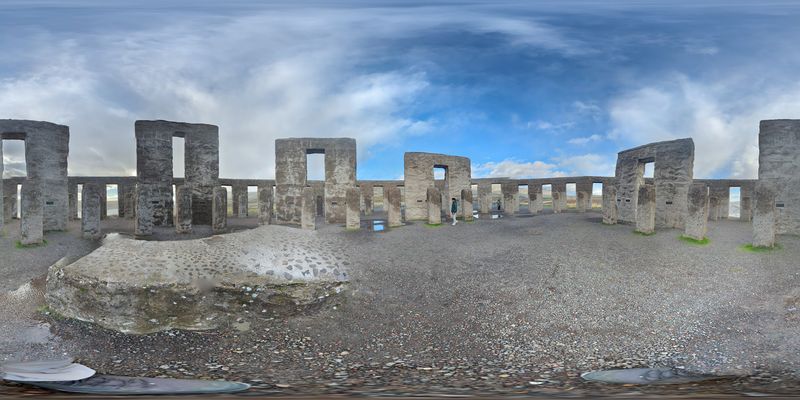
One of the most striking things about standing inside the Maryhill Stonehenge is realizing that it is actually more complete than the original in England.
England’s Stonehenge is iconic, but centuries of weathering and human interference have left it partially collapsed.
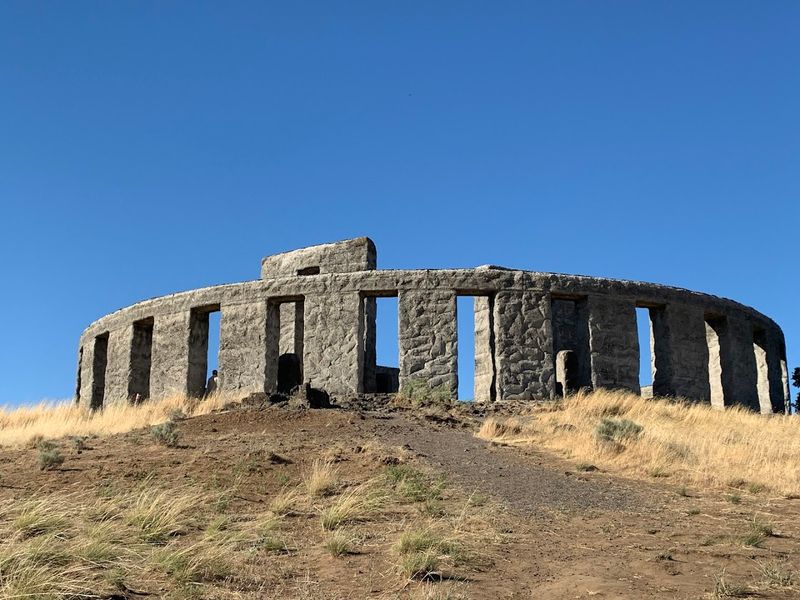
The Maryhill version was designed as a complete and accurate replica, with all the columns and lintels in place, forming an unbroken circle that gives visitors a clearer sense of what the ancient original may have looked like at its peak.
The structure is built from concrete rather than sarsen stone, which keeps it durable and structurally sound in a way the original can no longer claim.
The scale is faithful to the original’s proportions, meaning the columns tower above you in a way that feels genuinely imposing.
For anyone who has visited Stonehenge in England and felt slightly underwhelmed by the roped-off distance, this Washington version offers something refreshingly different: you can actually walk right up to the stones and stand among them.
The Atmosphere At The Site
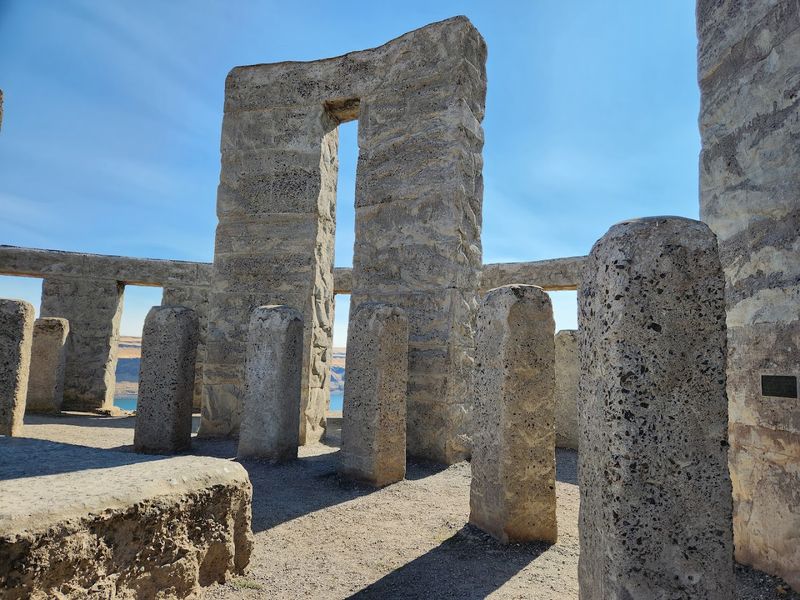
The mood here is hard to shake once you feel it.
It is quiet in a way that feels intentional rather than just empty.
The wind off the Columbia River Gorge moves through the columns with a low, steady sound.
The open landscape around the site amplifies that stillness, and even on days when other visitors are present, the space feels contemplative rather than crowded.
The memorial plaques positioned within the structure add to that mood.
Reading the names and details inscribed there grounds the experience in something real, pulling you away from the novelty of the stone circle and into the actual human story behind it.
Morning visits tend to offer softer light and fewer people.
Late afternoon brings golden tones that make the concrete columns glow in an almost warm, amber light.
Either way, the atmosphere rewards slowing down, taking your time, and resisting the urge to rush through for a quick photo and leave.
Sunrise And Solstice Alignments
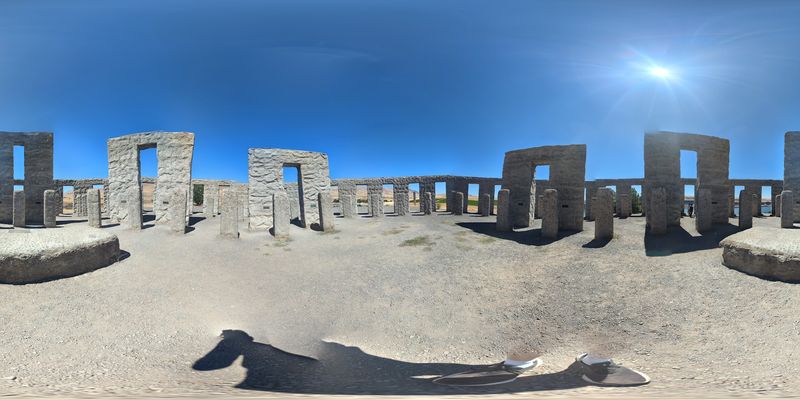
One detail that surprises many visitors is that the Maryhill Stonehenge was deliberately aligned with the sun, just like its ancient British counterpart.
The structure is oriented so that sunrises during the summer solstice align with the central axis of the monument.
This means that around the longest day of the year, the rising sun appears to frame itself perfectly within the stone columns in a way that feels almost theatrical.
Solstice gatherings at the site have become something of an informal tradition, drawing people who come specifically to witness that alignment at dawn.
It is not an official event in most years, but the location tends to attract a quiet, respectful crowd on those mornings.
Even on an ordinary day, watching the sun move across the open plateau and cast long shadows through the columns is worth arriving early for.
The interplay of light and stone shifts constantly, and no two visits at different times of day look quite the same.
The Columbia River Gorge As A Backdrop
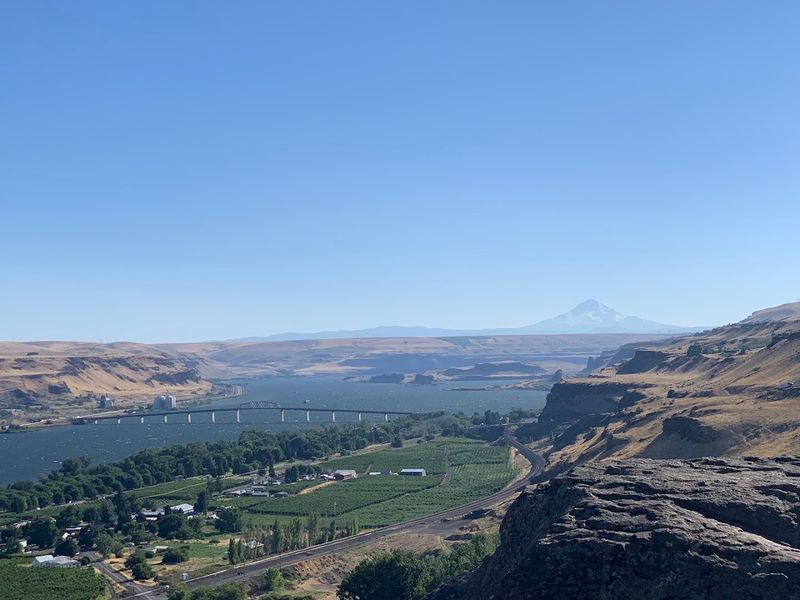
The Stonehenge structure alone would be worth the trip.
Add the Columbia River Gorge as its backdrop, and you have one of the more visually spectacular settings of any memorial in the country.
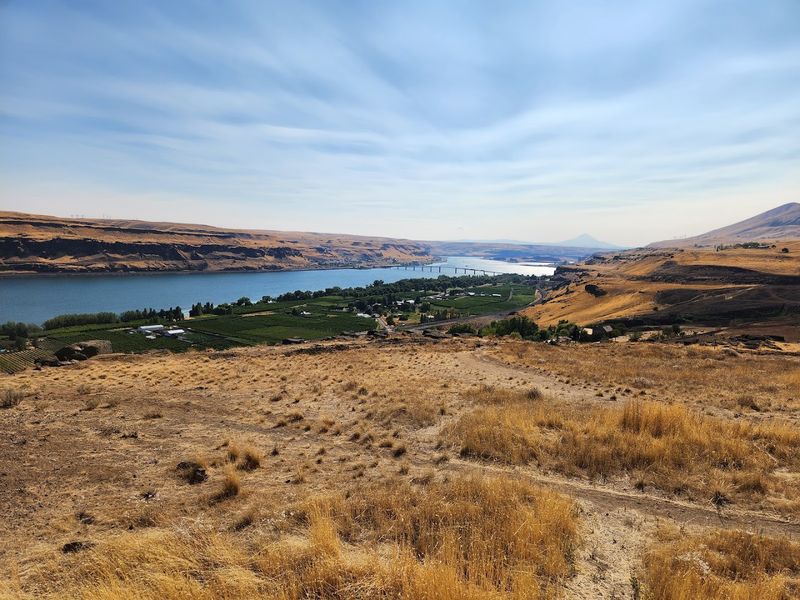
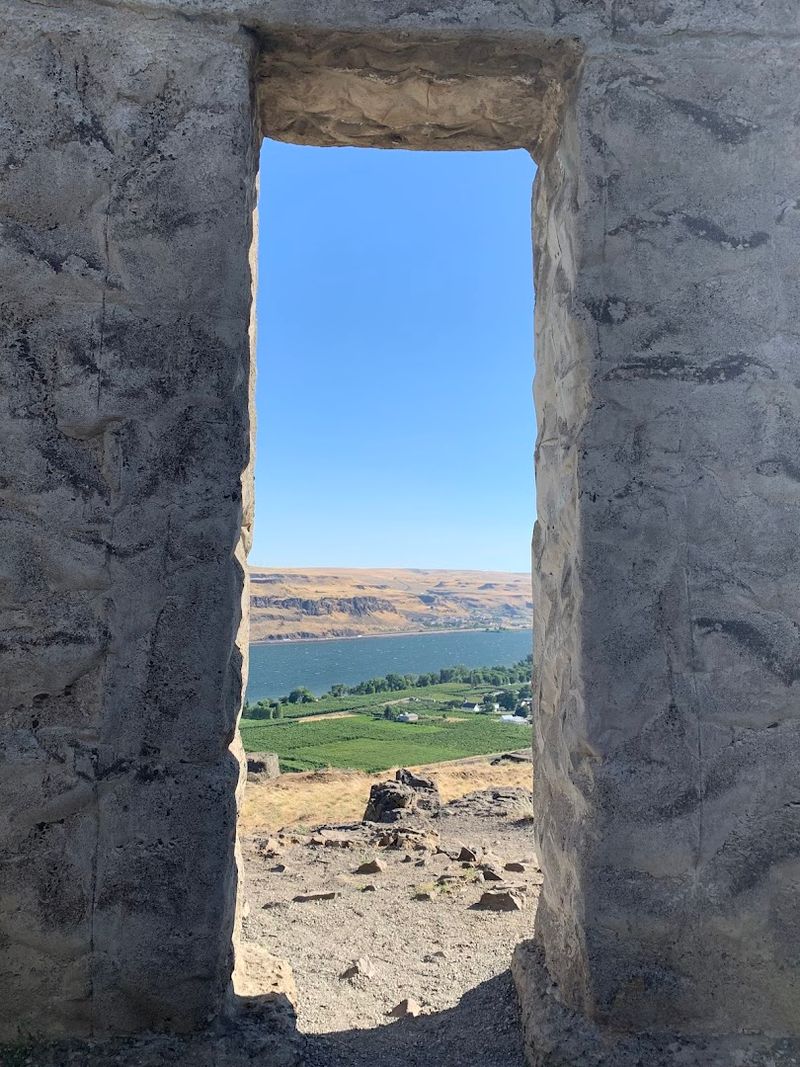
From the bluff where the monument stands, the gorge spreads out below in a wide, layered panorama.
The river itself looks almost impossibly blue on clear days, cutting between the steep basalt walls that define the gorge on both the Washington and Oregon sides.
The landscape around the site is high desert plateau, which means the vegetation is sparse and the sky dominates.
That openness makes the views feel enormous, and it also means weather changes can be dramatic and fast-moving.
Photographers tend to gravitate toward the eastern edge of the site, where the view down the gorge is widest.
Sunrise shoots from this vantage point regularly produce striking results, with the stone columns silhouetted against a sky that shifts through an entire range of colors in just a few minutes.
What To Expect When You Arrive
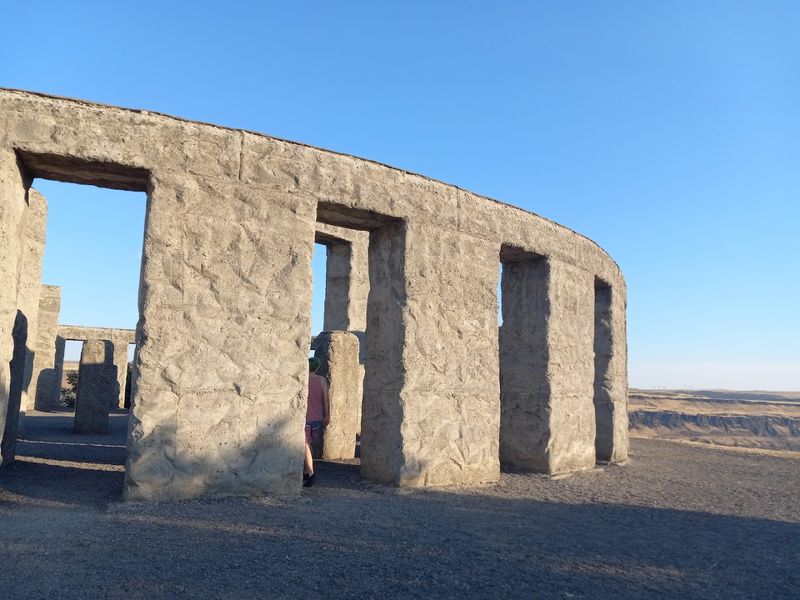
Pulling up to the Maryhill Stonehenge for the first time, many visitors do a double take.
The structure appears suddenly and dramatically as you approach along the plateau road, and the scale of it reads very differently in person than in any photo.
The site has a small parking area and is generally easy to access.
There is no complicated ticketing system or long entry queue.
Visitors walk directly from the parking area up a short path to reach the monument itself.
Informational signage around the site explains the history, the construction, and the intent behind the memorial.
Reading through these before exploring gives context that makes the whole visit more meaningful.
The ground around the monument is open and relatively flat, making it accessible for most visitors.
There are no formal guided tours running at set times, so the pace of a visit is entirely self-directed.
That freedom to linger, circle the structure, and take it in from different angles is actually one of the site’s quiet strengths.
The Nearby Maryhill Museum Of Art
A short drive from the Stonehenge memorial sits the Maryhill Museum of Art, and combining both stops into a single visit makes a lot of sense.
The museum is housed in a large mansion that was originally intended as a private home.
It was later converted into a public art museum and now holds a surprisingly rich collection that includes works by Auguste Rodin, a significant collection of chess sets, and pieces connected to Queen Marie of Romania.
The connection between the museum and the Stonehenge memorial is direct, as both were championed by the same visionary figure who shaped this corner of Washington.
Visiting both in the same day gives a fuller picture of his ambitions and his unusual aesthetic sensibilities.
The museum grounds also have gardens and viewpoints that overlook the gorge, adding yet another layer to an already scenic stop.
For a region that many travelers pass through without stopping, this pairing of art and architecture rewards anyone willing to slow down and explore.
Best Time Of Year To Make The Trip
The Columbia River Gorge region has its own weather personality, and knowing what to expect makes planning a visit considerably easier.
Spring tends to be a favorite season for the area.
The plateau surrounding the memorial comes alive with wildflowers, and the temperatures are comfortable without being extreme.
The gorge below often has dramatic cloud formations rolling through, which adds real atmosphere to photographs taken from the bluff.
Summer brings heat to this part of Washington, and the high desert setting means there is little shade at the monument itself.
Early morning visits during summer months are strongly recommended, both for comfort and for the quality of light.
Fall offers another appealing window, with cooler temperatures and clearer skies after the summer haze clears.
Winter visits are possible but can involve wind and cold that make lingering outdoors less comfortable.
Whatever season you choose, the monument itself is unchanged, but the surrounding landscape shifts enough to make each visit feel distinctly different.
Road Trip Context And Getting There
The drive out is part of what makes this stop so satisfying.
The memorial sits along US Route 97 near the Columbia River, accessible from both the Washington and Oregon sides of the gorge via the Sam Hill Memorial Bridge.
From Portland, Oregon, the drive runs roughly an hour and a half east along the gorge, passing through increasingly dramatic landscape as the forest gives way to open basalt plateau.
From the Seattle area, the drive is longer but very manageable as part of a broader eastern Washington road trip.
The roads in this region are generally uncrowded, and the scenery along the gorge corridor is consistently rewarding.
Pairing the Stonehenge stop with the nearby Maryhill Museum and a drive along the Historic Columbia River Highway makes for a full and satisfying day.
This stretch of Washington is often overlooked by travelers focused on the coast or the mountains, which means the roads stay refreshingly quiet.
Why This Stop Earns Its Reputation
Some roadside attractions earn their reputation through sheer quirk.
This one earns it through a combination of history, setting, and genuine scale that simply does not shrink on repeat visits.
The Maryhill Stonehenge manages to be both a serious memorial and an extraordinary visual spectacle at the same time.
That dual nature is rare, and it means different visitors connect with it in different ways.
Some come for the history, some for the views, some for the photography, and some simply because they saw a sign on the highway and pulled over on instinct.
All of them tend to leave having stayed longer than they planned.
That says something meaningful about a place.
Washington state has plenty of landmarks worth seeking out, but few deliver the particular combination of surprise, beauty, and substance that this one does.
Standing inside those columns above the gorge, with the wind moving through and the river shining far below, is the kind of travel moment that stays with you long after the drive home is done.