You planned a trip. Now make it one worth talking about. North Dakota’s wild west has a town that will stop you in your tracks. Canyon walls painted in red, gold, and purple.
A main street that looks straight out of the 1880s. Bison wandering like they own the place, because honestly, they do. Think you need a whole week? You might be right.
This is where the badlands stretch out farther than your eyes can follow. Where cowboy shows still draw real crowds and hiking trails lead to views that make your jaw drop.
Every sunset here feels like a personal show put on just for you. North Dakota is not waiting for you to be ready. Pack the bag, load up the car, and point yourself west. The adventure is already out there.
The Town That Time Forgot To Rush
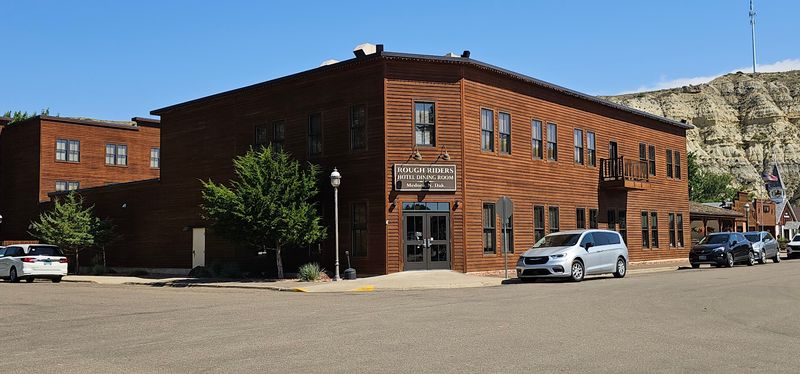
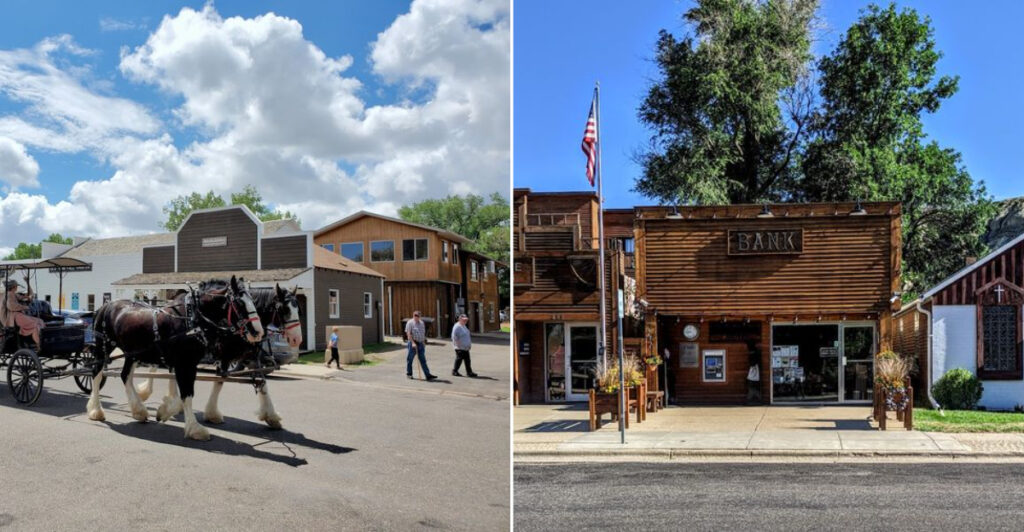
Medora sits in Billings County, North Dakota, right at the edge of Theodore Roosevelt National Park. The town has a population of fewer than 150 people, which makes it one of the smallest county seats in the entire country.
That small-town feel is exactly what makes a visit here so refreshing. There are no traffic jams, no crowded malls, and no noise except for the wind moving through the canyon.
The main street is lined with buildings that have kept their original old-west character, and walking through it feels like flipping through a history book that someone left open for you.
What keeps people coming back is not just the scenery but the pace. Locals greet strangers with a nod and a smile. Shop owners actually want to chat. There is a warmth here that bigger cities often lose somewhere along the way.
The town was named after Medora von Hoffman, the wife of a French nobleman who set up a cattle empire here in the 1880s. That backstory alone is worth the drive.
Every building, every trail, and every landmark carries a piece of that original story forward, keeping the spirit of the old frontier alive in a way that feels completely genuine and not staged for tourists.
Badlands That Belong On A Postcard
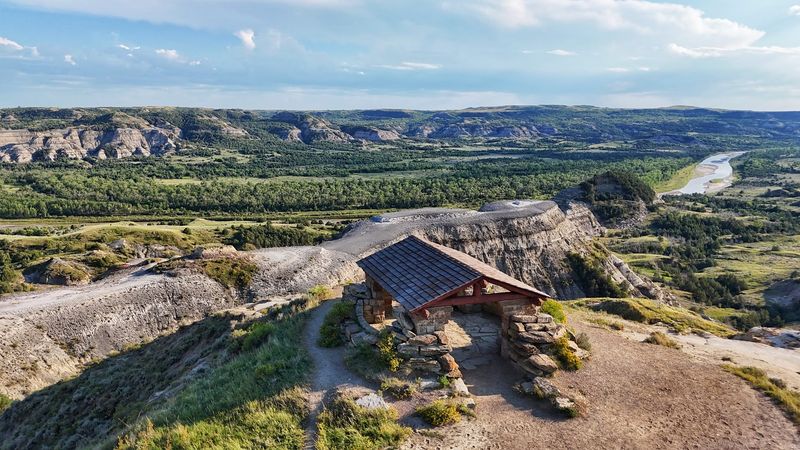
The landscape around Medora is the kind that makes photographers forget to blink. The badlands stretch out in every direction, full of layered rock formations in shades of red, orange, tan, and purple.
These formations were shaped over millions of years by wind and water, and the result is something that looks almost too dramatic to be real.
Theodore Roosevelt National Park surrounds the town and offers two main units for visitors to explore. The South Unit is closest to Medora and is the most visited, with scenic drives, overlooks, and trails that range from easy walks to full-day hikes.
One popular stop is the Painted Canyon Overlook, where you can stand at the rim and look out over miles of badland terrain without taking a single step downhill. The view from up there has made more than one person go completely quiet for a few minutes.
The park also protects prairie dog towns, wild horses, elk, and of course, the famous bison herds. Watching a bison graze just a few feet from your car window is one of those experiences that stays with you long after you have driven home.
The badlands do not ask for much, just your attention and a good pair of walking shoes.
A Cowboy Musical That Actually Delivers
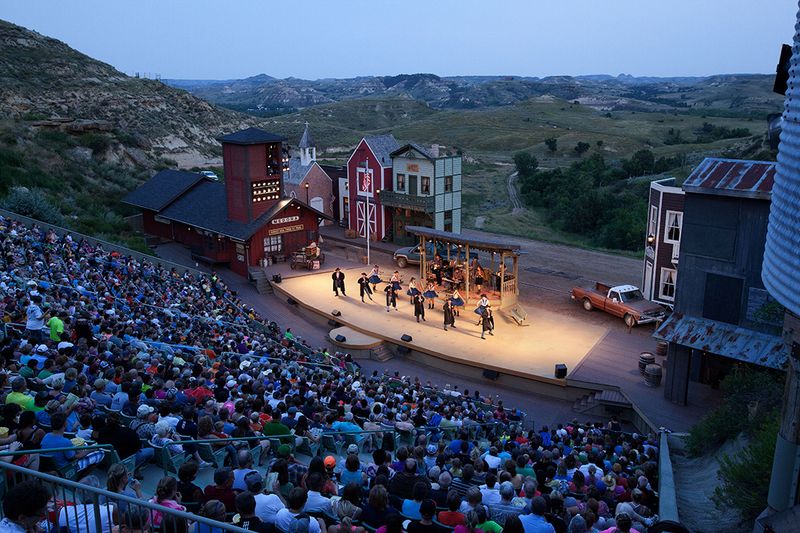
Every summer, Medora hosts the Medora Musical, an outdoor show performed at the Burning Hills Amphitheatre right on the side of a butte. The stage has a backdrop that is literally the badlands, which means no set designer in the world could compete with what nature provides for free.
The show has been running since 1965, making it one of the longest-running outdoor musicals in the American West. It celebrates the history of North Dakota, the legacy of Theodore Roosevelt.
Families love it. Solo travelers love it.
Even people who said they were not into musicals tend to walk out grinning. The seating area wraps around the hillside, and the views during the show are genuinely stunning, especially as the sun sets behind the buttes during the opening numbers.
Do you know what makes this musical stand out from every other outdoor show in the country? It is the combination of a world-class production with a setting that cannot be replicated anywhere else on earth. The amphitheater holds thousands of guests, but the atmosphere still feels personal and connected.
Tickets sell out early in the season, so planning ahead is a smart move. The Medora Musical returns every summer and the 2026 season kicks off on June 3rd at the amphitheatre.
Theodore Roosevelt’s Wild Chapter
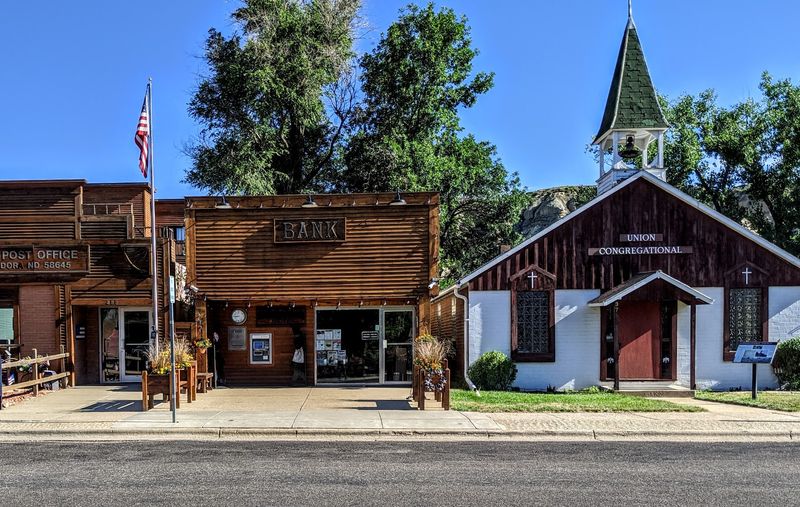
Long before Theodore Roosevelt became the 26th President of the United States, he came to the North Dakota badlands as a grieving young man looking for something to hold onto.
He first came to Dakota Territory in 1883 to hunt bison and invested in the Maltese Cross Ranch.
Roosevelt ranched in the Medora area for several years, and he later said that the time he spent in the badlands shaped the man he became.
His love for the land directly influenced his work as president, when he protected over 230 million acres of American wilderness through the creation of national parks and forests.
Visitors can tour the Maltese Cross Cabin, the actual log cabin where Roosevelt once lived, which now sits on the grounds of the park visitor center. The cabin has been preserved carefully, and standing inside it gives you a direct connection to one of the most influential conservation stories in American history.
How many small towns can say that a future president found himself within their borders? The Chateau de Mores Historic Site nearby adds even more historical depth, telling the story of the French marquis who founded Medora and whose ambitions shaped the town.
Together, these two stories give Medora a historical richness that most towns ten times its size would envy. History here is not behind glass; it is all around you.
Trails For Every Type Of Explorer
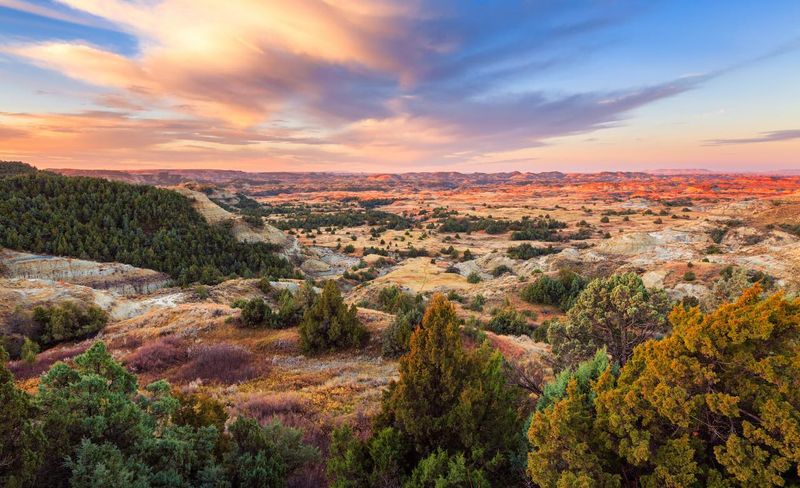
Medora is a paradise for anyone who likes to move their feet. The trail network inside Theodore Roosevelt National Park covers dozens of miles across both the North and South Units.
The Petrified Forest Loop is a favorite among those who want a longer challenge, running about ten miles through remote backcountry where petrified wood pieces scatter the ground like natural art.
The Coal Vein Trail is shorter and tells the story of an underground coal seam that burned for years, changing the color of the surrounding rock.
For those who prefer riding to walking, horseback riding is available through local outfitters, and several trails are open to horses. There is something about exploring badland terrain on horseback that makes the whole experience feel perfectly matched to the setting.
The Jones Creek Trail is an easy, flat path that winds through the valley floor and gives walkers a close-up look at the creek, the cottonwood trees, and the wildlife that comes to drink.
Birdwatchers will find golden eagles, meadowlarks, and wild turkeys along many of the routes. Whatever pace you set, the trails around Medora reward you generously at every turn.
Wildlife Encounters You Will Not Stop Talking About
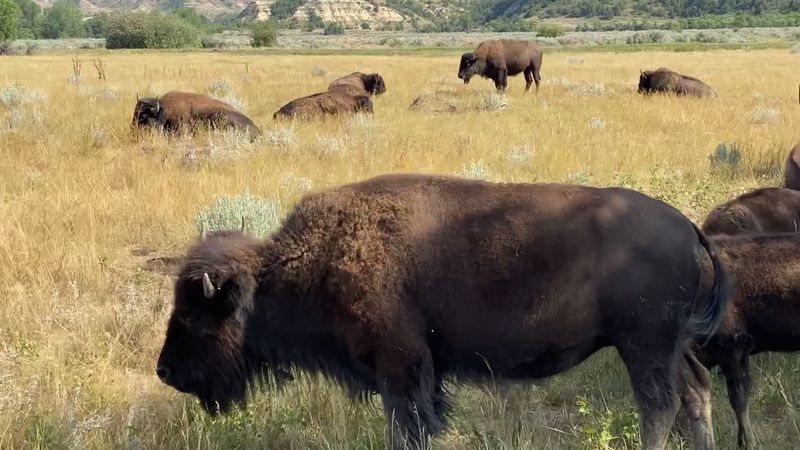
The bison that roam are not behind fences or in enclosures. They walk freely across the landscape, and they occasionally decide that your road is their road too.
Traffic stops, cameras come out, and nobody seems to mind the delay one bit.
The park is home to around 200 to 500 bison at any given time, and sightings are common throughout the year. Beyond bison, the park also protects wild horses that have roamed the badlands for generations.
Watching a band of wild horses move across a ridge at dusk is one of those moments that feels almost cinematic. Prairie dog towns pop up across the grasslands and are endlessly entertaining to watch.
These small creatures stand at the entrances to their burrows, chirp at each other, and dive underground at the slightest sign of something suspicious. Children and adults alike tend to spend far longer watching them than they originally planned.
What is the most surprising animal encounter visitors report in Medora? Many say it is the elk, which are most active at dawn and dusk and can sometimes be spotted right along the park road.
Pronghorn antelope sprint across open meadows at speeds that are almost hard to believe. Bighorn sheep cling to steep canyon walls with a confidence that makes human hikers feel a little self-conscious.
The wildlife in and around Medora is not a bonus feature; it is one of the main events, and every visit brings something new.
Small Town Shops With Big Personality
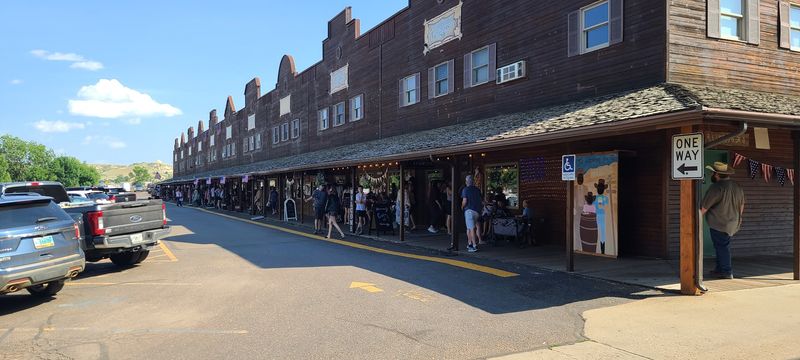
Shopping in Medora is nothing like scrolling through an online store. Every shop on the main street has its own character, its own story, and usually a real person behind the counter who actually made or curated what is being sold.
That personal touch changes the whole experience of buying something.
You will find handmade jewelry, leather goods, western-style clothing, locally made candles, and art pieces inspired by the badlands and the wildlife that lives there. Many items are one-of-a-kind, which means the hat or the painting you pick up here is not sitting on a shelf somewhere else in the country.
The Medora fudge shops are a local institution. People plan return visits partly around picking up another box of the handmade fudge that gets made fresh on-site in flavors that rotate with the seasons.
It is the kind of treat that gets talked about long after the trip is over.
Have you ever bought a souvenir that you actually use and love years later? The shops in Medora tend to produce exactly that kind of purchase.
Beyond the storefronts, the town also has a few galleries that showcase work from regional artists who draw their inspiration directly from the landscape outside their windows. Supporting these small businesses means supporting the community that keeps Medora alive and authentic.
Practical Tips For Planning Your Visit
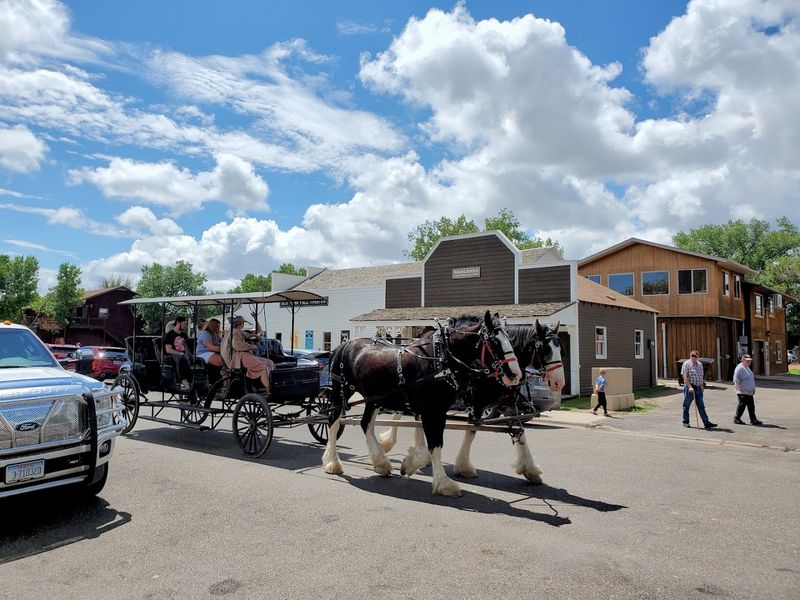
Medora is open to visitors year-round, but the peak season runs from late May through early September. During those months, the Medora Musical is running, most shops and restaurants are fully staffed, and the park visitor center operates on extended hours.
The drive to Medora is part of the experience. The town sits at South Billings, ND 58645, just off Interstate 94 at Exit 24, making it surprisingly easy to reach by car from both the east and the west.
Bismarck is about 135 miles to the east, and the drive through the western North Dakota prairie sets the mood perfectly before you even arrive.
Shoulder season visits in May and September offer a quieter experience with fewer crowds and cooler temperatures for hiking. Fall brings spectacular color to the cottonwood trees along the creek bottoms, and the light in the badlands during October is absolutely extraordinary for photography.
What should you absolutely pack before heading to Medora? Sunscreen, a reusable water bottle, and a good pair of walking shoes are the top three essentials.
Cell service can be limited inside the national park, so downloading offline maps before you go is a smart move.
The town itself is walkable, and most of the main attractions are within easy reach of wherever you park. Medora rewards visitors who slow down, look around, and let the place unfold at its own pace, which turns out to be one of the best travel strategies anywhere.