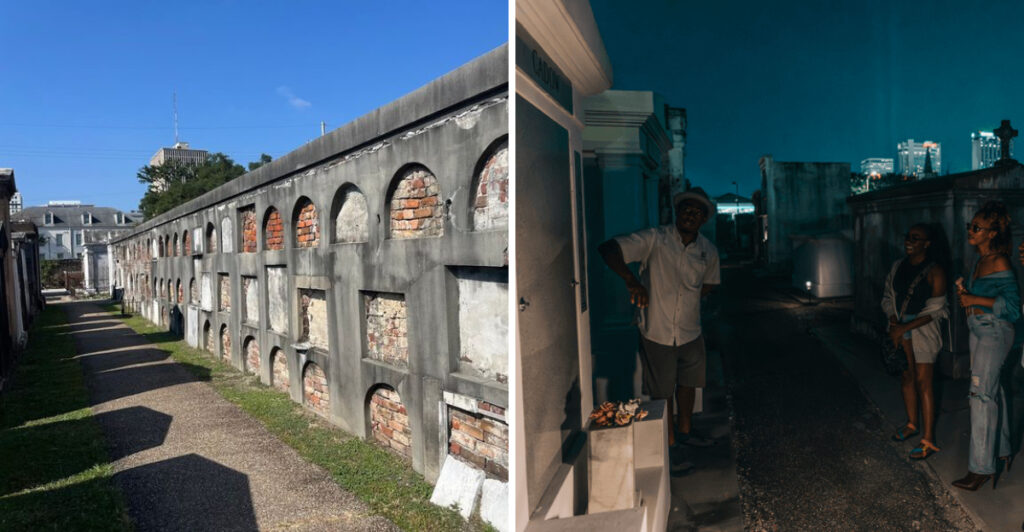
How many old cemeteries earn a second thought? Most get a glance through a car window and that’s the end of it.
Then there is a Louisiana burial ground that has been stopping people cold for over two centuries, and it shows no sign of slowing down.
The walls cut out the city noise the moment you pass through the gates. Inside, narrow paths twist between centuries of stone, shadow pools between the tombs even on bright days, and the air sits heavier than it has any reason to.
Louisiana has places that promise atmosphere and deliver a gift shop. This is not one of them.
Its haunted reputation has been building quietly across generations, and the history buried inside its walls gives that reputation far more weight than any ghost story needs.
A City Of The Departed Unlike Any Other
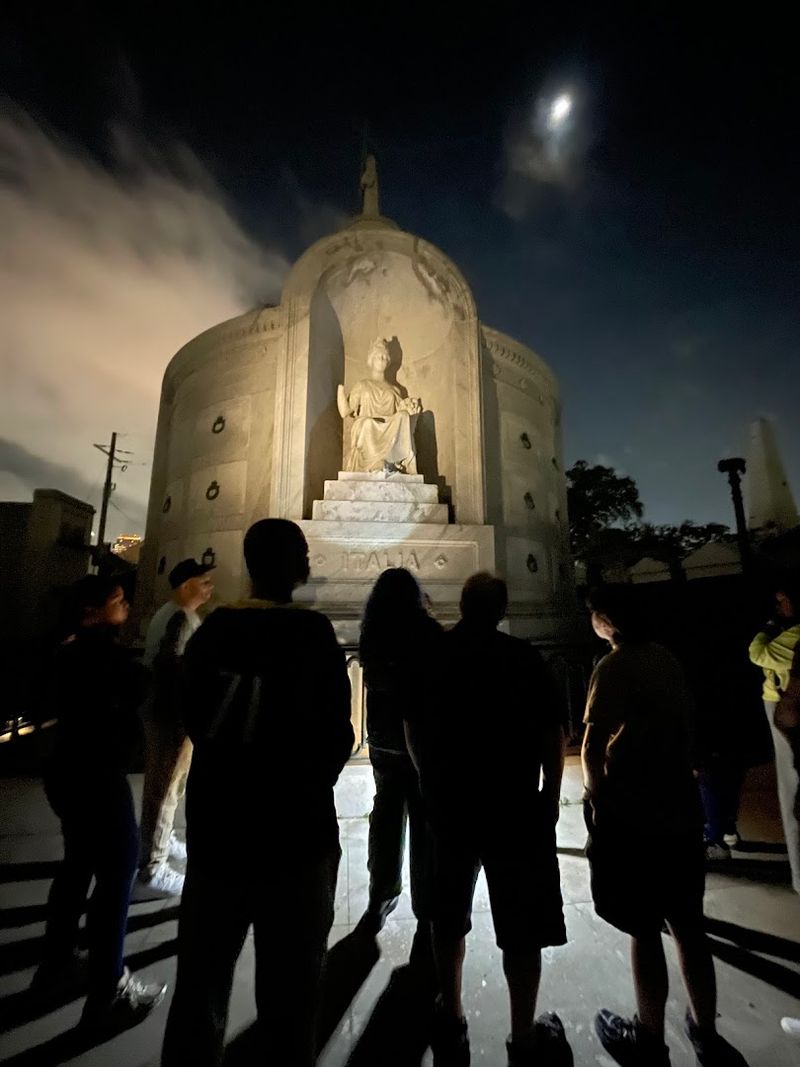
Picture a city block where every resident has been there for centuries and none of them are leaving. That is roughly what St. Louis Cemetery No. 1 feels like the moment you pass through its entrance gates on Basin St in New Orleans, Louisiana.
Unlike typical burial grounds with flat headstones stretching across open lawns, this place is packed with above-ground tombs that stack and crowd together like old rowhouses.
The narrow pathways between them create a maze that feels genuinely disorienting, even in broad daylight.
The reason for the above-ground burials has everything to do with Louisiana geography. The city sits below sea level, which historically made underground burial impractical and, at times, impossible.
So builders adapted, and the result is one of the most visually striking cemeteries anywhere in the United States.
Established in 1789, this is the oldest surviving cemetery in New Orleans, and its age shows in every weathered stone surface and moss-covered wall. It is a place where history is literally built into the architecture.
The Haunted Reputation That Keeps Growing
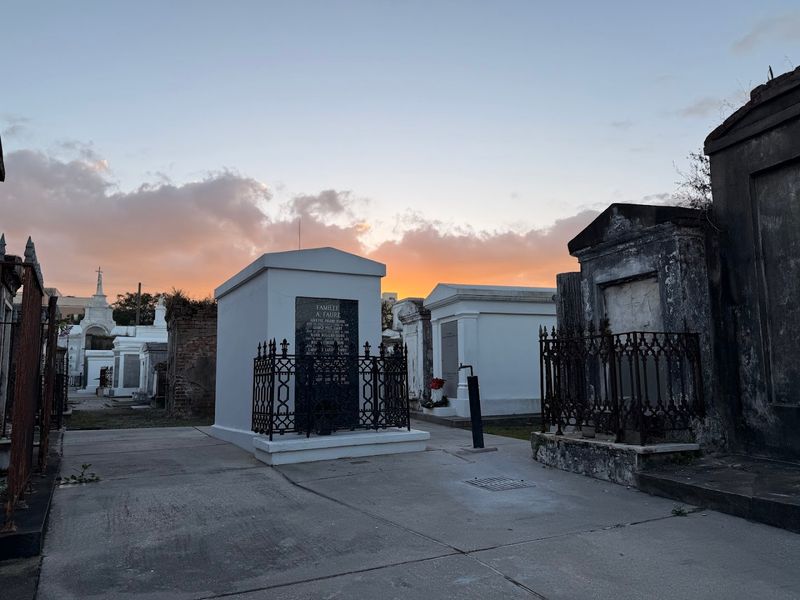
Ghost stories tend to grow with time, but the ones attached to this cemetery feel unusually persistent.
Visitors and tour guides alike have reported strange experiences inside the walls, ranging from cold spots that appear without explanation to shadowy shapes glimpsed between the tombs.
Louisiana has no shortage of haunted locations, but St. Louis Cemetery No. 1 consistently ranks among the most frequently cited paranormal hotspots in the entire country.
Paranormal investigation teams have visited on multiple occasions, and some claim their equipment behaved in ways they could not explain.
Part of what feeds the reputation is the sheer density of history packed into a relatively small space. Generations of New Orleans families are interred here, many of whom lived through yellow fever epidemics, wars, and dramatic social upheaval.
That kind of layered human experience tends to leave an impression, whether you believe in the supernatural or not.
Even skeptics often admit that the atmosphere inside the cemetery feels different from anywhere else they have visited. Something about the place simply refuses to feel ordinary.
The Voodoo Queen And Her Enduring Legacy
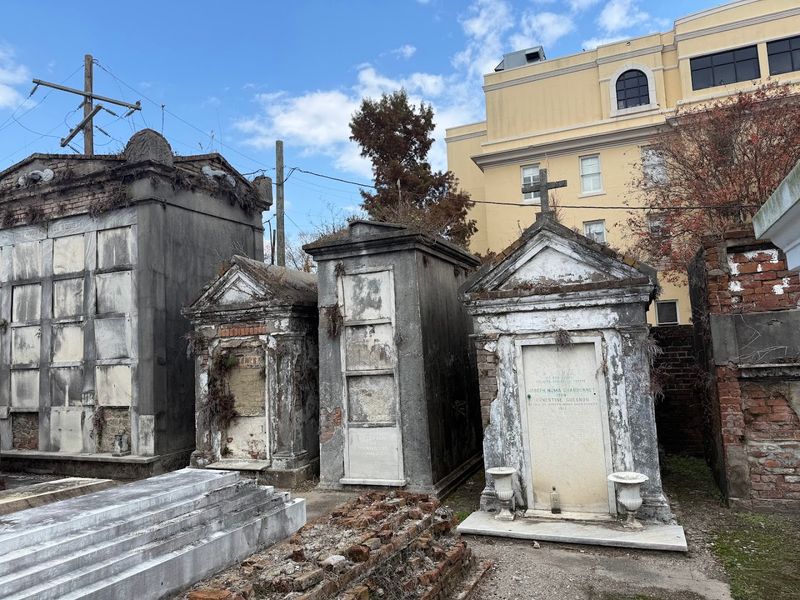
No figure looms larger over St. Louis Cemetery No. 1 than the Voodoo Queen of New Orleans, whose tomb here has become one of the most visited spots in the entire city.
She was a powerful and deeply respected practitioner of Voodoo in 19th-century Louisiana, and her influence on the culture of New Orleans never really faded.
Her tomb draws a remarkable mix of visitors. Some come out of historical curiosity, others out of genuine spiritual reverence.
Many leave small offerings at the base of the tomb, including flowers, coins, and personal trinkets, a tradition that continues to this day despite efforts to discourage it due to damage concerns.
The practice of marking an X on the tomb’s surface became so widespread that the Archdiocese of New Orleans, which manages the cemetery, eventually had to resurface the tomb to protect it. The markings kept coming back anyway, which feels fitting given the legend.
Her story is inseparable from the identity of this cemetery, and arguably from the identity of New Orleans itself. Few historical figures have cast a longer shadow.
Above-Ground Tombs And The Science Behind Them
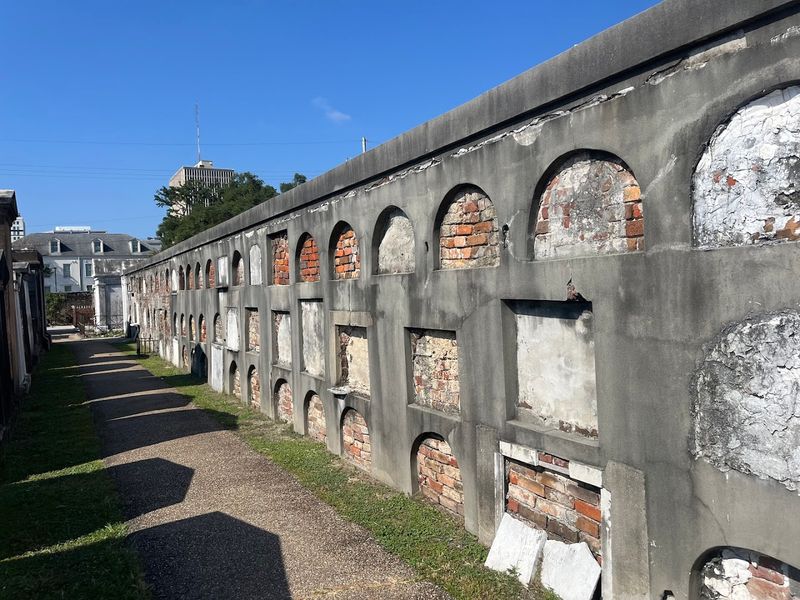
The above-ground tombs here are not just visually dramatic. They are an architectural response to a genuine practical problem, and understanding how they work makes the whole experience far more interesting.
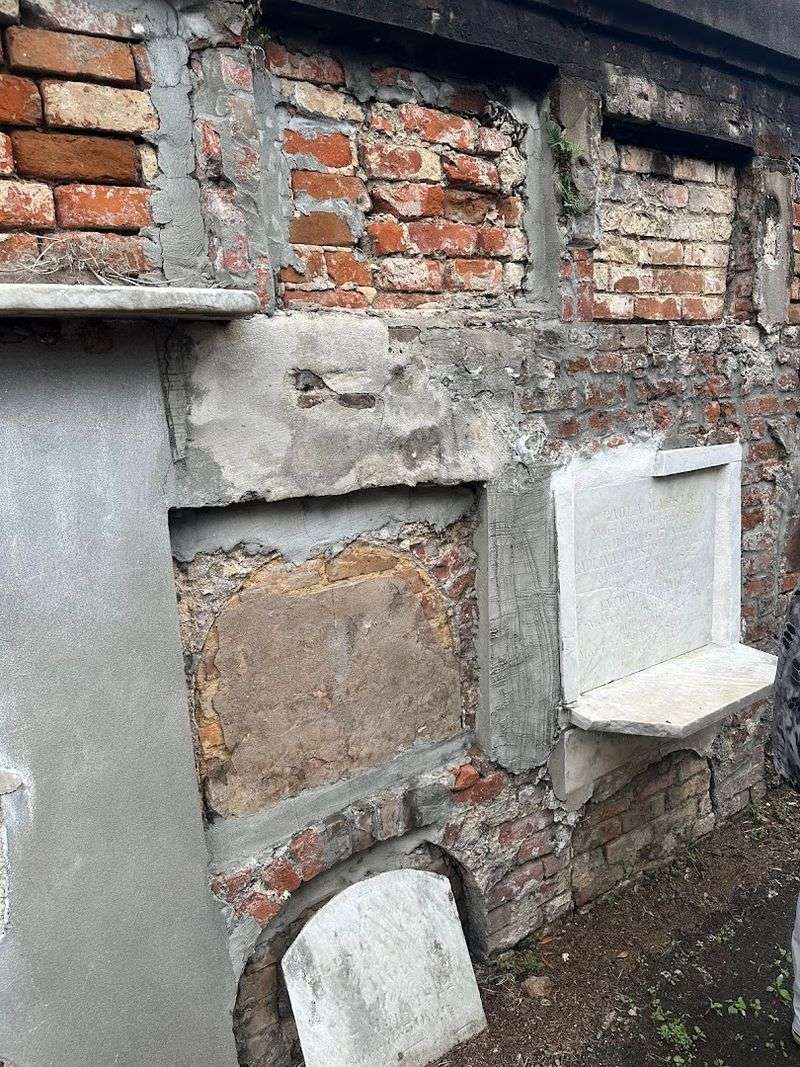
Most of the tombs are built from brick and coated in plaster, with iron doors or sealed stone faces. The interior chambers are designed to be reused over time.
After a period of roughly a year and a day, which is the traditional waiting period tied to Louisiana’s climate and the natural process of decomposition, a chamber can be opened and the remains consolidated to make room for a new occupant.
This system allowed family tombs to serve multiple generations without requiring additional land. Some of the tombs here contain the remains of dozens of family members accumulated over more than a century.
Wall vaults, which line the cemetery’s interior perimeter, work similarly and were often used for people of more modest means.
The engineering is surprisingly sophisticated for its era, and the fact that many of these structures are still standing after more than two centuries says a great deal about the craftsmanship involved.
Guided Tours And Why They Are Required
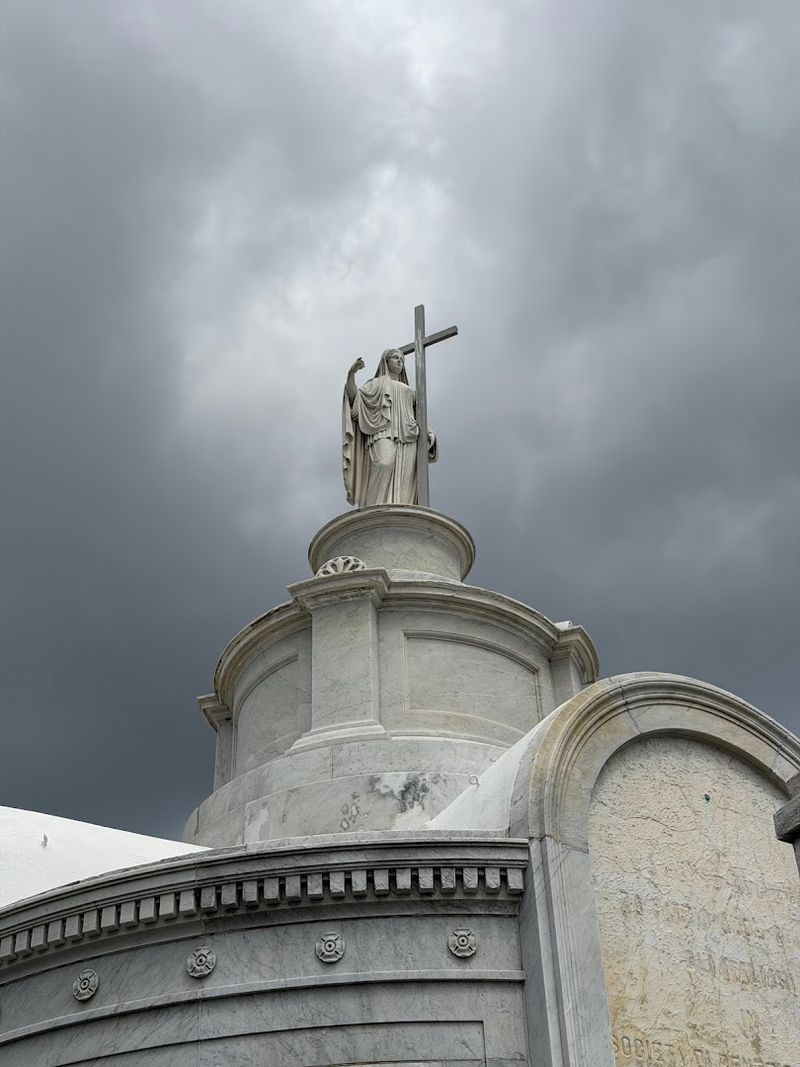
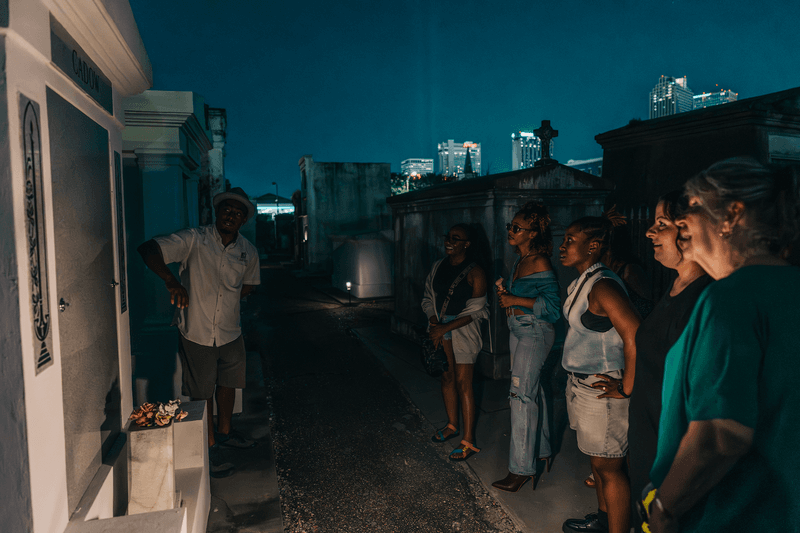
Access to St. Louis Cemetery No. 1 is not as simple as walking through the gate on your own. Since 2015, the Archdiocese of New Orleans has required that all visitors enter as part of an officially sanctioned guided tour, a policy introduced largely in response to vandalism and disrespectful behavior that had been damaging the historic site.
The tours are led by knowledgeable guides who bring the cemetery’s stories to life in ways that a solo wander never could. Guides cover everything from burial customs and architectural history to the personal stories of notable figures interred within the walls.
The experience tends to run around an hour, though some groups find it stretches longer when questions start flowing.
The guided format actually works in the visitor’s favor. The cemetery’s layout is genuinely confusing, and without a guide, it is easy to miss some of the most significant tombs entirely.
Booking in advance is strongly recommended, especially during busier travel seasons.
Yellow Fever And The Epidemics That Shaped The Cemetery
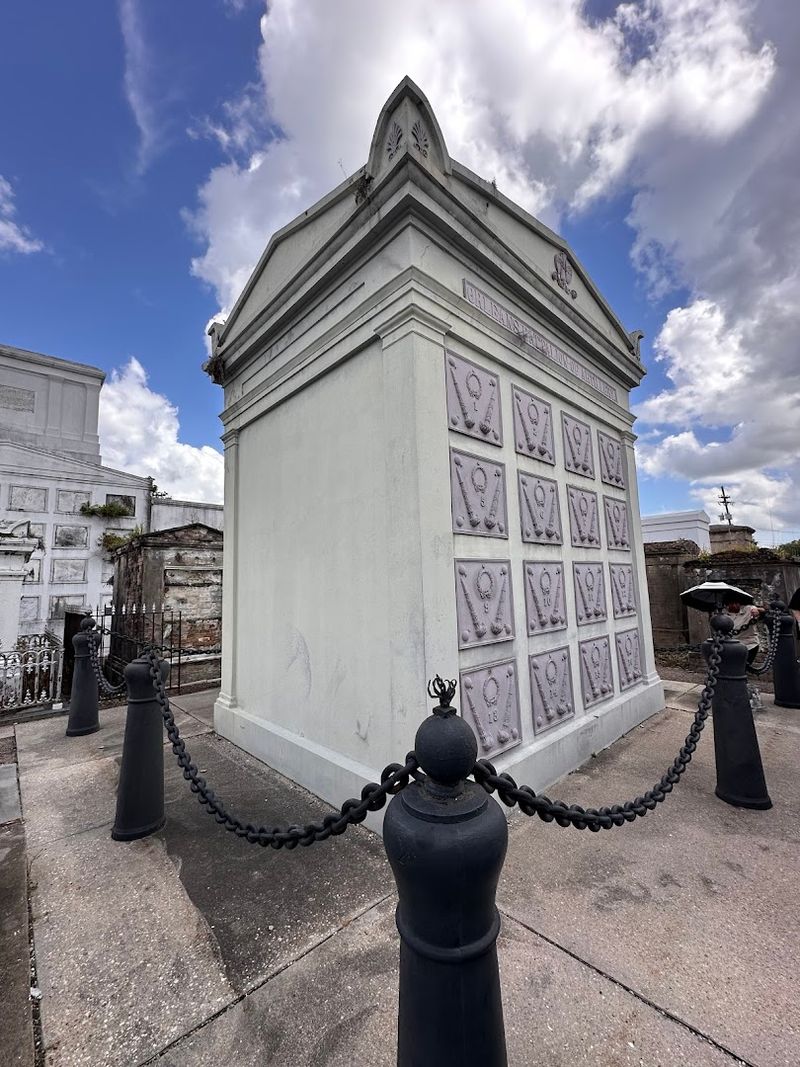
Louisiana’s history with yellow fever is one of the most sobering chapters in American public health, and St. Louis Cemetery No. 1 holds a great deal of that painful record within its walls.
New Orleans was hit by repeated yellow fever epidemics throughout the 18th and 19th centuries, and the mortality rates during the worst outbreaks were staggering.
The cemetery filled rapidly during epidemic years. Entire families were sometimes wiped out within weeks, and the demand for burial space pushed the city to expand and adapt its burial practices.
The above-ground tomb system, already in use, proved essential during these periods because it allowed for faster and more sanitary interment.
Many of the tombs here bear inscriptions that, when read carefully, tell the story of families struck by the fever in rapid succession. Multiple members of the same household, buried within days of each other, their names and dates carved into the same stone face.
Walking through the cemetery with that knowledge changes how you see the place. It shifts from eerie curiosity to something much more human and sobering.
The Famous Pyramid Tomb And Its Living Owner
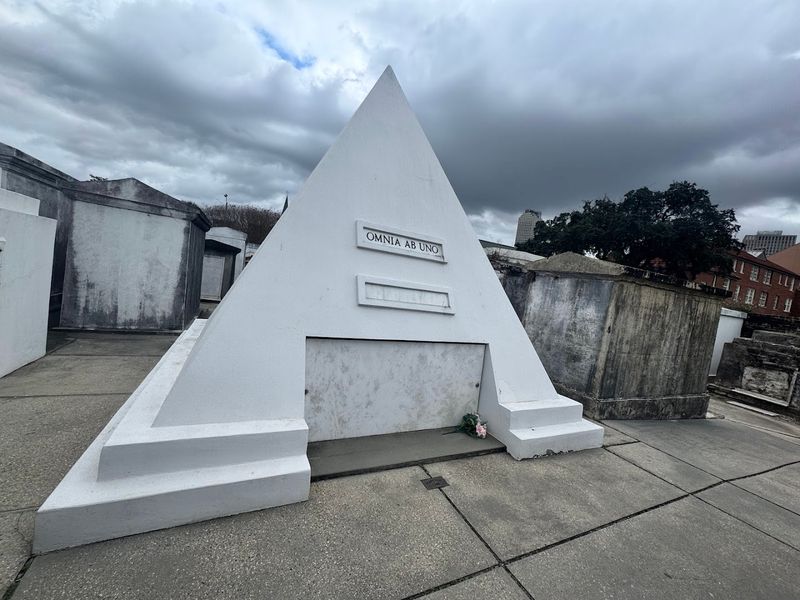
Among the cemetery’s many remarkable structures, one stands out immediately for being completely unlike anything around it. A sleek, modern granite pyramid rises from the ground with an energy that feels almost confrontational next to the centuries-old plaster tombs surrounding it.
This tomb belongs to a well-known Hollywood actor who is, as of this writing, still very much alive. He purchased the plot and had the tomb constructed in advance, a practice known as a pre-need arrangement that is actually quite common among those who want to plan ahead.
What is less common is choosing a pyramid in the middle of one of America’s most historic cemeteries.
The tomb has become a genuine attraction in its own right, drawing visitors who are as much fans of the actor’s films as they are history enthusiasts.
It sits in sharp contrast to its surroundings, which is either jarring or fascinating depending on your perspective.
Louisiana has always had a flair for the theatrical, and this tomb fits right into that tradition even if it does so in a thoroughly modern way.
The Architecture And Its French And Spanish Roots
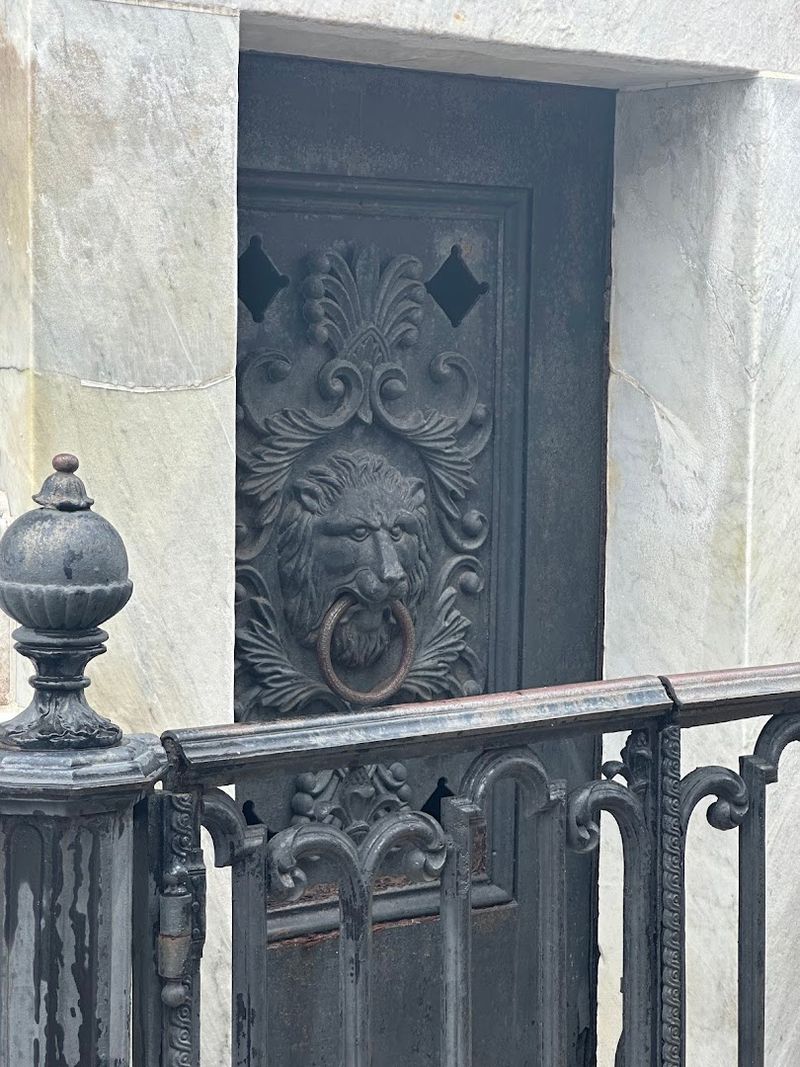
The design language of St. Louis Cemetery No. 1 is a direct reflection of New Orleans’ colonial past. The city was shaped by both French and Spanish rule before becoming part of the United States, and that layered cultural influence shows up clearly in the cemetery’s architecture.
French-style family tombs sit alongside Spanish colonial designs, with ironwork gates, plastered brick surfaces, and carved stone details that speak to craftsmen who brought their traditions from Europe.
The result is a visual patchwork that feels organic rather than planned, because it largely was.
Different sections of the cemetery reflect different eras and different communities. There are areas associated with specific ethnic and social groups, including a section historically associated with the city’s free people of color, who played a significant role in shaping Louisiana’s unique cultural identity.
Architectural historians consider the cemetery a genuine outdoor museum.
The variety of tomb styles, materials, and decorative approaches packed into such a small space makes it an unusually rich site for anyone interested in how culture and craft intersect over time.
What Makes The Atmosphere Feel So Different
Plenty of old cemeteries exist across America, but few of them generate the specific kind of atmosphere that this one does.
The combination of factors here is unusual enough that even people who do not consider themselves particularly sensitive to atmosphere tend to notice something is off, in the most compelling possible way.
The walls that surround the cemetery create a sense of enclosure that cuts off the noise of the surrounding city almost completely. Inside, the sound shifts.
Footsteps on the narrow stone paths echo slightly. The tombs rise high enough on either side to block sightlines, creating pockets of shadow even on bright days.
The humidity that defines Louisiana summers adds another layer.
Heat radiates off the stone surfaces, and the air between the tombs sits heavy and still. In cooler months, the light hits the white plaster at angles that make the whole place glow in a way that is hard to photograph and harder to describe.
It is the kind of place that stays with you long after you have left, and that tends to be the most honest measure of an experience worth having.
Planning Your Visit And What To Expect
Getting the most out of a visit to St. Louis Cemetery No. 1 takes a little preparation, and the effort pays off significantly.
Tours depart from the Basin Street location and typically run for about an hour, covering a solid cross-section of the cemetery’s most significant tombs and stories.
Comfortable, closed-toe shoes are a practical necessity. The pathways are uneven in places, and some areas require careful footing.
The New Orleans heat and humidity can be intense, so lightweight clothing and water are worth bringing along regardless of the season.
Photography is actively encouraged, which is a genuine pleasure given how photogenic the tombs are at almost any time of day. Morning light tends to be particularly striking on the white plaster surfaces, and the crowds are usually thinner earlier in the day.
Louisiana’s tourism calendar means the city can get busy, especially around Mardi Gras and Halloween. Booking a tour slot ahead of time avoids the frustration of showing up to find everything full.
The cemetery is a short walk from the French Quarter, making it easy to combine with a broader exploration of the city’s historic core.