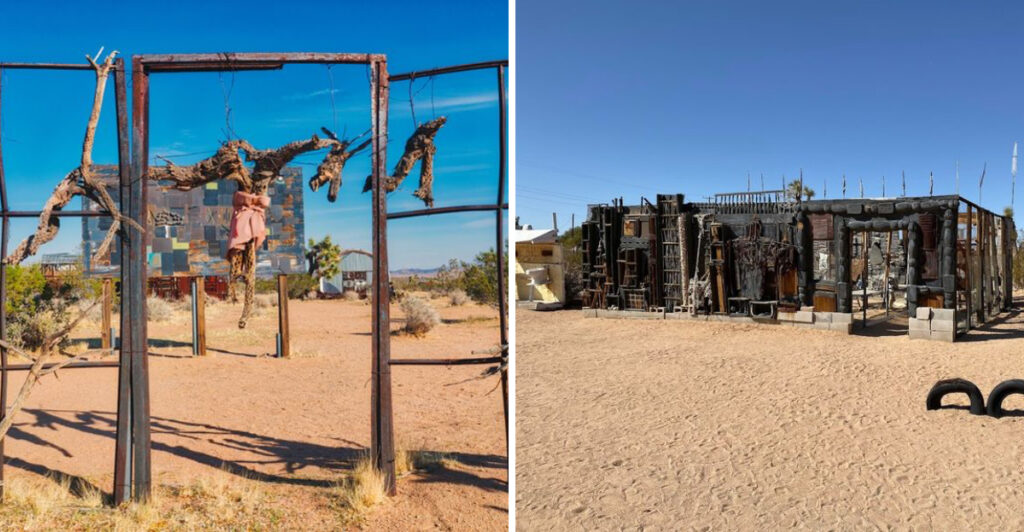
Most people drive straight past it without a second glance, not realizing there are ten acres of sculpture hiding just off the highway that will genuinely stop them in their tracks.
A free outdoor art museum in the California desert, built over fifteen years by a single artist who walked away from city life at 72 and never looked back. No ticket booth, no security guards, no glass cases.
Just open sky, Mojave wind, and over a hundred works built entirely from things other people threw away. California has world-class museums with climate control and gift shops.
This one has jackrabbits, rusting metal, and a body of work that somehow feels more alive than most of them. Take the detour.
The Artist Who Chose The Desert As His Canvas
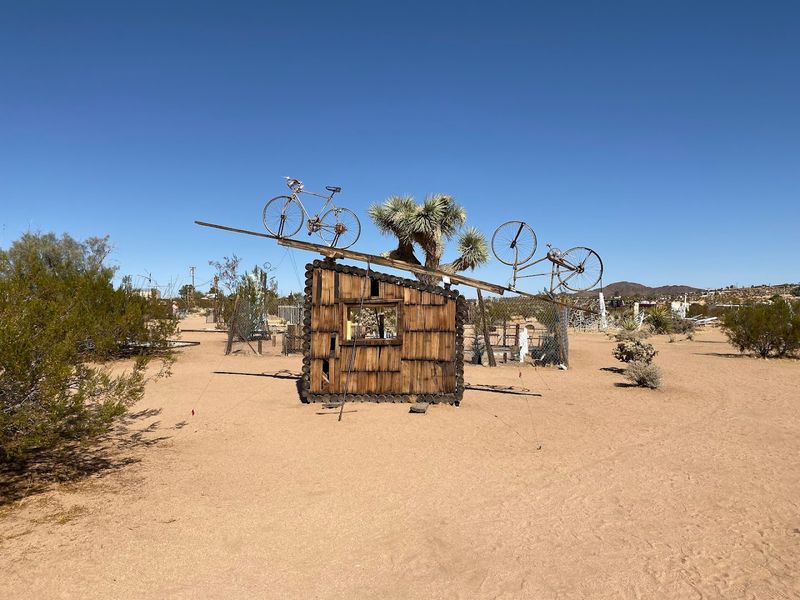
At age 72, most people are winding down. The artist behind this extraordinary site was just getting started.
After decades as a respected figure in the Los Angeles Black Arts Movement, he packed up and moved to Joshua Tree, California, trading city life for open desert and a completely different kind of creative freedom.
His art form, known as assemblage sculpture, involved collecting discarded objects and transforming them into large-scale works that carried real meaning. Bicycle wheels, old sinks, broken chairs, and scrap metal became the building blocks of an entirely new world.
He spent roughly 15 years building out this site before his passing in 2004, never chasing commercial success or gallery approval. The desert was his studio, his audience, and his partner all at once.
What he left behind is not just a collection of sculptures but a deeply personal statement about creativity, freedom, and the beauty hiding inside things most people throw away.
What Exactly Is Assemblage Sculpture And Why Does It Matter
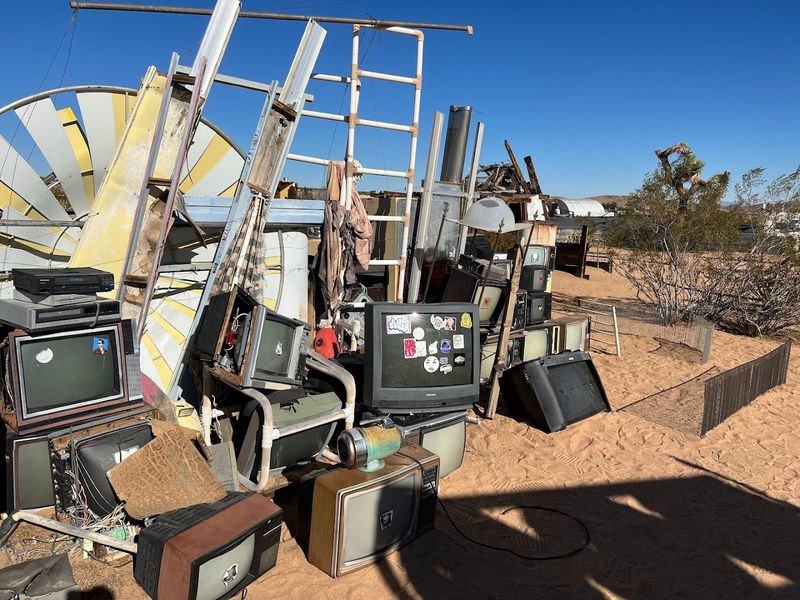
Forget marble statues and oil paintings. Assemblage sculpture is something else entirely, and once you understand it, the whole museum clicks into place in a satisfying way.
The technique involves taking everyday discarded objects and combining them into a unified artwork that carries both visual and social meaning. At this site in Joshua Tree, California, the materials include everything from bowling balls and computer monitors to clothing, tires, and old restroom doors.
Nothing here was purchased from an art supply store.
One of the most striking examples is a piece that uses salvaged restroom signs to address the legacy of racial segregation in America. It is blunt, powerful, and impossible to walk past without pausing.
Other pieces are more abstract, resembling strange buildings or gathering spaces that feel almost architectural.
The beauty of assemblage is that it forces you to look at familiar objects in completely unfamiliar ways. By the end of a visit, even a broken toilet starts to look like a potential masterpiece, which is exactly the point.
Ten Acres Of Junk That Will Surprise You
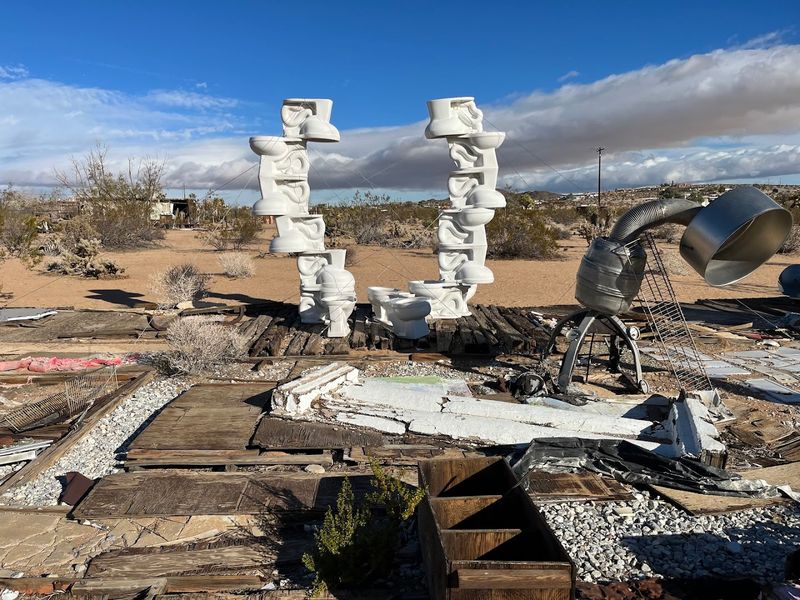
Ten acres sounds like a lot until you start walking through it and realize the sculptures keep appearing around every corner. The site holds over 100 individual works, ranging from small clustered arrangements to towering installations several stories high.
The scale of the whole thing is genuinely hard to grasp from a photograph. Standing in the middle of the property with sculptures stretching in every direction, under a wide California sky, feels almost cinematic.
Some pieces look like collapsed houses. Others resemble strange ritual spaces or abstract towers built by someone who had a very specific vision and zero interest in explaining it to you.
Unlike traditional museums, there are no ropes, no glass cases, and no security guards. Visitors are free to wander the grounds at their own pace, circling back to pieces that catch their eye and spending as long as they want with each one.
A brisk walk takes around 20 minutes, but most people end up spending much longer than they planned.
The museum sits just off the 29 Palms Highway, making it an easy detour that pays off in a way that very few roadside stops in California ever manage to deliver.
The Desert Is Not Just A Backdrop, It Is Part Of The Art
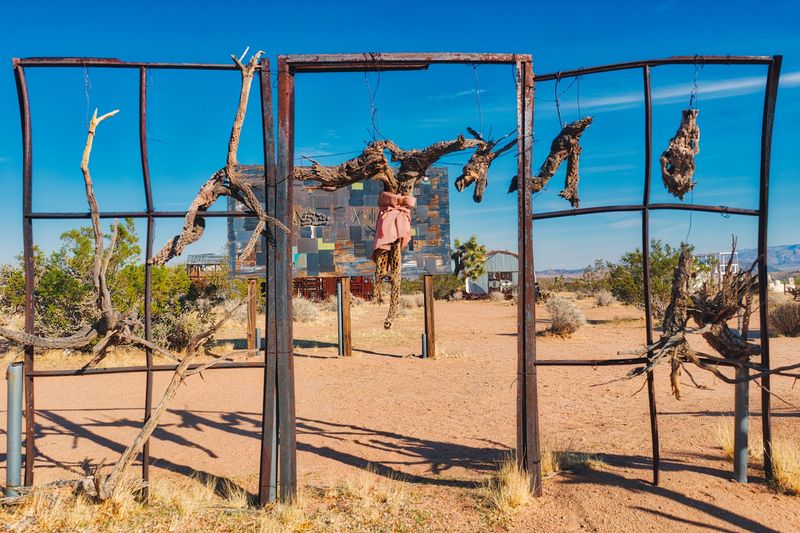
Most outdoor art installations try to protect their pieces from the elements. This museum does the exact opposite, and that choice is one of the most fascinating things about it.
The artist deliberately placed his works in the Mojave Desert so that wind, heat, rust, and sun would become active participants in the creative process. Over time, metal oxidizes into rich shades of orange and brown.
Wood cracks and bleaches. Objects settle into the sand in ways that no human hand could plan.
The desert slowly claims each piece and reshapes it into something new.
This philosophy of intentional decay is unusual in the art world, but it makes complete sense once you are standing in the middle of it. The sculptures feel alive in a way that perfectly preserved gallery pieces rarely do.
They are changing every season, every year, which means no two visits are exactly the same. The landscape of Joshua Tree, California is not just a setting here, it is a co-creator with an ongoing role in the work.
Finding The Place Is Half The Adventure
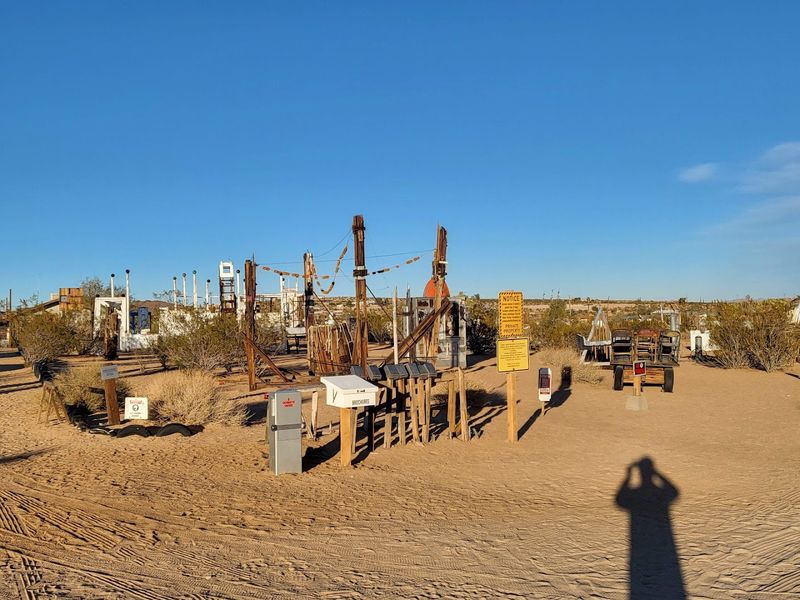
Part of the reason so many people drive past this museum is simply because it does not look like a museum from the road. There is no grand entrance, no prominent marquee sign, and no ticket booth to signal that something significant is happening here.
Getting to the site involves turning onto a dirt road and driving roughly a quarter mile through open desert. Depending on recent weather, that road can be bumpy and dusty, which adds to the feeling that you are heading somewhere genuinely off the beaten path.
At the entrance, visitors will find a welcome kiosk with brochures that include a numbered map of the installations. A donation box is also located nearby, since admission is free but contributions help support the Noah Purifoy Foundation.
Parking is available right at the site, and the whole setup feels deliberately low-key, which is entirely in keeping with the spirit of the place. The journey there primes you for what follows.
Social Commentary Hidden Inside Discarded Objects
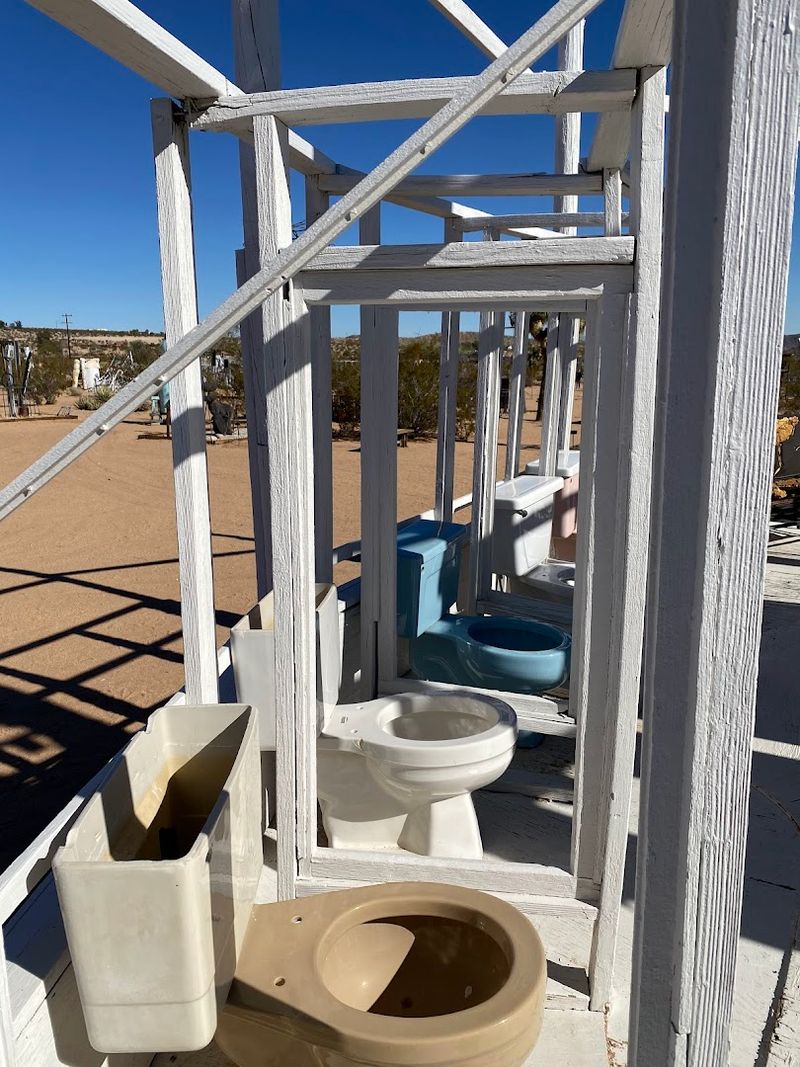
Some of the most powerful art does not shout its message. It whispers it through unexpected materials, and then lets the weight of it settle over you slowly.
Several pieces at this California museum carry pointed social commentary about race, inequality, and American history. The most discussed example uses salvaged restroom doors bearing the words found on segregation-era signs.
Standing in front of that piece in the open desert, far from any city or courthouse, gives it an eerie and affecting quality that a traditional gallery setting might actually diminish.
Other works reflect on consumerism, waste, and the throwaway culture that produces mountains of discarded objects every single year. The fact that those very objects became the building materials here adds a layer of irony that is hard to miss once you start thinking about it.
For younger visitors, the museum offers a surprisingly accessible entry point into conversations about history and social justice. The visual language is direct enough that kids and adults can engage with it together, which is a rare quality in contemporary art spaces.
What To Bring And How To Make The Most Of Your Visit
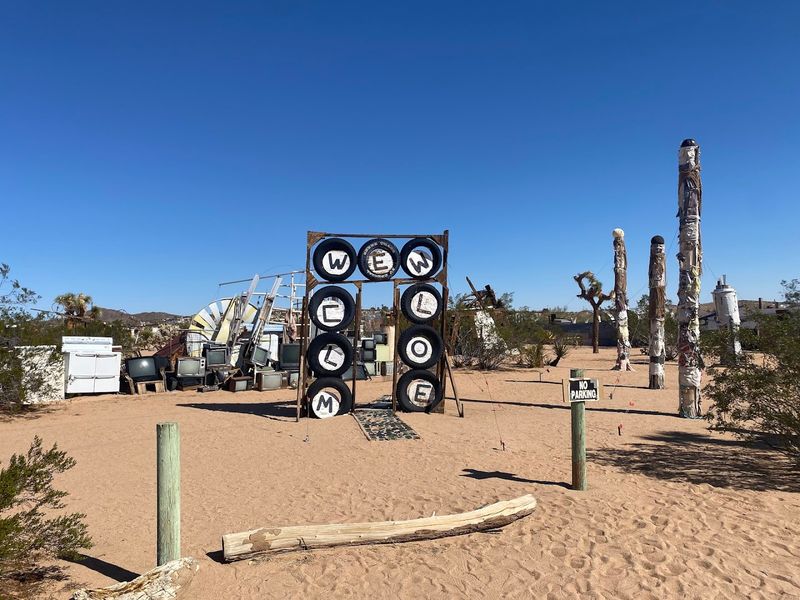
The Mojave Desert is not a forgiving environment, and a visit to this site requires a little preparation to be genuinely enjoyable rather than just survivable.
Sunscreen and a wide-brimmed hat are close to mandatory, especially during the warmer months. The site has very little shade, and the California sun reflects off pale desert sand in a way that can sneak up on you quickly.
Bringing water is equally important, as there are no traditional restrooms or refreshment options on the property.
Comfortable, closed-toe shoes are a smart choice since the ground is uneven in places, with gravel, sand, and scattered objects underfoot. Leashed, well-behaved dogs are welcome, though the heat can be intense for animals, so timing your visit carefully matters.
Early morning visits tend to be cooler and less crowded, with softer light that makes photographing the sculptures particularly rewarding.
Photography is fully permitted throughout the site, though drone use is prohibited. Visitors are asked not to touch or climb on the sculptures, and nothing should be removed from the property.
Respecting the site keeps it accessible for everyone who comes after you.
Free Admission And The Philosophy Behind It
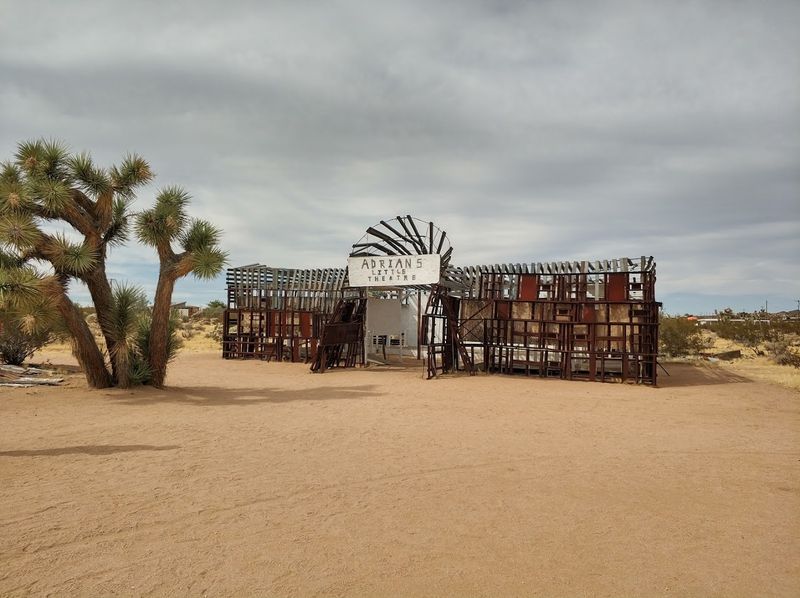
Free admission at a museum is always a pleasant surprise, but here it is not just a pricing decision. It reflects a core belief that art should be accessible to everyone, regardless of income or background.
The artist built this entire environment outside the commercial art world by choice. He was not interested in selling pieces to collectors or catering to gallery expectations.
His vision was for the work to exist in the open, available to anyone willing to make the drive out to the Mojave Desert.
Today, the Noah Purifoy Foundation maintains the site and relies on voluntary donations to keep it running. Visitors are encouraged to contribute through a QR code system, since the physical donation box was damaged by vandalism in the past.
Even a small contribution helps preserve one of the most unusual free cultural experiences in all of California.
The foundation also focuses on documenting the sculptures through photography and mapping rather than restoring them, honoring the original vision that natural change was always part of the plan. That commitment to authenticity is genuinely rare.
The Atmosphere That Sets This Place Apart From Every Other Museum
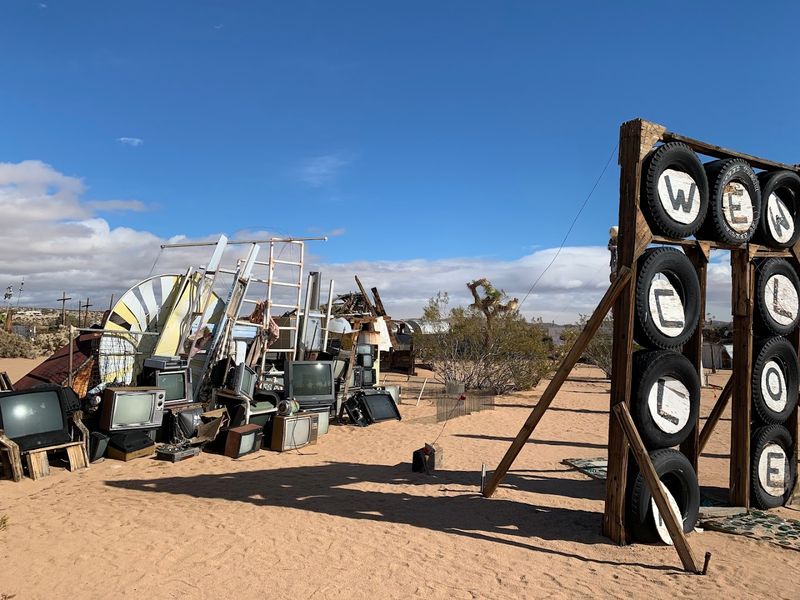
Walking into a traditional museum, you know exactly what is expected of you. You move quietly, you read the labels, and you keep a respectful distance from everything.
This place operates by completely different rules. The open desert air, the absence of walls, and the freedom to wander in any direction create an atmosphere that is more like exploration than exhibition.
Pieces appear around corners, behind rocky outcroppings, and across open stretches of sand. There is no prescribed route and no correct way to experience it.
The quiet is also striking, especially on weekday mornings when visitor numbers are low. With only the sound of wind moving through the sculptures and the occasional creak of weathered metal, the site takes on an almost meditative quality.
It is the kind of place that slows people down in a way that feels genuinely restorative.
California has plenty of world-class museums with controlled climates and security systems. This one has jackrabbits, open sky, and sculptures that have been slowly becoming part of the landscape for decades.
That combination is surprisingly hard to find anywhere else.
Why This Place Deserves A Spot On Every Joshua Tree Itinerary
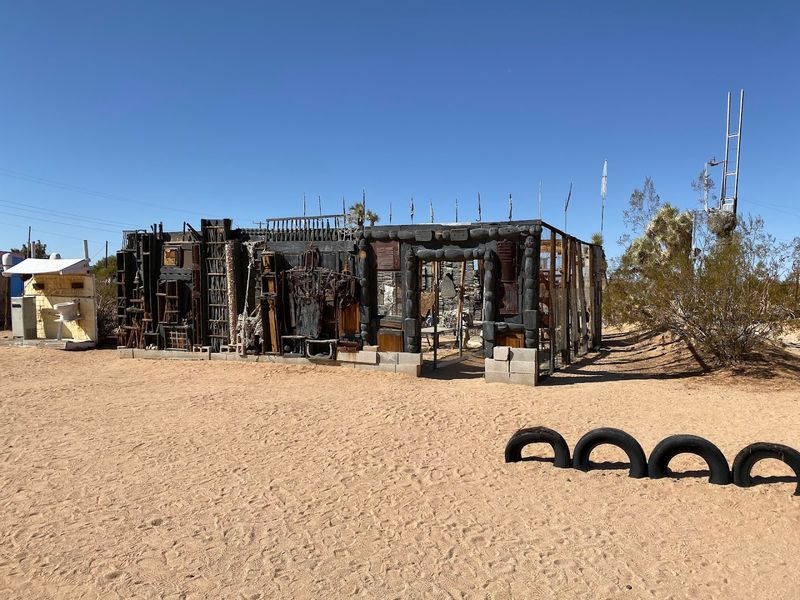
Most people who visit Joshua Tree, California come for the national park, the hiking trails, and the famous rock formations. Adding this museum to the itinerary takes maybe two hours and costs nothing, yet it tends to be one of the most talked-about stops on the whole trip.
The combination of location, concept, and execution is genuinely hard to replicate. Very few places in the country offer the experience of walking through a decade-spanning art environment built by a single visionary in one of America’s most dramatic desert landscapes.
For families, it sparks curiosity and conversation in kids who might otherwise tune out in a traditional gallery setting. For art enthusiasts, it offers a serious and layered body of work that rewards close attention.
For anyone who just stumbled across it by accident, it tends to deliver the kind of surprise that makes a road trip memorable long after the drive home.