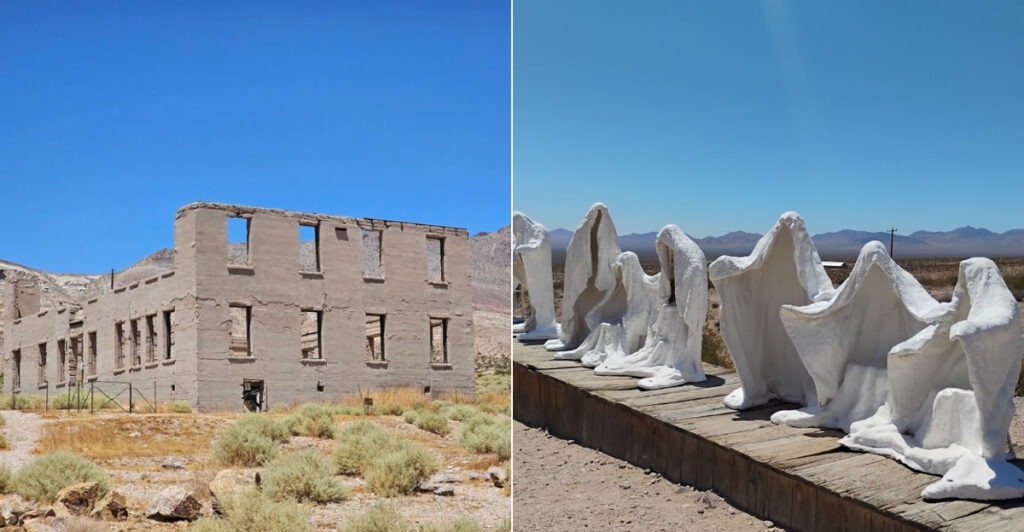
Out in the Mojave Desert, a town that once roared with gold seekers and big dreams now sits completely silent. The story it left behind is worth every mile of the drive.
The buildings are crumbling. The streets are empty.
The desert has slowly crept back in. And somehow, all of it together creates one of the most unexpectedly compelling stops in Nevada.
Broken walls. A house built entirely from glass bottles.
Open-air sculptures appearing out of nowhere in the middle of the desert. This is not a typical roadside attraction.
This is a full story frozen in time, waiting for anyone curious enough to show up and read it. Are you ready for a Silver State experience that surprises absolutely everyone who makes the effort to find it?
From Tents To Skyscrapers
In early 1905, two prospectors named Frank “Shorty” Harris and Ernest “Ed” Cross stumbled onto high-grade gold ore in the Bullfrog Hills of Nevada. What followed was one of the fastest town-building stories the American West had ever seen.
Within just six months of that discovery, Rhyolite had swelled to around 5,000 people. By late 1907, some estimates put the population as high as 12,000.
That is not a small camp. That is a city rising out of the sand.
The town had 50 saloons, 16 restaurants, a stock exchange, a school for 250 children, two electric plants, and even a miner’s union hospital. Concrete sidewalks ran through the streets.
Three competing railroads served the town. Electricity arrived by April 1907.
Can you picture a full-blown city blooming in the middle of the desert in under three years? Rhyolite did exactly that, and it did it fast.
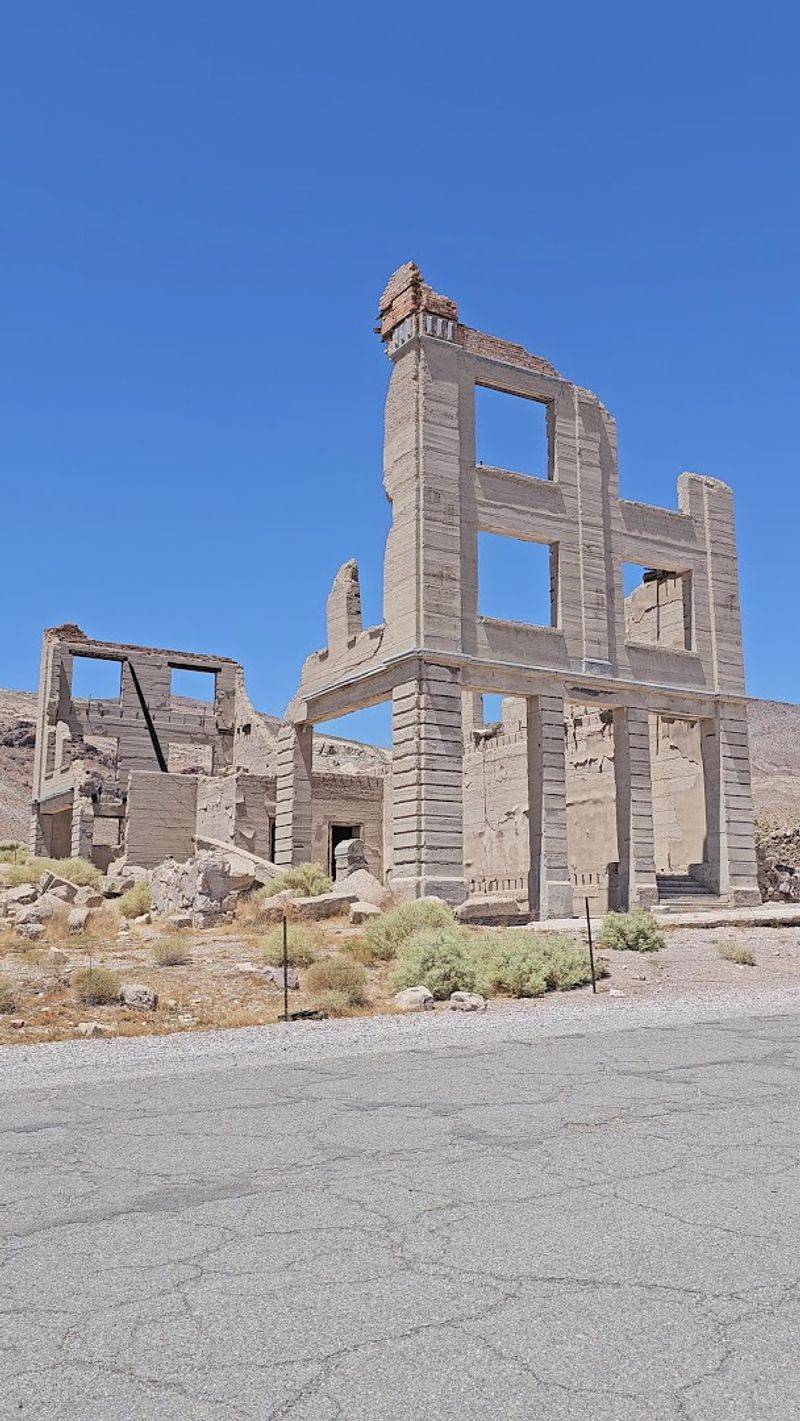
The Cook Bank Building rose three stories high, with marble staircases and mahogany finishings inside. The town published its own weekly newspaper, the Rhyolite Herald.
This was not roughing it. This was a real, thriving, modern community planted in the Nevada dirt, and it had absolutely no intention of staying small.
The Crash Nobody Saw Coming
Rhyolite’s rise was spectacular. Its fall was faster than anyone expected, and it started with something happening far from the desert. The financial panic of 1907 hit the United States hard. Banks tightened their grip on lending.
Investors pulled back. The money that had been flowing into mine development slowed to a trickle, then stopped almost entirely.
The Montgomery-Shoshone Mine, the biggest producer in the area, started losing money by 1910. It shut down for good in 1911.
Once the mine closed, there was no reason for anyone to stay. Businesses folded one by one. The post office closed in November 1913.
The last train rolled out in July 1914. By 1916, the power company had turned off the electricity and pulled up its lines. By 1920, only 14 people remained in a town that had once housed thousands.
What does a city look like when everyone leaves at once? Rhyolite answered that question in real time, leaving behind walls, foundations, and memories that the Nevada desert has been slowly swallowing ever since.
The speed of the collapse is almost as stunning as the speed of the rise, and standing in those ruins today, that contrast hits differently than any history book could manage.
A House Built From Bottles
Tom Kelly had a vision. He also had a lot of empty bottles and plenty of time on his hands.
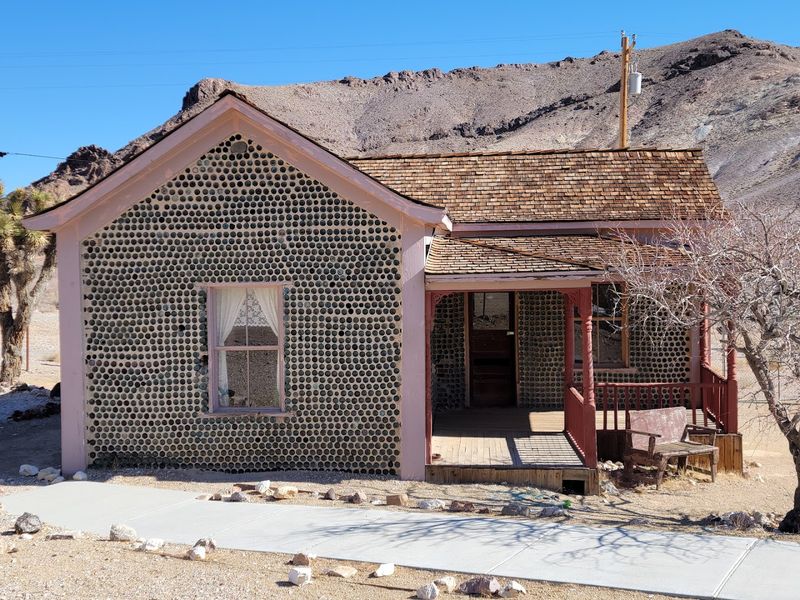
In 1906, he built himself a house using approximately 50,000 discarded glass bottles set into mortar, and the result still stands today.
The Tom Kelly Bottle House is the oldest and largest known bottle house in the United States. That alone makes it worth the drive. But seeing it in person adds a whole other layer to the story.
The walls catch the desert light in a way that makes them almost glow. The bottles, mostly green and brown, are stacked in neat rows, and the overall structure looks surprisingly solid for something built over a century ago out of what most people would call trash.
Visitors often spend more time at this one structure than anywhere else in Rhyolite. Kids find it fascinating. Adults find themselves taking photo after photo, trying to capture the strange beauty of it.
Have you ever looked at a pile of empty bottles and thought, “I could build something great with these”? Tom Kelly actually did it.
The house is managed by the Nevada Bureau of Land Management, admission is free, and it is open daily from sunrise to sunset. It is one of those places that sounds quirky on paper and becomes genuinely moving once you are standing right in front of it.
The Train Depot Still Stands
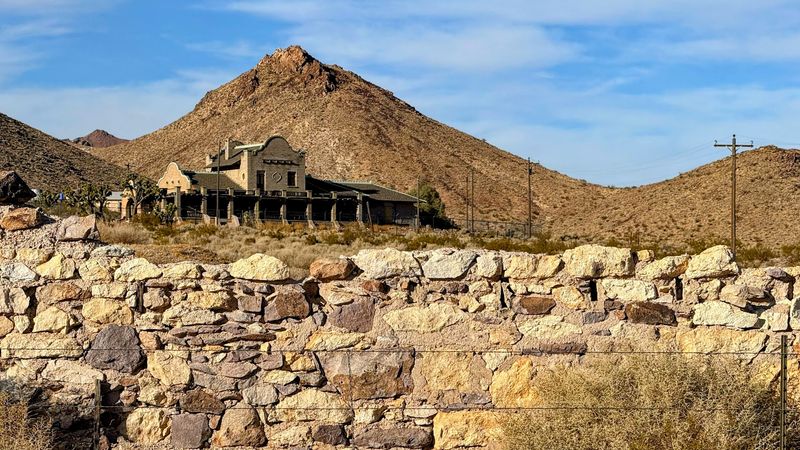
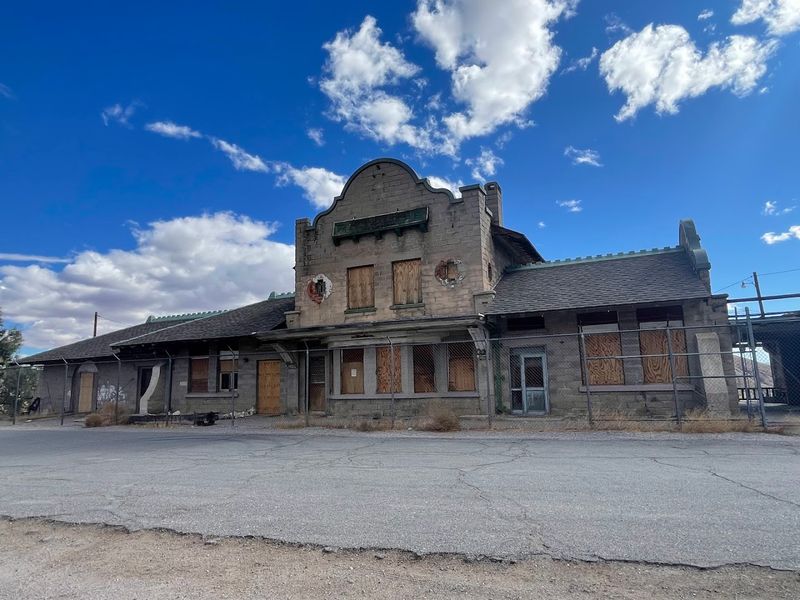
Most of Rhyolite is rubble. So when you come across a building that is still fully intact, it stops you in your tracks. The historic train depot is exactly that kind of surprise.
Built in a mission-style design with arched windows and a stucco exterior, the depot looks almost out of place among the crumbling ruins around it. An old Union Pacific caboose sits quietly behind the building, adding to the sense that time froze here somewhere around 1914.
Three railroads once competed for business in Rhyolite, including the Las Vegas and Tonopah Railroad. The depot was a busy, noisy hub of activity during the town’s peak years.
Miners, merchants, and travelers passed through constantly.
Today, the platform is empty and the tracks are long gone, but the building itself gives you a real sense of what Rhyolite looked like when it was alive. The architecture alone is worth studying.
It was clearly built with pride, not just function.
A restroom near the depot is one of the few visitor amenities available on site, so plan accordingly before exploring the rest of the area. Standing beside that old caboose and looking out at the desert, it is easy to imagine the whistle of an arriving train breaking the silence.
That silence now belongs entirely to the wind, the dust, and anyone lucky enough to make the trip.
Sculptures Rising From Sand
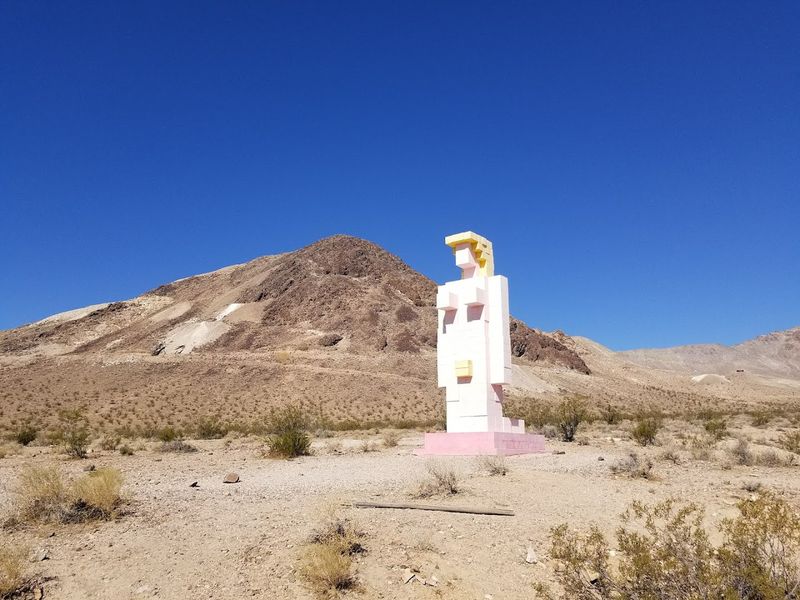
Just when you think you have figured out what Rhyolite is about, the Goldwell Open Air Museum shows up and completely changes the conversation.
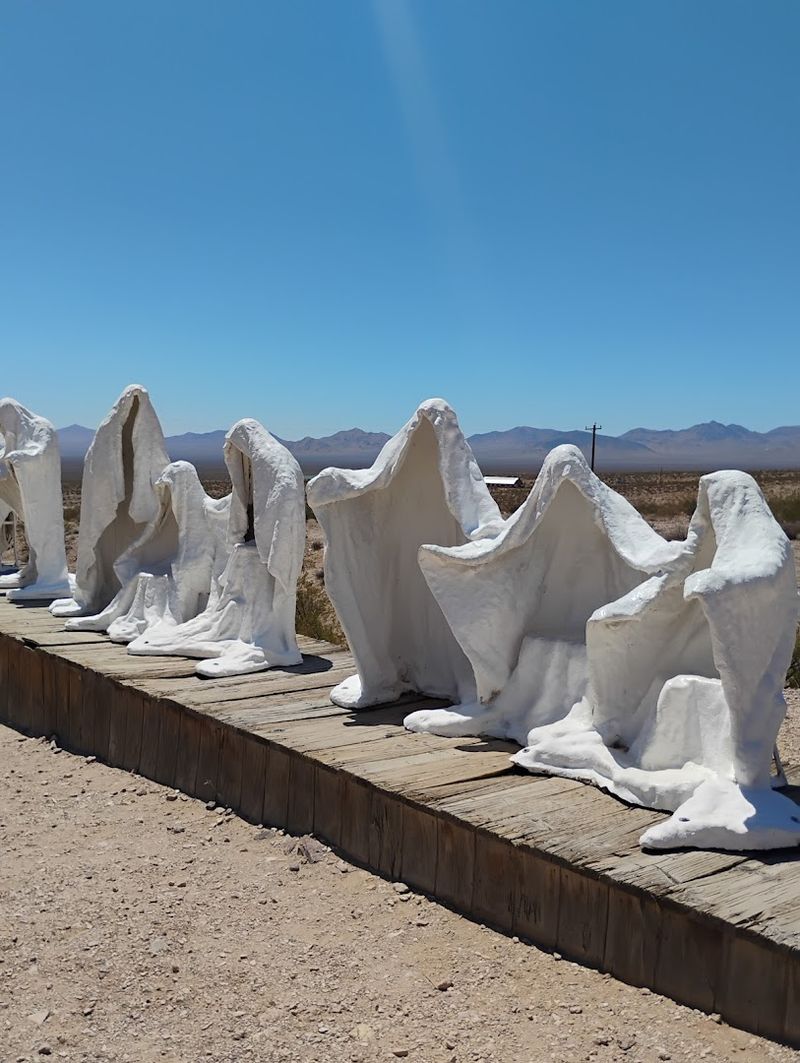
Belgian artist Albert Szukalski established this outdoor sculpture park in 1984, right next to the ghost town. His most famous piece, “The Last Supper,” features ghostly white figures cast in a haunting tableau that stands against the open Nevada sky.
The sculpture is eerie, beautiful, and completely unexpected in the middle of the desert.
Another standout is “Lady Desert: The Venus of Nevada,” a towering pink figure that rises from the sand like something from a dream. Other works by different artists have been added over the years, making the museum a growing collection of bold, strange, and thought-provoking art.
The park is free to visit and open to the public. There are no ropes or barriers.
You can walk right up to the sculptures and experience them up close, which makes the whole thing feel personal rather than formal. What happens when contemporary art meets a crumbling ghost town in the Nevada desert?
You get one of the most unexpected cultural experiences in the entire state. Visitors who stumble onto Goldwell without knowing it exists often say it is the highlight of their entire road trip.
That kind of happy surprise is exactly what makes this corner of Nevada so hard to forget once you have been there.
What The Ruins Tell You
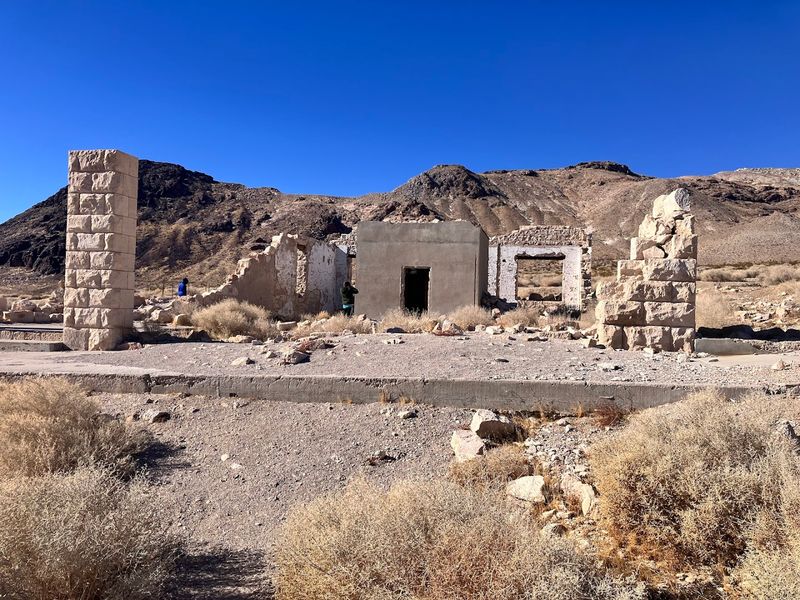
Walking through Rhyolite is not like visiting a museum. There are no guided tours, no velvet ropes, no narrated audio tracks. It is just you, the ruins, and a lot of open sky.
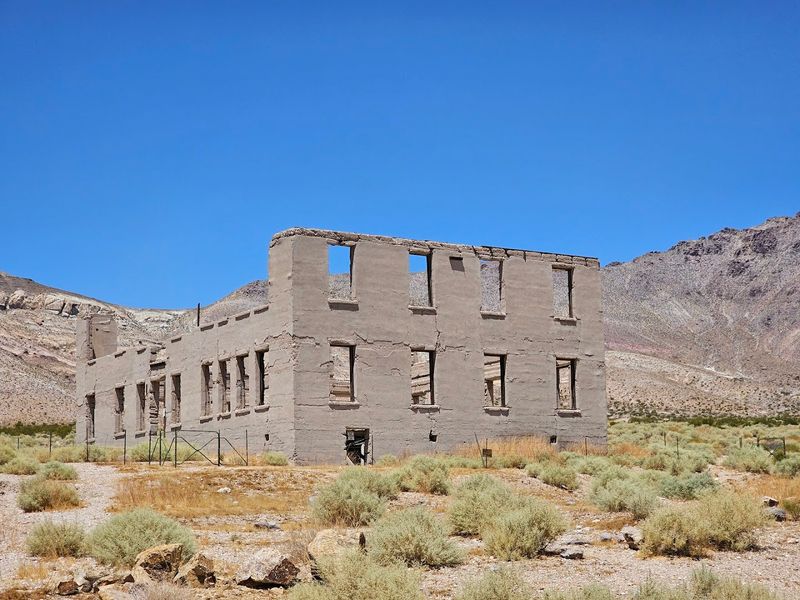
The Cook Bank Building is the most dramatic structure on site. Its three-story stone facade still stands, open to the air, with window frames looking out onto nothing.
It once had marble staircases and mahogany finishings inside. Now pigeons rest on the ledges where bankers once worked.
Scattered around the site are the remnants of the old jail, sections of the general store, and dozens of building foundations that outline streets you can still follow on foot. The layout of the town is surprisingly readable once you start exploring.
Every crumbling wall has a story behind it. Every foundation represents someone’s livelihood, someone’s daily routine, someone’s reason for being here.
That human weight is palpable as you walk from one ruin to the next.
Is it possible to feel both the energy of a bustling past and the stillness of the present at the same time? Rhyolite makes that happen.
The site is managed by the Nevada Bureau of Land Management and entry is free, open daily from sunrise to sunset.
Planning Your Desert Visit
Rhyolite sits just off the highway leading to Death Valley National Park, making it a natural stop for anyone heading into the park from Nevada. The address is Nevada 89003, located in Nye County, roughly 120 miles northwest of Las Vegas.
The best times to visit are spring and fall, when temperatures are manageable and the desert light is at its most photogenic. Summer temperatures can be extreme, sometimes climbing well above 100 degrees Fahrenheit by midday.
If a summer visit is your only option, go early in the morning and carry more water than you think you will need.
Rattlesnakes are active in warmer months, so watch where you step, especially around rubble and low walls. Sturdy footwear is a smart choice.
The terrain is uneven and the ground is full of loose rock and old debris.
There are no snack bars or food vendors at the site. A restroom is available near the train depot, but that is the full extent of the amenities. Plan accordingly and pack snacks for the road.
Sunrise and golden hour at Rhyolite are something special. The low light hits the stone walls at angles that make every photo look like it belongs in a documentary.
Why This Detour Stays With You
Most road trip stops are easy to forget by the time you reach the next town. Rhyolite is not one of them.
It has a way of replaying in your mind long after you have driven away. Part of what makes it stick is the scale of what happened here. This was not a tiny camp.
It was a city with schools, hospitals, newspapers, and electricity. The fact that it vanished so completely in under a decade is genuinely hard to wrap your head around.
Part of it is also the silence. The Bullfrog Hills stretch out in every direction, and on a quiet morning, the only sounds are the wind and your own footsteps on gravel. That kind of stillness is rare and oddly powerful.
Visitors from all over the world make the trip to Rhyolite specifically because it offers something that most tourist attractions cannot: an honest, unfiltered, and completely free experience. No ticket booth, no souvenir shop, no crowd control.
Just history sitting out in the open air, waiting.
Nevada keeps places like this close to its chest, and Rhyolite is one of the finest examples of what the state holds beyond the bright lights and casinos.
If you are looking for a detour that earns its place in your memory, this forgotten corner of the Silver State delivers every single time. The desert does not rush you here. Take all the time you want.