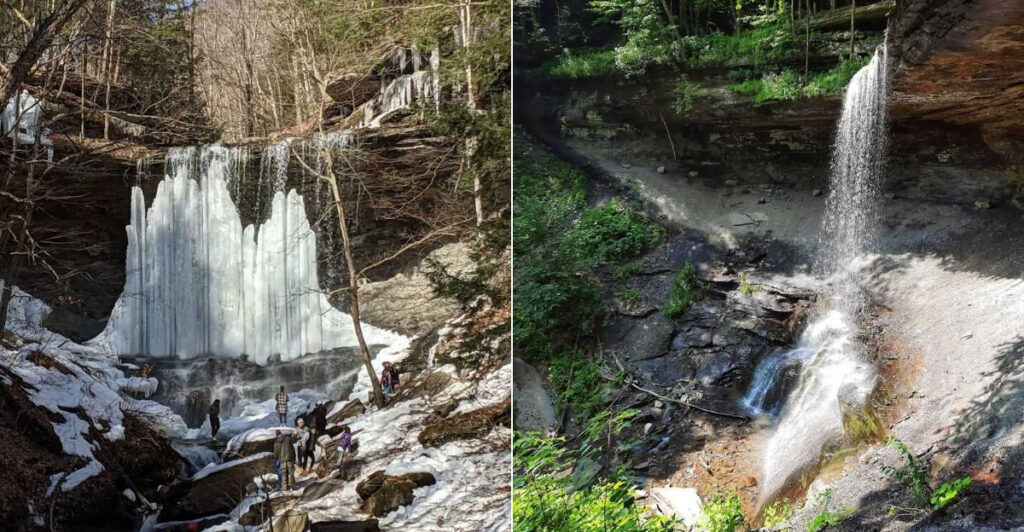
Stand behind a waterfall. Not near it. Not in front of it. Actually behind it.
That is exactly what New York is offering, and the trail to get there is short enough that absolutely no excuses apply. A massive rock overhang sits behind a 50-foot cascade, wide enough to walk under while the water thunders past just inches away.
Spring turns the whole thing into something almost impossible to describe. The roar is real. The feeling is even more real. Families love it. First-timers lose their minds over it.
And the best part? It costs absolutely nothing and takes almost no effort to reach. New York is quietly offering one of its most jaw-dropping natural moments for free, right off an easy woodland trail.
Why is this not already on the list? Go fix that.
The Waterfall Up Close
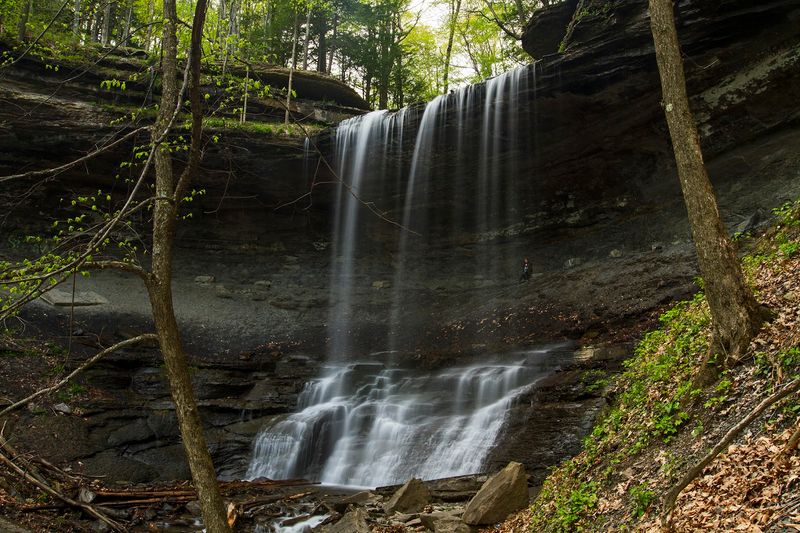
Standing at the base of Tinker Falls for the first time tends to stop people mid-sentence. The waterfall drops about 49 to 50 feet from a sandstone ledge, spreading nearly 24 feet wide at its crest as it free-falls into the shallow stream below.
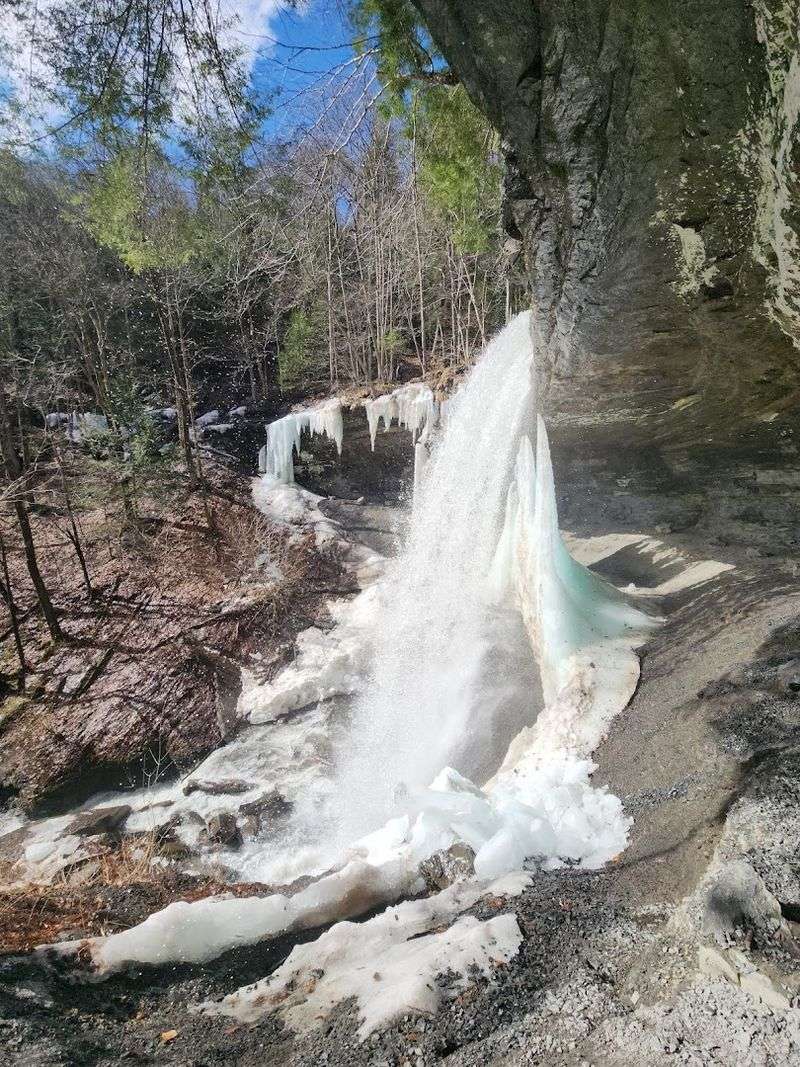
What makes this waterfall genuinely different from others across New York is the enormous natural rock overhang sitting directly behind the falling water. That overhang stretches roughly 100 feet wide, stands about 30 feet high, and reaches 30 feet deep.
You can walk right into it. The geology here is the real story. Tinker Falls is what geologists call a hanging falls, created when resistant sandstone on top eroded at a much slower rate than the softer shale layers underneath.
Over thousands of years, the shale wore away, leaving that dramatic overhang jutting out like a stone canopy.
Have you ever stood behind a waterfall and felt the cool mist hit your face while the world outside the curtain of water disappears? That is exactly what visitors get here.
The sound alone, a deep, rhythmic rush of water echoing off ancient rock, is worth the short walk from the parking area. Visitors say it feels like stepping into a completely different world, just a few minutes from the road.
The Trail Itself
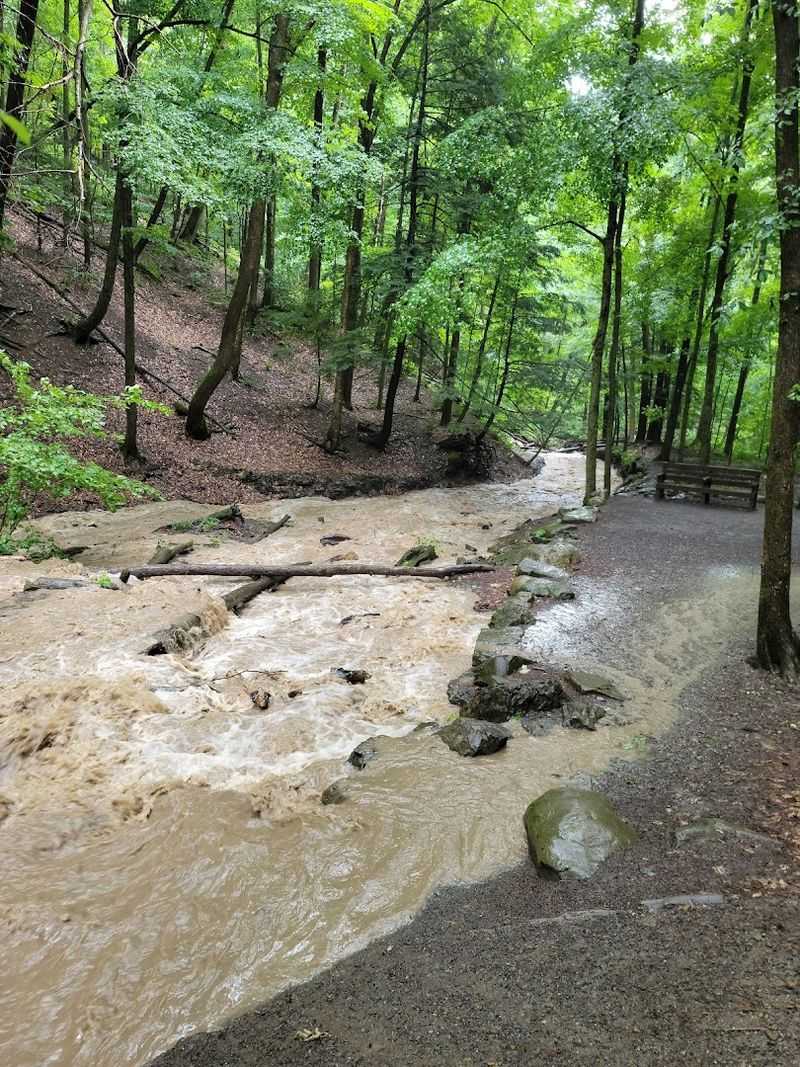
The Tinker Falls Trail starts with a smooth, mostly flat gravel path that practically invites you in. The first quarter mile is universally accessible, meaning strollers, wheelchairs, and visitors of all mobility levels can enjoy the walk without worry.
That easy opening stretch winds through peaceful woodland with a small brook running alongside it, and the sound of moving water keeps you company the whole way. It takes most people about ten minutes to reach the main viewing area of the falls, making this one of the most rewarding short hikes in central New York.
If you want to get closer to the base of the falls, the trail shifts into moderate territory. A brook crossing awaits, and visitors often find creative ways to hop across using rocks and logs.
Just know that wet shoes are a real possibility, and more than a few hikers have laughed their way through it.
Past the crossing, a steep rocky staircase built in 2014 climbs up toward the overhang and the space behind the falls.
The steps are narrow and can be slippery, so take your time and watch your footing. The total out-and-back distance is about 0.6 miles.
Could a hike this short really deliver this much scenery? Absolutely yes, and the trail proves it every single time.
Spring And Fall Visits
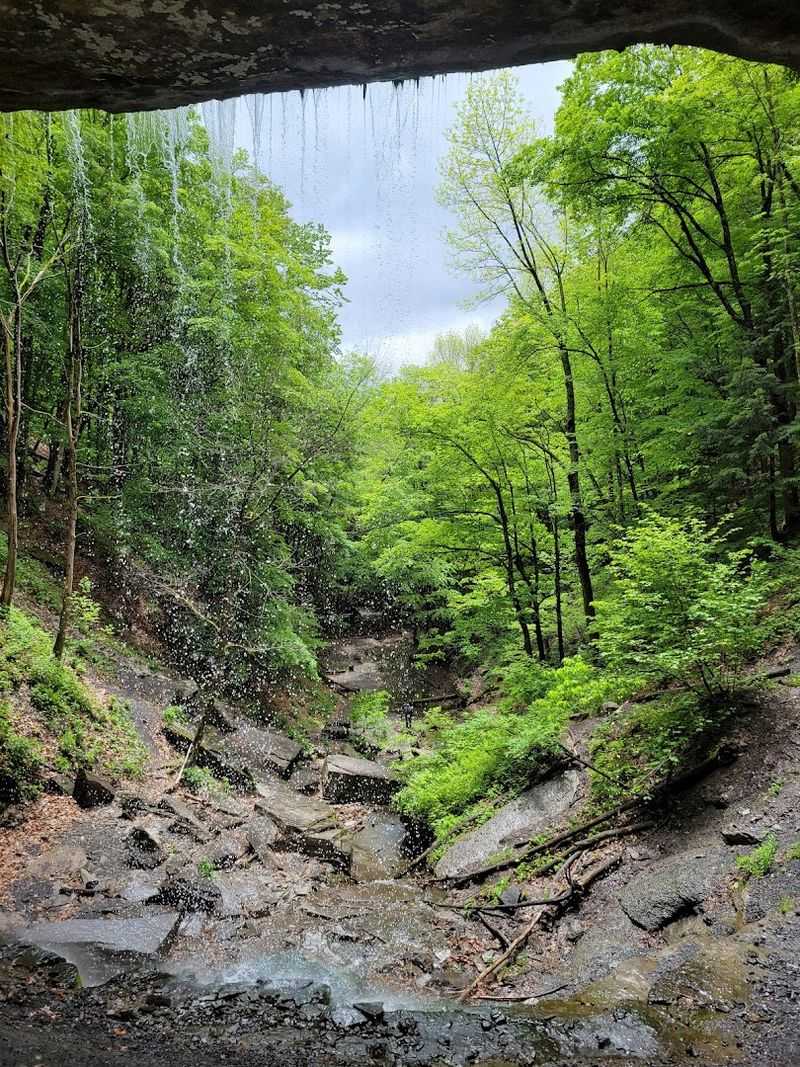
Timing your visit to Tinker Falls can seriously change the whole experience. Spring is when the waterfall shows off its full power.
After snowmelt and heavy spring rains, the water rushes over the sandstone ledge with serious force, and the mist around the base creates a cool, refreshing atmosphere that hikers absolutely love.
The surrounding forest in spring fills with fresh green leaves, wildflowers along the trail edges, and birdsong that makes the whole walk feel like a nature documentary. Visitors say the spring version of Tinker Falls is the loudest and most dramatic, and it is hard to argue with that description once you see it in person.
Fall brings a completely different kind of magic. The trees in this part of New York put on a stunning color display, and the trail through the Labrador Hollow Unique Area becomes a corridor of orange, red, and gold.
The waterfall slows down a bit compared to spring, but the scenery around it more than compensates. One couple who visited in autumn said the hike felt like walking through a painting.
What season would make you finally book that trip? Both spring and fall have strong arguments, and honestly, the only real way to settle the debate is to visit twice.
The trail and waterfall reward every season with something genuinely worth seeing.
Winter At Tinker Falls
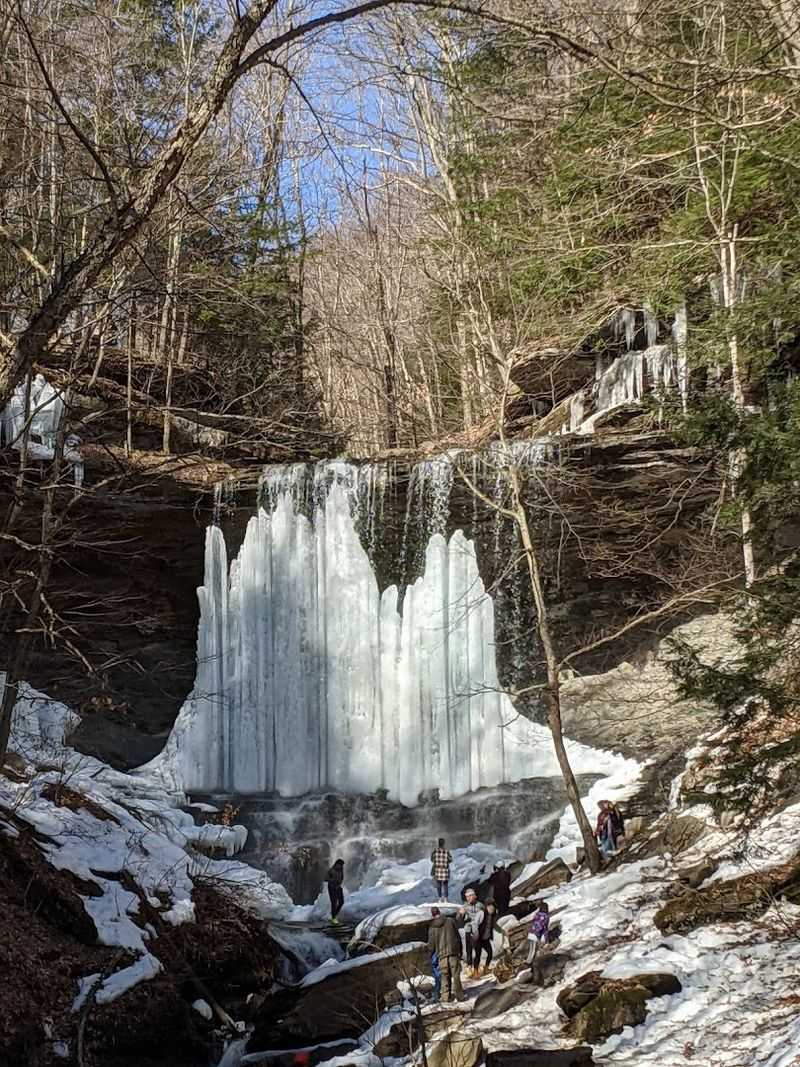
Most people think of waterfalls as a warm-weather destination. Tinker Falls disagrees with that idea entirely.
In winter, the waterfall can freeze completely solid, transforming into a towering column of thick, layered ice that looks almost too dramatic to be real.
The mist that normally floats around the base of the falls coats nearby branches and rocks in a delicate frost, turning the whole area into a glittering white landscape. Visitors who have made the trip in January or February say the frozen version of the falls is one of the most striking natural sights they have seen anywhere in New York.
Winter also brings a different crowd to Tinker Falls. Ice climbers are drawn to the thick frozen face of the waterfall, making it a surprisingly active destination even in the coldest months.
Watching experienced climbers work their way up the ice is a spectacle all on its own, and the area around the falls becomes a quiet gathering spot for outdoor enthusiasts who appreciate the season rather than hide from it.
The trail itself is manageable in winter for those with proper footwear, though ice and packed snow can make the rocky sections near the base more challenging.
Labrador Hollow Surroundings
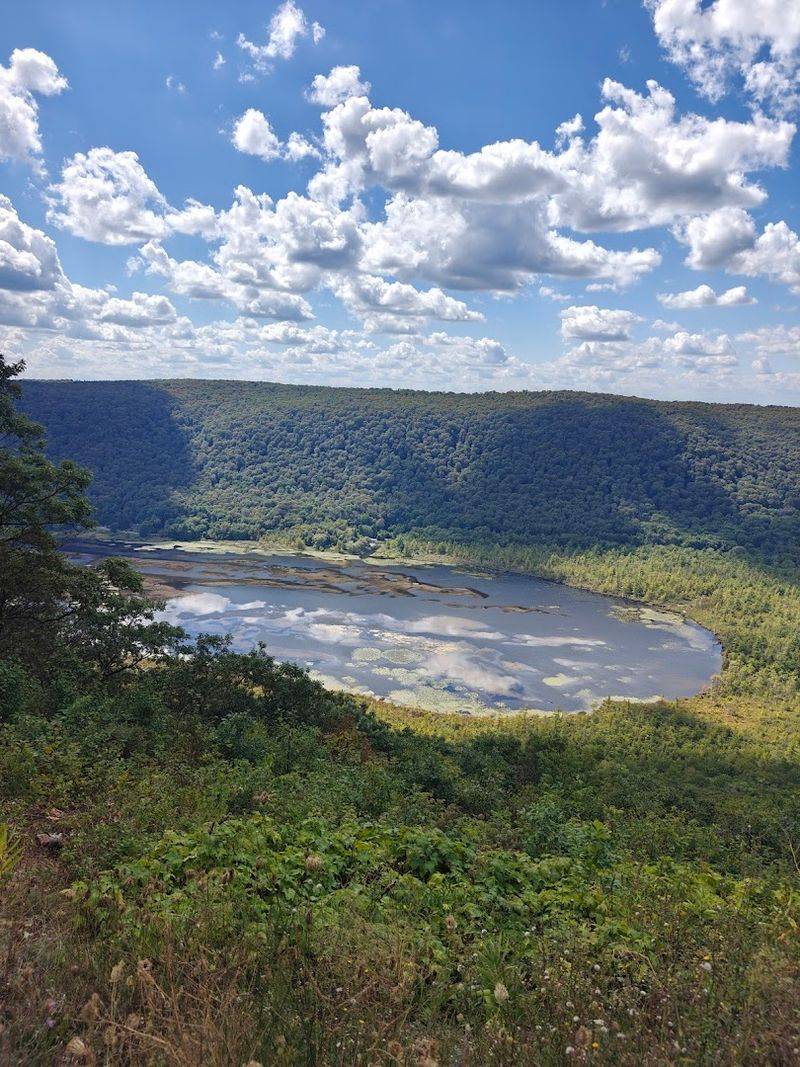
Tinker Falls sits inside the Labrador Hollow Unique Area, a 1,483-acre protected landscape managed by the New York State Department of Environmental Conservation. The hollow itself is a steep-sided glacial valley carved out during the last ice age, and the geography here feels ancient and dramatic in the best possible way.
Beyond the waterfall trail, the area includes Labrador Pond, a 120-acre glacial lake that sits at the bottom of the valley. A wetland boardwalk winds through the marshy areas near the pond, offering close-up views of aquatic plants, frogs, turtles, and a surprising variety of bird species.
Paddling is also allowed from a designated launch point on the pond.
The whole area is remarkably peaceful. No motorized boats are allowed on the water, and camping and open fires are prohibited, which keeps the atmosphere calm and undisturbed.
Hikers, birdwatchers, and paddlers share the space with a mutual respect that makes every visit feel relaxed and unhurried.
Trail connections within the hollow link up with the North Country National Scenic Trail, which passes almost directly above Tinker Falls, and the Skyline Trail for those who want to extend their adventure.
Did you know this entire landscape was shaped by glaciers thousands of years ago? Every hill, pond, and rocky ledge here tells part of that slow, powerful story, and the Labrador Hollow is one of the finest places in central New York to read it.
Wildlife Along The Way
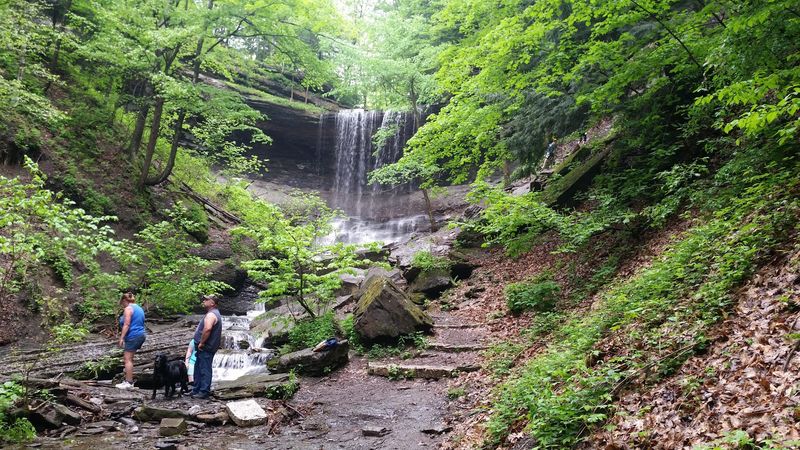
The trail to Tinker Falls is not just about the waterfall. The walk itself is alive in ways that keep your eyes busy from start to finish.
Chipmunks dart across the path with impressive confidence, salamanders hide near the wet rocks along the brook, and birds move through the forest canopy in a constant, cheerful shuffle.
One hiker who spent several hours exploring the wider trail network reported running into chipmunks, salamanders, and birds at almost every turn.
The stream that runs alongside the lower trail is especially active with small wildlife, and if you move quietly and keep your eyes low, you might spot a toad resting near the water’s edge.
One visitor found a surprisingly large toad sitting right next to the stream, which apparently made the whole trip even more memorable.
Birdwatching is a genuine draw at Labrador Hollow, and the mix of wetland, forest, and open water near Labrador Pond creates ideal habitat for a wide variety of species. Spring migration season brings an especially impressive variety of birds through the area.
The wildlife here is not something you have to seek out aggressively. It simply appears as you walk, adding small moments of delight to what is already a beautiful hike.
Practical Tips For Visitors
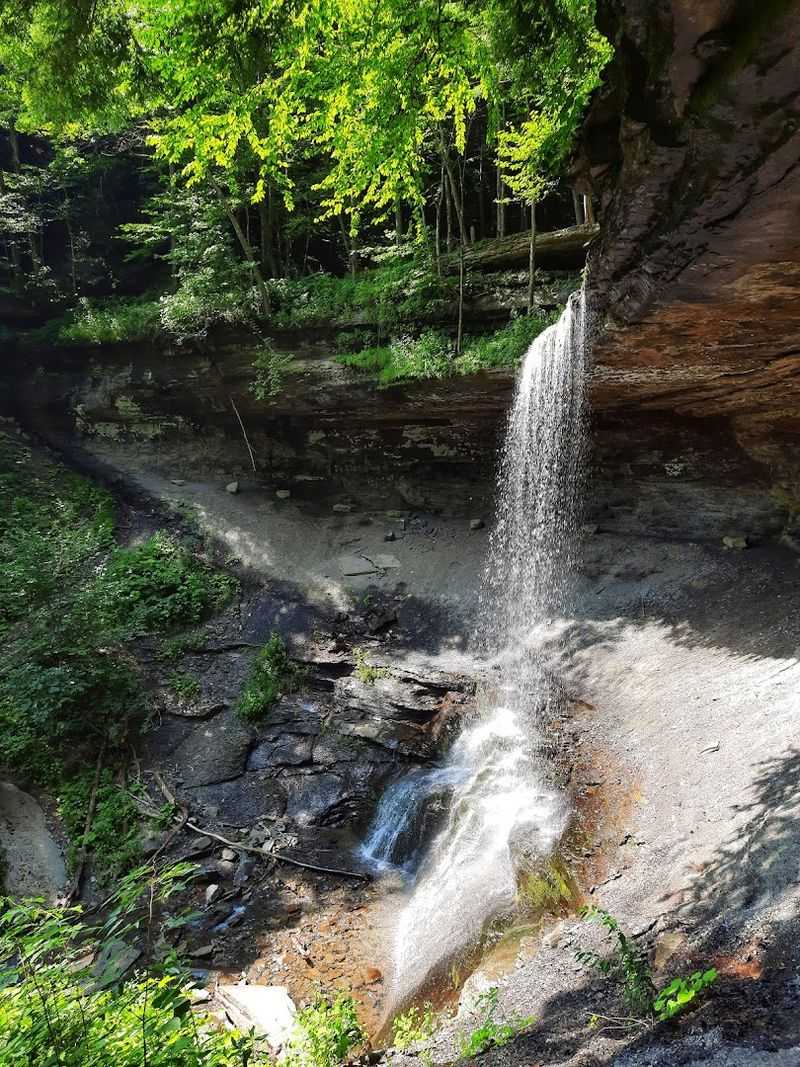
Getting to Tinker Falls is straightforward. A large parking lot sits across the road from the trail entrance, and a smaller designated handicapped accessible parking area is available closer to the trailhead.
The trailhead is located at Tinker Falls Trail, Tully, NY 13159, just off NYS Route 91.
The area is open daily from 7 AM to 7 PM. Admission is free, which makes it one of the most accessible natural attractions in this part of New York.
Bringing bug spray is genuinely recommended, especially in summer, and mud along the trail after rain is a real factor to plan around.
Footwear matters here more than it might for some other hikes. Sneakers work fine for the flat gravel section, but hiking boots give you a real advantage on the steep staircase and the rocky terrain near the base of the falls.
The steps can be slippery even on dry days, so grip and ankle support are worth thinking about before you head out.
Dogs are welcome on the trail and visitors say they enjoy the walk just as much as their humans do, though keeping them leashed keeps everyone happy.
Why This Hike Stands Out
A lot of trails in New York offer a nice walk and a decent view at the end. Tinker Falls offers something harder to find: an experience that genuinely surprises you, even if you have seen a hundred waterfalls before.
Walking behind the falling water inside that massive rock overhang is the kind of thing that makes people stop and look around in quiet disbelief.
The combination of accessibility and drama is rare. The flat gravel path at the start means almost anyone can make it to the viewing area, while the steeper route to the overhang gives those who want a challenge something real to work for.
Families with young children have managed it, and so have visitors well into their senior years who simply took the stairs at their own pace.
The fact that the whole experience is completely free adds another layer of appreciation. No entrance fees, no reservations, no complicated logistics.
Just a short drive from Tully, a walk through the woods, and one of the most photogenic waterfalls in the entire state waiting at the end.
Visitors consistently say Tinker Falls is worth every step, and many come back in different seasons just to see how the place transforms.
The trail connects to larger networks for those who want more mileage, and the surrounding Labrador Hollow adds depth to the visit. New York has no shortage of beautiful places, but few of them deliver this much reward for this little effort.
That is what makes Tinker Falls genuinely unforgettable.