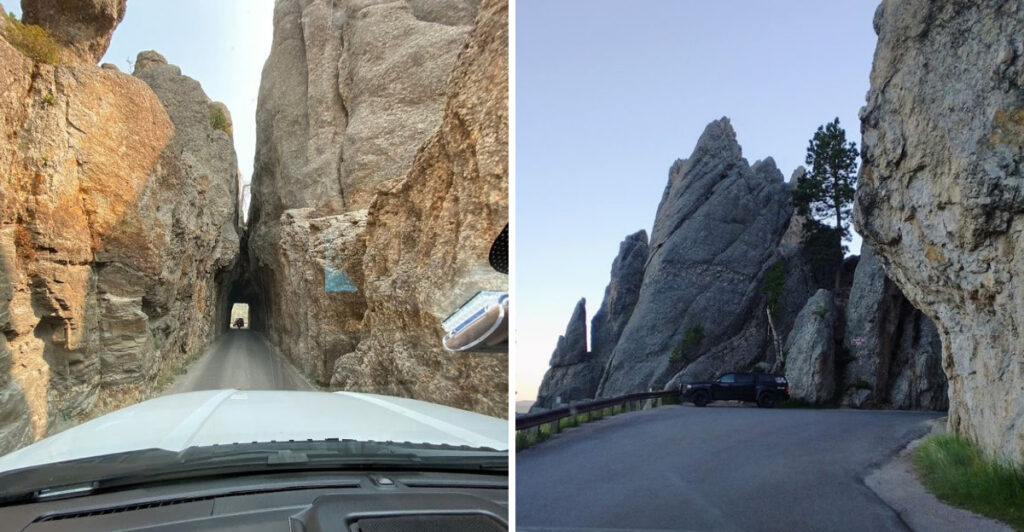
The granite tunnels alone would make this drive worth it. But then you add the spires shooting straight out of the forest like something a geology professor hallucinated.
A lake so perfectly framed by massive boulders it looks staged, and wildlife appearing in the road with absolutely zero warning. And that is still only the beginning of what South Dakota has packed into this one highway.
The road was personally mapped on horseback by a former governor who cared that much about getting it right. It rewards slow driving, spontaneous stops, and a real willingness to just sit with a view.
South Dakota has better road trips than most people give it credit for. This one makes the case harder than almost anything else in the country.
A Road Built By Someone Who Really Cared
Roads do not build themselves, and this one had an unusually passionate creator. Needles Highway was planned entirely by former South Dakota Governor Peter Norbeck, who surveyed the entire route on foot and on horseback before a single shovel hit the ground.
He wanted drivers to feel the landscape, not just pass through it. That philosophy shaped every tight curve, every switchback, and every tunnel blasted through solid granite.
The road was completed in 1922, and it has remained largely unchanged since then.
Norbeck believed the scenery should do the talking, which is why the highway moves so slowly and deliberately through the terrain. It is not designed for speed.
It is designed for attention.
Understanding who built this road and why makes the drive feel more personal. Every odd angle and dramatic curve was a deliberate choice, not a compromise.
The result is one of the most intentional scenic routes in all of South Dakota.
The Granite Needles That Named Everything
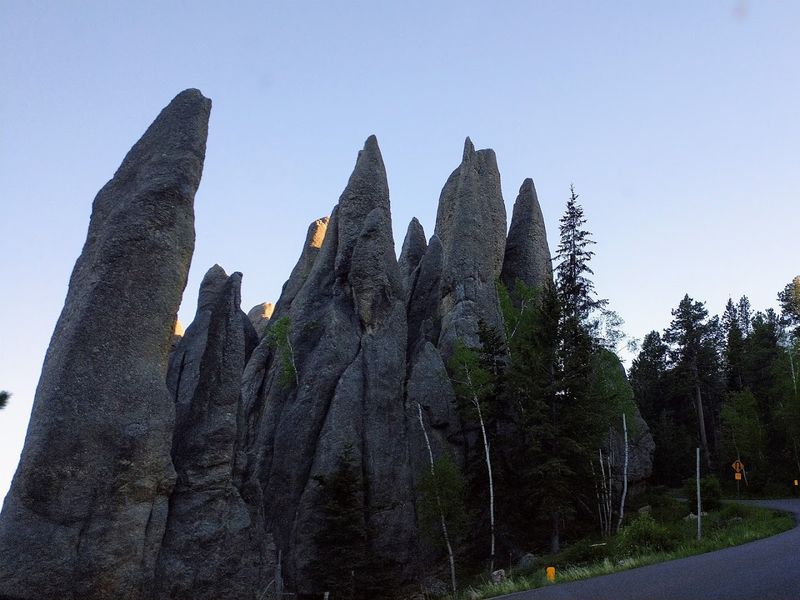
Jagged and impossibly tall, the granite spires along this highway look like nature decided to show off. These needle-like formations rise sharply from the surrounding forest, pointing skyward in clusters that seem almost architectural in their arrangement.
They are what gave the highway its name, and seeing them in person explains everything. Photographs come close, but standing beneath them feels entirely different.
The scale is hard to process until visitors are actually there.
The spires are made of Precambrian granite, shaped over millions of years by erosion and natural weathering. Some formations are so narrow at the top that they seem structurally impossible, yet they have stood for longer than human memory can reach.
The Cathedral Spires area is one of the most concentrated sections of these formations along the route. Hikers and rock climbers are drawn here regularly.
For drivers, simply pulling off and looking up at the spires is a moment that tends to stay with people long after the trip ends.
Tunnels So Narrow They Make Drivers Hold Their Breath
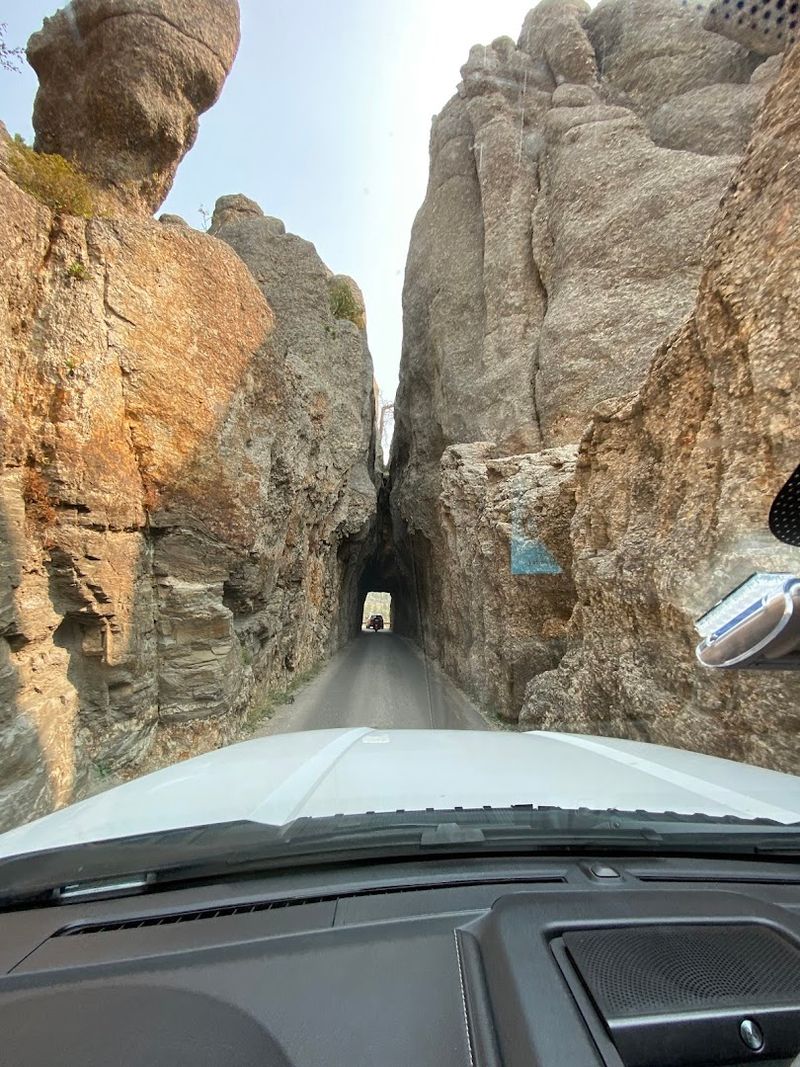
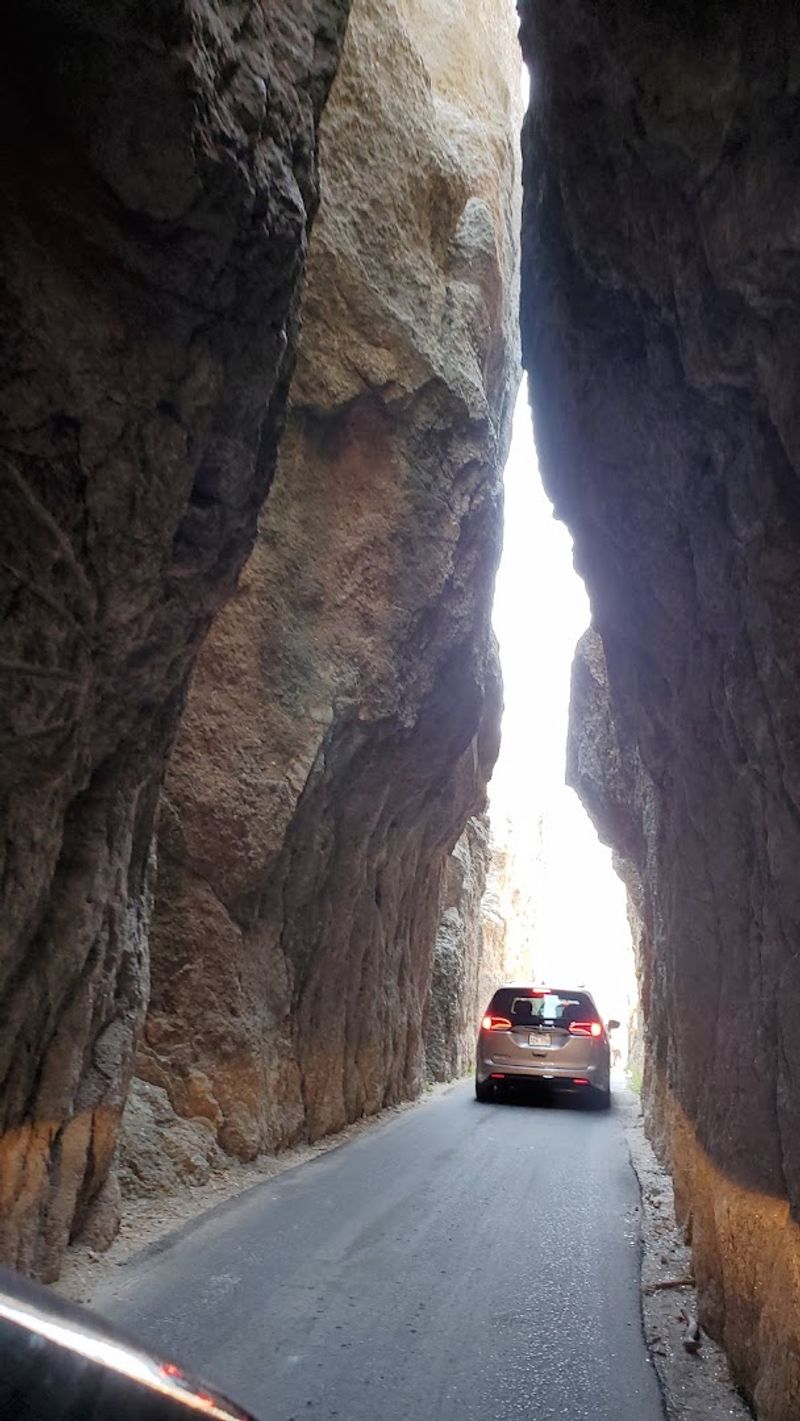
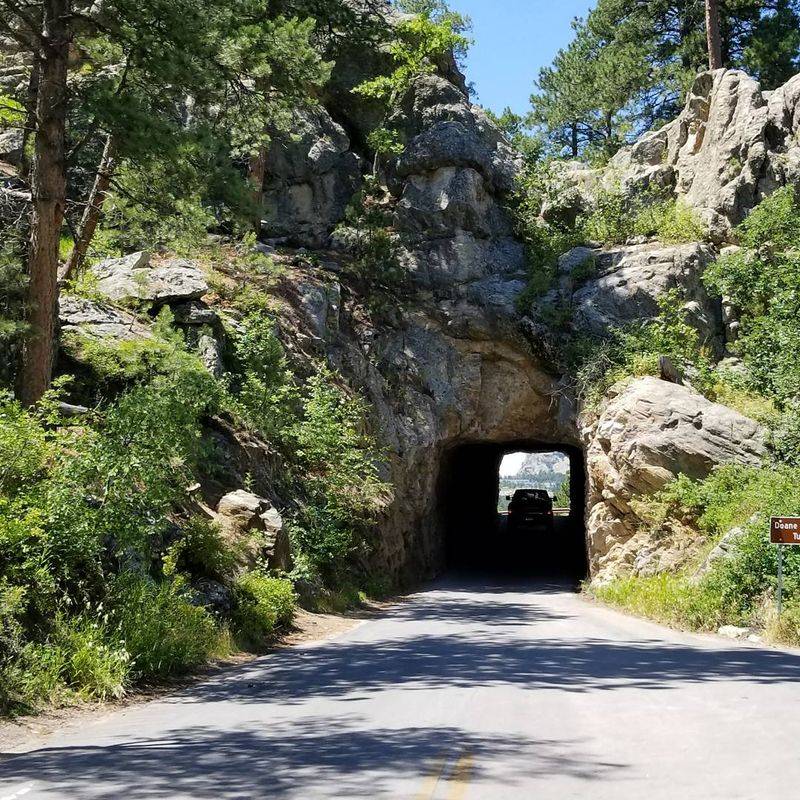
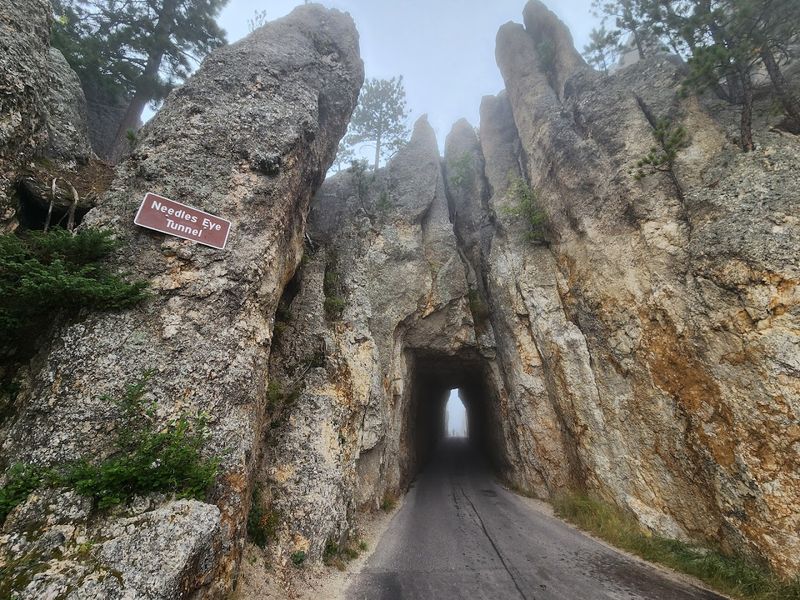
Tight does not quite cover it. The tunnels along Needles Highway were blasted directly through solid granite, and they are genuinely narrow.
The Needles Eye Tunnel measures roughly eight feet wide and just under ten feet tall, which means larger vehicles simply cannot pass through.
RV owners and drivers towing trailers are strongly advised to check dimensions before attempting the route. The tunnels are not suggestions.
They are hard limits carved into rock.
There are two tunnels along the highway: the Needles Eye Tunnel and the Iron Creek Tunnel.
Each one has slightly different dimensions, but all of them require careful, slow driving and full attention.
For standard passenger vehicles, the experience is thrilling in the best way. The moment a car emerges from the dark granite passage into open light and mountain views is one of those small, sharp travel memories that sticks around.
The tunnels alone are worth the trip to South Dakota.
Sylvan Lake And The Quiet It Brings
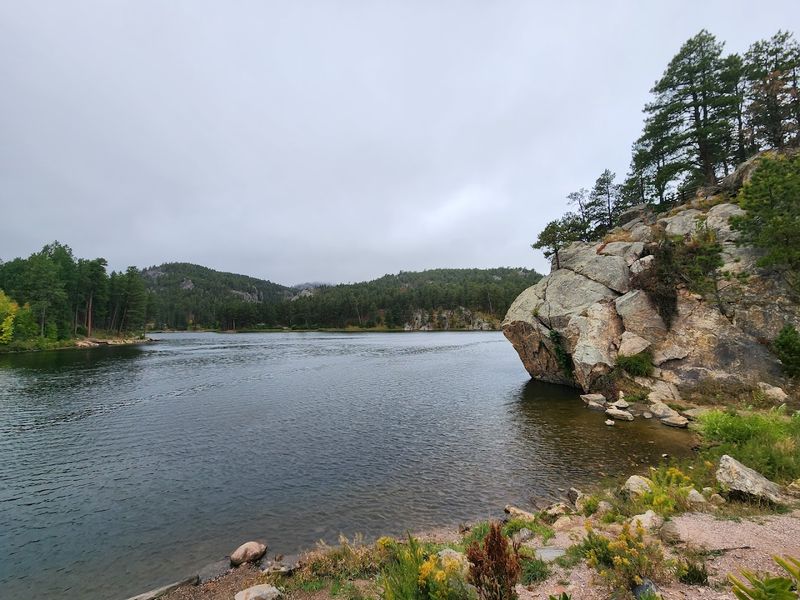
Crystal-clear water framed by massive granite boulders and tall pines, Sylvan Lake sits along the Needles Highway route like a reward for paying attention. It is one of the most photographed spots in all of South Dakota, and the view earns that reputation without any exaggeration.
The lake offers more than scenery. Visitors can fish, swim, or take out a non-motorized boat on the calm water.
Hiking trails branch out from the shoreline, offering routes through the surrounding rock formations and forest.
The atmosphere around Sylvan Lake tends to be calm and unhurried. People linger here longer than they planned.
It is the kind of place that quietly resets the pace of a trip.
Early morning visits offer the best light for photography and the fewest crowds. The water reflects the surrounding granite and sky in a way that feels almost unreal.
Sylvan Lake is a genuine highlight of the Needles Highway experience, not just a pretty backdrop but an actual destination worth slowing down for.
The Needle’s Eye Formation Up Close
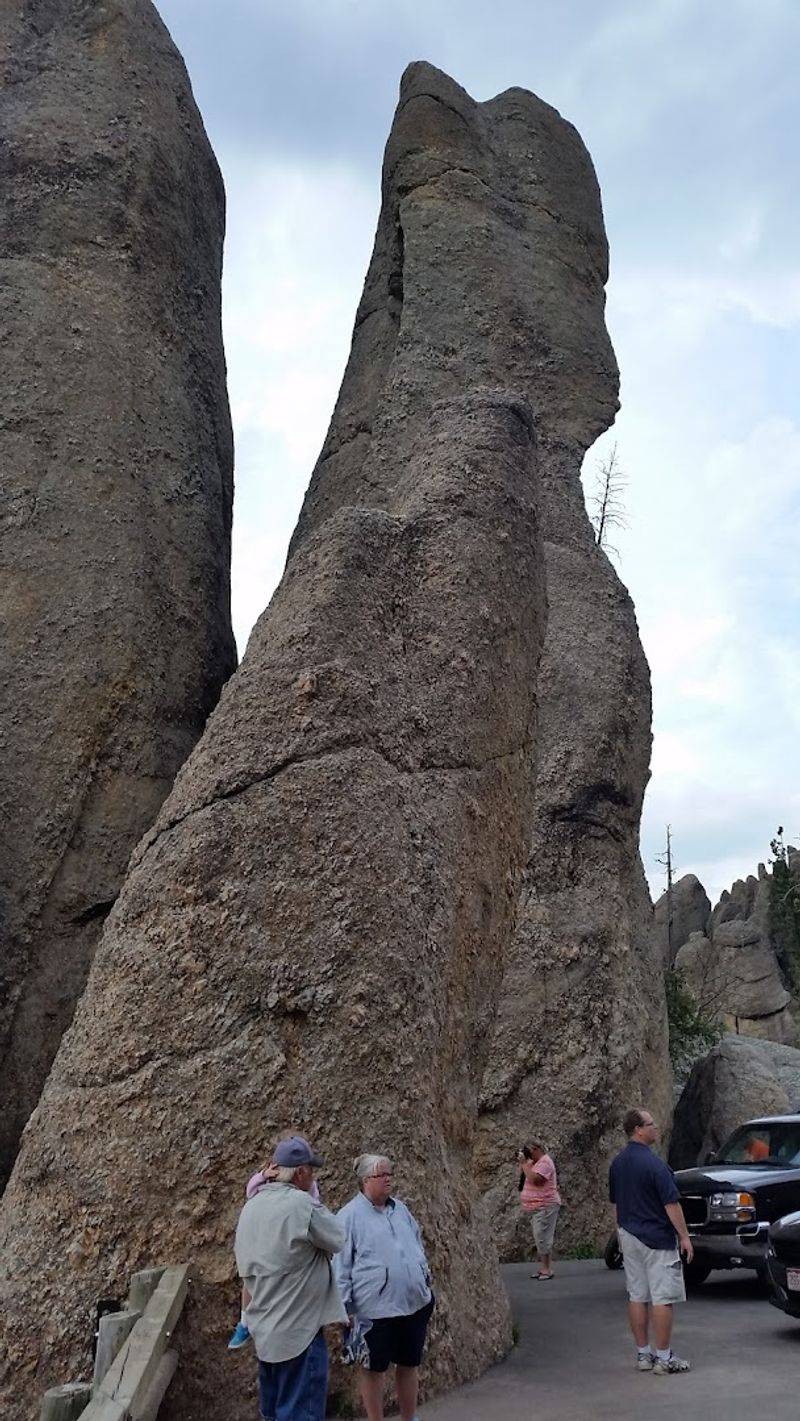
Among all the dramatic geology along this route, one formation earns its own name and its own stopping point. The Needle’s Eye is a slender opening eroded naturally through a tall granite spire, creating a narrow window in solid rock that hikers can actually walk through.
The opening is the result of thousands of years of natural weathering, not any human intervention. Wind, water, and time carved it out slowly, and the result is a formation that looks almost deliberate, like something designed rather than worn into existence.
A short trail leads from a parking area to the formation, making it accessible without requiring serious hiking experience. The walk itself passes through beautiful terrain, so the journey is worth it even before reaching the landmark.
Standing at the Needle’s Eye and looking through the gap at the landscape beyond is one of those moments that feels earned. It is a small adventure within a larger one, and it captures exactly what makes this South Dakota highway so endlessly interesting to explore.
Pigtail Bridges And The Engineering Behind The Beauty
Most scenic drives offer curves. The broader Peter Norbeck Scenic Byway, which Needles Highway forms part of, takes things further with pigtail bridges on the neighboring Iron Mountain Road stretch, and they are something else entirely.
These spiral-shaped wooden structures loop back over themselves to help the road gain or lose elevation without requiring excessive grading of the surrounding terrain.
The design is both functional and visually striking. From above, the bridges look like curled ribbons draped across the landscape.
From the driver’s seat, they feel like the road briefly folded in on itself before continuing forward.
Peter Norbeck wanted to minimize the impact of the road on the natural environment, and the pigtail bridges were part of that solution on Iron Mountain Road.
They represent a kind of engineering that prioritized landscape over convenience, which is rare. For visitors pairing Needles Highway with the full byway loop, these bridges add another layer of quiet fascination to the overall South Dakota experience.
Wildlife That Appears Without Warning
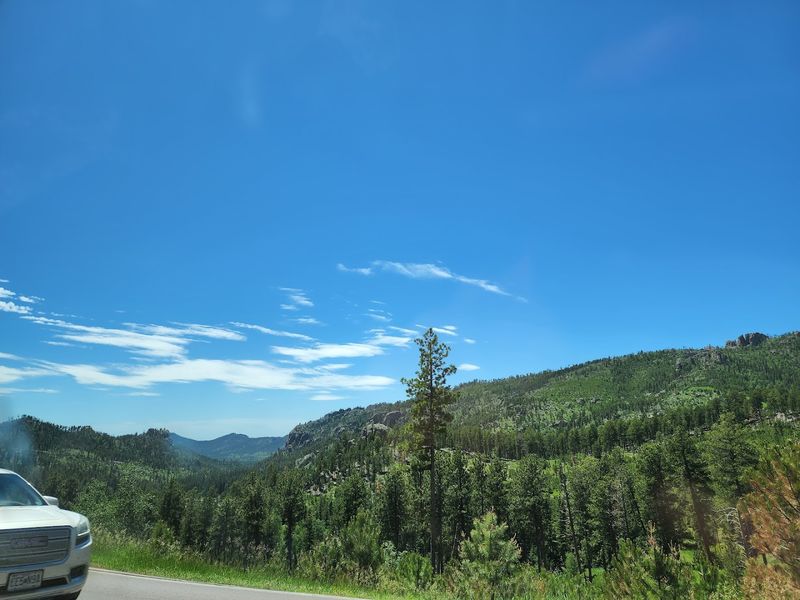
Custer State Park is home to one of the largest free-roaming bison herds in North America, and those animals do not check the schedule before crossing the road. Wildlife encounters along Needles Highway are common and can happen at any point during the drive.
Bison are the most dramatic sightings, but pronghorn, white-tailed deer, wild burros, and bighorn sheep are also frequently spotted in and around the highway corridor. Drivers should stay alert and keep speeds low, which the road’s curves naturally encourage anyway.
Pulling over safely and watching wildlife from a respectful distance is part of the experience here. Getting out of the vehicle near bison is strongly discouraged.
These are wild animals, and they behave accordingly.
The unpredictability of wildlife sightings is part of what makes the drive feel alive rather than just scenic. No two trips through this stretch of South Dakota look exactly the same, and a spontaneous bison encounter on a quiet morning is the kind of moment that becomes the story people tell when they get home.
Cathedral Spires And The Hikers Who Seek Them
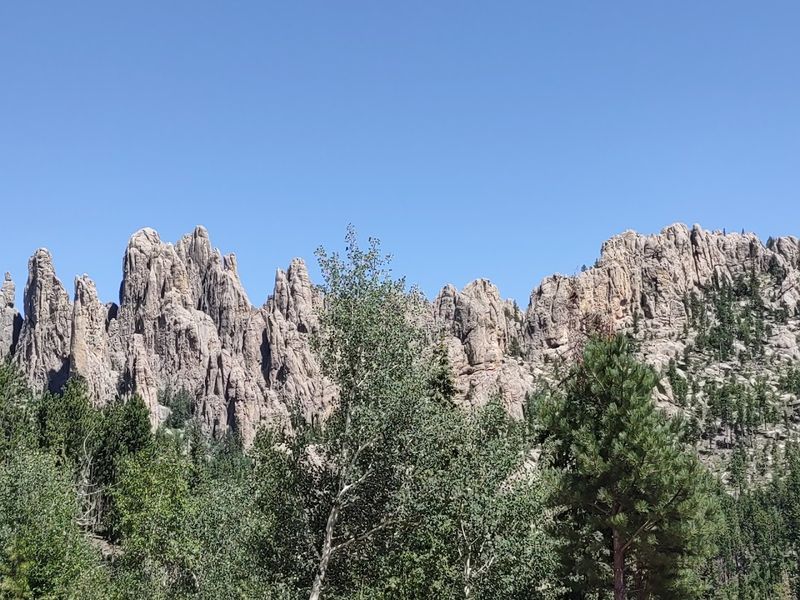
Tall, clustered, and visually overwhelming in the best way, the Cathedral Spires area along Needles Highway is a landmark that draws hikers back repeatedly. The granite columns here rise dramatically from the surrounding forest, grouped in a way that genuinely resembles the spires of a massive stone cathedral.
A dedicated trail leads through this area, offering close-up views of the formations and opportunities to see the surrounding Black Hills landscape from elevated vantage points. The hike is moderately challenging, which means it rewards effort without demanding technical skill.
Rock climbers also use this area regularly. The granite is solid and the routes vary in difficulty, making it a destination for both experienced climbers and those just starting out.
For drivers who do not want to hike, the views from the road itself are still remarkable. The Cathedral Spires are visible from the highway, rising above the treeline in a way that stops conversations mid-sentence.
This section of the route captures the dramatic scale that makes South Dakota’s Black Hills unlike anything else in the region.
When To Go And What To Expect
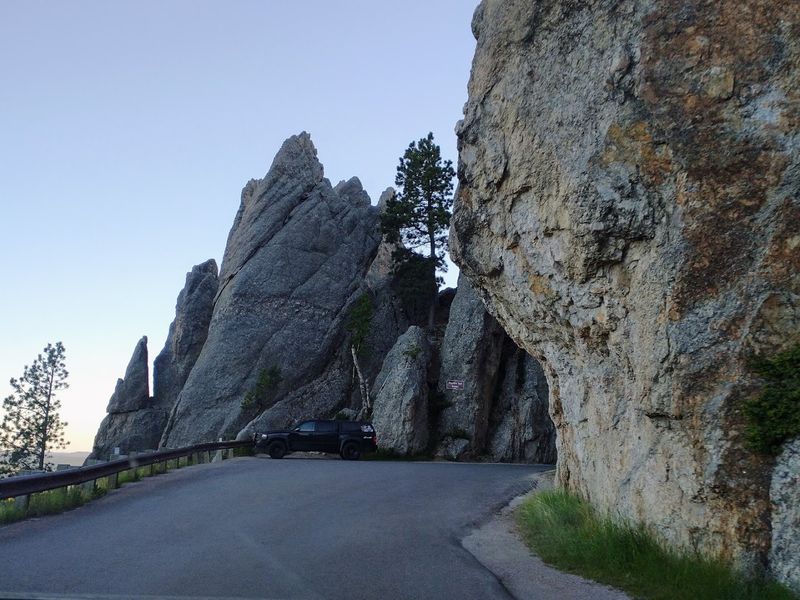
Timing a visit to Needles Highway matters more than it might seem. The road closes with the first significant snowfall each season and typically reopens around April 1st, though that date can shift depending on conditions.
Spring and summer, roughly May through September, offer the most reliable access and the most predictable weather.
Summer brings full greenery, warm temperatures, and longer daylight hours, which gives visitors more time to explore without rushing. The trade-off is that summer also brings more traffic, especially on weekends and holidays.
Early morning drives are consistently recommended for two reasons: lighter crowds and better light for photography. The low-angle morning sun hits the granite formations in a way that afternoon light simply cannot replicate.
An entrance license for Custer State Park is required to drive the highway. The address for navigation purposes is South Dakota 57730, within Custer State Park near Custer, SD.
Planning ahead, arriving early, and driving slowly are the three most useful pieces of advice for anyone making the trip to this corner of South Dakota.
The Full Peter Norbeck Scenic Byway Connection
Needles Highway does not exist in isolation. It forms one key segment of the larger Peter Norbeck Scenic Byway, a designated scenic route that connects several of the most dramatic roads in the Black Hills region of South Dakota.
The full byway includes Iron Mountain Road and portions of Wildlife Loop Road, among other routes. Together, they create a larger driving experience that can fill an entire day or be spread across multiple days for those who want to take their time.
Each segment of the byway has its own character. Iron Mountain Road, for example, features tunnels that frame views of Mount Rushmore in the distance.
Needles Highway focuses more on the raw geology of the granite landscape and the intimate scale of its tunnels and spires.
Treating Needles Highway as part of this broader byway rather than a standalone drive adds context and depth to the experience.
The roads were designed to complement each other, and exploring them together reveals a much fuller picture of what makes the Black Hills of South Dakota one of the most scenic regions in the entire country.