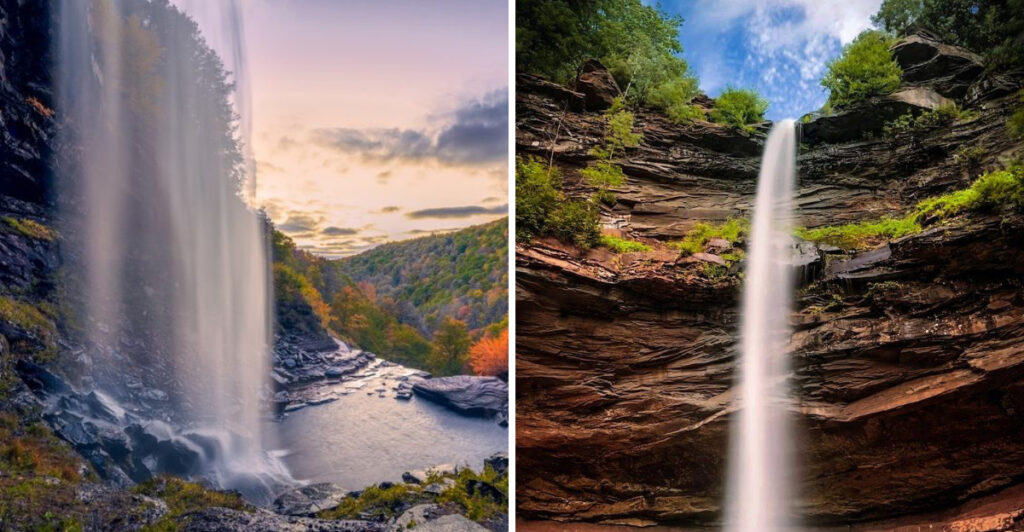
Nobody told you about the tallest waterfall in Upstate New York, and the fact that it towers nearly 100 feet above Niagara Falls makes that even wilder. Two tiers.
A full 260 feet of drop, a roar that crashes into the cliffs and bounces back at you in waves.
Hudson River School painters crossed the country to paint it. Washington Irving wrote about it by name.
New York has been sitting on this quietly for generations, and somehow most people still drive past without a clue.
The mist reaches you before the view fully does. Standing at the base and looking up resets your entire sense of what a waterfall can be.
Worth seeking out before everyone else figures it out.
Taller Than Niagara And Twice As Dramatic
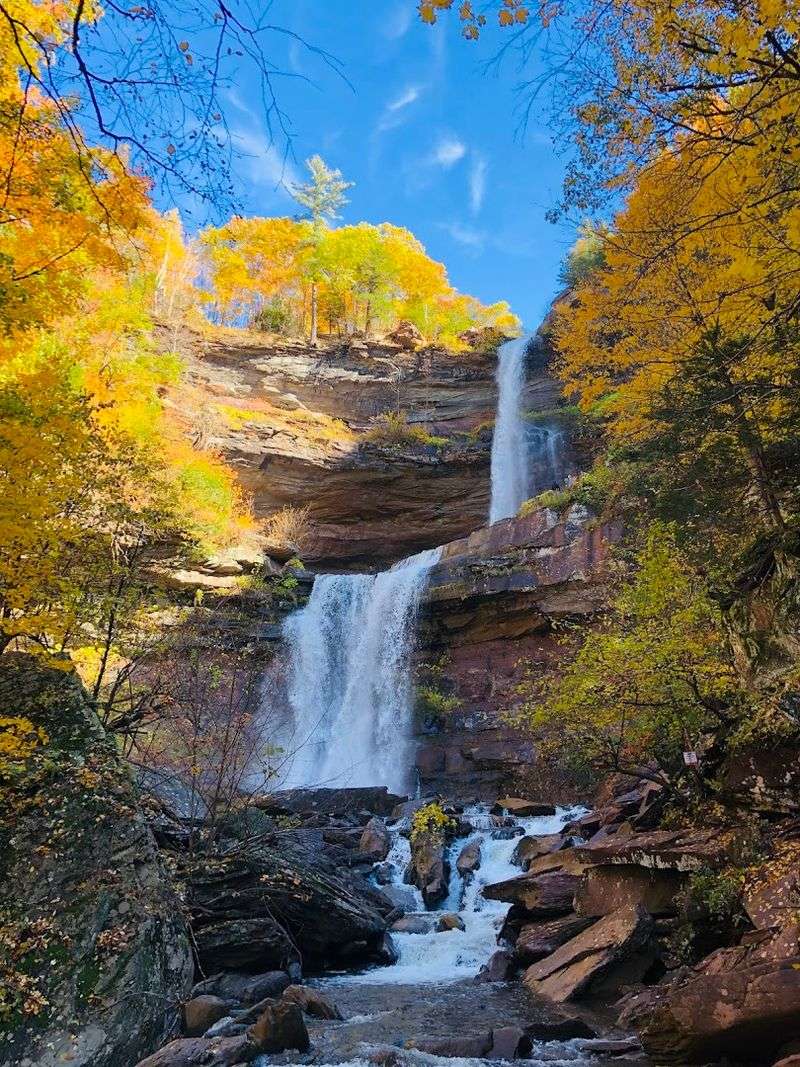
Forget everything you thought you knew about New York waterfalls. Kaaterskill Falls is not just tall, it is record-breaking, dropping a full 260 feet in two breathtaking tiers through the dense forests of the Catskill Mountains.
Niagara Falls measures 167 feet. That means Kaaterskill Falls is more than 90 feet taller, a gap that surprises almost every first-time visitor.
The upper tier alone accounts for around 175 feet of that drop, sending a powerful curtain of white water crashing down into a rocky basin below. The lower tier adds another dramatic plunge before the water continues downstream.
Standing at the base and looking up is one of those rare moments where the scale of nature genuinely stops people in their tracks. The mist that rises from the base coats nearby rocks and ferns in a cool, refreshing layer.
This is not a small, quiet trickle hidden in the woods. It is a full-force natural spectacle that earns every bit of its reputation.
A Sacred Place Long Before The Tourists Arrived
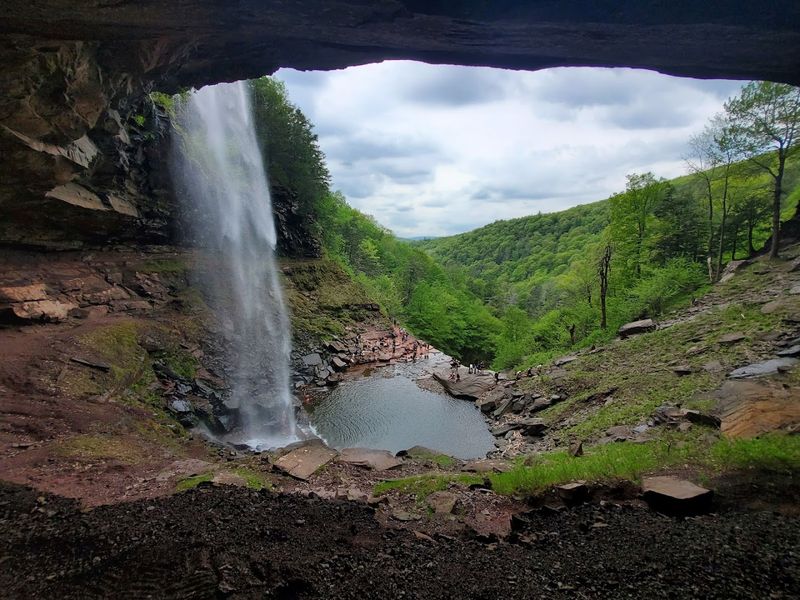
Long before hikers and photographers discovered Kaaterskill Falls, the Mohican people considered this place sacred. The waterfall held deep spiritual meaning for Indigenous communities who called the Catskill region home for generations.
That sense of reverence never really disappeared. Even today, standing near the falls carries a weight that is hard to explain but easy to feel.
As European settlers arrived and New York began to grow, the falls became one of the earliest tourist attractions in America. That is not an exaggeration.
Kaaterskill Falls was drawing curious visitors well before most of the country had developed a tourism culture at all.
Washington Irving referenced it in his famous story “Rip Van Winkle,” cementing the waterfall’s place in American literary history. That kind of cultural footprint is rare for any natural landmark.
The layers of history here run deep, adding a richness to the experience that goes far beyond just watching water fall from a great height.
How The Hudson River School Put This Waterfall On The Map
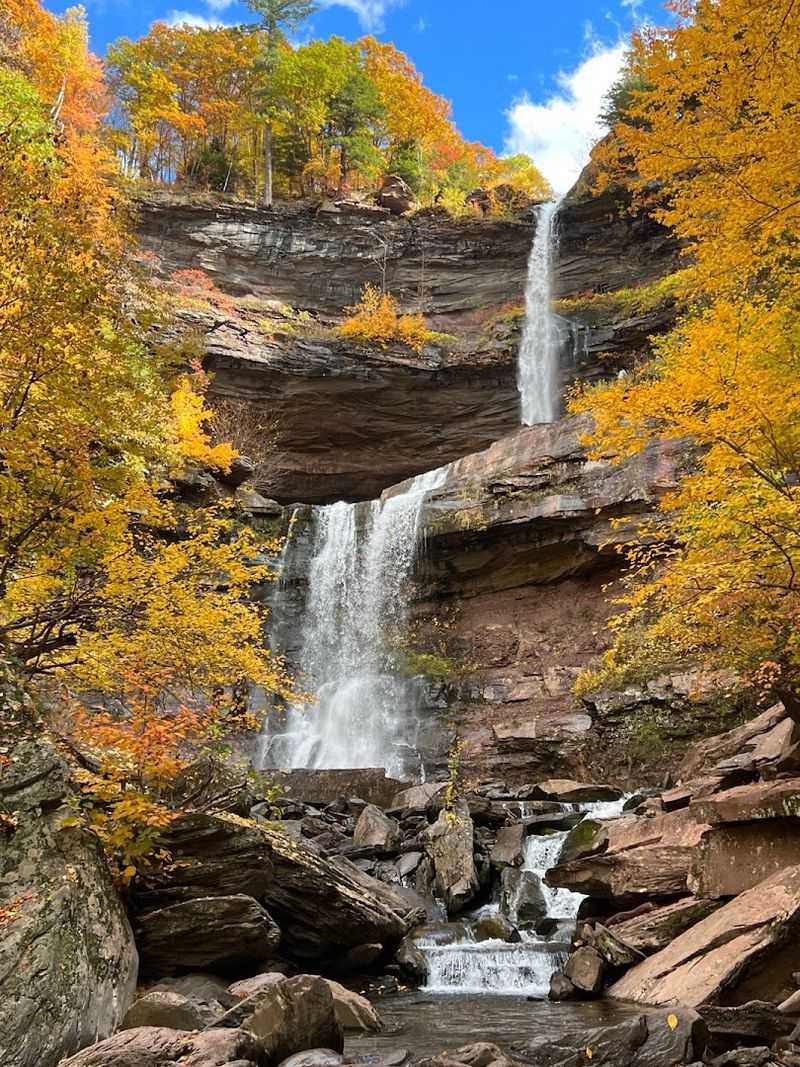
Few waterfalls in America have inspired as much art as this one. The Hudson River School, a celebrated 19th-century American art movement, practically adopted Kaaterskill Falls as its unofficial mascot.
Painters traveled from across the country to set up their easels near its base and capture the drama of water, rock, and forest in oil on canvas. Those paintings now hang in major museums and helped shape how Americans viewed their own natural landscape.
The romantic, almost mythical quality of the falls translated perfectly onto canvas. Artists were drawn to the way light filtered through the surrounding trees and caught the mist rising from the base.
That artistic legacy gave the falls a reputation that spread far beyond the Catskill region. New York’s wilderness became something worth celebrating, not just passing through.
Visiting today feels like stepping into one of those paintings. The scenery has changed very little, and the dramatic visual impact the artists captured centuries ago is still fully intact.
The Trail That Changes Everything
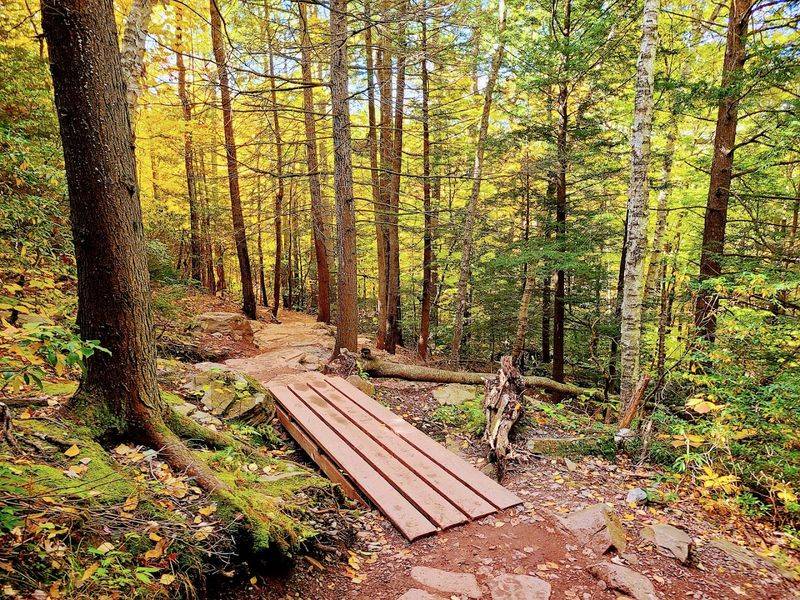
Getting to the base of Kaaterskill Falls is an experience all on its own. The trail descends roughly 400 feet and includes 181 steps, which gives visitors a real sense of how deep into the landscape the falls actually sit.
It is not a casual stroll, but it is absolutely manageable for most reasonably active hikers. The reward at the bottom is well worth the effort.
The path winds through forest that feels genuinely wild. Tall trees block out much of the sky, and the sound of rushing water grows louder with every step downward.
By the time the falls come into full view, the visual impact hits hard. The sheer size of the upper tier is impossible to fully appreciate until you are standing directly beneath it.
For those who prefer a less strenuous option, an accessible viewing platform at the top of the falls can be reached from the Laurel House Road parking area in Haines Falls, New York, offering a different but equally impressive perspective.
What The Mist Feels Like Up Close
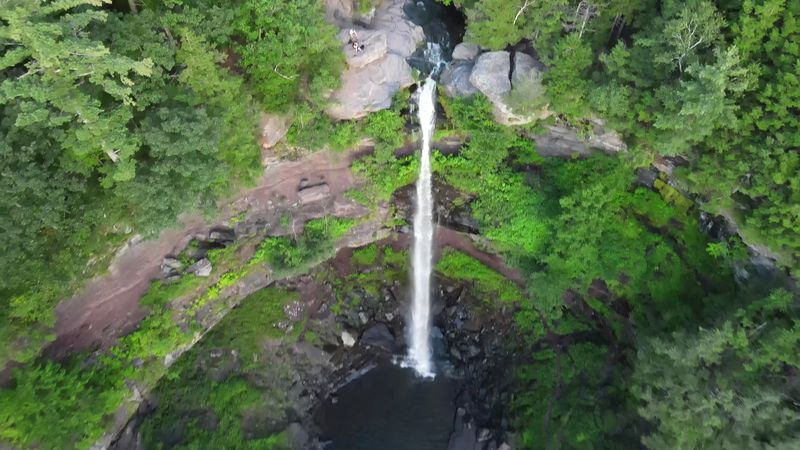
The mist at the base of Kaaterskill Falls is something you feel before you fully see it. As the upper tier crashes into the rocky basin, it sends a constant cloud of fine spray outward in every direction.
On a warm summer day, that mist feels like the best natural air conditioning imaginable. On a cooler autumn morning, it wraps around everything in a soft, silvery haze.
The rocks and ferns surrounding the pool at the base are permanently coated in moisture, giving them a vivid, almost electric shade of green. It is the kind of color that makes smartphone cameras work overtime.
The sound at the base is equally powerful. The roar of water hitting rock echoes off the surrounding cliffs, creating a natural surround-sound experience that is both energizing and calming at the same time.
Spending even a few quiet minutes at the base creates a sensory memory that tends to stick around long after the hike back up is finished.
Swimming Pools And A Word Of Caution
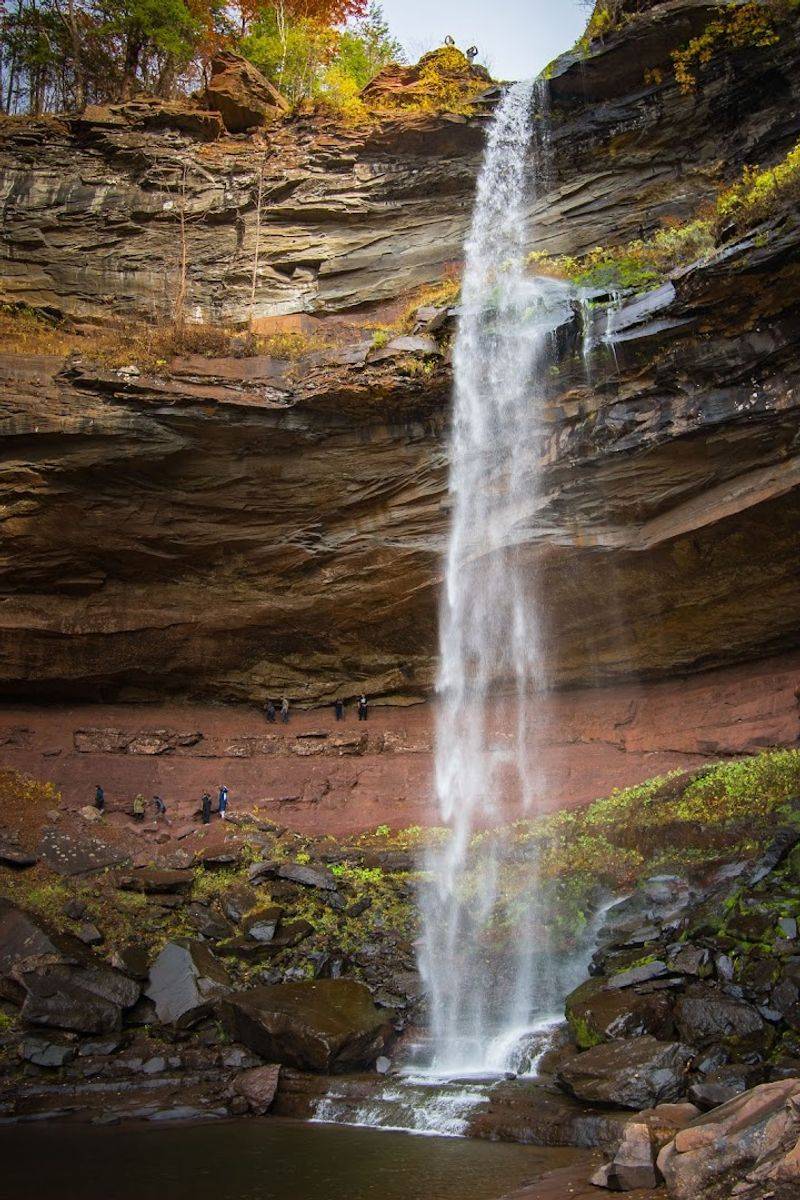
The pools at the base of Kaaterskill Falls have a magnetic pull. Cool, clear water collects in natural rock basins, and on a hot summer day, the temptation to wade in is completely understandable.
Swimming in these pools is a popular activity, and many visitors do take a dip. That said, the area comes with real risks that are worth taking seriously.
The rocks throughout this area are notoriously slippery. Water-polished stone and constant moisture from the mist create conditions where footing can disappear quickly, even for experienced hikers.
The currents near the falls can also be deceptively strong. What looks calm from a distance can shift unexpectedly, especially after periods of heavy rainfall when water volume increases significantly.
Visiting with awareness and respecting the natural environment here makes the experience both enjoyable and safe. The pools are beautiful, and many people enjoy them without incident, but caution and common sense are the smartest things to pack on this particular hike.
Autumn In The Catskills Hits Different Here
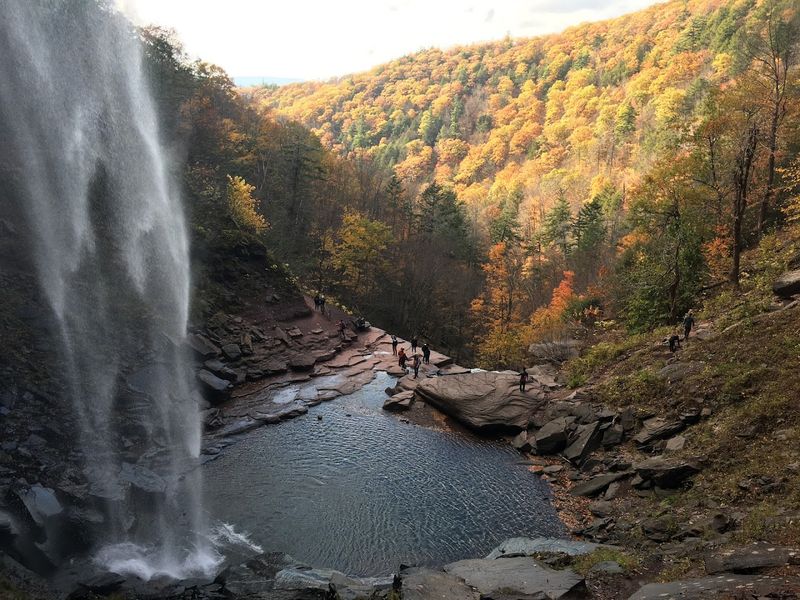
Fall foliage season transforms the already stunning landscape around Kaaterskill Falls into something almost unreal. The Catskill Mountains in New York are known for their autumn color displays, and this particular trail sits at the center of some of the best of it.
Reds, oranges, and deep yellows frame the waterfall from every angle. The contrast between the white rushing water and the warm tones of the surrounding forest creates a scene that photographers chase for weeks.
Peak foliage typically arrives in October, and the trail becomes noticeably busier during this period. Arriving early in the morning on weekdays offers the best chance of experiencing the color without sharing it with a crowd.
The light during autumn mornings is particularly flattering. Low-angle sun filters through the turning leaves and catches the mist from the falls in ways that feel almost cinematic.
Even the hike down to the base becomes more scenic during fall. Every turn of the trail reveals another layer of color draped across the hillside.
Over 200,000 Visitors A Year And How To Beat The Crowds
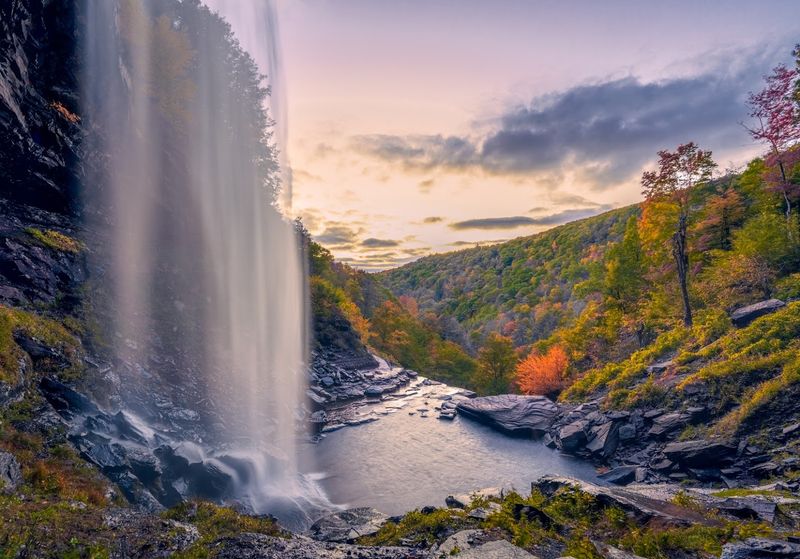
Kaaterskill Falls draws over 200,000 visitors every year. That number puts it firmly in the category of seriously popular destinations, and the parking situation on busy weekends reflects that reality.
The Laurel House Road parking area in Haines Falls, New York, fills up fast on summer weekends and holidays. Arriving early, ideally before 9 in the morning, dramatically improves the chances of securing a spot without circling the lot.
Weekday visits offer a noticeably different experience. The trail feels quieter, the falls feel more personal, and the overall atmosphere shifts from bustling to genuinely peaceful.
Late spring and early summer tend to produce the highest water flow, which makes the falls most powerful and visually dramatic. Winter visits are possible but require caution, as ice forms on the trail steps and surrounding rocks.
Planning around the crowd patterns here is one of the simplest ways to elevate the entire experience. A little timing strategy goes a long way at one of New York’s most visited natural landmarks.
Multiple Viewpoints Mean Multiple Experiences
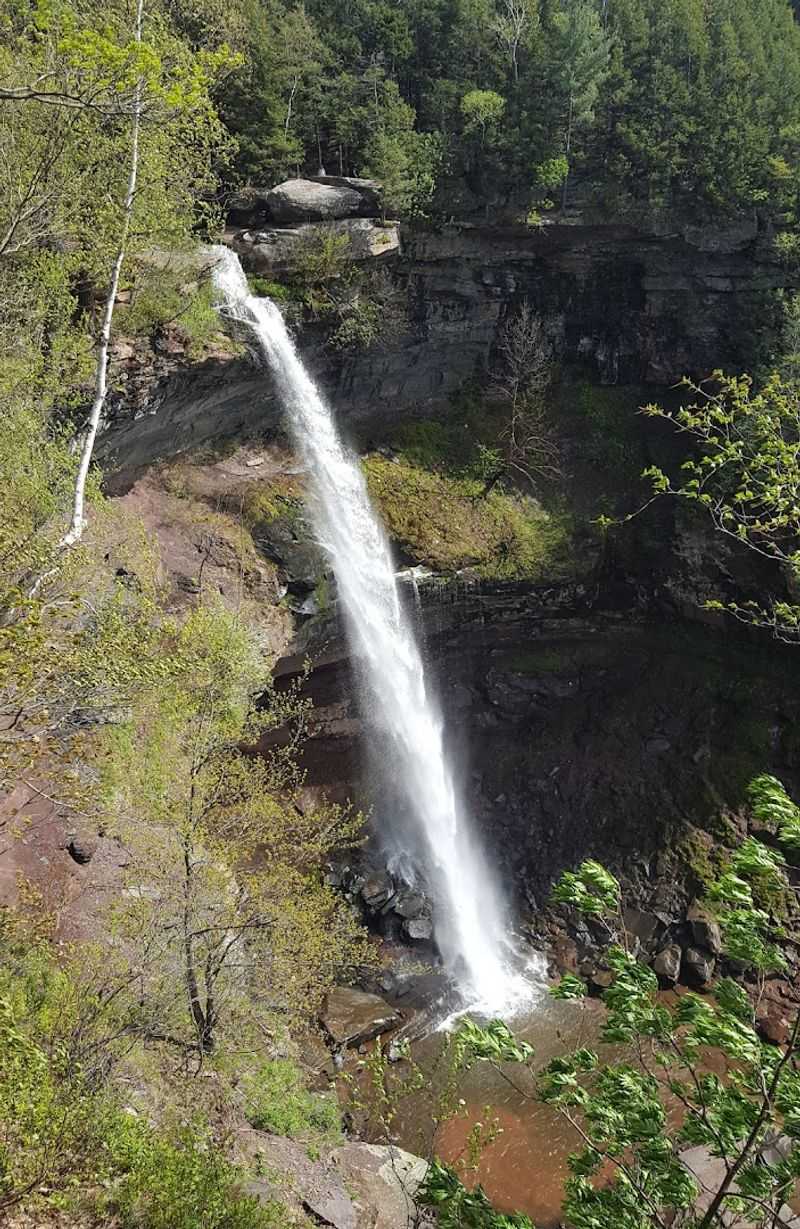
One of the most underrated aspects of visiting Kaaterskill Falls is that there is genuinely more than one way to experience it. The waterfall looks completely different depending on where you are standing.
From the top, the accessible viewing platform near the Laurel House Road trailhead offers a bird’s-eye perspective that emphasizes the sheer drop of the upper tier. It is dramatic in a way that feels almost vertiginous.
From the base, the view flips entirely. The falls tower overhead, and the scale becomes overwhelming in the best possible way.
The sound, the mist, and the visual impact all intensify the closer you get.
The middle tier provides yet another angle, somewhere between those two extremes. Hikers who take the time to explore all three perspectives come away with a much fuller picture of what makes this waterfall so remarkable.
Treating the visit as a multi-stop experience rather than a single destination makes the whole trip feel richer and more rewarding from start to finish.
Why This Waterfall Keeps Calling People Back
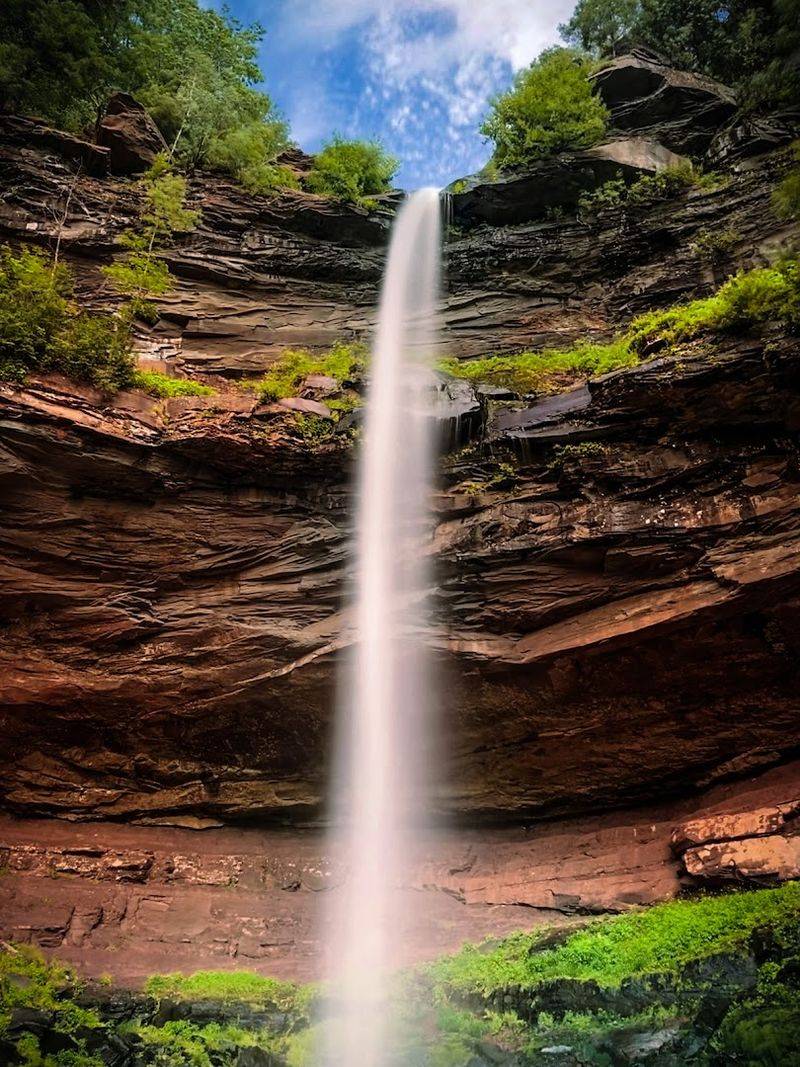
Some places earn a reputation and then fail to live up to it. Kaaterskill Falls is not one of those places.
Repeat visitors are remarkably common here, and the reasons are easy to understand once you have made the trip yourself.
Every season brings a genuinely different version of the falls. Spring runoff makes the water roar.
Summer turns the surrounding forest into a deep green canopy. Autumn sets the hillsides on fire with color.
Even winter, with ice forming along the rock faces, has its own quiet, stark beauty.
The historical layers add something too. Knowing that poets wrote about this place, that painters set up their easels here, and that the Mohican people held it sacred for generations gives each visit a weight that goes beyond scenery.
New York has no shortage of beautiful natural spots, but few carry this combination of height, history, and raw visual power. Kaaterskill Falls sits in a category largely its own, and the Northeast has very little that genuinely competes with it.