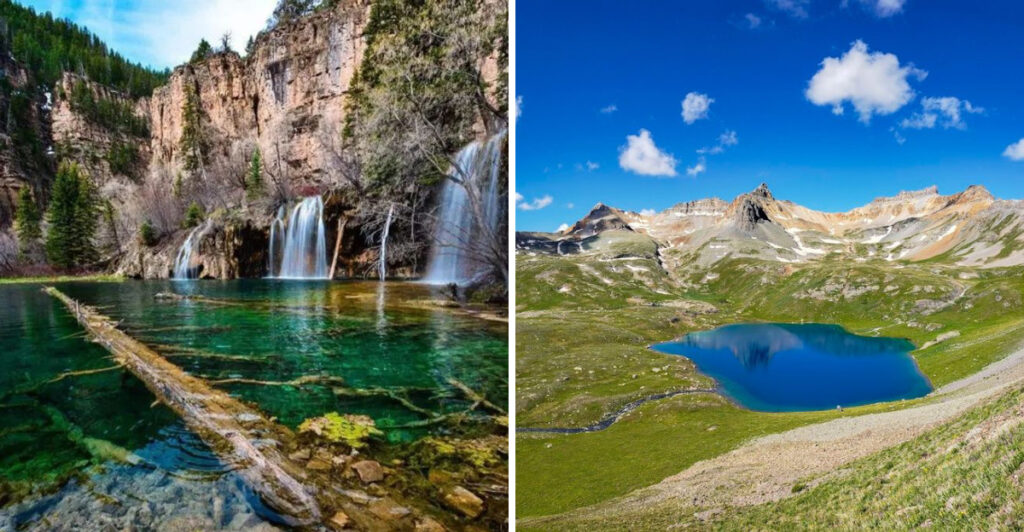
Colorado has been hiding something from you.
Not one thing, actually. Ten things, scattered across the mountains, hidden behind waterfalls, sitting quietly above the treeline where most people never think to look.
We’re talking lakes so clear they look digitally enhanced.
Water so cold it takes your breath away before you even touch it.
Trails that climb through wildflower meadows, past crumbling mining ruins, alongside cascading falls, and then suddenly drop you in front of something that makes every burning step feel embarrassingly worth it.
Colorado rewards the curious.
It always has.
And these ten trails are proof that the best views aren’t on any billboard or popular Pinterest board.
Grab your layers, break in those boots, and get ready to see this state completely differently.
1. Sky Pond Trail, Rocky Mountain National Park, Estes Park
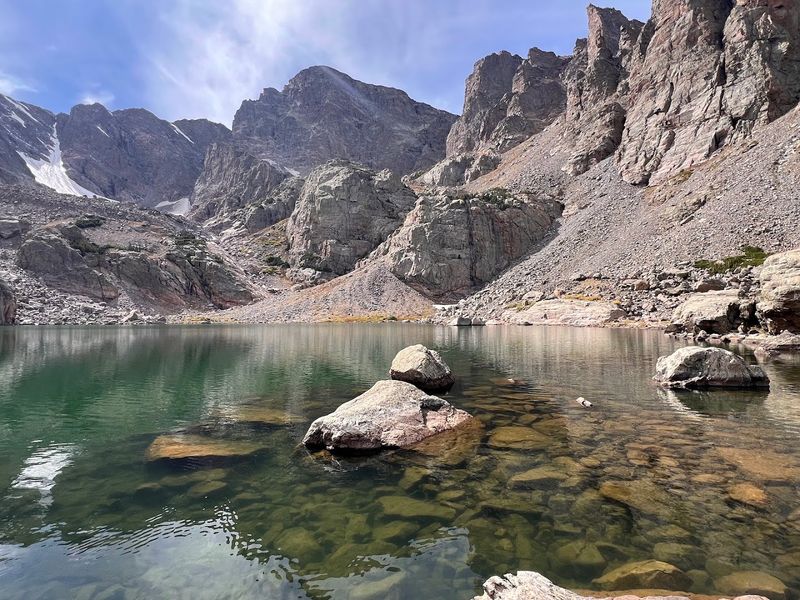
Want to feel like you have stepped into another world?
Sky Pond Trail in Rocky Mountain National Park near Estes Park, Colorado, delivers exactly that kind of jaw-dropping moment.
The hike starts at the Glacier Gorge Trailhead on Bear Lake Road and winds through dense forest before opening up to a series of alpine gems.
You pass Alberta Falls and Lake of Glass before reaching Sky Pond, a stunning high-altitude lake cradled by towering granite walls.
The trail is roughly nine miles round trip and gains significant elevation, so solid footwear and layers are essential.
One tricky section involves scrambling up a waterfall called Timberline Falls, which adds a splash of adventure to the journey.
Early morning starts are strongly recommended here, both to beat afternoon thunderstorms and to catch the lake at its most mirror-like calm.
Permits may be required for entry into Rocky Mountain National Park depending on the season, so check ahead before you go.
Few trails in Colorado combine waterfall scenery, glacier-carved rock, and a final payoff quite like this one does.
2. Emerald Lake Trail, Rocky Mountain National Park, Estes Park
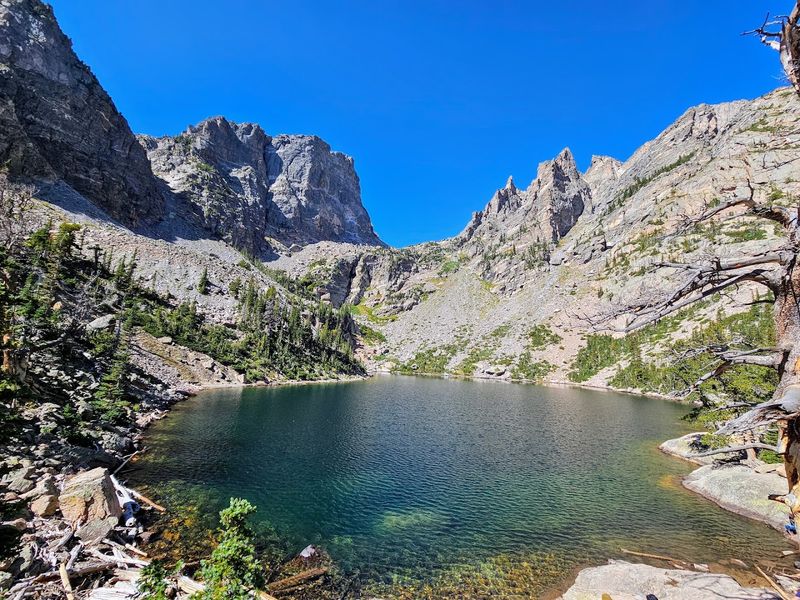
Three lakes for the price of one hike sounds like a pretty solid deal.
The Emerald Lake Trail in Rocky Mountain National Park near Estes Park, Colorado, starts at the Bear Lake Trailhead and passes Nymph Lake and Dream Lake before reaching the brilliant Emerald Lake.
The round trip covers just under four miles, making it one of the more accessible high-country hikes in the park.
That accessibility does come with company, especially on summer weekends, but the scenery makes every crowded moment worth it.
Emerald Lake sits at around 10,000 feet and is framed by Hallett Peak and Flattop Mountain, creating a dramatic backdrop that photographers absolutely love.
The water earns its name with a vivid green-blue hue that shifts with the light throughout the day.
Snowfields often linger near the lake well into summer, so expect cool temperatures even on warm days.
The Bear Lake area requires timed entry permits during peak season, so planning ahead is key to a smooth visit.
Pack a lunch, find a flat rock by the water, and let the silence do its thing.
3. Chasm Lake Trail, Longs Peak, Estes Park
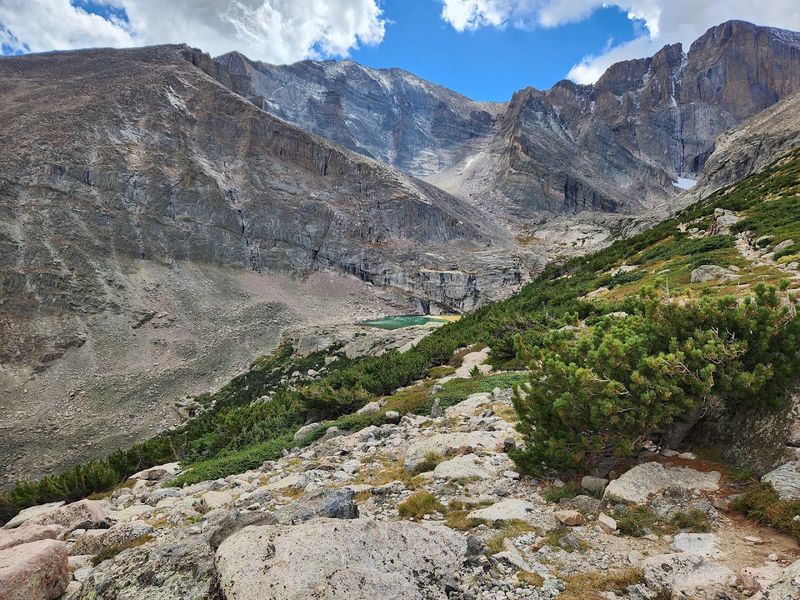
Sitting directly beneath the famous Diamond face of Longs Peak, Chasm Lake is one of the most dramatic alpine settings in all of Colorado.
The trailhead starts at the Longs Peak Trailhead off Colorado Highway 7 near Estes Park, and the round trip covers roughly eight and a half miles.
Elevation gain is significant, climbing well above 11,000 feet, so your lungs will definitely know they are working.
The payoff is a raw, rugged cirque carved by ancient glaciers, with Chasm Lake shimmering in the middle like a dark jewel.
Unlike the softer alpine scenes found elsewhere in the park, this one feels intensely powerful and almost intimidating in the best possible way.
The sheer granite walls surrounding the lake create a natural amphitheater that echoes with the sound of wind and distant waterfalls.
Starting before sunrise is not just recommended here, it is practically a tradition among hikers who want to catch the first light hitting the Diamond.
The high altitude means weather can shift quickly, so always carry rain gear regardless of how sunny the morning looks.
This trail is for those who want their mountain lake with a serious side of awe.
4. Lake Haiyaha Trail, Rocky Mountain National Park, Estes Park
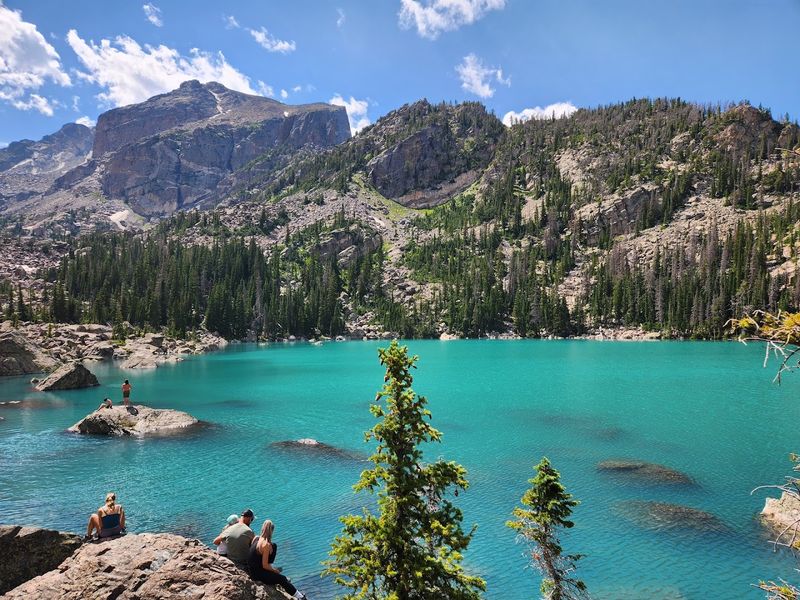
Most hikers at Bear Lake head straight for the popular trio of Nymph, Dream, and Emerald, but Lake Haiyaha rewards those who take the fork less traveled.
Starting from the Bear Lake Trailhead on Bear Lake Road in Rocky Mountain National Park near Estes Park, Colorado, this trail branches off and climbs to a boulder-choked lake with serious character.
The round trip is around four and a half miles, with a steady elevation gain that keeps things interesting without being brutal.
Lake Haiyaha itself is scattered with enormous boulders that you can hop across to find your own private perch above the water.
The lake’s name reportedly comes from a Native American word meaning “big rocks,” which could not be more accurate once you arrive.
The deep blue color of the water contrasts beautifully with the pale grey boulders, making it one of the most photogenic spots in the park.
Mornings here tend to be calmer and less crowded than afternoons, especially on weekends during peak summer season.
Timed entry reservations for the Bear Lake corridor are typically required, so confirming your access before heading out is always a smart move.
It is the kind of place that makes you want to stay just a little longer than planned.
5. Ice Lakes Trail, San Juan National Forest, Silverton
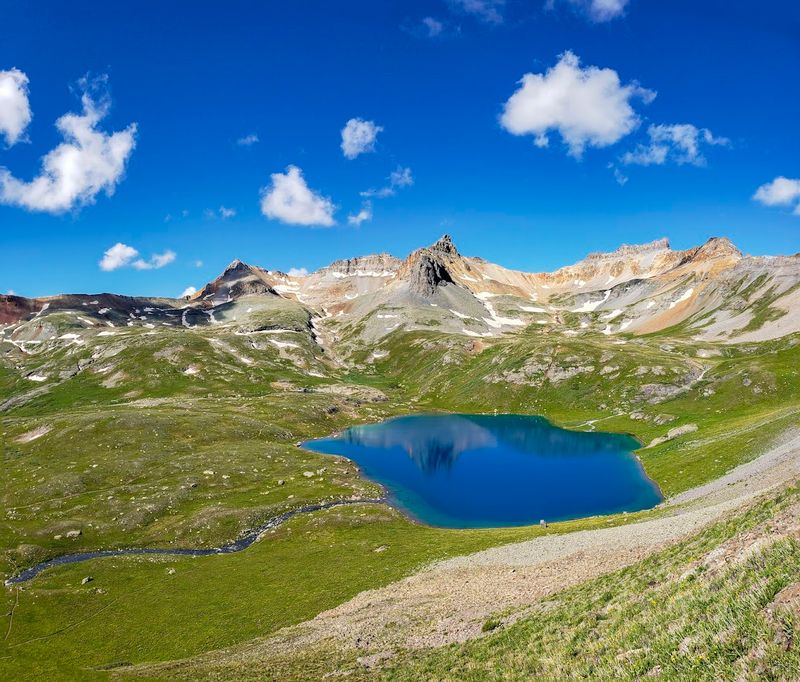
If you have ever wondered what a lake would look like if it were made of liquid sky, Ice Lake Basin near Silverton, Colorado, is your answer.
The trailhead sits along South Mineral Campground Road in the San Juan National Forest, and the hike to the upper basin covers roughly seven miles round trip.
The elevation gain is steep and relentless, pushing above 12,000 feet, but the reward is one of the most vivid alpine settings in the entire state.
Ice Lake glows with an almost unreal electric blue color that seems too saturated to be natural, yet there it is in person, even more stunning than in photos.
Wildflower season in late July and early August transforms the surrounding meadows into a rolling carpet of color that frames the lake perfectly.
Island Lake, a short scramble above Ice Lake, offers even more solitude and equally jaw-dropping views for those willing to push a bit further.
The San Juan Mountains are known for unpredictable afternoon thunderstorms, so an early start from the trailhead is strongly advised.
The Silverton area sits at high elevation year-round, meaning temperatures can drop sharply even on clear summer afternoons.
Bring your camera, your patience, and every layer you own.
6. Hanging Lake Trail, Glenwood Canyon, Glenwood Springs
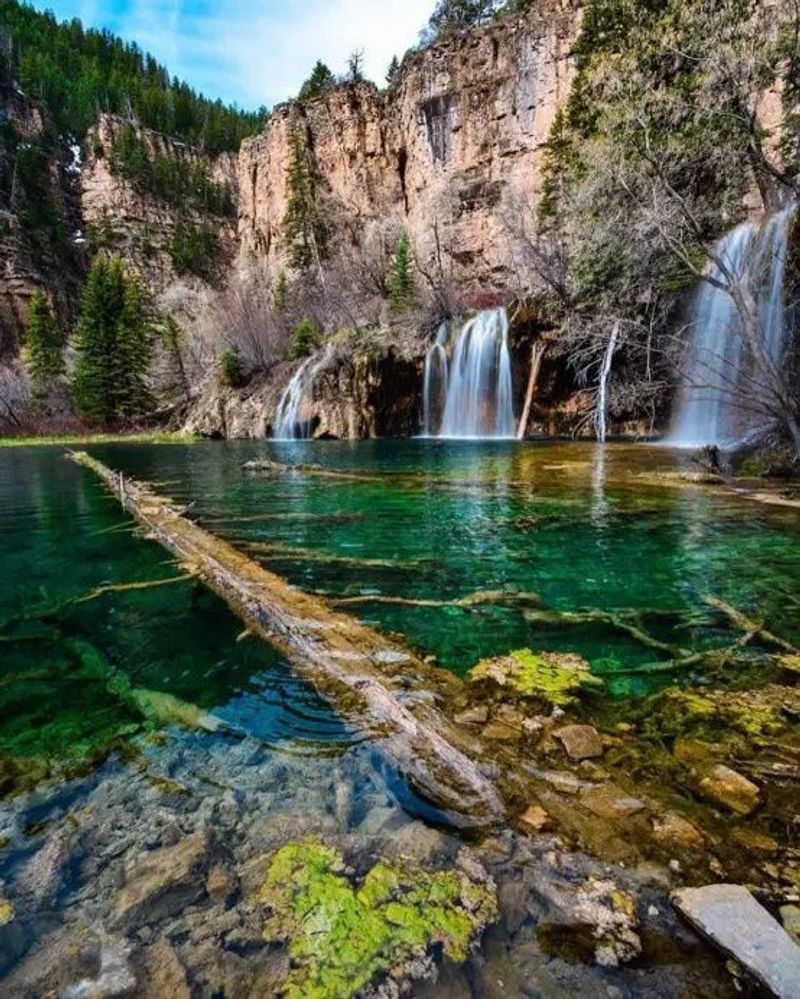
Few lakes in Colorado look quite as impossible as Hanging Lake, which appears to be perched mid-cliff inside Glenwood Canyon like nature decided to show off.
The trailhead is accessed from the Hanging Lake Rest Area at Interstate 70 Exit 125 near Glenwood Springs, Colorado.
The hike is only about three miles round trip, but do not let that short distance fool you because the trail climbs steeply and relentlessly from the canyon floor.
The lake itself is a rare travertine formation, meaning mineral-rich water has built up over centuries to create a shimmering turquoise pool balanced on a natural ledge.
Feather Falls and Bridal Veil Falls tumble directly into the lake, adding a constant soundtrack of rushing water that makes the setting feel even more surreal.
A wooden boardwalk circles part of the lake, and visitors are asked to stay on it to protect the delicate ecosystem.
This trail requires a reservation and a shuttle from Glenwood Springs, as private vehicles are not permitted at the trailhead during peak season.
Booking your spot in advance is essential since permits sell out quickly during summer months.
Hanging Lake is genuinely unlike anything else in Colorado, and that is saying quite a lot.
7. Mohawk Lakes Trail, Breckenridge
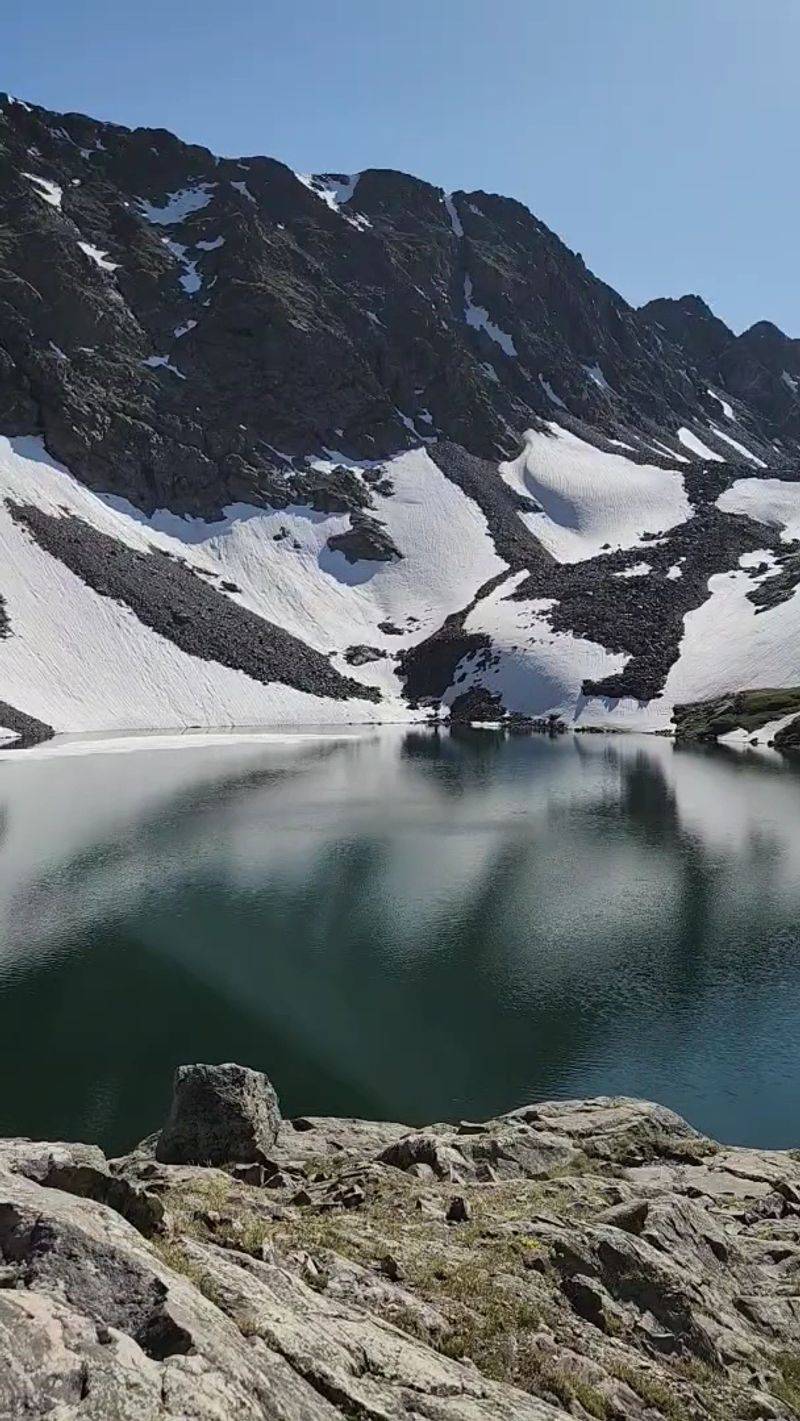
History and high-country beauty collide on the Mohawk Lakes Trail near Breckenridge, Colorado, where crumbling mining relics share the landscape with sparkling alpine lakes.
The trailhead starts along Spruce Creek Road, accessible from the Breckenridge area, and climbs steadily through forest before breaking into open tundra.
The round trip to Upper Mohawk Lake covers roughly nine miles with a substantial elevation gain that brings you well above treeline.
Along the way, you pass Lower Mohawk Lake before continuing up to the upper lake, which sits in a raw rocky basin with sweeping views in every direction.
The remnants of old mining operations scattered across the hillside give the trail a fascinating layer of Colorado history that most alpine hikes simply do not have.
Rusted machinery and stone foundations sit quietly among the wildflowers, making the climb feel like a walk through two different eras at once.
Late summer is arguably the best time to visit, when snowmelt has cleared the upper trail and the tundra wildflowers are putting on their annual show.
The Breckenridge area sits at high elevation, so acclimatizing before attempting this trail makes the experience significantly more enjoyable.
You earn every bit of this one, and every bit of it earns you back.
8. Booth Lake Trail, Vail
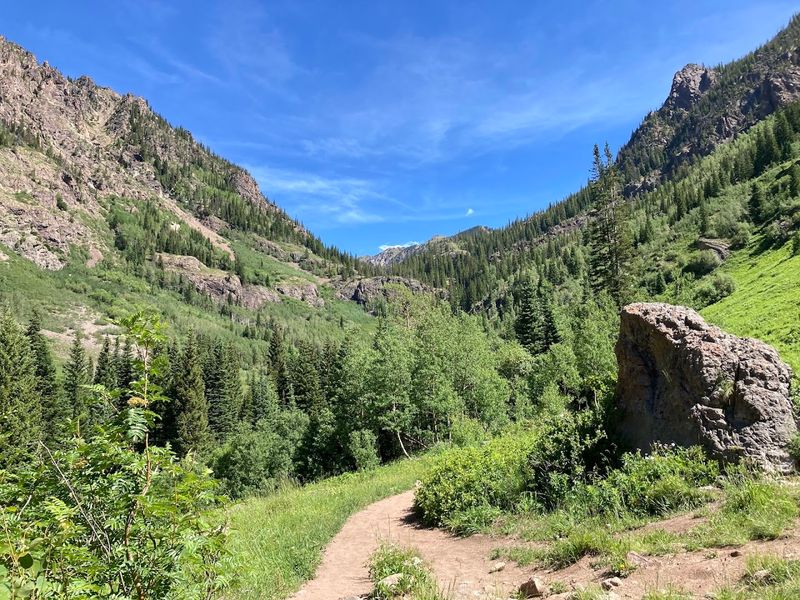
Most people associate Vail, Colorado, with ski slopes, but the Booth Falls and Booth Lake Trail offers a completely different kind of thrill once the snow melts.
The trailhead sits along Booth Falls Road in Vail, and the full round trip to Booth Lake stretches to around twelve miles with significant elevation gain.
The lower portion of the trail leads to Booth Falls, a tall and powerful waterfall that gives hikers an impressive milestone well before reaching the lake.
Continuing past the falls, the trail climbs steeply through aspen groves and conifer forest before opening into a broad alpine basin.
Booth Lake waits at the far end of that basin, tucked against rocky cliffs and surrounded by the kind of quiet that reminds you why you came out here in the first place.
The water is remarkably clear, fed by snowmelt from the surrounding peaks throughout the warmer months.
Because the full trail to the lake is long and demanding, many casual hikers turn around at the falls, which means the lake itself stays relatively uncrowded even during summer.
Wildlife sightings, including marmots, pikas, and occasional elk, are common in the upper basin areas.
Plan for a full day and bring enough food to celebrate properly when you finally arrive.
9. Lost Man Trail, Independence Pass, Aspen
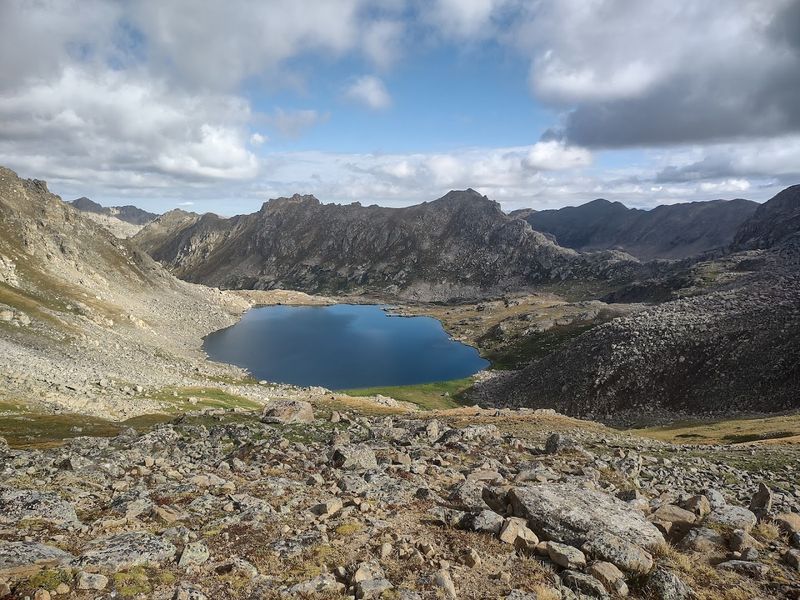
There is something quietly magical about a trail that takes you somewhere most people have never heard of.
The Lost Man Trail near Independence Pass outside Aspen, Colorado, follows a loop through one of the most open and dramatic stretches of high-country terrain in the state.
The trailhead sits along Colorado Highway 82 at Independence Pass, already one of the highest paved passes in North America at over 12,000 feet.
The loop to Lost Man Lake covers roughly eight miles and stays almost entirely above treeline, giving you unobstructed views for the majority of the hike.
Lost Man Lake itself is a calm, reflective body of water that mirrors the surrounding peaks and open sky with almost perfect clarity.
The lack of dense forest around the lake makes the setting feel wide open and almost otherworldly compared to the enclosed cirques found on other Colorado trails.
Because Independence Pass closes in winter and early spring, the hiking season here is relatively short, which naturally keeps visitor numbers lower than more accessible areas.
Wildflowers in the open tundra meadows peak in mid to late summer and create a stunning contrast against the rocky ridgelines above.
Getting lost has never looked this good.
10. Cathedral Lake Trail, Aspen
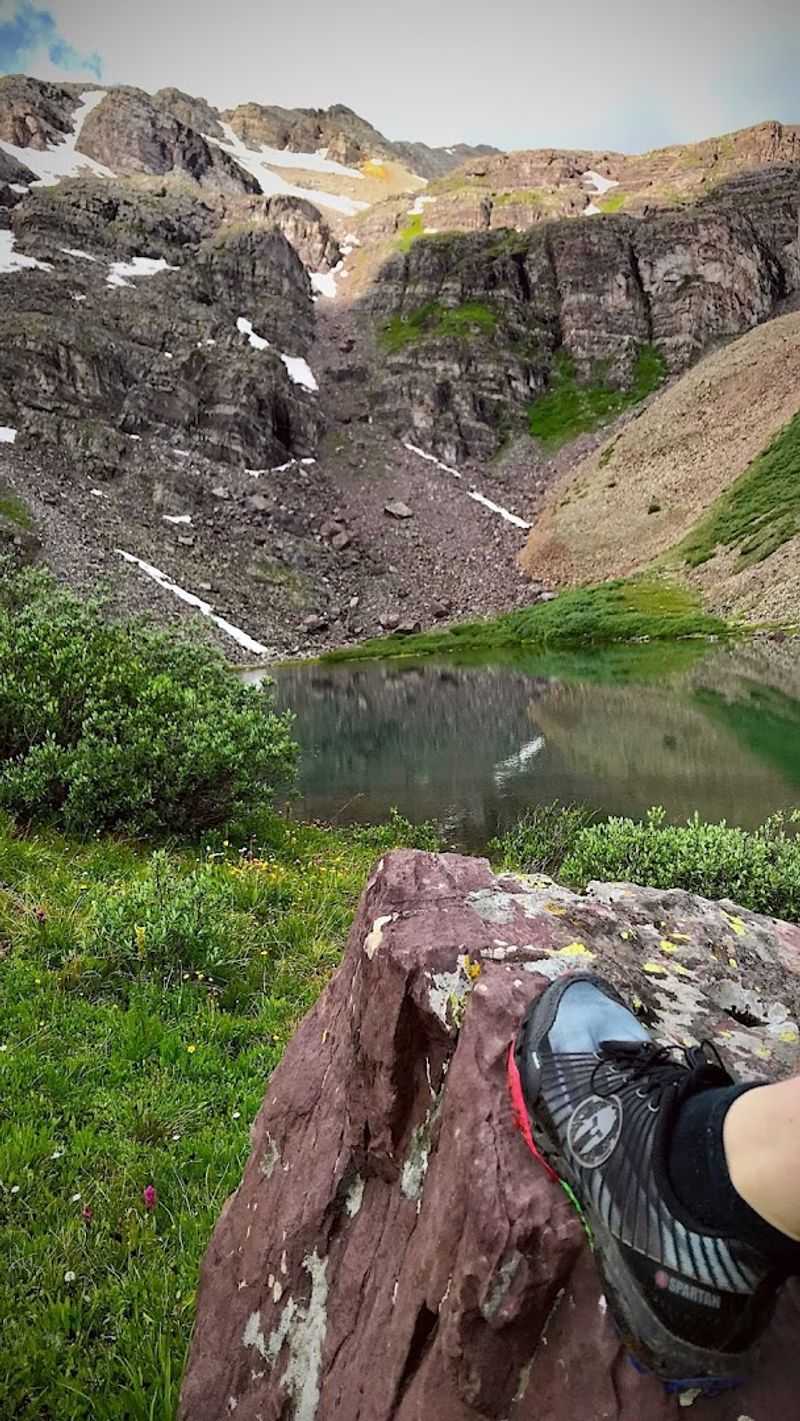
Cathedral Lake might be the most aptly named trail in Colorado, because arriving at the lake feels like stepping into something sacred.
The trailhead is found along Castle Creek Road outside Aspen, Colorado, and the round trip covers roughly six miles with a solid elevation gain into the Elk Mountains.
The trail climbs through dense spruce and fir forest before suddenly revealing a sweeping alpine meadow that opens up to reveal the lake and its dramatic rocky backdrop.
The spire-like rock formations rising above the lake are what give it that cathedral-like quality, creating a natural skyline that feels almost architectural.
The water in Cathedral Lake is strikingly clear and cold, fed by snowmelt from the surrounding cliffs that often hold snow well into summer.
The meadow surrounding the lake bursts with wildflowers during peak season, adding warm splashes of color to an already stunning scene.
This trail sits within the Maroon Bells-Snowmass Wilderness, which means the landscape is protected and feels genuinely pristine compared to busier hiking corridors.
Parking at the trailhead can be limited, so arriving early or checking for any access requirements before your visit is a practical move.
Cathedral Lake is the kind of place that quietly becomes your favorite hike without you even realizing it.