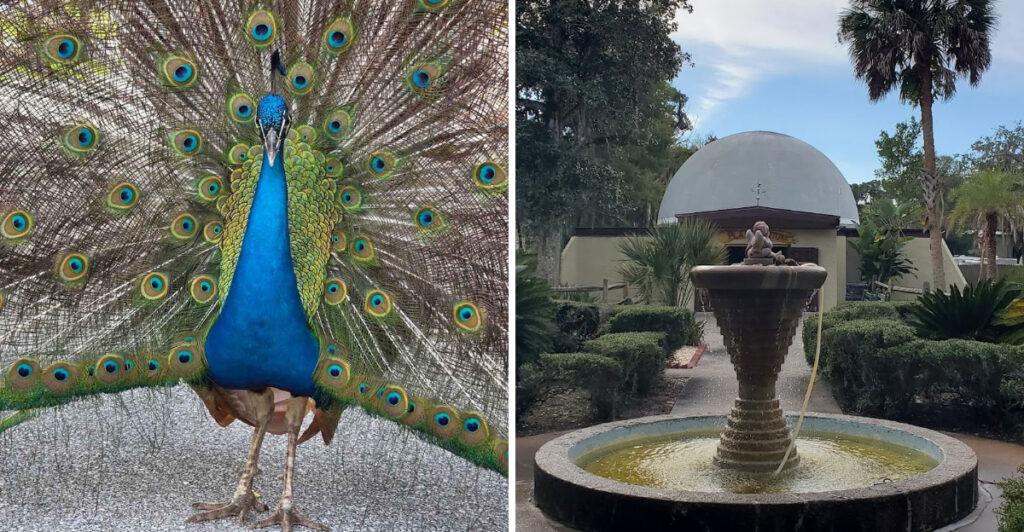
A cannon fires, peacocks strut past ancient ruins. And somewhere in between, someone hands you a cup of sulfur water and dares you to drink it.
Florida’s most bizarre and wonderful roadside attraction packs more genuine surprises into a single visit than most places manage in a lifetime. What looks like a quirky roadside stop on the surface turns out to sit on foundational history as significant as anything in North America.
Centuries of layered myth, real archaeology, and completely unbothered wildlife collide in one place. It genuinely has to be seen to be believed.
Florida rewards the curious, and a visit here tends to remind you why you started traveling in the first place.
The Legend Behind The Spring That Started It All
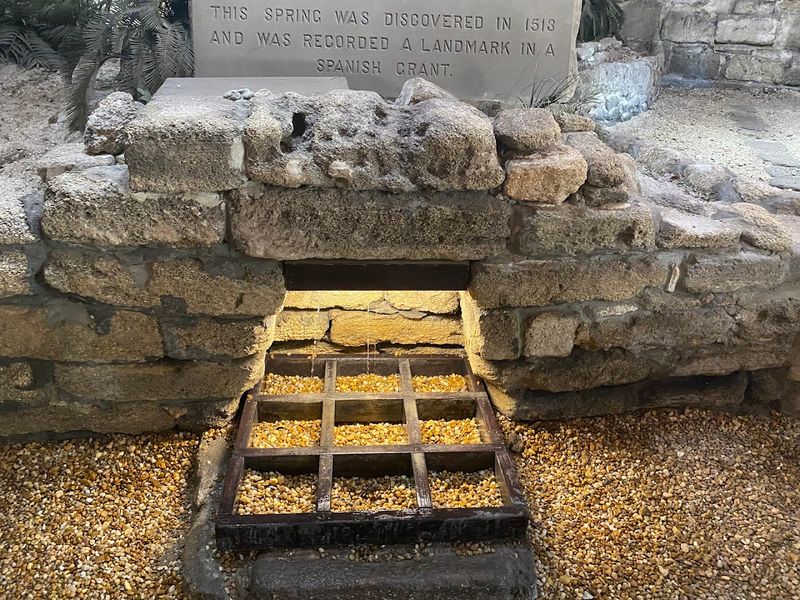
Centuries before the internet, a good rumor could travel across oceans and reshape history. The legend of the Fountain of Youth became one of the most famous myths ever attached to the Americas, and somehow, a spring in St. Augustine, Florida ended up at the center of it all.
Juan Ponce de Leon, the Spanish explorer credited with the first European landing in Florida in 1513, has long been connected to the search for a spring that could restore youth. Historians largely agree, however, that his real goals were land and wealth.
The fountain legend was likely attached to his name years after his passing, possibly by a rival chronicler trying to mock him.
That does not make the park any less interesting. The spring house at the heart of the attraction invites visitors to sample the mineral-rich water themselves.
Guest books at the site date back to 1868, making this one of the longest-running tourist traditions in the entire state.
Florida’s Oldest Attraction And What That Really Means
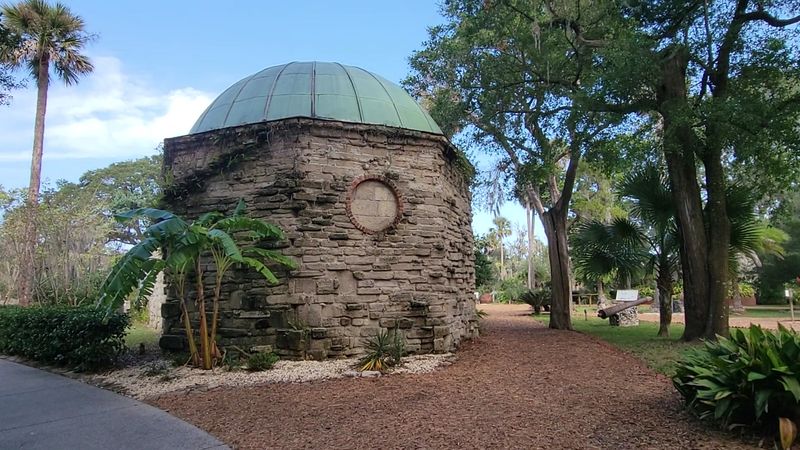
Being called Florida’s oldest attraction is not just a marketing slogan. This park has been welcoming curious visitors since the 1860s, which means it predates most of what people think of as classic American tourism.
The property sits at 11 Magnolia Ave, St. Augustine, FL 32084, right along Hospital Creek near the Intracoastal Waterway. The 15-acre grounds have gone through many hands and many stories over the decades.
One early developer reportedly fabricated colorful tales to both amuse and shock visitors, which honestly sounds like a solid business plan.
Later caretakers shaped the park into the layered historical experience it is today. The mix of myth, archaeology, and theatrical storytelling gives the place a personality that is hard to categorize.
It is part museum, part outdoor theater, and part living history classroom. Florida has no shortage of theme parks and tourist traps, but few can claim a track record stretching back this far with this much genuine historical weight behind them.
The Real History Hidden Beneath The Myth
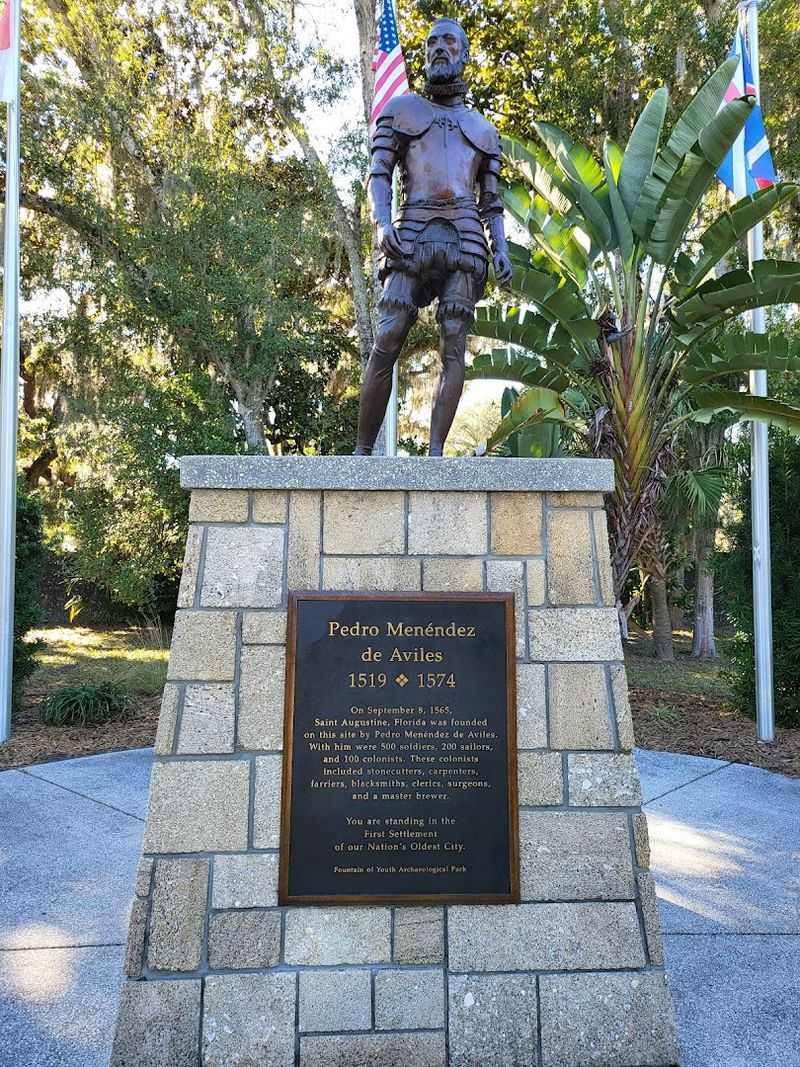
Pull back the curtain on the fountain legend and something far more significant appears underneath. This site is considered the likely landing spot of Ponce de Leon’s 1513 expedition, which marked the first documented European contact with what is now the continental United States.
More importantly, it sits on the grounds of Pedro Menendez de Aviles’s 1565 Spanish settlement, recognized as the oldest continuously inhabited European settlement in the continental United States. That title belongs to St. Augustine, Florida, and this park sits right at its origins.
Archaeological excavations carried out in the 1990s uncovered physical evidence of that first Spanish settlement, including fortifications and structural remains.
The park also marks the location of the first Catholic mission established in the present-day United States, with roots going back to 1565. These are not small historical footnotes.
They represent foundational chapters in the story of an entire continent, and they are all contained within a single strollable park that also happens to have peacocks.
Peacocks, Peanuts, And Pure Unexpected Joy
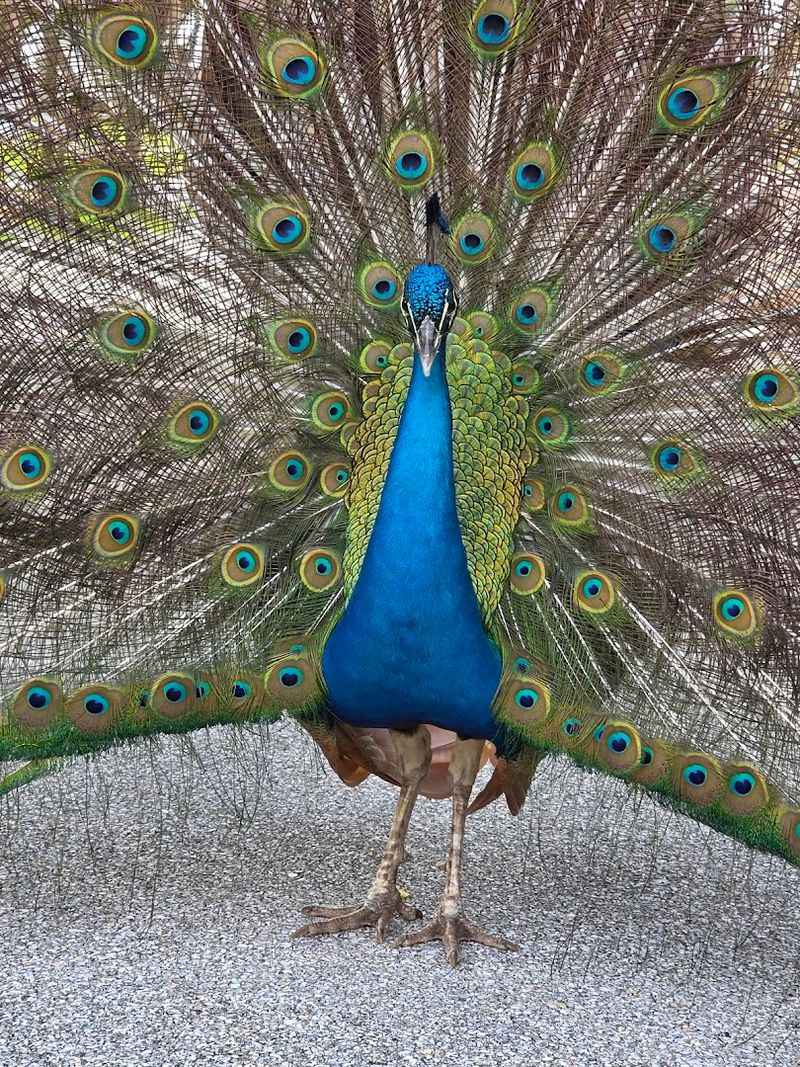
Nobody expects peacocks. That is what makes them so delightful.
Wander through the grounds of this St. Augustine park and you will quickly realize that a resident flock of exotic peacocks has claimed the place as their personal kingdom.
These birds strut between exhibits, pose near benches, and occasionally approach visitors hoping for a snack.
Peanuts can be purchased on-site for a small amount, and feeding one of these bold, feathered characters is a highlight that visitors consistently mention long after everything else has faded from memory.
During mating season, the males fan out their spectacular tail feathers in full display, which turns a simple walk between historical exhibits into something genuinely magical.
The peacocks are not a planned educational feature. They are just there, living their best lives, completely unbothered by history or mythology.
In a park full of carefully curated exhibits and reconstructions, the peacocks bring a spontaneous, unscripted energy that no amount of planning could replicate. Florida wildlife, as always, steals the show.
Drinking The Water Everyone Talks About
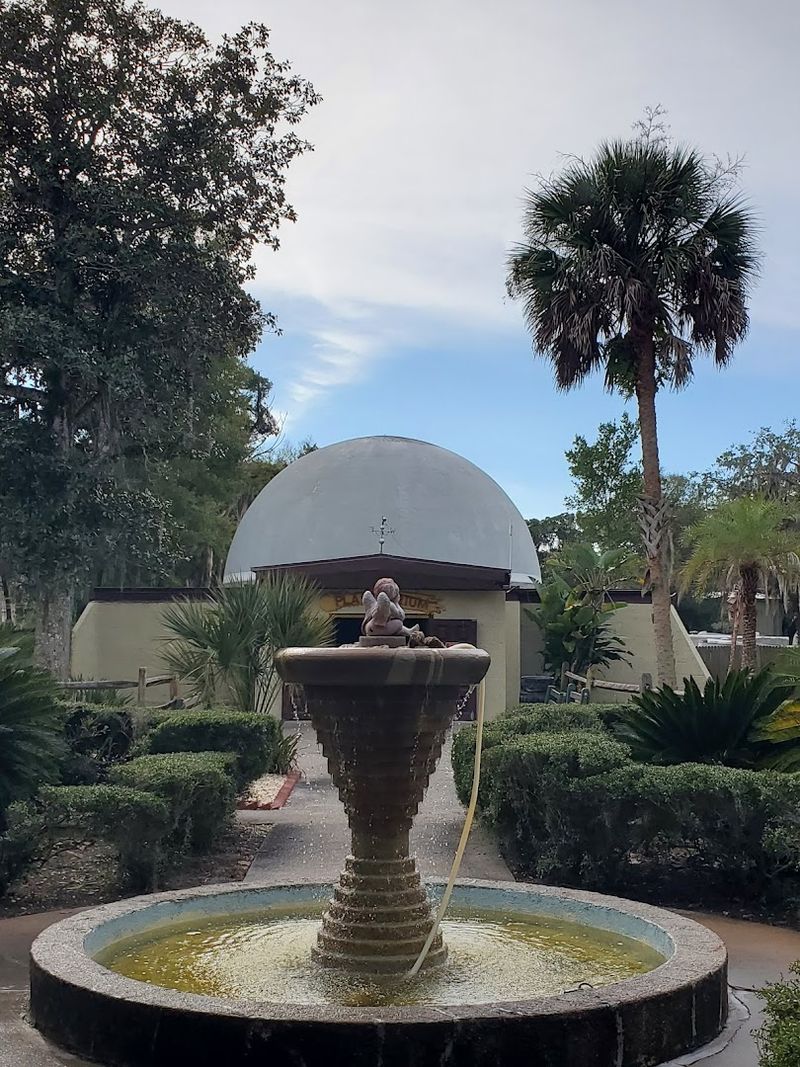
At some point during every visit, the moment arrives. Someone hands over a small cup of water drawn from the ancient spring, and the choice becomes simple: drink it or miss the whole point of being here.
The water tastes strongly of sulfur minerals, which is not exactly a selling point. However, that distinct flavor is exactly what makes the experience memorable.
Visitors have been sipping from this spring since at least 1868, when the first guest books were started. Thousands of signatures and comments fill those books, creating a record of human curiosity that stretches across generations.
Staff at the spring house share the full background of the legend, explaining how historians view the myth versus what the archaeological record actually shows. The spring water itself is mineral-rich and drawn from a natural source that has been flowing for a very long time.
Whether it adds years to your life is a matter of personal belief. What it definitely adds is a story worth telling at every dinner party for years to come.
Cannons, Crossbows, And Colonial Firepower
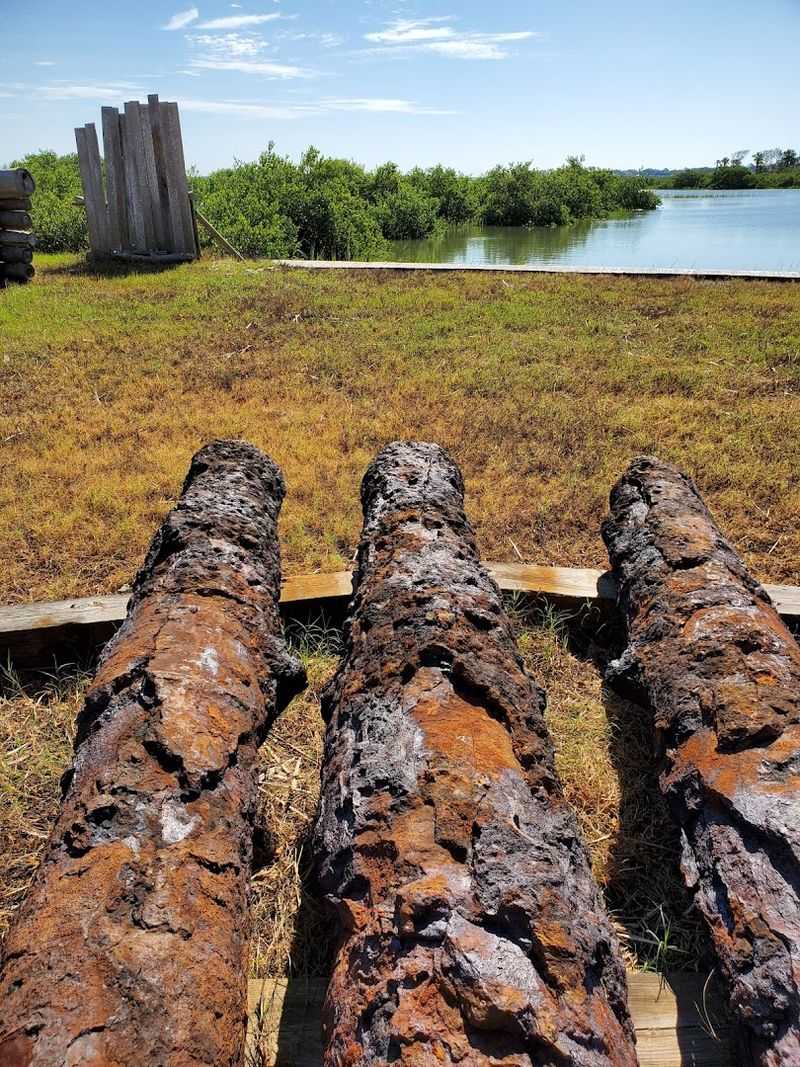
History gets loud here. Daily live demonstrations of historical weapons are one of the most popular features of the park, and for good reason.
Watching a cannon fire with a real boom and a cloud of smoke is a completely different experience from reading about it in a textbook.
The demonstrations cover a range of colonial-era weaponry, including muskets, crossbows, and the park’s impressive cannon. Knowledgeable staff in period-appropriate attire walk visitors through the mechanics, history, and military context of each weapon.
The presentations are genuinely educational without ever feeling dry or lecture-heavy.
Children and adults alike tend to gather in large groups for the cannon firing, and the reaction when it goes off is always the same mix of surprise and excitement.
The staff running these demonstrations are frequently praised for their depth of knowledge and their ability to make complex historical context feel approachable and entertaining.
In a park full of quiet exhibits, these moments of controlled chaos add a pulse of energy that keeps the whole experience feeling alive and dynamic.
The Timucua Village And The People Who Were Here First
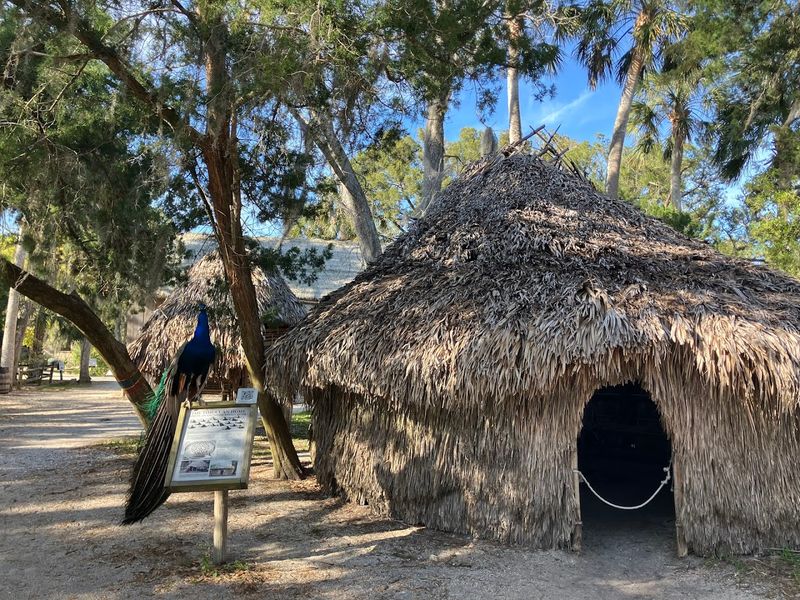
Before Spanish ships ever appeared on the horizon, the Timucua people had already built a thriving civilization along the coast of what is now Florida. Their story is told with care and detail inside the park’s reconstructed Timucua Indian Village.
The exhibit includes recreated dwellings, tools, and displays that walk visitors through daily life, cultural practices, and the dramatic changes that followed European contact.
The Native Christian Burial Ground on the property adds a solemn and important layer to the site, honoring the people who lived here long before the legend of the Fountain of Youth was ever invented.
Engaging with this part of the park means understanding that the history of St. Augustine does not begin with Spanish explorers.
It begins with the Timucua, whose presence shaped the landscape, the trade routes, and the early interactions that defined the region’s colonial period.
The reconstructed village gives that story a physical presence that photographs and text alone cannot fully convey. It is one of the most grounding parts of the entire visit.
The Planetarium And The Giant Discovery Globe
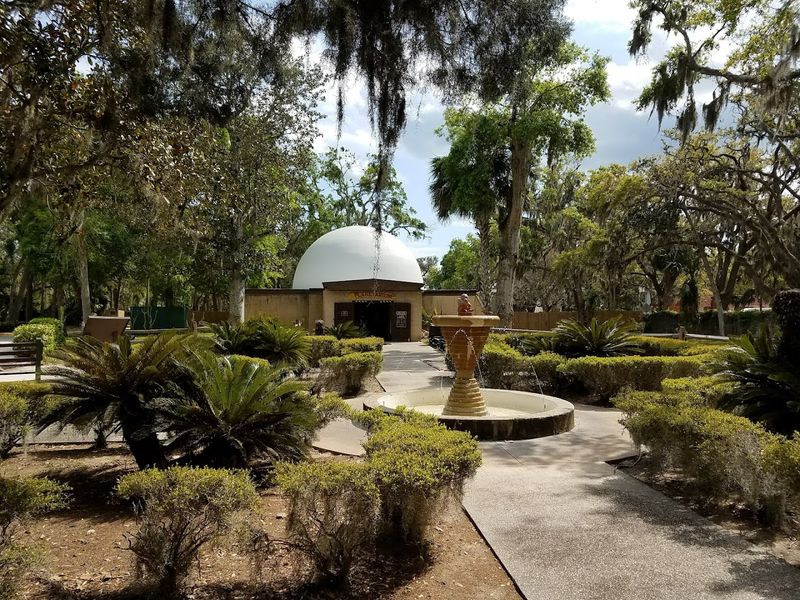
Tucked within the park is a feature that surprises almost everyone who finds it. An on-site planetarium offers shows that connect the history of exploration to the broader story of navigation, astronomy, and the tools that made long ocean voyages possible.
Right nearby stands the 40-foot rotating Discovery Globe, a massive spherical display that illustrates the history of global exploration in a format that is both visually striking and genuinely informative.
Visitors consistently describe the globe as a highlight, with several noting that it carries a nostalgic quality that feels refreshingly analog in a digital world.
Together, the planetarium and the Discovery Globe form a mini science and history hub within the larger park experience. They provide context for why explorers like Ponce de Leon set sail in the first place, tying the mythology of the Fountain of Youth to the very real ambitions and technologies of the Age of Exploration.
For families with curious kids, this corner of the park tends to spark the most questions and the longest conversations.
Waterfront Views And The Beauty Of The Grounds
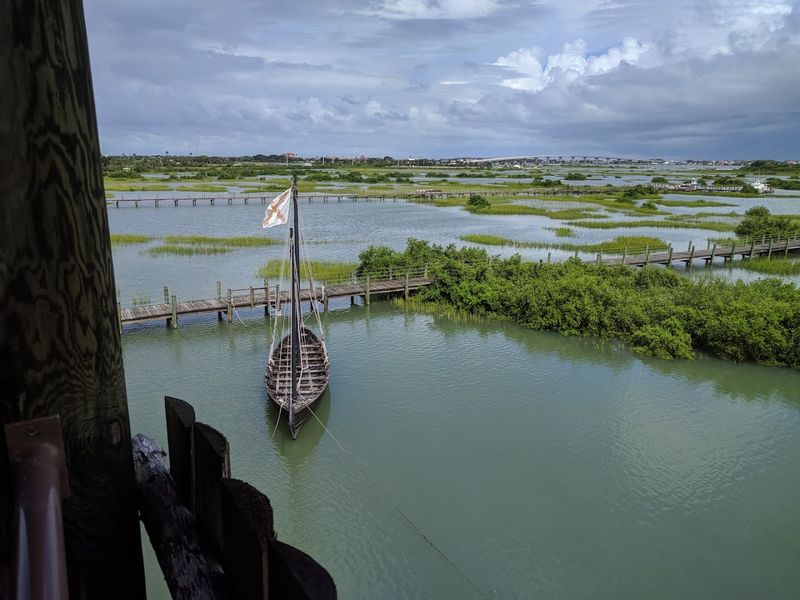
Beyond the exhibits and demonstrations, the park itself is simply a beautiful place to spend time. The 15-acre grounds sit along Hospital Creek near the Intracoastal Waterway, and scenic views of Matanzas Bay are accessible from several points within the property.
A wooden walkway stretches out over the marsh area, offering a peaceful pause from the historical content. The surrounding water, reeds, and coastal vegetation create a backdrop that feels worlds away from the busier parts of St. Augustine.
Many visitors describe this section of the park as unexpectedly serene, a place where it is easy to slow down and simply take in the natural setting.
The grounds throughout the park are well-maintained, with mature trees, open lawns, and thoughtfully placed benches. Florida’s natural beauty is woven into every corner of the property, which makes the walk between exhibits feel like a reward in itself rather than a chore.
The combination of history, wildlife, and waterfront scenery gives the park a layered appeal that goes well beyond any single attraction.
Tips For Making The Most Of Your Visit
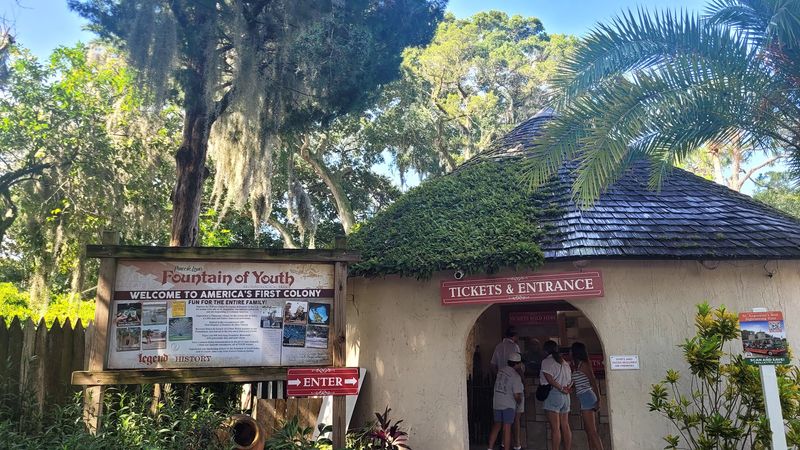
Plan for more time than expected. Most visitors spend between one and a half to three hours exploring the park, but those who stay for all the demonstrations and shows can easily fill an entire afternoon.
Arriving early gives the best chance of catching every scheduled presentation.
The park is easy to reach from downtown St. Augustine on foot, making it a natural addition to any walking tour of the city. Comfortable shoes are recommended, since the grounds cover a full 15 acres and involve a fair amount of walking between attractions.
Families with children will find plenty of interactive elements, including a fossil dig area, knot-tying stations, and a pulley system that keeps younger visitors engaged between the more history-focused exhibits.
The peacock feeding experience, available for a nominal coin fee, tends to be a crowd favorite across all age groups.
Florida offers many flashy, expensive attractions, but few deliver this combination of genuine history, outdoor beauty, and pure quirky charm for the price of a single park admission.