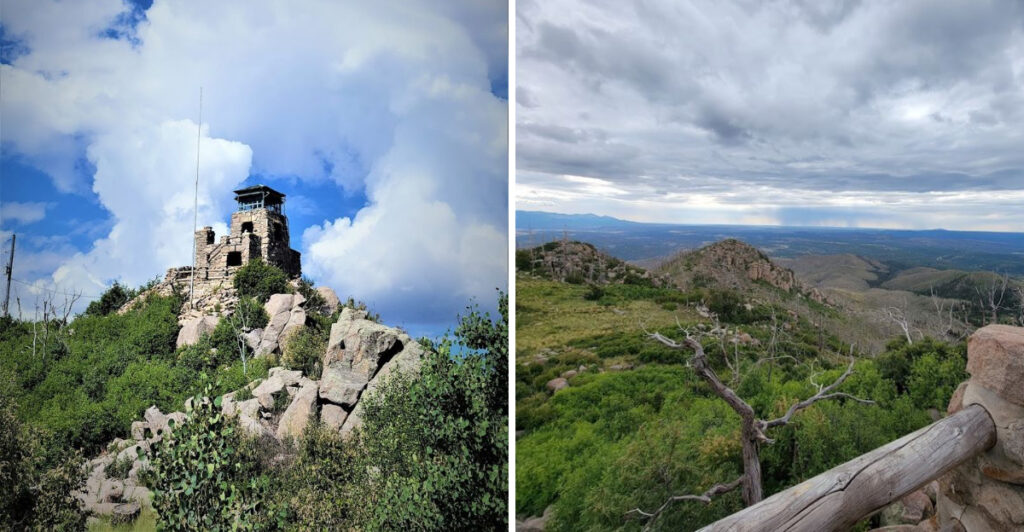
Nearly 9,600 feet up, a stone tower rises through the pines of southern New Mexico. It has the kind of old mountain feeling you notice before you even get close.
I stopped the second I saw it. Civilian Conservation Corps crews built this fire lookout in 1936, with reconstruction completed in 1940.
It has made it through wildfires, snow-packed winters, heavy wind, and decades of rough weather. Time has not softened it much.
That is part of what makes it so good. The higher you go, the more the world opens around you.
Ridges stretch out, wilderness rolls beyond them, and on exceptionally clear nights, distant lights can glow faintly to the east. There’s no fuss here, just stone walls, pine air, and a view that makes you forget whatever you were about to say.
Some stops feel like a photo. This one stays with you much longer.
A Stone Tower Above The Pines
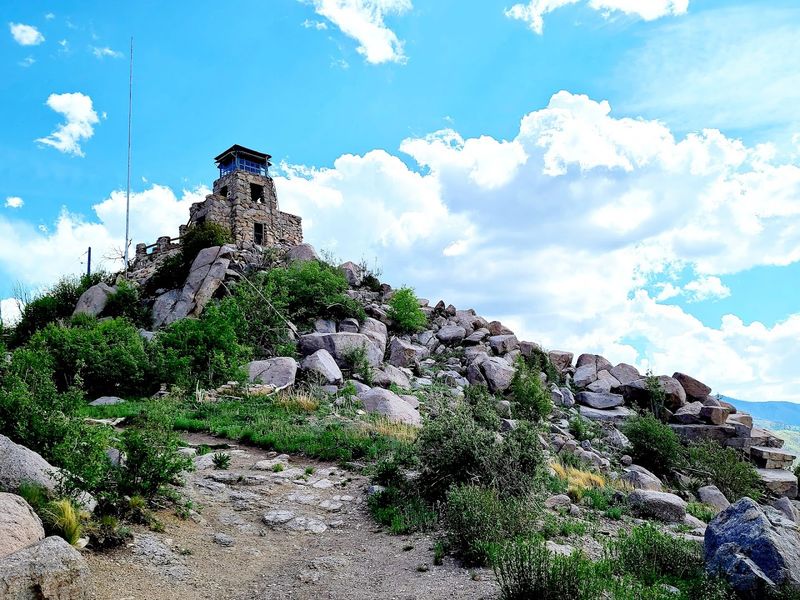
Some places earn their reputation quietly. The first time I caught a glimpse of this compact stone tower peeking above the treeline, I understood exactly why hikers and road-trippers keep coming back.
The tower itself is a 14-by-14-foot native stone structure built with the kind of craftsmanship that takes decades to appreciate fully.
Above that stone base sits a 7-by-7-foot metal-frame cab, giving the whole structure a layered, almost storybook quality that photographs do not quite capture.
The Civilian Conservation Corps built this lookout originally in 1936, with reconstruction completed in 1940, meaning the stones you run your hands across have been holding steady for well over eighty years.
What really got me was how the tower seems to grow naturally out of the mountain, blending into the rocky summit as if it always belonged there.
The setting feels quiet, rugged, and deeply tied to the Lincoln National Forest high country, with every angle offering another reason to slow down.
You will find all of this waiting for you at Monjeau Lookout near Ruidoso, NM 88345, a destination that earns attention without needing any big production.
Winding Forest Roads And Mountain Air
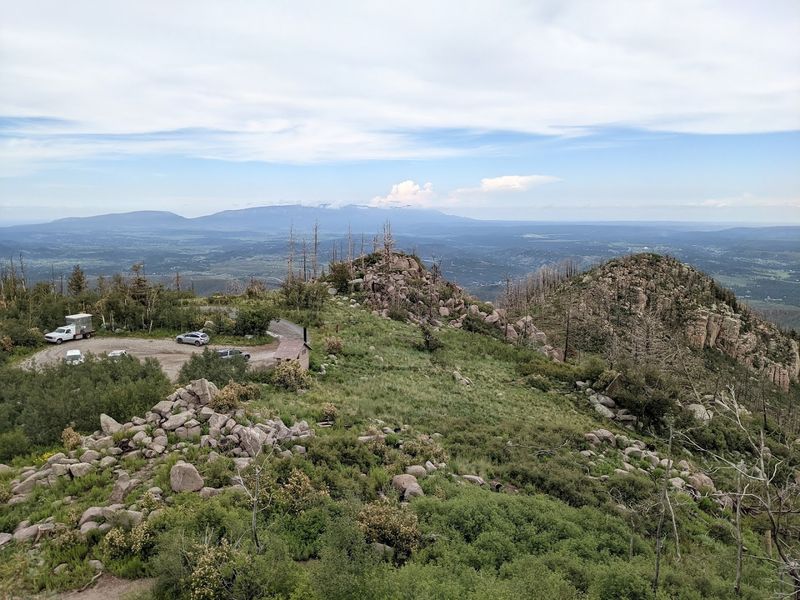
The trip to the summit is half the adventure, and Forest Road 117 sets the tone from the first turn.
The 5.5-mile gravel road north of Ruidoso winds through dense stands of ponderosa pine, climbing steadily with switchbacks that keep your hands busy and your eyes wide.
I was somewhere around the third switchback when a small group of horses appeared at the tree line. Completely unbothered by my slow-rolling vehicle, they gave me a reason to sit there longer than I probably should have.
Motorized access is generally seasonal, often from around May through October, so checking current road conditions before you go is the smart move if you want to drive all the way up.
An SUV or high-clearance vehicle handles the road most comfortably. Smaller cars can sometimes make it by taking the climb slowly and easing through the rougher, dusty stretches.
The air up here carries that sharp, resinous pine scent that city air simply cannot replicate, and breathing it in deeply on the drive up feels like a genuine reset for the senses.
Every twist in the road builds anticipation, and the mountain keeps its best reveal for the very end.
Panoramic Views From The Summit
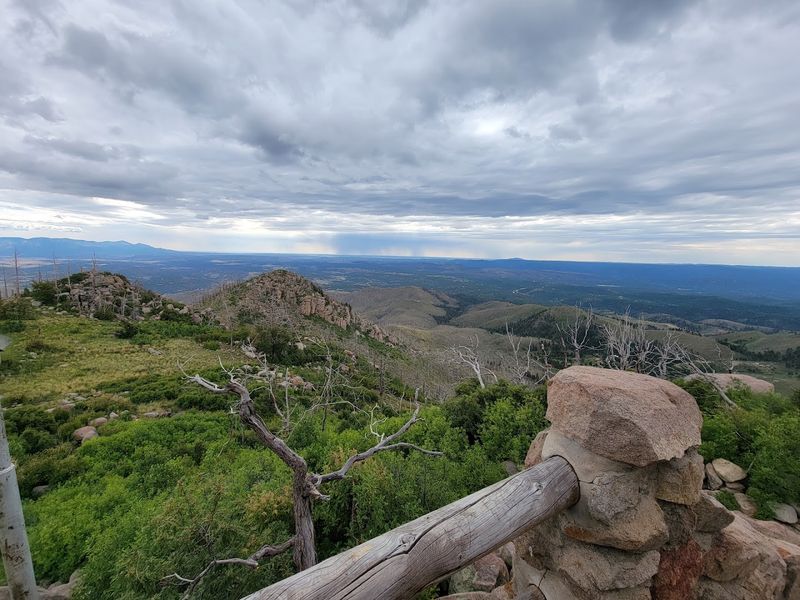
Nothing quite prepares you for the moment the trees pull back and the full sweep of New Mexico opens up in every direction around you.
At around 9,600 to 9,650 feet above sea level, the summit delivers a true 360-degree panorama that takes a few minutes to fully process.
To the west, Sierra Blanca Peak commands the skyline with its bold, angular profile rising above the White Mountain Wilderness.
The Sacramento Mountains roll out to the south and east in long, forested ridges that fade into hazy blue distance, while the Ruidoso valley sits tucked neatly below like a model train layout.
On exceptionally clear nights, distant lights to the east can add a quietly surreal quality to the experience, especially after the daytime crowds have gone and the mountain starts feeling still.
Photographers consistently find golden hour here to be something special, with the low light catching every ridge and canyon in sharp relief.
The darkness and elevation also make the summit a rewarding perch for stargazing when skies are clear, temperatures are dropping, and the wind stays manageable through the evening mountain hours.
The view alone justifies every bump in the road that brought you here.
Rustic Stonework With Historic Charm
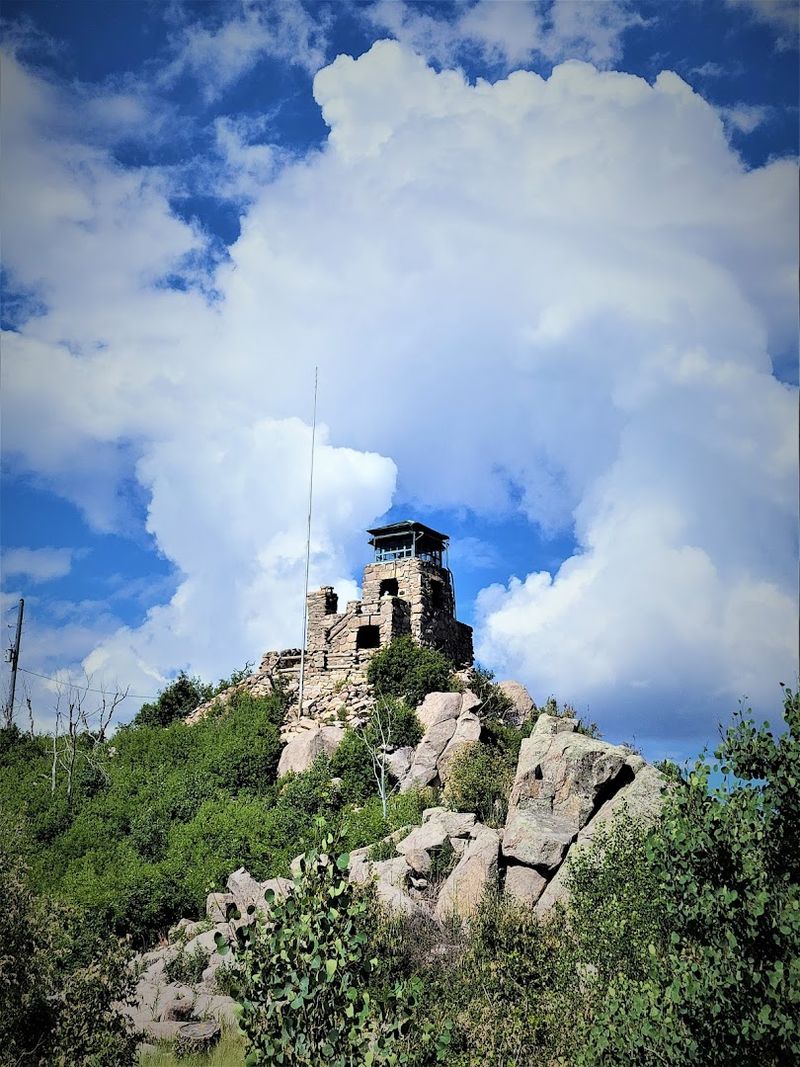
A wall that has outlasted storms, a major wildfire, and nearly a century of mountain seasons gives this place a grounded, almost personal kind of quiet lasting mountain power.
The native stonework of this lookout is the kind of craftsmanship the Civilian Conservation Corps became legendary for during the 1930s and 1940s, when young workers built structures meant to last generations.
Each stone was selected and placed by hand, fitted together in a way that gives the tower a solid, organic texture unlike anything produced by modern construction methods.
The lookout is listed on the National Register of Historic Places as well as the New Mexico State Register of Cultural Places, recognitions that reflect just how significant this structure is to the region’s heritage.
During the destructive 2012 Little Bear Fire in New Mexico, the stone tower stood firm while much of the surrounding forest burned.
That survival is not a small detail but a testament to the durability of the original design and the quality of the materials chosen by its builders.
When you run your hand along those weathered stones while looking out at the mountains, you get a quiet sense of connection to the people who built something this enduring.
Quiet Corners In The High Country
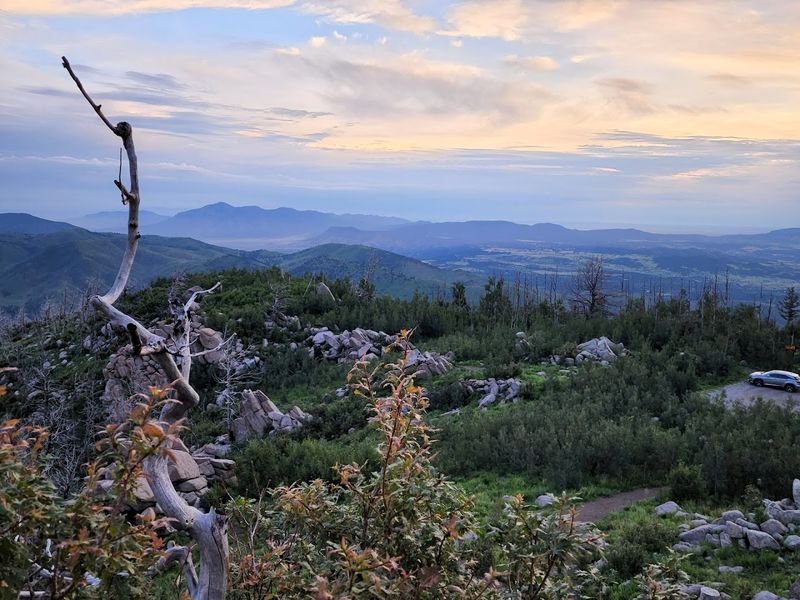
Crowds are not really this mountain’s style, and that suits the place perfectly.
The parking area below the tower is small, which naturally keeps the summit feeling calm and unhurried even on many popular weekend days.
I arrived on a Tuesday morning and had the rocky clearing almost entirely to myself for the better part of an hour, which felt like a rare luxury in a world where popular viewpoints are rarely quiet.
The area around the summit has cool rocks to scramble on and explore, with enough nooks and ledges to find your own private perch above the treeline.
Restroom availability can vary near the top, especially when upper road access changes, so it is best not to count on facilities being open during every visit, even in warmer summer months too.
The space often feels clean and respected, with that cared-for quality you notice quickly when a scenic place has not been treated like an afterthought.
Water is strongly recommended since there are no dependable services at the top and the altitude can sneak up on you faster than expected, especially if you are not used to elevations approaching 10,000 feet.
The stillness up here has a quality that is hard to find and even harder to leave behind.
Where Forest Peaks Meet Open Sky
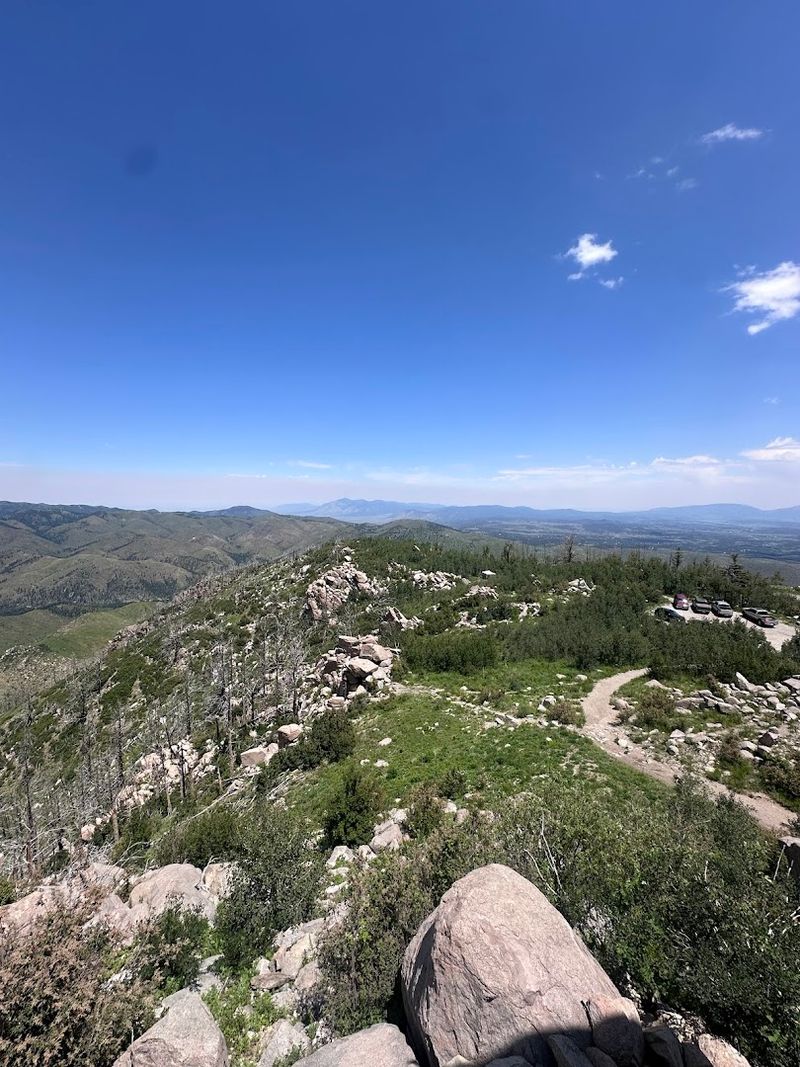
At nearly 10,000 feet, the boundary between forest and open sky feels less like a transition and more like a threshold you step across all at once.
The upper reaches of Monjeau Peak shed their dense tree cover and open into a rocky, windswept summit where the sky takes over the view completely.
I remember standing there on a breezy afternoon with clouds moving fast overhead, and the light kept shifting across the mountains below in dramatic sweeps that made it nearly impossible to stop watching.
The Lincoln National Forest stretches away in every direction, its green canopy broken only by ridgelines and rocky outcroppings that give the landscape a rugged, layered depth.
The White Mountain Wilderness sits to the west as a protected expanse of undeveloped terrain, adding a sense of true wildness to the view that no developed overlook can replicate.
Wind is a real factor at the summit, and several visitors have mentioned choosing calmer days for the best experience, which is practical advice worth taking seriously before you make the drive.
When the air stills and the clouds part, the summit feels suspended between the forest below and the open atmosphere above, a genuinely rare kind of place that rewards the effort it takes to reach it.
A Scenic Drive To Sweeping Views
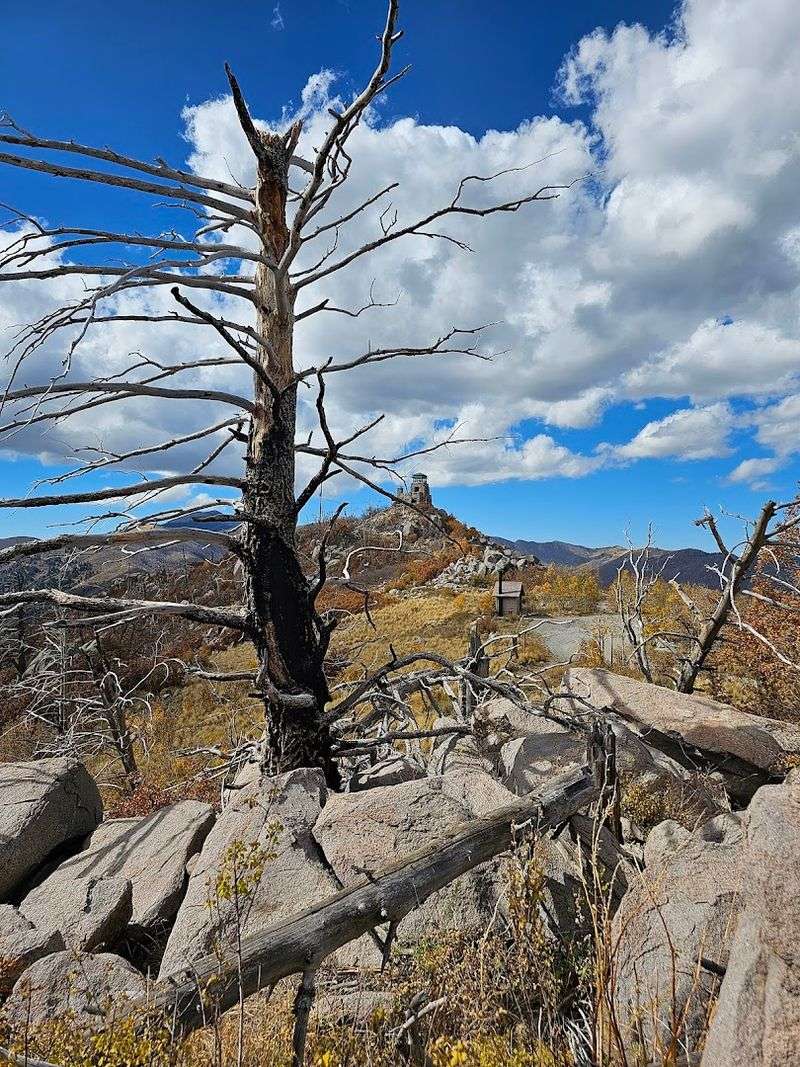
The drive up to the lookout is not just a means to an end but a full experience with its own rewards scattered along the way.
Forest Road 117 climbs through Lincoln National Forest with several pullouts and trailhead access points. They invite you to slow down, step out, and take in the surrounding landscape before you even reach the summit.
Fall is a particularly compelling time to make this drive, with the mountain’s vegetation shifting into warm gold and amber tones that contrast beautifully against the evergreen pines.
Nearby trails, including Crest Trail T25 and Mills Canyon Trail T22, can be combined with Forest Road 117 by hikers who want a more immersive way to explore the area around the lookout.
The road itself is free to access, which makes the whole outing remarkably accessible for families, solo travelers, and anyone working with a tight travel budget.
One practical note worth keeping in mind is that dusty conditions behind other vehicles can limit visibility on the narrow stretches, so leaving space between cars on the way up is a genuinely useful habit.
Every mile of that gravel road builds toward a payoff that can stop first-time visitors in their tracks before they say much at the summit viewpoint completely.
Golden Light Over Rugged Mountains
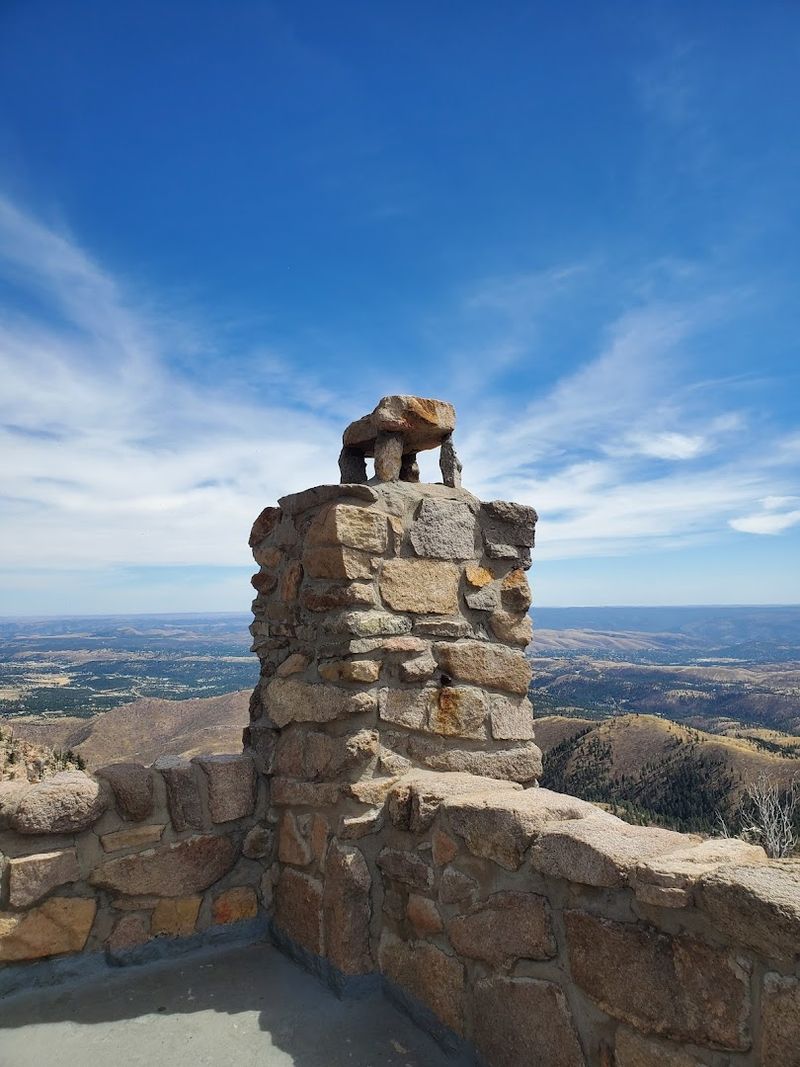
A late-afternoon visit transforms the already impressive views into something that feels almost unreasonably beautiful.
As the sun drops toward the western ridgelines, it throws warm golden light across the Sacramento Mountains in long, raking angles that deepen every shadow and sharpen every rocky edge below the summit.
Sierra Blanca Peak catches that light particularly well, its higher elevations glowing amber while the forested slopes below it settle into cool purple shadow.
Photographers who make the drive for golden hour often praise the combination of elevation, clear air, and open sightlines. Together, they create conditions that are hard to find anywhere else in the region.
Night visits add another layer entirely, with the high altitude and minimal light pollution creating a star-filled sky that can be excellent for meteor shower viewing and casual stargazing alike.
The elevation of around 9,600 to 9,650 feet means temperatures drop quickly after sunset, so bringing an extra layer is the kind of simple preparation that keeps a magical evening from turning uncomfortable once the sun drops.
Stay for golden hour, linger for the stars, or simply catch the view on a bright midday visit. Somehow, the mountain always finds a way to send you home quietly stunned.