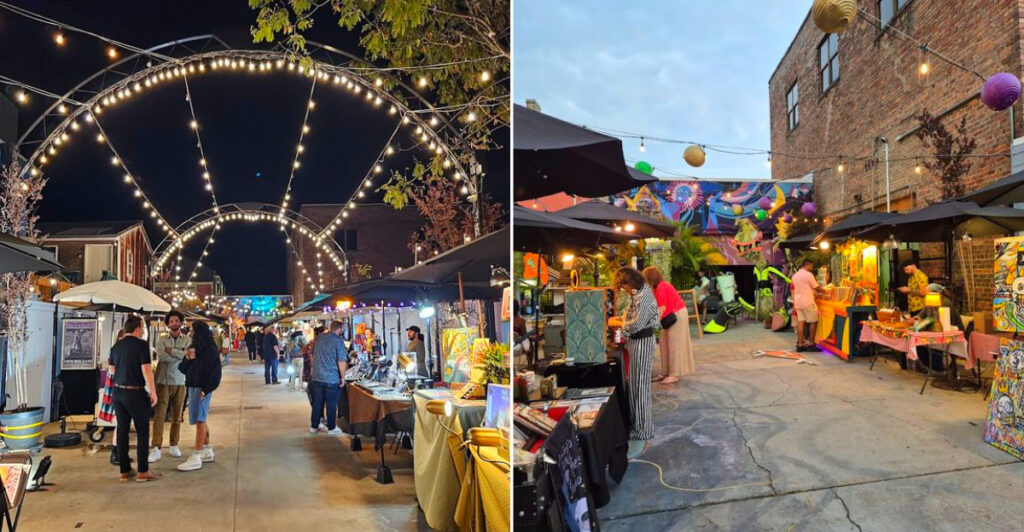
Most visitors to New Orleans follow a well-worn path. The same streets, the same bars, the same photo spots that have been shared a million times.
But the city has a quieter side, and finding it requires nothing more than turning down the right street after the sun goes down. There is a stretch of New Orleans that hums with a different kind of energy after dark. No neon, no cover charges.
Just the warm glow of string lights and the murmur of conversations between artists and strangers. New Orleans has a way of hiding its best treasures in plain sight, and this Louisiana art market is proof.
Tables spill over with jewelry, paintings, and candles whose scents were inspired by the bayou itself. A saxophone drifts through the open air. The crowd is a mix of locals who come every weekend and visitors who now cannot imagine a trip without it.
Lantern-Lit Vibe
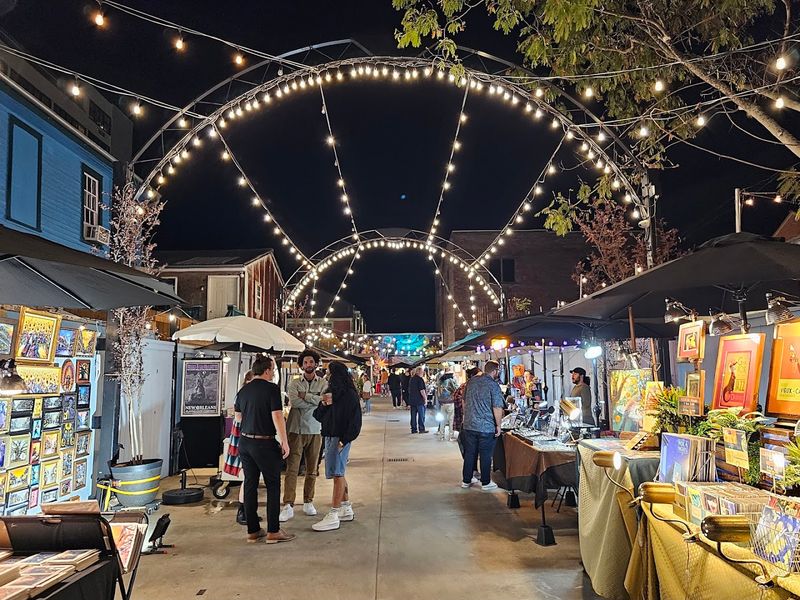
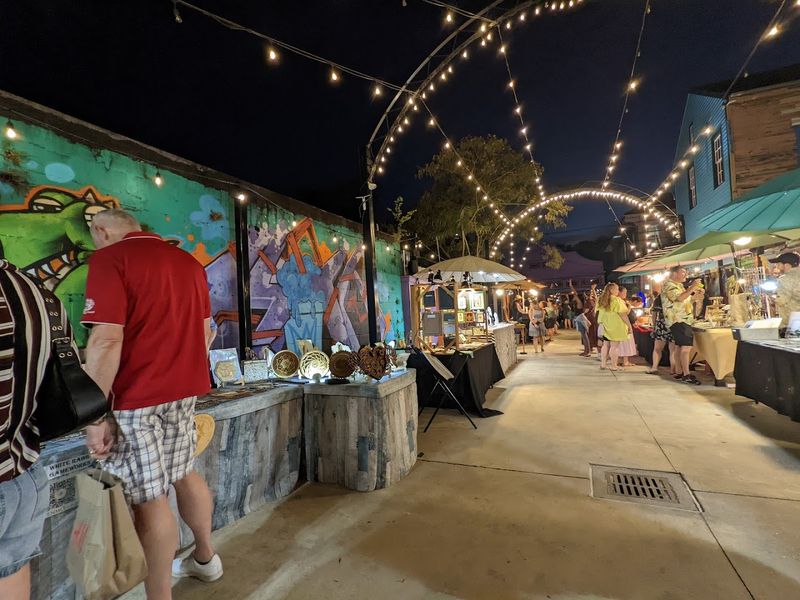
Walking into the Bazaar after dark feels like stepping into a miniature festival wrapped in a soft, human scale. The lanterns and strings of lights make every surface glow; vendors’ tables become stages and each object reads like a story waiting to be picked up.
I noticed people slowing their pace, lowering their voices, and smiling more often than on the noisy strip nearby.
The vibe here is deliberately slower and more intimate than the bustling music clubs next door. Conversations with artists often start with how a piece was made, not with sales talk, and that sense of craftsmanship makes lingering feel like the point of the night.
Let Frenchmen Street Pull You In
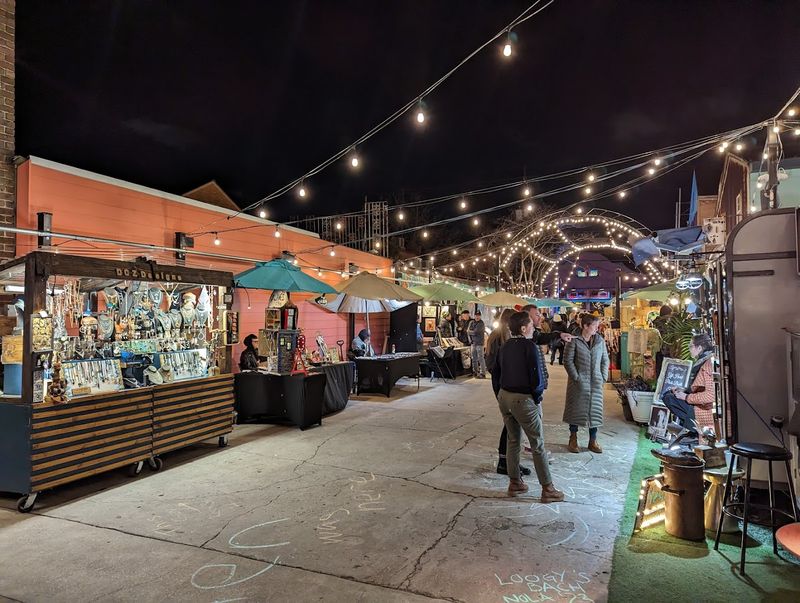
Frenchmen Art Bazaar is located at 619 Frenchmen St, New Orleans, Louisiana 70116, right where New Orleans starts acting like it knows exactly how good it is.
Do not treat this like a neat little drive-up errand. Get yourself near Frenchmen Street, find parking before the crowds fully swallow the block, then walk toward the noise, lights, and general sense that something interesting is happening just ahead.
The arrival is part of the fun here. One minute you are navigating the city, the next you are drifting into an open-air pocket of art, music, handmade oddities, and people who definitely planned to “just browse” before immediately changing their minds.
What To See: Artists And Goods
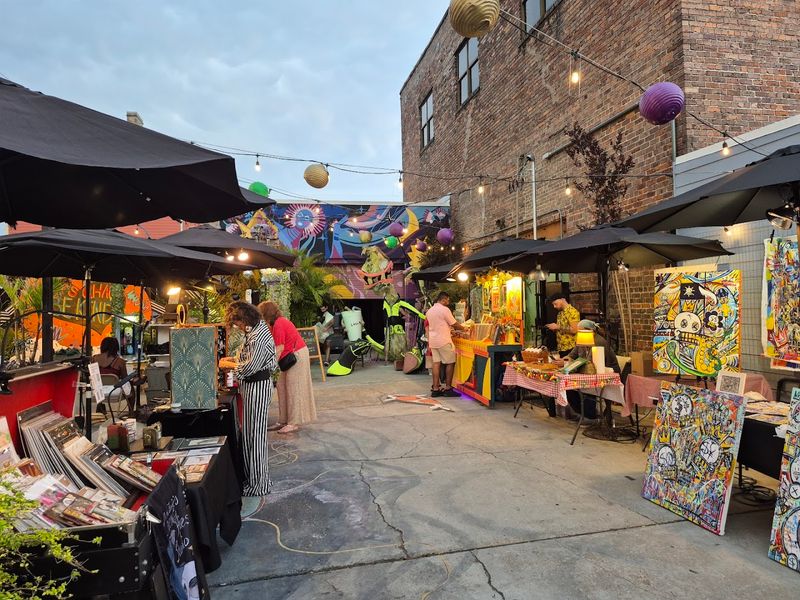
There is a rotating array of local and regional artists selling a surprising variety of handmade goods: jewelry, prints, books, handbound journals, woodwork, leather pieces, quirky sculpted items, and yes, painted toilet seats that have become a playful local hallmark.
On many nights a maker will work on a piece in real time, and that process adds a performative layer to browsing.
Because vendors rotate, the exact mix changes night to night, so each visit can feel like opening a new cabinet of curiosities. I recommend slowing down and chatting; artists are usually happy to explain techniques, materials, and stories behind their work, which enriches whatever you take home.
Sensory Details: Sound And Light
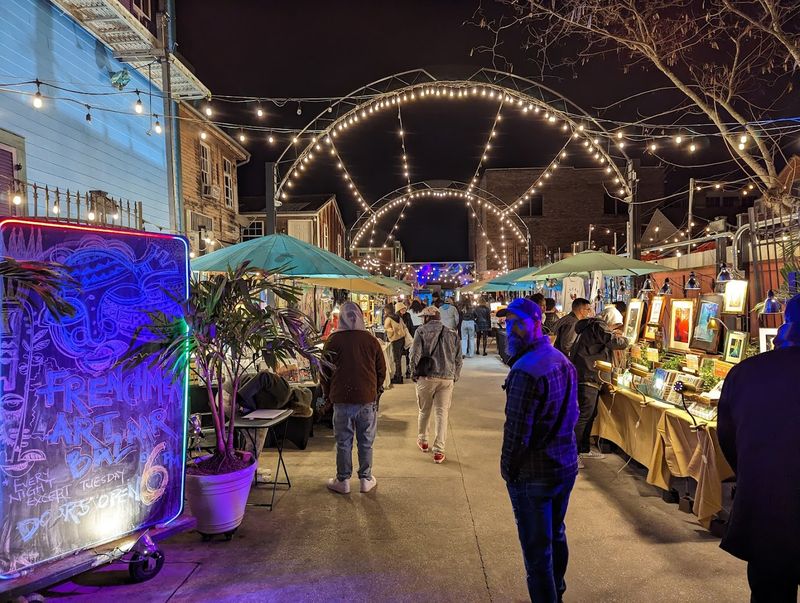
The sound at the Bazaar is layered but not loud; you hear fragments of jazz and brass drifting from nearby venues, but here the music is a distant accompaniment rather than the main event.
The lights are gentle and flattering, throwing warm pools over art and people, and there is an easy rhythm to the foot traffic that invites slow looking.
That softer soundscape makes conversations possible and photography kinder. When I stopped to listen, I found myself more attentive to small details – the rustle of a canvas, the rasp of a pen, the low laugh of someone delighted by a find.
It all feels purposefully calm for a night out in New Orleans.
Accessibility And Practical Notes
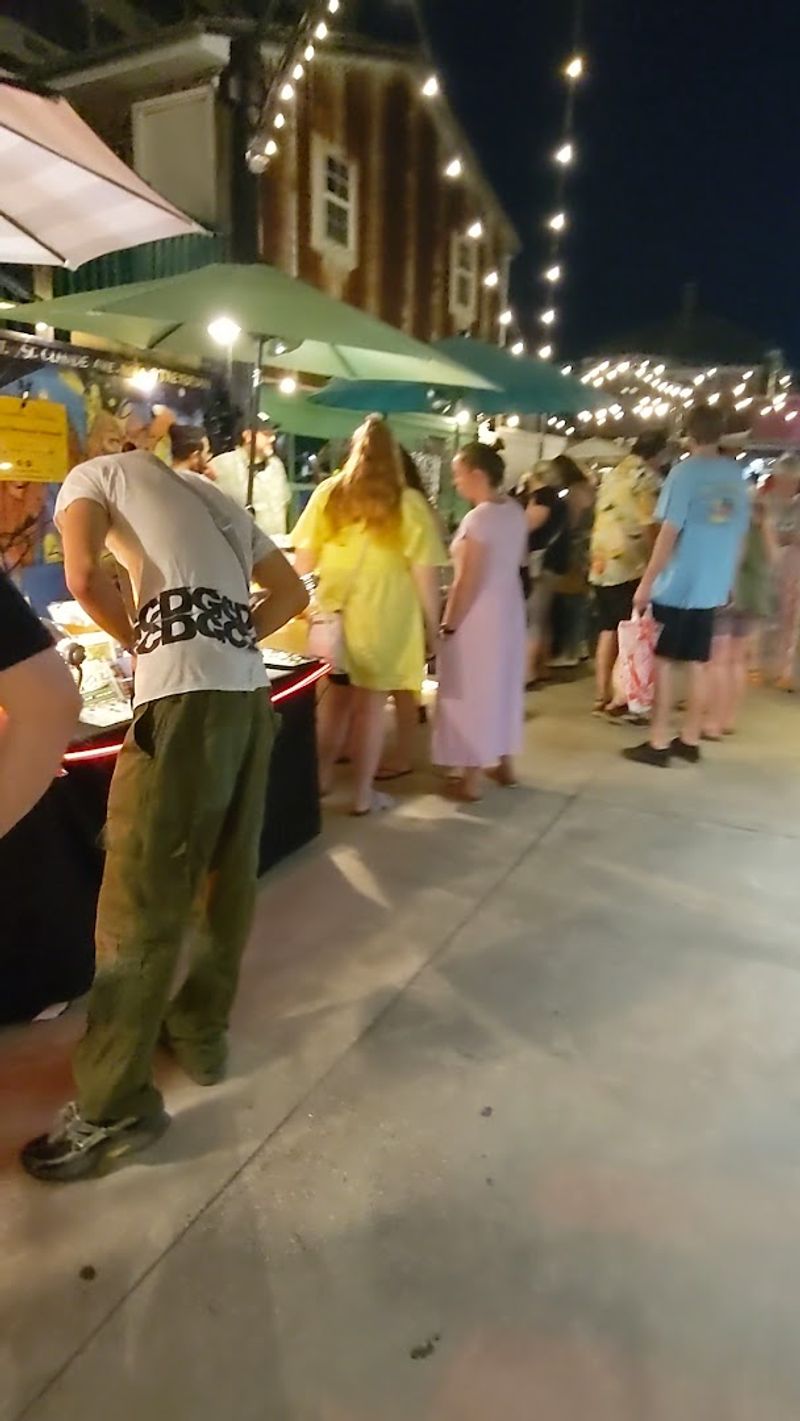
The Bazaar aims to be welcoming and practical: it is family-friendly and wheelchair accessible, with a layout that keeps aisles reasonably navigable even when the market is busy.
Operating hours are generally evenings, with doors opening around 7 PM and staying late; check the market website for the current schedule because artists rotate and times can shift.
Arrive after dark to catch the full ambiance, but if mobility or younger children are a consideration, getting there right when doors open gives you more space to browse. Bring a small tote or flat bag for fragile pieces and expect to walk a short distance from nearby streets when the market is full.
Photographers’ Playground
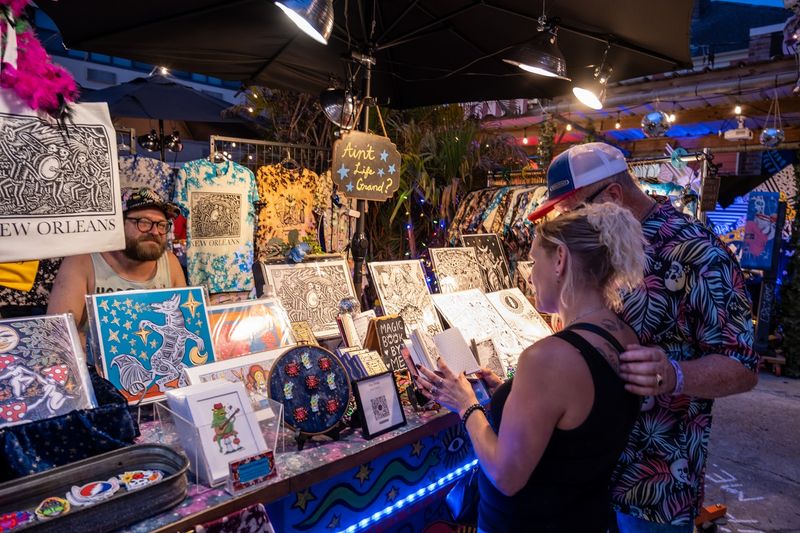
The Bazaar is an excellent spot for photographers because the lighting is consistent and cinematic without being harsh. String lights and lanterns create soft contrasts and flattering skin tones, while colorful artworks provide vivid focal points for composition.
Photographers often find small vignettes, a hand arranging beads, a paint-splattered workbench, a string of prints fluttering in a breeze.
Respect for artists is essential: ask before photographing close-up images of someone’s work or process. I noticed photographers who paused to chat often ended up with better portraits and stories to pair with their shots, so don’t be shy about engaging the person behind the table before clicking away.
Conversations With Makers
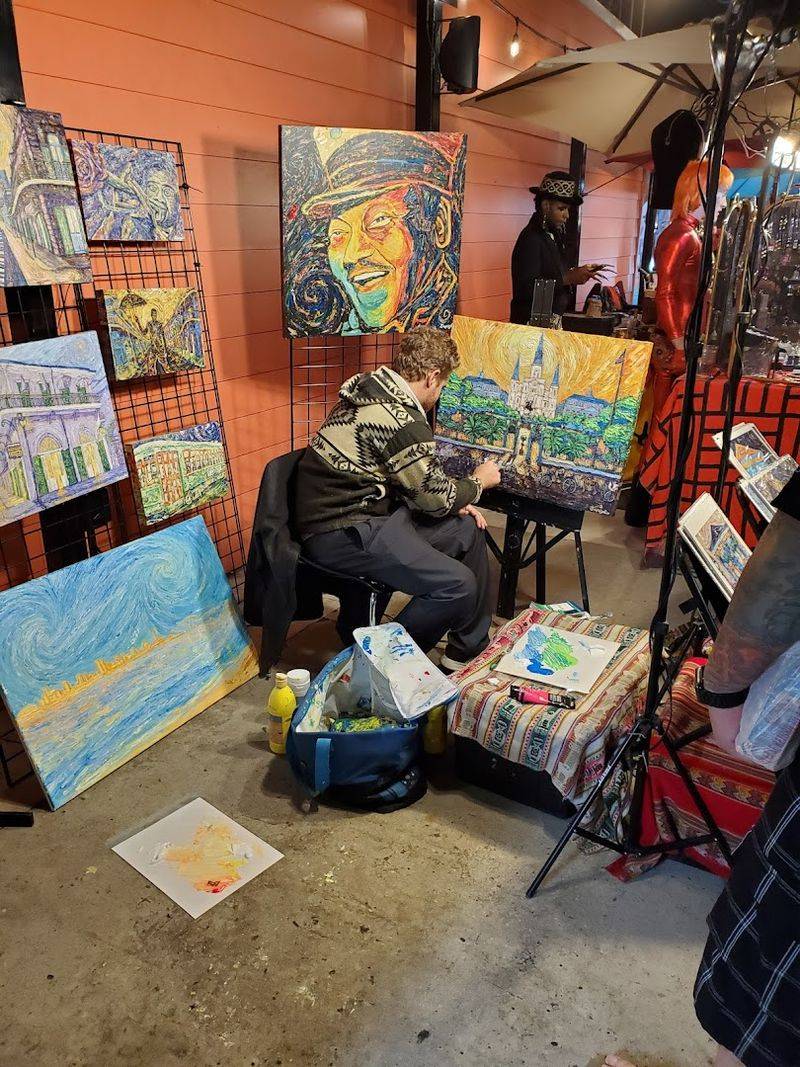
One of the Bazaar’s best features is the chance to meet artists working in real time; conversations often begin with technique and stray into the inspiration behind a piece. Makers tend to be approachable and proud of their work, and those brief exchanges can make a purchase feel more personal than a typical souvenir.
I found that asking about materials or process not only yielded stories but sometimes led to custom requests or small demonstrations.
If you want to learn, bring curiosity and a good question. Vendors appreciate thoughtful attention more than casual bargaining, and the market’s community spirit rewards those who engage respectfully with the people making the art.
Finding Unique Souvenirs
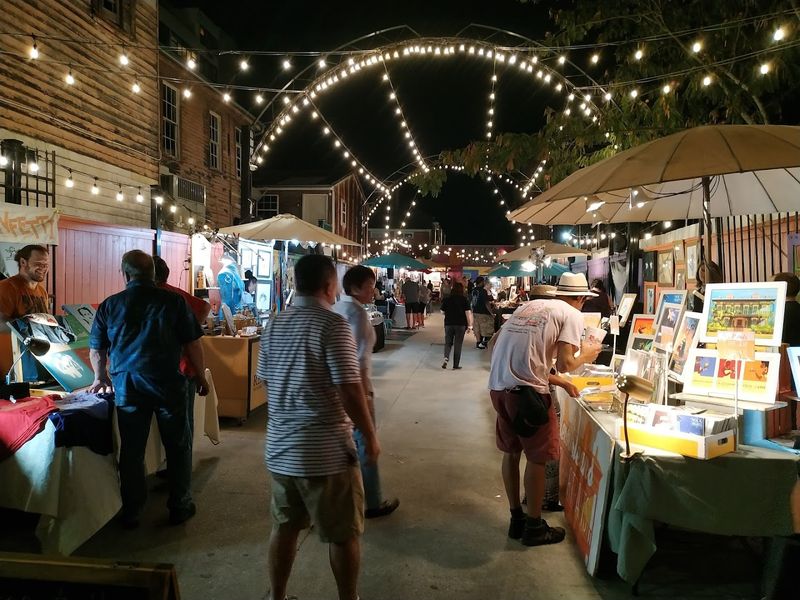
The Bazaar is an antidote to mass-produced tourist shops: you can find singular souvenirs that reflect individual makers’ voices. Whether it’s an offbeat print, a tiny leather journal, or a handcrafted piece of jewelry, these items have a traceable story and a maker’s touch.
Prices vary, and while some pieces are modestly priced, others reflect the labor and materials invested and can be pricier than typical souvenir fare.
Be realistic about budgeting and keep an eye out for pieces that speak to you beyond novelty. I left with a small print that reminded me of a conversation I had at the stall, and that kind of story is the market’s real takeaway.
Family-Friendly Evenings
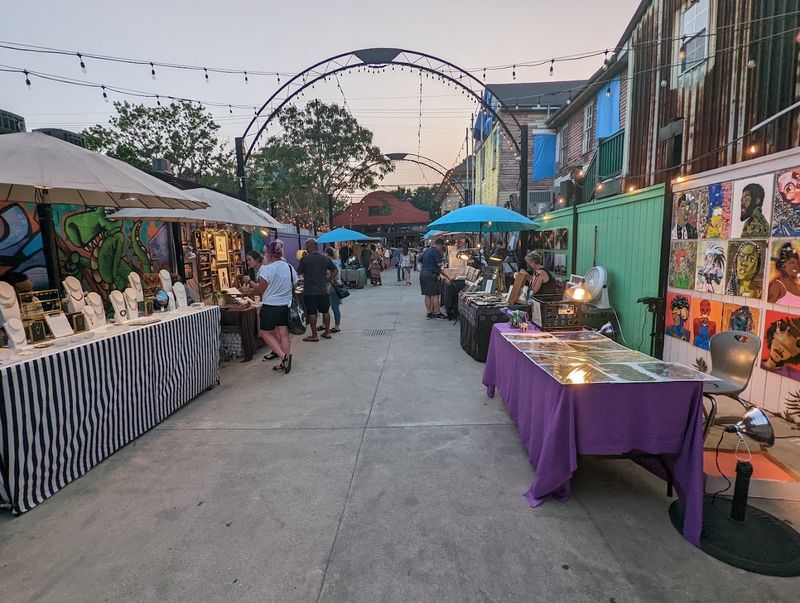
The market is family-friendly in practice: I saw parents bringing children to explore without the pressures of club crowds nearby. The slower pace and tactile pieces make it an engaging evening activity for older kids who enjoy art or crafts, and most vendors are patient with curious hands.
Because the Bazaar runs late, younger families might prefer an earlier visit when crowds are thinner and the pace is milder.
If you come with children, point out techniques and materials to turn browsing into a small lesson. Vendors often enjoy explaining their tools, and those moments can be memorable for kids who like making things rather than just consuming them.
Rotating Lineup And Timing
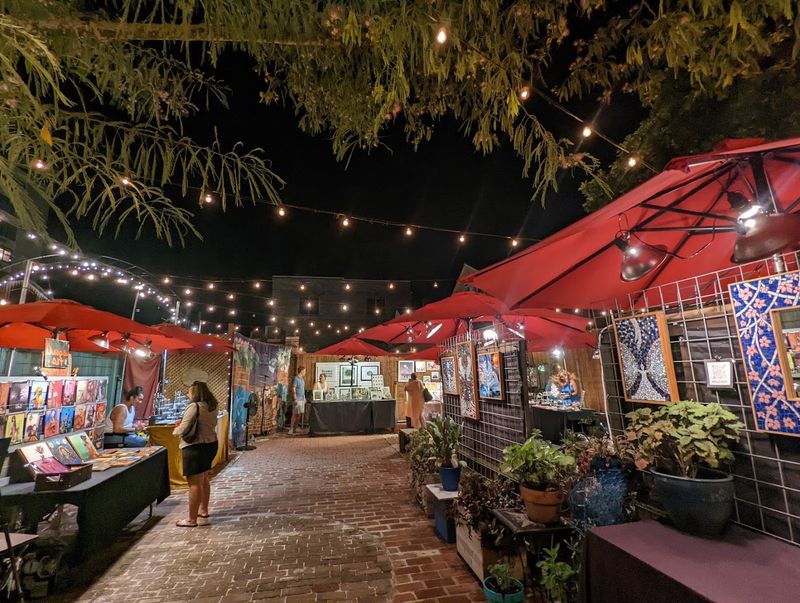
The Bazaar’s rotating roster is one of its strengths and a reason to visit multiple nights if you can. Some evenings feature a fuller lineup of vendors while other nights feel more compact; the market keeps changing to spotlight different makers.
That variability means you might find a favorite artist one night and a whole new set of creatives the next time you drop by.
Because of this rotation, check the market’s website or social channels if you’re chasing a particular artist. If you discover someone whose work you love, take a card or social handle so you can follow their next appearances or commission pieces later on.
Safety And Etiquette
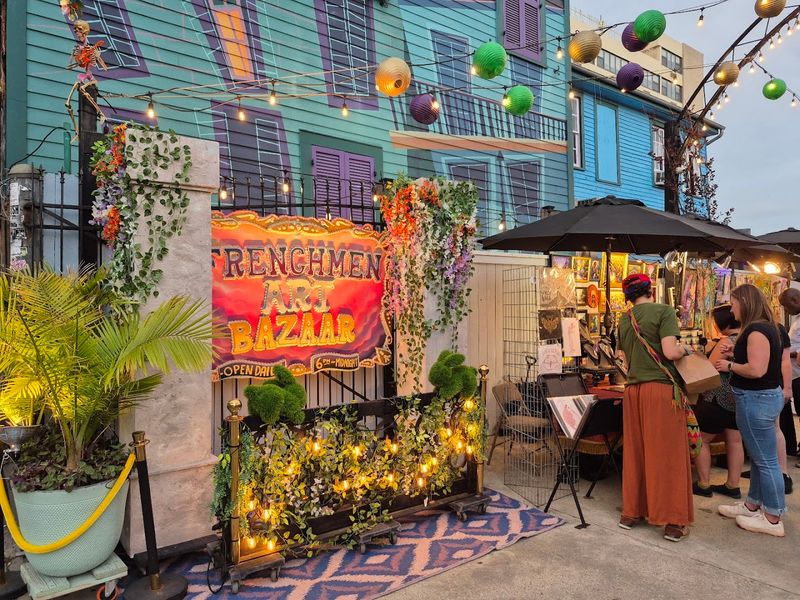
Safety at the Bazaar leans on shared etiquette: treat booths as personal spaces, ask before photographing close-up, and be mindful of fragile displays. The market staff and vendors expect respectful behavior, and you will see signs of that in how people move and interact.
The alley setup encourages low-impact browsing, so keeping voices moderate and phones unobtrusive helps preserve the ambiance.
If you want to purchase, handle items gently and ask about payment options; many vendors accept cards but some might prefer cash. Observing simple manners enhances everyone’s experience and keeps this quiet corner of Frenchmen Street pleasant for artists and visitors alike.
Why Go: The Slow-Night Appeal
The Bazaar offers an alternative evening rhythm, a slower, softer experience that contrasts with the amplified nightlife around it. It’s a place to discover local craftsmanship, chat with makers, and carry home something that feels personal rather than mass-produced.
For anyone who prefers thoughtful interaction over spectacle, this market feels like a quiet triumph tucked into Frenchmen Street.
Visiting after dark is when the market fully reveals itself; bring patience, curiosity, and a readiness to be surprised by small, skillful work. That is the real reason to come: an intimate encounter with the creative heart of New Orleans.