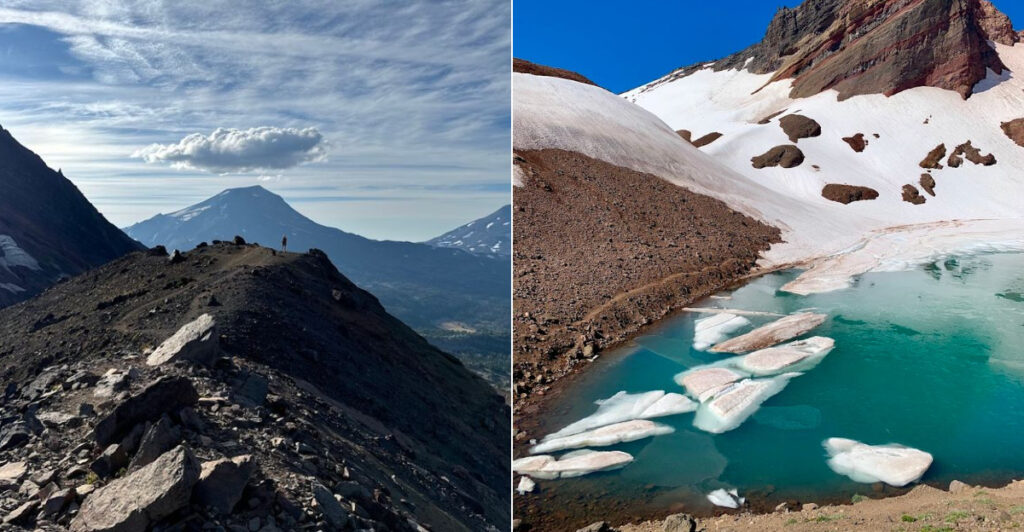
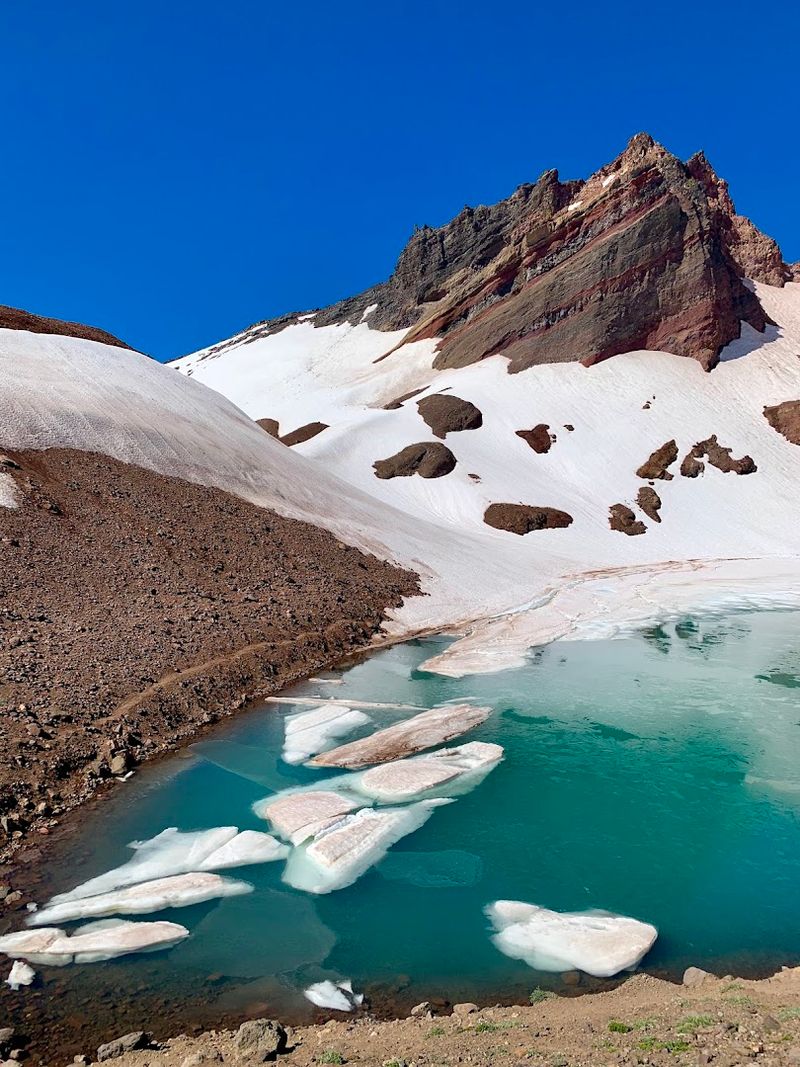
A turquoise alpine lake sitting inside a volcanic crater at over 8,000 feet. Oregon does not ease into its most spectacular scenery.
It just delivers it all at once. The trail shifts from dense forest to high desert to raw volcanic rock before opening up to views that make every single step feel completely worth the effort.
Not many hikers make it this far. That exclusivity is part of what makes standing at the top feel so genuinely satisfying. This is the kind of trail that rewards preparation and punishes shortcuts. Come ready.
Bring the right gear, check the conditions, and give the hike the respect it deserves. The payoff at the end is a scene that looks borrowed from another planet and belongs entirely to the people willing to earn it.
Oregon has no shortage of incredible trails. This one sits at the very top of that list. Lace up and go find out why.
The Road Less Traveled
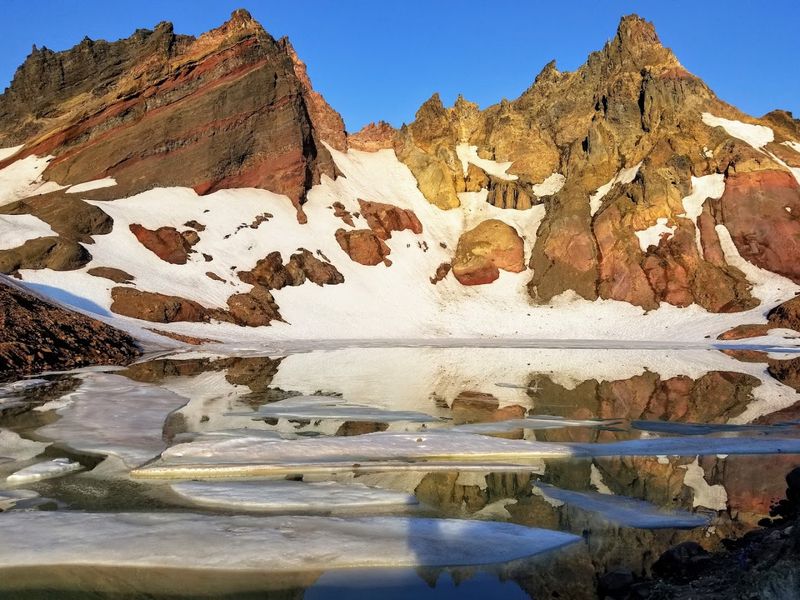
Before you even lace up your boots, the adventure at Broken Top Crater Trailhead has already started. Getting here is half the experience, and it is not for the faint of heart or the low-clearance sedan.
Forest Roads 370 and 380 lead to the trailhead, and they are rough. We are talking deep ruts, loose rocks, and sections that will make your knuckles tighten around the steering wheel.
A high-clearance 4WD vehicle is not just recommended here, it is genuinely necessary.
Visitors who have made the drive say some stretches feel almost impassable, with foot-deep holes on both sides of the road. One hiker even spotted a 1995 Buick LeSabre somehow making it down, which still baffles everyone who heard the story.
The road is typically gated until mid-summer because of snow, so planning your visit between July and October is smart. If your vehicle cannot handle the road, you can start from the Todd Lake Trailhead instead, though that adds serious mileage to your day.
Think of the rough drive as the trail’s first filter. It keeps the crowds away and makes that first view of the volcanic landscape feel even more earned. Can your vehicle handle the challenge?
A Volcanic World Awaits
Most hikes ease you in gently. This one skips the small talk entirely.
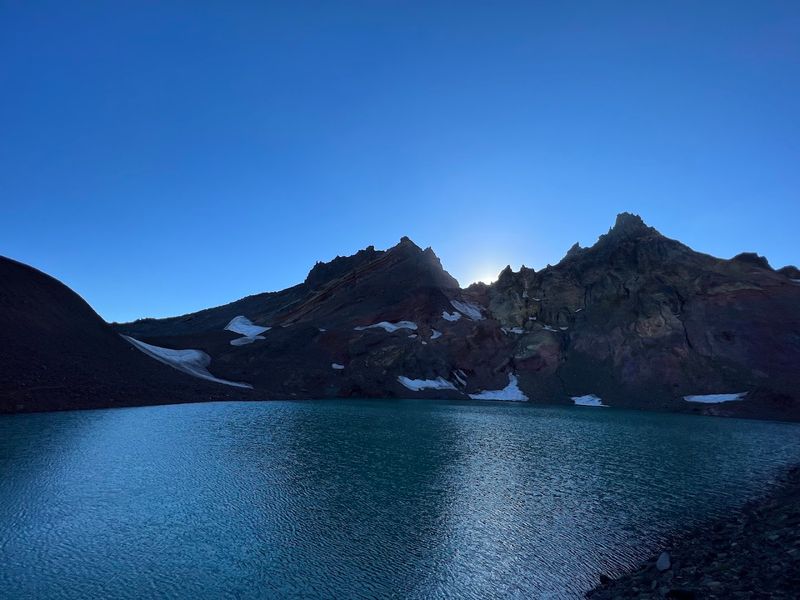
The Broken Top Crater Trailhead already sits in alpine terrain, which means you step out of your vehicle and you are already surrounded by raw, dramatic scenery.
The landscape here tells a story millions of years in the making. Broken Top is a heavily eroded stratovolcano, and its shattered crater walls rise above you like the ruins of something ancient and enormous.
The scale of it surprises nearly everyone who visits for the first time.
As you hike, the terrain shifts constantly. You move through pockets of forest, then open high desert, then fields of loose volcanic rock and scree.
Each section feels like a completely different world, which keeps the trail interesting from start to finish.
In late August and early September, wildflowers push up through the rocky soil in bursts of color that seem almost impossible given the harsh environment. Oregon does not do things halfway, and this trail is proof of that.
The views of the Three Sisters and Mount Bachelor appear early and stay with you the whole way up. Have you ever walked through a landscape that made you feel like you had accidentally wandered onto a different planet?
This trail delivers exactly that feeling, and it does so without any warning.
No Name Lake Up Close
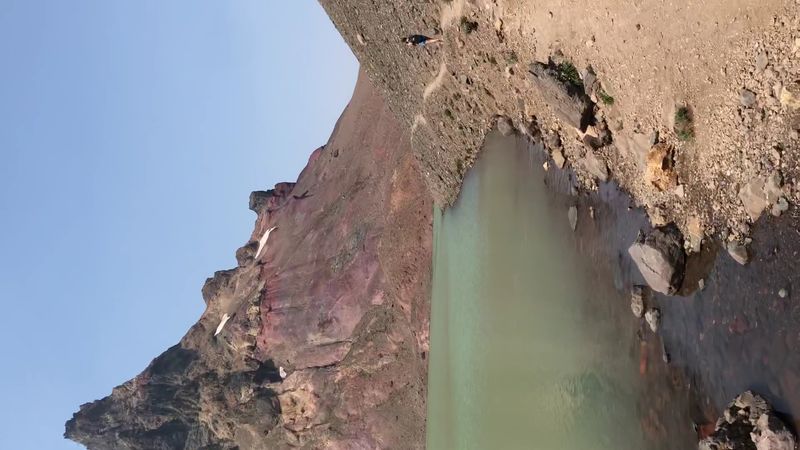
No Name Lake is the kind of place that makes you stop walking and just stare. Sitting at around 8,150 feet inside the crater of Broken Top Mountain, this turquoise pool is one of the most visually striking alpine lakes in all of Oregon.
The water is deep and impossibly clear. On a calm day, the reflection of the crater walls shimmers across the surface, and the color shifts between shades of blue and green depending on the angle of the sunlight.
Photographs simply cannot capture how vivid it looks in person.
Visitors consistently say the lake is much bigger and more dramatic than they expected. One hiker described it as stunning beyond what any photo could prepare you for, and that sentiment gets repeated often by people who make the trip.
Because of its popularity and the fragile alpine environment, camping at No Name Lake has been banned due to overuse. This is a day-visit destination now, which means you experience it, soak it all in, and then carry that memory home with you.
The lake is roughly 2 to 3 miles from the Broken Top Crater Trailhead, depending on the route you take. So the payoff comes relatively quickly once you are on the trail.
What would it feel like to stand at the edge of a volcanic crater and look down at water that color?
The Hike Itself Explained
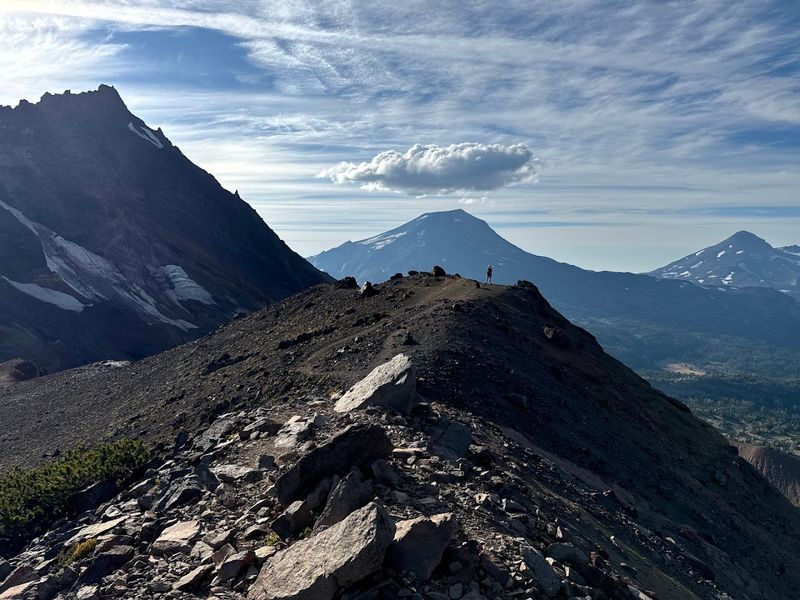
The trail from the Broken Top Crater Trailhead to No Name Lake covers approximately 5.5 to 6 miles roundtrip, with around 1,300 to 1,400 feet of elevation gain. That puts it in the moderate-to-challenging category, though the terrain keeps things interesting rather than just exhausting.
The path is generally easy to follow, but loose rock and scree sections demand your full attention. Trekking poles are a smart addition, especially on the descent when the gravel tends to shift underfoot.
Hikers who have skipped the poles say they wished they had brought them along.
The trail climbs steadily, and there are stretches that feel steep. But the views open up quickly, and every time you stop to catch your breath, you are rewarded with a sweeping panorama that makes the effort feel completely worthwhile.
If you want to push further, continuing past the lake and up the ridge to the crater rim adds roughly another mile roundtrip. From up there, on a clear day, you can spot Mount Washington and even Mount Hood in the far distance.
That extra push is absolutely worth it.
The trail is dog-friendly too, which means four-legged companions are welcome on the adventure. Just make sure your hiking partner, furry or otherwise, is ready for the elevation gain. Is your group up for the climb?
Permits And Planning Ahead
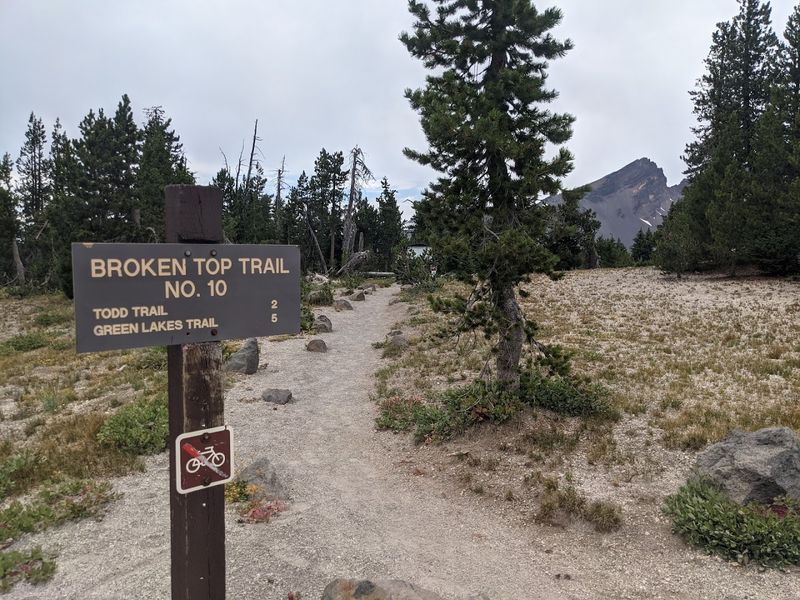
Spontaneous road trips are wonderful, but this particular trail requires a bit of homework before you go. A Central Cascades Wilderness Permit is required for both day-use and overnight visits between June 15th and October 15th each year.
These permits are issued through Recreation.gov and must be reserved in advance. The daily limit for the Broken Top Trail sits at 45 day-use permits, and they go fast.
If you show up without one during the permit season, you will be turned away at the trailhead.
Booking early is not just advice, it is a strategy. Popular summer weekends fill up weeks in advance, so checking the Recreation.gov calendar as soon as your travel dates are set is the smartest move you can make.
Outside of permit season, the trail may still be accessible, but snow and mud can make it impassable. The road to the trailhead is often gated until mid-summer, so July through early October is the sweet spot for most visitors to plan their trip.
The permit system exists to protect the landscape, and it is working. The trail stays in better condition because of it, and the experience feels more peaceful when you are not surrounded by hundreds of other hikers.
Have you already checked the permit calendar for your travel dates? If not, that is the first thing to do right now.
Wildlife Along The Way
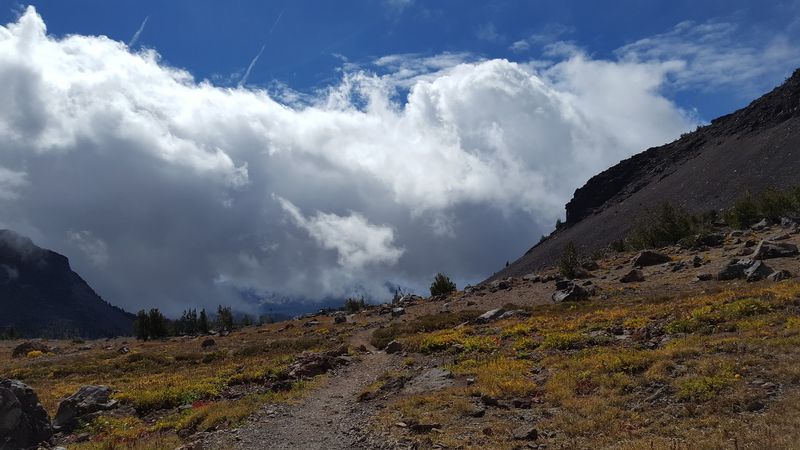
Not every hike comes with unexpected wildlife encounters, but the Broken Top Crater Trail has a reputation for delivering memorable surprises. One hiker who had lived in nearby Bend their entire life made the trip and came back raving about a mountain goat sighting along the route.
Mountain goats are not rare in this part of Oregon, but seeing one up close on a rocky ridgeline is still a moment that stops you in your tracks. They move across the loose volcanic rock with a casual confidence that makes human hikers look clumsy by comparison.
The Three Sisters Wilderness is also home to marmots, pikas, and various bird species that thrive at higher elevations. Keep your eyes on the rock fields and listen for the sharp squeaks that signal a pika nearby.
These small, round mammals are surprisingly easy to miss despite being adorable.
Wildflowers attract pollinators throughout the summer season, and the buzz of activity around the flower fields in late August adds a lively energy to the otherwise rugged landscape. The ecosystem here is thriving, and it is a good reminder of why the permit system and camping ban matter.
Always watch where you step on the rocky sections, since loose rocks can shift unexpectedly. But do not keep your eyes only on your feet, because the wildlife here has a habit of appearing exactly when you least expect it.
What might you spot on your hike?
Views From The Crater Rim
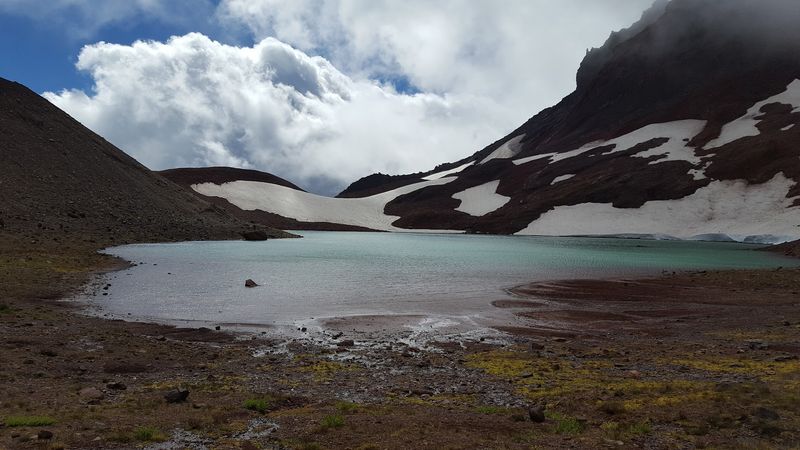
Reaching No Name Lake is a triumph on its own, but hiking the extra half mile up to the crater rim turns a great hike into something truly unforgettable. The views from up there are the kind that make you understand why people spend their weekends chasing elevation.
From the rim, you can see the Three Sisters stretching out in front of you in full detail. Mount Bachelor sits nearby, and on a clear day, the distant silhouette of Mount Hood appears on the horizon, roughly 100 miles to the north.
That view alone justifies every rocky step of the climb.
The crater walls drop dramatically below you, framing No Name Lake in a way that photographs from the trail simply cannot replicate. Standing on the rim and looking down at that turquoise water surrounded by volcanic rock is a perspective that stays with you long after you have driven home.
Wind tends to pick up significantly at the rim, so an extra layer in your pack is always a good idea. Visitors have described the wind as howling on certain days, which adds a raw, elemental feeling to the experience rather than detracting from it.
The rim is not a place to rush. Sit down, take it all in, and let Oregon do what it does best.
Of over 2,000 hikes, one seasoned hiker called this easily a top ten most beautiful experience. Could the rim view make your personal list too?
Tips For First-Time Visitors
First-timers at Broken Top Crater Trailhead tend to fall into two camps: those who came prepared and had an incredible day, and those who showed up underprepared and wished they had done more research. A little planning goes a long way here.
Water is non-negotiable. The hike covers several miles of exposed alpine terrain, and there are no services anywhere near the trailhead.
Pack more than you think you need, and toss in some bug spray too, since visitors in summer say the insects can be persistent in the lower sections of the trail.
Layers are your friend at this elevation. The temperature at the trailhead and along the ridge can drop sharply, especially if clouds roll in or wind picks up near the crater rim.
Starting the hike in sunshine does not guarantee you will finish it that way.
Sturdy hiking boots with ankle support make a real difference on the loose scree sections. The trail is not technical, but the rocky descent can catch people off guard, particularly if they are wearing casual footwear.
Start early in the morning to avoid afternoon thunderstorms, which are common in the Oregon Cascades during summer. An early start also means better light for photography at the lake and a quieter experience overall on the trail.
The trailhead is located near Blue River, OR 97413, so plan your route and fuel up before heading into the wilderness. Are you ready to make the most of your day out here?