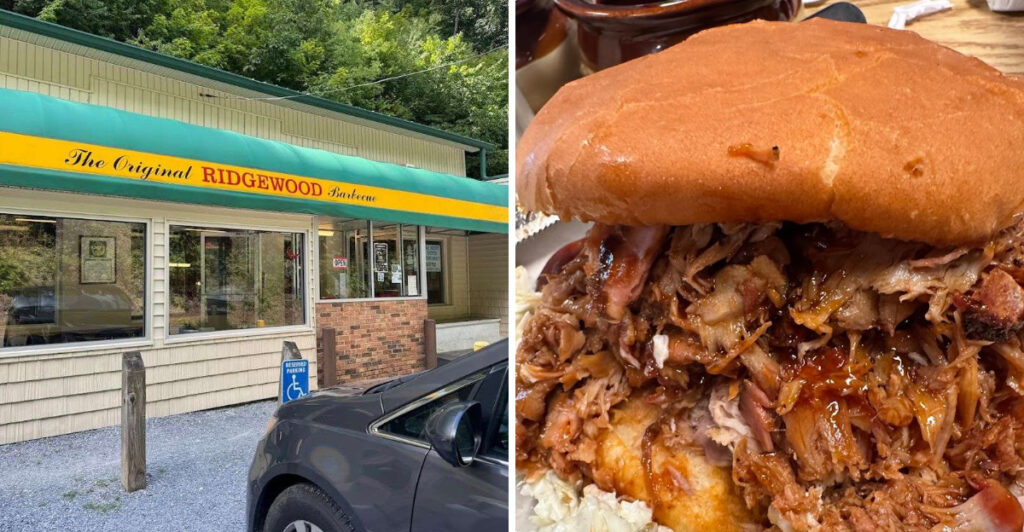
Finding this place is half the experience. A winding Appalachian road in a small Tennessee town, a building that does not announce itself, and a parking lot full of cars from Virginia, North Carolina, and Georgia that tells you everything before you walk through the door.
The smoked ham here follows a method developed in 1948 and has not changed since. Whole fresh hams over hickory wood from the family’s own farm.
A secret sauce with somewhere between 20 and 24 ingredients that only two people on earth know completely. Hand-cut fries and a blue cheese dip that regulars order without looking at the menu.
Tennessee keeps this one tucked into the hills on purpose. The people who find it plan their next visit before they reach the end of the parking lot.
The Hidden Location That Makes It Even More Worth Finding
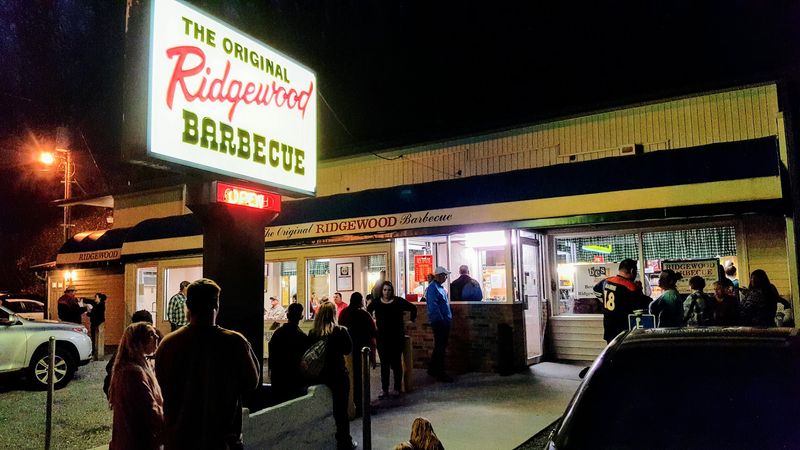
Getting lost might actually be part of the charm here. Ridgewood Barbecue sits jammed into a hillside along a winding stretch of road in Bluff City, a small town nestled in the Appalachian Mountains with fewer than 2,000 residents.
The building does not announce itself loudly. No flashy signs or big parking structures draw the eye.
What gives it away is the steady stream of cars parked along the road and a crowd that refuses to thin out.
The co-owner once said you have to want to come find it, and that statement holds up. Visitors from multiple states have made the drive specifically for this spot, guided by word of mouth and reputation rather than roadside billboards.
The location on Elizabethton Highway feels almost deliberately off the beaten path. But that remoteness is part of what makes arriving feel like a small reward.
Ridgewood Barbecue is located at 900 Elizabethton Hwy, Bluff City, TN 37618.
Pit-Cooked Ham That Changed What Barbecue Means In Tennessee
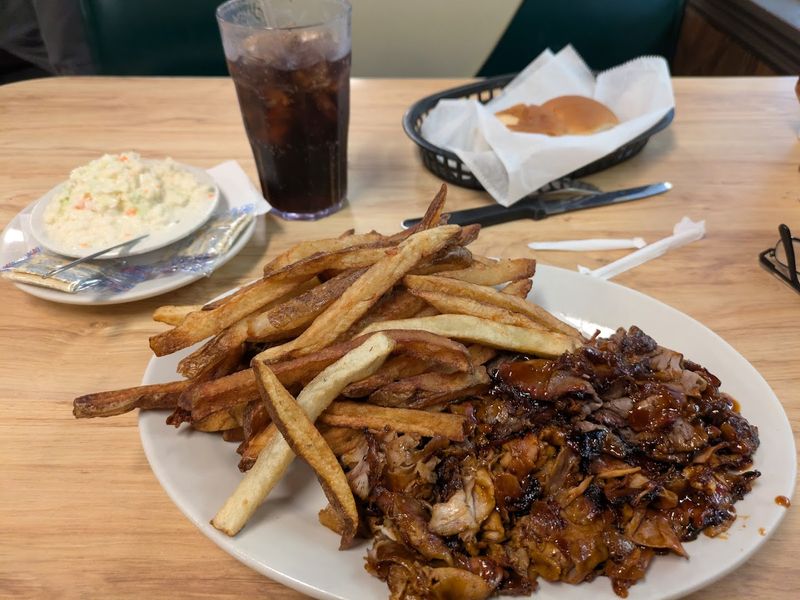
Forget pulled pork shoulders. Ridgewood does something entirely different, and that difference is exactly why people keep coming back.
The restaurant uses whole fresh hams, not shoulders, for all of its pork barbecue. This method dates back to the 1940s and was developed by the original founder.
The hams are smoked low and slow over hickory wood for eight to ten hours, then chilled overnight with spices before service.
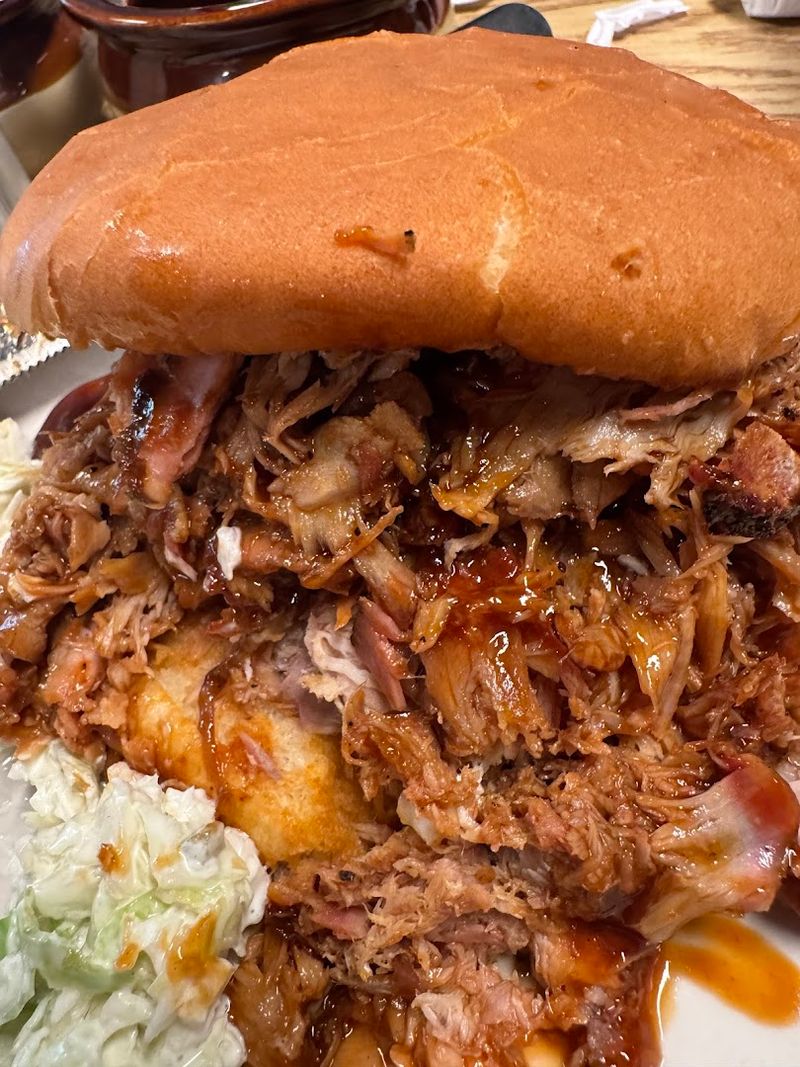
When an order comes in, the meat is thinly sliced and reheated on a flat-top grill. The result is tender, layered barbecue with a texture that surprises first-timers who expect the usual pulled or chopped style.
This approach sets Ridgewood apart from barbecue traditions in North Carolina and Memphis alike. The style is uniquely its own, rooted in one family’s method passed down through generations.
It is the kind of barbecue that makes people rethink what the word even means.
The Secret Sauce With A Recipe Known By Almost Nobody
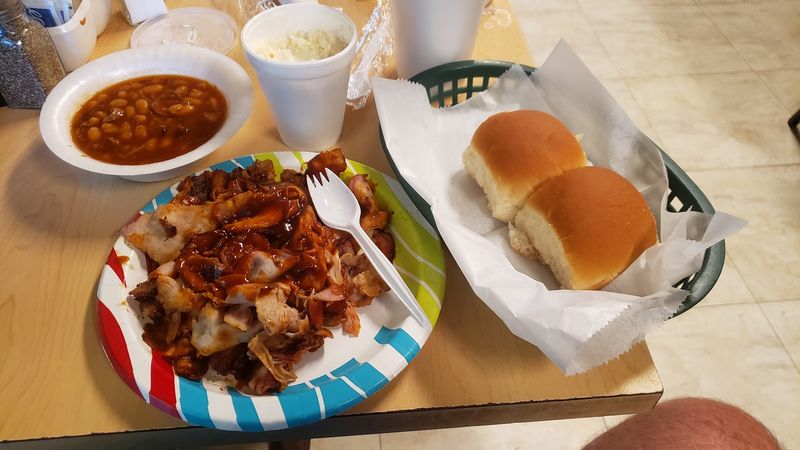
What makes the meat legendary is not just the smoke. The sauce at Ridgewood Barbecue carries a reputation all its own, and it is fiercely protected.
The recipe contains somewhere between 20 and 24 ingredients. Only two family members know the full formula, and it has never been written down.
That level of secrecy is not a marketing gimmick. It reflects a genuine commitment to keeping the original recipe intact across generations.
The sauce is tangy, dark red, slightly smoky, and tomato-based. It gets drizzled generously over the sliced ham before serving, soaking into every layer of meat.
The flavor is assertive and distinctive, unlike the sweet sauces common at many barbecue spots around the South.
Some visitors buy jars to take home, which says everything about how memorable it is. The sauce is the kind of thing that sticks in your memory long after the meal is over.
It is a genuine one-of-a-kind recipe built on decades of quiet consistency.
Hickory Smoke From A Family Farm That Fuels Every Bite
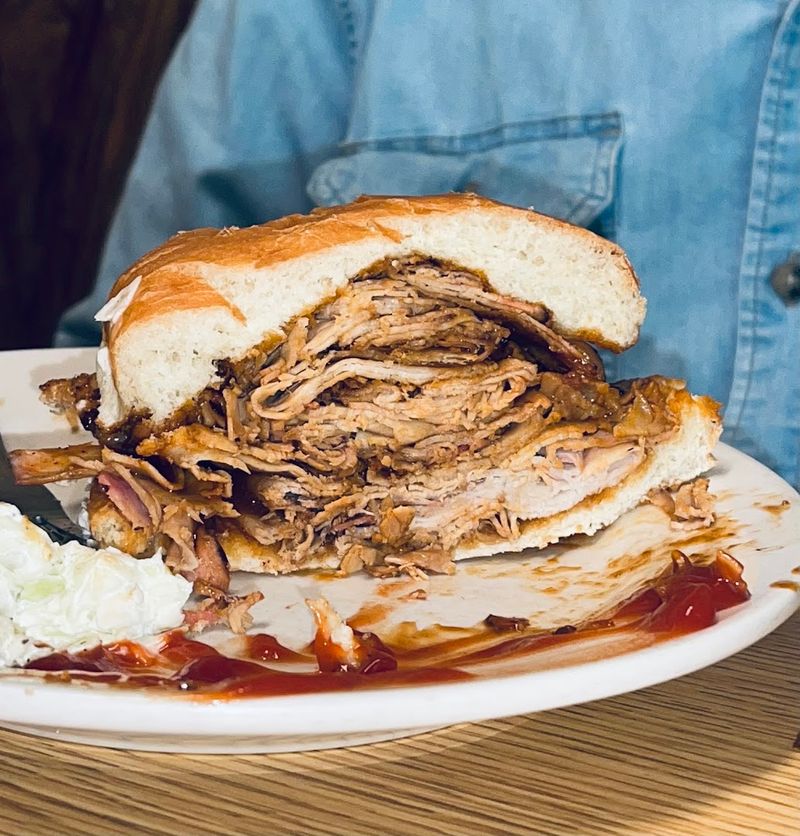
Smoke is the foundation of everything at Ridgewood, and the wood behind that smoke is not random. The hickory used to cook the hams comes from the family’s own nearby farm.
That connection between land and plate is rare in the restaurant world. Most barbecue spots source their wood commercially or rotate suppliers.
At Ridgewood, the sourcing stays close and consistent, and that consistency shows up in the flavor.
Hickory produces a strong, slightly sweet smoke that penetrates deeply into the meat over a long cook time. Eight to ten hours over that wood gives the ham a flavor profile that is impossible to replicate with shortcuts.
The smoke does not just flavor the surface. It works its way into the fat and muscle layers, creating depth in every slice.
Visitors often comment on how the smokiness lingers in a pleasant way without being overpowering. That balance comes from using quality wood, a slow process, and a recipe refined over more than seven decades of practice.
The Famous Blue Cheese Bowl That Deserves Its Own Fan Club
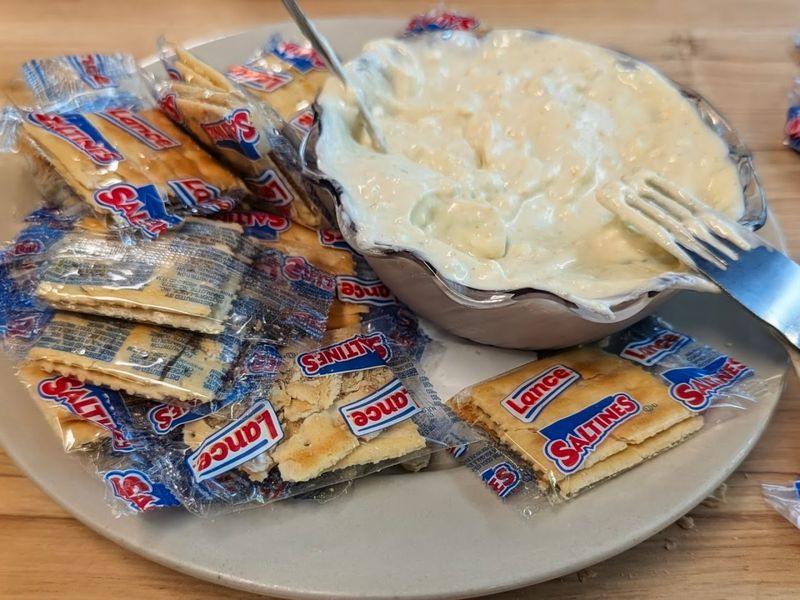
Not every barbecue restaurant has an appetizer famous enough to pull people in from multiple states. Ridgewood does, and it comes in a bowl with saltine crackers.
The blue cheese dip is house-made and served as a starter before the main plates arrive. The texture is thick and creamy, with a bold flavor that pairs surprisingly well with the smoky barbecue that follows.
Many regulars order it every single visit without exception.
Some guests dip their hand-cut fries in it. Others put it on sandwiches.
A few just work through the bowl with crackers and call it a complete experience on its own.
The blue cheese bowl has been mentioned as a standalone reason to make the drive to Bluff City. That is a bold claim for an appetizer, but the crowd reaction backs it up consistently.
It is the kind of dish that turns first-time visitors into regulars before the main course even hits the table. Simple, rich, and completely addictive.
Hand-Cut Fries And Homestyle Sides That Round Out Every Plate
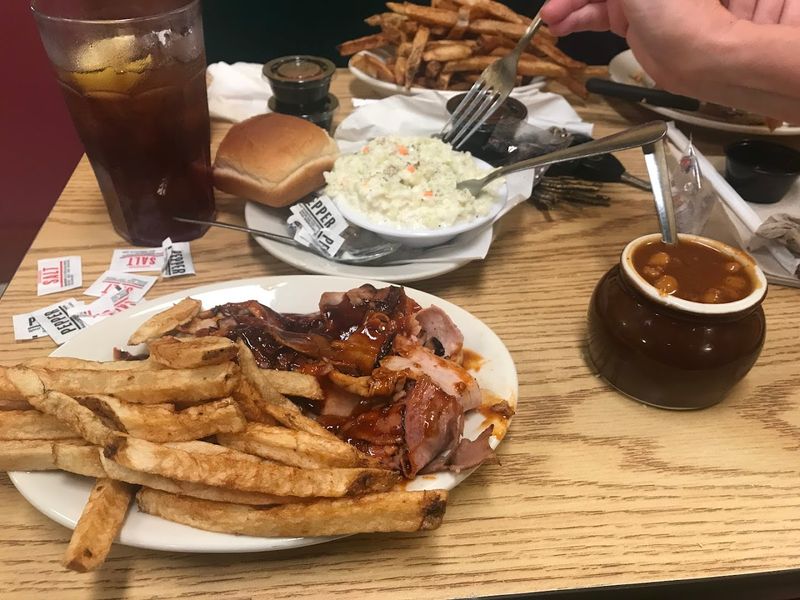
Barbecue this good deserves sides that can keep up, and Ridgewood delivers on that front without much fanfare.
The fries are cut fresh by hand, not frozen or pre-processed. That makes a noticeable difference in texture.
They come out with crisp edges and a soft center, and portions tend to be generous to the point of being almost excessive in the best possible way.
The barbecue beans are another standout. They are rich and slow-cooked, with enough depth of flavor to qualify as a meal on their own.
Regulars often order them as a side and end up eating them first.
The coleslaw rounds out the plate with a lighter, creamy finish that cuts through the smoke and sauce. It is made in-house and has a straightforward, old-fashioned flavor that feels right at home next to everything else on the table.
These are not afterthought sides. They are made with the same care as the main event and contribute to why a full Ridgewood plate feels so satisfying from start to finish.
A Family Legacy That Started Back In 1948
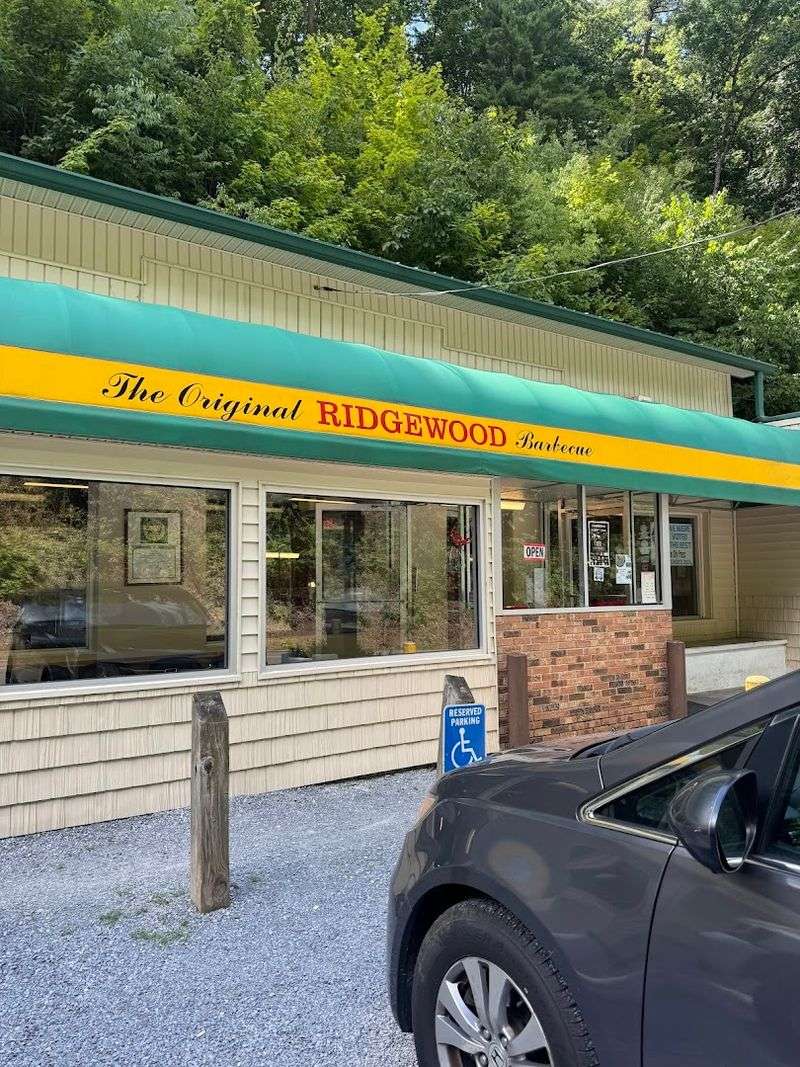
Some restaurants have history. Ridgewood Barbecue practically is history.
The establishment was founded in 1948 by Grace and Jim Proffitt.
It originally operated as a roadhouse before the business pivoted entirely to barbecue, a decision that turned out to be one of the most consequential in East Tennessee food history.That pivot turned out to be one of the most consequential decisions in East Tennessee food history.
The ham-smoking method developed by Jim Proffitt in those early years became the foundation of everything the restaurant is known for today. The technique has not changed significantly in more than seven decades.
Today the restaurant is run by a third-generation family member, keeping the original vision intact across more than 75 years of continuous operation. That kind of generational commitment to a single method is almost unheard of in the restaurant industry.
Knowing the backstory makes every plate feel a little more meaningful. The food is not just good barbecue.
It is a living piece of Appalachian culinary tradition, served in the same building where it all started.
The No-Frills Atmosphere That Feels Like A Step Back In Time
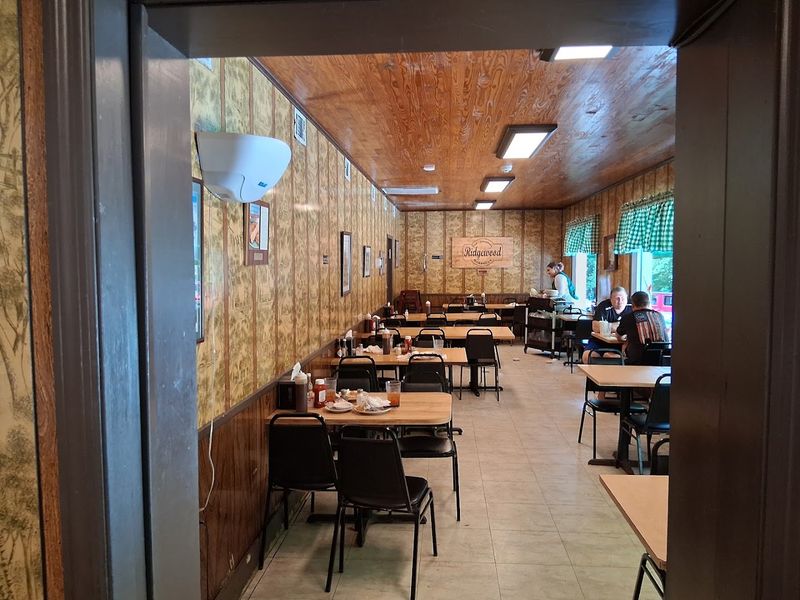
Walking in feels like the calendar rolled back several decades, and that is not a complaint. The dining room at Ridgewood is small, simple, and unpolished in a way that feels completely intentional.
Tables are packed close together. The decor is minimal and dated.
The floors and fixtures carry the visible wear of a place that has served thousands of meals without pausing to redecorate. Some visitors find this charming.
Others find it rustic. Almost everyone agrees the food makes the setting irrelevant.
The energy inside is communal and a little chaotic during busy periods. Service moves at a quick pace.
Staff stay focused and friendly even when the room is full and the wait stretches outside the door.
There is something grounding about a place that has never tried to be trendy. Ridgewood does not compete on ambiance.
It competes on the quality of what comes out of the kitchen, and that confidence shows in every corner of the room. The experience feels honest and unpretentious from start to finish.
Crowds, Parking, And Why Timing Your Visit Actually Matters
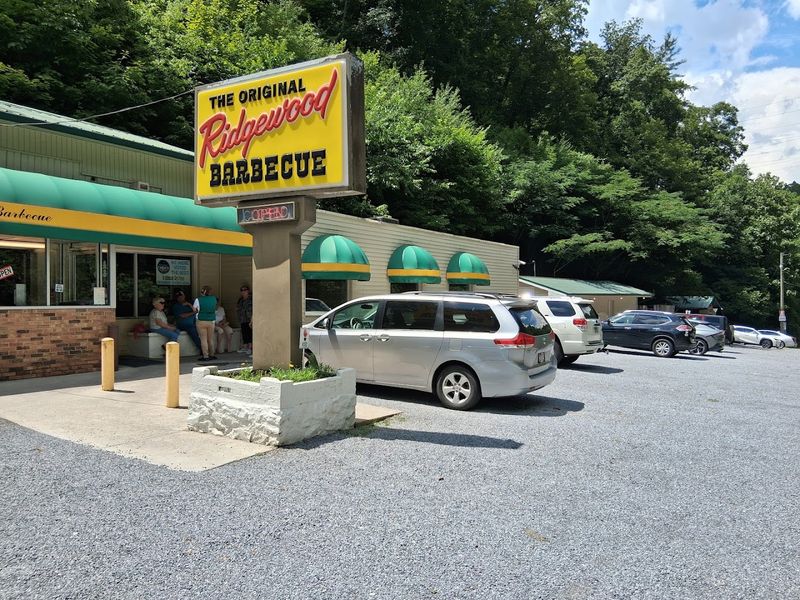
Plan ahead, because this place gets genuinely packed. On busy weekend days, the restaurant can serve well over a thousand customers, and the parking situation reflects that volume.
The lot is small and fills up fast. Cars often line the road outside.
Weekend visits typically involve a wait, sometimes outside before a table even opens up. Weekday visits during off-peak hours tend to move more smoothly, with shorter waits and a calmer pace inside.
There is one more timing consideration worth knowing. The kitchen occasionally closes early once the smoked meat sells out for the day.
The supply is not unlimited, and popular days can exhaust it faster than expected.
Arriving earlier rather than later is the safest approach, especially on weekends. Going with flexibility and patience makes the experience more enjoyable.
The wait is part of the rhythm here, and most people who stick it out agree the food makes the wait feel completely reasonable. Come hungry and come ready to be patient.
Why Barbecue Lovers From Across The Southeast Keep Coming Back
Cars from Virginia, North Carolina, and Georgia regularly fill the parking lot at Ridgewood. That is not a coincidence.
Word about this place travels far and travels fast among people who take barbecue seriously.
The restaurant has been featured in Southern Living and earned praise from food writers and barbecue enthusiasts across the region. One notable food book on North Carolina barbecue included Ridgewood as the only non-North Carolina restaurant worth mentioning.
That kind of recognition from a neighboring state’s barbecue loyalists speaks volumes.
The draw is not just the food in isolation. It is the combination of a unique preparation method, a one-of-a-kind sauce, a signature appetizer, and a family history that gives the meal real context and meaning.
Repeat visitors are common. People who try it once tend to plan their next visit before they leave the parking lot.
The restaurant has built a reputation that no amount of advertising could manufacture. It earned every bit of it one plate at a time.