How does a steakhouse stay completely unchanged and still pack the dining room decades later? Nebraska has one answer to that question, and it starts with brass steer horn door handles before you even get inside.
A cottage cheese spread lands on your table before you open a menu, recipe unchanged since the 1950s, and nobody is telling you what is in it.
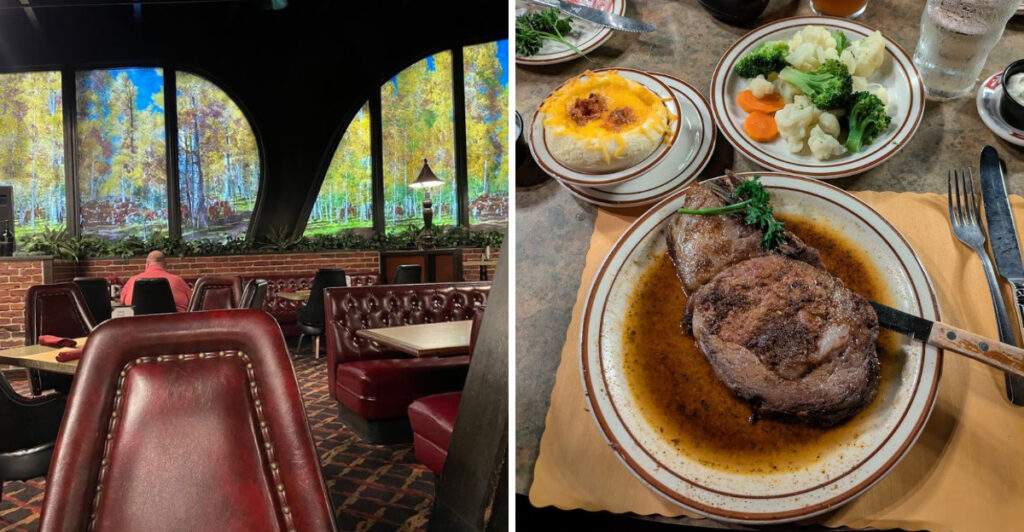
Red leather booths, a dining room mural telling Omaha’s beef history without saying a word, and a kitchen aging and hand-cutting beef on-site every single day. Onion rings from scratch every morning.
Soups, dressings, gravies, all made by people who simply do not believe in shortcuts. Three generations of the same Nebraska family.
The regulars who grew up here are now bringing their grandchildren. That says everything.
The Brass Steer Horn Doors That Set The Tone Before You Even Sit Down
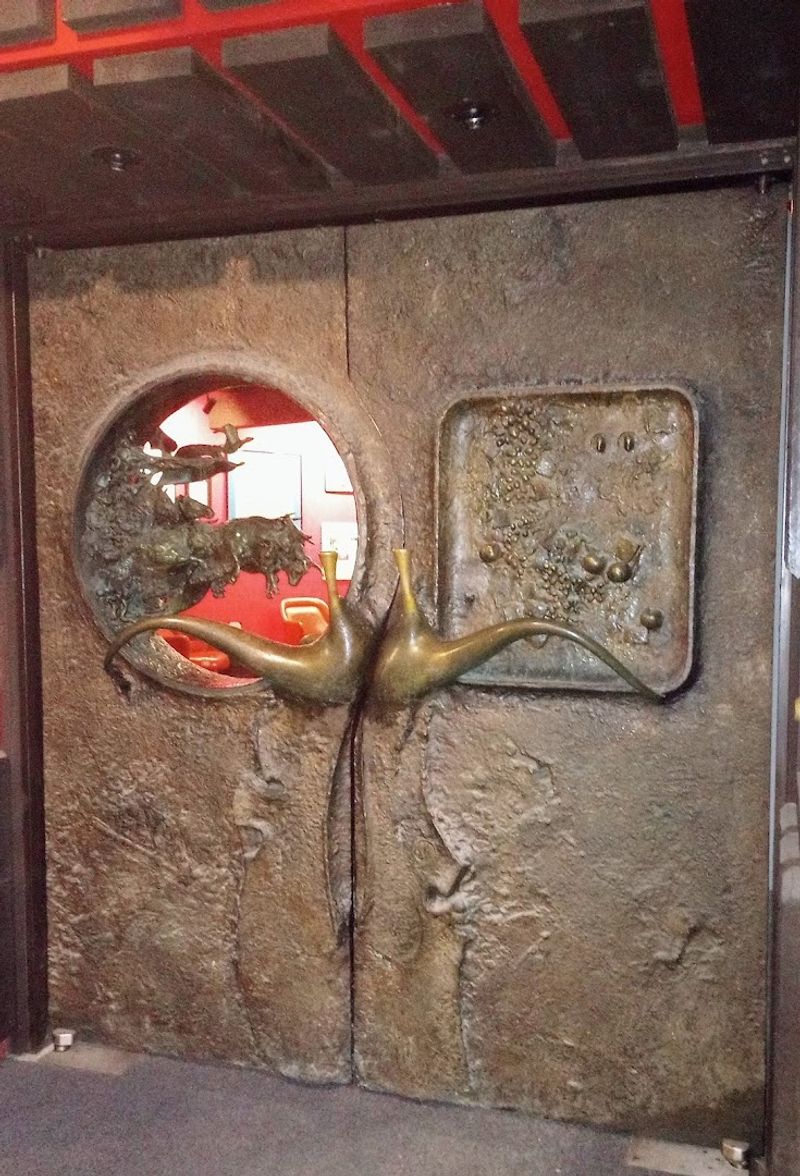
Bold, heavy, and unmistakably unique, the brass steer horn front doors at Johnny’s Cafe signal exactly what kind of place waits inside. These doors were installed during the landmark 1970s renovation and have remained untouched ever since.
They are not decorative in a subtle way. They make a statement the moment guests arrive.
The horns are a direct nod to Omaha’s deep roots in the beef and cattle industry. The restaurant originally opened next to the Omaha Stockyards in 1922, and that connection still shapes everything about the space.
The doors carry that history forward in a physical, tangible way.
First-time visitors often stop to look before stepping inside. Regulars barely notice anymore, but that familiarity is part of the charm.
The entrance sets a mood that the rest of the dining room delivers on fully. Johnny’s Cafe is located at 4702 S 27th St, Omaha, NE 68107.
Hand-Cut, On-Site Aged Steaks That Have Been The Standard For Over A Century
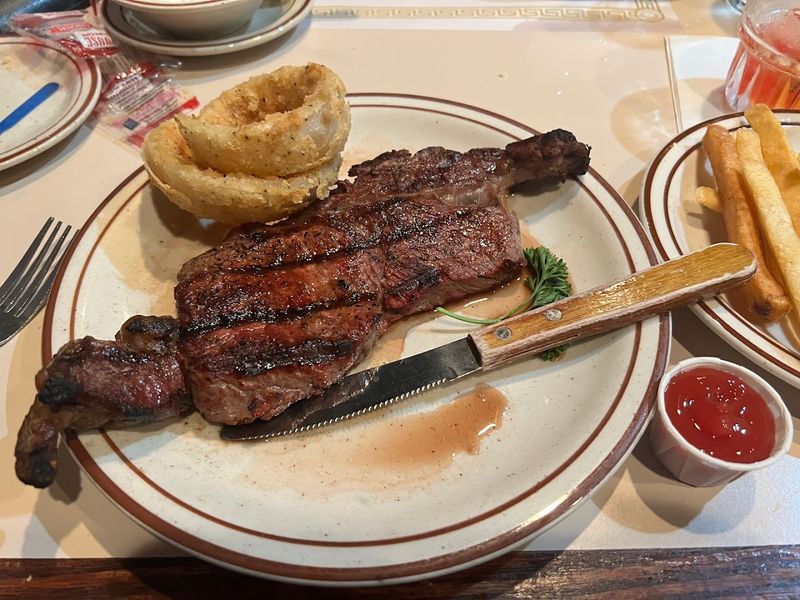
How many steakhouses still cut and age their beef on-site? At Johnny’s Cafe, that practice has continued without interruption for over 100 years.
The steaks are not pre-portioned off-site or sourced pre-aged. Every cut is handled in-house, which gives the kitchen direct control over quality and consistency.
Aging beef on-site concentrates flavor and affects texture in ways that pre-packaged alternatives cannot replicate. It also requires space, time, and skilled preparation.
Most modern restaurants skip this step entirely. Johnny’s has never wavered from it.
Guests who order steak here are tasting the result of a process that has stayed the same across three generations of family ownership. The ribeye, the T-bone, and the prime rib all reflect that commitment.
Steaks are cooked to order, and the results speak to a kitchen that takes the process seriously. This is Midwest beef prepared the way Omaha has always expected it to be prepared.
Red Leather Booths And Dark Wood That Refuse To Be Replaced
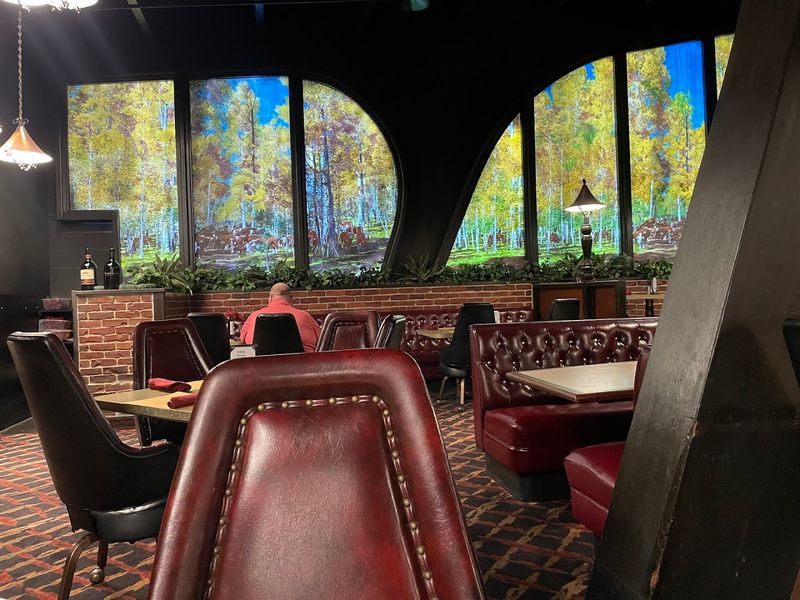
Red leather booths line the dining room at Johnny’s Cafe, and they have been there since the 1970s renovation gave the space its current character. The dark wood paneling surrounds them, and the combination creates a mood that feels settled and unhurried.
Nothing about this room feels rushed or trendy.
The color palette of deep reds, dark wood, and warm lighting was chosen deliberately to create what the family described as a handsome feel. Decades later, that intention still reads clearly.
Guests who visit for the first time often describe the experience as stepping into another era.
Regulars have been known to say they hope the interior never gets updated. That reaction is not nostalgia for its own sake.
It reflects genuine appreciation for a space that still works exactly as intended. The booths are comfortable, the lighting is right, and the atmosphere delivers before the food even arrives.
Prime Rib Finished In-House And Served Fresh Every Day
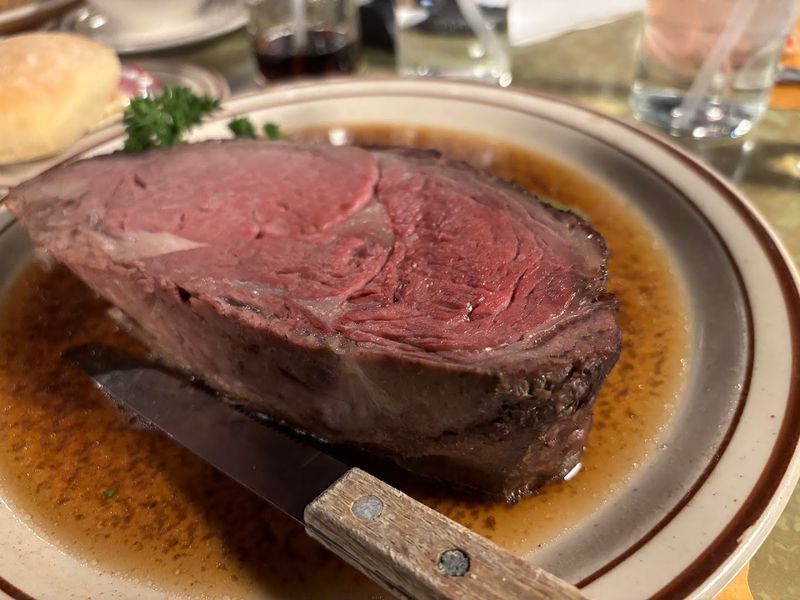
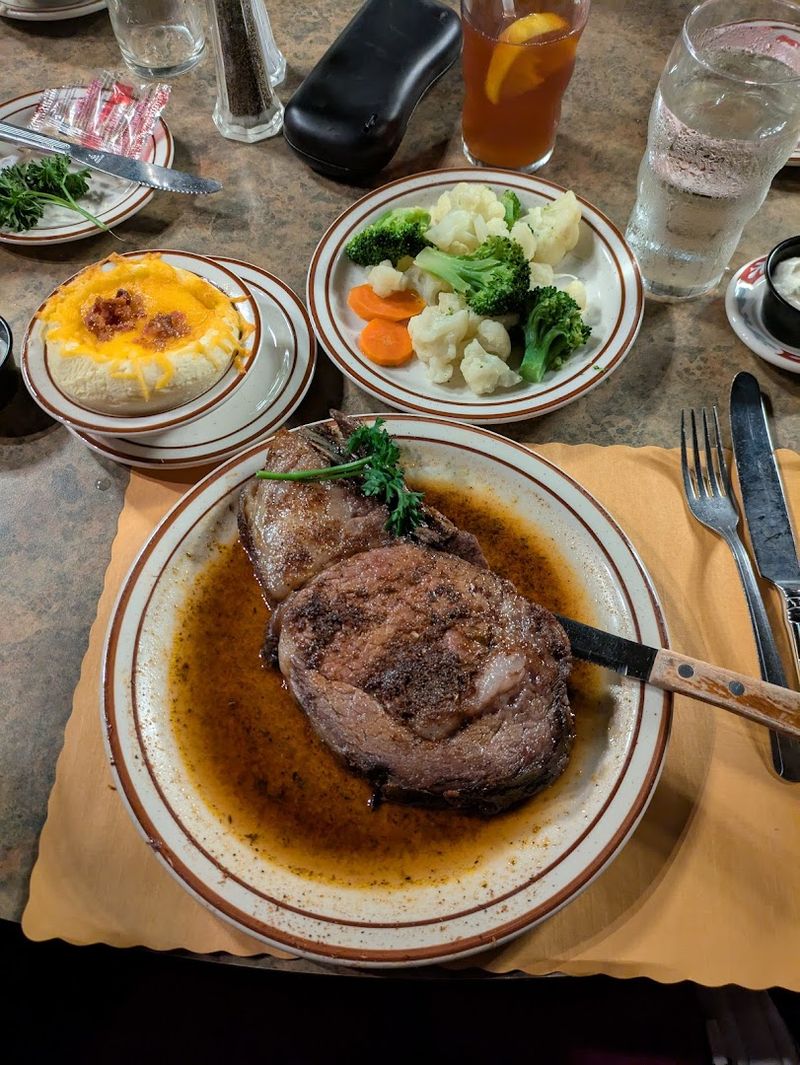
Prime rib done right takes time and attention. At Johnny’s Cafe, the prime rib is finished in-house and served daily, which means the kitchen is actively managing the process rather than relying on shortcuts.
The result is a cut that arrives at the table with genuine depth of flavor.
Unlike pre-made au jus from powder or concentrate, the preparation here stays true to traditional methods. The rib is cooked whole and sliced to order, which keeps the interior temperature consistent and the texture where it should be.
That level of care is increasingly uncommon in casual dining.
Guests who have ordered the prime rib across multiple visits tend to describe it as reliably satisfying. It does not vary wildly from one visit to the next, which matters for regulars who know what they want when they walk in.
Consistency in a dish this central to the menu says a great deal about how the kitchen operates.
The Secret Cottage Cheese Spread That Has Been On Every Table Since The 1950s
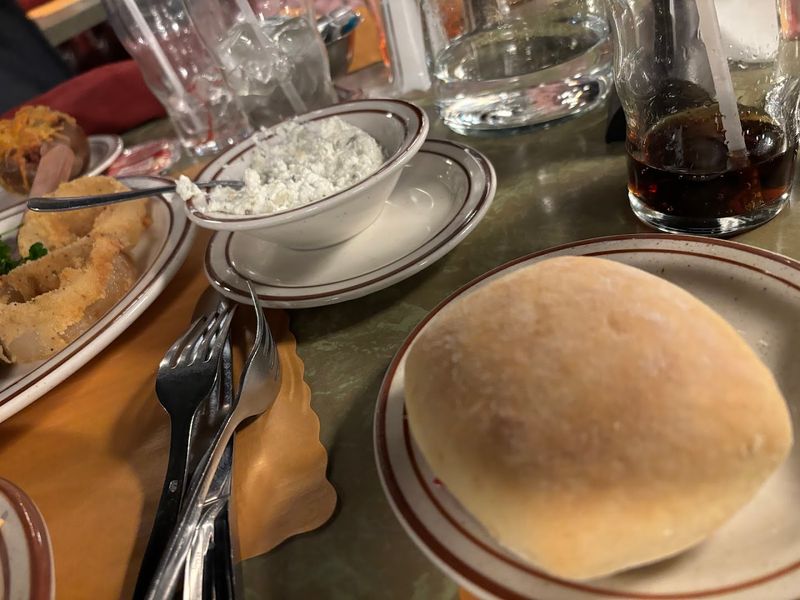
Before the steak arrives, before the soup, before anything else, a cottage cheese spread comes to the table with dinner rolls. This has been the opening gesture at Johnny’s Cafe since the 1950s, and the recipe has not changed.
Guests who ask for it are told, politely, that it stays a secret.
The spread is creamy, mild, and quietly addictive. It disappears quickly at most tables, and more than a few guests have tried to recreate it at home without success.
The fact that it has survived for over seven decades on the same menu says something about how well it works.
Small traditions like this one define a restaurant’s identity more than any renovation could. It is the kind of detail that regulars mention when they describe what makes Johnny’s feel different from other steakhouses.
The spread costs nothing extra and requires no explanation. It simply arrives, and it is always welcome.
Onion Rings Made The Old-School Way, Every Single Morning
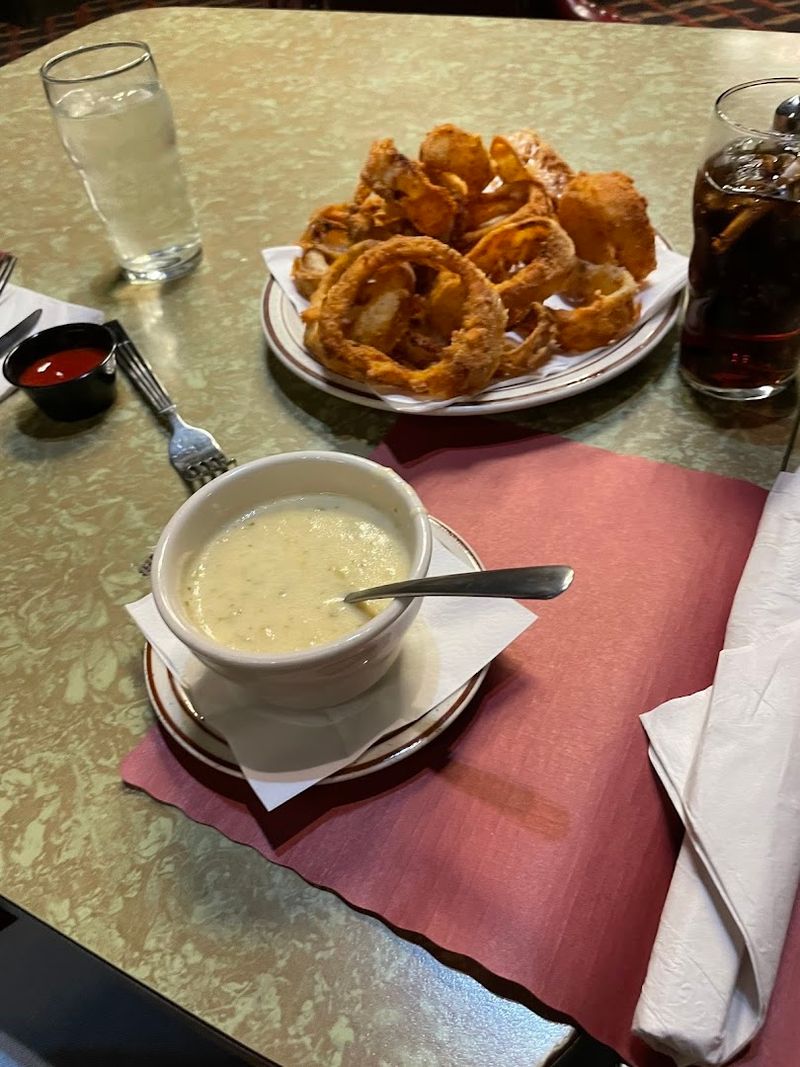
Fresh onion rings sound simple until the preparation is explained. At Johnny’s Cafe, a staff member hand-slices onions for roughly two hours each morning before service begins.
The rings are then battered and cooked using the same formula the kitchen has used for decades. No frozen bags, no shortcuts.
The result is a noticeably different product from what most restaurants serve. The onion inside has texture and bite.
The batter holds without becoming heavy. Regulars who order them consistently describe the rings as one of the standout items on the menu, and first-time visitors are often surprised by how good they are.
Maintaining this process requires real labor and commitment. It would be far easier to switch to a pre-made product, and no one would likely notice at first.
But the kitchen has not made that trade. The onion rings remain a point of quiet pride, and the effort behind them is part of what keeps the menu grounded in genuine cooking rather than convenience.
Scratch-Made Soups, Dressings, And Gravies That Taste Like Someone Actually Cooked Them
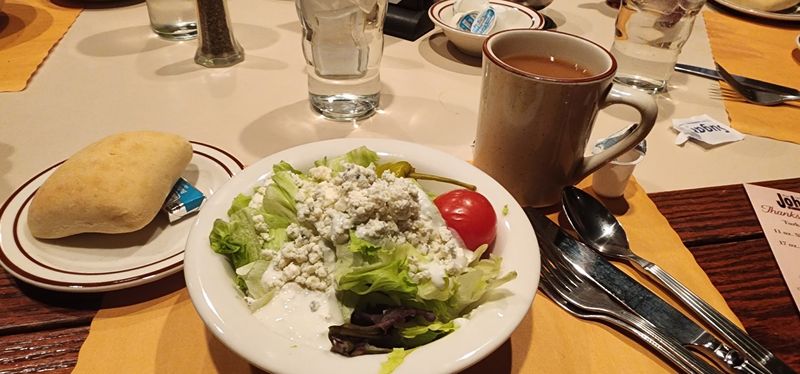
Scratch cooking is a phrase that gets used loosely in the restaurant industry. At Johnny’s Cafe, it applies literally to soups, dressings, and gravies.
These are made in-house using real ingredients, not reconstituted bases or pre-mixed packets. The French onion soup in particular has drawn consistent praise for its depth and richness.
The Polish vinaigrette dressing has developed enough of a following that it is now bottled and sold. The recipe draws from an older tradition, and the flavor reflects that origin.
Guests who enjoy it at the table can take a bottle home, which is a practical extension of the kitchen’s confidence in what it produces.
Salads served with house dressing arrive dressed properly, not flooded, which reflects basic kitchen discipline that not every restaurant maintains. When the foundational elements of a meal, the soup, the salad, the sauce, are made with care, the overall experience feels more complete.
At Johnny’s, that attention to detail has been consistent for generations.
The Dining Room Mural That Tells Omaha’s Story Without Saying A Word
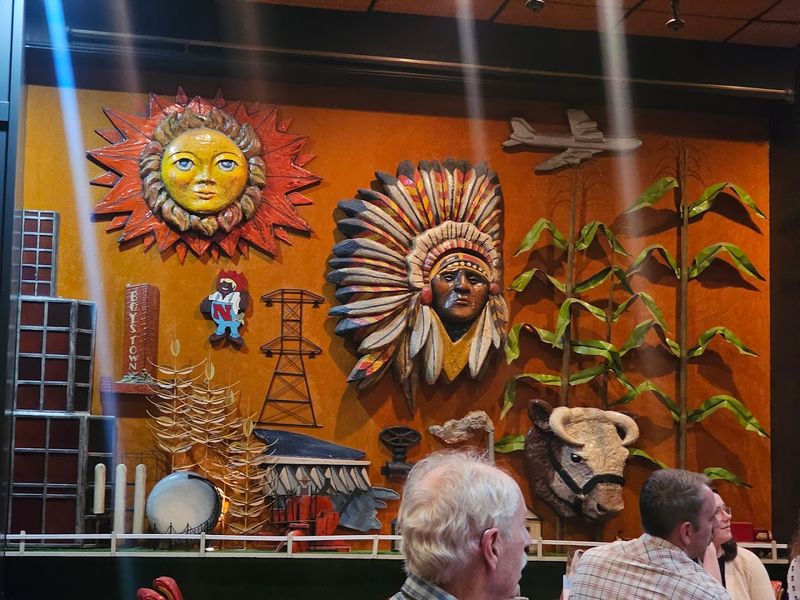
Murals in restaurants are usually decorative. The large dining room mural at Johnny’s Cafe functions differently.
It connects the space to Omaha’s history as a center of the American beef industry, the same history that gave the restaurant its original reason to exist back in 1922.
The mural was enhanced during the 1970s renovation as part of a broader effort to give the dining room a more defined character. It has remained in place since then, and it contributes to the layered visual environment that makes the room feel earned rather than designed by committee.
Dark walls, warm lighting, and this mural create a backdrop that supports the food rather than competing with it.
Guests who pay attention to the details of a room tend to notice it. Guests who are focused on conversation and dinner may absorb it without registering it consciously.
Either way, it adds to the sense that this space has history behind it, not just decor in front of it.
Three Generations Of Family Ownership That Keep The Standards Intact
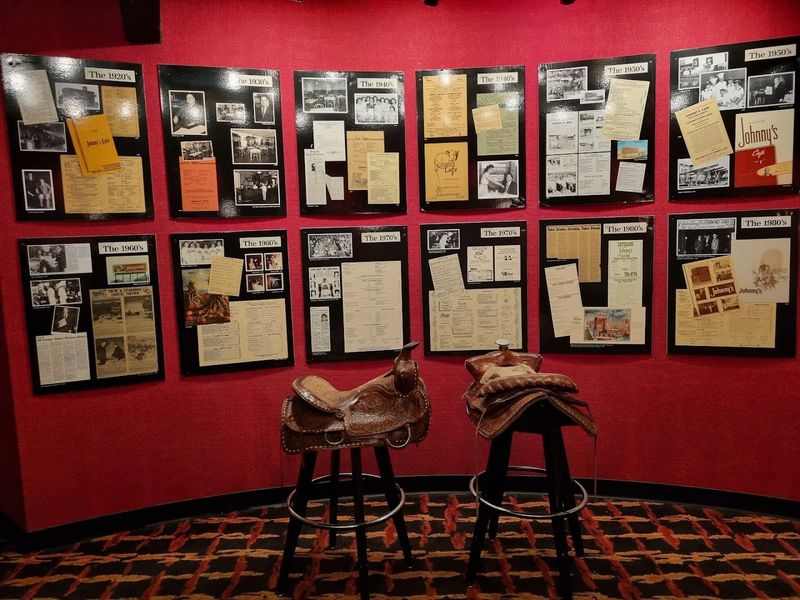
Johnny’s Cafe was founded in 1922 by Frank Kawa, a Polish immigrant who purchased a small restaurant next to the Omaha Stockyards. The name on the building was already there when he bought it, and he kept it.
That practical decision became the identity of a restaurant that has now operated for over 100 years under the same family.
The third generation currently runs the restaurant, with Frank Kawa’s granddaughters maintaining the standards that have defined the place across decades. Family ownership of this kind creates accountability that corporate management structures rarely replicate.
The people making decisions about the menu and the dining room are the same people whose family built it.
That continuity shows up in the details. The cottage cheese spread recipe stays protected.
The onion ring process stays labor-intensive. The steak aging stays in-house.
These are choices that require ongoing commitment, not just inherited momentum. The family has actively chosen to maintain them, and that choice is what regulars are really returning to.
A Community Table Where Omaha Brings Its Guests And Its Memories
Locals bring out-of-town guests to Johnny’s Cafe. That pattern repeats itself across decades and generations.
It is the kind of place Omaha residents point to when someone asks where to eat something that reflects the city’s actual character, not a chain, not a trend, but a place with roots.
Weekend evenings tend to draw multi-generational groups. Families who ate here in the 1970s now bring their own children and grandchildren to the same booths, under the same mural, with the same cottage cheese spread arriving before the meal.
That cycle of return is not manufactured. It builds slowly over time through consistent experience.
A small sign placed on every dining room table reads, “103 years. Perfectly aged.” It is a confident statement, but it earns its confidence.
The restaurant has not survived this long by accident. It has survived by staying exactly what it set out to be.
Johnny’s Cafe remains one of the city’s most enduring dining destinations.